

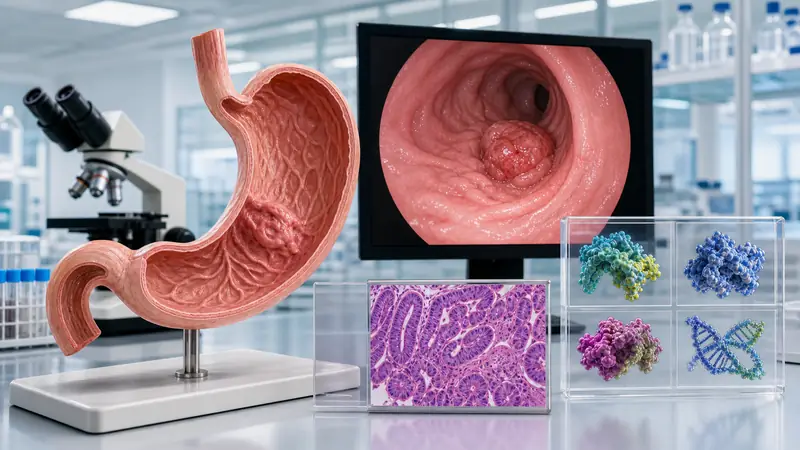
Tumor Location, Histology and Stage Change the Treatment Path
Nearly all stomach cancers are adenocarcinomas, but their behavior can differ. Cardia tumors begin near the junction with the esophagus; non-cardia tumors begin elsewhere in the stomach. Pathologists may also describe intestinal or diffuse histology. Gastrointestinal stromal tumors, lymphomas and neuroendocrine tumors of the stomach are biologically different diseases and require different treatment frameworks.
Staging may include upper endoscopy with biopsy, CT, PET-CT in selected cases, endoscopic ultrasound and diagnostic laparoscopy with peritoneal washings when appropriate. Tumor depth, lymph-node involvement, nearby structures and spread to the peritoneum, liver or other organs determine whether care is endoscopic, surgical, multimodal or primarily systemic.
Endoscopic Treatment May Be Possible
Selected small, superficial, low-risk tumors may be removed endoscopically; other early cancers require surgery.
Gastrectomy and Systemic Treatment Often Work Together
Partial or total gastrectomy with lymph-node removal may be combined with chemotherapy before and after surgery.
Multimodal Planning Is Essential
Systemic therapy, surgery and sometimes radiation are selected according to location, stage, response and overall health.
Biomarkers Can Open Different Paths
Chemotherapy, immunotherapy, targeted treatment, clinical trials and symptom-directed procedures may be considered.
Ask Whether the Tumor Has Been Tested for Actionable Biomarkers
For advanced gastric adenocarcinoma, testing commonly includes HER2, PD-L1 combined positive score and mismatch-repair deficiency or microsatellite instability. CLDN18.2 testing may identify eligibility for zolbetuximab in a HER2-negative tumor. Broader genomic testing can sometimes identify uncommon alterations, including NTRK fusions, that affect treatment or clinical-trial options.
A biomarker result is not interpreted in isolation. The treatment plan also depends on prior therapy, disease burden, symptoms, organ function, nutrition, performance status and the patient’s priorities. Sunridge reviews the original pathology and molecular reports rather than relying only on a summary.
Natural Therapies Can Support the Person When They Are Carefully Coordinated
Interest in nutrition, natural medicine and quality-of-life support is welcomed. Selected integrative approaches may help with nausea, fatigue, stress, sleep, activity and general well-being. They can be coordinated thoughtfully with potentially curative surgery or evidence-based systemic treatment. Concentrated botanicals, high-dose nutrients and antioxidants require individual review for bleeding, anesthesia, liver metabolism, immune effects and drug interactions.
Protect Weight, Strength and Digestion Before and After Gastrectomy

Gastric cancer and its treatment can cause early fullness, nausea, reduced appetite, reflux, dumping symptoms and loss of muscle. An individualized support plan may address:
- Small, frequent, protein-rich meals
- Hydration between meals when early fullness is a problem
- Weight trends and preservation of lean body mass
- Dumping syndrome, reflux, nausea and bowel changes
- Vitamin B12, iron, folate, calcium and vitamin D monitoring
- Oral supplements or enteral nutrition when intake is inadequate
- Safe activity and rehabilitation before and after surgery
- Review of every herb, supplement and high-dose nutrient
Nutrition advice after partial or total gastrectomy must be individualized. Some people need evaluation for anemia, micronutrient deficiencies, malabsorption or pancreatic insufficiency. Dietitians, surgeons, oncology clinicians and rehabilitation professionals may be as important to recovery as any supplement. Research supports structured nutrition and enhanced-recovery strategies, although the right method depends on the operation and clinical situation.
When Patients Come to Sunridge
Before Surgery or Systemic Therapy
We can review nutrition, weight, conditioning, anemia, supplement risks and recovery priorities without delaying time-sensitive care.
During Active Treatment
Care may focus on intake, hydration, nausea, neuropathy, fatigue, stress, sleep and screening natural products for interactions.
After Gastrectomy
Recovery may include smaller meals, dumping-symptom strategies, micronutrient monitoring and gradual rebuilding of strength.
With Recurrent or Metastatic Disease
We reassess biomarkers, prior response, organ function, nutrition, symptoms and goals before discussing additional support.
What We Review
Helpful records include the endoscopy and pathology reports, tumor location and histology, endoscopic ultrasound findings, CT or PET-CT, diagnostic-laparoscopy results, operative report, systemic and radiation treatment history, HER2, PD-L1, MMR/MSI and CLDN18.2 results when available, current laboratory values and a complete medication and supplement list.
We also want to understand recent weight and muscle loss, the amount and types of food tolerated, reflux, nausea, early fullness, dumping symptoms, pain, fatigue, neuropathy and the goals that matter most. Those practical details help shape a plan that is medically coherent and realistic.
Questions About Integrative Gastric Cancer Care
Do you treat Stage 4 or metastatic gastric cancer?
Yes. Recommendations depend on histology, metastatic sites, HER2, PD-L1, MMR/MSI, CLDN18.2, previous treatment, nutrition, symptoms, organ function and personal goals. Integrative support is coordinated with the oncology plan.
Can I come while receiving chemotherapy, immunotherapy or targeted treatment?
Potentially. Many patients seek supportive care during active treatment. Every supplement and therapy must be reviewed for bleeding, drug interactions, immune effects, liver metabolism, nutrition and surgical timing.
Why are HER2, PD-L1, MSI and CLDN18.2 important?
These biomarkers may help identify targeted therapy or immunotherapy options for advanced gastric adenocarcinoma. The relevance of each result depends on the full pathology and treatment setting.
Can natural therapies replace gastrectomy or systemic treatment?
No natural therapy has been proven to replace potentially curative gastric-cancer treatment. Integrative approaches may support selected symptoms, strength and quality of life. Sunridge explains what is supported, what is uncertain and where delay could carry meaningful risk.
Can you help with nutrition after my stomach surgery?
Yes. Support may include small-meal strategies, protein and calorie planning, hydration, dumping-symptom management, micronutrient monitoring and referral for specialized nutrition or enteral support when needed.
Will you work with my oncologist, gastroenterologist and surgeon?
Yes. Communication among the treating specialists helps reduce conflicts and keeps the full plan coherent.
References
- National Cancer Institute. Gastric Cancer Treatment.
- National Cancer Institute. Gastric Cancer Treatment by Stage.
- National Cancer Institute. Gastric Cancer Treatment (PDQ®)–Health Professional Version.
- National Cancer Institute. Stomach (Gastric) Cancer.
- National Cancer Institute. Stomach Cancer Diagnosis.
- National Cancer Institute. Nutrition in Cancer Care (PDQ®).
- National Cancer Institute. Cancer Therapy Interactions With Foods and Dietary Supplements (PDQ®).
- Society for Integrative Oncology–ASCO guideline for anxiety and depression symptoms in adults with cancer.
- ASCO–Society for Integrative Oncology guideline update for cancer-related fatigue.
- Quality of life following gastrectomy for gastric cancer: systematic review.
- Post-discharge oral nutritional supplementation after gastrectomy: systematic review and meta-analysis.
This page is educational and does not replace diagnosis or treatment advice from a qualified medical professional. Treatment outcomes cannot be guaranteed.