

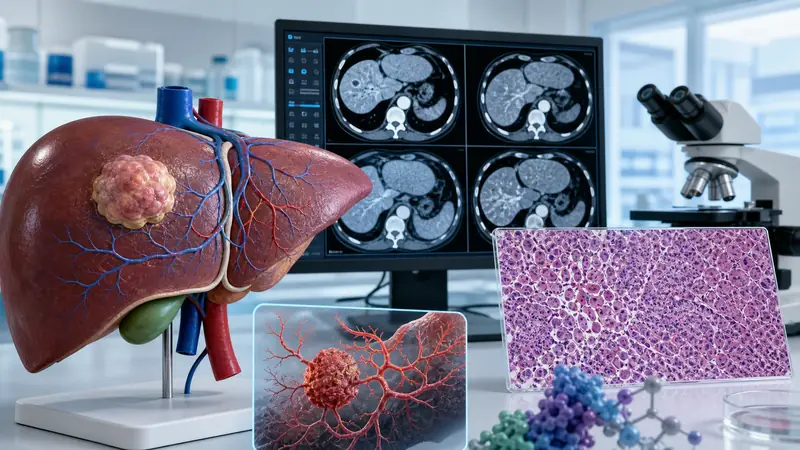
Primary Liver Cancer Is Not the Same as Cancer That Spread to the Liver
Hepatocellular carcinoma (HCC) begins in liver cells and is the most common adult primary liver cancer. Intrahepatic cholangiocarcinoma begins in bile ducts within the liver and has a different treatment pathway. A colon, breast, lung, pancreatic or other cancer that spreads to the liver remains that original cancer biologically; it is not treated as HCC.
HCC can sometimes be diagnosed from its characteristic appearance on properly performed multiphasic CT or MRI in a person at risk. Biopsy may be needed when imaging is not definitive or the clinical setting is different. AFP can help in selected cases, but it cannot establish the diagnosis by itself.
How Much Cancer Is Present?
Number, size, location, vascular invasion, lymph nodes and spread outside the liver help define local, regional and systemic options.
How Well Is the Liver Working?
Bilirubin, albumin, INR, platelets, ascites, encephalopathy, portal hypertension and Child-Pugh class help estimate hepatic reserve.
What Is Affecting the Liver?
Cirrhosis, hepatitis B or C, metabolic liver disease, alcohol exposure and other causes need appropriate management alongside the cancer.
What Can Treatment Accomplish Safely?
Performance status, frailty, nutrition, other illnesses, previous toxicity and personal priorities influence the best sequence.
Liver-Directed and Systemic Treatments Can Be Combined Strategically
Early HCC may be approached with curative intent using surgical resection, liver transplantation or ablation in appropriately selected patients. When those paths are not suitable, options may include transarterial embolization or chemoembolization (TAE/TACE), radioembolization, stereotactic body radiation therapy and other carefully selected liver-directed procedures.
For advanced HCC, modern treatment may include immunotherapy combinations such as atezolizumab with bevacizumab or durvalumab with tremelimumab, as well as targeted medicines such as lenvatinib, sorafenib, cabozantinib, regorafenib or ramucirumab in appropriate settings. Bleeding risk, varices, blood pressure, liver function, autoimmune history and previous treatment all affect the choice.
An Integrative Plan Can Add Meaningful Support Without Closing the Door on Modern Oncology
Natural and supportive therapies are worth discussing. Nutrition, individualized movement, sleep support, stress reduction, acupuncture for selected symptoms and carefully screened natural products may help a person feel stronger and participate more fully in care. Sunridge evaluates these options in the context of the liver, the cancer and the treatment—not as a one-size-fits-all replacement for therapies that can control or potentially eradicate disease.
Natural Care Should Be Purposeful, Measurable and Liver-Safe

A personalized liver cancer support plan may address:
- Protein and calorie intake to help preserve muscle
- Early fullness, nausea, appetite and weight change
- Safe movement for strength, balance and fatigue
- Sleep, anxiety, mood and coping
- Ascites, edema, bowel patterns and hydration guidance
- Alcohol, acetaminophen and medication review
- Hepatitis and cirrhosis care coordination
- Every herb, extract, vitamin and supplement being used
Loss of muscle can occur even when body weight appears stable because fluid retention may mask it. A dietitian-guided plan may emphasize adequate protein and energy, smaller meals and a late-evening snack when appropriate. Movement can be valuable, but intensity should reflect fatigue, balance, ascites, anemia, bleeding risk and current treatment.
When Patients Come to Sunridge
Before the First Treatment
We help organize the diagnosis, tumor extent, liver reserve, transplant or local-therapy questions, nutrition and a safe integrative foundation.
During Local or Systemic Treatment
Support may focus on appetite, fatigue, sleep, skin or bowel symptoms, blood pressure, activity and supplement–drug interaction review.
After Recurrence or Progression
We review prior response, remaining liver-directed and systemic options, clinical trials, liver function and what the patient wants from the next phase.
When Quality of Life Is the Priority
Symptom-directed and palliative care can be provided alongside active cancer treatment. It is not the same as giving up or automatically choosing hospice.
What We Review
Helpful records include the exact diagnosis, multiphasic CT or MRI reports and images, pathology if performed, AFP trend, bilirubin, albumin, INR, platelets, kidney function, hepatitis testing, information about cirrhosis or portal hypertension, endoscopy findings for varices when applicable, and a complete treatment timeline.
Please include every prescription, over-the-counter medicine, vitamin, herb, extract, powder and “detox” product. We also want to understand appetite, weight and muscle change, abdominal swelling, confusion, bowel patterns, pain, sleep, fatigue, activity and the outcomes you most want to protect.
Questions About Integrative Liver Cancer Care
Do you treat hepatocellular carcinoma and cancer that has spread to the liver?
We evaluate adults with HCC and with liver metastases, but they are different diseases. The plan follows the original cancer type, tumor distribution, liver function, prior treatment and individual goals.
Can I come during immunotherapy, targeted therapy, TACE or radiation?
Potentially. Support must be coordinated around the exact treatment, liver reserve, blood counts, bleeding risk and symptoms. Every supplement is screened for toxicity and interaction.
Why might an endoscopy be needed before some treatment?
Cirrhosis and portal hypertension can produce enlarged veins called varices. Because bevacizumab can increase bleeding risk, the oncology team may evaluate and manage varices before treatment when clinically indicated.
Should I do a liver detox?
Not without medical review. The liver does not need an aggressive cleanse, and some concentrated botanicals or multi-ingredient detox products can injure the liver or interfere with cancer medicines. A safer plan focuses on removing harmful exposures, treating underlying liver disease, supporting nutrition and monitoring liver tests.
Will you work with my oncologist, hepatologist or transplant team?
Yes. Coordination is especially important because tumor treatment, liver function, portal hypertension, transplant eligibility, infections and medication metabolism are closely connected.
References
- National Cancer Institute. Primary Liver Cancer Treatment (PDQ®)—Health Professional Version.
- National Cancer Institute. What Is Liver Cancer?
- National Cancer Institute. Liver Cancer Treatment.
- National Cancer Institute. Advances in Liver Cancer Research.
- American Association for the Study of Liver Diseases. Practice Guidance on prevention, diagnosis and treatment of HCC.
- ASCO Guideline Update: Systemic Therapy for Advanced Hepatocellular Carcinoma.
- National Cancer Institute. Nutrition in Cancer Care (PDQ®).
- National Cancer Institute. Fatigue and Cancer.
- National Cancer Institute. Cancer Therapy Interactions With Foods and Dietary Supplements (PDQ®).
- National Institute of Diabetes and Digestive and Kidney Diseases. LiverTox: Drug- and Supplement-Induced Liver Injury.
- Combined physical activity and diet interventions in cancer: systematic review and meta-analysis.
This page is educational and does not replace diagnosis or treatment advice from a qualified oncology, hepatology, surgical or transplant team. Treatment outcomes cannot be guaranteed.