
Subtype and Clinical Behavior Change the Treatment Plan
Lymphomas arise from lymphocytes, but they do not all behave alike. Some aggressive lymphomas require rapid treatment and may still be curable even when widespread. Some indolent lymphomas can be monitored without immediate treatment when symptoms and tumor burden are low. Stage IV lymphoma does not automatically mean the same prognosis or options as stage IV solid tumors.
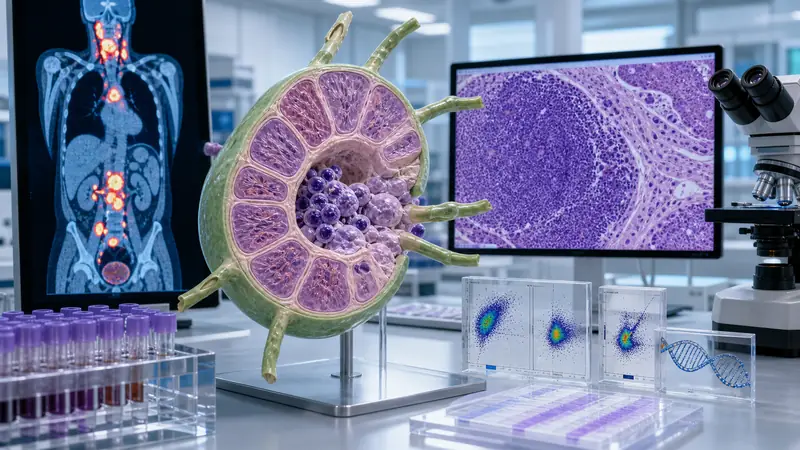
A useful diagnosis usually requires enough tissue to evaluate lymph-node architecture, cell appearance, immunohistochemistry, flow cytometry and selected chromosome or molecular findings. An excisional biopsy is often preferred when practical; a carefully planned core biopsy may be appropriate in other situations. Fine-needle aspiration alone may not provide enough information to classify lymphoma reliably.
Classical and Related B-Cell Disease
Age, symptoms, PET/CT findings, disease bulk and risk factors help shape treatment. Modern programs may include chemotherapy, checkpoint inhibition, antibody-drug conjugates and radiation in selected cases.
DLBCL, High-Grade and Burkitt Lymphomas
These diseases can progress quickly, so expert pathology and timely treatment matter. Initial therapy, salvage treatment, transplant, CAR T-cell therapy and bispecific antibodies may have roles.
Follicular and Marginal-Zone Lymphomas
Some people can be observed safely, while symptoms, threatened organs, cytopenias or increasing burden may prompt antibody-based, systemic or radiation treatment.
Mantle-Cell and T/NK-Cell Lymphomas
These require subtype-specific review. Biology, age, fitness, molecular features, skin involvement and prior therapy can substantially change the approach.
Expert Hematopathology and Staging Prevent the Wrong Treatment
When the diagnosis is new, unusual or relapsed, pathology review by a hematopathologist can confirm that the tissue and testing support the exact subtype. Depending on the case, testing may include CD markers, Ki-67, MYC, BCL2 and BCL6 studies, EBV testing, cyclin D1, SOX11, ALK, T-cell receptor studies or broader molecular profiling.
PET/CT is central for many FDG-avid lymphomas and can help with staging, response assessment and selection of a biopsy site. CT, bone-marrow evaluation, CBC with differential, comprehensive metabolic panel, LDH, viral screening and organ-function testing may also be needed. New fever, drenching night sweats or unintentional weight loss—the traditional “B symptoms”—should be documented along with itching, fatigue, pain and rapidly enlarging nodes.
Aggressive Lymphoma Should Not Wait for an investigational Alternative
Natural therapies can support strength, nutrition, symptoms and quality of life while timely hematology decisions address the behavior of an aggressive lymphoma. Rapidly growing disease can cause tumor lysis, airway or vascular compression, spinal-cord compromise and organ injury. Treatment can be time-sensitive and, for several lymphoma subtypes, potentially curative.
Treatment Can Combine Cytotoxic, Immune, Targeted and Cellular Strategies
The treatment sequence depends on subtype and risk, not simply the word lymphoma. Options may include chemotherapy, anti-CD20 antibodies, antibody-drug conjugates, checkpoint inhibitors, targeted oral medicines, involved-site radiation, autologous or allogeneic stem-cell transplant, CAR T-cell therapy, bispecific antibodies and clinical trials.
Response-adapted therapy uses follow-up imaging and clinical findings to refine the plan. At relapse, a new biopsy may be important because the disease can transform or its biology can change. The best next step also depends on prior response, time to relapse, blood counts, infections, heart and lung function, neuropathy, fertility goals and the person’s preferences.
At First Diagnosis
Confirm the subtype, complete staging, assess urgency and discuss the treatment goal—including whether cure, durable control or symptom relief is realistic.
During Active Treatment
Track response, blood counts, infection risk, nutrition, neuropathy, fatigue, sleep, activity and treatment-specific adverse effects.
At Relapse or Refractory Disease
Recheck pathology and eligibility for targeted agents, transplant, CAR T-cell therapy, bispecific antibodies and clinical trials.
In Remission or Observation
Support cardiovascular and metabolic health, strength, bone health, mental health, late-effect monitoring and a safe surveillance plan.
Help Preserve Strength, Comfort and Treatment Readiness

An individualized integrative plan may address:
- Protein, calorie intake, appetite and weight stability
- Safe aerobic and resistance activity for fatigue and function
- Sleep, anxiety, mood and uncertainty
- Nausea, bowel changes, neuropathy and pain
- Bone, heart and metabolic health during survivorship
- Infection prevention and oral health
- Recovery before or after transplant or cellular therapy
- Every herb, extract, vitamin and supplement being used
Natural and supportive therapies can be a positive part of lymphoma care when they are selected for a clear goal and coordinated with the treatment plan. Food-based nutrition, individualized exercise, relaxation training, mindfulness and acupuncture for selected symptoms may help people maintain function and quality of life. The plan should be adjusted when blood counts are low, infection risk rises or transplant and cellular therapies change safety requirements.
Selecting Natural Therapies During Lymphoma Treatment
Several lymphoma medicines depend on CYP3A and other metabolic pathways, and some increase bleeding, heart-rhythm or infection risk. Concentrated botanicals can alter drug levels, platelet function or immune signaling. High-dose antioxidants, immune-stimulating products, probiotics and live microbial products may also require special caution depending on chemotherapy, neutropenia, transplant or cellular therapy.
Sunridge’s approach is selective: identify the treatment and its timing, verify each product and dose, screen for interaction and contamination risk, introduce changes deliberately, and monitor symptoms and laboratory results. This creates a safer path for using helpful natural support without undermining proven treatment.
Before Anti-CD20 Therapy
Hepatitis B screening and a prevention plan are important because B-cell-directed antibodies can reactivate infection.
With Oral Targeted Drugs
Review grapefruit, St. John’s wort, concentrated extracts, acid-suppressing drugs and other products that may change exposure.
During Neutropenia
Use food-safety and infection precautions. Avoid unreviewed probiotics, live products and practices that can introduce bacteria through broken skin.
Around Transplant or CAR T
Follow the cellular-therapy team’s rules for supplements, infections, vaccinations and neurologic or inflammatory warning signs.
What We Review
Helpful records include the complete biopsy report, pathology slides or blocks when available, immunohistochemistry, flow cytometry, FISH/cytogenetic and molecular results, PET/CT and CT reports, CBC with differential, LDH, kidney and liver tests, bone-marrow results when performed and hepatitis B, hepatitis C or HIV screening as appropriate.
Please include the full treatment timeline, doses and response, radiation records, transplant or cellular-therapy records, echocardiogram or lung testing when relevant, current symptoms, infections, allergies and every prescription, nonprescription medicine, herb and supplement. We also want to understand sleep, nutrition, activity, support at home and the outcomes the patient values most.
Questions About Integrative Lymphoma Care
Do you work with both Hodgkin and non-Hodgkin lymphoma?
Yes, for adults. The plan must be based on the exact subtype, including whether the lymphoma is B-cell, T-cell or NK-cell and whether it behaves aggressively or indolently.
Can Stage IV lymphoma still be treated successfully?
Yes. Stage IV lymphoma is not automatically terminal. Prognosis and the possibility of cure or durable control vary widely by subtype, molecular features, age, health, treatment response and available therapies.
Can natural therapies cure lymphoma?
No natural therapy has been proven to replace effective lymphoma treatment. Integrative care may support nutrition, strength, symptoms and quality of life. We explain what is supported, what is uncertain and when delaying treatment could be dangerous.
Can I come while receiving chemotherapy, immunotherapy or targeted treatment?
Potentially. Many people seek integrative support during treatment. The plan must account for blood counts, infection risk, organ function, drug metabolism, bleeding risk and the timing of each treatment.
What if my lymphoma has returned or stopped responding?
Relapsed lymphoma may still have important options. Expert pathology review, repeat biopsy in selected cases and evaluation for targeted drugs, transplant, CAR T-cell therapy, bispecific antibodies or clinical trials can clarify the next step.
Will you coordinate with my hematologist or cellular-therapy team?
Yes. Coordination is especially important because treatment schedules, immune suppression, infections, blood counts and supplement interactions affect which supportive therapies are appropriate.
References
- National Cancer Institute. Advances in Lymphoma Research.
- National Cancer Institute. Adult Hodgkin Lymphoma Treatment (PDQ®)—Health Professional Version.
- National Cancer Institute. Aggressive B-Cell Non-Hodgkin Lymphoma Treatment (PDQ®).
- National Cancer Institute. Indolent B-Cell Non-Hodgkin Lymphoma Treatment (PDQ®).
- National Cancer Institute. Peripheral T-Cell Non-Hodgkin Lymphoma Treatment (PDQ®).
- National Cancer Institute. Epcoritamab-bysp.
- Exercise training and health-related quality of life in lymphoma survivors: randomized controlled trial evidence.
- Exercise interventions for adults with hematologic malignancies: systematic review.
- Exercise before and after hematopoietic stem-cell transplantation: systematic review and meta-analysis.
- Non-pharmacological interventions for symptoms and quality of life in hematologic cancers.
- National Cancer Institute. Cancer Therapy Interactions With Foods and Dietary Supplements (PDQ®).
This page is educational and does not replace diagnosis or treatment advice from a qualified hematologist, oncologist, radiation oncologist, transplant or cellular-therapy team. Treatment outcomes cannot be guaranteed.