

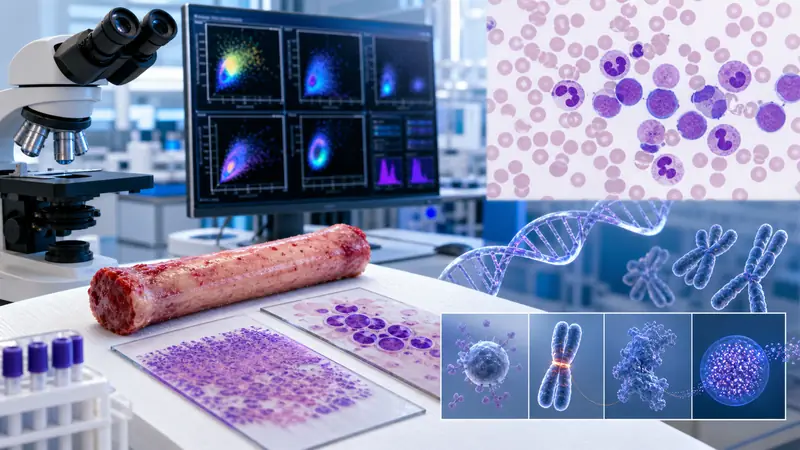
Subtype and Molecular Biology Determine the Treatment Plan
Leukemias arise in blood-forming cells but differ in lineage, speed and biology. Diagnosis may use a complete blood count and smear, bone-marrow aspirate and biopsy, flow cytometry, chromosome analysis, fluorescence in situ hybridization and molecular testing. Measurable residual disease (MRD) can help assess response in selected leukemias.
AML Often Requires Urgent, Molecularly Guided Treatment
Age, fitness, cytogenetics and alterations such as FLT3, IDH1/2 and NPM1 can affect induction, lower-intensity therapy, targeted treatment, transplant and trial options.
ALL Treatment Uses Multiple Phases
Lineage, Philadelphia chromosome/BCR::ABL1, central-nervous-system risk and MRD help guide chemotherapy, targeted therapy, immunotherapy and transplant decisions.
CML Is Tracked Molecularly
BCR::ABL1-targeted tyrosine-kinase inhibitors have transformed chronic-phase CML, with response monitored by quantitative PCR.
CLL May Be Observed or Treated
Asymptomatic disease may be monitored; symptoms, cytopenias, progression, TP53/del(17p), IGHV and overall health help determine when and how to treat.
Modern Leukemia Care Uses More Than Conventional Chemotherapy
Depending on subtype and setting, care may include intensive or lower-intensity chemotherapy, differentiating agents, BCR::ABL1, FLT3, IDH, BTK or BCL2 targeted medicines, monoclonal antibodies, bispecific antibodies, antibody-drug conjugates, CAR T-cell therapy, clinical trials and allogeneic stem-cell transplantation. Some people with CLL are appropriately observed without immediate treatment.
The sequence matters. Blood-count recovery, marrow response, MRD, mutations, organ function, infections, previous toxicity and transplant eligibility can change the next step. Sunridge’s role is to support the person and help keep an integrative plan compatible with the hematology plan—not to substitute one generic protocol for very different diseases.
Natural Therapies Can Support Resilience and Whole-Person Strength
Interest in nutrition, natural medicine and mind-body support is welcomed. Carefully selected strategies may help fatigue, sleep, anxiety, nausea, appetite, activity and general well-being. But low platelets, neutropenia, liver or kidney changes and transplant medicines alter what is safe. Herbs and supplements require individual review for bleeding, infection, liver metabolism, immune stimulation, QT effects and interactions with oral targeted drugs, chemotherapy or conditioning regimens.
Protect Strength, Nutrition and Quality of Life Without Missing Urgent Risks

An individualized leukemia support plan may address:
- Neutropenia, infection precautions and prompt fever reporting
- Platelet count, bruising and bleeding risk
- Anemia, fatigue and safe activity
- Nausea, mouth sores, appetite and protein-calorie intake
- Sleep, anxiety, mood and cognitive concerns
- Medication adherence and oral targeted-therapy timing
- Transplant preparation and recovery priorities
- Review of every herb, probiotic, supplement and nonprescription medicine
Food-safety and infection advice should follow the treating team, particularly during severe neutropenia or after transplant. “Immune boosting” is not a sufficient safety standard: live-microbial products, raw foods, concentrated botanicals and high-dose nutrients may be inappropriate in certain phases. Exercise, mindfulness and behavioral support have evidence for selected cancer-related fatigue, anxiety and quality-of-life concerns, but intensity must reflect blood counts, fever, dizziness, bone pain and current treatment.
When Patients Come to Sunridge
At Diagnosis
We review the exact subtype, marrow findings, cytogenetics, molecular results, urgency and treatment plan before suggesting supportive strategies.
During Induction, Consolidation or Maintenance
Care may focus on nutrition, nausea, fatigue, sleep, activity, stress and screening every natural product for interaction and infection risk.
During Observation or Long-Term Targeted Therapy
Support may address adherence, cardiovascular or metabolic risk, symptoms, laboratory trends and sustainable daily routines.
After Transplant or With Relapsed Disease
We coordinate around immunosuppression, graft-versus-host concerns, infections, organ function, previous response, symptoms and goals.
What We Review
Helpful records include the exact leukemia diagnosis, bone-marrow pathology, flow cytometry, cytogenetics/FISH, molecular results, MRD testing when applicable, recent complete blood counts with differential, transfusion history, liver and kidney tests, infection history, treatment timeline, transplant evaluation and complete medication and supplement list.
We also want to understand fevers, bruising, bleeding, fatigue, shortness of breath, mouth sores, appetite, weight, sleep, anxiety, neuropathy and the goals that matter most. Those details help shape a plan that is medically coherent and appropriate for the current treatment phase.
Questions About Integrative Leukemia Care
Do you work with acute and chronic leukemias?
Yes, for adults. The plan must be built around the exact subtype and treatment phase. Acute leukemia usually requires urgent hematology treatment; integrative support is coordinated around that plan.
Can I come while receiving chemotherapy or a targeted leukemia medicine?
Potentially. Many patients seek supportive care during treatment. Every supplement must be reviewed for blood-count effects, bleeding, infection, liver metabolism, QT effects and drug interactions.
Why do cytogenetic and molecular results matter?
Findings such as BCR::ABL1, FLT3, IDH1/2, NPM1, TP53, del(17p), IGHV and others can help classify disease, estimate risk, choose targeted treatment and monitor response.
Can natural therapies replace leukemia treatment?
No natural therapy has been proven to replace curative or disease-controlling leukemia treatment. Integrative approaches may support selected symptoms and quality of life. Sunridge explains what is supported, what is uncertain and where delay could be dangerous.
Is watchful waiting the same as doing nothing?
No. In selected asymptomatic CLL, observation is an evidence-based strategy involving regular blood counts, examinations and symptom review. Treatment begins when defined progression or symptom criteria are met.
Will you work with my hematologist or transplant team?
Yes. Communication is essential because blood counts, infection risk, drug levels, immunosuppression and treatment timing can change quickly.
References
- National Cancer Institute. Leukemia—Health Professional Information.
- National Cancer Institute. Acute Myeloid Leukemia Treatment (PDQ®).
- National Cancer Institute. Adult Acute Lymphoblastic Leukemia Treatment (PDQ®).
- National Cancer Institute. Chronic Myeloid Leukemia Treatment (PDQ®).
- National Cancer Institute. Chronic Lymphocytic Leukemia Treatment (PDQ®).
- National Cancer Institute. Advances in Leukemia Research.
- National Cancer Institute. Infection and Neutropenia During Cancer Treatment.
- National Cancer Institute. Cancer Therapy Interactions With Foods and Dietary Supplements (PDQ®).
- Society for Integrative Oncology–ASCO guideline for anxiety and depression symptoms in adults with cancer.
- ASCO–Society for Integrative Oncology guideline update for cancer-related fatigue.
- Exercise after bone-marrow transplantation: systematic review and meta-analysis.
This page is educational and does not replace diagnosis or treatment advice from a qualified hematology team. Treatment outcomes cannot be guaranteed.