


Poor sleep can both contribute to chronic fatigue and become worse because of it. A natural approach to insomnia and chronic fatigue considers sleep alongside factors such as stress, nutrition, and underlying health conditions. For chronic fatigue syndrome, fatigue must last at least six months and be accompanied by at least four additional symptoms.
If exhaustion persists despite rest, it can be hard to tell whether disrupted sleep is the cause, one contributing factor, or part of a more complex picture. Your experience is real. Looking at possible influences together can provide a clearer starting point.
This article explains chronic fatigue and explores five approaches that may support sleep and energy: stress management, complementary therapies, nutrition, sleep habits, and possible contributors such as post-viral conditions or thyroid dysfunction. These strategies do not replace evaluating what may be driving persistent symptoms. They can, however, help you consider the issue more fully and identify practical topics to discuss with a healthcare professional.
Key Takeaways
- Recognize how persistent, nonrestorative sleep and other symptoms can fit into the broader picture of chronic fatigue.
- Explore calming routines and gentle mind-body practices that may support stress regulation without overexertion.
- Learn why supplements and complementary therapies call for careful consideration alongside your existing care.
- Identify nourishing food choices and possible nutrient gaps that may affect energy.
- Consider potential contributors, including post-viral conditions, thyroid dysfunction, autoimmune disease, and disrupted sleep.
1. What is Chronic Fatigue?
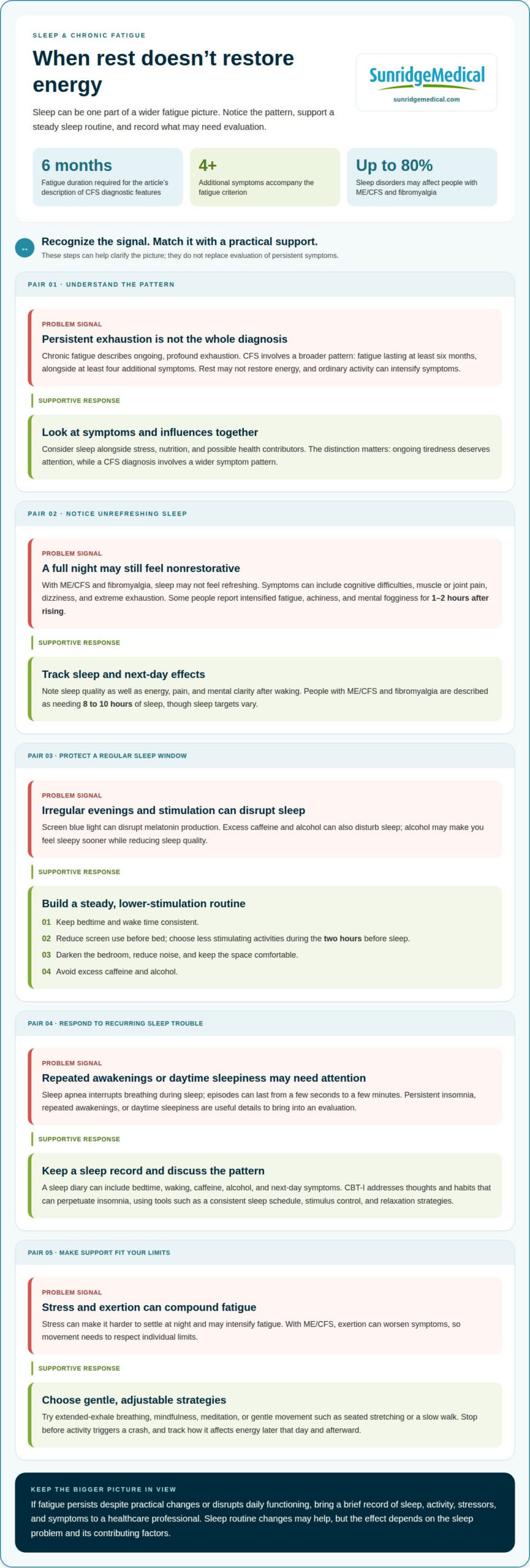
Chronic fatigue describes persistent, profound exhaustion, while chronic fatigue syndrome (CFS) has specific diagnostic features. Fatigue must last at least six months, along with at least four additional symptoms. Rest may not restore energy, and ordinary activity can intensify symptoms. The distinction matters: ongoing tiredness deserves attention, while a CFS diagnosis involves a broader pattern.
For people with ME/CFS and fibromyalgia, sleep may feel unrefreshing even after a full night. Symptoms can include cognitive difficulties, muscle or joint pain, dizziness, and extreme exhaustion. Physical or mental activity may worsen them, and rest may not fully relieve them. Some people experience intensified fatigue, achiness, and mental fogginess for one to two hours after rising. Sleep disorders may affect as many as 80% of people with ME/CFS and fibromyalgia.
A steady routine can support sleep quality and circadian rhythm. Keep bedtime and wake time consistent, reduce screen use before bed, and choose less stimulating activities during the two hours before sleep. Blue light from screens can disrupt melatonin production. Darken the bedroom, reduce noise, and keep the space comfortable to protect a regular sleep window. Avoid excess caffeine and alcohol, which can disrupt sleep. Alcohol may make you feel sleepy sooner while reducing sleep quality.
How does cognitive behavioral therapy for insomnia (CBT-I) work, and how can I find it? CBT-I addresses thoughts and habits that can perpetuate insomnia, using tools such as a consistent sleep schedule, stimulus control, and relaxation strategies. Search clinician directories for “CBT-I,” or ask a healthcare professional about finding a clinician trained in this approach.
How much sleep do adults need, and how long should it take for sleep changes to help? The sleep target varies; people with ME/CFS and fibromyalgia are described as needing 8 to 10 hours. The effect of routine changes depends on the sleep problem and its contributing factors, so track sleep and daytime energy to notice patterns.
Sleep-disrupting conditions can also undermine a routine. Sleep apnea, for example, interrupts breathing during sleep, with episodes that can last from a few seconds to a few minutes. Persistent insomnia, repeated awakenings, or daytime sleepiness are useful details to record and discuss during an evaluation. A sleep diary can track bedtime, waking, caffeine, alcohol, and next-day symptoms.
Over-the-counter sleep aids and prescription medicines are not interchangeable. Prescription examples used to help maintain sleep include doxepin, amitriptyline, and nortriptyline. A clinician can consider your symptoms, other medicines, and possible sleep disorders before discussing medication. This is especially relevant when fatigue persists despite changes to the bedroom, evening routine, and screen habits.
2. Stress management and nervous system regulation
Stress can make it harder to settle at night and may intensify fatigue. A useful stress-management plan targets specific moments, such as racing thoughts at bedtime or tension after demanding tasks. Try extended-exhale breathing: inhale gently, then make each exhale longer. Repeat for several minutes while seated comfortably. This steady rhythm gives your attention a focus and may help interrupt escalating tension.
Mindfulness, meditation, yoga, and Tai Chi offer structured ways to notice stress without adding strenuous activity. For example, a brief body scan can move attention gradually from the feet toward the shoulders. Mindfulness-based stress reduction combines practices such as meditation and gentle awareness exercises. A consistent practice can help you identify situations that precede symptoms and choose a calming response. The aim is not to force relaxation, but to build routines that support balance and sleep.
Gentle movement can support emotional regulation when it respects your body’s limits. Consider seated stretching, a slow walk, or a few restorative yoga poses. With ME/CFS, exertion can worsen symptoms, so activity should be individualized and stopped before it triggers a crash. Track how movement affects your energy later that day and afterward. That pattern is more informative than judging an activity only by how it feels in the moment.
Asking for help is part of practical care, not a failure of willpower. A trusted person can help reduce a specific pressure, such as preparing meals or handling an errand during a difficult period. A therapist can help address anxiety or low mood that accompanies chronic illness. Stress practices do not replace evaluation for medical contributors; vitamin B12 deficiency, for example, can also affect energy.
When should insomnia and persistent fatigue be evaluated by a doctor? Arrange an evaluation when symptoms persist despite practical changes, disrupt daily functioning, or occur with other concerning changes in health. Bring a brief record of sleep, activity, stressors, and symptoms so the clinician can see patterns. Circadian timing also matters: shifts in the body’s daily rhythm can affect sleep and hormone patterns, including cortisol secretion. If fatigue accompanies concerns about hormone function, Hormone Optimization Therapy may be relevant to discuss as part of care. A plan that considers stress alongside possible medical factors can better address the full picture.
Other mind-body options include meditation, yoga, and mindfulness-based stress reduction, which are recommended for managing stress and improving sleep quality in people with CFS. Mindfulness and meditation are also stress-management techniques. Gentle movement, including yoga, Tai Chi, walking, stretching, or light exercise, may help reduce stress without overexertion and can be part of a lifestyle approach for people with CFS.
Cognitive behavioral therapy may help reduce ME/CFS symptoms and associated depression, stress, and anxiety, although its benefits remain uncertain. Taking a warm bath several hours before sleep may help you relax.
3. Herbal remedies, supplements, and complementary therapies
Supplements are not interchangeable, and a long list does not make a plan more effective. Start by identifying the goal: improving sleep, supporting nutrition, or addressing fatigue. Examples discussed for sleep include magnesium, valerian root, and melatonin. CoQ10, NAD+, L-carnitine, and alpha-lipoic acid are used as mitochondrial-support supplements. Each choice should fit the person’s symptoms, diet, and current treatment plan.
Magnesium has roles beyond sleep. According to the National Institutes of Health, Office of Dietary Supplements, magnesium supports over 300 enzymatic reactions, including reactions involved in energy production and nervous system balance. It also supports muscle function. That role does not mean a supplement will restore energy or resolve insomnia; the rationale depends on a person’s needs and overall health.
For mitochondrial support, some studies suggest NADH, magnesium, or omega-3 fatty acid supplements may benefit people with chronic fatigue syndrome. CoQ10 and NAD+ are also described as potential options. These supplements are not a substitute for addressing sleep disruption, nutrition, or other contributors. Record what you take, why you started it, and any changes in sleep, muscle symptoms, or daytime energy. Reviewing that record makes it easier to evaluate one change at a time.
What are safe ways to manage chronic fatigue while improving sleep? Pair a consistent sleep routine with activity that respects your limits, and avoid pushing through exercise when it worsens symptoms. Before adding supplements, discuss the product and your current medicines with a healthcare professional, who can help assess suitability and monitor side effects.
Natural sleep remedies still warrant care. Valerian, melatonin, and magnesium can have unwanted effects, and combining supplements with prescription or over-the-counter medicines may complicate care. Treating a symptom without considering your full regimen can carry risks. Share product names and doses with a clinician before combining them, and note any new symptoms after a change.
Complementary therapies offer other options for symptom support. Some studies suggest acupuncture may reduce mental and physical fatigue and depression in people with ME/CFS. Certain massage approaches, including tui na, may help with pain, fatigue, depression, and insomnia. These therapies may complement a broader plan, but evidence for alternative treatments remains limited. Choose a therapy based on the symptom you want to address, and track changes in sleep and daily function.
Gut-focused supplements, including probiotics and prebiotics, are intended to support beneficial gut bacteria. Consider them in context rather than assuming they will address fatigue on their own. A personalized approach considers diet, existing supplements, medicines, sleep patterns, and symptom changes together. This helps distinguish a useful addition from an unnecessary one.
4. Anti-inflammatory foods and nutrition
Food provides the protein, fats, carbohydrates, and micronutrients the body uses for energy. A whole-food pattern can include berries, leafy greens, fatty fish, and turmeric. These foods provide a range of nutrients and are often included in anti-inflammatory eating plans. No single ingredient addresses every cause of fatigue. A natural approach to insomnia and chronic fatigue can consider the overall food pattern, meal regularity, and whether symptoms change after particular foods.
Build meals from different components rather than relying on a single “energy” food. Pair eggs, legumes, meat, or nuts with quinoa, brown rice, or sweet potatoes. Add avocado or olive oil for unsaturated fats, alongside vegetables such as spinach or kale. This combination provides protein and complex carbohydrates and makes meals more substantial. Record meals and energy afterward to notice personal patterns.
Vitamin B12 and iron deficiencies can affect energy levels. Basic blood work can help assess nutrient status, including iron stores. Suggested optimal serum ferritin ranges are 40-100 µg/L for women and 50-130 µg/L for men. These figures are reference points, not a reason to begin iron independently. A clinician considers test results, symptoms, diet, and other health factors before addressing a suspected deficiency.
Personalized nutrition starts with what you eat and how your body responds. Keep a food and symptom record that includes meal timing, caffeine, and changes in sleep or fatigue. If a particular food seems to trigger symptoms repeatedly, note the context rather than removing multiple foods at once. This helps distinguish a consistent pattern from a one-time fluctuation and supports a targeted discussion about possible imbalances. In a natural approach to insomnia and chronic fatigue, this record can help guide practical dietary changes.
Digestion can matter, too. A compromised gut may contribute to fatigue through inflammation or impaired nutrient absorption. Persistent digestive discomfort alongside low energy is useful information to share during an assessment. A varied diet with fruits, vegetables, legumes, and other tolerated whole foods provides a practical starting point. Restrictive eating without a clear reason can make it harder to meet nutrient needs.
Nutrition plans should reflect appetite, food preferences, activity limits, and any identified deficiencies. If fatigue makes meal preparation difficult, try simple options such as eggs with greens, canned fish with brown rice, or nuts alongside fruit. Hydration also supports bodily function and energy. Rather than expecting one food to restore stamina, track which meals are manageable and sustaining, then adjust your eating pattern with qualified guidance.
5. Potential contributors to chronic fatigue
Chronic fatigue syndrome is not the only explanation for persistent exhaustion. Fatigue can follow a viral or bacterial infection, including long COVID, when immune, mitochondrial, or nervous system function is disrupted. Thyroid dysfunction and autoimmune disease can also present with fatigue. These possibilities matter because the right response depends on what contributes to symptoms, not just how tired you feel.
Consider sleep-related causes alongside daytime symptoms. Sleep apnea can interrupt breathing during sleep, while nighttime blood sugar dysregulation and altered circadian cortisol secretion can affect sleep quality. Notice patterns such as repeated waking, unrefreshing sleep, or energy changes at particular times. A record of sleep and daytime function gives a clinician concrete information to assess.
Other clues can point toward specific conditions. Seek medical evaluation for witnessed breathing pauses, waking while gasping, or persistent sleepiness; an urge to move your legs that disrupts rest; unusual weakness or breathlessness; or fatigue accompanied by cold intolerance, unexplained weight changes, or persistent low mood. These symptoms can have different causes, so describe when they began and how they affect daily function.
Context matters. Physical or emotional trauma may precede chronic fatigue, and having relatives who struggle with fatigue is associated with a greater likelihood of developing it. A clinician assessing fatigue may ask about sleep routines, daytime and nighttime habits, eating, exercise, and current or past stressors. Note when symptoms began, whether they followed an infection, and whether movement worsens them afterward. These details help distinguish a persistent fatigue syndrome from short-term tiredness.
Laboratory findings can add context, but a single result does not explain every symptom. Insulin, nutrient status, immune conditions, and post-viral changes may also be considered. The useful next step is to connect test results with symptoms, sleep, and daily function rather than treating a number in isolation.
Build a concise symptom timeline before an appointment. Include changes in sleep, eating, activity, mood, and energy, plus any infection or major stressor preceding the fatigue. Note whether ordinary movement causes a delayed worsening, since that pattern can guide discussion of safe activity. For a broader evaluation of persistent fatigue and possible underlying contributors, explore a comprehensive medical assessment.
Sunridge Medical: Alternative Cancer Treatment Protocols
Sunridge Medical offers Alternative Cancer Treatment Protocols and care for complex chronic conditions that may be relevant when fatigue has an underlying medical contributor. Its services include Chronic Lyme Disease Treatment, Autoimmune Disease Management, and Hormone Optimization Therapy. This care addresses those specific conditions, not insomnia itself.
If persistent fatigue occurs alongside a diagnosed or suspected condition such as Lyme disease, autoimmune disease, or a hormone concern, exploring condition-focused care may be a useful next step. Sunridge Medical combines conventional therapies with research-based alternative treatments to develop individualized care plans. Contact Sunridge Medical to discuss whether its care may fit your health concerns.
Take the Next Step Toward More Informed Care
Persistent fatigue can make planning feel uncertain, especially when sleep and daily functioning remain difficult. A natural approach to insomnia and chronic fatigue can include supportive routines, but lasting progress also depends on understanding the broader health picture. Keep a clear record of what changes your symptoms and bring it into conversations about your care.
If an underlying condition may be contributing, focus your next discussion on your symptoms, health history, and priorities. Sunridge Medical offers condition-focused care, including Alternative Cancer Treatment Protocols, Chronic Lyme Disease Treatment, and Autoimmune Disease Management. These services address specific conditions, not insomnia in general.
For a thoughtful next step, contact Sunridge Medical to discuss your health concerns. A clearer understanding of the factors affecting your well-being can help you move forward with greater confidence.
Frequently Asked Questions
What is Chronic Fatigue?
Chronic fatigue is persistent exhaustion; chronic fatigue syndrome (CFS) describes a more specific pattern. A CFS diagnosis requires fatigue lasting at least six months, plus at least four additional symptoms. These may include cognitive difficulties, muscle or joint pain, and dizziness. Symptoms can worsen after physical or mental activity and may not fully improve with rest. Recording symptom changes over time can help distinguish a brief energy dip from an ongoing problem.
What causes insomnia and chronic fatigue, and what medical conditions should be ruled out?
Insomnia and persistent fatigue can have several contributors, so evaluation considers sleep and overall health. Relevant possibilities include sleep apnea, thyroid dysfunction, autoimmune disease, and fatigue following an infection, including long COVID. Iron or vitamin B12 deficiency can also affect energy. A clinician may review sleep patterns, diet, activity, stressors, and health history, then consider which assessments fit the symptoms rather than assuming one cause explains everything.
Which natural sleep habits and lifestyle changes have the strongest evidence for insomnia?
No single habit suits every sleep problem, but a consistent schedule is a practical foundation: keep wake time steady, reduce stimulating evening activities, and make the bedroom dark and comfortable. Limiting screens before bed can reduce exposure to blue light, which disrupts melatonin production. A simple sleep log can reveal whether late caffeine, alcohol, or irregular bedtimes coincide with difficult nights, helping you focus changes on the patterns that matter.
Do melatonin, magnesium, valerian, or other supplements help insomnia, and what are the risks?
Melatonin, magnesium, and valerian are used as possible sleep aids, but they are not risk-free or guaranteed solutions. Supplements may cause side effects, and combining them with prescription or over-the-counter medicines can complicate care. Before trying one, write down the product and dose, then review them with a healthcare professional. This helps assess potential interactions and gives you a clearer way to track changes.
Can diet, caffeine, alcohol, or exercise affect sleep quality and daytime fatigue?
Yes. Caffeine can remain in the body for hours, so late-day coffee may interfere with sleep; alcohol can make falling asleep easier while reducing sleep quality. Balanced meals with adequate protein and micronutrients support energy needs, while iron or vitamin B12 deficiency can contribute to fatigue. Exercise requires particular care with ME/CFS, since physical exertion may worsen symptoms. Track meals, drinks, activity, and next-day sleepiness to spot patterns.