
Regenerative & restorative medicine · Scottsdale, Arizona
Regenerative Medicine
A physician-directed approach to joint pain, soft-tissue injury and function—beginning with the diagnosis, then comparing the treatment options that genuinely fit.
“Regenerative medicine” is often used as a broad marketing phrase. At Sunridge, it means something more practical: understand the structure involved, the health of the surrounding tissue, the forces acting on it and the patient’s capacity to recover. Then choose an injection, supportive therapy or rehabilitation strategy for a defined reason.
Diagnosis before procedureUltrasound-informed decision makingWhole-person recovery plan
You do not need to decide which injection to request.
Tell us where you hurt, what movement has changed and what has already been tried. A useful consultation starts by clarifying the problem—not by fitting every patient into a procedure.
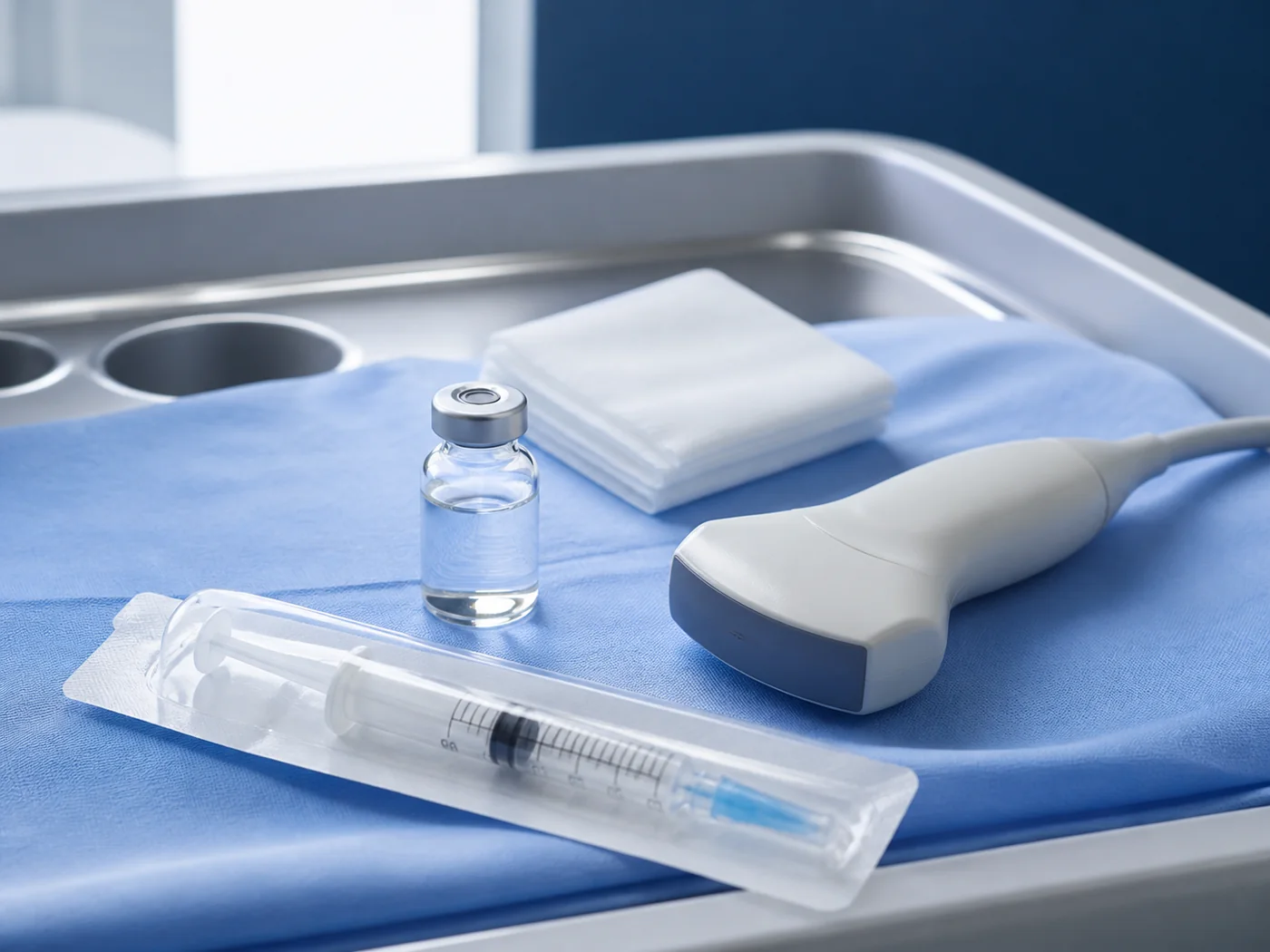
Regenerative medicine consultation
Speak With Our Patient Care Team
Tell us where you hurt, what limits your movement and which treatments you have already tried. We will help you prepare for a physician review.
* Required fields
Prefer to speak with someone now?
1-800-923-7878 - Joint and soft-tissue concerns are welcome
- Your diagnosis and goals guide the options
- Questions before scheduling are always welcome
Start with the person and the structure
Regenerative Care Is More Than an Injection
Pain may come from cartilage, tendon, ligament, muscle, fascia, joint lining, nerve irritation—or several of these at once. The same scan can also mean different things in two different people.
Identify the likely pain generator
History, examination, previous imaging and, when useful, diagnostic ultrasound help the physician decide which structure deserves attention.
Understand why recovery stalled
Movement patterns, repeated load, deconditioning, sleep, nutrition, metabolic health, inflammation and medication history can influence the healing environment.
Choose a treatment for a purpose
An option should have a clear goal: improve joint mechanics, support tissue recovery, reduce an obstacle to rehabilitation or help a patient return to meaningful activity.
Measure function—not promises
Progress is followed through pain, mobility, strength, tolerance for activity and the patient’s real-world goals. No injection can guarantee tissue regrowth or eliminate every source of pain.
The naturopathic perspective: use the least force necessary, support the conditions that allow repair and treat the whole person while remaining honest about structural damage and the limits of available evidence.
Explore the treatment pathways
Regenerative and Restorative Options at Sunridge
These treatments are not interchangeable. The appropriate option depends on the diagnosis, tissue, severity, prior treatment, medical history and goal.
Platelet-Rich Plasma (PRP)
A concentration prepared from the patient’s own blood and placed at a selected tissue or joint. Protocols and evidence vary by condition.
Explore PRP therapy →Stem Cell Therapy
A careful discussion of cell-based products, source, regulatory status, evidence and whether the proposed use is appropriate for the individual.
Understand stem cell therapy →Prolozone Therapy
An injection approach that may combine local anesthetic, nutrients and medical ozone. It should not be confused with established dextrose prolotherapy evidence.
Explore Prolozone therapy →Hyaluronic Acid Injections
Viscosupplementation intended to change the joint environment and symptoms for selected patients, with candidacy and expectations discussed openly.
Explore hyaluronic acid injections →Neural & Scar Therapy
Targeted evaluation of painful scars and areas where local tissue or nervous-system irritation may be contributing to a persistent pattern.
Explore neural and scar therapy →Red Light & Diathermy
Noninvasive supportive treatments that may be used around movement and recovery goals rather than presented as stand-alone tissue cures.
Red light therapy →Diathermy therapy →An honest side-by-side view
How the Options Differ
The label “regenerative” does not establish that a treatment rebuilds normal tissue. Ask what is being used, why it fits the diagnosis, what evidence applies and how response will be judged.
Option
What it is
Questions to discuss
PRP
Autologous platelet concentrate prepared from blood.
Target tissue, preparation method, injection guidance, condition-specific evidence and rehabilitation plan.
Hyaluronic acid
A gel-like joint injection often described as viscosupplementation.
Which joint, arthritis severity, prior treatment and the fact that professional guidelines differ on routine use.
Dextrose prolotherapy
An irritant injection approach, commonly using hypertonic dextrose.
Diagnosis, protocol, number of sessions and the limited-to-moderate certainty of evidence for specific conditions.
Prolozone
An ozone-containing injection approach used by some integrative clinicians.
Exact ingredients, technique, rationale and why evidence for dextrose prolotherapy cannot simply be transferred to Prolozone.
Cell-based products
A broad category that may involve different sources and processing methods.
Product identity, FDA status, sterility, evidence, cost, alternatives and potential risks. “Stem cell” is not a complete product description.
Common reasons people contact Sunridge
Problems That May Lead to a Regenerative Medicine Review
A consultation may be useful when pain or loss of function persists despite a reasonable first course of care—or when someone wants a more complete review before deciding on another procedure.
Osteoarthritis & chronic joint pain
Knee, hip, shoulder and other joint concerns require a realistic discussion of severity, mechanics, inflammation, movement and available nonsurgical or surgical choices.
Read about osteoarthritis →Explore chronic joint pain →Tendon, ligament & soft-tissue injury
Persistent tendinopathy, sprain or overuse pain may require load modification, strength progression and diagnostic clarification alongside any procedure.
Explore soft-tissue pain →Recovery that has plateaued
When symptoms return each time activity increases, the plan may need to address biomechanics, recovery capacity and how rehabilitation is being progressed.
A second look before escalation
Some patients want another perspective before long-term medication, repeated corticosteroid injection or surgery. A review does not assume those options are wrong; it clarifies choices.
Whole-person clinical evaluation
What We Look at Before Recommending a Procedure
A procedure works inside a living system. Tissue health, joint mechanics, general health and the recovery plan all matter.
- The pain story: onset, injury, location, aggravating movement, instability, weakness, swelling and what has helped.
- The structure: examination, prior X-ray or MRI findings and whether ultrasound could clarify the target.
- The load: work, sport, footwear, movement pattern, strength and the amount of stress the tissue receives.
- The terrain: sleep, protein and nutrient intake, smoking, blood-sugar regulation, hormones, medications and systemic inflammation.
- The goal: walk farther, sleep without pain, return to a sport, avoid repeated flare-ups or make a well-informed surgical decision.
Imaging is important, but it does not replace the clinical picture. Many degenerative findings occur in people without pain. The task is to connect symptoms, examination, function and imaging rather than treating a scan alone.
A deliberate care process
What to Expect at Sunridge
01 · ConversationTell us what changed
Share the injury or symptom timeline, activity limits, prior procedures and the outcome you want.
02 · Physician reviewClarify the diagnosis
Review records, examine the area and decide whether more imaging or testing would change the plan.
03 · OptionsCompare reasonable paths
Discuss rehabilitation, supportive therapies, injection choices, conventional care and situations that need referral.
04 · Follow-throughProtect the recovery window
Use aftercare, progressive loading and reassessment to learn whether function is truly improving.
Evidence, uncertainty and honest expectations
Regenerative Medicine Deserves Precise Language
Evidence is condition-specific. A positive study for one preparation, joint or diagnosis does not prove that every “regenerative” treatment works for every form of pain. PRP and dextrose prolotherapy have encouraging evidence for selected musculoskeletal conditions, but protocols vary and stronger comparative trials are still needed. Hyaluronic acid recommendations differ among organizations. Cell-based products require particular attention to product identity and regulatory status.
Important safety note: The FDA warns that many regenerative products marketed for orthopedic pain and other conditions are unapproved. Ask exactly what is being administered, where it comes from, how it was processed and what regulatory pathway applies. Risks can include infection, inflammatory or immune reactions, unintended tissue growth and procedural complications.
Sunridge does not promise that an injection will regrow cartilage, reverse advanced arthritis or replace a needed surgery. We help patients understand where a treatment may fit, where evidence is uncertain and which outcomes are realistic enough to measure.
Selected patient and research resources
- FDA: Important information about regenerative medicine therapies
- AAOS: Management of osteoarthritis of the knee—patient summary
- AAOS: Hyaluronic acid and knee osteoarthritis guidance
- Systematic review and meta-analysis: dextrose prolotherapy for osteoarthritis
- Systematic review: PRP and bone-marrow aspirate concentrate compared with hyaluronic acid
Common questions
Questions About Regenerative Medicine
Which treatment is best for arthritis?
There is no single best injection for every person. The joint, diagnosis, arthritis severity, symptoms, prior care, medical history, goals, cost and evidence all influence the decision.
Can these treatments replace surgery?
Sometimes a nonsurgical plan can improve symptoms and function enough to postpone or avoid surgery. It cannot reliably correct every structural problem. Progressive weakness, instability, fracture, infection or advanced joint failure may require specialist or surgical care.
How many treatments will I need?
That depends on the diagnosis and procedure. Before beginning, ask about the proposed series, total cost, recovery schedule, stopping rules and how success will be measured.
Is stem cell therapy FDA approved for joint pain?
The FDA states that regenerative medicine products have not been approved for orthopedic conditions such as osteoarthritis, tendonitis, back pain or joint pain. Product and regulatory details should be reviewed carefully before treatment.
Can I continue exercising?
Often yes, with modification. The tissue and procedure determine what to limit and how activity is progressed. A good plan makes rehabilitation part of treatment rather than an afterthought.
Your next step
Start With a Thoughtful Review
You do not need to arrive knowing whether PRP, Prolozone, hyaluronic acid, a cell-based treatment or another approach is right. Tell us what is limiting your life. Our Patient Care Team can explain what records are useful and whether a physician consultation may be an appropriate next step.