

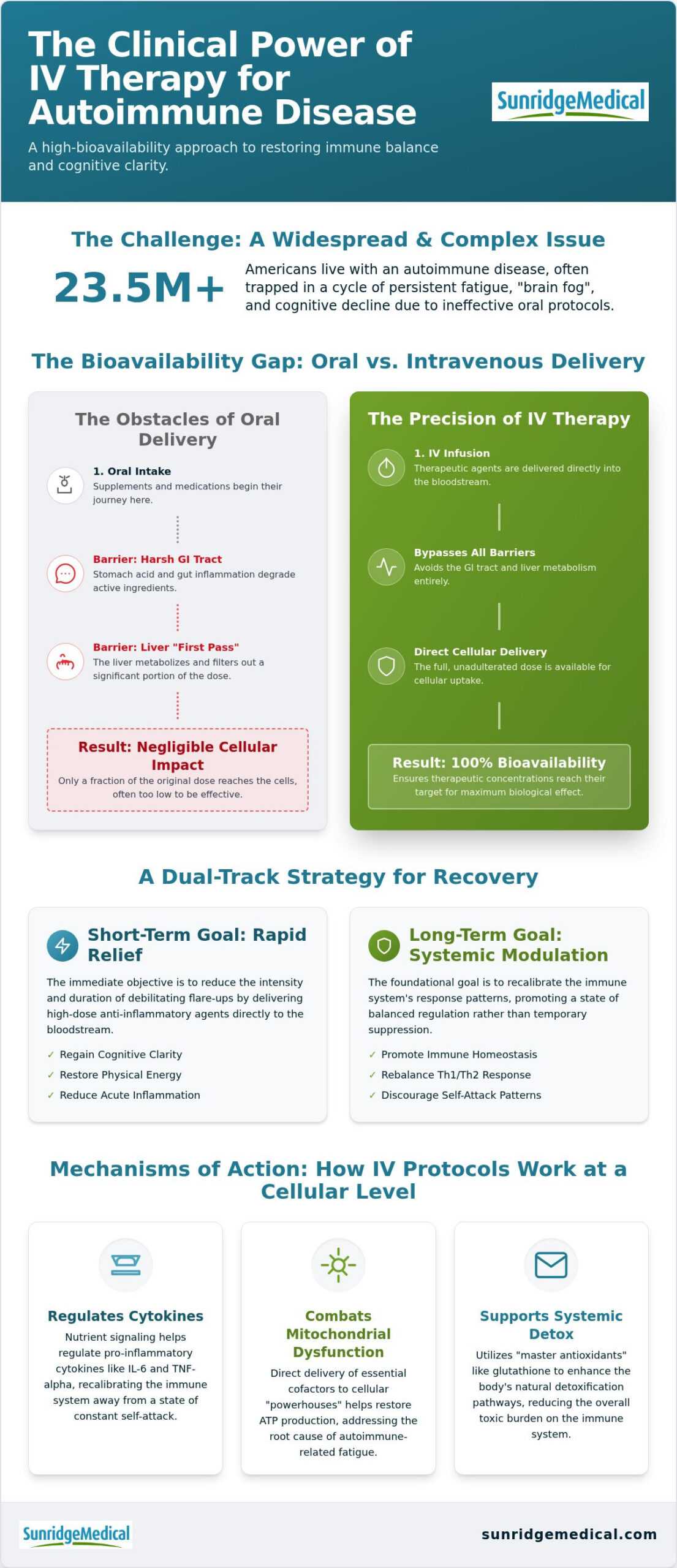
Over 23.5 million Americans currently live with an autoimmune disease, yet many find that standard oral protocols leave them trapped in a cycle of persistent fatigue and cognitive decline. If you’ve struggled with “brain fog” that won’t lift or gastrointestinal issues that make oral supplements ineffective, you’re not alone. Clinical research is shifting toward precision delivery. Today, iv therapy for autoimmune disease has emerged as a vital tool for those whose bodies require a more direct path to cellular recovery.
We understand the frustration of relying on medications that don’t seem to move the needle and the fear of long-term steroid dependency. You deserve a strategy that addresses the root cause of immune dysfunction rather than just masking the symptoms. In this clinical guide, you’ll discover how high-bioavailability intravenous therapies provide a sophisticated path to immune modulation. We’ll explore the latest 2026 medical breakthroughs, including the recent FDA approval of targeted therapies like Nipocalimab, and explain how a customized treatment plan can help you regain cognitive clarity and reduce systemic inflammation markers.
Key Takeaways
- Learn why intravenous delivery is essential for bypassing gastrointestinal malabsorption and ensuring the high-bioavailability nutrient signaling required for cellular repair.
- Understand the role of advanced protocols in regulating pro-inflammatory cytokines and utilizing “master antioxidants” like glutathione to support systemic detoxification.
- Discover the clinical differences between nutritional, oxidative, and biological infusions when designing a targeted plan for iv therapy for autoimmune disease.
- Explore how comprehensive diagnostic testing identifies the environmental triggers and biochemical imbalances that often drive chronic, multi-systemic immune dysfunction.
- Gain insight into the Sunridge philosophy of individualized care, which prioritizes a multi-faceted approach to restoring long-term wellness and cognitive clarity.
The Clinical Role of IV Therapy in Autoimmune Disease Management
The medical landscape of 2026 has witnessed a definitive shift from “wellness hydration” to sophisticated clinical integrative therapy. While recreational IV bars focus on general fatigue, iv therapy for autoimmune disease serves as a targeted medical delivery system for complex biological modulators. This transition is driven by the need for precision. Patients facing multi-systemic illness require more than a standard vitamin mix; they need a delivery method that addresses systemic inflammation and oxidative stress at a foundational level. By utilizing direct vascular access, we bypass the physiological barriers that often render traditional treatments ineffective.
Bioavailability remains the primary challenge in managing chronic autoimmunity. Oral medications and supplements must survive the harsh environment of the stomach and the metabolic “first-pass” through the liver before reaching the systemic circulation. For a healthy individual, this process is manageable. However, for those with compromised systems, the amount of active ingredient that actually reaches the cells is often negligible. IV protocols eliminate this uncertainty, ensuring that therapeutic agents are delivered at the exact concentrations required to trigger a biological response.
The Gut-Immune Connection and Malabsorption
Chronic inflammation doesn’t stay localized; it frequently targets the digestive lining, leading to increased intestinal permeability, commonly known as “Leaky Gut.” This condition creates a significant “absorption gap” in patients with conditions like Lupus and Rheumatoid Arthritis. When the gut is inflamed, it cannot effectively transport nutrients across the intestinal wall, leaving the patient malnourished despite a healthy diet. IV therapy bypasses this damaged barrier entirely. It ensures 100% nutrient and medication utilization, providing the cellular fuel necessary for repair without taxing an already stressed digestive system.
Immediate vs. Long-Term Clinical Objectives
Our clinical approach prioritizes a dual-track strategy for recovery. In the short term, the objective is rapid symptom relief. By delivering high-dose anti-inflammatory agents directly into the bloodstream, we can reduce the intensity and duration of debilitating flare-ups. This provides the patient with the immediate cognitive clarity and physical energy needed to engage with their broader treatment plan.
The long-term goal is systemic modulation. Through advanced protocols like Immunoglobulin therapy, we work toward recalibrating the immune system’s response patterns. This isn’t about temporary suppression; it’s about promoting long-term immune homeostasis. IV therapy is a precision-calibrated medical intervention for immune homeostasis. By consistently providing the body with the specific biochemical signals it lacks, we create an environment where the immune system can move away from self-attack and toward a state of balanced regulation.
Mechanisms of Action: How Intravenous Protocols Modulate the Immune System
Effective management of autoimmunity requires more than just suppressing the immune system. While many conventional biologics focus strictly on blocking inflammatory receptors, iv therapy for autoimmune disease utilizes nutrient signaling to regulate the production of pro-inflammatory cytokines such as IL-6 and TNF-alpha. This process helps recalibrate the Th1/Th2 immune response balance, which is often skewed in chronic illness. By providing the body with the specific biochemical precursors it needs, we can encourage the immune system to transition from a state of constant self-attack toward a more controlled and balanced state of regulation.
Mitochondrial dysfunction is another critical factor often overlooked in standard care. Autoimmune-related fatigue isn’t merely a lack of sleep; it’s a cellular energy crisis where the mitochondria fail to produce adequate ATP. Intravenous protocols deliver essential cofactors directly to these “cellular powerhouses,” bypassing the absorption issues that plague oral supplementation. This direct delivery helps restore energy production at the source, providing the physical resilience necessary for long-term recovery. If you’re seeking a more comprehensive strategy, our team can help you develop an individualized autoimmune protocol tailored to your unique biochemical markers.
Cellular Detoxification and Oxidative Stress
Oxidative stress acts as a persistent fuel for autoimmune flares, creating a cycle of tissue damage and immune activation. High-dose Vitamin C serves as a potent neutralizer of free radicals, protecting healthy cells from the collateral damage of a hyperactive immune response. We also place a heavy emphasis on the “Master Antioxidant,” Glutathione. When administered intravenously, Glutathione bypasses the digestive tract to maximize liver clearance and reduce the systemic toxin load. This level of detoxification is essential for clearing the environmental triggers that frequently sustain chronic inflammation.
Neurological Protection and Brain Fog Recovery
The blood-brain barrier is highly sensitive to systemic inflammation. When this barrier becomes permeable, inflammatory markers enter the central nervous system, resulting in the cognitive impairment patients describe as “brain fog.” Our protocols support neurological health by utilizing neuro-specific nutrient infusions. B-complex vitamins and NAD+ play vital roles in cognitive restoration, helping to repair damaged neurons and improve mental clarity. By linking systemic immune health to specialized brain fog treatment, we address the neurological symptoms of autoimmunity through a sophisticated, research-based lens that prioritizes the restoration of total well-being.
Comparing Advanced IV Protocols: Nutritional vs. Oxidative vs. Biological
Standard medical models often categorize intravenous care into narrow silos, but true recovery requires a multi-faceted approach. While many clinics offer “off-the-shelf” bags, advanced iv therapy for autoimmune disease relies on personalized compounding. Pre-mixed solutions lack the precision needed to address the specific biochemical imbalances found in complex chronic illness. Instead, we utilize three distinct pillars of intravenous care: nutritional, oxidative, and biological protocols. Nutritional infusions go beyond the basic Myers’ cocktail, incorporating specialized minerals to rebuild the cellular foundation. Biological protocols target the underlying infections, such as Chronic Lyme or Epstein-Barr Virus (EBV), that frequently act as the silent triggers for autoimmune dysfunction.
It’s important to understand that a one-size-fits-all approach doesn’t work for a system in crisis. By the time many patients reach our care in 2026, they’ve already tried standard oral supplements without success. Our clinical focus is on creating a synergy between these different delivery methods. By combining the foundational support of nutrients with the targeted action of biological modulators, we provide the body with the comprehensive tools it needs to move out of a state of chronic inflammation.
The Role of Oxidative Therapy in Immune Training
Oxidative therapies, including medical-grade ozone and Ultraviolet Blood Irradiation (UBI), represent a sophisticated shift in immune management. Unlike suppressive drugs, these therapies use controlled oxidative stress to “train” the immune system. This process stimulates a dysfunctional immune response, encouraging the body to recognize and address chronic viral loads that may be driving the autoimmune process. Research-based administration ensures a high safety profile, making these protocols a powerful option for patients who have plateaued with conventional treatments.
Nutrient Synergies for Specific Conditions
Each autoimmune condition presents a unique biochemical signature, requiring specific nutrient synergies for optimal results. For Hashimoto’s thyroiditis, the focus often shifts to Selenium and Zinc to support thyroid conversion alongside targeted adrenal support. Patients with Multiple Sclerosis may benefit from high-dose Alpha Lipoic Acid and neuro-protective nutrients to support myelin health. In cases of Lupus or Rheumatoid Arthritis, we prioritize potent anti-inflammatory blends and collagen precursors to protect joint integrity and reduce the frequency of systemic flares. This level of customization ensures that every infusion serves as a direct step toward immune homeostasis.
The Path to Personalization: Assessing Candidacy and Clinical Outcomes
Standard rheumatology often relies on generic markers like ANA or ESR to determine eligibility for conventional biologics. While these tests provide a baseline, they rarely reveal the underlying drivers of immune dysfunction. In 2026, the clinical standard for iv therapy for autoimmune disease requires a deeper investigation into environmental triggers and the accumulation of heavy metals that may be overstimulating the immune system. We also evaluate biochemical imbalances through hormone optimization therapy, as endocrine health is inextricably linked to immune regulation. This comprehensive assessment ensures that your protocol is a precise response to your body’s specific needs rather than a standardized template.
Diagnostic Precision in Integrative Medicine
Identifying the “Root Cause” explains why two patients with the same diagnosis often require entirely different intravenous formulations. One patient with Rheumatoid Arthritis might be struggling with a high viral load, while another may have severe mineral deficiencies or toxic exposures. Individualized diagnostics are the prerequisite for effective IV therapy. We monitor progress through a combination of inflammatory markers and functional improvements, such as increased mental clarity and physical stamina. This data-driven approach allows our medical team to pivot the protocol as your biochemistry shifts toward health.
Integrating IV Therapy with Lifestyle and Oral Support
We often describe our infusions as providing a “Bridge Effect.” While we address the immediate symptoms and cellular deficiencies, the IVs provide the stability needed to implement necessary changes in diet and stress management. Our protocols are designed to coordinate with existing treatments, including alternative cancer treatment or other chronic illness management plans. This holistic integration ensures that no aspect of your health is ignored during the recovery process, allowing for a smooth transition from intensive clinical care to long-term wellness.
A typical clinical IV session lasts between 60 and 120 minutes, depending on the complexity of the compounded infusion. Our medical team provides constant monitoring to ensure safety and comfort throughout the process. Treatment frequency is highly individualized. Most patients begin with an intensive loading phase, often two to three times per week, before transitioning into a maintenance schedule as their systemic inflammation markers stabilize. If you’re ready to move beyond the status quo, schedule a consultation for a personalized autoimmune assessment to determine your candidacy for advanced intravenous care.
Advanced Integrative IV Care at Sunridge Medical
Sunridge Medical represents a sanctuary for those who have navigated the standard rheumatology system without finding lasting relief. We recognize that many individuals feel overlooked by traditional medicine, which often focuses on symptom suppression rather than systemic restoration. Our philosophy is rooted in a research-based, alternative approach to complex chronic disease. Under the clinical direction of Dr. Steven S. Isaacman, who has led our center since 2003, we provide iv therapy for autoimmune disease that is fundamentally different from standardized infusions. We don’t just offer vitamin drips; we design precision-calibrated protocols that address the unique biochemical needs of each patient.
While wellness spas might prioritize a relaxing atmosphere, we maintain a high level of professional gravity and clinical precision. Our facility is a specialized center for those facing multi-systemic illnesses that require more than standard care. We provide nationwide access to our integrative protocols, ensuring that geographical boundaries don’t limit your ability to receive premiere medical attention in 2026. This commitment to exclusivity and high-level care ensures that every patient receives the specialized attention their condition demands.
Why Patients Choose Sunridge for Autoimmune Management
Many of our patients come to us with complex, overlapping conditions that have failed to respond to conventional biologics. We are recognized as lyme disease specialists who understand how chronic infections can trigger and sustain autoimmune responses. This expertise in multi-systemic illness allows us to treat the root cause rather than just the outward symptoms. Our commitment is to combine the safety of conventional medical standards with the innovative efficacy of alternative research. We act as your dedicated advocate, providing personalized clinical monitoring throughout every stage of your recovery journey. This level of specialized attention is what sets our iv therapy for autoimmune disease apart from standard practices.
Next Steps: Initiating Your Personalized Protocol
The path to restoration begins with a comprehensive consultation. This process involves a meticulous review of your medical history followed by advanced diagnostic mapping to identify your specific triggers, environmental toxicities, and hormonal deficiencies. We don’t rush the process. Instead, we build a logical case for your treatment, ensuring you feel fully informed and supported.
To begin your journey, you can contact our center via our toll-free 1-800 number for immediate support and guidance. Our team coordinates closely with your broader healthcare team, ensuring that your integrative care plan is a seamless addition to your overall health strategy. We are here to act as a steady hand as you navigate your way back to cognitive clarity and physical well-being. Your recovery is our calm determination.
Reclaiming Your Health Through Precision Medicine
Transitioning from a state of chronic inflammation to one of stability requires a departure from standardized care. We’ve explored how bypassing the “absorption gap” through direct vascular access ensures the delivery of essential modulators that the gut often fails to absorb. By addressing mitochondrial dysfunction and neutralizing oxidative stress, iv therapy for autoimmune disease provides a sophisticated mechanism for immune recalibration. This approach moves beyond temporary symptom masking, focusing instead on the restoration of cellular health and cognitive clarity.
Since 2003, Sunridge Medical has specialized in these individualized protocols for complex chronic diseases. Led by Medical Director Dr. Steven S. Isaacman, our center provides comprehensive physician evaluations for every patient to identify the environmental and biochemical triggers unique to your health journey. You don’t have to navigate this complex path alone. Contact Sunridge Medical to schedule your personalized autoimmune consultation and take a definitive step toward physical resilience. We believe in the possibility of progress and are here to act as your steady clinical guide.
Frequently Asked Questions
Is IV therapy safe for patients with multiple autoimmune diseases?
Yes, iv therapy for autoimmune disease is specifically designed to manage complex, multi-systemic conditions. Since many patients present with overlapping diagnoses, our individualized protocols focus on the common biochemical pathways driving inflammation. Dr. Isaacman conducts a comprehensive physician evaluation to ensure the formulation addresses all active symptoms. This personalized approach allows us to support the body’s recovery without overtaxing a compromised immune system, providing a safer alternative to one-size-fits-all treatments.
How quickly can I expect to see results from autoimmune IV therapy?
Response times vary based on the severity of your condition and specific biochemical needs. Many patients report improvements in mental clarity and energy levels within the first few sessions of their loading phase. However, systemic immune recalibration is a steady process that typically unfolds over several months. We monitor inflammatory markers closely throughout 2026 to track your progress. Long-term recovery depends on consistent delivery of the nutrients and modulators required to reset cellular signaling.
Can I receive IV therapy while taking standard immunosuppressants or biologics?
Most patients can safely integrate these protocols with their existing medication regimens. Our physician-led team coordinates with your broader healthcare providers to ensure that iv therapy for autoimmune disease complements standard biologics or immunosuppressants. The goal is often to provide the nutritional and oxidative support your body needs while you’re on suppressive therapies. This integrative strategy helps mitigate the side effects of conventional drugs and addresses the underlying dysfunction they might overlook.
How often do I need to receive IV infusions for long-term maintenance?
Treatment frequency is determined by your initial diagnostic mapping and functional progress. Most protocols begin with an intensive loading phase, which often involves two or three infusions per week for several weeks. Once we observe a reduction in systemic inflammation and a stabilization of symptoms, we transition to a maintenance schedule. This typically involves monthly infusions or quarterly “boosters” to sustain immune homeostasis and prevent the recurrence of debilitating flares.
What is the difference between medical IV therapy and wellness spa drips?
Clinical IV therapy is a sophisticated medical intervention, whereas wellness spa drips are generally limited to basic hydration and low-dose vitamins. Our protocols utilize research-based alternative terminology and therapeutic concentrations of biological modulators. Every infusion is physician-led and customized to address complex chronic disease. We focus on medical necessity and root-cause resolution, providing a level of professional gravity and clinical precision that isn’t available in a recreational spa environment.
Can IV therapy help prevent autoimmune flare-ups?
Reducing the frequency and intensity of flare-ups is a primary objective of our integrative protocols. By neutralizing free radicals and regulating pro-inflammatory cytokines, we help the body maintain a state of immune homeostasis. This proactive management prevents the “tipping point” where oxidative stress triggers a full-scale systemic attack. Consistent maintenance therapy ensures your cells have the antioxidants and nutrients needed to remain resilient against environmental or emotional stressors that typically cause flares.
Are there any side effects associated with oxidative or nutrient IVs?
While these therapies are generally well-tolerated, some patients experience temporary reactions as their body detoxifies. For example, oxidative protocols may trigger a mild “Herxheimer” response, which includes temporary fatigue or flu-like symptoms as the body clears cellular debris. These effects are usually short-lived and indicate that the therapy is successfully stimulating the immune system. Our clinical team provides continuous monitoring and personalized support to manage any discomfort and adjust your protocol as needed.
Does IV therapy address the root cause of autoimmune dysfunction?
Yes, our protocols are specifically engineered to identify and address the environmental and biochemical drivers of immune dysfunction. We don’t just mask symptoms; we investigate heavy metal toxicity, chronic viral loads, and hormonal imbalances that overstimulate the immune system. By targeting these foundational issues, we provide a more comprehensive path to recovery than standard rheumatology. This focus on the individual human experience allows us to foster progress that is both meaningful and sustainable.