


Remission is a transition, not a signal that every concern should disappear. You may feel relief and still wonder what a new symptom means, how often you need follow-up, or whether lingering fatigue and worry are part of recovery. Finding the right life after cancer remission support can help you address those questions without facing them alone.
It’s understandable to want clear answers and a plan that reflects your cancer history, treatment, and current needs. This guide explains the medical, emotional, and practical support that may be useful after remission, and how to prepare for focused conversations with your oncology team.
You’ll learn what to ask about follow-up visits, ongoing effects, and concerns about recurrence, as well as ways to explore counseling, peer support, and practical resources. If you’re considering an additional or alternative approach, discuss it with your oncology team so it can be considered alongside, not instead of, recommended follow-up care. There’s no single path through this phase, but informed next steps can make it feel more manageable.
Key Takeaways
- Remission doesn’t necessarily end follow-up care. Ask your oncology team for a written plan tailored to your cancer history.
- Compare medical, emotional, peer, and practical support options to identify what fits your current needs.
- Gather your records and prepare questions so conversations with your care team lead to clear next steps.
- Evaluate life after cancer remission support carefully. Question unverified claims, guaranteed outcomes, and advice to stop prescribed treatment.
- Choose one priority to address first, then adjust your support plan as your needs change.
What Life After Cancer Remission Can Feel Like, and Why Support Still Matters
Reaching remission can bring profound relief, but it doesn’t always provide a clear boundary between treatment and “normal life.” Appointments may become less frequent while questions remain: What symptoms should I report? How will I know what follow-up I need? Why do I feel unsettled when I expected to feel only grateful? There’s no single right response. Relief, uncertainty, grief, and hope can exist side by side.
What does remission mean after cancer treatment?
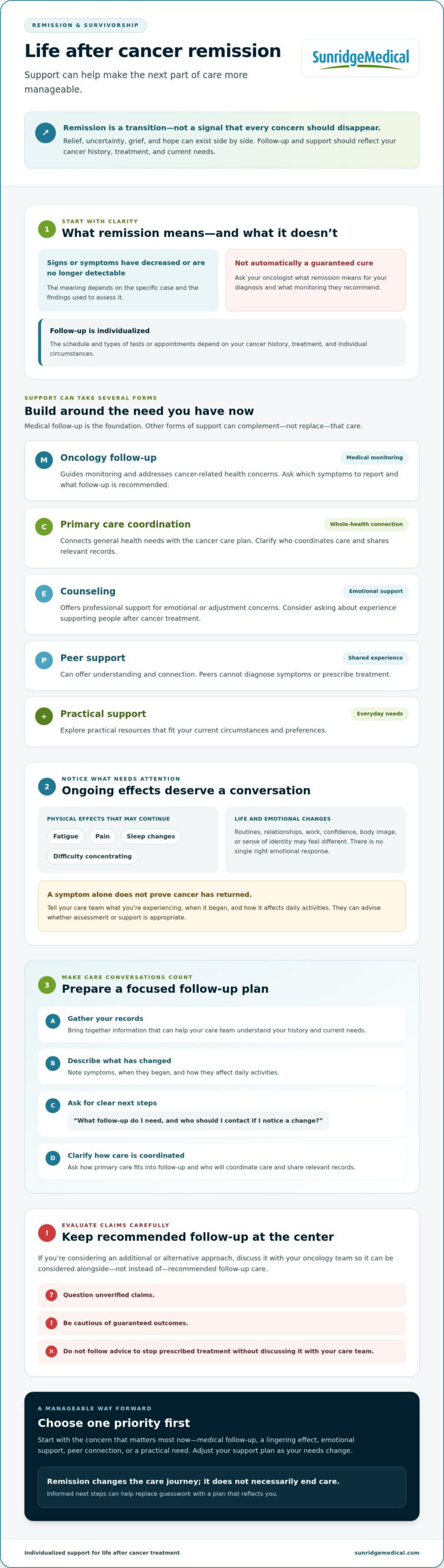
In plain language, remission means that signs or symptoms of cancer have decreased or are no longer detectable, depending on how the term is used in a specific case. It isn’t automatically the same as a guaranteed cure, and its meaning can depend on the cancer and the findings used to assess it. Ask your oncologist what remission means for your diagnosis and what monitoring they recommend.
Follow-up isn’t one-size-fits-all. The schedule and types of tests or appointments depend on your cancer history, treatment, and individual circumstances. Before leaving an appointment, consider asking, “What follow-up do I need, and who should I contact if I notice a change?” A clear answer can replace guesswork with a plan.
Why can support still matter after active treatment?
Active treatment often gives daily life a structure. When it ends, routines and relationships may shift, and returning to work or familiar responsibilities can feel different than expected. Some people find that their confidence, body image, or sense of identity has changed. Others want to acknowledge the experience without making cancer the focus of every conversation.
Physical effects such as fatigue, pain, sleep changes, or difficulty concentrating can also continue after treatment. These symptoms deserve discussion with a clinician, but they don’t, by themselves, prove that cancer has returned. Tell your care team what you’re experiencing, when it began, and how it affects daily activities. They can advise whether assessment or support is appropriate.
Remission marks a change in the care journey, not necessarily the end of care. The broader concept of a cancer survivor can include a person from diagnosis onward, recognizing that survivorship may involve physical, emotional, and social needs beyond active treatment.
That’s why life after cancer remission support may include more than scheduled medical visits. Depending on your situation, you might discuss lingering symptoms with your oncology team, ask how primary care fits into follow-up, or seek emotional or practical support. The goal isn’t to follow a prescribed emotional script. It’s to identify what matters to you now and bring those needs into conversations with your care team.
Which Types of Cancer Remission Support May Help You?
Support after active treatment can take several forms. The most useful combination depends on your health history, current concerns, and preferences. Medical follow-up remains the foundation for monitoring your health. Counseling, peer connection, and practical guidance can complement that care, not replace it.
How do clinical follow-up and survivorship care differ from peer support?
Your oncology team recommends monitoring based on your diagnosis, treatment, and individual circumstances. A primary care clinician may help address general health needs, but clarify with your oncology team who coordinates care and shares relevant records. The National Cancer Institute explains what may go into a follow-up care plan. Peers can offer understanding and connection, but they can’t diagnose symptoms or prescribe treatment.
| Support option | Purpose | Who may find it useful | Questions to ask |
|---|---|---|---|
| Oncology follow-up | Guide monitoring and address cancer-related health concerns. | Anyone who needs a plan for ongoing medical care. | What follow-up do you recommend, and which symptoms should I report? |
| Primary care coordination | Connect general health needs with the cancer care plan. | People balancing oncology visits with other health concerns. | Who will coordinate my care and share records? |
| Counseling | Offer professional support for emotional or adjustment concerns. | Those seeking private, one-to-one conversations. | What experience do you have supporting people after cancer treatment? |
| Peer support | Provide shared experience and a sense of connection. | People who want to talk with others who understand cancer-related challenges. | Is the group moderated, and how is privacy handled? |
| Practical navigation | Help identify resources and organize practical next steps. | Those facing questions about logistics, work, or finding services. | What can you help with, and are there costs? |
How can you choose counseling, navigation, or a support group?
Start with what feels most pressing. If you prefer focused, individual conversations, ask about counseling. If you want shared experience, check whether a group’s format and privacy practices feel comfortable. For logistical concerns, clarify what a navigator can and cannot do. Before deciding, ask each provider about cancer-specific experience, accessibility, confidentiality, evidence-informed practices, and costs.
For a broader view of how conventional and additional approaches may be discussed together, explore integrative oncology as a topic and bring questions about any additional care to your oncology team. If you’re considering individualized medical input about complex care, you can learn about individualized cancer care and discuss any proposed approach with your oncology team before making changes to your care.
How to Build a Practical Life After Cancer Remission Support Plan
A manageable plan turns broad concerns into questions and next steps. It doesn’t need to anticipate everything. Start with the information you have, then refine the plan with your oncology team and other clinicians involved in your care.
- Gather your records. Collect treatment summaries, test results, medication information, and contact details for your care team. Ask for copies if you’re missing key documents.
- Clarify follow-up. Request a written plan that explains recommended visits or monitoring, who coordinates care, and how to reach the right clinician with a concern.
- List what’s on your mind. Note symptoms, treatment effects, questions about screening or medicines, and practical challenges such as getting to appointments.
- Identify support. Decide whether help from a trusted person, counselor, rehabilitation professional, or peer group could address a priority.
What should you discuss at a follow-up appointment?
Ask which monitoring is recommended for your cancer history and why that schedule fits your circumstances. Bring up new or persistent symptoms, including when they started and how they affect daily life. Ask what changes call for prompt medical attention and whom to contact. Also clarify which clinician manages prescriptions, preventive care, and referrals, especially if you see more than one provider.
A brief written record can help you describe patterns accurately. Note the date, what you experienced, and any effect on sleep, movement, work, or routine. This is a communication aid, not a way to diagnose yourself. Your care team can help interpret the information and decide whether an evaluation is needed.
How can you organize day-to-day support?
Choose one or two trusted people who could help with a specific task, such as keeping appointment notes, arranging transportation, or handling an everyday responsibility during a difficult week. Be clear about what would be useful. Support can be practical as well as emotional.
Consider counseling, rehabilitation, or peer support based on your goals and your clinician’s guidance. For example, you might ask whether a rehabilitation referral could address a treatment-related limitation, or seek counseling if adjusting to changed routines feels difficult. Your preferences matter, including whether you want individual support or a group setting.
Gather your records, confirm follow-up, write down concerns, and choose one source of support to explore. This gives life after cancer remission support a practical starting point while leaving room to adjust as your needs change.
How to Evaluate Remission Support Claims and Additional Care Options
Support can help address wellbeing and practical needs, but a service’s promises deserve careful review. Be cautious of guaranteed outcomes, claims to cure cancer or prevent recurrence, or pressure to stop prescribed treatment. These are reasons to pause and discuss the recommendation with your oncology team before making a decision.
Separate the stated goal from the evidence. A service may aim to support comfort or general wellbeing. That is different from demonstrating that it treats cancer or prevents it from returning. Ask what evidence supports the specific claim, whether it comes from independent sources, and what remains uncertain. Clear answers should include limitations, possible risks, and what the service cannot promise.
What questions help assess a cancer support service?
Before you proceed, ask who provides the service and what qualifications or relevant cancer-care experience they have. Find out what the service is intended to do, what evidence supports that purpose, what risks or interactions may apply, and how its providers will coordinate with your oncology team. Request written details you can review and share with your clinicians.
If a recommendation would change established cancer care, such as stopping a prescribed medicine or skipping follow-up, seek guidance from your oncology team and consider an independent second opinion. You deserve time to review options without pressure.
Where can integrative care fit after remission?
Integrative care involves considering conventional and additional approaches in a coordinated way, with the goals and evidence made clear. For example, you might raise a supportive approach with your clinicians to discuss its potential role, risks, and compatibility with your care plan. An alternative protocol should not be treated as proven recurrence prevention or a replacement for recommended oncology follow-up.
If you’re exploring care options, look for a guide to integrative cancer treatment by stage and bring relevant questions to your oncology team. The word “integrative” alone doesn’t establish that a service is safe or effective for your circumstances. What matters is transparent information, informed discussion, and a plan that doesn’t disrupt recommended monitoring or treatment.
For an individualized discussion about complex care options, explore a consultation with Sunridge Medical. Review any additional approach with your oncology team so your clinicians can consider coordination and safety alongside your follow-up plan.
Finding Your Next Step With Ongoing, Individualized Cancer Support
There’s no single checklist that fits everyone after remission. Your concerns may shift over time, and the support that helps now may differ from what you need later. A plan can be adjusted as your health, priorities, and daily life change. You don’t have to resolve every question at once. Start with one step that feels manageable.
What can you do this week to feel more supported?
Set aside a few minutes to write down the questions or concerns that matter most right now. They might involve follow-up timing, a symptom you want to discuss, or an emotional or practical challenge. Then choose one action:
- Contact your oncology team to clarify follow-up, ask about a symptom, or request a referral.
- Identify one practical or emotional support resource you’d like to explore, such as a counseling option or peer group.
- Ask someone you trust to help with a specific next step, such as making a call or attending an appointment.
Small, clear actions can make life after cancer remission support feel less abstract. If you’re not ready to reach out to a new resource, simply keeping your questions together for your next appointment is a useful beginning.
When might an individualized medical consultation be useful?
If you have questions about complex care or are considering an additional approach, an individualized medical consultation may give you an opportunity to discuss your circumstances and relevant care considerations. Bring your treatment history and questions, and ask what is known, what remains uncertain, and how any proposed approach would be coordinated with your oncology team. Your oncologist’s recommendations for monitoring and follow-up remain central. An additional consultation should not replace them.
Sunridge Medical is a comprehensive medical center that offers individualized care plans for cancer and complex conditions, combining conventional therapies with research-based alternative approaches. This is an option for discussing complex care questions, not a dedicated remission-support program or a promise of a particular outcome. Share any recommendations with your oncology team before changing prescribed care or follow-up.
If a broader, individualized discussion would be useful, you can contact Sunridge Medical. Whatever you choose, keep your next step grounded in your own priorities and coordinated with the clinicians who know your cancer history. Support can evolve with you.
Take Your Next Step With Confidence
Remission can bring relief alongside new questions, and support can change as your needs do. A clear follow-up plan from your oncology team remains the foundation. Keep track of concerns, ask who coordinates your care, and explore emotional or practical resources that feel relevant to you. When considering additional care, look for transparent evidence and discuss potential risks and coordination with your clinicians.
The right life after cancer remission support is personal. You can begin with one question, one conversation, or one resource rather than trying to plan everything at once.
Sunridge Medical offers medical consultations and individualized care plans. If you have broader questions about complex care, discuss your individual care questions with Sunridge Medical. Consider any additional approach alongside, not instead of, your oncology team’s recommendations for follow-up.
Your next step doesn’t need to be the whole path. Start with what matters most today, and allow your support plan to grow with you.
Frequently Asked Questions
Does remission mean cancer is gone forever?
No. Remission means signs or symptoms of cancer have decreased or are no longer detectable, but it doesn’t guarantee that cancer will never return. The meaning depends on your diagnosis and clinical findings. Ask your oncology team what remission means in your case, what follow-up they recommend, and which symptoms or changes you should report. Continue the monitoring and care plan they provide, even when you’re feeling well.
What support is available after cancer treatment ends?
Support may include oncology follow-up, coordination with primary care, counseling, peer groups, and practical help with referrals or daily needs. The right combination depends on your concerns and preferences. For life after cancer remission support, start by asking your oncology team about a written follow-up plan and referrals for ongoing symptoms or emotional concerns. Peer and practical services can complement medical care, but they don’t replace clinician-led follow-up.
Is it normal to feel anxious after cancer remission?
Feeling anxious after remission can be a common response to uncertainty, changes in care routines, or concern about symptoms. You don’t have to feel only relieved, and your emotions don’t follow a schedule. If worry is affecting sleep, relationships, work, or daily activities, tell your oncology team or primary care clinician. They can help you consider options such as counseling or a support group suited to your needs.
How often should I see my doctor after cancer remission?
There isn’t one schedule that applies to everyone. Your oncology team’s recommendations depend on factors such as your cancer history, treatment, and individual circumstances. Ask which clinician will oversee follow-up, what visits or tests are recommended, and how the plan may change over time. If you have a new or persistent symptom, contact your care team for guidance rather than waiting for the next routine appointment.
Can I use complementary or alternative care after cancer remission?
Possibly, but discuss any complementary or alternative approach with your oncology team before starting it. Share details about medicines, supplements, or therapies so clinicians can consider potential risks, interactions, and coordination with your care plan. Be cautious of claims to cure cancer or prevent recurrence, guaranteed results, or pressure to stop prescribed treatment. Additional approaches shouldn’t replace recommended oncology follow-up or treatments.
What should I ask my oncologist after remission?
Ask what remission means for your diagnosis and what follow-up is recommended based on your treatment history. Clarify which symptoms to report, when to seek prompt medical attention, and whom to contact with questions. You can also ask who coordinates care with your primary care clinician, whether any screening or medication reviews are needed, and what referrals may help with ongoing physical or emotional concerns. Bring written questions to your visit.
Where can I find support if my cancer type is not covered by a support group?
You can still seek support through groups for people affected by cancer broadly, individual counseling, or a social worker or patient navigator who can help identify relevant resources. Ask your oncology team whether they know of options that match your needs, including virtual groups if attending in person is difficult. Before joining, check whether the group welcomes people with different diagnoses and whether its format and privacy practices feel comfortable.
To discuss individualized care options for cancer or complex conditions, contact Sunridge Medical and share any recommendations with your oncology team.