


What if the most useful approach to preventing cancer recurrence naturally isn’t a strict diet or supplement, but a considered plan built around your health and treatment history? It’s understandable to want practical steps after treatment, especially when online advice makes confident promises. Yet no lifestyle change or natural product can guarantee that cancer won’t return.
There are meaningful ways to support your well-being, but evidence varies by measure and cancer type. This article explains what healthy eating, physical activity, and other lifestyle choices may contribute, where evidence has limits, and why ongoing oncology follow-up remains essential. It also explains why supplements and alternative therapies deserve careful review before you try them.
You’ll find guidance for distinguishing supportive integrative care from approaches that replace proven treatment, along with questions to raise with your oncology team. A personalized discussion can account for your diagnosis, current medications, and survivorship goals, helping you consider safer, realistic next steps that fit your care.
Key Takeaways
- Understand what recurrence risk reduction can realistically mean, including the difference between local and distant recurrence.
- Compare the purpose and strength of evidence for follow-up care, lifestyle habits, and supplements when considering preventing cancer recurrence naturally.
- Identify practical health goals involving movement, food, tobacco, alcohol, sleep, and emotional support that can be tailored to your needs.
- Use a step-by-step approach to review your survivorship plan, keep recommended appointments and tests, and discuss changes with your care team.
- Learn how individualized integrative care may be discussed alongside conventional oncology, without treating it as a proven way to prevent recurrence.
What Does Preventing Cancer Recurrence Naturally Really Mean?
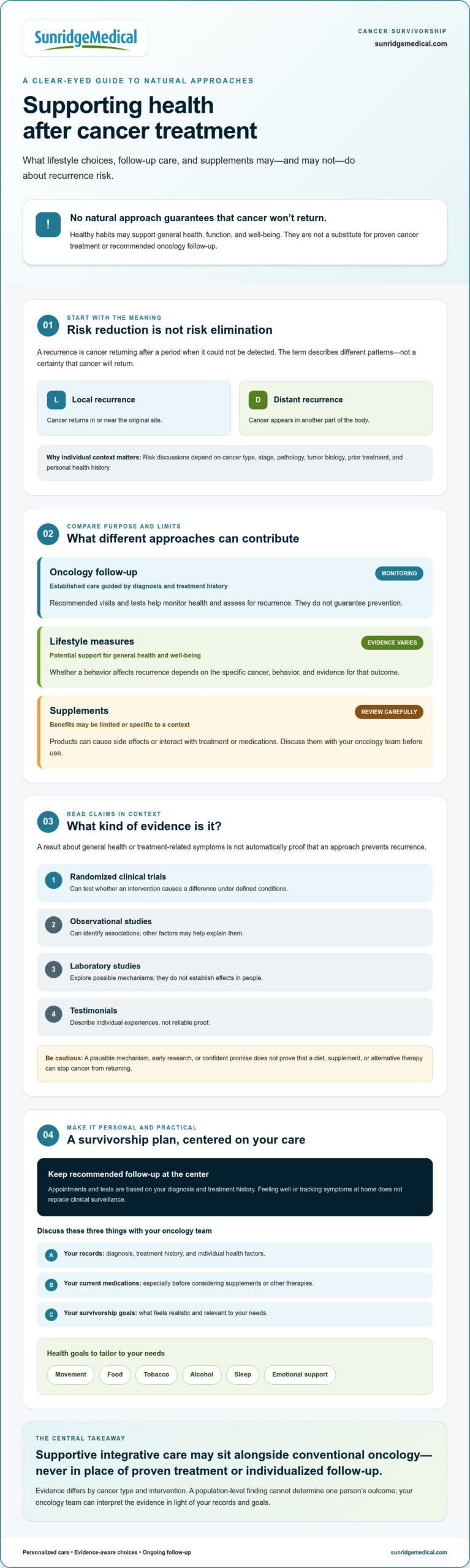
Wanting to lower the chance of cancer returning is understandable, especially after the demands of diagnosis and treatment. But no lifestyle plan can guarantee prevention. A recurrence happens when cancer returns after a period when it could not be detected. It may be local, meaning it returns in or near the original site, or distant, meaning it appears in another part of the body.
Risk reduction means lowering the likelihood of an outcome, not eliminating it. Survivorship care addresses health and quality of life after a cancer diagnosis, including follow-up and support for lasting effects of treatment. The experience of cancer survivorship can extend from diagnosis throughout a person’s life, so needs may change over time.
Can natural approaches prevent cancer from coming back?
No natural approach is proven to eliminate recurrence risk across all cancers. Lifestyle changes may support general health, function, and well-being, but whether a particular behavior affects recurrence depends on the cancer and the evidence for that specific outcome. A finding about overall health or treatment side effects isn’t automatically proof that a change prevents recurrence.
Supportive habits can strengthen overall health, but they aren’t a substitute for cancer treatments or follow-up proven to address a person’s specific diagnosis. Early research and associations can guide further study, but they can’t predict what will happen to an individual. Be cautious of claims that a diet, supplement, or alternative therapy can reliably stop cancer from returning.
Why recurrence risk is specific to each person
Risk discussions depend on details such as cancer type, stage, pathology, tumor biology, prior treatment, and individual health history. These factors also help shape follow-up care, including which visits or tests may be appropriate. Two people with the same broad cancer diagnosis may have different clinical details and care plans.
Research can identify patterns across groups, but a population-level result cannot determine one person’s outcome. Your oncology team can interpret the evidence in light of your records and treatment history. For more context on how stage informs clinical discussions, see this guide to integrative cancer treatment by stage.
That distinction is central to preventing cancer recurrence naturally: focus on evidence-informed ways to support health while keeping individualized oncology guidance and recommended surveillance at the center of your plan.
What the Evidence Says About Natural Cancer Recurrence Prevention
Judge evidence by what an intervention has actually been shown to do. A practice may support general health or ease a treatment-related symptom without being proven to reduce recurrence. Research differs by cancer type, intervention, study quality, and follow-up period, so broad claims can overstate what findings mean for an individual.
| Approach | Evidence and purpose |
|---|---|
| Oncology follow-up | Established care guided by diagnosis and treatment history. Visits and recommended tests help monitor health and assess for recurrence; they don’t guarantee prevention. |
| Lifestyle measures | May support general health and well-being. Evidence for recurrence outcomes varies and should be considered for the specific cancer and behavior. |
| Supplements | May be studied for particular uses, but evidence of benefit for recurrence is often limited or specific to a context. Products can also cause side effects or interact with treatment or medications. |
The National Cancer Institute describes evidence-based follow-up care as part of survivorship. Keep recommended visits and tests distinct from wellness practices: feeling well or tracking symptoms at home doesn’t replace clinical surveillance.
How to judge claims about diets, supplements, and therapies
Start by asking whether evidence comes from people with your cancer type and a relevant treatment history. Randomized clinical trials can test whether an intervention causes a difference under defined conditions. Observational studies can find associations, but other factors may help explain them. Laboratory studies explore possible mechanisms; they don’t establish effects in people. Testimonials describe individual experiences, not reliable proof.
A plausible mechanism or preliminary study is not proof that an approach reduces cancer recurrence. Treat guaranteed outcomes, cure claims, or advice to replace oncology care as serious warning signs. Discuss proposed supplements and therapies with your oncology team, including possible interactions.
What evidence can and cannot say about lifestyle
Research on diet, activity, and other habits doesn’t support one universal recurrence-prevention formula across cancers. An intervention may improve fitness, nutrition, or another aspect of health without showing that recurrence risk has changed. That distinction matters when assessing claims about preventing cancer recurrence naturally.
For broader context on integrative oncology and alternative cancer treatment, see this clinical guide to alternative cancer treatment. If you’re considering an individualized evaluation, review Sunridge Medical’s approach to cancer care and discuss proposed changes with your oncology team.
Which Lifestyle Changes May Support Health After Cancer?
Survivorship habits can support health, energy, and quality of life, but they aren’t a guaranteed way to prevent cancer from returning. There’s no single regimen that suits everyone. Treatment effects, disability, appetite changes, other health conditions, and current care all matter when deciding what’s appropriate.
- Movement: Choose activity that fits your current ability and recovery. If pain, fatigue, balance concerns, or treatment effects make exercise difficult, ask your clinician whether an oncology rehabilitation professional can help tailor a safe approach.
- Nutrition: Aim for varied, adequate nourishment rather than a restrictive plan. Appetite, digestion, weight changes, and treatment-related needs may call for individualized guidance from a registered dietitian.
- Tobacco and alcohol: If you use tobacco, ask your care team about support for stopping. Discuss alcohol in light of your cancer history, medications, and overall health instead of assuming one rule applies to everyone.
- Sleep and emotional support: Tell your care team about persistent sleep problems, distress, or anxiety. Support for these concerns can be part of whole-person care, even though it doesn’t establish that recurrence risk has changed.
Avoid detox claims and diets that sharply restrict food groups or calories, particularly if you’re struggling to maintain weight or recover. A health-supporting change should be sustainable and appropriate for your circumstances, not another source of pressure.
Nutrition and physical activity during survivorship
Start with manageable steps, then adjust with guidance as your needs change. A registered dietitian can help address nutrition concerns, while an oncology rehabilitation professional can advise on movement when treatment effects or disability create barriers. No particular diet or exercise plan has been shown to prevent every cancer from returning.
Some integrative practices are considered for symptom and side-effect support rather than recurrence prevention. Memorial Sloan Kettering Cancer Center describes its approach to integrative medicine for cancer survivors in the context of cancer care. Discuss potential approaches with your clinicians and clarify their purpose.
Supplements, herbs, and interaction risks
“Natural” doesn’t automatically mean safe. Supplements, herbs, and over-the-counter products may affect treatment or interact with other medicines. Tell your oncology team about everything you take, including products you use occasionally, and ask a clinician or pharmacist to review safety before starting, stopping, or changing anything.
For people exploring preventing cancer recurrence naturally, careful review helps separate health-supportive choices from unproven promises. An individualized physician evaluation and treatment-planning discussion can help you consider your goals and existing care. Learn about individualized alternative cancer treatment protocols as an option to discuss with your oncology team, without changing recommended treatment or follow-up on your own.
How to Build a Safe, Personalized Survivorship Plan
A clear plan can turn broad concerns about preventing cancer recurrence naturally into practical questions for your care team. It should reflect your diagnosis, treatment history, current health, and priorities rather than follow a one-size-fits-all formula.
A survivorship care plan is a coordinated guide to follow-up, ongoing health needs, and next steps agreed on by you and your clinicians. Use it to support communication, not as a replacement for oncology care.
- Review your care plan. Gather your diagnosis, treatment summary, and any existing survivorship instructions. Ask your oncology team to explain details you’re unsure about.
- Clarify follow-up. Confirm which visits and tests are recommended for your cancer and treatment history, when they should happen, and whom to contact with concerns. Keep scheduled oncology appointments. Home wellness tracking can provide useful information to share, but it doesn’t replace recommended surveillance.
- Set realistic goals. Choose manageable priorities, such as addressing sleep, returning gradually to activity, or getting help with appetite changes. Goals should support well-being and fit your abilities, recovery, and other health needs.
- Check proposed changes. Before starting a supplement, restrictive diet, or complementary therapy, ask about its purpose, supporting evidence, possible risks, and interactions. Confirm who will oversee it and how they’ll coordinate with your oncology team.
Questions to bring to an oncology appointment
Write down questions before your visit. A short checklist can help you use the time well:
- What follow-up schedule and tests are appropriate for my diagnosis and treatment history?
- Should I report any new or persistent symptoms, and who should I contact?
- Could my current medicines or supplements affect a proposed change?
- Which lifestyle adjustments or complementary therapies may fit alongside my care?
- What matters most to me right now, and what support could help?
New symptoms don’t automatically mean cancer has returned, but your care team can help determine whether they need assessment. Share when they began, how they’ve changed, and what affects them.
How to assess a complementary therapy before trying it
Ask for a clear explanation of the therapy’s intended purpose, the quality of evidence for that purpose, known risks, and potential interactions. Find out who is responsible for overseeing it and how updates will reach your oncology team. Be cautious of any approach presented as a substitute for proven treatment or routine follow-up.
If you’re considering an individualized evaluation to review your goals, existing care, and possible interactions, explore individualized alternative cancer treatment protocols as a topic for informed discussion with your oncology team.
How Integrative Medical Care Can Fit Into Cancer Survivorship
Integrative care may bring supportive approaches into a person’s broader medical care alongside conventional oncology. Its role should be clearly defined: a therapy might be considered for a specific supportive purpose, but that doesn’t make it a proven way to prevent recurrence. Review any proposed approach in light of your diagnosis, treatment history, current medicines, and follow-up plan.
Sunridge Medical offers physician evaluations, individualized treatment planning, and alternative cancer treatment protocols that combine conventional therapies with research-based alternative treatments. This model is a subject for informed discussion, not evidence that the care prevents recurrence. If you’re exploring it while thinking about preventing cancer recurrence naturally, keep your treating oncologist involved and continue recommended treatment and surveillance.
What to ask an integrative medical provider
Before agreeing to a therapy or protocol, ask for a specific explanation of its purpose and how it relates to your established oncology plan. Useful questions include:
- What evidence supports this approach for my cancer type and treatment history, and what remains uncertain?
- What are the potential risks, side effects, or interactions with my medicines and other care?
- Who will oversee this therapy, and who will communicate with my treating oncologist?
- How will its effects or risks be monitored, and what would prompt a change?
- How does this fit with my scheduled oncology visits and recommended tests?
A responsible discussion should make limits clear. No provider can guarantee that an approach will prevent recurrence, and complementary care shouldn’t replace proven cancer treatment or routine follow-up. If a therapy is presented as a reason to stop or delay either, pause and discuss the recommendation with your oncology team.
Choosing a next step with confidence
If you decide to seek an additional medical perspective, bring relevant records when available: pathology information, a treatment summary, and current lists of prescription medicines, supplements, and over-the-counter products. Also note your goals and questions. These details can help a clinician consider your circumstances and identify issues to review with your oncology team.
Keep your established oncology relationship active throughout any complementary care. Ask each provider to clarify their responsibilities and how important updates will be shared; don’t assume coordination is automatic. Learn more about discussing individualized care with Sunridge Medical. A consultation can support an informed conversation about options, but it can’t guarantee an outcome or replace your cancer care and surveillance.
Move Forward With a Plan That Fits Your Care
After cancer treatment, it’s understandable to look for steps you can take. The most grounded approach to preventing cancer recurrence naturally starts with realistic expectations: healthy habits may support overall well-being, but they can’t guarantee that cancer won’t return. Evidence varies by cancer and intervention, so broad promises about diets, supplements, or therapies deserve caution.
Keep recommended oncology visits and tests at the center of your survivorship plan. Discuss lifestyle changes and supplements with your care team, especially if you take medication or are receiving ongoing treatment. A personalized plan can help align your goals with your medical history and follow-up needs.
Sunridge Medical offers physician evaluations and individualized treatment planning. These evaluations can provide an opportunity to discuss your goals and existing care, but they don’t guarantee an outcome or replace your oncology team. To explore whether an individualized discussion may be appropriate, contact Sunridge Medical to discuss an individualized approach.
Small, well-considered steps can support your health while you continue care guided by your oncology team.
Frequently Asked Questions
Can cancer recurrence be prevented naturally?
No natural approach is proven to eliminate recurrence risk across cancers. Healthy habits may support overall health, but evidence that a specific lifestyle change prevents recurrence varies by cancer type and intervention. For preventing cancer recurrence naturally, focus on evidence-informed choices as part of survivorship care, not as guarantees. Keep recommended oncology appointments and tests, and discuss proposed changes with your care team before making them.
What foods help prevent cancer from coming back?
No specific food or diet has been proven to prevent every cancer from returning. A varied, nourishing eating pattern may support general health, but nutrition needs can differ with treatment effects, appetite, digestion, and other health conditions. Be cautious of restrictive diets, detox plans, or claims that a food can cure cancer or prevent recurrence. If eating is difficult or weight is changing, ask your care team about a registered dietitian.
Do supplements prevent cancer recurrence?
Supplements haven’t been shown to prevent recurrence across cancers, and some may interact with cancer treatments or other medicines. “Natural” doesn’t automatically mean safe, effective, or appropriate for you. Share a complete list of vitamins, herbs, supplements, and over-the-counter products with your oncology team. Ask a clinician or pharmacist to review possible risks before starting, stopping, or changing a product, particularly if you’re receiving ongoing treatment.
Can exercise lower the risk of cancer coming back?
Exercise can support physical function and overall well-being, but its effect on recurrence risk isn’t established uniformly across cancer types. The right activity depends on your treatment history, current abilities, symptoms, and other health needs. Ask your clinician how to begin or adapt movement, especially if fatigue, pain, balance issues, or disability affect activity. An oncology rehabilitation professional may help tailor a safe plan when needs are complex.
How often should cancer survivors have follow-up appointments?
Follow-up frequency depends on the cancer, its stage and biology, treatments received, and your individual health history. Ask your oncology team which visits and tests are recommended, when to schedule them, and whom to contact between appointments. Keep that plan even if you feel well. Home symptom tracking or wellness checks can help you share information, but they don’t replace recommended clinical visits or surveillance tests.
What symptoms could mean cancer has returned?
There isn’t one symptom list that applies to every cancer, and a new symptom doesn’t automatically mean recurrence. Pay attention to changes that are persistent, worsening, or unusual for you, and ask your care team whether they need assessment. Your clinician can advise which signs matter for your diagnosis and treatment history. Don’t wait for a routine appointment if you’re concerned; contact your oncology team for guidance.
Is integrative cancer care the same as alternative cancer treatment?
No. Integrative care generally means considering supportive approaches alongside conventional oncology, while alternative treatment refers to approaches used instead of conventional care. They aren’t interchangeable terms. Sunridge Medical offers individualized physician evaluations and alternative cancer treatment protocols, but these services aren’t proven to prevent recurrence. Before considering any approach, discuss its evidence, risks, and possible interactions with your treating oncologist, and don’t stop or delay recommended treatment or surveillance.