

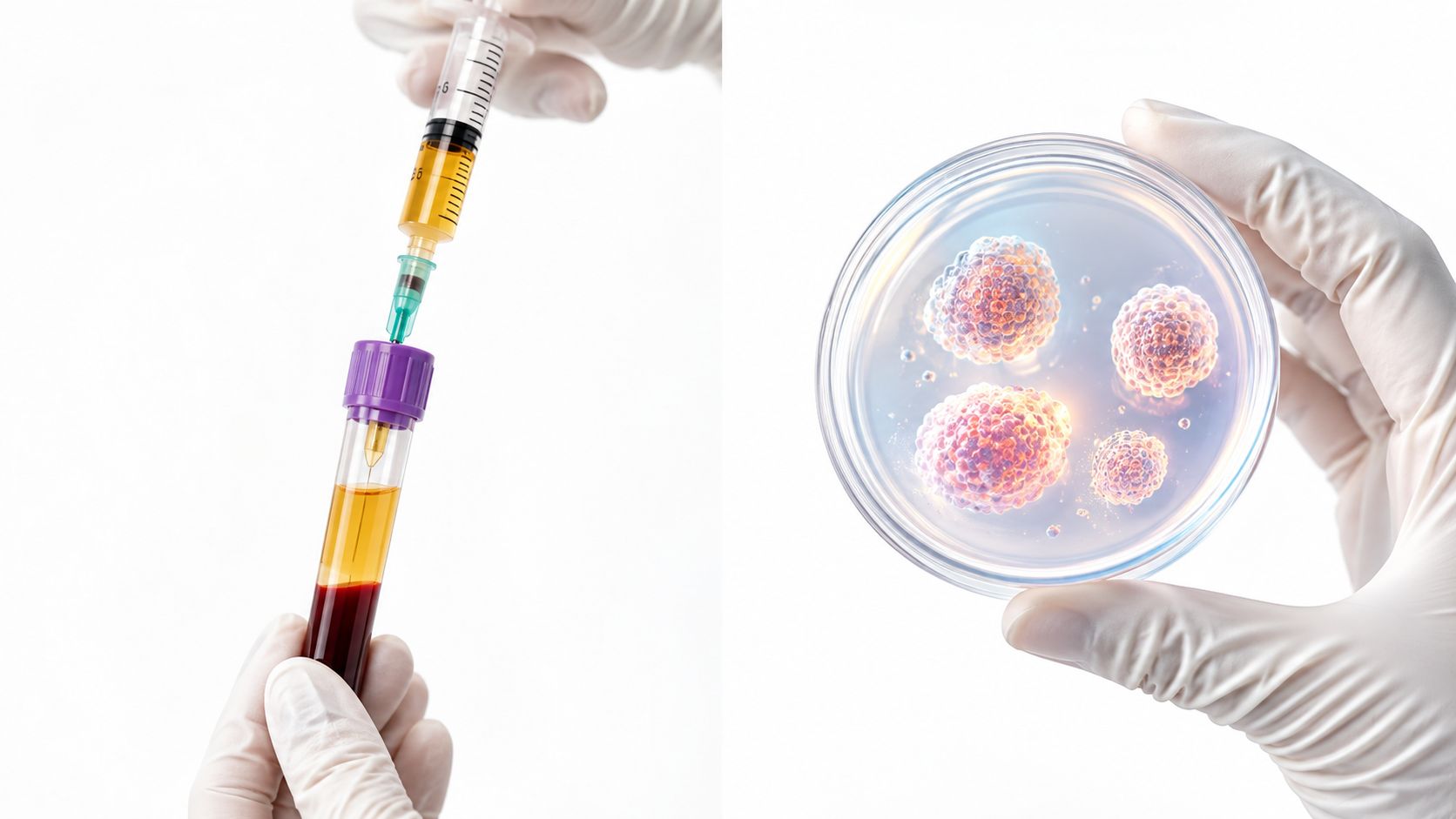
You're in Scottsdale with persistent knee pain, a lingering sports injury, or a condition that hasn't improved as expected. One clinic recommends platelet-rich plasma, while another promotes stem cell therapy as the more advanced option. Both sound plausible, but the labels alone don't tell you what will be injected, what evidence supports it, or whether the proposed use is properly regulated.
The practical question isn't only platelet rich plasma vs stem cell. It's whether the product, preparation, diagnosis, treatment goal, and regulatory pathway all make sense together. PRP may be a reasonable option for symptom management in some musculoskeletal conditions. Stem-cell-oriented treatments may have a role in research or carefully selected clinical pathways, but they shouldn't be presented as guaranteed cartilage regeneration or universally superior care.
Table of Contents
- Why Patients in Scottsdale Are Asking This Question
- How PRP and Stem Cell Therapy Actually Work
- Comparing PRP and Stem Cell Therapy Across Key Criteria
- What the Evidence Actually Shows by Condition
- When the More Complex Option Is Not the Better Option
- A Patient's Due Diligence Checklist Before Either Therapy
- Choosing the Right Option and How Sunridge Medical Can Help
Why Patients in Scottsdale Are Asking This Question
A patient in Scottsdale may arrive at a consultation with imaging, a list of failed treatments, and two very different recommendations. The first clinic describes PRP as a blood-derived injection. The second presents stem cells as a more powerful way to rebuild damaged tissue. The patient wants a straightforward answer: which one should I choose?
That question is understandable, but a winner-takes-all answer would be medically careless. PRP and mesenchymal stem-cell injections have shown broadly comparable osteoarthritis outcomes through 12 months, with PRP showing a modest short-term advantage in one systematic review. The review included 11 studies involving 693 patients, with 394 receiving MSC treatment and 299 receiving PRP, and found similar KOOS and WOMAC results while PRP produced higher IKDC scores (systematic review of PRP and MSC injections).
Those findings don't mean PRP is always better. They mean the treatment label isn't enough. PRP studies differ in platelet concentration, leukocyte content, activation method, injection volume, injection number, and use of ultrasound guidance. MSC studies differ in tissue source, viable cell dose, cell viability, expansion history, sterility testing, potency characterization, and delivery technique.
The real comparison is transparency
A clinic can't make a scientifically meaningful comparison if it says only “PRP” or “stem cells.” The patient needs to know what the treatment contains and how the clinician plans to measure success. Pain reduction, walking tolerance, range of motion, work capacity, and return to an activity are more useful endpoints than a promise to “regenerate” tissue.
Practical rule: If a clinic can't explain the product and protocol in plain language, you don't have enough information to compare treatments.
Patients traveling from Phoenix, Paradise Valley, Tempe, Mesa, Chandler, or Gilbert may also encounter different claims, costs, and follow-up arrangements. A local consultation gives you an opportunity to review the diagnosis, imaging, medications, prior treatment, and realistic alternatives before committing to an injection.
Both therapies can be oversold. The responsible decision depends on what is being injected, who is preparing it, why it's being recommended, and under what regulatory pathway.
How PRP and Stem Cell Therapy Actually Work
Platelet-rich plasma, or PRP, is made from a patient's own blood. A clinician draws blood and processes it to concentrate platelets before placing the preparation at a target area. Platelets contain biologically active substances, but the clinical effect depends on the preparation rather than the name alone.
A useful PRP description should include measurable details:
- Platelet enrichment: How concentrated is the platelet preparation compared with the patient's baseline blood?
- Leukocyte content: Is the product leukocyte-rich or leukocyte-poor?
- Activation: Is the preparation activated, and if so, how?
- Injection plan: What volume, number of injections, interval, and placement method are planned?
- Guidance: Will ultrasound or another imaging method guide placement?
Those variables matter because “PRP” can describe preparations with materially different biologic exposure. A patient considering hair restoration may also benefit from reading this PRP For HairLoss hair restoration blog, while a patient with joint or tendon symptoms needs diagnosis-specific medical evaluation rather than a general regenerative claim.
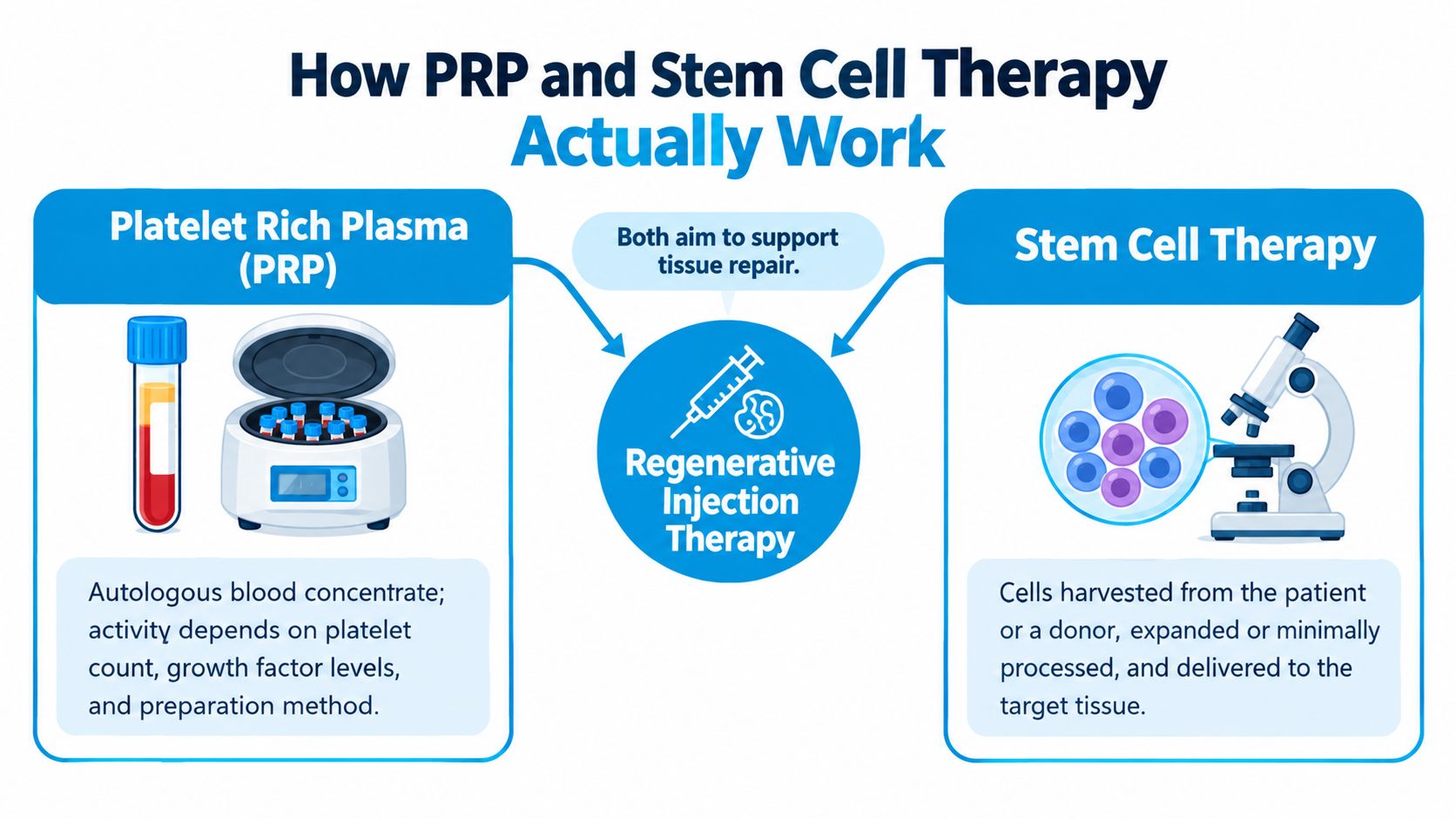
Mesenchymal stem-cell, or MSC, therapy is more complex. The cells may come from bone marrow, adipose tissue, umbilical tissue, or another source. A credible explanation should identify whether the cells are autologous, meaning from the patient, or donor-derived, and should address the viable nucleated-cell dose, cell viability, passage or expansion history, sterility testing, potency characterization, and regulatory pathway.
Calling an injection “stem cells” doesn't tell you what the patient receives. Two clinics may use the same marketing phrase while offering products with different sources, processing methods, doses, and oversight.
For a clinical overview, review Sunridge Medical's stem cell therapy information. The purpose of that review shouldn't be to accept a label at face value. It should help you prepare better questions for a physician who can connect the product to your diagnosis and treatment objective.
Both approaches are intended to influence the local tissue environment, but neither should be described as a guaranteed way to rebuild cartilage. Their potential value depends on the condition being treated, the product used, the injection technique, and the outcome being measured.
Comparing PRP and Stem Cell Therapy Across Key Criteria
The table below is a practical starting point, not a substitute for diagnosis. It shows why the question platelet-rich plasma vs stem cell therapy can't be answered without specifying the treatment.
| Criterion | PRP | Stem Cell Therapy |
|---|---|---|
| Mechanism | Autologous blood-derived concentrate containing platelets and associated biologic factors | Cell-based intervention involving mesenchymal stem cells or another specified cell product |
| Common clinical uses | Investigated and used for selected joint, tendon, and soft-tissue conditions | Investigated for selected musculoskeletal and other conditions, with appropriateness depending on product and diagnosis |
| Level of evidence | Multiple studies exist, but results vary by condition and preparation | Studies suggest possible benefit, but protocols and products are highly heterogeneous |
| Regulatory standing in the United States | Treatment status depends on the specific procedure and clinical context | Product and indication must be evaluated carefully. Stem-cell products generally require FDA approval or appropriate clinical-trial oversight |
| Preparation variables | Platelet concentration, leukocyte content, activation, volume, injection number, and placement | Tissue source, cell dose, viability, expansion history, sterility, potency, and delivery |
| Typical treatment course | Depends on diagnosis, product, and protocol. Some plans involve one injection, while others use more than one | Varies substantially by product, source, protocol, and clinical pathway |
| Major safety considerations | Infection, bleeding, post-injection pain, and risks related to the injection site or underlying condition | Infection, immune or inflammatory reactions, product quality concerns, regulatory risk, and risks related to the injection procedure |
PRP is generally easier to describe reproducibly because the clinician can document platelet-fold enrichment, leukocyte classification, activation, volume, and treatment frequency. That doesn't make every PRP protocol effective, but it gives the patient concrete variables to review.
MSC interventions require a larger set of quality and oversight questions. Reviews describe possible improvements in pain and function with both approaches, yet heterogeneity in preparation, dosing, activation, and outcome reporting limits generalizability. Current comparative evidence hasn't established a definitive MSC dose-response protocol (review of dosing, activation, and functional performance).
Regulatory standing also changes the conversation. A product may be biologically plausible without being approved for a particular disease. Patients comparing biologic options may find a broader discussion of related products in this exosomes vs PRP guide, but the same principle applies: the product identity and evidence for the specific diagnosis matter more than the promotional category.
For patients considering PRP, Sunridge Medical's platelet-rich plasma information can provide context for discussing whether an individualized evaluation is appropriate.
What the Evidence Actually Shows by Condition
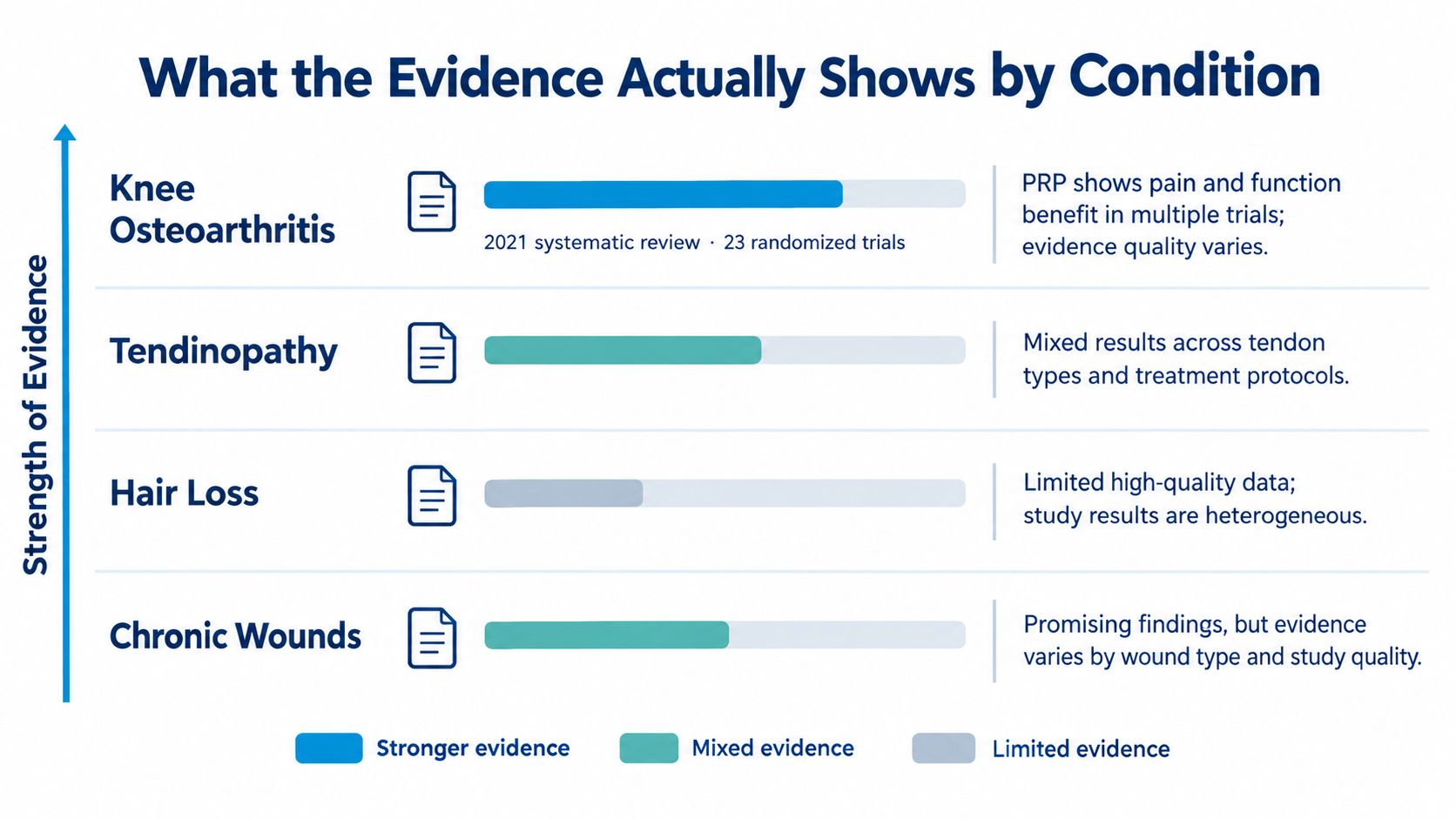
The diagnosis should determine the evidence you review. Results reported for knee osteoarthritis do not automatically apply to rotator-cuff disease, hair loss, chronic wounds, or oncology-related concerns.
Knee osteoarthritis
A 2021 systematic review identified 23 randomized controlled trials evaluating PRP for knee osteoarthritis. At 6 months, PRP produced lower pain scores than placebo and oral nonsteroidal anti-inflammatory drugs. Compared with hyaluronic acid, PRP performed better on pain, WOMAC, and IKDC subjective scores. The review found no significant difference in adverse-event rates between PRP and either placebo or hyaluronic acid (systematic review of PRP for knee osteoarthritis).
That evidence supports discussing PRP as a symptom-management option. It does not show that PRP rebuilds cartilage, removes arthritis, or works equally well for every patient. Disease severity, preparation method, injection protocol, activity level, and the outcome being measured can change the apparent result. Before comparing PRP with a stem-cell-oriented product, a patient should confirm the diagnosis and review the relevant imaging. Sunridge Medical's osteoarthritis care information offers topics to raise during that appointment.
The statistical strength of some positive findings also deserves scrutiny. A review of randomized controlled trials examined 34 statistically significant continuous outcomes and reported a median fragility index of 5.7. In practical terms, changing the outcome status of a median of about six participants could reverse statistical significance. For WOMAC total scores, the median fragility index was 6.6. Only 3 of 34 outcomes, or 8.8%, had loss to follow-up greater than the number of outcome changes needed to overturn significance (fragility analysis of PRP outcomes).
Rotator-cuff disease and other musculoskeletal conditions
Evidence across musculoskeletal diagnoses is less consistent. Reviews report possible improvements in pain and function with both PRP and MSC approaches, while differences in preparation, dosing, activation, delivery, and outcome reporting limit firm protocol recommendations.
For rotator-cuff disease, one meta-analysis found no overall clinically significant difference between PRP and corticosteroid injections. The comparison matters because a therapy should be judged against the available alternative for the specific diagnosis, not against broad regenerative claims.
Oncology-adjacent and non-orthopedic uses
Patients receiving or recovering from oncology care need a separate medical discussion. A product marketed as regenerative is not automatically appropriate during cancer treatment, after treatment, or alongside immunosuppressive medications. The physician should consider the diagnosis, treatment history, current medications, immune status, injection risks, and coordination with the oncology team.
The same standard applies to chronic wounds, neurologic conditions, and other complex illnesses. A favorable result in one condition doesn't establish effectiveness in another. Product transparency, regulatory status, and diagnosis-specific evidence should guide the Scottsdale patient's decision, rather than the treatment's complexity or marketing category.
When the More Complex Option Is Not the Better Option
A Scottsdale patient with persistent shoulder pain may face a choice between a familiar blood-based injection and a treatment marketed around living cells. The harder-to-manufacture product can sound more advanced, yet complexity does not establish better results. The relevant questions are product transparency, regulatory status, and evidence for the specific diagnosis.
As noted in the evidence section, the rotator-cuff comparison did not favor the more complex option. That finding matters because treatment should be judged against the available alternative for the patient's condition, not against broad claims about regeneration.
The expensive or technologically complex option isn't automatically the evidence-based option.
Statistical significance also requires scrutiny. Earlier findings on PRP trials show why patients should ask whether an apparent improvement was clinically meaningful, durable, and supported by a well-designed study. A positive study result can be fragile without proving that the treatment has no value.
Regulatory status supplies another practical filter. The FDA consumer alert on regenerative medicine products states that the FDA-approved stem-cell products consist of blood-forming hematopoietic progenitor cells derived from umbilical cord blood. Their approved use concerns disorders affecting blood production, not orthopedic pain, arthritis, neurologic disease, cancer, or general anti-aging treatment.
That distinction does not dismiss stem-cell research. It prevents a clinic from presenting an investigational joint injection as FDA-approved for arthritis. Ask which regulatory route applies. A product may be FDA-approved for a particular indication, used within an appropriately overseen clinical trial, or offered outside those pathways. Those categories are not interchangeable.
Patients can also check whether a claimed trial is registered, identify its study status and intervention, and confirm that the clinic and physician match the registered information. The FDA's consumer information on regenerative medicine products provides a useful starting point for recognizing unsupported marketing.
For Arizona patients, this review should happen before payment or international travel. Ask who manages complications, what happens if symptoms worsen, and how the clinician will respond if the expected improvement does not appear.
A Patient's Due Diligence Checklist Before Either Therapy
A reputable clinic should welcome detailed questions. You're not being difficult by asking what will be injected and how the clinician will judge success. You're protecting yourself from vague product labels and unsupported promises.
Start with the regulatory pathway
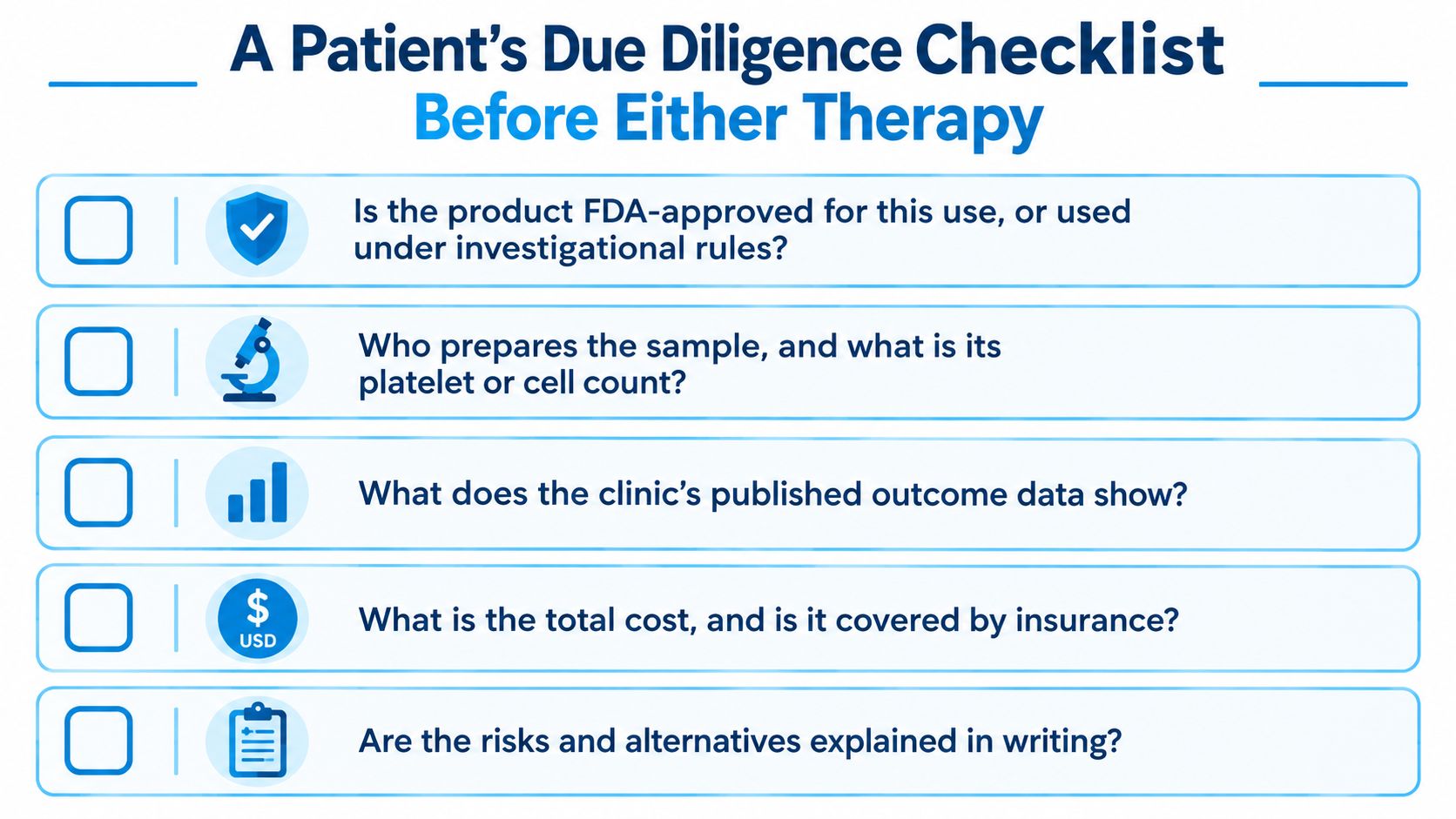
Ask whether the product is FDA-approved for your specific condition and use. If it isn't, ask whether it's being provided within an appropriately overseen clinical trial or another recognized clinical pathway. The FDA warns that some regenerative products are illegally marketed and may present significant safety risks (FDA information for patients and consumers).
Identify the actual product
For PRP, request the platelet concentration, leukocyte classification, activation method, injected volume, injection number, and imaging guidance. For an MSC product, ask:
- Source: Is it bone marrow, adipose tissue, umbilical tissue, or another source?
- Ownership: Is it autologous or donor-derived?
- Dose: What is the viable nucleated-cell dose?
- Processing: Has it been expanded, and what is its passage history?
- Quality testing: What sterility and potency testing has been performed?
- Delivery: Where and how will the product be administered?
A clinic that can't answer these questions can't offer a meaningful product comparison.
Demand diagnosis-specific evidence
Ask for published controlled-trial evidence involving your diagnosis, not just a general list of conditions. A study of knee osteoarthritis doesn't establish that the same product works for a rotator-cuff problem, chronic wound, neurologic condition, or oncology-related concern.
Then ask how success will be measured. A useful plan might track pain, function, walking tolerance, range of motion, activity limits, and medication use. “Regeneration” is too vague to serve as a clinical endpoint.
Review consent and contingency planning
Written consent should address expected benefits, uncertainty, alternatives, procedural risks, infection monitoring, immune or inflammatory concerns, and follow-up. It should also explain what the team will do if symptoms worsen, treatment fails, or a complication develops.
Patients who want more guidance on evaluating providers can review this guide to finding a credible alternative medicine practitioner. The objective is simple: choose a clinician who answers specific questions rather than substituting enthusiasm for evidence.
Choosing the Right Option and How Sunridge Medical Can Help
The decision should follow a clear order. Define the diagnosis first. Set a realistic endpoint second. Match the therapy to diagnosis-specific evidence third. Verify the product, regulatory status, and follow-up plan before consenting.
For selected osteoarthritis and soft-tissue problems, PRP may be a reasonable first regenerative option to discuss because its preparation can be described with measurable variables and its evidence base includes randomized trials. That still doesn't make it a cure or a cartilage-restoration treatment. A stem-cell-oriented product requires more scrutiny, particularly regarding source, viable dose, manufacturing, regulatory status, and whether human evidence exists for the patient's specific disease.
Sunridge Medical in Scottsdale evaluates regenerative options within an individualized, integrative plan. That evaluation may consider musculoskeletal symptoms alongside oncology care, chronic illness, autoimmune conditions, medications, recovery goals, and coordination with a patient's existing conventional medical team. Patients looking for broader background may also review this guide to stem cell therapy, then bring specific questions to a qualified clinician.
If you're in Scottsdale, Phoenix, Paradise Valley, Tempe, Mesa, Chandler, Gilbert, or the greater Phoenix metropolitan area, a consultation can help clarify whether PRP, a stem-cell-oriented approach, conventional care, rehabilitation, or another option fits your diagnosis and goals.
Sunridge Medical offers individualized evaluation of PRP and stem-cell-oriented regenerative options as part of integrative care for complex health concerns. Visit Sunridge Medical to discuss your diagnosis, treatment goals, product questions, and whether a Scottsdale consultation is appropriate.