


Yes, managing ankylosing spondylitis naturally can involve regular movement, heat or cold for temporary symptom relief, and eating patterns that emphasize whole foods. A practical starting point is daily stretching, strength training two to four times a week, and 75–150 minutes of cardio exercise per week, alongside your prescribed care. Acupuncture may also be worth considering, although its effects vary from person to person.
Living with stiffness and pain can make it hard to know which self-care steps are worthwhile. Natural approaches may support comfort and mobility, but they work best as part of a thoughtful plan, not as a replacement for medical treatment.
This guide covers exercise and stretching, heat and cold, and Mediterranean-style eating. It also explains what to consider before trying acupuncture or other complementary approaches, so you can weigh practical steps against their role and limits.
Key Takeaways
- Build a sustainable movement routine with stretching, strengthening, and low-impact cardio, adapting activity to your comfort and mobility.
- Use heat or cold as short-term comfort measures, choosing the option that feels helpful and taking care to protect your skin.
- Try a Mediterranean-style pattern centered on fruits, vegetables, whole grains, healthy fats, and lean proteins; track foods to notice personal patterns.
- Understand that assessment may involve health and family history, a physical exam, blood work, and imaging of the lower spine.
- Acupuncture may ease symptoms for some people, but results vary; consider it as a complement to medical care rather than a replacement.
1. Exercise and stretching
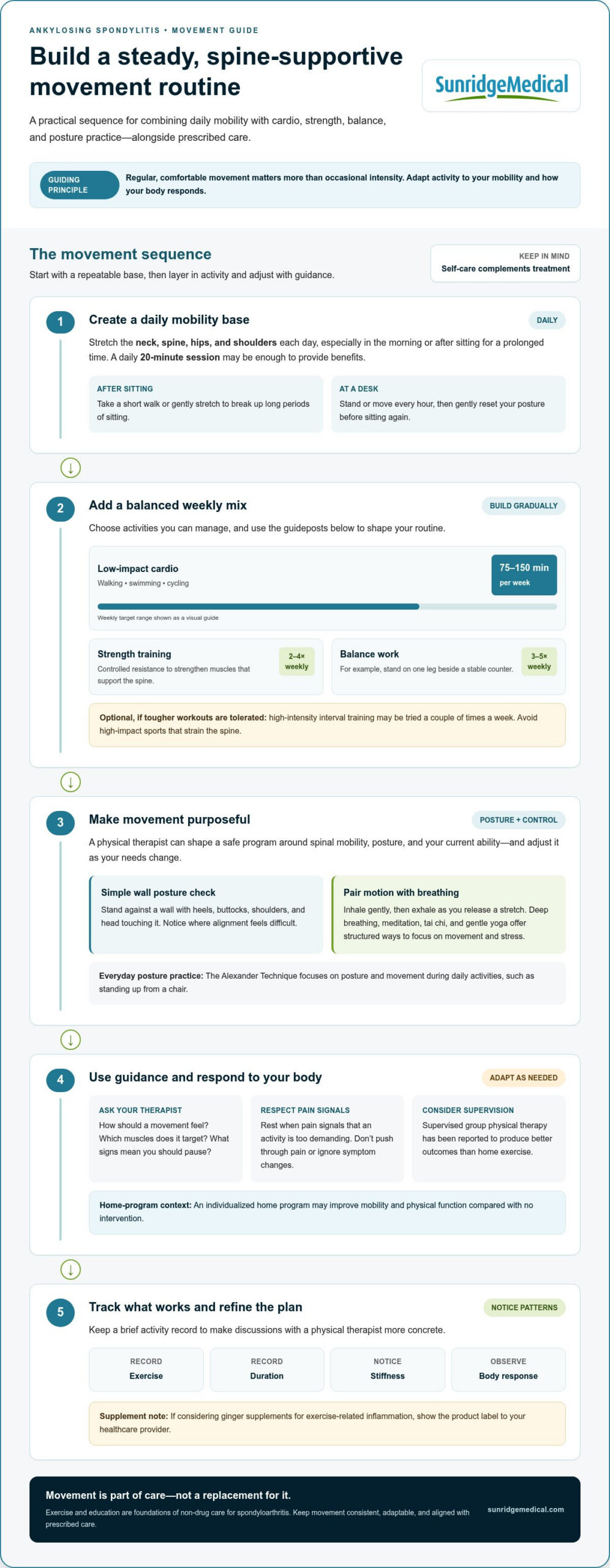
Recommended activities include low-impact cardio, strength training, balance work, and daily stretching. Aim for 75–150 minutes of cardio exercise per week, with walking, swimming, or cycling as practical options. A physical therapist can help shape a safe program around spinal mobility, posture, and current ability. Exercise and education are foundations of non-drug care for spondyloarthritis.
For people managing ankylosing spondylitis naturally, regular movement matters more than occasional intensity. A daily 20-minute session may be enough to provide benefits, and short walks can help break up long periods of sitting. Stretch the neck, spine, hips, and shoulders each day, especially in the morning or after sitting for a prolonged time. For desk work, stand or move every hour, then gently reset your posture before returning to the chair.
Build a balanced routine with specific goals. Do strength training two to four times a week, using controlled resistance to strengthen muscles that support the spine. Add balance exercises three to five times a week, such as standing on one leg beside a stable counter. People who tolerate tougher workouts can try high-intensity interval training a couple of times a week. Avoid high-impact sports that strain the spine, and rest when pain signals that an activity is too demanding.
Posture practice can be simple and repeatable. Stand against a wall with your heels, buttocks, shoulders, and head touching it, then notice where alignment feels difficult. The Alexander Technique also focuses on posture and movement during everyday activities, such as standing up from a chair. Pair movement with slow breathing: inhale gently, then exhale as you release a stretch. Deep breathing, meditation, tai chi, and gentle yoga offer structured ways to focus on movement and stress.
Supervised group physical therapy has been reported to produce better outcomes than home exercise, while an individualized home program may improve mobility and physical function compared with no intervention. If you’re considering ginger supplements for exercise-related inflammation, show the product label to your healthcare provider. Supplements are not a reason to push through pain or ignore changes in symptoms. Keep a brief activity record, noting the exercise, duration, stiffness, and how your body responds. These observations can help you develop a consistent approach to managing ankylosing spondylitis naturally, which you can discuss with a physical therapist.
2. Heat and cold therapy
Managing ankylosing spondylitis without medication may leave inflammation and symptoms insufficiently controlled. Care involves both self-care and medication, so heat, cold, and massage should complement prescribed treatment rather than replace it.
Heat may help loosen stiff joints and tight muscles. Try a warm compress, heating pad, or hot bath when stiffness makes comfortable movement difficult. These options may provide temporary relief, but they do not control the underlying disease. Don’t rely on heat alone if pain or stiffness is changing or interfering with daily activities. If you have deep vein thrombosis, vascular disease, an open wound, or dermatitis, consult a doctor before using heat therapy.
Cold can be useful for a painful area. Place an ice pack over the affected area, and limit each application to 20 minutes. Don’t extend the session because the area still hurts. People with circulation problems should speak with a doctor before using cold therapy. Notice how your symptoms respond, and stop if the application causes discomfort or aggravates the area.
Physical therapy can bring movement and symptom management into a structured plan. A physical therapist can adapt activities to your mobility, stiffness, and posture, then adjust the routine as your needs change. Ask how a movement should feel, which muscles it targets, and what signs mean you should pause. This makes therapy more purposeful than trying different exercises without guidance.
Massage may offer comfort, but technique matters. Gentle massage may relieve symptoms for some people, while incorrect technique can trigger pain. Choose a massage therapist experienced with ankylosing spondylitis, and describe painful or sensitive areas before the session. Avoid forceful pressure over affected areas, and speak up if a technique increases discomfort.
Anti-inflammatory medication and physical therapy are typical treatments for ankylosing spondylitis. Natural therapies can complement that care, but they don’t replace medication decisions or ongoing disease management. If you’re considering changing or stopping medication, discuss it with your doctor rather than making the change on your own. Explain which symptoms persist, what self-care you use, and how symptoms affect your movement or sleep.
For a broader approach to complex autoimmune concerns, explore autoimmune disease management. Keep a simple record of each therapy, including whether you used heat or cold, the area treated, and the effect afterward. This gives your doctor and physical therapist concrete details to consider when refining your care plan.
3. Anti-inflammatory and Mediterranean-style eating
No single diet is best for ankylosing spondylitis, and food choices won’t cure this chronic inflammatory disease. A Mediterranean-style eating pattern offers a practical framework: build meals around vegetables, fruit, whole grains, healthy fats, and lean proteins. For example, pair roasted vegetables and brown rice with fish, or add fruit and nuts to breakfast. These foods may help tamp down inflammation, but individual responses differ. Diet is one part of care, not a replacement for treatment focused on spinal symptoms and joint health.
Start with small, trackable changes instead of eliminating several food groups at once. Highly processed foods may contribute to inflammation, so compare how you feel when you replace packaged snacks with fruit or refined grains with whole grains. Limit alcohol, saturated fats, and processed starches, then note whether these changes affect stiffness, energy, or digestion. A food journal can record meals, symptoms, and timing. Note what you ate and how you felt afterward, then look for patterns over time rather than treating one difficult day as proof.
Some people explore gluten-free or low-FODMAP eating, omega-3 fatty acids, or vitamin D. Responses vary, and evidence is insufficient to determine whether a low-starch diet eases ankylosing spondylitis symptoms. Avoid assuming that a restrictive plan is automatically more anti-inflammatory. If a food experiment removes a major group, discuss how to maintain balanced nutrition. A journal can help identify whether a particular choice appears to affect symptoms, while keeping the focus on sustainable meals rather than rigid rules.
Hydration is another practical part of daily eating. Dietary advice for ankylosing spondylitis recommends eight to 10 glasses of water each day. Keep water visible at your desk or carry a refillable bottle, then drink throughout the day. Needs can vary with activity, climate, and health circumstances, so use this target as a guide within your overall care plan. Water supports routine hydration; it doesn’t directly treat inflammation or replace medication.
Resveratrol is a compound found in foods such as grapes, and supplements may be marketed around inflammation. That does not make a supplement an established treatment for ankylosing spondylitis. Before adding resveratrol capsules, bring the product label to your healthcare professional and review your current medicines and health needs. The same careful approach applies to vitamin D and omega-3 supplements. In the United States, an individualized food plan can respect personal preferences while keeping useful measures, such as meals and symptom levels, easy to track.
4. Are There Natural Treatments for Ankylosing Spondylitis?
Yes, self-care and complementary approaches can support symptom management, but they don’t replace medical treatment. Lifestyle steps include regular movement, posture practice, not smoking, stress management, and balanced eating. The right combination may support mobility and daily function while a rheumatologist monitors your disease and treatment plan.
Diagnosis starts with a fuller picture, not a single test. A rheumatologist may review your health and family history, conduct a physical exam, order blood work, and arrange imaging of the lower spine. They may ask whether relatives have ankylosing spondylitis and whether you have a history of psoriasis or inflammatory bowel disease. Share when pain and stiffness began, what affects them, and whether movement improves your symptoms.
Medication and supplement choices need the same careful review. Anti-inflammatory medication and physical therapy are typical treatments, and seven biologics have FDA approval for ankylosing spondylitis. Ask whether omega-3 or curcumin supplements are appropriate, and which type to use. A doctor can check vitamin D levels to determine whether supplementation is needed. Avoid fish liver oil, including cod liver oil, because excess vitamin A can interact with NSAIDs and cause bleeding problems.
Complementary and alternative medicine may relieve some symptoms, but evidence for its use in axial spondyloarthritis is limited. Gentle massage may help some people, while incorrect technique can trigger pain. Avoid high-velocity spinal manipulation if you have axial spondyloarthritis with spinal fusion or spinal osteoporosis. Discuss any therapy or supplement with your doctor before adding it to your plan.
Taking medication as prescribed can be difficult because of side effects, cost concerns, complicated routines, or doubts about its benefits. If you’re missing doses or taking medication differently, tell your healthcare provider what is getting in the way. This can help them discuss options and revise your plan. Don’t stop prescribed medication on your own, as untreated inflammation may leave pain and stiffness poorly controlled.
For diagnosis, treatment decisions, and ongoing monitoring, see a rheumatologist if ankylosing spondylitis is suspected or symptoms persist. Follow-up appointments help track disease progression and review medications. Seek urgent care for a sudden, severe change that needs immediate assessment. Bring a list of medications and supplements, along with notes about symptoms and daily activities, to make each appointment more useful.
5. Acupuncture
Acupuncture may be considered as a complementary option for ankylosing spondylitis symptoms. It is generally considered safe, but studies report benefits for some people and not others. This mixed response matters: acupuncture may be supportive, but it is not a dependable way to control inflammation or prevent disease progression. Keep your rheumatologist involved when considering it alongside prescribed treatment.
The research picture calls for measured expectations. A 2019 review examined 70 clinical trials and other reports on acupuncture. That number describes the scope of the review, not proof that acupuncture works for every person with ankylosing spondylitis. Studies may differ in their methods and outcomes, so a result from one group doesn’t predict an individual’s response. Use symptom relief, daily function, and your overall health as practical topics for follow-up.
Before a session, decide what you want to observe. For example, note whether morning stiffness, pain during movement, or disrupted sleep is your main concern. Afterward, record any changes in those same symptoms, how long they last, and whether they affect daily activities. This comparison gives you and your care team concrete information instead of relying on a general impression that the session helped.
Acupuncture and massage are different approaches. Gentle massage may ease muscle discomfort for some people, but forceful techniques can trigger pain. If you’re considering both, explain your ankylosing spondylitis diagnosis and sensitive areas to each practitioner. Don’t assume that combining treatments will improve results. Track each therapy separately to see which appears helpful and which may aggravate symptoms.
Stress can shape how someone experiences chronic pain, and calming activities may support overall well-being. Acupuncture can be considered as part of a broader self-care plan, alongside practices such as gentle breathing or meditation. It doesn’t replace movement, medical monitoring, or medication. If a session increases pain or causes a concerning symptom, stop and discuss what happened with your healthcare professional before continuing.
Make the decision collaboratively: tell your rheumatologist why you’re considering acupuncture, what symptoms you hope to address, and what other therapies you use. Review progress through specific examples, such as whether getting dressed or completing a walk feels easier. For a broader, individualized approach to autoimmune concerns, explore Sunridge Medical’s autoimmune disease management.
Sunridge Medical: Alternative Cancer Treatment Protocols
Natural self-care can support daily comfort, but ankylosing spondylitis still requires ongoing medical management. Sunridge Medical offers Autoimmune Disease Management for people seeking broader support with complex autoimmune concerns. This service is distinct from rheumatology care for ankylosing spondylitis, so keep your rheumatologist involved in diagnosis, medication decisions, and monitoring.
If you’re exploring a more comprehensive approach to your health, Sunridge Medical can discuss its Autoimmune Disease Management offering in the context of your needs. Bring a clear account of your diagnosis, current care, and questions about complementary approaches. You’re welcome to contact Sunridge Medical or visit Sunridge Medical online.
Make Your Next Step Personal
Progress is easier to recognize when it connects to what matters in daily life. Before your next appointment, choose a practical goal, such as getting through your morning routine with less disruption or staying engaged in a favorite activity. Share it with your rheumatologist and use it to guide a focused conversation about your care. Managing ankylosing spondylitis naturally works best as part of a coordinated plan, not as a test of willpower or a substitute for medical treatment.
You don’t need to make every change at once. Keep the next step manageable, and bring questions about complementary approaches, medication, or broader health concerns to your care team. Sunridge Medical offers Autoimmune Disease Management for people seeking support with complex autoimmune concerns.
Contact Sunridge Medical to learn more about its approach. A thoughtful, individualized plan can help you move forward with clarity and steady purpose.
Frequently Asked Questions
Are There Natural Treatments for Ankylosing Spondylitis?
Yes. Natural approaches can support symptom management, but ankylosing spondylitis has no cure and self-care doesn’t replace medical treatment. Options include movement, pacing daily activities, and complementary therapies such as acupuncture. Choose approaches based on the problem you want to address, such as difficulty maintaining activity or coping with pain. Keep your rheumatologist informed, especially before changing medication or adding supplements to your routine.
Is ankylosing spondylitis an autoimmune disease?
Ankylosing spondylitis is a chronic inflammatory condition that primarily affects the spine. It’s commonly discussed as an immune-mediated condition and grouped with autoimmune-related diseases. The label alone doesn’t explain what’s causing a particular person’s symptoms or determine their treatment. A rheumatologist considers symptoms, examination findings, blood work, and imaging together when evaluating the condition and distinguishing it from other causes of back pain.
What Kinds of Exercise Are Best?
Low-impact activities such as walking, cycling, swimming, and gentle yoga can support mobility while limiting jarring movement. Choose an activity you can repeat consistently, then adjust your pace or range of motion if symptoms increase. Swimming may suit people who find weight-bearing movement uncomfortable. A physical therapist can adapt exercises to your current ability, including suggesting alternatives when a movement causes pain or feels difficult to control.
What does HLA-B27 positive mean?
A positive HLA-B27 result means the blood test detected this genetic marker; it doesn’t establish an ankylosing spondylitis diagnosis. Up to 95 percent of people with ankylosing spondylitis test positive, but people with the marker have a 10 percent chance or less of developing a spondyloarthritis condition. A rheumatologist interprets the result alongside symptoms, family history, examination, and imaging.
Can posture training and physical therapy reduce ankylosing spondylitis symptoms?
Posture training and physical therapy can support movement and function. Supervised therapy has been reported to produce better outcomes than home exercise alone. Ask a physical therapist to observe how you sit, stand, and turn, then identify a movement to practice safely. For example, improving your desk setup may reduce prolonged slouching. Track which daily tasks become easier over time and share those observations at follow-up.
What diet or foods may help with ankylosing spondylitis inflammation?
No single eating plan is established as best for everyone with ankylosing spondylitis. A Mediterranean-style pattern emphasizes vegetables, fruits, whole grains, healthy fats, and lean proteins. Rather than broadly eliminating foods, record meals alongside symptoms and look for recurring patterns. Responses differ, and research is insufficient to establish that a low-starch diet eases symptoms. Discuss restrictive changes with a healthcare professional to help maintain balanced nutrition.
Is there evidence for supplements or herbal remedies for ankylosing spondylitis?
Evidence for complementary and alternative medicine in axial spondyloarthritis is limited, so supplements shouldn’t replace prescribed treatment. Ask a healthcare professional about a specific product, such as omega-3 or curcumin, and share its label and your medication list. A doctor can check vitamin D levels to determine whether supplementation is needed. Avoid fish liver oil, including cod liver oil, because excess vitamin A can interact with NSAIDs and cause bleeding problems.
Do heat, cold, massage, or acupuncture help ankylosing spondylitis pain?
These approaches may provide temporary comfort, but their effects aren’t the same for everyone. Heat may ease stiffness, while a wrapped ice pack can be applied for up to 20 minutes. Gentle massage may help, but forceful technique can trigger pain. Doctors generally consider acupuncture safe, though studies report benefits for some people and not others. Note which approach you tried and how symptoms responded, then discuss that record with your care team.