


Avoiding biologics for autoimmune disease isn’t automatically the lower-risk choice. Biologics are medicines made from living organisms that target specific parts of the immune system. Their potential side effects matter, but so do ongoing inflammation and disease progression when treatment isn’t effective.
It’s understandable to have concerns about medicines that alter immune activity, especially when weighing possible infections or other side effects against the symptoms you already face. The choice isn’t simply biologics versus no risk. It’s about comparing the options for your specific condition.
This article explains how biologics work, what side effects and infection concerns may arise, and how their risks compare with other immunosuppressants and inadequately treated autoimmune disease. It also covers why biologics may be considered, when other treatments may be suitable, and which factors can shape an informed treatment decision.
Key Takeaways
- Understand how biologics target parts of the immune system, and why avoiding them does not automatically eliminate treatment risks.
- Learn which infection precautions, screening tests, and vaccine considerations may affect biologic treatment decisions.
- Recognize potential side effects, from injection-site reactions to less common immune effects, and what to discuss when they occur.
- Compare medication risks with the possible consequences of ongoing inflammation and inadequately controlled autoimmune disease.
- Explore when other treatments may be considered and which factors shape an individualized approach.
Infection and cancer risks from immunosuppressants
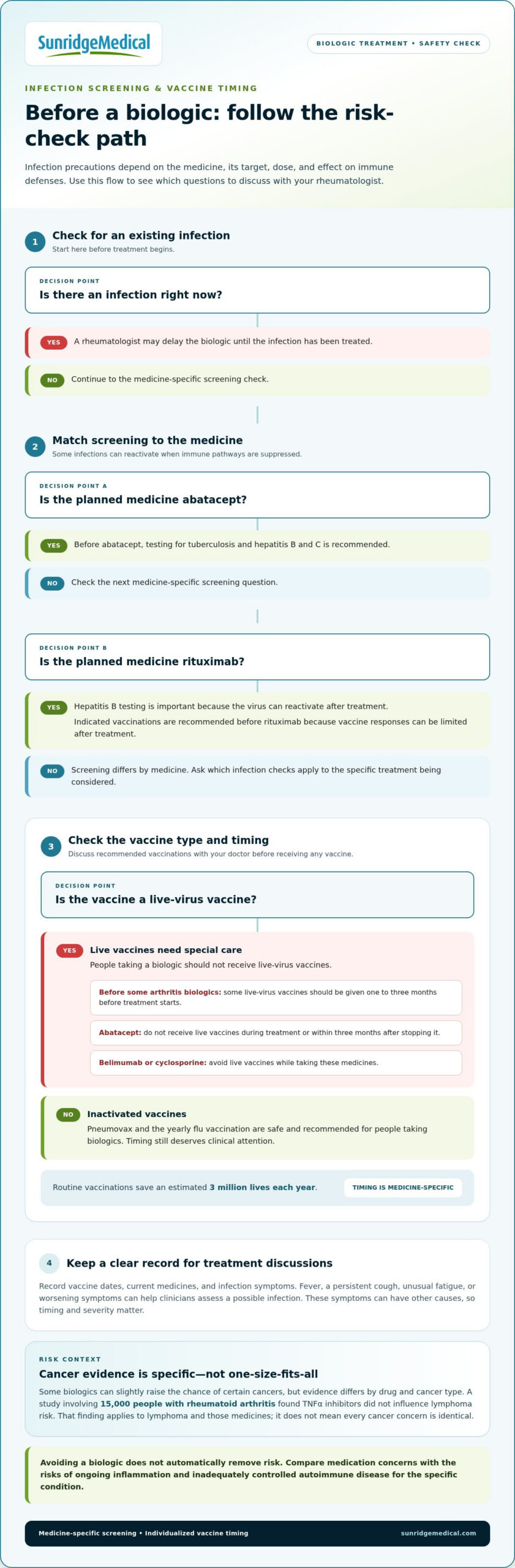
Biologic immunosuppressants change immune activity, which can make infections more likely. The medicine’s target, dose, and effect on immune defenses shape the risk. Some biologics can also slightly raise the chance of certain cancers, but the evidence differs by drug and cancer type. A study involving 15,000 people with rheumatoid arthritis found TNFα inhibitors did not influence lymphoma risk. That finding is specific to lymphoma and those medicines; it doesn’t mean every cancer concern is identical.
Infection prevention starts before treatment. A rheumatologist may delay a biologic if you have an existing infection, until it has been treated. Screening also matters because tuberculosis and hepatitis can reactivate when immune pathways are suppressed. Before abatacept, patients should be tested for tuberculosis and hepatitis B and C. Before rituximab, hepatitis B testing is important because the virus can reactivate after treatment. Vaccinations should be planned around the specific medicine.
Live vaccines need particular attention. People taking a biologic should not receive live-virus vaccines. Discuss recommended vaccinations with your doctor before getting any vaccine. Some live-virus vaccines should be given one to three months before starting a biologic for arthritis. With abatacept, live vaccines should not be given during treatment or within three months after stopping it. People taking belimumab or cyclosporine should also avoid live vaccines. Before rituximab, indicated vaccinations are recommended because vaccine responses can be limited after treatment.
Inactivated vaccines, including Pneumovax and the yearly flu vaccination, are safe and recommended for people taking biologics. Routine vaccinations save an estimated 3 million lives each year. These vaccines do not use live germs, but timing still deserves clinical attention. Keep a record of vaccine dates, current medicines, and infection symptoms, then bring it to treatment discussions. Fever, a persistent cough, unusual fatigue, or worsening symptoms can help clinicians assess a possible infection. The same symptoms may have other causes, so their timing and severity matter.
Concern about cancer is understandable, especially when a medicine affects normal immune responses. Yet avoiding biologics for autoimmune disease doesn’t remove every risk: untreated inflammation can also harm health, and the balance varies by condition and treatment. Ask how the proposed medicine affects infection defenses, which screening applies, and how to time vaccines. These details make the risk discussion specific rather than treating all immunosuppressants as interchangeable.
Possible side effects of biologic therapy
Biologic side effects depend on the medicine and how it’s given. An injection can cause redness, pain, itching, or swelling at the injection site. Some people experience fatigue, headache, or stomach pain after an infusion or injection. These effects can affect comfort and daily routines, even when treatment is helping control inflammatory symptoms. Note when a symptom begins, how long it lasts, and whether it follows a dose. This timeline gives the clinical team useful information when assessing a possible medication effect.
Immune effects can be more complex than a temporary headache or local reaction. Biologics target selected immune pathways, but the resulting changes can sometimes be associated with autoimmunity. Reports have linked biologic therapy with antinuclear antibodies and, in some cases, new autoimmune disorders or paradoxical inflammation. A new symptom doesn’t prove the medicine caused it. Its timing and pattern, along with the underlying disease, help distinguish a possible side effect from disease activity.
Rituximab illustrates why effects can differ between patients. It reduces B cells, which contribute to immune responses and antibody production. In most people treated with rituximab, B cells return within one year. For some, however, B cells fail to return and low antibody levels persist for many years or lifelong. This differs from common infusion effects and is an important consideration when discussing the specific medicine.
The immune system can also build antibodies against a biologic. These antibodies may make the medication less effective, so its effect can change over time. If symptoms return or treatment no longer controls inflammation, the clinical review should consider both disease activity and a possible reduction in medication effect. Track symptom changes and when they occur relative to treatment. A clinician can use that pattern to guide a shared review of the treatment plan.
Conventional disease-modifying antirheumatic drugs, or DMARDs, can control autoimmune disease for some people. Biologics are commonly considered for inflammatory arthritis when conventional DMARDs haven’t worked or have caused side effects. Neither category is uniformly more effective for every condition or person. The comparison depends on the disease, treatment response, tolerability, and specific medicine.
Health insurance requirements depend on the plan’s coverage criteria. Some plans may require trying a conventional treatment before covering a biologic, while others may use different criteria. This coverage process is separate from the clinical comparison: a medication’s suitability depends on the condition and treatment response, not coverage rules alone.
Don’t change a biologic dose or stop treatment without discussing a plan with the prescribing clinician. A careful review considers why you want to stop, your current symptoms, and how disease activity will be monitored afterward. Shared decision-making can establish which changes to watch for and when to reassess. Bring a current medication list and symptom record. These specifics support a deliberate transition rather than an unmonitored interruption.
Balancing treatment risks against autoimmune disease progression
Medication decisions weigh side effects against inflammation, symptoms, and possible disease damage. For rheumatoid arthritis or inflammatory bowel disease, the key factor is whether a treatment controls the disease effectively.
Nonbiologic medication alternatives
Nonbiologic alternatives include conventional disease-modifying drugs, steroids, azathioprine, and methotrexate. Some are taken by mouth, offering a different route from biologic injections or infusions. But treatment choice involves more than avoiding a biologic: the medicine must address disease activity while accounting for side effects, monitoring, and your response.
When biologics can be avoided
Biologics are commonly considered for inflammatory arthritis when conventional DMARDs haven’t worked or have caused side effects. A healthcare provider may recommend other treatments first when they’re easier to access and can successfully treat the condition. Avoiding biologics for autoimmune disease can be a reasonable path when disease control is achieved without them, but ongoing inflammation changes that balance.
For some chronic diseases, earlier biologic treatment may help curb progression. In inflammatory bowel disease, inadequate treatment can increase colon cancer risk. The decision weighs disease severity, prior treatment response, potential medication effects, and the harm uncontrolled inflammation may cause.
Costs of nonbiologic treatments
In the United States, nonbiologic treatment costs vary with the medication, formulation, dosing, insurance coverage, and monitoring needs. A prescribed oral medicine and a treatment that requires clinical monitoring can involve different cost factors. The relevant comparison includes ongoing medicine and monitoring expenses, as well as whether treatment controls symptoms and disease activity.
Cost is one factor, not a measure of clinical suitability. Cyclosporine, for example, can cause high blood pressure and decreased kidney function, requiring close monitoring. That monitoring is part of the practical treatment picture, alongside medication coverage and plans for evaluating response.
Diseases treated without biologics
Rheumatoid arthritis and psoriatic arthritis may initially be managed with conventional treatments rather than biologics. The right option depends on disease activity, previous response, and whether inflammation remains controlled. A doctor considers these factors together; no single medication pathway applies to everyone with the same diagnosis.
Lifestyle changes can support autoimmune disease management without replacing needed treatment. Practical steps include stopping smoking, tracking symptoms and medication effects, and discussing persistent changes with a doctor. These steps can clarify disease patterns and inform treatment decisions. For conditions such as inflammatory bowel disease, symptom tracking can also help identify when control may be inadequate.
TNFɑ blockers
Tumor necrosis factor alpha, or TNFɑ, is an immune signaling molecule involved in inflammation. TNFɑ blockers are biologic medicines that target this pathway, reducing part of the inflammatory activity rather than suppressing every immune pathway. This targeted action can help control disease, but treatment decisions still weigh inflammation against immune defenses.
The FDA approved infliximab, also called Remicade, in 1998 as the first biologic used to treat an autoimmune disease. TNFɑ blockers are now among the biologic options for inflammatory arthritis, including rheumatoid arthritis, psoriatic arthritis, ankylosing spondylitis, and juvenile idiopathic arthritis. They may be considered when conventional disease-modifying drugs have not worked or caused side effects.
For patients, the relevant question is whether blocking TNFɑ is likely to meet a specific treatment goal. A clinician weighs the condition, symptom burden, previous medication responses, and need to control chronic inflammation. Biologics can help control pain and inflammation and may prevent the need for corticosteroids. Other treatments may be suitable if they manage the disease adequately.
Because TNFɑ blockers alter immune activity, infection risk is part of the decision. A rheumatologist may delay treatment if you have an existing infection, until it has been treated. Screening for tuberculosis and hepatitis may also be considered because these infections can reactivate. These precautions inform treatment planning. They don’t mean that everyone taking a TNFɑ blocker will develop an infection.
Cancer concerns also require a specific discussion. Biologic immunosuppressants can slightly raise the risk of certain cancers, but risks vary by medicine and cancer type. A study of 15,000 patients with rheumatoid arthritis found TNFɑ inhibitors did not influence lymphoma risk. That result concerns lymphoma in the studied group and doesn’t settle every cancer question.
The immune system can build antibodies against a biologic, potentially reducing its effectiveness. If symptoms return, a treatment review can consider disease activity and medication response. For people considering avoiding biologics for autoimmune disease, the alternative must still control inflammation. Frame the decision around the treatment goal, prior response, infection considerations, and the consequences of ongoing disease activity, rather than treating all biologics as interchangeable.
Which autoimmune diseases can be treated without biologics?
No diagnosis automatically means biologics are required. For inflammatory arthritis, including rheumatoid arthritis, psoriatic arthritis, ankylosing spondylitis, and juvenile idiopathic arthritis, treatment may begin with conventional medicines. A healthcare provider may recommend another treatment before a biologic when it’s easier to access and can successfully control the condition. The goal is disease control, not avoiding one medication category at any cost.
Conventional disease-modifying antirheumatic drugs, or DMARDs, are commonly considered before biologics for inflammatory arthritis. Methotrexate is one example; azathioprine and steroids are other nonbiologic immunosuppressive medicines. Some are taken by mouth. These treatments work differently, and their suitability depends on the condition, disease activity, prior medication response, and side effects. A diagnosis alone cannot determine the best option.
For rheumatoid arthritis, a conventional DMARD may remain part of treatment if it controls inflammation and symptoms. If the response is inadequate or side effects limit its use, a biologic may enter the discussion. Treatment plans for psoriatic arthritis, ankylosing spondylitis, and juvenile idiopathic arthritis can also involve nonbiologic medicines. In each case, the practical question is whether the approach is controlling the condition.
Inflammatory bowel disease requires particular care in this comparison. Untreated or inadequately treated disease can increase colon cancer risk, so avoiding biologics cannot mean leaving inflammation unmanaged. A nonbiologic option may be considered if it can effectively treat the condition. Disease activity and response to treatment help determine whether that approach is maintaining control.
Other factors can shape the choice. Cyclosporine, for example, can cause high blood pressure and decreased kidney function, requiring close monitoring. Steroids may be used in some treatment plans, while biologics can control chronic inflammation and may prevent the need for corticosteroids. Comparing options means considering benefits, side effects, monitoring needs, and the consequences of persistent disease activity.
To make a treatment discussion concrete, bring a current medication list and note changes in symptoms alongside medication changes. For rheumatoid arthritis, this record can help clarify whether a conventional DMARD is controlling symptoms or disease activity persists. For inflammatory bowel disease, ongoing symptoms matter because inadequate control has health consequences. The aim is an effective plan, whether it includes biologics or other medicines.
In an Autoimmune Association survey, 36% of patients reported taking a biologic drug to treat their condition. That figure provides context for how biologics feature in patient treatment, but it does not establish what is appropriate for any individual. The decision still needs to reflect whether a nonbiologic approach controls the specific disease, alongside its risks and monitoring needs.
Practical details may also matter when comparing options. IVIG treatment takes two to four hours, so patients can ask how its schedule fits with their care and what monitoring is involved. Discussing the time commitment alongside symptom control, side effects, and previous medication response can help make the choice more individualized. A healthcare provider can explain whether this approach is relevant to the diagnosis and how it compares with other available treatments.
Sunridge Medical: Alternative Cancer Treatment Protocols
Sunridge Medical offers Autoimmune Disease Management for people seeking a thoughtful review of their care options. If you’re weighing biologics against other approaches, this service connects the discussion with your condition, symptoms, and treatment history. Sunridge Medical develops individualized care plans that integrate conventional medicine with research-informed alternative treatments.
Alternative Cancer Treatment Protocols address cancer care, not autoimmune disease or biologic side effects. For autoimmune concerns, Autoimmune Disease Management is the relevant service. It may be a next step if you want to explore a broader care plan and how treatments fit together. Have your current medications and symptom history ready for a focused discussion.
For information about Autoimmune Disease Management, contact Sunridge Medical or visit sunridgemedical.com.
Make Your Next Treatment Conversation Count
The question of avoiding biologics for autoimmune disease deserves a plan built around your priorities, not fear or pressure. Before your next appointment, write down what you most want treatment to address, which effects concern you, and what changes would tell you your current approach is working. These priorities can make a complex conversation more focused and personal.
Bring that perspective to a discussion about your care goals and available options. Sunridge Medical’s Autoimmune Disease Management provides a setting to explore an individualized approach to autoimmune concerns. A clear conversation can help you identify the questions that matter and decide what to discuss with your healthcare team.
Contact Sunridge Medical to discuss your options. You deserve thoughtful guidance as you consider the next step in your care.
Frequently Asked Questions
What are biologics (biologic medication and drugs)?
Biologics are medicines genetically engineered from living organisms to target specific parts of the immune system. Their large molecules differ from many conventional drugs, which are generally smaller chemical compounds. Biologics typically contain tens of thousands of molecules, and different medicines act on different immune targets. This helps explain why the word “biologic” describes a broad class, not one drug or a single treatment approach.
Should I ask my doctor about biologics?
Yes. Ask about biologics if your current treatment isn’t controlling symptoms, causes difficult side effects, or your disease is progressing. A useful conversation compares your diagnosis, treatment history, symptom pattern, and goals with the likely benefits and risks of a specific medicine. For example, ask what the treatment aims to improve and how progress will be assessed. You can also discuss nonbiologic options and what would prompt reconsidering them.
What are the disadvantages of biologics?
Potential disadvantages include greater vulnerability to infection, injection-site reactions, fatigue, headache, or stomach pain. Some biologics can also be associated with autoimmune effects, and antibodies against a medicine may reduce its effectiveness. Specific concerns vary by drug and medical history. To make the discussion practical, ask which side effects are relevant to the proposed medicine and what symptoms to report promptly.
What are the risks and side effects of avoiding or delaying biologic treatment?
Avoiding or delaying a biologic can leave active inflammation insufficiently controlled if other treatment isn’t working. The consequences depend on the disease and its activity: persistent symptoms may interfere with daily function, while some conditions can progress or cause organ damage. In inflammatory bowel disease, inadequate treatment is associated with increased colon cancer risk. Discuss the likely course of your condition and how disease control will be evaluated.
How can patients discuss biologic concerns and treatment alternatives with a rheumatologist?
Prepare a concise record of your symptoms, current medicines, past treatment responses, and specific concerns. Then ask how a proposed biologic compares with alternatives for your diagnosis, what benefit it targets, and how the team will assess whether it’s working. If you prefer another approach, explain why and ask what signs would indicate it isn’t controlling the disease. This keeps the conversation focused on shared goals and a clear monitoring plan.
How can patients safely taper or stop biologics with a doctor’s guidance?
Discuss why you want to stop with the prescribing clinician before changing the dose or stopping treatment. Plan how symptoms and disease activity will be monitored afterward, including which changes to watch for and when to reassess.