


Stress management can support cognitive health: chronic stress can impair cognitive function and short-term memory. A personalized approach to boosting cognitive function with functional medicine considers stress alongside sleep, nutrition, activity, and other factors that may influence brain health. The aim is to understand how these factors relate to your experience, rather than focusing on one symptom in isolation.
If brain fog or difficulty concentrating has left you feeling stuck, it makes sense to look beyond a single explanation. Daily habits can influence how you feel, but they’re only part of the picture. A whole-person perspective offers a structured way to explore possible connections without promising a quick fix.
Here, you’ll learn how stress management may support cognitive function, which food choices nourish brain health, and how nutrient status and nervous system function fit into a personalized plan. You’ll also see how functional medicine considers these factors together, helping you understand the questions and care considerations that can guide your next steps.
Key Takeaways
- Look at cognitive health in context: lifestyle, environment, and individual health patterns can all inform a personalized plan.
- Build meals around nutrient-rich whole foods, including leafy greens, berries, fatty fish, and nuts.
- Persistent brain fog or fatigue may warrant an assessment of nutrient status before considering targeted supplements.
- Antioxidant-rich foods and healthy fats can help support the brain’s defenses against oxidative stress and inflammation.
- Brain-training activities and exercises involving balance and coordination are practical ways to engage cognitive and nervous system function.
1. Personalized functional medicine plans for brain health
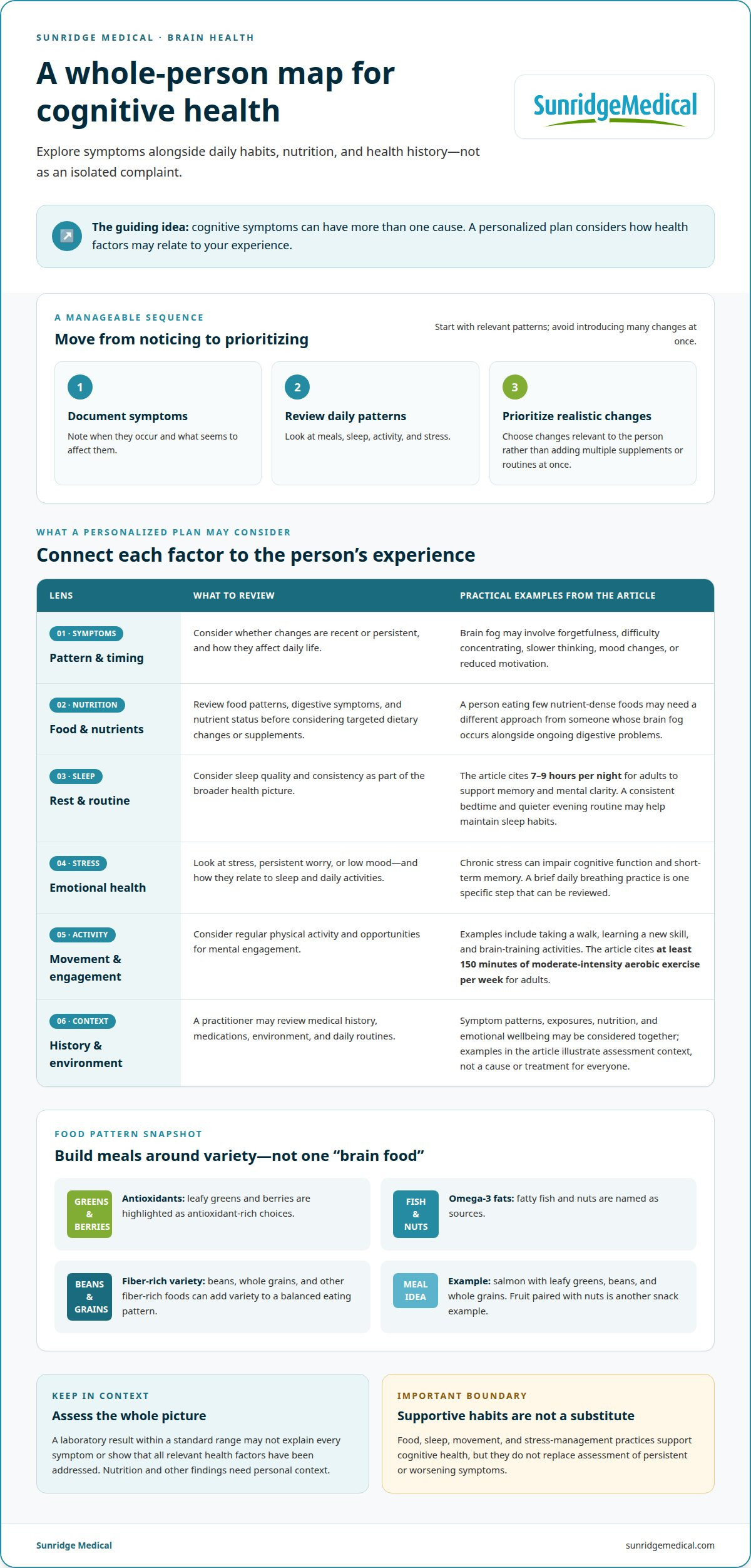
A personalized plan begins by connecting cognitive symptoms with the broader health picture. A practitioner may review sleep, nutrition, stress, medical history, medications, environment, and daily routines. These details can help identify possible contributors instead of treating brain fog as an isolated complaint. A plan for boosting cognitive function with functional medicine uses this context to choose practical changes and assessments suited to the individual. Functional medicine considers potential underlying factors while recognizing that cognitive symptoms can have more than one cause.
Nutrition is one part of that assessment. A plan might review food patterns, digestive symptoms, and nutrient status before suggesting targeted dietary changes or supplements. For example, someone who eats few nutrient-dense foods may need a different approach from someone whose brain fog occurs alongside ongoing digestive problems. Test results also need context: a result within a standard laboratory range may not explain every symptom or show that all relevant health factors have been addressed.
Brain fog can involve forgetfulness, difficulty concentrating, slower thinking, mood changes, or reduced motivation. A 35-year-old teacher described brain fog alongside digestive issues, illustrating why symptoms and gut health may be considered together. Stress, inadequate sleep, nutrition, environmental exposures, and medical conditions can also affect brain function. A careful history helps distinguish a recent change from a persistent pattern and guides which factors deserve attention first.
Personalized, proactive care turns that assessment into a manageable sequence. First, document when symptoms occur and what seems to affect them. Next, review daily patterns such as meals, sleep, activity, and stress. Then, prioritize changes that are realistic and relevant, rather than introducing multiple supplements or routines at once. Starting supportive habits earlier may help maintain brain health across life stages, although a plan should respond to the person’s health needs and current symptoms.
When considering how to improve cognitive function, functional medicine commonly looks at nutrition, regular physical activity, quality sleep, mental engagement, and stress management. Practical examples include adding nutrient-rich foods, taking a walk, keeping a consistent bedtime, learning a new skill, and practicing meditation or deep breathing. The goal of boosting cognitive function with functional medicine is to consider how these habits fit the person’s health context. These practices support cognitive health, but they don’t replace assessment of persistent or worsening symptoms.
In the United States, costs for functional medicine cognitive care depend on the individual’s clinical needs, including evaluation, testing, and care planning. Insurance coverage varies by policy and service, so there is no single price or coverage answer.
Emotional health belongs in the same picture. Chronic stress can impair cognitive function and short-term memory, while persistent worry or low mood may make concentration harder. A specific step, such as scheduling a brief daily breathing practice, gives the plan something observable to review. If emotional strain and cognitive changes appear together, their timing and effects on sleep and daily activities can help guide a more complete assessment.
Functional medicine aims to support brain health through individualized decisions, not a single packaged protocol. A 50-year-old man who developed memory problems after mold exposure illustrates how environmental history may inform clinical assessment. That example does not establish one cause or treatment for everyone. It highlights why symptom patterns, exposures, nutrition, and emotional wellbeing are considered together when building a plan.
2. Which foods contribute positively to cognitive function?
Choose meals that combine vegetables, fruit, quality protein, and healthy fats. Leafy greens and berries provide antioxidants, while fatty fish and nuts supply omega-3 fats. Beans, whole grains, and other fiber-rich foods add variety and support a balanced eating pattern. A practical meal might pair salmon with leafy greens, beans, and whole grains. Food choices work best as a consistent pattern, not as a single “brain food.”
Regular meals made with minimally processed ingredients can support steady energy. For example, pair fruit with nuts or include protein and vegetables at lunch. Ultra-processed foods have been associated with increased dementia risk, so replacing some packaged snacks with whole-food options is a sensible step. Individual needs, preferences, and digestive tolerance matter; a plan should fit the person’s health context rather than impose a rigid menu.
Sleep is part of the same picture. Adults should aim for 7-9 hours of sleep per night to support memory and mental clarity, according to UltraWellness Center. A consistent bedtime and a quieter evening routine can make sleep habits easier to maintain. During sleep, the brain clears certain waste products that accumulate during the day, making adequate rest relevant to cognitive health.
The lifestyle changes most often emphasized for cognitive health are regular exercise, sufficient sleep, stress management, and a nutrient-rich eating pattern. Adults should aim for at least 150 minutes of moderate-intensity aerobic exercise per week, according to UltraWellness Center. Functional medicine considers how these habits interact, then prioritizes interventions based on symptoms, routines, and health needs.
Blood sugar regulation is another consideration. Meals combining fiber-rich carbohydrates with protein and healthy fats can support a more balanced eating pattern than meals centered on refined carbohydrates alone. For instance, oatmeal with nuts and berries brings together fiber, fats, and fruit. The brain relies on a steady supply of energy, so food timing and composition may be relevant when someone reports energy dips alongside concentration difficulties.
Digestive symptoms can also inform food choices. The gut microbiome can influence mood and cognition through the gut-brain connection. If cognitive concerns occur alongside persistent digestive issues, reviewing dietary patterns and gut health may help shape an individualized approach. Chronic inflammation can affect brain function, which is one reason whole foods rich in vegetables, fruit, and healthy fats are often favored over heavily processed options.
For a person managing a diagnosed chronic Lyme condition alongside cognitive concerns, chronic Lyme disease care may be relevant to the broader health picture. Diet, sleep, stress, and exercise are considered together in functional medicine, rather than treated as interchangeable interventions. The right starting point depends on which patterns and symptoms are most prominent.
3. Nutritional deficiencies and cognitive symptoms
Brain fog, fatigue, and memory difficulties can have nutritional contributors, but symptoms alone cannot identify a deficiency. A 40-year-old woman with persistent brain fog and fatigue was found to have B-vitamin and magnesium deficiencies. Dietary changes and targeted supplements were followed by reported improvement. Her example shows why assessment matters: the same mental symptoms can have different causes, and treatment should address a documented need.
A practical nutrition review starts with regular meals and a varied, nutrient-rich pattern. Fruits, vegetables, fish, and fiber have been associated with better cognition in people with and without existing cognitive conditions. Leafy greens, berries, nuts, and fatty fish can contribute antioxidants and omega-3 fatty acids. For example, adding fish and vegetables to a meal may improve its nutrient profile, while exercise supports circulation and blood flow to the brain.
Omega-3 fats occur in fatty fish and nuts, and low levels may impair cognitive health. Food choices can help increase intake, but supplements aren’t automatically appropriate for every person. A clinician considers diet, symptoms, medications, and relevant test results before recommending them. Supplements marketed for brain health don’t reliably improve everyone’s cognitive function, and ingredients can cause side effects or interact with medications. Product claims alone don’t establish that a supplement is needed.
Testing can help organize questions, not replace clinical judgment. Depending on the history, a practitioner may consider nutrient, toxin-exposure, or genetic testing. Examples include an organic acid test, an MTHFR gene panel, and an Omega 6:3 ratio assessment. Each test addresses different information, so results need to be interpreted alongside symptoms, diet, and medical history. A result should guide a relevant decision, rather than trigger a treatment without context.
Blood sugar patterns are another part of dietary assessment. Meals combining fiber-rich foods with protein and healthy fats offer a practical alternative to relying heavily on refined carbohydrates. For example, berries with nuts or vegetables alongside a protein source can make a meal more balanced. These choices don’t diagnose a deficiency, but they can support a consistent eating pattern while a clinician evaluates persistent symptoms.
Testing and treatments have limitations. A test may not explain symptoms, and an unnecessary supplement or intervention can cause avoidable side effects or medication interactions. Discuss the purpose of each proposed test, how its result could change care, and the reasoning behind any treatment. Targeted interventions are most useful when they address an identified concern and fit the person’s broader health picture.
Nutrition can support cognitive health, but persistent or worsening memory problems deserve assessment beyond diet alone. A structured review of symptoms, eating patterns, medications, and relevant test results can help distinguish possible nutrient concerns from other contributors. This approach keeps care focused and helps prevent supplements from becoming a substitute for understanding the cause.
4. Antioxidant- and anti-inflammatory-rich diets
Build meals around colorful plants, healthy fats, and varied whole foods. Dark leafy greens and berries contain antioxidants that help protect the brain from oxidative stress. Fatty fish adds omega-3 fats, while vegetables provide vitamins and minerals. For a practical start, add berries to breakfast and greens to lunch. These choices make an antioxidant-rich pattern part of everyday wellness, rather than relying on one food or supplement.
Inflammation matters because chronic inflammation can affect brain function. Antioxidants, healthy fats, vitamins, and minerals help provide energy and protect against oxidative stress and inflammation. A meal with leafy greens, beans, and fish brings several of these nutrients together. No single ingredient removes inflammation; the overall eating pattern and the person’s health context both matter.
Environmental exposure also belongs in a thoughtful health review. Heavy metals, mold, and pesticides are exposures that can damage neurons. A useful first step is to note relevant exposure history, such as known mold in a home or workplace, and discuss it during a clinical assessment. This information can help determine whether environmental factors deserve attention alongside diet, symptoms, and other health details.
Reducing inflammation through lifestyle choices means focusing on repeatable routines. Choose minimally processed meals more often, include vegetables or fruit at meals, and use foods such as nuts or fatty fish for healthy fats. Regular exercise and adequate sleep can complement these choices. The right priorities depend on a person’s symptoms and circumstances.
Food preparation can make a plan easier to follow. For example, prepare greens and other vegetables for several meals, keep berries available, and include fish when planning dinner. Pairing plant foods with protein and healthy fats creates balanced meals without turning eating into a complicated protocol. A consistent pattern is more useful than treating one “superfood” as a complete solution.
When cognitive symptoms occur alongside a history of mold, pesticide, or heavy-metal exposure, diet is only part of the picture. A clinician can consider symptom timing, exposure history, and broader health patterns before choosing next steps. Avoid starting restrictive diets or multiple supplements based on an exposure concern alone. A focused plan can address nutrition and relevant environmental factors without assuming one cause explains every symptom.
Antioxidant-rich foods contribute to a brain-supportive lifestyle, but they don’t replace evaluation of persistent cognitive changes. Keep a simple record of meals, sleep, exercise, and symptoms to identify patterns for discussion. This concrete account can help clarify whether a dietary change coincides with a change in daily function and support more individualized wellness decisions.
5. Functional neurology and nervous system function
Functional neurology focuses on assessing nervous system function and using non-invasive techniques for neurological conditions. Its goal is to support neuroplasticity, the brain’s ability to adapt and rewire after injury or stress. A plan may include brain exercises, vestibular and balance therapy, or visuomotor exercises. These approaches are selected according to the person’s symptoms and functional needs, rather than applied as a standard routine.
Targeted practice can make rehabilitation more specific. For example, balance exercises challenge coordination, while visuomotor tasks connect visual input with movement. Brain-training activities such as memory games, crossword puzzles, and learning a new skill provide other structured challenges. A functional medicine approach may consider these activities alongside sleep, stress, and general health. Chronic stress can impair cognitive function, making stress management relevant to a broader care plan.
Age-related cognitive changes deserve careful assessment. Mild cognitive impairment is common among people over age 65, and memory changes can have different causes. Alzheimer’s disease is one concern, but forgetfulness alone does not establish a diagnosis. A clinician may consider a neurological exam, blood tests, or brain imaging when evaluating cognitive dysfunction. These conventional assessments can help clarify symptoms and guide appropriate care.
Functional neurology and conventional neurological care need not be competing choices. A neurological exam and other medical evaluation can help identify concerns that require diagnosis or treatment. Exercises and rehabilitation approaches may address specific functional goals, while clinical assessment puts those goals in context. New, worsening, or disruptive symptoms deserve prompt discussion with a qualified healthcare professional.
After COVID-19, some people may notice neurological symptoms or changes in concentration and memory. Describe when symptoms began, how they affect daily activities, and whether they are changing. That timeline gives a clinician useful context for deciding what evaluation is appropriate. Persistent symptoms should not be attributed to stress or dismissed without considering other possible explanations.
Age, symptom pattern, medical history, and daily function all shape decisions about cognitive support. For instance, difficulty maintaining balance calls for different assessment questions than trouble recalling recent conversations. Recording concrete examples helps describe changes clearly. A clinician can then consider whether a neurological examination, blood tests, brain imaging, or targeted rehabilitation fits the concern.
For people seeking care for neurological concerns, discuss neurologic condition care as part of a personalized plan. A thoughtful evaluation can connect symptoms with relevant health factors and identify suitable next steps. The emphasis is on addressing the person’s actual challenges, while keeping medical assessment central when cognitive decline or new neurological symptoms arise.
Sunridge Medical
Sunridge Medical provides personalized, physician-led care for people whose cognitive concerns occur alongside complex chronic or neurological conditions. Its comprehensive approach combines conventional therapies with research-informed alternative treatments, considering each person’s health picture rather than relying on a standardized plan. If brain fog or memory changes appear alongside a neurological condition, chronic Lyme disease, or another complex illness, a broader clinical discussion can help connect symptoms with relevant care needs.
Sunridge Medical provides Neurologic Condition Treatment and Chronic Lyme Disease Treatment, among other condition-specific services. Care is focused on the underlying health concerns and the person’s individual circumstances, without promising a particular cognitive outcome. Contact Sunridge Medical to discuss your health concerns and possible next steps.
Take a Thoughtful Next Step for Your Brain Health
Progress begins with a clearer understanding of how cognitive concerns fit into your overall health. Rather than adding multiple supplements or making sweeping lifestyle changes, focus on a care plan that considers your symptoms, medical history, and priorities. That’s the value of boosting cognitive function with functional medicine: exploring relevant health factors in a personalized way while keeping appropriate medical assessment in view.
If neurological concerns or a complex chronic condition are part of your experience, Sunridge Medical provides care for neurologic conditions and chronic Lyme disease. A conversation can help you discuss your concerns and whether the clinic’s condition-focused care aligns with your needs. You don’t need to have every answer before taking that step.
Contact Sunridge Medical today to discuss your health concerns and possible next steps. A more informed path forward can begin with a thoughtful conversation.
Frequently Asked Questions
Can stress management techniques improve brain function?
Yes. Meditation, slow deep breathing, and biofeedback can support stress regulation and mental clarity. Try pairing a breathing practice with a daily cue, such as finishing lunch, then notice how concentration feels during afternoon tasks. Chronic stress is associated with impaired cognitive function and short-term memory, so addressing it is relevant to brain health. Stress-management practices complement broader care rather than replace assessment of persistent cognitive symptoms.
What are some of the causes of cognitive dysfunction?
Cognitive dysfunction can have multiple contributors, including chronic stress, poor sleep, nutrient shortfalls, digestive problems, environmental exposures, medication effects, and neurological or other medical conditions. Medication effects also deserve review with a qualified healthcare provider. Timing and pattern matter: symptoms that began after an illness raise different assessment questions than gradual changes or difficulties that fluctuate with sleep. Recording when symptoms began and how they affect daily tasks gives you a useful starting point for clinical discussion.
What is Brain Fog?
Brain fog is a common description for difficulty thinking clearly, concentrating, or recalling information. Someone might lose their train of thought during a conversation, reread the same paragraph, or struggle to organize familiar tasks. It describes an experience, not a diagnosis. Note when it occurs and whether it affects work, conversations, or routine activities. Specific examples help distinguish occasional lapses from persistent changes that need evaluation.
What role does sleep play in maintaining brain health?
Sleep supports memory and mental clarity, and the brain clears certain waste products during sleep. After a restless night, someone may find it harder to focus on instructions or remember details from a meeting. A steady wind-down routine, such as putting screens aside before bed and keeping a consistent bedtime, can help make sleep habits more regular. Persistent sleep disruption is useful information to include in a discussion about cognitive symptoms.
Which foods contribute positively to cognitive function?
Meals featuring vegetables, fruit, beans, fish, and nuts provide a range of nutrients associated with brain-supportive eating patterns. A simple option is to add vegetables and a protein source to lunch, then choose fruit or nuts for a snack. Favoring whole foods over ultra-processed choices can improve overall diet quality. The most useful approach is a sustainable eating pattern that fits your preferences and digestive needs, not reliance on one “brain food.”
Why Choose Functional Medicine for Brain Fog?
A functional medicine approach considers brain fog alongside a person’s broader health history and daily patterns. This perspective can help organize questions about symptom timing, sleep, nutrition, stress, and other relevant factors. For example, concentration problems that occur with digestive symptoms invite different discussion points than memory changes following an illness. The value is a more individualized assessment, not an assumption that one cause or protocol explains everyone’s experience.
What causes cognitive problems that functional medicine practitioners commonly assess?
Practitioners commonly consider whether cognitive symptoms relate to sleep, stress, nutrition, digestive concerns, environmental exposures, medication effects, or an underlying neurological or chronic condition. They also consider when symptoms began and how they affect daily function. For instance, brain fog that coincides with a medication change presents a specific issue to review with a qualified healthcare provider. This context helps focus evaluation instead of treating every concentration problem alike.
What tests are used to evaluate memory, attention, and brain health in functional medicine?
Assessment may include a clinical history, neurological examination, blood tests, and brain imaging, depending on symptoms and medical context. A practitioner may also consider tests related to nutrient status, genetic factors, or toxin exposure when relevant. Each assessment answers a different question; no single result describes every aspect of memory or attention. The key is connecting findings with symptoms and deciding whether they change the care plan.