


More treatment isn’t always the only path forward when a chronic illness remains difficult to manage. Options for treatment-resistant chronic illness can include lifestyle support, practical self-management strategies, personalized care planning, and ongoing monitoring alongside appropriate medical treatment. The right combination depends on the condition, symptoms, and effects on daily life.
It’s understandable to feel stuck when a treatment hasn’t brought the progress you hoped for. A broader, coordinated approach can help clarify what’s changing, identify ways to support day-to-day well-being, and guide thoughtful adjustments with your healthcare team. This article explores supportive therapies and lifestyle measures, self-management and patient education, individualized planning, and ongoing monitoring, so you can better understand the approaches that may help you manage a complex health journey.
Key Takeaways
- When progress stalls, consider how daily routines and supportive therapies may complement, not replace, medical treatment.
- Antibiotic resistance occurs in bacteria, and antimicrobial use is one factor that can contribute to it.
- Symptom tracking, medication lists, and condition-specific education can help make care discussions more focused.
- Personalized plans can align treatment goals, lifestyle support, and monitoring, especially when several conditions overlap.
- Regularly reviewing symptoms, test results, treatment effects, and side effects can help inform timely care adjustments.
Lifestyle changes and supportive therapies
Patients can support symptom management and quality of life while pursuing effective treatment by adapting daily routines and considering appropriate supportive therapies. The aim is to address practical needs alongside medical care, not to substitute lifestyle changes for treatment.
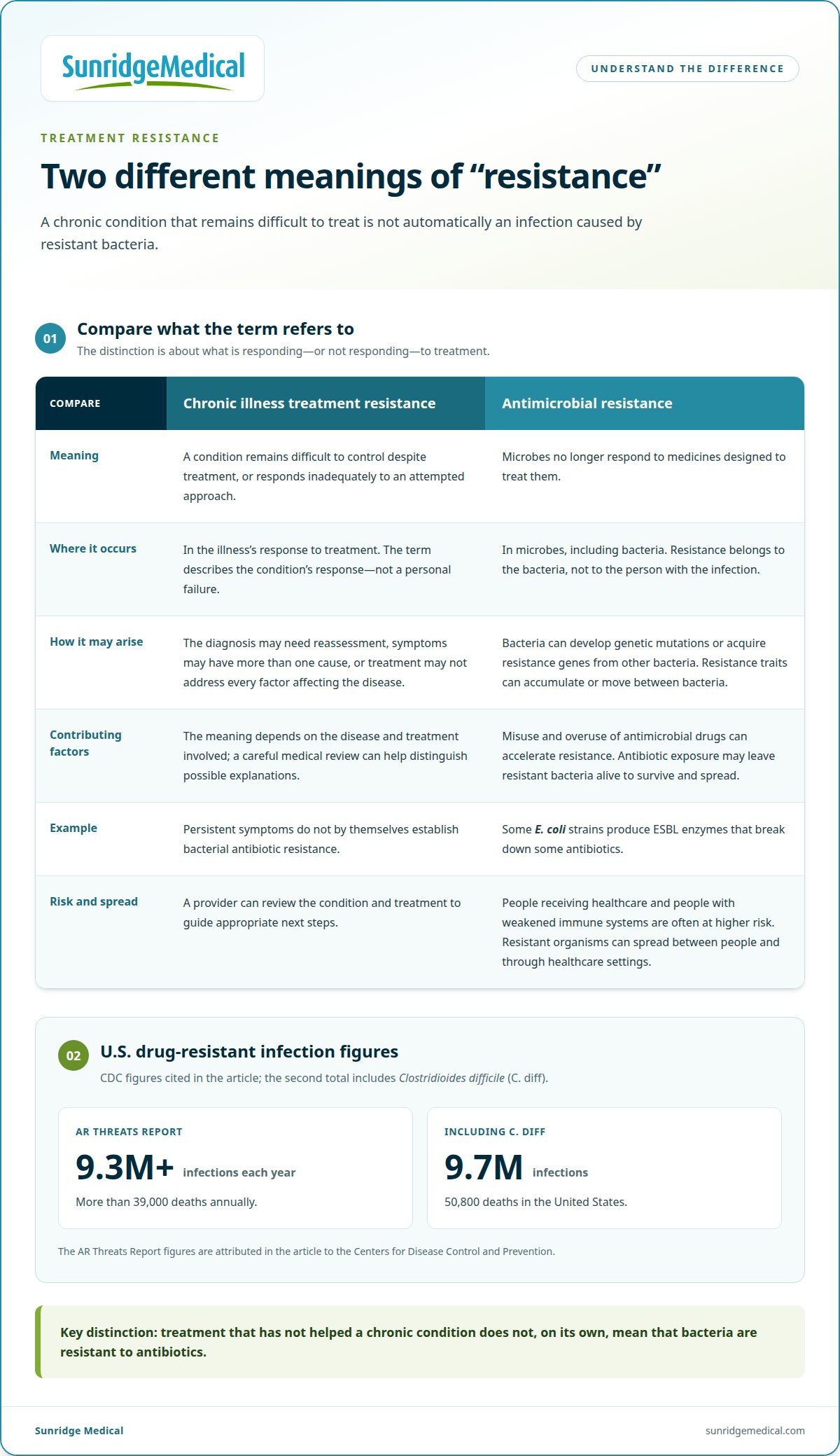
According to the Centers for Disease Control and Prevention’s 2026 Antimicrobial Resistance Threats Report (AR Threats Report), more than 9.3 million drug-resistant infections occur in the United States each year, and more than 39,000 people die as a result annually.
Managing Symptoms While Seeking Treatment
Symptom management means using practical measures, such as pacing activity or physical therapy, to ease daily strain while treatment continues. It matters because pain, fatigue, or breathing difficulties can disrupt ordinary tasks even as providers work to address the disease. For arthritis or chronic back pain, balancing activity with rest and learning pain-management techniques beyond medication can support daily function.
Supportive therapies can address specific challenges alongside primary care. Depending on the condition, these may include physical therapy, respiratory therapy, cognitive behavioral therapy, or nutritional counseling. Respiratory therapy, for example, may support breathing-related needs, while cognitive behavioral therapy can help someone work through the emotional effects of ongoing symptoms. The right combination depends on the patient’s circumstances.
Supporting Quality of Life
Quality-of-life support shapes routines around a person’s symptoms, abilities, and treatment needs. Care should account for how someone sleeps, moves, eats, and manages stress, not only the diagnosis. Condition-specific dietary changes, suitable physical activity, stress management, sleep routines, tobacco cessation, and alcohol moderation may all be considered in broader chronic disease management.
Specific changes should fit the condition and the person’s capacity. Someone whose symptoms worsen after exertion may discuss pacing activity and rest with providers, while a person working on sleep may focus on a consistent bedtime routine. Nutritional counseling can turn dietary goals into manageable choices. These supportive measures do not promise that symptoms will resolve or that a disease will respond to treatment.
Drug-resistant infections are another part of the chronic-illness landscape, but resistance is a change in bacteria, not in a person’s body. According to the Centers for Disease Control and Prevention, when Clostridioides difficile (C. diff) is added, all the threats in the AR Threats Report reach 9.7 million infections and 50,800 deaths in the United States. When Clostridioides difficile (C. diff) is added, the Centers for Disease Control and Prevention gives the U.S. toll as 9.7 million infections and 50,800 deaths.
- Tell providers about substantial symptom changes, medication side effects, difficulty following treatment, or emotional distress related to the condition.
- Discuss how physical activity, rest, sleep, diet, and stress management can be adapted to your symptoms.
Factors contributing to resistance
Treatment-resistant chronic illness describes a condition that remains difficult to control despite treatment or responds inadequately to an attempted approach. The term describes the illness’s response, not a personal failure. Its meaning depends on the disease and treatment involved.
Clinical trials study a defined intervention in a selected group of participants. For someone with a persistent condition, a trial may offer a structured way to receive and assess an investigational approach while researchers gather evidence about its effects and risks.
Resistance has more than one meaning in medicine. A chronic disease that has not improved with treatment is not automatically an infection caused by resistant bacteria. Antimicrobial resistance specifically concerns microbes that no longer respond to medicines designed to treat them.
Bacteria can develop resistance through genetic mutations or by acquiring resistance genes from other bacteria. Misuse and overuse of antimicrobial drugs can accelerate this natural process. Antibiotic exposure can eliminate susceptible bacteria while resistant bacteria survive and spread.
Resistance traits can also move between bacteria. Bacteria may acquire genes from other bacteria that reduce a medicine’s effectiveness. Over time, they can accumulate multiple resistance traits, making infections harder to treat with different antibiotic types. These mechanisms matter for disease control because resistant infections can spread between people and through healthcare settings.
Some bacteria have specific defenses. Certain strains of E. coli, for example, produce extended-spectrum beta-lactamases, or ESBLs. These enzymes break down some antibiotics, complicating treatment of infections caused by those strains. The resistance belongs to the bacteria, not to the person with the infection.
Exposure and health circumstances also affect risk. People receiving healthcare and those with weakened immune systems are often at higher risk of antimicrobial-resistant infections. Antibiotic use is not the only factor: resistance can emerge naturally as microbes evolve, and resistant organisms can spread between people.
For an individual chronic condition, apparent treatment resistance can have other explanations. The original diagnosis may need reassessment, symptoms may have more than one cause, or treatment may not address every factor affecting the disease. A careful medical review can distinguish these possibilities from bacterial antibiotic resistance and guide appropriate next steps.
In a clinical trial, researchers follow a study protocol to evaluate a candidate treatment in participants who meet its eligibility criteria. Findings can help determine whether the intervention merits further study, but participation does not establish that it will work for a particular person. The condition, prior treatments, study purpose, and eligibility criteria all shape whether a trial is relevant.
Patient education and self-management
Self-management combines education about a condition with practical skills for responding to symptoms and daily care demands. When a treatment plan is complex, understanding the purpose of each prescribed medicine can make appointments more focused. Bring a complete list of prescription medicines, over-the-counter products, and supplements to medical visits. Include recent healthcare received, since that context can affect care decisions.
Tracking can turn day-to-day experience into useful information. Record symptoms, possible triggers, medication timing, and changes in function, such as whether fatigue interferes with walking or work. A written log or symptom-tracking application can help organize these observations. Bring the record to appointments so providers can discuss patterns rather than relying on memory alone.
Education should match the condition. For asthma or COPD, learning the difference between maintenance and rescue medicines, practicing inhaler technique, and recognizing environmental triggers can support an action plan. For diabetes, tracking blood glucose and coordinating medication timing with meals may be relevant. These examples show why self-management guidance should be specific, not a generic checklist for every disease.
Infection prevention is another practical part of managing chronic conditions. People with diabetes, heart disease, or kidney disease are advised to manage those conditions to help protect against infection. Handwashing with soap and water or using an alcohol-based hand rub can help reduce the spread of infection. Vaccines recommended by a healthcare provider can also help prevent infections that might otherwise prompt unnecessary antibiotic use.
Knowing what a medicine can and cannot treat is important. An antibiotic treats certain bacterial infections, not viral illnesses such as colds or influenza. Take antibiotics only when prescribed, follow the directions for dosage and duration, and never share unused medicine. Staphylococcus aureus commonly lives on the skin or in the nose without causing illness, but it can cause infection if it enters a wound. Keeping cuts clean and covered supports basic wound care.
Patients in the United States can search ClinicalTrials.gov by condition, intervention, or location, then review the study purpose and eligibility criteria with their care team. Specialty clinics can be found through condition-focused medical centers and referrals from clinicians familiar with the diagnosis. The relevant specialty depends on the condition and symptoms.
Self-management also means knowing when a routine plan may need prompt review. Contact providers about new or worsening symptoms, medication side effects, or difficulty following the treatment schedule. For example, if nausea or fatigue makes a prescribed routine difficult, describe the barrier, when it occurs, and how it affects daily activities. Clear details help the care team consider adjustments without you changing treatment independently.
- Bring an updated medicine and supplement list to each appointment.
- Record symptoms, medication timing, and functional changes between visits.
- Use condition-specific education to understand care tasks and warning signs.
Personalized treatment planning
A personalized plan connects a person’s diagnosis, symptoms, treatment goals, and practical needs. It can specify targeted medications, lifestyle measures, monitoring, and responses to complications. For a condition that remains difficult to manage, this structure helps make clinical decisions more deliberate and measurable. Reviewing options for treatment-resistant chronic illness starts with understanding the individual clinical picture, not choosing a treatment based on diagnosis alone.
Planning begins with the clinical picture. Providers consider the diagnosis, previous treatments, current symptoms, test results, and other conditions affecting the patient. If someone has both an autoimmune disease and a thyroid disorder, for example, the plan should account for how each condition and its treatment may affect the other. Treatment for one illness should not be considered in isolation. These details also help identify which options for treatment-resistant chronic illness may be relevant to discuss.
Clear goals make a plan more useful. They may focus on symptom control, daily function, preventing flare-ups, or reducing the chance of complications. The team can connect each goal with an approach, such as medication, a laboratory check, or a change in daily routine. Defining what progress means to the individual also gives follow-up visits a more specific focus.
When several specialists are involved, coordination matters. One provider may manage a chronic disease while another addresses a related symptom or complication. A shared medication list and schedule can reveal conflicting recommendations, overlapping medicines, or gaps in follow-up. For example, a patient seeing a neurologist and an immunology specialist may need both perspectives considered before a treatment adjustment.
Infectious diseases require a distinct planning approach. If tests identify bacteria or other organisms, the plan can consider the type of infection and which treatments target it. Antimicrobial resistance is different from chronic disease treatment resistance: it describes microbes that no longer respond to medicines designed to treat them. This distinction supports appropriate disease control and prevention without assuming every persistent symptom signals infection.
Insurance coverage and out-of-pocket costs for advanced or experimental treatments depend on the individual health plan, treatment classification, and care setting, such as outpatient care or a hospital. Before making a treatment decision, patients can review these factors with their insurer and care team, including whether the plan considers a proposed intervention covered care.
A useful plan also anticipates what happens if symptoms change. It can identify which changes need prompt clinical review, what information to bring, and how treatment effectiveness or side effects will be assessed. For instance, a person starting a new medication may have follow-up and laboratory testing included in the plan. This structure helps providers weigh the response alongside the patient’s experience.
- Set goals tied to symptoms, function, and complications.
- Coordinate recommendations when multiple specialists or conditions are involved.
- Connect each treatment choice with a monitoring plan and a way to assess progress.
Regular monitoring and treatment adjustments
Monitoring compares treatment effects, side effects, test results, and reported symptoms over time. These findings help providers decide whether a plan needs adjustment.
Responding When Standard Treatment Fails
When standard treatment isn’t working, arrange a clinical review rather than changing the plan yourself. Persistent symptoms can reflect limited treatment effect, side effects, or a change in the condition. Providers can compare your experience with laboratory results, office assessments, and other relevant measures before considering another approach.
Monitoring uses different measures depending on the condition. Office visits allow providers to assess symptoms and function, while laboratory tests can help evaluate treatment response or possible adverse effects. Blood pressure or blood sugar checks, pulmonary function tests, and patient-reported symptoms may also contribute. For example, worsening breathlessness can be considered alongside pulmonary function results, rather than in isolation.
A useful review connects each finding to a specific question: Is treatment helping the intended symptoms? Are side effects interfering with daily life? Do test results support continuing the current approach? Comparing the answers helps distinguish a temporary fluctuation from a pattern that calls for reassessment. It also gives providers a clearer basis for discussing next steps with the patient.
Monitoring should fit the treatment and condition. A new medication may require attention to effectiveness and side effects, while a stable plan may focus on routine visits and selected tests. Information gathered over time can show whether the approach remains appropriate. If symptoms change between scheduled visits, share that change promptly with your care team.
Risks of Changing or Stopping Treatment
Changing or stopping treatment without clinical guidance means altering a care plan without weighing its purpose, risks, and monitoring needs. A treatment may help control symptoms or reduce flare-ups even when improvement feels incomplete. An unsupervised change can make it harder to understand whether symptoms reflect the condition, a treatment effect, or another cause.
For example, stopping a prescribed medicine before a planned review may disrupt the treatment strategy and complicate later assessment. Providers need to know what changed and when to interpret new symptoms or test results accurately. If side effects or practical barriers make treatment difficult to continue, report them. That information can guide a considered adjustment instead of an abrupt change.
Infections require particular care because ineffective antimicrobial treatment can affect both the patient and public health. Providers may need to reassess treatment for resistant infections based on clinical findings and relevant tests. Hospitals and other care centers also monitor infection patterns as part of disease control. Report worsening symptoms or medication effects promptly, rather than stopping or changing antimicrobial medicines independently.
For ongoing illness, connect with a care team that can review treatment response and monitoring needs. Explore individualized chronic illness care as a next step in considering a coordinated approach.
Sunridge Medical: Chronic Lyme Disease Treatment
Sunridge Medical’s Complex & Chronic Conditions Program supports people seeking individualized care for complex health conditions, including Lyme disease and other infections. Physician-led care combines conventional therapies with research-informed alternative options, shaped around each patient’s circumstances rather than a standardized protocol.
If ongoing symptoms or limited progress have left you unsure about next steps, a comprehensive review can help clarify treatment priorities and how different approaches may fit together. Sunridge Medical also offers Autoimmune Disease Management, Environmental Illness Treatment, and Alternative Cancer Treatment Protocols for related care needs.
Contact Sunridge Medical to discuss care for chronic Lyme disease and your health goals.
Take the Next Step Toward More Individualized Care
Options for treatment-resistant chronic illness are most meaningful when they connect with what matters in your daily life. Consider which symptoms affect your routines, what you hope treatment will help you do, and what questions remain. Those priorities can give a care conversation a clearer starting point and keep the focus on your individual needs.
Sunridge Medical offers Alternative Cancer Treatment Protocols, Chronic Lyme Disease Treatment, and Autoimmune Disease Management. If one of these areas matches the care you’re seeking, a conversation can help you explore whether its approach aligns with your health priorities. Bring your main concerns and the progress you hope to pursue.
Contact Sunridge Medical to discuss care and consider a thoughtful next step for your health journey. Each informed conversation can help you move forward with greater clarity and purpose.
Frequently Asked Questions
What Are the Most Effective Ways to Manage Chronic Health Conditions?
Effective management connects treatment goals with outcomes that matter in daily life. For example, someone hoping to maintain work attendance could discuss how symptoms affect that goal alongside clinical measures. A conversation about options for treatment-resistant chronic illness can focus on a specific priority, such as maintaining energy through the workday. Ask who coordinates care and what changes call for an earlier review, so the plan reflects both health needs and daily responsibilities.
What Questions Should I Ask My Healthcare Providers?
Ask what each treatment is intended to change, how its effect will be evaluated, and which side effects deserve attention. You can also ask how a proposed medicine fits with your other prescriptions or supplements, and whom to contact if symptoms shift. If recommendations differ, ask each provider to explain the reasoning and how the approaches might be coordinated. Writing down your main concerns can keep the discussion focused.
What Causes Chronic Illnesses to Be Resistant to Treatment?
Several factors may contribute, including a diagnosis that needs reassessment, disease processes that are difficult to target, or multiple conditions influencing symptoms. A treatment may also be poorly matched to a person’s clinical picture or difficult to tolerate. Exploring options for treatment-resistant chronic illness begins by clarifying what may be limiting progress. Reviewing the diagnosis and treatment history can help distinguish these possibilities without treating limited response as personal failure.
How Can a Specialist or Second Opinion Help With Treatment-Resistant Chronic Illness?
A specialist can bring focused experience with a condition, while a second opinion offers another clinical review of the diagnosis and care history. This can help when symptoms persist, recommendations conflict, or the next step is unclear. Sunridge Medical provides physician-led, individualized care for complex chronic conditions, integrating conventional therapies with research-informed alternative treatments. Relevant medical records can help the physician understand your history and discuss possible directions.
What Alternative and Complementary Therapies Have Evidence for Chronic Illness?
Evidence depends on the specific therapy and condition, so a treatment’s value should be judged against research relevant to that illness. Consider whether studies assess outcomes that matter to you, such as symptom burden or daily function, and whether they address potential harms or interactions. Ask how a complementary approach fits with existing medical care. A therapy should not be assumed effective for every condition simply because it is called natural or integrative.