


A gradual hormone shift isn’t a single explanation for every change in energy, mood, or sexual function. Andropause describes age-related hormonal changes in men, including a gradual decline in testosterone that can begin around age 30 to 40 at about 1% a year. Managing andropause symptoms naturally focuses on supportive habits and care tailored to the symptoms affecting you.
It can be frustrating when changes develop gradually or overlap with other health concerns. Andropause also differs from menopause: testosterone tends to decline over time rather than dropping sharply, and some men with lower levels have no symptoms.
This article explains what andropause is, which symptoms may occur, and how exercise, sleep, nutrition, and stress management can support well-being. It also explains why focusing on specific symptoms matters and when a medical evaluation can help determine whether testosterone changes or another factor may be involved.
Key Takeaways
- Andropause involves gradual hormone changes, but lower testosterone doesn’t always cause symptoms.
- Low energy, mood changes, sleep problems, and shifts in sexual function can have several possible causes, so symptoms deserve thoughtful assessment.
- Strength training, cardio, balanced nutrition, quality sleep, and stress management can support overall well-being during age-related changes.
- Addressing individual concerns can make care more relevant than treating every symptom as a sign of low testosterone.
- Sunridge Medical’s Hormone Optimization Therapy is a potential next step when hormone-related symptoms call for a more comprehensive care approach.
Age-related testosterone decline
Testosterone levels often decrease gradually with age, but the pace and effects differ between men. From around age 30 to 40, levels decline by about 1% a year; symptoms and test results, not age alone, help clarify whether this change matters medically.
Andropause is a term for gradual age-related hormonal changes in men. It isn’t a sudden transition: symptoms may emerge in the late 40s or early 50s, while some men have low testosterone without noticeable effects. Possible changes include reduced libido, erectile difficulties, lower energy, depressed mood, reduced muscle mass, and increased body fat. No single symptom establishes the cause.
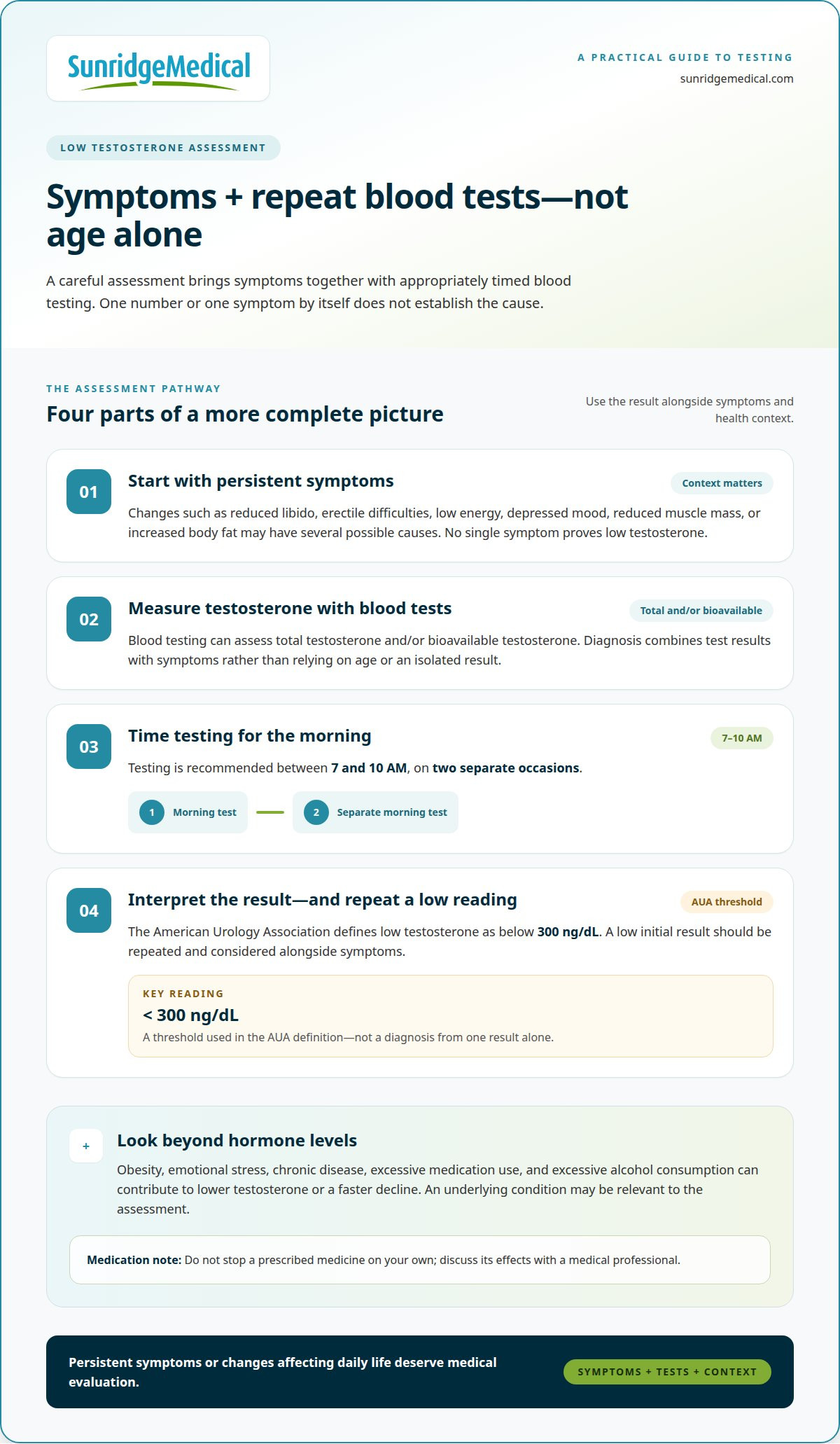
Obesity, emotional stress, chronic disease, and excessive medication use can contribute to lower testosterone or a faster decline. Excessive alcohol consumption can also lower levels. These factors matter because addressing an underlying condition may help testosterone return to the normal range. Don’t stop a prescribed medicine on your own; discuss its effects with a medical professional.
Health Concerns Linked to Low Testosterone
Low testosterone is a hormone deficiency that may accompany concerns beyond sexual function, including reduced bone mineral density and changes in muscle. In men over 50 with testosterone deficiency, an estimated one-third develop osteoporosis or osteopenia. Hypogonadism is also associated with higher cardiovascular disease rates and heart attack risk, making persistent symptoms a reason to assess overall health, not just hormone levels.
Testing for Low Testosterone
Diagnosis combines symptoms with blood testing, rather than relying on age or one isolated result. The American Urology Association defines low testosterone as below 300 ng/dL; testing total and/or bioavailable testosterone can help assess levels. Blood tests are recommended between 7 and 10 AM on two separate occasions, and a low initial result should be repeated. See a medical professional when symptoms persist or affect daily life.
Supplements and Testosterone Treatment
Ashwagandha, maca root, tongkat ali, vitamin D, zinc, and omega-3 fatty acids are supplements promoted for hormone support. Evidence is strongest as a potential benefit when addressing a deficiency; supplements don’t establish or diagnose low testosterone. Ask a healthcare professional before starting them, because excessive zinc can interfere with copper absorption.
Testosterone treatment may ease symptoms for some men, but it requires medical supervision to confirm deficiency, weigh potential benefits, and monitor risks. Reported concerns include blood clots, cardiovascular events, and possible prostate or breast cancer risks. Treatment may also be unsuitable when near-term fertility matters, since testosterone can affect fertility.
Exercise and strength training
Regular movement can support muscle maintenance, strength, and energy during age-related hormone changes. Exercise may also support testosterone levels, but it isn’t a guaranteed way to correct a deficiency. A balanced routine combines resistance training, cardio, and flexibility rather than relying on one activity. Choose movements suited to your current ability and daily routine, such as body-weight exercises at home or walking outdoors.
Strength training challenges muscles through resistance, using weights, resistance bands, or body weight. Squats, rows, and wall push-ups are examples that work different areas of the body. Prioritize controlled movement and a comfortable range of motion over lifting heavier loads. As exercises become more manageable, gradually increase the resistance or difficulty while maintaining good form.
- Strength work: Choose resistance movements that challenge different muscle groups.
- Cardio: Include activities such as walking or cycling at a sustainable pace.
- Flexibility: Use stretching or mobility exercises to practice comfortable movement.
These activities can complement one another. Walking, for example, provides cardio, while resistance exercises build strength and mobility work supports flexibility. A routine doesn’t need to feel complicated: choosing a few familiar movements makes it easier to remember and repeat. If a movement causes pain or feels unstable, stop and try a gentler variation rather than pushing through.
Eating well can support the physical demands of exercise. Include protein-rich foods such as eggs, beans, fish, or poultry, alongside vegetables and other balanced meal choices. Protein supports lean mass and muscle growth, while limiting excess sugar can fit weight-management goals. Meal planning can help too: prepare a protein source and vegetables ahead of time so a nourishing meal is ready after activity.
Consistency is more useful than an intense routine that is difficult to sustain. Tie movement to an existing habit, such as walking after lunch or stretching after getting dressed. If fatigue makes a full workout difficult, shorter bouts of activity can make getting started more manageable. Track how movement feels and what you can do comfortably, rather than judging progress only by appearance or weight.
Exercise is supportive care, not a substitute for evaluating persistent symptoms. Hormone replacement therapy or testosterone replacement therapy involves separate medical considerations; activity alone cannot determine whether treatment is appropriate. If reduced strength or fatigue continues despite changes to your routine, discuss the symptoms with a doctor. For hormone-related concerns that call for individualized care, Hormone Optimization Therapy is one relevant option.
How male hormone changes differ from menopause
Men’s androgen hormones begin to decrease during their thirties, usually over many years. Menopause, by contrast, involves a sharper hormone drop over a shorter period. Women usually experience menopause between ages 45 and 55, while men’s testosterone changes are more gradual. The term “male menopause” can suggest a direct equivalent, but the biological patterns differ.
Lifestyle changes and testosterone replacement therapy serve different purposes. Regular exercise, balanced eating, stress management, and adequate sleep support overall health and hormone balance. Replacement therapy is a medical treatment considered when low testosterone is confirmed alongside relevant symptoms. Lifestyle measures can complement care, but they don’t replace an assessment when symptoms persist or disrupt daily life.
Hormonal changes may be associated with reduced sexual interest, low energy, mood changes, sleep difficulties, or shifts in muscle and body fat. These experiences can also have causes beyond testosterone, so a symptom alone doesn’t prove a hormone imbalance. For example, persistent fatigue alongside disrupted sleep is worth discussing as a pattern, not treating as automatic proof of low testosterone.
Stigma can make these changes harder to discuss. Some men may dismiss low mood, reduced libido, or declining strength as personal weakness or an inevitable part of aging. Calling symptoms “male menopause” may also obscure the gradual nature of the change. Describing specific experiences, such as interrupted sleep or reduced motivation, gives a healthcare conversation a clearer starting point.
Sleep is one practical part of hormone-supportive lifestyle habits. Men should aim for seven to nine hours of good-quality sleep per night. In clinical trials, men sleeping fewer than five hours nightly for one week experienced a 10 percent to 15 percent testosterone drop. A consistent bedtime and wake time can help establish a steadier routine; persistent sleep problems still merit attention.
For a balanced approach, combine manageable habits rather than relying on a single intervention. Choose strength training, cardio, and flexibility work; build meals around lean protein, healthy fats, fruits, and vegetables; and include stress-reducing practices such as meditation or deep breathing. Weight management may also support hormone health, since obesity is linked to lower testosterone. These habits support well-being without promising a specific hormone result.
A blood test can assess testosterone, but results need context: symptoms, health history, sleep, stress, and other conditions all matter. If concerns continue, discussing both daily habits and symptoms with a healthcare professional can clarify next steps. That conversation can distinguish supportive lifestyle changes from treatment options, including replacement therapy, based on the person’s needs and test findings.
Symptoms associated with the male menopause
“Male menopause” is a familiar phrase, but it can misrepresent men’s hormone changes. Menopause involves a comparatively sharp decline in hormone production, while testosterone usually decreases gradually over many years. Some men develop symptoms alongside testosterone deficiency; others have low levels without noticeable changes. The label doesn’t explain what is causing a particular person’s symptoms.
Symptoms can affect sexual function, mood, sleep, energy, and physical health. Examples include decreased libido, erectile dysfunction, low energy, reduced motivation, and difficulty concentrating. These effects may appear together or separately, and a symptom alone cannot establish testosterone deficiency. Recording when a change began and how it affects daily routines gives a clearer picture than relying on the label “male menopause.”
- Sexual and reproductive changes: Reduced libido, erectile difficulties, or infertility.
- Mood and thinking: Depressed mood, reduced motivation, or concentration problems.
- Sleep and energy: Sleep disorders, sweating, or persistent low energy.
- Body composition and bones: Decreased muscle mass, increased fat mass, low bone mineral density, or height loss.
Physical changes can be subtle. For example, a man may find it harder to maintain muscle mass as body fat increases. Low bone mineral density can occur without obvious daily symptoms, while height loss may become noticeable over time. These changes deserve attention as health observations, not as proof that hormones are the sole cause.
Hot flashes are uncommon in men, though severe andropause may include them. Sweating can also occur, and sleep disorders may affect energy or concentration the next day. Noticing whether sweating occurs alongside disrupted sleep, mood changes, or reduced libido helps describe the pattern. The combination matters more than matching one symptom to a popular phrase.
Symptoms associated with testosterone changes may develop in the late 40s to early 50s, but timing alone doesn’t identify their cause. Chronic disease, stress, medication use, and other health factors can also affect how a person feels. A useful record might note the symptom, when it appears, changes in sleep, and whether exercise or daily tasks feel different.
Take persistent changes seriously without assuming they mean “male menopause.” For instance, a sustained loss of sexual interest alongside low energy is more useful to discuss than age alone. Andropause symptoms can overlap with other health concerns, so describing specific changes helps guide assessment. Separating observed effects, such as reduced strength or low mood, from assumptions about their cause is a practical first step.
Treating individual symptoms
Care is more useful when it responds to the symptoms affecting daily life, not just a hormone result. Gradually declining testosterone can overlap with sleep, mood, and other health concerns. Matching each concern with a practical response can make the next steps clearer.
Natural Approaches to Individual Symptoms
Natural approaches can support libido, energy, mood, and muscle maintenance through targeted habits, though they don’t confirm or correct a testosterone deficiency. Regular exercise supports strength; a balanced diet and consistent sleep support general health. For stress or anxiety, exercise, mindfulness, meditation, and other relaxation practices offer practical ways to address the specific concern.
Libido, Energy, Mood, and Muscle Loss
Reduced libido, fatigue, low mood, and declining muscle can affect different parts of daily life. Tracking when each change occurs, alongside sleep and activity, can help reveal patterns. For instance, note whether fatigue follows poor sleep or reduced strength shows up during familiar tasks. This record makes a conversation about symptoms more specific than describing a general sense of feeling different.
For low energy, start with the basics: review sleep routines, regular movement, and eating habits. Men should aim for seven to nine hours of good-quality sleep per night. Walking or strength exercises can support activity and muscle maintenance, while balanced meals provide lean protein, healthy fats, fruits, and vegetables. These habits support well-being, but they don’t establish the cause of persistent fatigue.
When mood or anxiety is the main concern, identify stressors and choose a relaxation practice you can repeat. Deep breathing or meditation can fit into a daily routine, while exercise can support stress management. If low mood persists or interferes with work, relationships, or everyday responsibilities, discuss it with a healthcare professional rather than assuming testosterone is responsible.
For reduced libido, record changes in sexual interest and function, and note whether they coincide with stress, disrupted sleep, or other symptoms. A clinician can consider the full pattern and hormone levels before discussing treatment. Testosterone replacement is not a general remedy for every change in desire; diagnosis and the person’s health context determine whether it is appropriate.
Managing andropause symptoms naturally means choosing habits that address the concern at hand, not expecting one routine to resolve every symptom. If reduced strength is the priority, focus on appropriate resistance exercise and balanced eating. For stress-related symptoms, build in relaxation and sleep routines. If symptoms continue, explore Hormone Optimization Therapy as a care option for hormone-related concerns.
Sunridge Medical: Alternative Cancer Treatment Protocols
Sunridge Medical offers Hormone Optimization Therapy for people seeking care for hormone-related concerns. If changes in libido, energy, mood, or strength persist despite supportive lifestyle habits, an individualized care plan may help clarify options relevant to your symptoms.
Hormone-related concerns can overlap with other health conditions, so it’s important to consider the broader picture rather than focus on one symptom alone. Sunridge Medical creates individualized care plans that integrate conventional therapies with research-informed alternative treatments. This approach may be relevant when ongoing concerns call for care beyond lifestyle adjustments.
Contact Sunridge Medical to discuss your hormone-related care needs.
Choose a Clear Next Step for Your Health
Your next step can begin with a clear sense of what you want to address. Consider which changes affect daily life most, what you have already tried, and what questions remain. This gives a future care discussion a practical focus without reducing your health to one symptom or test result.
Managing andropause symptoms naturally can involve supportive habits, while persistent concerns may call for a broader conversation about care. Sunridge Medical offers Hormone Optimization Therapy for hormone-related concerns, along with Alternative Cancer Treatment Protocols, Chronic Lyme Disease Treatment, and Autoimmune Disease Management. These offerings address different health needs, so the next step depends on the concern you want to discuss.
If you’re ready to explore whether a more individualized approach fits your situation, contact Sunridge Medical today. Share the changes you’ve noticed and the priorities you want your care to address. A thoughtful conversation can help you consider a path forward with greater clarity, while keeping your goals and health context at the center.
Frequently Asked Questions
What is Andropause?
Andropause describes age-related changes in men’s hormone production, especially testosterone. The term can refer broadly to gradual change, while testosterone deficiency describes low levels associated with relevant symptoms. Some men have lower testosterone without feeling unwell, so the word “andropause” alone doesn’t establish a medical problem. Whether the change matters depends on symptoms, test results, and the person’s wider health picture.
Is there such a thing as a “male menopause”?
“Male menopause” is an informal label, not a direct biological equivalent of women’s menopause. The distinction matters because men can continue producing sperm and remain fertile while testosterone changes with age. Anyone concerned about future fertility should include that priority in discussions about hormone treatment. The phrase is best understood as shorthand for possible age-related changes, not as a diagnosis or a predictable life stage.
Do men get hot flashes?
Men can experience hot flashes, although they’re uncommon and associated with severe cases of andropause. A brief episode of heat or sweating doesn’t identify its cause. Note when it happens, whether it disrupts sleep, and whether it occurs alongside other changes. That record gives a clinician more useful context than the symptom alone and helps distinguish an isolated episode from a recurring pattern.
What are the Signs and Symptoms of Hormonal Imbalance in Men?
Hormone-related concerns can affect sexual function, mood, energy, sleep, or physical health. These experiences can also have causes other than testosterone, so an assessment may include questions about stress, personal circumstances, and chronic conditions. Bloodwork can measure testosterone and investigate other hormone imbalances. In some cases, clinicians examine pituitary function to explore why levels are low and whether other hormones are affected.
What are common symptoms of andropause or age-related low testosterone?
Symptoms linked with age-related low testosterone can include changes in libido, erectile function, mood, energy, concentration, and body composition. Their combination and impact vary; no single change confirms the cause. For a useful appointment, describe which concern began first and what it prevents you from doing. For example, explain whether low motivation affects work, exercise, or time with family, rather than reporting only a general sense of change.
Can exercise and strength training improve low testosterone symptoms?
Regular exercise can support strength, muscle maintenance, and fatigue management during age-related changes. Its value isn’t limited to a testosterone reading: improving your ability to manage everyday tasks can also matter. If you’re starting after a long inactive period, choose a comfortable activity and increase the challenge gradually. Persistent symptoms still deserve attention in their own right, rather than being judged solely by how much exercise you can complete.
What diet and nutrients may support healthy testosterone levels?
Balanced meals can include protein, healthy fats, fruits, and vegetables. Vitamin D, zinc, and omega-3 supplements are used to support hormone health in some circumstances, while vitamin D deficiency can improve with time in the sun. Zinc consumed with vitamin B6 and magnesium may benefit absorption. Excessive zinc can interfere with copper use, so discuss supplements with a healthcare professional before starting them.
Does weight loss improve testosterone in overweight men?
Obesity is linked to lower testosterone, and weight management can be one part of addressing that health context. A one-point decrease in BMI correlates with approximately a one-point increase in testosterone level. That relationship describes an association, not a stand-alone treatment plan. A practical focus is making sustainable changes to eating and activity habits while tracking symptoms that continue as weight changes.