


The AIP diet is more than a list of foods to avoid: it uses three phases, transition, elimination, and reintroduction, to explore possible food triggers. The elimination phase typically lasts 30-90 days before foods are tested again systematically. This autoimmune protocol (AIP) diet guide explains what that process involves and what to consider if you have an autoimmune condition.
If you’re looking for a clearer way to understand how food choices might relate to symptoms, it helps to understand both the structure and limits of an elimination diet. The autoimmune protocol (AIP) diet is intended to help identify potential food triggers while emphasizing nutrient-dense choices, but restrictive eating requires careful planning. This guide explains commonly excluded foods, how reintroduction works, how to think about nutrition, and why the diet may suit some people with autoimmune conditions but not others.
Key Takeaways
- AIP uses an elimination phase followed by a structured reintroduction, so excluded foods aren’t necessarily permanent bans.
- Testing foods individually and recording symptoms can help you notice patterns without confusing reactions to different foods.
- Meal planning matters: understand which nourishing foods remain available and how to avoid gaps in key nutrients.
- Research findings vary by condition, so consider what the evidence can and can’t tell you before interpreting symptom changes.
- For broader support with an autoimmune condition, Sunridge Medical offers Autoimmune Disease Management.
Foods excluded during elimination
The AIP diet has a transition phase, an elimination phase, and a reintroduction phase. During elimination, people remove foods considered possible triggers by the protocol, then test them systematically later. The goal is to observe whether symptoms change, not to prove that every excluded food harms the immune system.
How long should the AIP elimination phase last? It’s commonly described as 30-90 days before systematic reintroduction. The appropriate duration depends on the protocol and the person’s experience, so the elimination phase shouldn’t become an indefinite list of restrictions.
Two approaches are described: Core AIP and Modified AIP. Their restriction lists differ, so “AIP” doesn’t always mean the same exclusions. The elimination phase commonly removes:
- Grains, including wheat, rice, corn, oats, and other grain-based foods.
- Legumes, such as beans, lentils, chickpeas, and peanuts.
- Nightshade vegetables, including tomatoes, peppers, eggplant, and white potatoes.
- Dairy products, eggs, nuts, and seeds.
- Processed foods and refined sugars, including packaged sweets and sugary drinks.
- Coffee and alcohol.
Some AIP proponents also recommend avoiding tobacco and nonsteroidal anti-inflammatory drugs (NSAIDs) during elimination. These are lifestyle or medication considerations, not foods. Don’t stop a prescribed medicine on your own; discuss any medication changes with the clinician managing your care.
Phase names can vary between explanations. Some describe elimination, healing, and reintroduction, using “healing” for the period of restricted eating. Others describe elimination, reintroduction, and maintenance, where maintenance means the longer-term eating pattern after food testing. The commonly described three-phase framework is transition, elimination, and reintroduction. These labels aren’t a reason to extend restrictions without a clear purpose.
What does a sample AIP meal plan for a week look like? A sample seven-day plan can rotate permitted proteins, vegetables, and fruit while excluding the foods listed above. For example, meals might pair poultry or fish with spinach, zucchini, cucumbers, or sweet potatoes, with apples, bananas, or berries for fruit.
A practical approach is to plan different protein and vegetable combinations, such as beef with zucchini, fish with spinach, or poultry with sweet potato. Check ingredient labels for grains, dairy, eggs, refined sugars, and other excluded ingredients in sauces and packaged foods. This can make elimination easier to follow and give you a clearer baseline for reintroduction.
Reintroducing foods and monitoring reactions
Food reintroduction helps you assess whether an excluded food can return to your eating pattern without symptoms recurring. Testing one food at a time makes it easier to associate a reaction with a specific food.
Structured Food Reintroduction
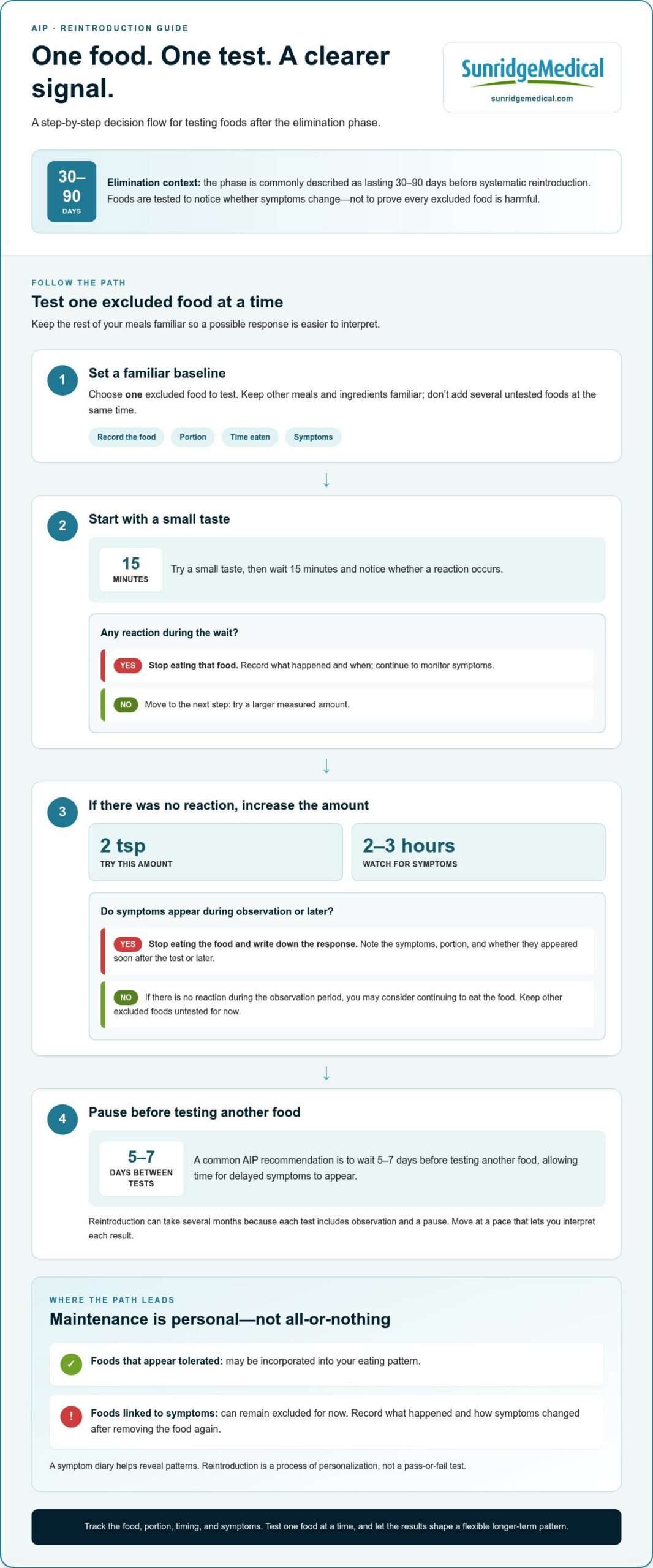
Structured reintroduction adds a single excluded food in small amounts, then leaves time to observe the response. According to Cleveland Clinic, begin with a small taste and wait 15 minutes; if no reaction occurs, try 2 teaspoons and watch for symptoms for two to three hours. This measured approach helps distinguish a response to one food from reactions that could be confused by testing several foods together.
Keep the rest of your meals familiar during each test. For example, if you’re testing eggs, don’t add dairy or grains at the same time. Record the food, portion, time eaten, and any symptoms, such as digestive changes, skin irritation, or joint discomfort. A written record gives you a clearer basis for deciding what to test next.
Wait between tests. A common AIP recommendation is to leave 5 to 7 days before testing another food, giving delayed symptoms time to appear. Reintroduction can take several months because each test includes observation and a pause. Move at a pace that allows you to interpret each result rather than rushing through a list of foods.
Monitoring Symptoms and Maintenance
Symptom monitoring means tracking changes during a food test and in the days afterward. Maintenance is the longer-term eating pattern shaped by those observations. A diary of meals, portions, and symptoms can help you notice whether foods such as spices, processed ingredients, or avocado repeatedly coincide with a reaction. This makes personalization more practical than treating every excluded food as a permanent restriction.
If symptoms arise after trying a food, stop eating it and record what happened. Note whether the reaction appeared soon after the test or later, and whether it changed after you removed the food again. If no reaction occurs during the observation period, you may consider continuing to eat the food, while other excluded foods remain untested.
Maintenance doesn’t mean returning to every food at once. It’s a flexible pattern informed by individual test results: foods that appear tolerated can be incorporated, while foods linked to symptoms can remain excluded for now. Keep your broader diet varied with foods you already tolerate, and revisit choices as your needs and eating pattern change. Reintroduction is a process of personalization, not a pass-or-fail test.
AIP-compatible foods and foods to avoid
AIP meals can include a range of whole foods, even with a strict elimination list. Build meals from permitted ingredients and adjust choices as you identify potential triggers.
In the United States, an AIP diet may cost more or less than a typical diet, depending on what you buy and how you plan meals. Protein choices, seasonal produce, specialty substitutes, and home cooking all affect grocery spending. Using familiar ingredients and preparing meals ahead can help manage costs without relying on packaged products.
Many AIP-compatible foods can work in everyday meals. Examples include mangoes and strawberries, minimally processed poultry or seafood, and oils such as olive, avocado, and coconut. Some AIP food lists allow natural sweeteners such as honey, agave, and maple syrup. Check packaged sauces and seasonings, as they may contain ingredients excluded by your chosen protocol.
- Vegetables: spinach, sweet potatoes, and other leafy greens can anchor meals; nightshades remain excluded during elimination.
- Fruit: apples, oranges, mangoes, and strawberries offer different choices for snacks or meals.
- Protein: poultry, fish, seafood, and organ meats are options; the AIP food list recommends meat, poultry, or fish without additives as a main protein at each meal.
- Fats: avocado oil, olive oil, and coconut oil can be used in cooking or dressings.
- Fermented foods: sauerkraut, pickles, and kimchi are examples when they’re nondairy and made without nightshade ingredients.
Organ meats can broaden protein choices beyond familiar cuts, while fermented foods such as sauerkraut or kimchi add variety. Read labels carefully: prepared versions may contain excluded ingredients, including nightshades. A “fermented” label alone doesn’t mean a product fits your specific AIP approach.
Some food lists suggest up to nine servings of leafy greens and vegetables, excluding nightshades, and limiting fruit to two servings a day. These are protocol-specific recommendations, not universal requirements. Some AIP protocols allow 10 to 40 grams of fructose per day from fruit, and average green or black tea intake of up to 3 to 4 cups per day is described as compatible.
Keep the purpose in view: elimination is designed to help identify possible food triggers, not to restrict every food indefinitely. A very narrow menu can make eating more difficult and may contribute to fatigue if it lacks variety. Once reintroduction begins, use your recorded responses to personalize choices rather than assuming every excluded food affects your immune system.
Can the AIP diet worsen nutrient deficiencies?
The AIP diet aims to identify possible food triggers and replace them with nutrient-dense foods. Yet excluding food groups, including dairy, grains, and legumes, can narrow nutrient sources. If meals aren’t planned carefully, elimination may worsen deficiencies in calcium, vitamin B1, and vitamin B12. The practical question is whether the foods that remain provide enough variety and fiber.
Who should avoid the AIP diet or consult a doctor before starting? Pregnant women and people who are underweight or malnourished should avoid the diet. People with autoimmune disease should consult their rheumatologist before starting. A healthcare provider or dietitian can also help plan food choices and monitor nutrition.
Fiber deserves attention because eliminating grains and legumes can remove familiar sources. Listed minimum daily fiber recommendations are 28 grams for women ages 19-30, 25 grams for women ages 31-50, and 22 grams for women ages 51 and older. For men, the listed recommendations are 34 grams for ages 19-30, 31 grams for ages 31-50, and 28 grams for ages 51 and older. Vegetables and fruit can contribute fiber, so include them consistently.
The USDA Dietary Guidelines report that more than 90% of women and 97% of men don’t meet recommended dietary fiber goals. These figures aren’t specific to AIP, but they underline why removing fiber-containing foods requires thoughtful substitutions. Track the variety of vegetables and fruit in meals, rather than relying on a short list of tolerated ingredients.
Research on inflammatory bowel disease (IBD) offers early findings, not a complete picture. In a study of 15 people with IBD, participants followed AIP for 11 weeks, with improvements in quality of life. A small IBD study also reported improvements in bowel frequency, stress, and ability to take part in leisure or sport activities as early as three weeks. At an endoscopy at 11 weeks, visible inflammation along the gut walls had decreased.
Evidence for rheumatoid arthritis is more limited: one small controlled study has examined AIP, and further research is needed. These findings don’t establish that the diet treats arthritis or other diseases. The proposed rationale is to identify food triggers while emphasizing nutrient-dense choices. Intended benefits include supporting gut health, hormone regulation, and immune regulation.
For a practical nutrition check, note excluded foods, replacement ingredients, and symptoms alongside meals. For example, replacing dairy without adding other calcium sources could leave a nutritional gap. A dietitian can assess your overall eating pattern, including calcium, B vitamins, and fiber, while your rheumatologist considers the diet alongside your autoimmune condition and care plan.
Autoimmune diseases and the AIP diet
An autoimmune disease involves immune activity directed against the body’s own tissues, but conditions differ in affected organs and symptoms. Johns Hopkins Medical School states that more than 80 types of autoimmune diseases are known. The AIP diet is an elimination approach intended to identify possible food triggers and emphasize nutrient-dense foods. An autoimmune protocol (AIP) diet guide can help you understand the approach, but it isn’t a single treatment for every autoimmune condition.
Conditions sometimes discussed in relation to AIP include Hashimoto’s thyroiditis, rheumatoid arthritis, psoriasis, psoriatic arthritis, celiac disease, type 1 diabetes, inflammatory bowel disease, and multiple sclerosis. A food pattern that affects one person’s symptoms may not affect another person with the same diagnosis. Use an autoimmune protocol (AIP) diet guide to frame questions about food patterns, rather than as evidence that food caused the disease.
Research in Hashimoto’s thyroiditis illustrates both potential and uncertainty. In a study of women with Hashimoto’s, participants followed AIP for 10 weeks; the study reported inflammation decreased by 29% and disease-related symptoms decreased by 68%. A small study included 16 women. Another small Hashimoto’s study found improvements in symptoms and quality of life after 12 weeks, although thyroid peroxidase antibody levels increased. Symptom changes and antibody results therefore didn’t move in the same direction.
That distinction matters. Feeling better doesn’t establish that the autoimmune process has resolved, and a change in one laboratory marker doesn’t capture every aspect of health. Findings from a small group or one disease shouldn’t be assumed to apply to multiple sclerosis, type 1 diabetes, or another condition.
Everyday choices also affect how manageable the diet feels. For example, excluding nightshades means avoiding eggplant and certain potatoes while building meals around permitted vegetables. Track symptoms and food changes together, and note factors such as stress that may coincide with a flare. A symptom diary can help you distinguish patterns from assumptions, but it can’t establish that a food caused inflammation.
People with autoimmune disease should discuss the diet with their rheumatologist before starting, especially when restrictions may affect nutrition or existing care. If you want individualized support for an autoimmune condition, explore Autoimmune Disease Management as part of a broader care discussion.
Sunridge Medical: Alternative Cancer Treatment Protocols
Sunridge Medical provides Autoimmune Disease Management for people seeking support for complex autoimmune conditions. An AIP diet can be one part of a broader health discussion, but food exclusions and symptom changes should be considered alongside diagnosis, nutrition, and ongoing care. Sunridge Medical develops individualized care plans that combine conventional therapies with research-based alternative treatments, creating a broader framework than dietary changes alone. This support may be relevant when an autoimmune condition remains difficult to manage or when you’re considering how dietary changes fit with your overall care. AIP doesn’t replace prescribed treatment or clinician guidance. Discuss your diet and care priorities as part of that conversation. To learn more, contact Sunridge Medical or visit sunridgemedical.com.
Choose a Thoughtful Next Step
A useful next step is to discuss dietary choices in the context of your overall health. Before changing your eating pattern, consider what you hope to learn, which symptoms you want to monitor, and how food changes will fit alongside your existing care. This autoimmune protocol (AIP) diet guide can help frame those questions, but decisions are more useful when they reflect your diagnosis, nutritional needs, and priorities.
Sunridge Medical offers Autoimmune Disease Management, Chronic Lyme Disease Treatment, and Alternative Cancer Treatment Protocols. If you’re considering dietary changes as part of care for an autoimmune condition, bring your questions and goals to a discussion focused on your individual circumstances.
Contact Sunridge Medical to discuss your options and take a considered step toward care that reflects your needs.
Frequently Asked Questions
What is the AIP Diet?
The AIP diet is a structured eating approach designed to explore whether specific foods relate to symptoms. It pairs a temporary elimination period with planned food testing, rather than treating every excluded ingredient as permanently off-limits. For example, when comparing packaged soups, inspect labels for ingredients such as dairy, grains, or nightshade-derived seasonings, then keep other meals consistent while assessing changes.
How Does AIP Help Autoimmune Conditions?
AIP is intended to help identify possible food triggers and emphasize nutrient-dense choices. It doesn’t diagnose an autoimmune disease or establish that food caused it. A practical approach is to record symptoms alongside meals and other relevant circumstances, such as stress or changes in routine. That record can support a more informed discussion with the clinician managing your condition.
Does the AIP Diet Lower Autoimmune Antibodies?
Lower antibody levels aren’t an established outcome of the AIP diet. In a small study of Hashimoto’s thyroiditis, participants reported improved symptoms and quality of life after following AIP, while thyroid peroxidase antibody levels increased. This illustrates why symptom changes and laboratory markers should be considered separately. Don’t rely on how you feel alone to interpret antibody results or change prescribed treatment.
How does it work?
AIP is a process of observation: food choices change, symptoms are recorded, and individual foods are tested for possible patterns. For clearer comparisons, note portions, timing, digestion, skin changes, and joint symptoms. Also record significant changes, such as a new medication or unusual stress. These details can help distinguish a possible food association from other changes happening at the same time.
What Does Autoimmune Mean?
Autoimmune describes a process in which the immune system mistakenly targets the body’s own cells or tissues. The area affected depends on the condition, which is why symptoms differ between diseases such as Hashimoto’s thyroiditis, psoriasis, and rheumatoid arthritis. The term describes an immune-related disease process; it doesn’t identify a specific food cause or mean that the same dietary approach suits everyone.
What Does the Research Say?
Research on AIP is developing, and findings are limited by small studies and differences between conditions. Studies involving inflammatory bowel disease and Hashimoto’s thyroiditis have reported improvements in some symptoms or quality-of-life measures, but the results don’t establish AIP as a treatment for autoimmune disease. When reviewing a study, note its condition, participants, duration, and measured outcomes before applying its findings to your situation.
What is the Autoimmune Protocol (AIP)?
The Autoimmune Protocol is the broader framework behind the AIP diet. It combines food changes with a process for observing symptoms and assessing which foods an individual tolerates. Protocols can differ, including Core AIP and Modified AIP, so food lists may not match exactly. Before starting, clarify which version you’re following and how you’ll keep meals nutritionally varied.
What’s the difference between paleo and AIP?
Paleo is a broad dietary pattern, while AIP uses a more restrictive elimination framework intended to identify possible food triggers. During elimination, AIP commonly excludes additional foods such as eggs, nuts, seeds, and nightshades. For example, someone following a general paleo pattern might eat eggs, while an AIP elimination plan excludes them. The exact list depends on the AIP approach.