


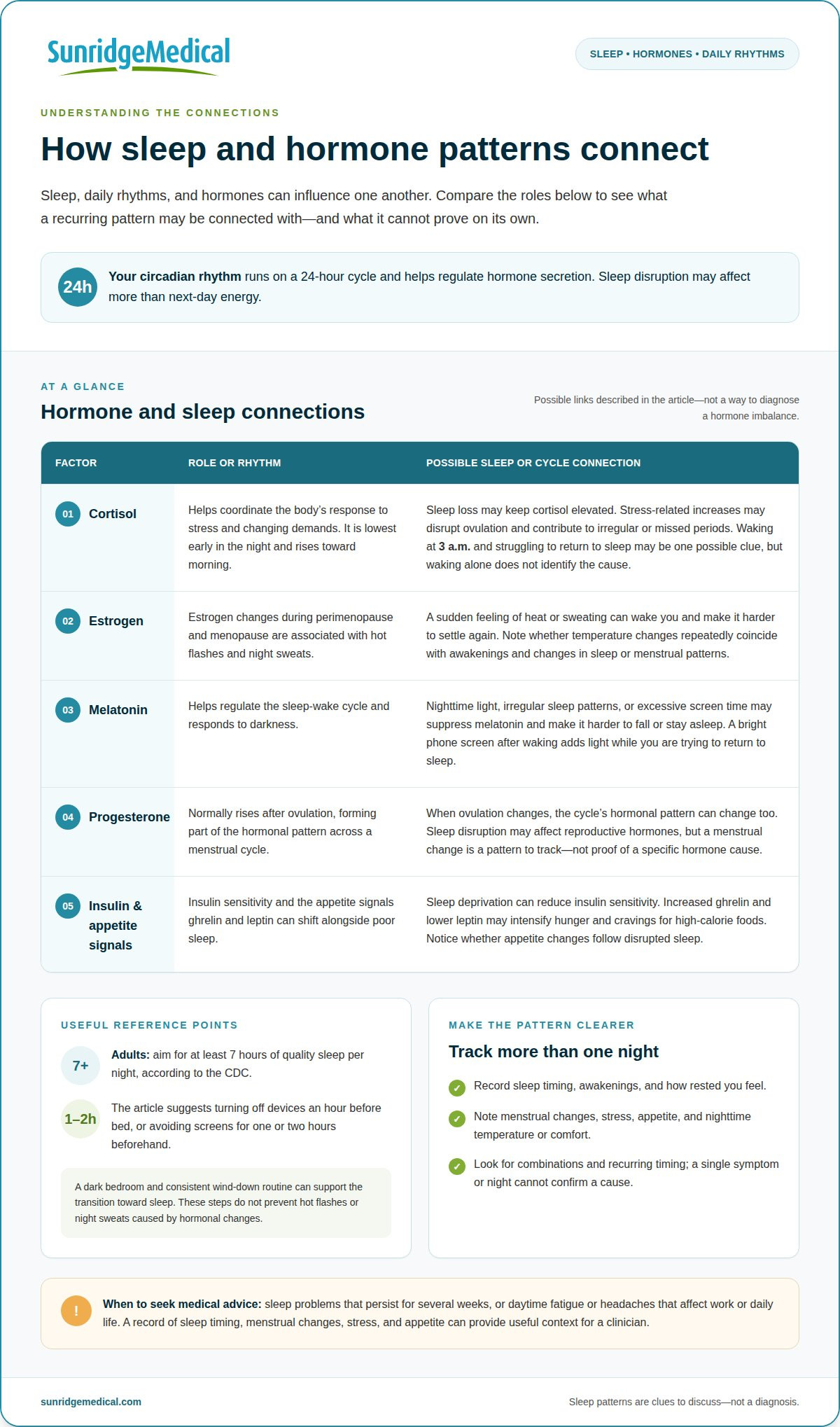
Poor sleep can disrupt hormonal rhythms that influence ovulation and menstrual regularity, so the effects may reach beyond feeling tired the next day. The body’s circadian rhythm runs on a 24-hour cycle and helps regulate hormone secretion, according to the National Institute of General Medical Sciences. A practical approach to balancing hormones to improve sleep starts with understanding how sleep, hormones, and daily rhythms affect one another.
It makes sense to look for a connection when restless nights coincide with cycle changes, hot flashes, or shifts in energy and appetite. Sleep and hormones can influence each other, but disrupted sleep alone doesn’t explain every change. Adults should aim for at least 7 hours of quality sleep per night to support health, according to the Centers for Disease Control and Prevention.
This article explains how sleep disruption may affect menstrual cycles, perimenopause and menopause symptoms, metabolism, and the sleep-wake cycle. It explores how melatonin, cortisol, estrogen, and progesterone relate to these patterns, helping you understand what may contribute to restless nights and what support may be worth discussing.
Key Takeaways
- Understand how disrupted sleep and circadian rhythms may affect ovulation and menstrual regularity.
- Learn why hot flashes and night sweats during perimenopause can interrupt restorative sleep.
- See how sleep loss may influence appetite signals, insulin sensitivity, and metabolic health.
- Explore how melatonin, cortisol, and reproductive hormones contribute to the sleep-wake cycle.
- Recognize when persistent sleep and hormone concerns may call for a more individualized assessment.
Can poor sleep affect your menstrual cycle?
Yes. Sleep disruption can affect hormones involved in ovulation and menstrual regularity, while stress and cycle changes can also disturb sleep. The body’s circadian rhythm operates on a 24-hour cycle and regulates hormone secretion, according to the National Institute of General Medical Sciences.
Cortisol and the Stress Response
Cortisol helps coordinate the body’s response to stress and changing demands. Sleep loss can keep cortisol elevated, linking restless nights with stress, inflammation, and weight gain. Chronic stress may also affect heart rate, breathing, and muscle tension, making it harder to settle. These effects are relevant when poor sleep and cycle changes occur together.
Stress-related increases in cortisol can disrupt ovulation and contribute to irregular or missed periods. Because progesterone normally rises after ovulation, changes in ovulation can affect the hormonal pattern across a cycle. Sleep disruption may also affect estrogen, progesterone, and testosterone, with possible effects on fertility and libido. A menstrual change is a pattern to track, not proof of a specific hormone cause.
Cortisol Rhythms and Nighttime Waking
Cortisol follows a daily rhythm: it is lowest early in the night and rises toward morning to help the body wake. If you regularly wake at 3 a.m. and struggle to return to sleep, stress-related cortisol changes may be one possible factor. Night waking alone cannot identify the cause, since sleep can be interrupted for several reasons.
Insulin and appetite signals may also shift alongside poor sleep. Sleep deprivation can reduce insulin sensitivity, while increased ghrelin and lower leptin may intensify hunger and cravings for high-calorie foods. Note when you wake, how rested you feel, and whether hunger or cycle changes follow. These details can help identify a recurring pattern that may warrant clinical attention.
Signs Associated With High Cortisol
Possible signs associated with elevated cortisol include ongoing stress, disrupted sleep, inflammation, and weight gain. Waking at 3 a.m. and finding it difficult to fall asleep again is another pattern sometimes linked with high cortisol. None of these signs confirms a cortisol imbalance; their timing and persistence matter more than one isolated night.
Look for combinations of symptoms rather than interpreting one in isolation. Repeated night waking alongside increased stress, appetite changes, or irregular periods, for example, gives a fuller picture than a single night of waking. Record sleep and menstrual patterns over time, including changes in nighttime temperature or comfort. This can help distinguish a recurring pattern from an occasional poor night.
Thyroid Problems and Cortisol Imbalance
Thyroid hormone changes or cortisol disruption may contribute to sleep difficulties, but symptoms alone cannot establish the cause. Blood, saliva, or urine tests can help assess thyroid hormones and cortisol, as well as estrogen, progesterone, testosterone, DHEA, and melatonin. A clinician interprets results alongside symptoms and cycle history, then considers treatment in light of the findings and underlying concern.
Seek medical advice if sleep problems persist for several weeks, or if daytime fatigue or headaches affect work or daily life. Bring a record of sleep timing, menstrual changes, stress, and appetite. This context helps connect test results with your experience rather than treating one sign in isolation.
Perimenopause, menopause, and night sweats
During perimenopause and menopause, hormonal shifts can contribute to hot flashes, night sweats, and broken sleep. The reason you wake matters: temperature changes, nighttime light, and sleep timing can all play a role.
Estrogen, Hot Flashes, and Night Sweats
Changes in estrogen during perimenopause and menopause are associated with hot flashes and night sweats that can interrupt sleep. A sudden feeling of heat may wake you, while sweating can make it harder to settle again. Track when these episodes occur alongside sleep and menstrual patterns to help clarify whether temperature changes are driving repeated awakenings.
Adults should aim for at least 7 hours of high-quality sleep per night to support optimal hormonal balance, according to the Centers for Disease Control and Prevention. If hot flashes repeatedly cut sleep short, note their timing and how often they coincide with waking. That information helps distinguish a symptom-related pattern from other disruptions and makes it easier to describe the effect on daily energy.
Melatonin and Nighttime Light Exposure
Melatonin helps regulate the sleep-wake cycle and responds to darkness, so nighttime light can work against the body’s transition toward sleep. Irregular sleep patterns or excessive screen time may suppress melatonin and make it harder to fall or stay asleep. For example, checking a bright phone screen after waking at night adds light exposure when your body is trying to return to sleep.
Try turning off devices an hour before bed, or avoiding screens for one or two hours beforehand. Keep the bedroom dark and follow a consistent wind-down routine. These steps support the transition toward sleep, but they won’t prevent hot flashes or night sweats caused by hormonal changes.
Hormone Replacement Therapy for Sleep
Hormone replacement therapy may improve sleep when hot flashes or night sweats are causing disruptions. Whether it is appropriate depends on your symptoms, health history, and the specific treatment. Potential side effects vary by medication and formulation, so a prescriber should review your individual risks and alternatives. In the United States, costs also vary with treatment and insurance coverage; there is no single universal price.
Medication choices may include hormone treatments, but no single option suits everyone with menopause-related sleep problems. Discuss expected benefits, potential side effects, and personal risk factors before starting or changing treatment. A clear account of nighttime waking and daytime effects can help guide that conversation.
Supplements for Hormone-Related Sleep Problems
Melatonin, magnesium, and ashwagandha are supplements some people consider for sleep, but they are not interchangeable treatments for hot flashes or hormonal changes. Melatonin is generally described for short-term use, such as jet lag or shift work. Understanding what is disrupting sleep matters when deciding whether a supplement is relevant.
Talk with a health care professional before adding melatonin, magnesium, or ashwagandha, particularly if you take medication or have ongoing symptoms. Effects and potential interactions depend on the product and the person. Track whether the main problem is falling asleep, staying asleep, or waking with night sweats; this distinction can support a safer, more focused discussion.
How does sleep affect hormones in women?
Sleep and hormones influence one another, shaping appetite, reproductive function, and daily energy. A consistent sleep schedule, morning light, balanced nutrition, moderate exercise, and mindful stress management can support healthier rhythms.
Sleep and Appetite-Regulating Hormones
Sleep helps coordinate ghrelin and leptin, hormones involved in hunger and fullness. Poor sleep can raise ghrelin and lower leptin, making hunger and cravings for high-calorie foods more noticeable. This may affect food choices the next day, not just nighttime comfort. Paying attention to appetite alongside sleep quality can reveal patterns worth discussing with a clinician.
Nutrition also matters. The gut contains more than 100 trillion friendly bacteria, which can produce metabolites affecting hormone health. Fiber-rich foods support the gut environment, while meals with protein, fiber, and healthy fats can provide balanced nourishment. Aim for 25-30 grams of protein per meal, as experts recommend, and include varied plant foods such as beans, vegetables, and whole grains.
Sleep Quality and Hormone Regulation
Sleep quality involves more than time in bed; it also means getting restful, sufficiently uninterrupted sleep. Growth hormone is released during deep sleep, especially early in the night, supporting tissue repair and muscle building. Repeated waking can interrupt sleep continuity and leave you feeling less restored. Note whether you wake often, struggle to fall asleep, or feel tired despite adequate time in bed.
Estrogen, progesterone, and thyroid hormones can affect neurotransmitters such as serotonin and dopamine. These chemical messengers contribute to mood and other functions that may influence how easily you settle at night. Hormonal imbalance may be one factor among several, so consider sleep patterns alongside cycle changes, mood, and daytime energy rather than treating one symptom as a diagnosis.
Build regular cues into the day. Keep bedtime and waking time consistent, including weekends, and spend 10 to 15 minutes outside within an hour of waking. Morning light helps reinforce the body’s daily rhythm. Stop caffeinated drinks by early afternoon, and avoid large meals in the two to three hours before bed if digestion feels disruptive.
Moderate exercise and stress management can support sleep and hormone health. Walking, stretching, deep breathing, or journaling are practical options; even a brief daily stress-reduction practice can help you shift toward rest. If sleep difficulties persist for several weeks or interfere with daily life, discuss the pattern with a health care provider. They can assess your symptoms and consider whether sleep habits, hormones, or another issue may contribute.
Sleep, insulin sensitivity, and metabolism
Sleep, insulin, and metabolism are connected through the body’s regulation of blood sugar. When sleep is disrupted, insulin sensitivity can decline, making it harder for cells to respond effectively to insulin. This matters because poor sleep may contribute to metabolic changes, oxidative stress, and insulin resistance. These effects may also interact with appetite, meal timing, and daytime activity.
Insulin helps move glucose from the bloodstream into cells for energy. Reduced insulin sensitivity means the body may need to work harder to manage blood sugar after eating. Sleep deprivation can reduce insulin sensitivity and increase the risk of Type 2 diabetes. That risk is not determined by sleep alone, but repeated short or fragmented nights can become one part of a broader metabolic picture.
Added sugar is another factor to consider. Sweetened drinks, flavored yogurts, and packaged snacks are examples. Frequent high-sugar choices can contribute to blood sugar fluctuations and insulin resistance. A balanced dinner with protein, fiber, and healthy fats can help avoid spikes and crashes that may disrupt sleep.
Sleep affects metabolism in ways that extend beyond glucose regulation. Poor sleep may contribute to oxidative stress and negative metabolic changes, while stress-related cortisol levels may influence appetite and energy. Hormones act as messengers between body systems, so disrupted sleep can affect how those systems coordinate. Notice whether late meals, restless nights, and next-day cravings occur together; that pattern may point to habits worth adjusting.
Movement supports insulin sensitivity and can fit into a gradual routine. Start with 10 minutes of exercise most days of the week, then work toward 150 minutes of moderate exercise weekly. Walking after a meal is one practical way to add movement without requiring a complex plan. Consistency matters more than an occasional demanding workout, especially when poor sleep leaves energy low.
Track sleep, meals, and activity together rather than focusing on one reading or symptom. For example, note whether an evening sugary snack coincides with restless sleep, or whether a walk helps establish a steadier daily rhythm. These observations cannot diagnose insulin resistance, but they can make discussions about blood sugar and metabolism more specific. Persistent fatigue or concerns about glucose regulation deserve attention as part of your overall health picture.
How hormones affect sleep-wake cycles
Hormones act as timing signals, helping the body shift between alertness and sleep. Melatonin responds to darkness and helps regulate the sleep-wake cycle, while cortisol naturally rises toward morning. When these signals and daily routines become irregular, poor sleep may affect how you feel, function, and manage physical demands the next day. Understanding these rhythms is a useful starting point for balancing hormones to improve sleep.
Morning sunlight helps regulate cortisol and boosts serotonin, which later converts into melatonin. This connects daytime light exposure with the body’s nighttime transition. Spending 10 to 15 minutes outside within an hour of waking can strengthen circadian rhythm cues. By contrast, bright screens late at night may suppress melatonin and make it harder to fall asleep.
Cortisol levels can change overnight and toward morning as the body transitions toward wakefulness. Its levels usually rise toward morning after being lower early in the night. If stress or irregular sleep timing shifts that pattern, someone may feel alert at bedtime or sluggish after waking. A steady schedule gives the body clearer cues for when to prepare for rest and activity.
Melatonin, cortisol, progesterone, estrogen, and testosterone all play roles in regulating sleep cycles. Estrogen, progesterone, and thyroid hormones also affect neurotransmitters such as serotonin and dopamine. These interactions help explain why sleep symptoms can occur alongside changes in mood, cycle patterns, or daytime energy. They do not mean that one hormone level alone explains every restless night.
Observe symptom timing over several days: note when you feel sleepy, when you wake, and whether nighttime light or changes in routine coincide with poor sleep. Compare these notes with cycle changes or shifts in daytime alertness. A clear pattern can help a health professional assess whether hormone levels, sleep habits, or other factors may contribute. This context can guide a more individualized approach to balancing hormones to improve sleep.
If persistent sleep disruption occurs alongside hormone-related symptoms, individualized assessment can help clarify which factors deserve attention. Sunridge Medical offers Hormone Optimization Therapy for people seeking support with hormone concerns. Discussing sleep timing, symptoms, and relevant hormone testing can help shape an informed conversation about next steps.
Sunridge Medical: Alternative Cancer Treatment Protocols
Sunridge Medical’s Alternative Cancer Treatment Protocols address a different medical need from sleep-related hormone concerns. For people with persistent sleep difficulties alongside concerns about hormone levels, Hormone Optimization Therapy is the relevant offering. Sunridge Medical develops individualized care plans and combines conventional therapies with research-informed alternative treatments, taking a comprehensive view of health rather than focusing on sleep symptoms alone.
Consider discussing hormone-related concerns when disrupted sleep occurs alongside ongoing changes in energy, mood, or other symptoms. An assessment can help clarify whether hormone health belongs in the broader care conversation and what factors deserve attention. Contact Sunridge Medical to discuss your concerns or visit sunridgemedical.com.
Take the Next Step Toward More Restful Nights
A thoughtful approach to balancing hormones to improve sleep begins by noticing how your sleep patterns connect with changes in your health. If persistent symptoms leave you feeling stuck, bring your observations into a clinical conversation rather than trying to interpret every change on your own.
Sunridge Medical provides individualized care through services that include Hormone Optimization Therapy, Alternative Cancer Treatment Protocols, Chronic Lyme Disease Treatment, and Autoimmune Disease Management. Each addresses a different health concern, so the next step depends on what you want to discuss. A conversation can help you explore whether Sunridge Medical’s approach fits your broader care goals.
Contact Sunridge Medical to discuss your concerns and possible next steps. With a clearer understanding of what may be affecting your sleep, you can move forward with greater confidence and a more informed plan.
Frequently Asked Questions
What is cortisol?
Cortisol helps the body respond to stress and changing demands. Its levels follow a daily pattern, and clinicians may assess cortisol with blood, saliva, or urine tests. Results should be interpreted alongside symptoms and sleep patterns, not as a standalone explanation. For example, a record of recurring nighttime waking and daytime fatigue provides useful context for discussing whether cortisol testing is appropriate.
Which hormones affect sleep, and how?
Melatonin, cortisol, progesterone, estrogen, testosterone, and thyroid hormones can all relate to sleep and daily rhythms. Their roles differ: melatonin responds to darkness, while reproductive and thyroid hormones can influence neurotransmitters such as serotonin and dopamine. A clinician may assess hormone levels through blood, saliva, or urine testing, guided by symptoms. Mentioning cycle changes, medications, and when sleep problems began can help focus the evaluation.
What are common signs that a hormone imbalance is affecting sleep?
Possible clues include recurring difficulty staying asleep alongside hot flashes, night sweats, irregular or missed periods, or persistent changes in appetite and energy. These symptoms can have other causes, so their combination and timing matter. For a practical record, note bedtime, awakenings, temperature changes, cycle dates, and daytime fatigue. Bring this pattern to a clinician, especially if symptoms persist for several weeks or interfere with work or daily activities.
Can menopause-related hormone changes cause insomnia or night sweats?
Yes. Hormonal changes during perimenopause and menopause can be associated with hot flashes and night sweats that interrupt sleep or make it difficult to settle again. Note whether warmth or sweating happens before you wake, after you wake, or at different points in the night. This detail can help a clinician understand the pattern and discuss suitable options, including whether hormone therapy is appropriate given your health history and symptoms.
What medications or hormone treatments can improve sleep, and what side effects should I know about?
Hormone replacement therapy may improve sleep when hot flashes or night sweats are disrupting it. Side effects vary by medication and formulation, so discuss your individual risks, benefits, and alternatives with a prescriber before starting or changing treatment.