


Bartonellosis can affect more than the lymph nodes or skin. In some cases, it involves the nervous system and other parts of the body. Healing from Bartonella infection may involve assessing symptom patterns, considering possible co-infections, and tailoring care to the person’s clinical picture.
It’s understandable to seek a clear explanation when fatigue, pain, mood changes, or cognitive difficulties overlap with other conditions. Bartonella can be challenging to assess because symptoms vary and laboratory tests have limitations. A single symptom or test result may not tell the whole story.
This article explains what bartonellosis is, how it may affect different body systems, and what treatment and recovery can involve. It also covers possible Lyme disease co-infection, temporary symptom flares during treatment, and serious neurological or other complications that need careful medical attention.
Key Takeaways
- Bartonella may affect the skin, nerves, mood, energy, and other body systems, so consider the overall symptom pattern rather than one symptom alone.
- Testing has limitations; exposure history, symptoms, laboratory results, and possible co-infections all contribute to an evaluation.
- Treatment may involve prescription antibiotics, herbal antimicrobials, or a combination, selected according to the clinical picture.
- Supportive needs such as hydration, sleep, bowel regularity, and symptom stability may matter before antimicrobial treatment begins.
- Recognize that symptom flares can occur during treatment, but new or severe symptoms need medical evaluation, and serious complications require careful attention.
How does Bartonella affect different body systems?
Bartonella-associated symptoms can affect several systems, from skin and nerves to mood and energy. A careful evaluation considers symptom patterns, exposure history, and the limitations of testing.
Symptoms Across Body Systems
Bartonella symptoms may include fatigue, muscle and joint pain, headaches, and burning soles. Skin changes can be part of a broader health picture, but they do not by themselves establish Bartonella as the cause. Looking at symptoms across several systems can help avoid overlooking patterns when each symptom is considered separately.
Digestive or hormonal complaints may be part of a person’s broader health picture, but they don’t establish Bartonella as the cause. Record when each symptom began, what changes it, and whether skin, digestive, or energy changes occur together. This timeline gives clinicians a clearer basis for considering Bartonella alongside other possible causes.
Neuropsychiatric Symptoms
Neuropsychiatric symptoms are changes in mood, thought, or cognition that may be part of a broader illness picture. Reported Bartonella-associated experiences include anxiety, panic attacks, rage episodes, intrusive thoughts, mood swings, depersonalization, and cognitive dysfunction.
The pilot case-control study authors found Bartonella-positive results in 11 of 17 patients with schizophrenia. That finding does not establish Bartonella as the cause of schizophrenia, or show that a positive result proves active infection. It does underline why new psychiatric or cognitive symptoms should be considered in context, including medical history, exposure, and other potential explanations.
History can be important when symptoms persist. Alexandra Beane reported health problems beginning at about eight years old, 25 years before she wrote her account. Colonel Nicole Malachowski consulted with over 24 military and civilian doctors before receiving a Bartonella diagnosis. These accounts illustrate how a long, changing symptom history can complicate diagnosis, not how every patient’s illness progresses.
Evaluation may draw on exposure history, symptom patterns, and laboratory testing. PCR, serology, and blood culture are possible testing methods, but each has limitations. Bartonella serology has poor sensitivity, so a negative result doesn’t reliably rule out infection. Diagnosis is often clinical: test results are interpreted alongside the overall presentation, not as a standalone answer. Bartonella may also be considered alongside other tick-borne illnesses when exposures and symptoms overlap.
A symptom flare during treatment may temporarily intensify existing symptoms such as fatigue, pain, irritability, or brain fog. A flare alone doesn’t show that treatment has failed. However, new or severe symptoms need assessment rather than automatic attribution to a Herxheimer reaction. A dated record of symptoms and treatment changes can help distinguish a temporary flare from a new problem.
What are common Bartonella treatment options?
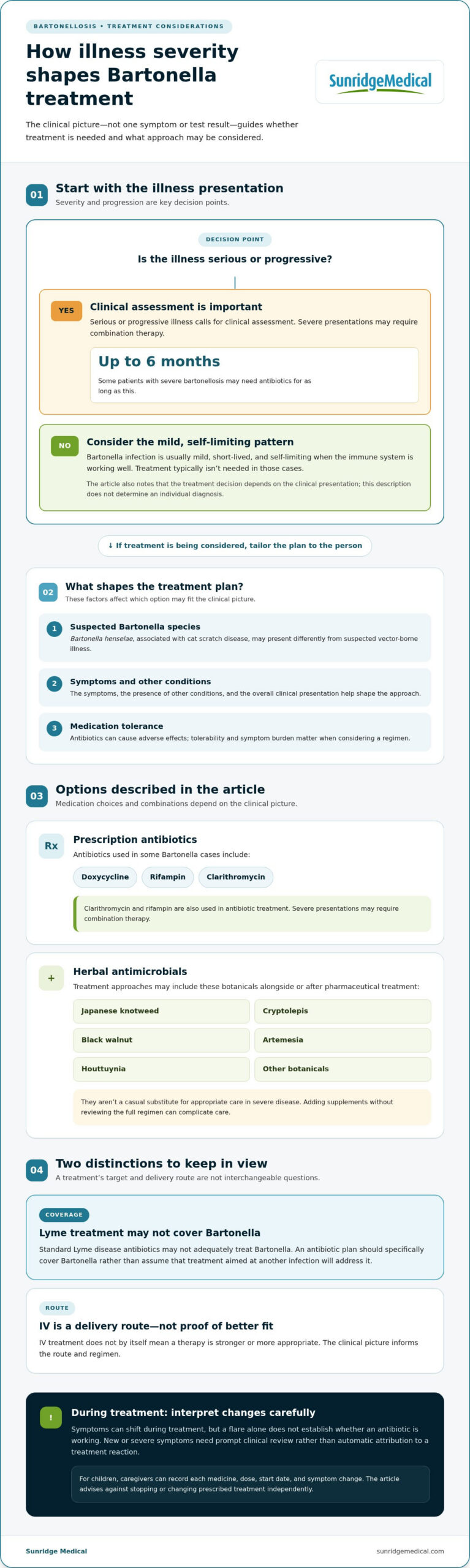
Bartonella treatment depends on the clinical presentation, including whether the illness is mild or severe. Infection can resolve without treatment: it is usually mild, self-limiting, and short-lived when the immune system is working well. Treatment typically isn’t needed in those cases, while serious or progressive illness calls for clinical assessment.
Doxycycline and rifampin are prescription antibiotics used in some Bartonella cases. Clarithromycin and rifampin are also used in antibiotic treatment, while severe presentations may require combination therapy. Some patients with severe bartonellosis may need antibiotics for as long as 6 months. These options aren’t interchangeable: the suspected Bartonella species, symptoms, other conditions, and medication tolerance shape the plan.
Bartonella henselae, the species associated with cat scratch disease, may present differently from suspected vector-borne illness. Standard Lyme disease antibiotics may not adequately treat Bartonella, which can require different or combination therapies. An antibiotic plan should specifically cover Bartonella rather than assume that treatment aimed at another infection will address it. IV treatment is a delivery route, not proof of stronger or more appropriate therapy; the clinical picture informs the route and regimen.
Herbal antimicrobials used in Bartonella treatment approaches include Japanese knotweed, cryptolepis, black walnut, Artemesia, Houttuynia, and other botanicals. They may be used alongside or after pharmaceutical treatment, but they aren’t a casual substitute for appropriate care in severe disease. Some clinicians also consider pulsing medications with herbal options. Because combinations can affect tolerability and symptom burden, adding supplements without reviewing the full regimen can complicate care.
Children need particular attention to dosing and tolerability. Antibiotics can cause adverse effects, and a child who develops new symptoms during treatment needs timely clinical review. Caregivers can record each medicine, dose, start date, and symptom change. This can help distinguish a possible medication effect from infection symptoms or another cause, without stopping or changing prescribed treatment independently.
Inflammation, fatigue, and other symptoms can shift during treatment, but a flare doesn’t by itself establish whether an antibiotic is working. Healing from Bartonella infection calls for a plan that accounts for symptom changes and treatment tolerance. Report new or severe symptoms promptly rather than assuming they’re a treatment reaction. For persistent neurological concerns alongside complex illness, neurologic condition treatment may be relevant to the broader care picture. A considered approach to healing from Bartonella infection also keeps the person’s overall health needs in view.
Can a Herxheimer reaction occur during Bartonella treatment?
Yes. A Herxheimer reaction can temporarily intensify existing symptoms during Bartonella treatment. Fatigue, pain, irritability, and brain fog may become more noticeable. A flare doesn’t automatically mean treatment has failed. New or severe symptoms, however, need evaluation rather than an assumption that they’re part of a reaction.
For people with HIV or other weakened immune systems, treatment decisions take into account illness severity, symptoms, and immune status. Severe presentations may require antibiotics such as doxycycline or rifampin, sometimes in combination. Possible co-infections and medication tolerance also shape the clinical plan.
Preparation can make antimicrobial treatment more manageable. Before treatment, clinicians may address bowel regularity, hydration, sleep, and nervous system symptoms. In some cases, supportive treatment to stabilize mast cells comes before antimicrobials. These steps address a patient’s baseline needs rather than adding several interventions at once, when symptoms are already difficult to track.
Supportive care during recovery can include steady hydration, adequate sleep, and attention to bowel regularity. Patients can also keep a daily record of symptoms, medication changes, and changes in function, such as whether brain fog disrupts reading or work. A dated record helps show whether symptoms are stable, improving, or worsening after a treatment adjustment.
A naturopath-recommended plan should be individualized, not treated as a standard recipe for every Bartonella presentation. The clinician weighs co-infections, mold burden, medication tolerance, and symptom intensity. For example, cat scratch disease may present differently from suspected tick-borne Bartonella. A negative test result alone also doesn’t settle the clinical picture.
Nervous system care matters during treatment because pain, irritability, and cognitive symptoms can affect daily function. Track changes in concentration, sleep, mood, and sensory symptoms alongside antimicrobial adjustments. Report a marked change promptly. Don’t automatically label a new symptom a Herxheimer reaction, especially if it differs from the person’s usual pattern.
Bartonella treatment can be challenging when symptoms fluctuate or multiple illnesses overlap. A temporary increase in fatigue or pain may call for reassessment of the treatment plan and supportive needs, not an unsupervised medication change. Careful clinical management considers symptom intensity, co-infections, and tolerance over time. Clear notes about each change give the treatment team useful context for evaluating next steps.
Bartonella and Lyme disease co-infection
Bartonella and Lyme disease can occur together after a tick exposure. Overlapping illnesses may complicate symptom interpretation and treatment planning. Bartonella can also overlap with Babesia and mold illness, so one suspected infection may not explain every symptom. Fatigue, headaches, muscle and joint pain, or mood changes such as depression need to be considered alongside exposure history and the overall clinical picture.
One reported case illustrates how several infections can occur together: Russ was diagnosed with three tick-borne pathogens, Borrelia burgdorferi, Bartonella henselae, and Babesia duncani. That case does not establish how often co-infection occurs. It does show why clinicians may consider more than Lyme disease when symptoms persist or change during treatment.
Distinguishing one cause from another requires context. A compatible exposure, symptom pattern, and laboratory evaluation all contribute, while no single symptom proves a particular infection. Bartonella serology can miss cases, and PCR also has limitations. A positive result may reflect past exposure rather than active infection. These limitations make it important to interpret findings alongside symptom timing and any response to treatment.
Lyme disease treatment may not adequately address Bartonella, which may require a different antimicrobial approach or combination therapy. Treatment decisions account for suspected organisms, symptoms, medication tolerance, and possible co-infections. If headaches, fatigue, or depression continue, tracking when they began and how they change can help clinicians assess the broader pattern. Persistent symptoms alone don’t identify which infection is causing them.
Prevention focuses on reducing exposure to cats, fleas, ticks, and other potential vectors. Avoid cat scratches and bites, reduce flea exposure around cats, and use measures that limit tick bites. Whether ticks transmit Bartonella remains debated. However, Bartonella species have been identified in ticks, so tick exposure may still be relevant to an evaluation.
People with weakened immune systems can reduce cat-related exposure by adopting a cat over one year old rather than a kitten. To address possible lice exposure, wash clothing at least once a week. Clothing that cannot be machine-washed can be sealed in plastic bags for two weeks to kill lice. These steps address specific exposure routes, but no single measure prevents every route of Bartonella transmission.
Assessing co-infections is especially relevant when symptoms don’t follow the expected course for one diagnosis. A clear timeline of tick or cat exposure, symptom changes, test results, and treatment response gives the clinical team practical details. This information helps distinguish possible co-infections from overlapping symptoms without assuming every persistent complaint has the same cause.
Neurological and severe complications
Bartonella infection can involve more than skin changes or swollen lymph nodes. Progressive infection can cause serious complications, including endocarditis, an infection of the heart’s inner lining. Neurological and psychiatric symptoms also need careful clinical attention, especially when they appear suddenly, worsen, or disrupt daily functioning. Don’t assume severe changes are simply part of an ordinary recovery.
A 2015 case described a 14-year-old boy who developed sudden psychotic behavior after infection. In the account, he experienced psychosis for 18 months and had four hospitalizations before receiving Bartonella treatment. This case illustrates a possible serious presentation, but it cannot establish how often Bartonella causes psychosis or explain every psychiatric symptom. New confusion, psychosis, or marked behavioral change warrants prompt medical assessment.
Colonel Nicole Malachowski’s account offers another example of neurological and psychiatric symptoms during illness. Her psychiatric symptoms reportedly began to fade within three days of starting rifampin. That individual response does not predict another person’s response or prove that rifampin is appropriate for every case. Bartonella treatment depends on the clinical presentation, and medication decisions require assessment of the suspected infection and the person’s health.
Bartonella henselae is associated with cat scratch disease, but severe complications are not limited to the site of a scratch. Bartonella bacteria can invade endothelial cells lining blood vessels, which helps explain why vascular manifestations may be considered during evaluation. Progressive infection can cause serious illness, including endocarditis. Chest discomfort, fainting, breathing difficulty, or a sudden neurological change should not be dismissed as a routine treatment flare.
Immune status can affect the level of concern. People with weakened immune systems may face more serious Bartonella illness, so new or worsening symptoms need timely clinical evaluation. Share the full history: cat scratches or bites, possible tick exposure, symptom onset, test results, and medicines already taken. This context helps distinguish a possible infection complication from a medication effect or another condition.
When neurological symptoms are present, record specific changes rather than relying on broad descriptions. Note when confusion, severe headache, altered mood, weakness, or vision problems began, and whether each symptom is progressing. Bring the timeline and medication list to the appointment. Sudden or severe symptoms call for urgent medical attention. A suspected Herxheimer reaction should never be used to explain away a new emergency.
Persistent neurological symptoms can require a broader clinical assessment alongside infection evaluation. For support focused on complex nervous system concerns, explore neurologic condition treatment as a possible part of your care planning.
Sunridge Medical: Alternative Cancer Treatment Protocols
Sunridge Medical provides individualized care for complex chronic conditions, including Chronic Lyme Disease Treatment and Neurologic Condition Treatment. If Bartonella concerns occur alongside persistent Lyme-related or neurological symptoms, an integrated assessment can help organize the broader health picture and inform care planning. Sunridge Medical combines conventional therapies with research-informed alternative treatments, tailoring plans to each patient. Its services also include Autoimmune Disease Management and Hormone Optimization Therapy, which may be relevant when those concerns are part of a person’s health needs. Alternative Cancer Treatment Protocols are a separate offering for people seeking cancer care. Treatment recommendations depend on each person’s diagnosis, medical history, laboratory findings, medications, organ function, symptoms, tolerance, and goals. Contact Sunridge Medical to discuss your health concerns and potential next steps.
Choose a Thoughtful Next Step
Progress begins with a clear view of what is changing and what still needs attention. As you consider healing from Bartonella infection, keep a concise record of your priorities, questions, and day-to-day symptoms. Bring that perspective to your next clinical conversation so the discussion can focus on what matters most to your health.
If Bartonella concerns overlap with a broader chronic condition, Sunridge Medical offers Chronic Lyme Disease Treatment and Autoimmune Disease Management. Its care also includes Alternative Cancer Treatment Protocols. The next step depends on your health needs and the conditions you want to address. Look for a plan that considers your full picture rather than one symptom in isolation.
For a conversation about your care needs, contact Sunridge Medical. A considered next step can help you move forward with greater clarity and confidence.
Frequently Asked Questions
What Is Bartonellosis?
Bartonellosis is illness caused by bacteria in the genus Bartonella. Different species can affect people, and Bartonella henselae is associated with cat scratch disease. Infection may follow contact with infected animals or vectors, and its effects can range from localized symptoms to more complex illness. The term describes Bartonella-related disease, not one uniform symptom pattern or a diagnosis established by symptoms alone.
What makes Bartonella infection difficult to diagnose and treat?
Diagnosis can be challenging because Bartonella symptoms overlap with other conditions and available tests have limitations. Serology may miss infections, PCR also has limits, and a positive antibody result can reflect past exposure. Treatment decisions become more complex when symptoms overlap with Lyme disease, Babesia, or other health concerns. A useful evaluation considers the timeline, exposure history, test results, and medication response together.
When should I see my healthcare provider?
Arrange a clinical evaluation for persistent or worsening symptoms, particularly after possible cat, flea, or tick exposure. Seek prompt assessment for new confusion, psychosis, severe headache, vision changes, or other sudden neurological symptoms. Bartonella can also cause serious complications such as endocarditis. Bring a symptom timeline and medication list, and describe what changed, when it began, and how it affects daily activities.
Why is treatment sequencing important in Bartonella therapy?
Sequencing helps clinicians establish a baseline and address factors that may affect treatment tolerance before adding antimicrobials. For example, documenting sleep, hydration, bowel regularity, and current symptoms creates a clearer point of comparison. If several medicines or supplements begin together, it becomes harder to identify what caused a new symptom or change. A staged plan makes each adjustment easier to assess and discuss.
What is Bartonella infection and how is it diagnosed?
Bartonella infection occurs when Bartonella bacteria cause illness in a person. Evaluation may include PCR, serology, or blood culture, alongside an assessment of exposure and symptoms. A clinician interprets results in context: antibodies can remain elevated after recovery, while a negative serology result doesn’t reliably rule out infection. CD57 should not be used as the sole marker. Share prior results and their dates to support interpretation.
What are the symptoms and long-term effects of Bartonella infection?
Symptoms can include fatigue, headaches, joint or muscle pain, burning soles, skin changes, and mood or cognitive difficulties. Some people experience persistent symptoms after treatment, so note changes in function as well as discomfort. For example, record whether pain limits walking or brain fog disrupts work. A lasting symptom doesn’t by itself identify its cause; reassessment considers the full health history and other possible conditions.
What antibiotics are used to treat Bartonella, and for how long?
Doxycycline and rifampin are among the antibiotics used for Bartonella; clarithromycin, azithromycin, or other medicines may also be considered in treatment combinations. Choices depend on the presentation, suspected infection, co-infections, and medication tolerance. Some severe cases may require antibiotics for as long as six months. Don’t use another person’s regimen or change a prescribed course without discussing it with the prescribing clinician.
How effective are antibiotics for Bartonella infection, and how long does recovery take?
Antibiotics are used to treat Bartonella, but symptom response and recovery differ among patients. About 10-20% of patients continue to have symptoms after antibiotic treatment, and recovery of the microbiome after antibiotic disruption can take around six months or more. Track function and symptoms after treatment, not just test results. Persistent or returning concerns deserve clinical review to assess possible co-infections, medication effects, and other explanations.