

Cholangiocarcinoma Is Not One Disease
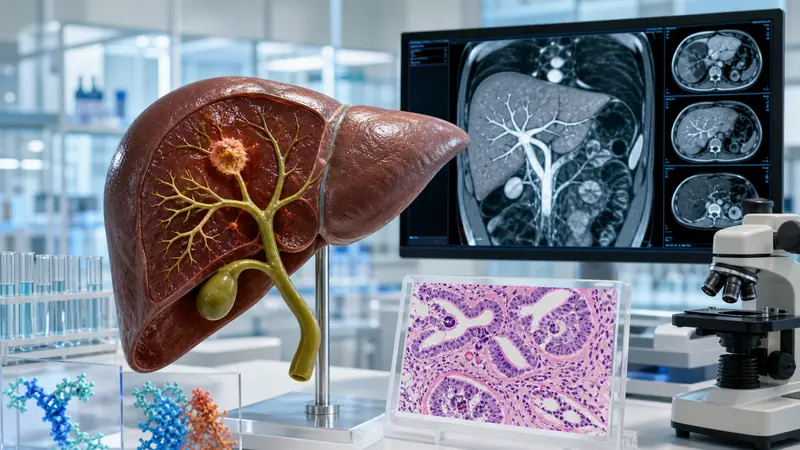
Cholangiocarcinoma begins in the bile ducts. Intrahepatic tumors arise within the liver. Perihilar tumors develop where the right and left hepatic ducts join, while distal tumors form lower in the common bile duct near the pancreas. Gallbladder cancer is another biliary cancer but is diagnosed and treated separately.
Evaluation may include contrast-enhanced CT or MRI with MRCP, laboratory testing, endoscopic or percutaneous procedures, and pathology when appropriate. The biopsy approach should be selected by the specialist team because tumor location and possible surgery or transplant pathways can affect how tissue is obtained.
Tumors Within the Liver
Number, size, vascular involvement, lymph nodes, liver reserve and the amount of liver that would remain after surgery help determine resectability.
Tumors at the Main Duct Junction
Bile-duct extent, vascular anatomy, liver drainage and future liver remnant require experienced hepatobiliary review. Selected patients may enter specialized transplant pathways.
Tumors Near the Pancreas
These tumors may require a pancreaticoduodenectomy, commonly called a Whipple procedure, when complete removal is feasible.
Biology Becomes Especially Important
Systemic therapy, molecularly matched treatment, radiation, selected local procedures and clinical trials may provide meaningful options.
Surgery, Systemic Therapy and Precision Oncology All Have Roles
Complete surgical removal with negative margins offers the main potentially curative path for localized disease. The operation varies by location and may include partial liver resection, bile-duct reconstruction or a Whipple procedure. After resection, adjuvant capecitabine is commonly considered, and selected patients may discuss chemoradiation or clinical trials.
For unresectable, recurrent or metastatic biliary-tract cancer, first-line therapy commonly combines gemcitabine and cisplatin with an immune-checkpoint inhibitor such as durvalumab or pembrolizumab. Later choices depend on response, organ function, treatment tolerance and the molecular profile.
Molecular Testing Can Turn a Rare Diagnosis Into a More Specific Treatment Strategy
Comprehensive tumor profiling is worth asking about. Intrahepatic cholangiocarcinoma may carry FGFR2 fusions or IDH1 mutations with matched treatment options after progression. Other potentially relevant findings include HER2 amplification or overexpression, BRAF V600E, NTRK or RET fusions, MSI-high/dMMR and other alterations. The meaning depends on tumor location, prior therapy, approval status and clinical-trial access.
Help the Person Stay Nourished, Strong and Ready for Treatment

An individualized integrative plan may address:
- Appetite, early fullness, nausea and weight loss
- Protein and calorie intake before and during treatment
- Safe movement for strength, fatigue and recovery
- Sleep, anxiety, mood and coping
- Itching and skin care related to cholestasis
- Bowel changes after drainage or surgery
- Pain and symptom-management coordination
- Every herb, vitamin, extract and supplement being used
Natural care can be active and useful when each intervention has a purpose, a safety screen and a way to judge whether it is helping. Food-based nutrition, personalized movement, mindfulness, relaxation training, acupuncture for selected symptoms and carefully chosen supportive products may help quality of life and treatment tolerance.
Protect the Liver, Kidneys and Cancer Treatment From Avoidable Interactions
Cholangiocarcinoma and its treatments can affect bilirubin, liver enzymes, kidney function, blood counts and digestion. Concentrated botanicals and multi-ingredient “detox” products may cause liver injury, alter drug metabolism, increase bleeding or influence immune activity. Products that seemed harmless before diagnosis may no longer be appropriate during chemotherapy, immunotherapy, surgery or a drainage complication.
Sunridge’s natural-therapy approach is selective rather than indiscriminate: review the evidence, confirm ingredients and doses, screen for interaction and organ toxicity, introduce changes deliberately, and monitor symptoms and laboratory trends. This creates more room for useful natural support while reducing preventable risk.
Before Surgery
Review bleeding risk, anesthesia interactions, nutrition, physical conditioning and which supplements should be paused.
During Chemotherapy or Immunotherapy
Coordinate around blood counts, kidney and liver tests, nausea, neuropathy, immune-related effects and treatment-day timing.
With a Biliary Stent or Drain
Know the warning signs of blockage or infection and follow the procedural team’s care instructions.
After Progressionn
Revisit molecular results, clinical trials, remaining standard options, symptoms and goals before assuming nothing remains.
What We Review
Helpful records include the exact tumor location, CT or MRI/MRCP reports and images, endoscopy or interventional-radiology reports, pathology, operative notes, bilirubin and liver tests, kidney function, blood counts, CA 19-9 trend when available, treatment timeline and current stent or drain information.
Please include comprehensive tumor-profiling results, germline testing if performed, and every prescription, nonprescription medicine, herb and supplement. We also want to understand fever history, itching, jaundice, pain, appetite, weight, bowel changes, fatigue, sleep, activity and the outcomes that matter most to the patient.
Questions About Integrative Cholangiocarcinoma Care
Do you work with all types of cholangiocarcinoma?
Yes, for adults. The plan must account for whether the tumor is intrahepatic, perihilar or distal, as well as resectability, biliary drainage, molecular results, previous treatment and current organ function.
Should every patient get molecular testing?
Broad tumor profiling is especially important in advanced disease and is often planned before or during first-line treatment. It may identify FGFR2, IDH1, HER2, BRAF, MSI-high/dMMR, NTRK, RET or other findings that affect treatment or trial options.
Can natural therapies cure bile-duct cancer?
No natural therapy has been proven to replace complete surgical removal or effective systemic treatment. Integrative therapies may support symptoms, nutrition, strength and quality of life. We explain what is supported, what is uncertain and where delay could be dangerous.
Can I come while receiving chemotherapy or immunotherapy?
Potentially. Many people seek integrative support during treatment. The plan must be coordinated around bilirubin, kidney function, blood counts, biliary drainage, immune-related effects and drug–supplement interactions.
What if my doctor says the cancer is inoperable?
A specialist multidisciplinary review can clarify resectability and local options. If surgery is not feasible, systemic therapy, targeted treatment, radiation, selected liver-directed procedures and clinical trials may still be considered.
Will you coordinate with my hepatobiliary or oncology team?
Yes. Coordination is essential because surgery, stents or drains, infections, liver function, molecular treatment and supportive therapies affect one another.
References
- National Cancer Institute. Bile Duct Cancer (Cholangiocarcinoma) Treatment (PDQ®)—Health Professional Version.
- National Cancer Institute. Bile Duct Cancer Treatment.
- National Cancer Institute MyPART. Cholangiocarcinoma.
- ESMO Clinical Practice Guideline for diagnosis, treatment and follow-up of biliary-tract cancer.
- ASCO Clinical Practice Guideline: Adjuvant Therapy for Resected Biliary-Tract Cancer.
- TOPAZ-1 updated survival: durvalumab with gemcitabine and cisplatin in advanced biliary-tract cancer.
- TOPAZ-1 patient-reported outcomes in advanced biliary-tract cancer.
- National Cancer Institute. Targeted Therapy Drug List by Cancer Type.
- National Cancer Institute. Cancer Therapy Interactions With Foods and Dietary Supplements (PDQ®).
- National Institute of Diabetes and Digestive and Kidney Diseases. LiverTox.
- Exercise and quality of life in digestive-system cancers: systematic review and network meta-analysis.
This page is educational and does not replace diagnosis or treatment advice from a qualified hepatobiliary, surgical, medical-oncology or interventional team. Treatment outcomes cannot be guaranteed.