


No single food can fight cancer on its own, and a restrictive diet is not a substitute for treatment. That distinction matters when conflicting claims make it hard to know what to put on your plate. The phrase “cancer fighting foods and diet plan” can suggest a certainty the evidence doesn’t support: research looks at overall eating patterns, not a magic ingredient.
It’s reasonable to want practical guidance, especially when cancer or treatment affects appetite, digestion, energy, or food tolerance. A flexible approach can emphasize a variety of nourishing foods without turning meals into a test of willpower or adding unnecessary restrictions.
This guide explains what food may support as part of general health, what it can’t do in place of cancer care, and how to shape a realistic, varied eating pattern. You’ll also learn why dietary changes and supplements deserve discussion in the context of your full treatment plan, and when symptoms or treatment-related challenges call for individualized guidance. The goal is clarity, not cure claims: food can be one considered part of care, tailored to what you need and can manage.
Key Takeaways
- Focus on varied eating patterns instead of expecting one ingredient to make a decisive difference.
- Use vegetables, fruit, beans, whole grains, nuts, and seeds as flexible options, adapting meals to appetite and tolerance.
- Assess claims behind popular diets and distinguish practical guidance from restrictive trends or unsupported cure promises.
- Build a realistic cancer fighting foods and diet plan with a simple meal template, then adjust it to your preferences and needs.
- Discuss supplements, fasting, and major dietary changes with your care team, especially when treatment or symptoms affect eating.
Cancer-fighting foods and diet plans: what food can realistically do
Food advice about cancer can feel confusing because confident online claims often reduce a complicated subject to one ingredient or a strict set of rules. The stakes can feel personal, too: choosing what to eat may seem like one of the few decisions you can control. A steadier starting point is to separate what research suggests about long-term cancer risk from how nutrition can support someone during diagnosis and treatment.
A cancer-supportive diet is a varied, adaptable eating pattern that helps meet a person’s nutrition needs; it is not a list of foods that treats cancer. That distinction leaves room for nourishing choices without assigning any one meal or ingredient powers it hasn’t been shown to have.
What does cancer-fighting food mean?
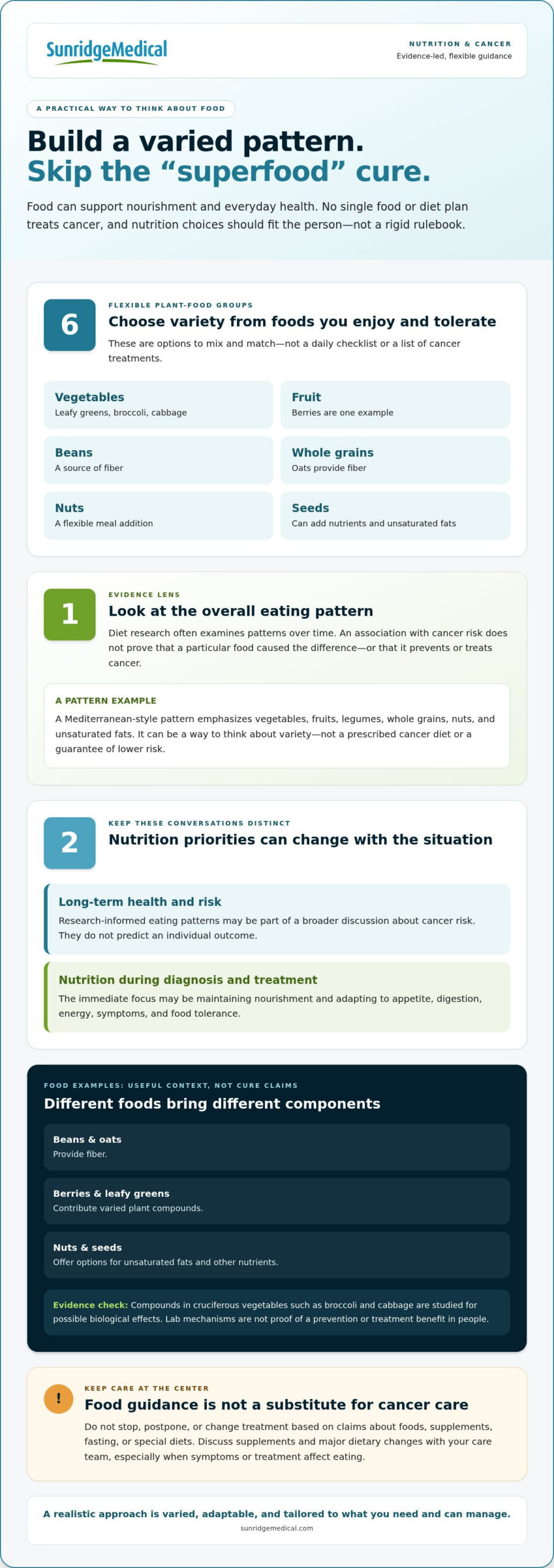
“Cancer-fighting food” is an informal phrase, and it can overstate what an individual food can do. Vegetables, fruits, beans, whole grains, nuts, and seeds provide fiber and diverse naturally occurring compounds. They can be part of a balanced eating pattern, but a relationship between a broader dietary pattern and cancer risk doesn’t prove that one food prevents cancer or works the same way for every person.
Nutrition research often examines patterns over time, alongside factors such as activity, body weight, and alcohol use. The overview of Diet and cancer discusses the range of questions researchers investigate. Associations can help researchers understand potential risk, but they aren’t a promise about an individual’s outcome or proof that a food is a treatment.
Can a diet plan treat cancer?
No diet plan should be presented as a cancer treatment or cure. Eating well may support general nourishment, but nutrition goals differ according to diagnosis, treatment, symptoms, appetite, and personal needs. A plan that feels manageable for one person may be unsuitable for another, particularly when eating becomes difficult or treatment changes what the body tolerates.
Risk reduction and nutrition during treatment are separate conversations. For people thinking about long-term health, research-informed dietary patterns may be one part of a broader discussion about cancer risk. After a diagnosis, the immediate priority may instead be maintaining nourishment and adapting to symptoms. A rigid “clean eating” rule or sudden elimination diet can add pressure without necessarily meeting those needs.
Keep food guidance in its proper role: it can inform everyday choices, but it cannot replace cancer evaluation, prescribed treatment, or clinician guidance. Don’t stop, postpone, or change treatment based on claims about foods, supplements, fasting, or special diets. Discuss proposed changes with your care team so they can be considered alongside your full treatment plan. The practical goal is not to eat perfectly. It’s to make choices that are appropriate, flexible, and supportive of your circumstances.
How plant foods and overall eating patterns relate to cancer research
Research on diet and cancer usually looks at patterns over time, not whether one ingredient can deliver a guaranteed effect. A food may contain compounds of scientific interest without proving that eating it changes cancer risk in people. Consider how different foods fit together rather than searching for a single “superfood” to carry the promise.
Why variety matters more than a superfood list
Beans, berries, leafy greens, oats, nuts, and seeds each bring different nutrients and food components to meals. Beans and oats provide fiber; berries and greens contribute varied plant compounds; nuts and seeds add options for incorporating unsaturated fats and other nutrients. No single item supplies the full range, and a laboratory finding about a compound doesn’t establish that a food treats cancer in people.
Variety matters because different plant foods contribute different nutrients and components, while no one “superfood” can stand in for a balanced pattern. For example, cruciferous vegetables such as broccoli and cabbage contain compounds studied for their possible biological effects. The National Cancer Institute’s Cruciferous Vegetables and Cancer Prevention fact sheet describes this research. Mechanisms studied in a lab should not be mistaken for proof of a prevention or treatment benefit in people.
Use variety as a flexible principle, not a rigid daily checklist. Rotate foods you enjoy and tolerate, and adapt preparation or portions to your appetite and routine. If some options don’t suit you, there’s no need to force them in pursuit of a perfect list.
What can research say about dietary patterns?
Studies may find that certain eating patterns are associated with cancer risk, but an association alone cannot show that diet caused the difference. Researchers have to account for other influences, and people’s diets and circumstances vary. The American Institute for Cancer Research emphasizes an overall pattern rich in plant foods; the National Cancer Institute’s material on individual food groups also shows why evidence about a specific food needs careful interpretation.
A Mediterranean-style pattern is one example of an eating pattern that emphasizes vegetables, fruits, legumes, whole grains, nuts, and unsaturated fats. It can offer a practical way to think about variety, but it isn’t a prescribed cancer diet or a guarantee of lower risk. The pattern, not a single featured ingredient, is the useful frame for considering everyday choices.
In practical terms, the cancer fighting foods and diet plan conversation is less about adding a particular “power food” and more about finding a sustainable mix of foods that works for you. If food questions arise alongside a diagnosis or treatment, include them in an individualized cancer-care discussion so dietary choices are considered in the context of your care.
Cancer-supportive foods versus popular diet claims: how to judge the difference
Food advice can sound too vague to use or so strict that it creates fear around ordinary meals. To assess a claim, ask whether it describes a flexible pattern, imposes sweeping restrictions, or promises an outcome food cannot guarantee. This distinction helps keep cancer-risk guidance separate from claims that a food treats an existing cancer.
Which foods are commonly included in a varied eating pattern?
Options can include leafy greens, carrots, berries, apples, beans, lentils, oats, brown rice, nuts, eggs, fish, poultry, tofu, or other protein foods that fit your preferences and needs. There’s no need to rank these as “best” or assign any one a guaranteed cancer-fighting effect. Frozen or canned produce, different grains, and culturally familiar beans or proteins can be practical alternatives when fresh ingredients are costly, unavailable, or difficult to tolerate.
Guidance to limit a food is not the same as declaring it forbidden for everyone. The American Cancer Society recommends limiting red and processed meats, avoiding sugar-sweetened beverages, and avoiding alcohol when possible as part of cancer-prevention guidance. These recommendations address patterns associated with risk; they don’t mean that eating a particular food causes cancer or that avoiding it treats cancer after diagnosis. Your circumstances and overall pattern matter.
How to recognize a misleading cancer diet claim
Be cautious if a plan promises to cure cancer, replace medical treatment, or work for every cancer type. Be wary, too, when advice relies on fear, strict food bans, detox language, or supplements presented as universally effective. Fasting or severe restriction promoted as a way to “starve” cancer is not a safe substitute for care; it can make it harder to meet nutrition needs, particularly during treatment.
Risk-reduction guidance describes possible associations across populations; it does not show that a food treats an existing cancer. Before starting a detox, fasting regimen, supplement, or major diet change, discuss it with your treating clinical team. This is especially important if treatment or symptoms affect appetite, digestion, or what you can comfortably eat. A realistic cancer fighting foods and diet plan should reflect individual needs, not cure claims or unnecessary rules.
A flexible cancer-supportive diet plan for everyday meals
A useful meal plan should work with your preferences, available energy, and treatment-related needs. Think of this four-step template as a flexible starting point, not a prescription or a test you have to pass. The goal is to make meals more manageable and nourishing, not to follow rigid rules.
A simple plate-building approach
Build a meal one choice at a time. Start with a base, then add produce and a protein that suits your appetite and circumstances. Adjust or skip parts as needed.
- Choose a base. Try oats, rice, pasta, bread, potatoes, or another grain or starchy vegetable you enjoy.
- Add produce. Include a fruit or vegetable that feels appealing and is comfortable to eat. Fresh, frozen, and canned options can all be convenient.
- Include protein. Depending on your preferences and needs, consider beans, lentils, eggs, yogurt, tofu, fish, poultry, or another familiar source.
- Personalize. Change ingredients, textures, or serving sizes to suit your routine, culture, budget, and tolerance. A simple prepared meal can be a reasonable choice when cooking feels like too much.
Examples, not prescriptions: oatmeal topped with fruit and yogurt; rice with canned beans and cooked vegetables; or toast with eggs and a side of fruit. These combinations are starting points, not a required daily menu. Rinsed canned beans, frozen vegetables, and prepared soups or meals can reduce prep when energy is limited. Choose ingredients that fit your preferences and any guidance from your clinical team.
How to adapt meals when appetite or symptoms change
Appetite, nausea, taste changes, dry mouth, or swallowing concerns can make familiar meals difficult. If a large portion feels overwhelming, smaller, more manageable meals or snacks may feel easier. Try foods and textures you tolerate, and let your care team guide hydration and any changes needed for swallowing. Don’t force foods that worsen symptoms.
On low-energy days, simplify: use a ready-to-eat option, ask someone to help prepare food, or keep easy-to-access foods on hand. If taste changes make usual choices unappealing, try a different tolerated food or temperature rather than imposing a restrictive plan. These are practical adjustments, not treatment recommendations. No single meal pattern suits everyone during cancer care.
Persistent difficulty eating or drinking, swallowing problems, or unintended weight changes deserve timely discussion with your treating clinical team. They can help assess what’s driving the issue and advise on next steps based on your situation. Avoid setting calorie targets, taking supplements, or starting fasting or other restrictive plans without individualized clinical guidance.
A realistic cancer fighting foods and diet plan is one you can adapt as your needs shift, and it belongs within the broader treatment conversation. Discuss your individualized cancer-care plan with Sunridge Medical, including questions about dietary changes and how they fit alongside your care.
Personalizing cancer nutrition with your care team
There isn’t one nutrition plan that suits every person with cancer. Needs can vary with the diagnosis, treatment, symptoms, medical history, and foods you can comfortably eat. Advice may also change over time: a food that works well one week may be difficult during a later phase of treatment. Think of nutrition as one part of an individualized care conversation, not a replacement for cancer treatment.
Bring specific questions to your treating clinical team, especially before starting supplements, fasting, or a major diet change. A supplement can affect care or be inappropriate for an individual situation, and restrictive plans may make it harder to maintain adequate intake. Share what you’re considering and why, including products or eating schedules promoted online. That gives your clinicians a chance to consider the change in the context of your full care plan.
When is individualized nutrition guidance especially important?
Seek timely guidance if treatment or symptoms make it difficult to eat or drink, if swallowing becomes challenging, or if your weight changes without intention. Persistent nausea, changes in taste, digestive problems, or ongoing loss of appetite can also affect what feels manageable. Describe what has changed and when, rather than trying to solve it through stricter food rules.
Food-safety considerations can vary with treatment and personal medical circumstances. Follow the instructions from your clinical team, and ask how they apply to your situation instead of relying on general advice online. If eating difficulties persist or worsen, raise them promptly so your care team can help determine appropriate next steps.
How nutrition fits into an individualized cancer-care plan
At Sunridge Medical, cancer care combines conventional therapies with research-based alternative treatments in individualized care plans. Nutrition questions can be part of that broader discussion, alongside your diagnosis, current treatment, symptoms, and preferences. This does not mean that a diet changes cancer outcomes or can take the place of treatment. It means food choices and proposed changes should be considered in context.
For a wider view of care, explore the related guides on integrative cancer treatment by stage and the alternative cancer treatment clinical guide. Use them as starting points for questions, then bring those questions to your clinical team. The most useful discussion is specific: Which changes are reasonable now? Are there foods or supplements I should avoid given my treatment? What should I do if eating becomes harder?
The phrase cancer fighting foods and diet plan can imply that a meal plan is a treatment. A more grounded goal is to find an approach to eating that fits your needs while your medical care remains central. Explore Sunridge Medical’s individualized approach to cancer care as part of a thoughtful conversation about your full plan.
Make your next nutrition decision with care
Your next step doesn’t have to be a complete diet overhaul. Choose one manageable question to bring to your care team, such as whether a planned food change or supplement fits your treatment and current symptoms. That can turn the phrase cancer fighting foods and diet plan into a grounded conversation about your needs, rather than a search for a perfect menu or guaranteed result.
Sunridge Medical’s individualized cancer-care approach brings conventional therapies together with research-based alternative treatments in personalized care plans. Nutrition belongs in that broader discussion, with choices considered in context and without treating food as a substitute for cancer care.
Explore Sunridge Medical’s individualized cancer-care approach and consider what questions you’d like to bring to your care conversation. A thoughtful next step can be small, personal, and guided by the care you’re receiving.
Frequently Asked Questions
Is there one food that can fight or cure cancer?
No single food has been shown to cure cancer or reliably stop it. Research into nutrients or plant compounds doesn’t mean eating a particular food will reproduce laboratory effects in people. Food can contribute to nourishment and general health, but it shouldn’t be treated as a cancer therapy. Be cautious of recipes or products promoted as effective for every cancer type or as a reason to delay medical care.
Can a cancer diet plan replace chemotherapy, radiation, or surgery?
No. A diet plan cannot replace chemotherapy, radiation, surgery, or other treatment recommended for your diagnosis. Cancer care decisions depend on individual clinical circumstances, and changing or postponing treatment based on a food claim can be dangerous. If you’re considering a major diet change, discuss it with your treating team while continuing your prescribed care. The phrase cancer fighting foods and diet plan should never imply that meals are an alternative to treatment.
What foods are commonly included in a cancer-supportive diet?
Common choices include vegetables, fruits, beans, lentils, whole grains, nuts, and seeds, alongside protein foods that suit your needs, such as eggs, fish, tofu, yogurt, or poultry. For example, you might combine lentils with rice or add fruit to oatmeal. There’s no required menu or single best ingredient. Choose options that fit your preferences, access, culture, symptoms, and clinical guidance.
What foods should you avoid during cancer treatment?
There isn’t one universal avoidance list for everyone receiving cancer treatment. Restrictions may depend on your treatment, symptoms, allergies, or other health considerations. Ask your clinical team about food-safety precautions that apply to you, especially if treatment affects your immune system. Avoid imposing broad food bans based on online claims. If a particular food seems to worsen symptoms, note what happens and discuss it with your care team.
Can sugar make cancer grow faster?
No. Eating sugar doesn’t selectively feed a tumor or prove that cancer will grow faster. The body uses glucose for energy, and eliminating all carbohydrates won’t starve cancer; it may also make it harder to eat enough. If you’re concerned about sugary drinks or sweets, discuss realistic choices in the context of your overall health and treatment needs rather than following a restrictive plan.
Should people with cancer take supplements or follow a fasting diet?
Don’t start supplements or fasting without discussing them with your treating clinical team. Supplements can affect medicines or be unsuitable for your circumstances, while fasting may make it harder to maintain adequate nourishment. Bring the product label and a clear description of the proposed fasting schedule to your appointment. Your clinicians can consider potential risks alongside your treatment and current eating difficulties.
What can I eat if cancer treatment affects my appetite?
Try small, manageable portions of foods you can tolerate instead of pressuring yourself to finish a large meal. Depending on your symptoms, simple options such as toast, yogurt, soup, or a familiar snack may feel easier. If smells, textures, nausea, or swallowing are making eating difficult, tell your treating team. Ask for individualized guidance, particularly if problems persist or you’re losing weight unintentionally.