


No specific diet has been proven to treat Hashimoto’s disease or put autoimmune thyroid disease into remission. A diet to lower thyroid antibodies may support overall health, and some studies have reported changes in antibody levels with particular eating patterns, but lower results don’t necessarily mean the disease is in remission.
It’s understandable to look for a clear eating plan when thyroid antibody results are elevated. This article explains what the evidence suggests about a diet to lower thyroid antibodies, including the Autoimmune Protocol (AIP), Mediterranean-style eating, selenium-rich foods, and why diet alone may not be enough. It also shows how food choices can fit alongside appropriate medical care, without treating restrictive eating as a guaranteed solution.
Key Takeaways
- Food choices may support thyroid and overall health, but diet alone hasn’t been proven to put autoimmune thyroid disease into remission or replace medication.
- AIP research suggests possible improvements in quality of life and inflammation markers, while thyroid lab results may not change.
- Selenium-rich foods can contribute to thyroid hormone conversion; Brazil nuts are concentrated sources, so more isn’t automatically better.
- A gluten-free or dairy-free approach is not necessary for everyone. Consider whether an elimination addresses a diagnosed condition or a clear symptom pattern.
- Research on Mediterranean-style eating offers a promising link with lower thyroid antibodies, making it a less restrictive pattern to explore.
Can diet alone put autoimmune thyroid disease into remission?
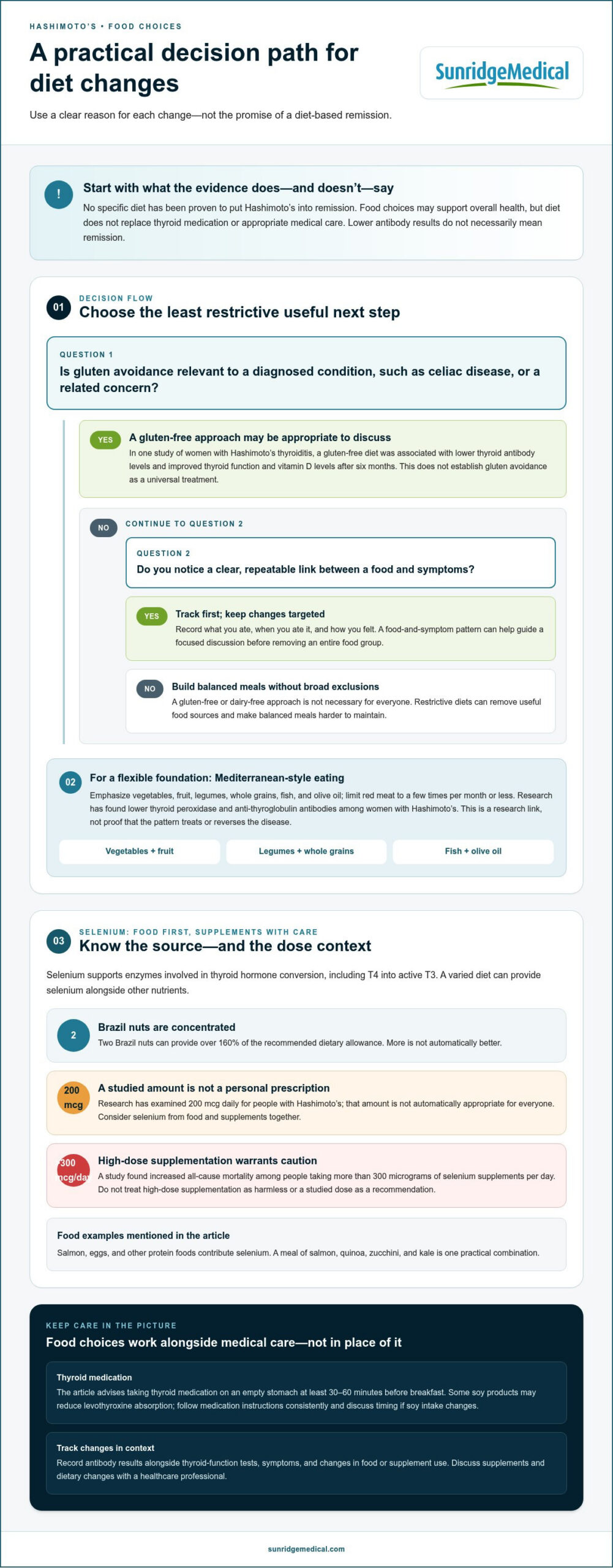
No specific diet has been proven to put Hashimoto’s disease into remission. Food choices can support overall health, but they don’t replace thyroid medication or other appropriate care.
Diet Approaches for Hashimoto’s
Diet approaches for Hashimoto’s focus on food patterns that support nutrition and individual needs. A gluten-free diet isn’t necessary for everyone, but it may be important with celiac disease or a related concern. In a study of women with Hashimoto’s thyroiditis, a gluten-free diet was associated with lower thyroid antibody levels and improved thyroid function and vitamin D levels after six months, according to the study authors.
That finding doesn’t establish gluten avoidance as a universal treatment. Restrictive diets can remove useful food sources and make balanced meals harder to maintain. Thyroid supplements can also pose risks when taken without a clear need, including excessive intake of some nutrients. Keep changes targeted, and discuss supplements in the context of medication and symptoms with a healthcare professional.
Hashimoto’s and Hypothyroidism
Hashimoto’s is an autoimmune disease that causes chronic thyroid inflammation; over time, this can slow or stop production of essential hormones. It accounts for roughly 90 percent of hypothyroidism cases, so the diagnosis helps explain why thyroid hormone levels may fall.
Hypothyroidism can affect energy, digestion, skin, hair, and weight. A diet that supports general nutrition may help someone feel better, but it doesn’t restore hormone production when the thyroid cannot make enough. People taking thyroid medication are advised to take it on an empty stomach at least 30-60 minutes before breakfast, according to The source page providing the medication guidance.
Vitamin D and Thyroiditis
Vitamin D supports immune function, and low levels can be assessed with a blood test. In the gluten-free study above, vitamin D levels improved alongside thyroid function and antibody levels after six months. Those results occurred together in that study, but they don’t show that avoiding gluten raises vitamin D for everyone.
Vitamin D food sources include fatty fish such as salmon and fortified foods. Sun exposure and individual health factors also influence vitamin D status. Rather than adding a supplement based only on thyroid antibodies, use measured vitamin D levels and your current supplements to guide a discussion about appropriate intake.
Meal and Snack Ideas
Balanced meals can include protein, vegetables, fruit, and high-fiber foods without requiring a restrictive plan. For lunch, try salmon with quinoa and zucchini, or serve eggs with sautéed vegetables and fruit. These combinations offer practical variety and keep the focus on nourishing meals, not a promise to lower antibodies.
For a snack, pair an apple with nuts, or choose plain yogurt with berries if dairy suits you. A simple meal pattern can also make it easier to spot whether a particular food consistently relates to symptoms. Before removing an entire food group, record what you ate, when you ate it, and how you felt. Broad exclusions can reduce variety without clarifying the cause.
Selenium-rich foods and thyroid hormone conversion
Selenium supports enzymes involved in thyroid hormone conversion, including the conversion of T4 into active T3. Selenium-rich foods, alongside a varied eating pattern, can contribute to thyroid function and immune health.
Which foods and nutrients may be relevant to thyroid antibody levels? Selenium, vitamin D, and nutrient-dense foods such as fruits and vegetables may play a role. Research on Mediterranean-style eating has also found lower thyroid peroxidase and anti-thyroglobulin antibodies among women with Hashimoto’s.
Brazil nuts are a concentrated selenium source: two nuts can provide over 160% of the recommended dietary allowance. Salmon, eggs, and other protein foods also contribute selenium; a meal of salmon, quinoa, zucchini, and kale offers a practical combination.
Selenium supplements require care. Research has examined 200 mcg daily for people with Hashimoto’s, but that amount isn’t automatically appropriate for everyone. A study found increased all-cause mortality among people taking more than 300 micrograms of selenium supplements per day. Don’t treat a studied dose as a personal prescription, and account for selenium from food and supplements together.
How do selenium supplements affect TPO and thyroglobulin antibodies, and what dose is safe? Selenium research has examined antibody changes, but the facts here don’t establish one supplement dose as safe for every person. More than 300 micrograms/day was associated with increased all-cause mortality in a study, so avoid treating high-dose supplementation as harmless.
Mediterranean-style eating emphasizes vegetables, fruit, legumes, whole grains, fish, and olive oil, with red meat limited to a few times per month or less. These foods provide protein, fiber, and a range of vitamins, supporting an overall eating pattern rather than relying on one antibody-lowering ingredient. Berries, leafy greens, and tomatoes are examples of colorful, antioxidant-rich choices.
Food can also affect medication absorption. Compounds in some soy products may reduce levothyroxine absorption, so follow medication instructions consistently and discuss timing if you change your soy intake. Tracking meals, supplements, symptoms, and laboratory results together can help distinguish dietary changes from shifts in thyroid function.
How should thyroid antibodies and thyroid function be monitored while changing diet? Record antibody results alongside thyroid-function tests, symptoms, and changes in food or supplement use. For broader hormone concerns alongside thyroid questions, Hormone Optimization Therapy may be a relevant next step.
The autoimmune protocol (AIP) diet: Does it actually help thyroid conditions?
The Autoimmune Protocol (AIP) is a restrictive elimination diet intended to remove foods thought to trigger inflammation. Research has reported improvements in some symptom-related measures, but thyroid antibody and hormone results need to be considered separately.
Gluten-Free and Grain-Free Diets
AIP removes gluten-containing grains and other foods, then may reintroduce selected items to observe responses. A gluten-free or grain-free plan can be difficult to sustain, and removing foods doesn’t prove they cause an individual’s symptoms.
AIP also eliminates dairy, eggs, legumes, and seed oils. For someone with celiac disease, avoiding gluten addresses a diagnosed condition. Celiac disease occurs more often in people with Hashimoto’s than in people without it. For those with Hashimoto’s who don’t have celiac disease, current research doesn’t support a gluten-free diet for everyone.
Grain-free and gluten-free aren’t the same: some grains contain no gluten, while AIP excludes grains as a group. Replacing bread with vegetables, fruit, and protein foods can maintain variety, but removing several food groups may make balanced meals harder to plan. The reason for each exclusion matters.
Anti-Inflammatory Diets and Antibodies
An anti-inflammatory diet emphasizes whole foods and limits selected foods, but studies don’t establish one universal thyroid treatment. In a 10-week study of women with Hashimoto’s thyroiditis, the Autoimmune Protocol diet improved quality-of-life scores and decreased C-reactive protein levels, according to The study authors. These outcomes describe quality of life and inflammation, not remission.
A separate study evaluated AIP in 16 women with Hashimoto’s thyroiditis. Another study of people with thyroid disorders reported zero improvement in thyroid lab results after following AIP. These findings show why symptom measures and thyroid tests shouldn’t be treated as interchangeable outcomes.
Research on broader anti-inflammatory eating also offers a distinct signal. In a 2016 study lasting three weeks and including nearly 200 participants with autoimmune thyroid disease, the anti-inflammatory diet group’s thyroid antibody levels fell by up to 60 percent. The standard low-calorie diet group experienced antibody increases of up to 30 percent in that study.
Those results don’t establish that calorie restriction caused the antibody changes or that the same response applies to everyone. A whole-food pattern can include vegetables, fruit, fish, and minimally processed meals without adopting AIP’s full list of exclusions. That may be more manageable than eliminating several food groups at once.
If you’re considering AIP, separate the goal from the method: symptom relief, antibody levels, and thyroid function are different measures. Track the specific foods you remove and any symptoms you observe instead of assuming every excluded food is harmful. Reintroduction may help identify whether a particular food relates to a clear response. Celiac disease, however, calls for a distinct gluten-free approach.
Autoimmune Protocol diet food exclusions
The Autoimmune Protocol (AIP), also called the autoimmune paleo diet, is an elimination approach designed to avoid foods thought to trigger inflammation or affect the gut. Because its exclusions are broad, it’s important to understand what the diet removes as well as what remains.
AIP excludes gluten and dairy, along with eggs, legumes, grains, and seed oils. Familiar foods such as wheat bread, yogurt, lentils, oatmeal, and scrambled eggs are therefore removed during the elimination phase. Meals then rely on foods such as meat, fish, fruit, and vegetables. This can feel demanding, especially when several everyday sources of protein and other nutrients disappear at once.
Cruciferous vegetables, including broccoli, cauliflower, and kale, generally don’t need to be removed automatically. The dietary guidance identifies specific reasons to avoid them: SIBO, sulfur sensitivity, or clear symptom flares after eating them. Before excluding an entire vegetable group, record what you ate and any symptoms that followed. Nightshades, such as tomatoes, peppers, and eggplant, are another debated category; whether they cause inflammation remains unsettled.
Excluding a food doesn’t prove it caused autoimmune thyroid disease. Gluten avoidance has a specific role for people with celiac disease, which occurs more often in people with Hashimoto’s than in people without it. For those with Hashimoto’s who don’t have celiac disease, current research doesn’t support a gluten-free diet for everyone. Let the reason for removing a food guide the decision.
Broad restrictions can make it harder to get a range of nutrients. Removing dairy, legumes, eggs, and grains at once, for example, changes several sources of protein and other nutrients. If you follow AIP, plan deliberate alternatives, such as fish with vegetables and a permitted starch. A food log can capture ingredients, symptoms, and thyroid antibody changes without assuming that a single result proves remission.
Symptoms and thyroid tests measure different things. One AIP study reported improvements in quality of life and C-reactive protein, while another study of participants with thyroid disorders found zero improvement in thyroid lab results. Symptom relief alone, therefore, doesn’t establish autoimmune remission. A doctor can review the diet alongside symptoms, medication, and laboratory findings, then help determine whether exclusions remain useful.
A practical approach is to define the reason for each exclusion, keep meals varied, and reconsider foods individually instead of removing every debated category. For example, if you’re testing whether dairy relates to bloating, track that symptom while keeping other meals consistent. This makes the pattern easier to interpret and can reduce unnecessary restrictions.
Research on thyroid antibodies and Mediterranean eating
Mediterranean-style eating has a specific research signal in Hashimoto’s: women following a modified version of this pattern had lower thyroid peroxidase and anti-thyroglobulin antibodies. This finding makes the approach worth understanding, but it doesn’t establish that Mediterranean eating reverses autoimmune thyroid disease or works the same way for everyone.
The pattern centers on vegetables, fruit, legumes, whole grains, nuts, olive oil, and fish. A practical plate might pair lentils and roasted vegetables with whole-grain bread, or serve salmon with greens and barley. These meals offer variety without AIP’s broad exclusions and can be easier to maintain as part of daily life.
What makes this pattern relevant? It emphasizes minimally processed foods and a range of plant foods, while commonly using olive oil and fish as fat sources. That’s different from testing one nutrient or eliminating a single ingredient. The study’s antibody finding involved a modified Mediterranean diet, so it doesn’t prove that any one food lowered antibody levels.
The antibody result needs context. Thyroid peroxidase and anti-thyroglobulin antibodies are markers of immune activity, while thyroid-function tests help assess hormone levels and the thyroid gland’s output. A change in antibodies alone doesn’t establish remission or determine whether medication is still needed. Keep these measures distinct when discussing dietary changes and lab results.
For a manageable approach, build meals around familiar Mediterranean-style foods: serve vegetables at lunch and dinner, add beans to soups or salads, and pair fish with grains. Choose fruit or nuts for snacks, and use olive oil for cooking or dressings. Red meat can remain occasional rather than the centerpiece, with the dietary guidance limiting it to a few times per month or less.
Medication and supplements still need attention. Dietary changes shouldn’t replace prescribed thyroid medication, and elevated antibody results alone aren’t a reason to add supplements. Record changes in your diet, symptoms, medication use, and test results so they can be reviewed together. This gives a clearer picture than attributing every change to one meal or ingredient.
The central takeaway is practical: Mediterranean eating offers a varied, less restrictive pattern and a promising antibody finding, not a guaranteed treatment. If autoimmune thyroid disease is affecting your care decisions, explore individualized autoimmune disease management as a way to consider nutrition alongside the broader clinical picture.
Sunridge Medical: Alternative Cancer Treatment Protocols
Sunridge Medical offers Alternative Cancer Treatment Protocols, while thyroid antibody concerns relate more directly to its Autoimmune Disease Management. This distinction matters: a nutrition pattern may support general health, but it cannot establish remission or replace care for autoimmune thyroid disease.
Consider Autoimmune Disease Management when Hashimoto’s symptoms, antibody results, and thyroid function need to be understood together. Sunridge Medical develops individualized care plans for complex conditions, providing an opportunity to discuss how nutrition fits into your broader health picture. The focus is on your specific concerns, not on treating one antibody result as the whole story.
To discuss autoimmune concerns and a possible next step, contact Sunridge Medical.
Choose a thoughtful next step for your thyroid health
Food changes are most useful when they fit your health needs and can be assessed alongside symptoms, thyroid tests, and current care. Rather than chasing a single antibody result, focus on a sustainable eating pattern and discuss meaningful changes as part of your care. A diet to lower thyroid antibodies can be part of that conversation, not a substitute for individualized medical care.
If autoimmune thyroid concerns feel difficult to manage, Sunridge Medical offers Autoimmune Disease Management. Its other services include Chronic Lyme Disease Treatment and Alternative Cancer Treatment Protocols for people seeking care for those conditions. The right next step depends on the concern you want to address, and dietary changes alone may not resolve autoimmune thyroid disease.
Contact Sunridge Medical to discuss your care and consider how your nutrition questions fit into a broader plan. A steady, informed approach can help you move forward with greater clarity.
Frequently Asked Questions
Can you eat eggs if you have Hashimoto’s?
Yes, eggs can fit into a Hashimoto’s eating pattern unless you have an allergy, intolerance, or another reason to avoid them. AIP excludes eggs during its elimination phase, but that restriction isn’t a rule for everyone with Hashimoto’s. If you’re testing whether eggs relate to symptoms, keep other meals steady and note what changes instead of removing several foods at once.
Does diet replace thyroid medication?
No. Diet supports nutrition, but it doesn’t replace prescribed thyroid medication or determine whether hormone treatment is needed. A diet to lower thyroid antibodies is nutritional support, not a substitute for medication. Don’t stop or change a prescription because of a new meal plan or antibody result. If you change your eating pattern, continue taking medication as prescribed and share the change with the clinician managing your thyroid care.
How long does it take to see antibody reduction after changing diet?
There’s no reliable timeline that applies to everyone. A study of women with Hashimoto’s linked a gluten-free diet with lower antibody levels after six months, but that finding can’t predict an individual response. A diet to lower thyroid antibodies may affect people differently. Record when a change began, then review antibody results alongside thyroid-function tests, symptoms, and other changes in care.
Is the Autoimmune Protocol (AIP) diet the only effective approach?
No. AIP is one restrictive approach, not the only way to support health with Hashimoto’s. Mediterranean-style eating offers another option, built around varied whole foods rather than AIP’s broad elimination list. Choose an approach you can sustain and assess it against specific goals, such as symptom patterns or lab results, rather than assuming one diet works best for everyone.
Should all autoimmune patients avoid cruciferous vegetables?
No. People with autoimmune conditions don’t need to automatically remove broccoli, kale, or cauliflower. Avoid them if you have SIBO, sulfur sensitivity, or clear symptom flares after eating them. If you suspect a connection, track the vegetable and your response; that record can help distinguish a consistent pattern from an assumption based on the food’s category.
What are thyroid antibodies?
Thyroid antibodies are immune proteins that can target components of the thyroid gland. Tests may measure thyroid peroxidase antibodies or anti-thyroglobulin antibodies. A positive result can help clinicians assess autoimmune thyroid disease, but it doesn’t by itself show how well the gland produces hormones. Thyroid-function tests and symptoms provide different information for understanding the overall picture.
What to Eat (and What to Skip) to Support Your Hashimoto’s Journey?
Build meals from foods you tolerate, such as vegetables, fruit, fish, beans, and whole grains, then adjust to your needs. Avoid foods linked to a diagnosed condition, such as gluten with celiac disease, or to a consistent personal symptom response. A simple shopping plan might include produce, a protein source, and a grain for several meals, rather than specialty substitutes for every excluded food.
What triggers Hashimoto’s flare-ups?
There isn’t one established food trigger that explains every symptom change in Hashimoto’s. Symptoms can shift for reasons beyond a particular meal, so don’t label a flare based on one food or antibody test. Record symptoms, medication changes, new supplements, and major dietary changes together. Bring that pattern to your clinician to help assess possible causes and next steps.