

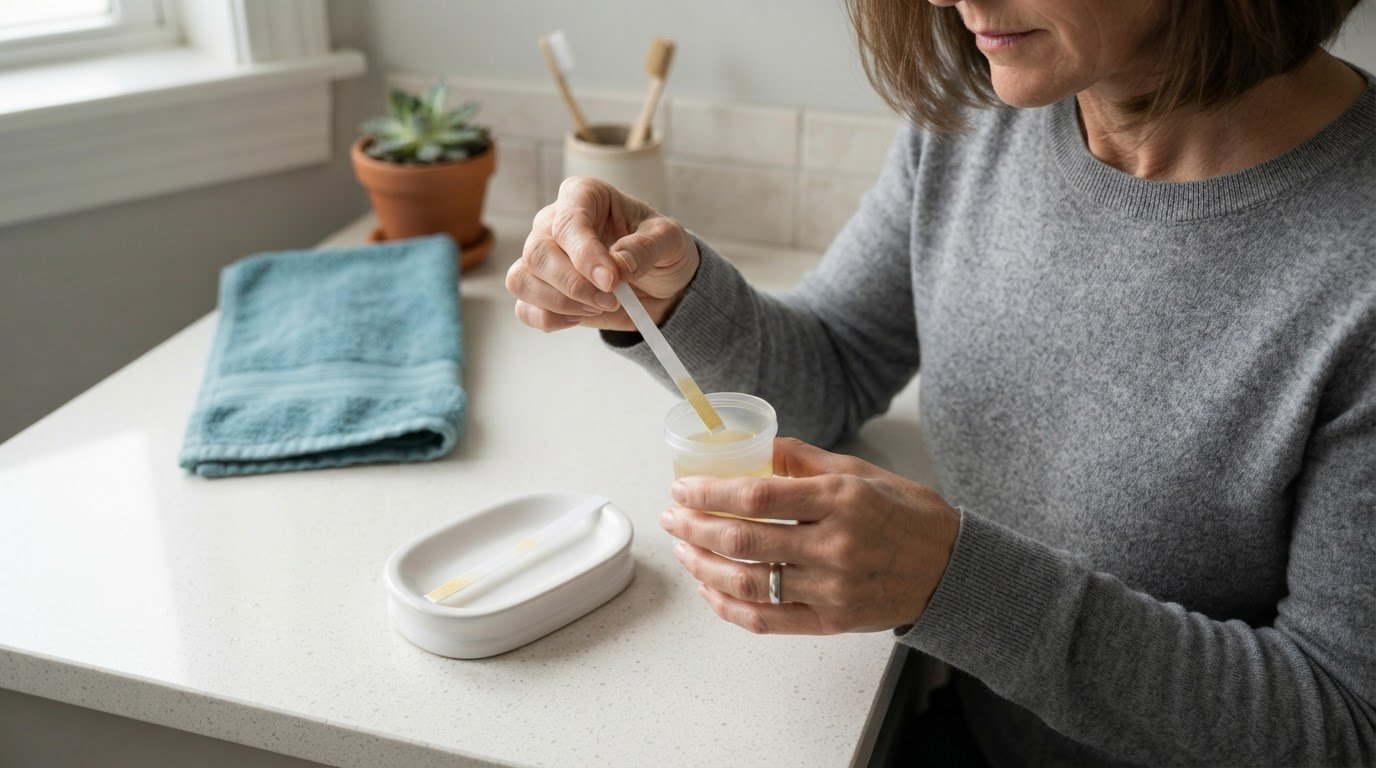
Hormone results are more than a single number. The DUTCH test for hormone analysis measures hormones and their metabolites in dried urine samples collected at home. Depending on the panel, it can show patterns in sex hormones, adrenal hormones, and how the body processes them.
If you want to understand what a hormone test can show, the collection method and report matter. This guide explains what the DUTCH test measures, how DUTCH Complete differs from standard blood and urine tests, and what its results can and cannot tell you. It also explains how to interpret hormone and metabolite patterns in context, rather than treating the numbers as a diagnosis.
Key Takeaways
- Learn which hormone metabolites and related biomarkers may appear in a DUTCH panel, and why they add context to hormone levels.
- Understand how multiple collection points can show daily cortisol patterns that a single measurement may not capture.
- Read color-coded results as signals to interpret in context, not as a diagnosis on their own.
- See what DUTCH Complete can include and how its dried urine collection is structured.
- Recognize how a healthcare provider can connect test findings with symptoms and treatment decisions.
What does DUTCH test?
The DUTCH test measures hormones and hormone metabolites in dried urine samples collected at home. Depending on the panel, it may also include adrenal hormones and other biomarkers.
Hormones and Metabolites Measured
DUTCH panels assess sex hormones, adrenal hormones, their metabolites, and selected organic acid markers. Metabolites are substances produced as the body processes hormones, adding context beyond a hormone level alone.
Panels can include estrogen, progesterone, testosterone, DHEA-S, cortisol, and related metabolites. Some organic acid markers relate to nutrition, neurotransmitters, neuroinflammation, oxidative stress, gut health, and melatonin. The DUTCH Complete assesses 35 hormones, including these major hormone groups and their metabolites. A practitioner considers the panel’s findings alongside symptoms and other clinical information.
Androstenedione Metabolites and Androgenic Symptoms
Androstenedione is reflected through two metabolites: etiocholanolone (5b) and androsterone (5a). The 5a pathway is associated with androgenic symptoms, including coarse facial hair growth, male-pattern hair loss, and acne.
For someone experiencing acne or hair loss, testing may show testosterone levels and how testosterone is metabolized into more androgenic alpha metabolites. These patterns can add context to symptoms, but do not establish a diagnosis. A practitioner interprets them alongside the person’s broader health picture.
Estrogen metabolism is another part of the report. The test assesses phase 1 and phase 2 pathways, including 2-OH, 4-OH, and 16-OH metabolites. The 2-OH pathway is described as the most common and healthiest detoxification pathway. The 4-OH pathway creates unstable genotoxic metabolites linked to increased breast cancer risk, while 16-OH metabolites have estrogenic activity linked to more estrogen-related issues.
A family history of cancer is relevant context when discussing estrogen findings with a practitioner. These pathway results do not determine an individual’s cancer risk or replace appropriate screening. They describe hormone metabolism markers. Organic acid markers may also relate to B vitamins and neurotransmitters such as dopamine, providing additional nutritional context.
How does the test work, and how are samples collected? You collect dried urine samples at home on collection strips, usually at multiple points during the day; the timing and number depend on the panel. DUTCH Complete samples are collected across a 24-hour period.
How should you prepare, including medications and supplements? Preparation guidance advises avoiding avocados, bananas, and fava beans for 48 hours before testing, and limiting total fluid intake to 32 to 64 ounces from dinnertime on the testing day through the following morning. List current medications and supplements for the ordering practitioner, and follow the kit instructions for any medication-related directions.
How much does it cost in the United States, and is insurance coverage available? People with out-of-network coverage may submit a receipt for possible reimbursement when a provider orders the test.
What are the risks and limitations? The test measures hormones and metabolites, but results alone do not diagnose a condition. Standard medical evaluation, including blood work, medical history, and physical examination, remains important. Thyroid disorders, PCOS, and adrenal insufficiency may require additional testing.
How is this different from other hormone tests?
The main distinction is the collection pattern: DUTCH testing can measure cortisol at several points during the day. This creates a daily profile alongside other hormone measurements, rather than relying on a single time point.
Cortisol and Cortisone Patterns
Cortisol and cortisone are measured across the day, showing how their levels vary over time. This pattern can help a practitioner interpret results in relation to sleep, energy, and the body’s daily rhythm.
The adrenal panel includes free cortisol and free cortisone patterns, as well as metabolized cortisol. Free cortisol is the active form that binds to and activates receptors. Metabolized cortisol represents abundant cortisol metabolites and helps assess total cortisol production by the adrenal glands.
Together, these measurements offer different kinds of information. Free cortisol reflects the hormone available to interact with receptors at collection times. Metabolized cortisol gives a broader view of production, rather than showing only the amount present at one point.
Collecting samples at multiple points matters because cortisol changes throughout the day. A pattern may show how measured levels align with the collection schedule, while a single sample represents only the moment it was collected. Clinical context still matters: symptoms, sleep timing, and other test findings all affect how a practitioner interprets the results.
Standard blood testing remains important for diagnosing and treating hormone-related conditions. Medical history and physical examination also inform that assessment. DUTCH results provide one type of information, not a replacement for conventional evaluation or diagnostic testing.
Cortisol Measurement and Add-On Testing
The cortisol add-on focuses on cortisol and its metabolites to assess stress-response patterns. It can provide more detail when a practitioner is considering daily cortisol rhythms alongside hormone findings.
An organic acid add-on measures a different group of markers. These may relate to nutritional deficiencies, oxidative stress, gut dysbiosis, melatonin, and neuroinflammation. They are not cortisol measurements, but may provide additional context for a treatment plan.
For example, a person reporting fatigue, low energy, or low motivation may have a DUTCH panel that assesses daily cortisol patterns, androgen levels, and organic acid markers related to B vitamins and neurotransmitters such as dopamine. These results describe several biological markers, but do not explain the cause of symptoms on their own.
Test selection should match the clinical question. A cortisol-focused add-on emphasizes adrenal patterns, while organic acid testing examines those related markers. A practitioner can interpret the findings alongside symptoms and standard medical testing to determine what belongs in a broader care plan. For care focused on hormone balance, hormone optimization therapy may be a relevant next step.
Interpreting DUTCH test results
A DUTCH report combines measured values with reference ranges and collection times. Its colors and hormone patterns help organize findings, but interpretation depends on clinical context.
Contextual and Symptom Interpretation
Interpreting results in context means reviewing report values alongside symptoms, health history, and collection details. A marker by itself cannot explain a person’s experience.
For example, fatigue, mood swings, and a reported hormone imbalance provide different context from results in someone without symptoms. A practitioner considers which findings relate to the person’s concerns, whether hormone patterns fit the sample timing, and whether other clinical information changes the interpretation. Dried urine results describe measured markers, not a complete diagnosis.
Accuracy and Clinical Validation
The DUTCH Test is a group of validated tests that evaluates sex and adrenal hormones, including their metabolites. However, validation of the measurements does not by itself establish how accurately a result diagnoses a condition or guides treatment.
Most research supporting the DUTCH test’s use has been industry-funded. This funding context matters when weighing the evidence. Results should be considered alongside standard medical evaluation, including blood tests, medical history, and physical examination, rather than treated as a standalone diagnosis.
The report uses green, yellow, and red markers to indicate optimal, slightly out-of-range, and significantly out-of-range results, respectively. These colors are visual guides, not diagnoses. A yellow marker needs interpretation in relation to the analyte, the person’s symptoms, and the rest of the report. A red marker also calls for clinical review, not an isolated response to its color.
Symptoms can guide the discussion without proving a hormone-related cause. Fatigue may lead a practitioner to review adrenal findings, while mood swings may prompt discussion of hormone patterns and timing. The practitioner can compare these concerns with the report and other clinical information, helping distinguish a relevant pattern from a value that does not explain the symptoms.
After an intervention, many practitioners recommend repeating a DUTCH test 3-6 months later. Comparing reports can show whether measured patterns changed after the intervention. The practitioner interprets that comparison alongside symptom changes and other relevant findings; a changed marker alone doesn’t establish that an intervention caused a change in health.
How accurate and clinically validated is the DUTCH test? It comprises validated tests, but most research supporting its use has been industry-funded. The results provide measurements, not a standalone diagnosis.
How do you order a DUTCH test, and do you need a healthcare provider? A healthcare provider or practitioner typically arranges the test and receives the report for interpretation. Their involvement allows results to be considered alongside symptoms and other medical findings.

What the DUTCH test measures
DUTCH panels measure sex hormones, adrenal hormones, and selected related biomarkers. The specific findings depend on the panel, so testing should match the clinical question.
Sex hormone panels can measure testosterone, estradiol, estrone, estriol, progesterone, and DHEA, along with hormone metabolites. These results show more than the level of one hormone. A practitioner can interpret related measurements together, such as estrogen values and their metabolism markers. This distinction helps patients understand what a report measures without treating one result as a complete explanation for symptoms.
Adrenal panels assess cortisol and related markers. DUTCH includes eight adrenal analytes to help providers evaluate the HPA axis, the communication pathway involving the hypothalamus, pituitary, and adrenal glands. The report can include free cortisol patterns and metabolized cortisol. These are different measurements: free cortisol is the active form that binds to receptors, while metabolized cortisol reflects abundant cortisol metabolites and helps assess total adrenal cortisol production.
Melatonin is measured in DUTCH Complete through the marker 6-OHMS. This gives the report a specific marker related to melatonin, rather than a direct reading of sleep quality. Stress, sleep timing, and symptoms are useful context for discussing the finding with a practitioner. The marker itself does not explain why a patient sleeps poorly or feels tired, so its meaning depends on the broader clinical picture.
Some DUTCH panels also include organic acid markers. These can relate to nutrition, neurotransmitters, neuroinflammation, oxidative stress, gut health, and melatonin. The DUTCH Complete includes urinary 8-OHdG as an oxidative stress marker. Other organic acid findings may relate to B vitamins or neurotransmitters such as dopamine. Together, these measurements help explain the scope of a panel, but they do not turn every marker into a diagnosis.
For cycling women, DUTCH Cycle Mapping adds repeated collection across the menstrual cycle. It uses nine urine collections taken daily over a month to show cycle-related patterns. This differs from a panel focused on a limited collection window. The sequence may help a practitioner review changing hormone measurements across the cycle rather than relying on a single collection day.
In short, a DUTCH report can combine hormone levels, hormone metabolites, adrenal analytes, melatonin markers, and organic acids. To identify the panel’s scope, note which measurements appear in the report. These findings describe measured biology; a practitioner connects them with symptoms, medical history, and other hormone tests to assess their clinical relevance.
DUTCH Complete hormone test overview
DUTCH Complete combines hormone measurements, metabolites, and selected biomarkers in one report. Its defining feature is the collection pattern: dried urine samples gathered at several times across a 24-hour period create a time-based picture, not a single snapshot.
Patients collect four or five dried urine samples during the collection period. The schedule includes a sample upon waking, within 10 minutes, and another two hours after waking. Further samples are collected before dinner, at about 5 p.m., and at bedtime, around 10 p.m. A collection may also include an optional sample in the middle of the night. Follow the kit’s instructions for the exact sequence.
Timed samples help show how measured hormones vary during the day. For example, the report can display free cortisol and cortisone patterns alongside metabolized cortisol. Together, these findings offer different information about daily rhythm and total cortisol production. They do not measure every aspect of adrenal function, but give a practitioner a structured set of markers to discuss alongside symptoms and other clinical findings.
The Complete report also combines sex hormone metabolites with adrenal measurements. Its organic acid markers include urinary 8-OHdG, an oxidative stress marker, and 6-OHMS, the marker used to measure melatonin. This makes the report broader than a panel focused only on reproductive hormones. Still, a marker provides a specific measurement, not a complete explanation for a symptom or diagnosis.
Collection timing is central to interpreting the report. A waking sample and an evening sample represent different points in the daily pattern, so recording them in the prescribed sequence matters. Dried samples remain stable for several weeks, allowing time for the collected strips to be sent for laboratory analysis. A practitioner can then review the full pattern instead of interpreting each time point in isolation.
The practical takeaway is that DUTCH Complete offers a multi-marker picture, while the collection schedule adds a time dimension. It may be useful when a clinician wants to review hormone metabolites, cortisol patterns, melatonin, and selected organic acids together. It does not replace standard medical evaluation. Before findings inform a treatment plan, they need to be considered alongside symptoms, medical history, and other testing.
If hormone findings are part of a wider care discussion, explore support for hormone-related concerns.
Sunridge Medical: Hormone Optimization Therapy
Sunridge Medical offers Hormone Optimization Therapy for people with hormone-related concerns. If DUTCH findings raise questions or symptoms continue without a clear explanation, the results can form part of a broader conversation about health and care options.
Hormone measurements do not establish a diagnosis on their own. Sunridge Medical develops individualized care plans that integrate conventional medicine with research-informed alternative treatments, taking each patient’s broader health picture into account. This approach can help connect test findings with symptoms and other clinical information, rather than treating one marker as the whole story.
To discuss hormone-related concerns and possible next steps, contact Sunridge Medical.
Turn your findings into a thoughtful next step
Health decisions rarely depend on a single report. If hormone findings leave you with questions, use them to start a conversation about your symptoms, priorities, and broader health picture. A DUTCH test for hormone analysis may inform that discussion, while your care plan should reflect the whole person, not one result.
Sunridge Medical offers Hormone Optimization Therapy and care for complex health concerns through Alternative Cancer Treatment Protocols, Chronic Lyme Disease Treatment, and Autoimmune Disease Management. The right next step depends on the concern you want to address and the context behind your results.
Share what you’re experiencing and discuss possible next steps with Sunridge Medical. Contact Sunridge Medical today to begin that conversation with clarity and support.
Frequently Asked Questions
How does this test compare to other ways of evaluating your hormones?
The main difference is the type and timing of information collected. A DUTCH panel can show hormone metabolites and, in some panels, patterns across collection times. Blood tests, medical history, and physical examination remain central to evaluating hormone-related conditions. For example, a practitioner may use conventional testing to investigate a suspected disorder, then consider DUTCH findings as additional information about hormone metabolism.
How often should you retest?
Many practitioners recommend repeating the test 3-6 months after starting an intervention, when a comparison could help assess changes in measured patterns. Retesting isn’t a substitute for tracking symptoms or reviewing other clinical findings. For a useful comparison, a practitioner considers what changed between collections, including the intervention, symptoms, and relevant health circumstances, rather than interpreting a new report in isolation.
What does the DUTCH measure?
What a DUTCH test for hormone analysis measures depends on the panel selected. Testing may assess sex hormones, adrenal hormones, hormone metabolites, and selected organic acid markers. Some panels also include markers related to melatonin, oxidative stress, nutrition, or neurotransmitters. Before interpreting a report, identify the panel used and the analytes it includes. You cannot infer a marker that the panel does not measure from its other results.
What is estrogen metabolism?
Estrogen metabolism describes how the body processes estrogen into different metabolites. DUTCH testing assesses phase 1 and phase 2 pathways, including 2-OH, 4-OH, and 16-OH metabolites. These pathway measurements provide information about estrogen processing, not a personal cancer diagnosis or risk estimate. A practitioner considers them alongside medical history and other appropriate assessments, especially when discussing concerns related to estrogen or family cancer history.
Who would benefit from this test?
A practitioner may consider DUTCH testing when hormone-related symptoms raise questions about hormone levels, metabolism, or daily patterns. Examples include concerns involving fatigue, sleep, acne, hair loss, heavy menses, or cyclical breast tenderness. The test is not automatically appropriate for every symptom. Its usefulness depends on the clinical question, the panel selected, and whether the findings could add relevant information to a broader evaluation.
Why is adrenal testing important?
Adrenal testing can provide information about cortisol patterns and related measurements. Cortisol findings may be relevant when a patient reports concerns such as low energy or disrupted sleep, but these symptoms can have multiple causes. For suspected adrenal insufficiency, specialized medical evaluation, such as an ACTH stimulation test, assesses the body’s response to stimulation. A DUTCH result alone does not confirm adrenal insufficiency.
What is the DUTCH test and what hormones does it measure?
The DUTCH test for hormone analysis is a group of tests using dried urine samples to assess hormones and their metabolites. Depending on the panel, measurements may include estrogen forms, progesterone, testosterone, DHEA, and cortisol. DUTCH Complete includes a broader set of hormone and related markers. The panel name matters: different DUTCH options cover different analytes, so findings should be interpreted according to the specific test performed.
What can DUTCH test results diagnose or help evaluate?
DUTCH results can help evaluate hormone and metabolite patterns, but do not independently diagnose a medical condition. A practitioner may use them to inform questions about hormone metabolism or cortisol patterns. Conditions such as thyroid disorders, PCOS, and adrenal insufficiency require standard medical testing, which may include blood work, imaging, or specialized tests. DUTCH results are one part of an assessment, not a replacement for diagnosis.