


Finding the best hormone replacement therapy doctor starts with choosing a licensed clinician whose training and experience fit your menopause-care needs. Board certification in obstetrics and gynecology, internal medicine, or family medicine is one credential to consider, alongside current licensing and disciplinary history. Because hormone therapy can cause side effects, your clinician should discuss potential effects and how treatment decisions relate to your health.
It’s reasonable to want relief while also feeling cautious about possible risks. Common side effects typically ease within the first few months as the body adapts, but your experience depends on factors such as the treatment and your health history. For menopause hormone therapy, the balance of benefits and risks also depends on timing: benefits may outweigh risks when treatment starts before age 60 or within 10 years of menopause.
This guide explains which clinicians prescribe menopause hormone therapy, how to assess credentials and professional records, and what to discuss during an appointment. You’ll also learn how reviewing your symptoms, medical history, and treatment options can support a personalized conversation about care.
Key Takeaways
- Compare clinicians by relevant board certification, menopause-care experience, and how clearly they explain treatment options.
- Review licensing and disciplinary history as part of assessing a prescriber’s professional standing.
- Bring your symptoms, medical history, and priorities to the discussion so treatment can be considered in light of your individual health risks.
- Ask how the clinician monitors treatment, responds to side effects, and adjusts care when needed.
- Learn how Sunridge Medical’s Hormone Optimization Therapy may fit into a broader approach to individualized hormone care.
Tailoring hormone therapy to individual needs and health risks
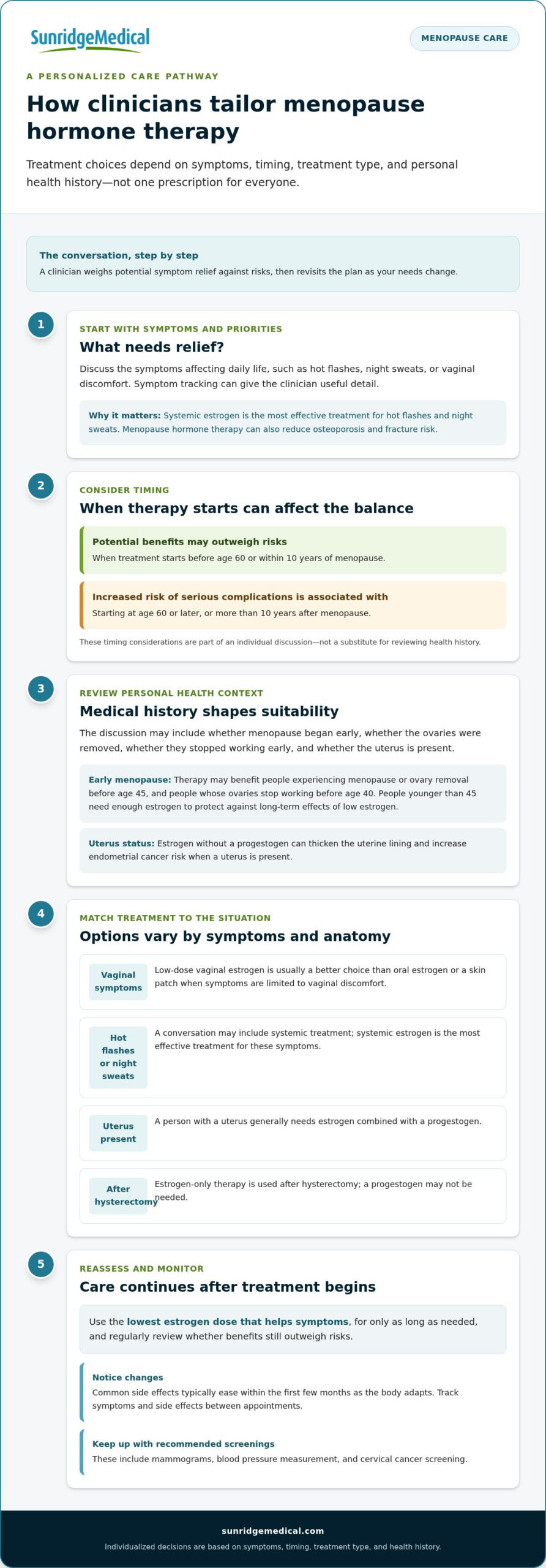
Menopause hormone therapy is not a single prescription for every person. Its potential benefits, risks, and side effects depend on timing, symptoms, treatment type, and personal health history.
Risks and Treatment Suitability
Treatment suitability means weighing likely symptom relief against risks shaped by age, timing, and medical history. Benefits may outweigh risks when therapy starts before age 60 or within 10 years of menopause. Starting at age 60 or later, or more than 10 years after menopause, is associated with increased risk of serious complications.
Menopause is defined as 12 consecutive months without a period, according to the National Institute on Aging. A clinician also considers whether menopause began early, whether the ovaries were removed, and whether the uterus is present. Menopause hormone therapy may benefit people experiencing menopause or ovary removal before age 45, and people whose ovaries stop working before age 40. People younger than 45 need enough estrogen to protect against long-term effects of low estrogen.
Treatment type matters. If you have a uterus, estrogen without a progestogen can thicken the uterine lining and increase endometrial cancer risk. After a hysterectomy, a progestogen may not be needed. If symptoms are limited to vaginal discomfort, low-dose vaginal estrogen is usually a better choice than oral estrogen or a skin patch.
Potential Benefits for Menopause and Bone Health
Menopause hormone therapy can relieve symptoms, and systemic estrogen is the most effective treatment for hot flashes and night sweats. It can also reduce osteoporosis and fracture risk. These potential benefits are worth discussing when symptoms disrupt daily life or bone health is a concern.
Benefits differ across treatment forms. Someone with vaginal symptoms alone may discuss low-dose vaginal estrogen, while hot flashes may prompt a discussion of systemic treatment. A person with a uterus generally needs estrogen combined with a progestogen; estrogen-only therapy is used after hysterectomy.
What are the benefits, risks, and side effects of hormone replacement therapy? Benefits can include relief from hot flashes and night sweats, as well as reduced osteoporosis and fracture risk. Risks depend on age, timing, treatment type, and health history. Common side effects typically stop within the first few months as the body adapts.
How much does hormone replacement therapy cost in the United States, including insurance coverage? Costs vary with the prescribed treatment, follow-up care, and insurance coverage, so there is no single amount that applies to everyone. A health plan’s coverage and out-of-pocket terms affect what a person pays.
Care continues after treatment begins. Use the lowest estrogen dose that helps your symptoms, for only as long as needed, and regularly review whether benefits still outweigh risks. Continue recommended screenings, including mammograms, blood pressure measurement, and cervical cancer screening. Tracking symptoms and side effects between appointments gives follow-up discussions useful detail.
Types of doctors who prescribe HRT for menopause
In the United States, obstetrician-gynecologists, internists, and family practitioners prescribe menopause hormone therapy. A clinician’s specialty, menopause-care experience, and ability to address your symptoms can shape the care discussion.
Common prescribing clinicians
An obstetrician-gynecologist may be a familiar starting point for menopause concerns. Internists and family practitioners also prescribe hormone therapy and can discuss it in the context of your overall health. The right fit depends on the questions you need answered, such as which options may address hot flashes or night sweats.
Board certification in obstetrics and gynecology, internal medicine, or family medicine is a useful credential to consider. It identifies a clinician’s certified specialty, but doesn’t show how much menopause care they provide. Ask about their experience treating people through perimenopause and menopause, and how they review symptoms and make treatment decisions.
For example, someone seeking help with hot flashes may want a clinician who can explain systemic treatment options. Someone with symptoms limited to vaginal concerns may need a focused discussion of other approaches. Treatment conversations should reflect the symptoms being addressed, not just the prescriber’s professional title.
Finding a certified menopause expert
If you need more specialized menopause guidance, ask a healthcare professional for help finding a certified menopause expert. You can also ask how the clinician’s training and experience relate to menopause care. Training in hormone therapy varies, so a clear explanation of their background can help you understand their expertise.
Board certification in a relevant field offers one comparison point; menopause-specific experience adds another. Ask how often the clinician cares for people with symptoms like yours and how they explain treatment benefits and risks. Their answers can show whether they address your concerns directly and support shared decisions.
Perimenopause typically begins in a person’s mid-40s, although it can start earlier. Symptoms may arise before menopause, so you don’t need to wait until periods have stopped to raise concerns with a clinician. Describing changes in your cycle and symptoms can help make the conversation more specific.
The timing window for menopause hormone therapy
Timing is one factor clinicians consider when discussing menopause hormone therapy. The commonly cited window is before age 60 or within 10 years of menopause onset. These are useful reference points for a conversation, not a substitute for reviewing personal health history and treatment goals.
Make the discussion concrete by noting when your symptoms began and how they affect daily life. Then ask how your age, time since menopause, and health history influence the balance of potential benefits and risks. The clinician can explain how these factors inform whether treatment options suit your circumstances.
Choosing among an obstetrician-gynecologist, internist, family practitioner, or certified menopause expert starts with the care you need. Compare relevant board certification and menopause experience, then consider whether the clinician communicates clearly about symptoms and timing. Together, these factors provide a useful basis for discussing personalized care.
Choosing a clinician for personalized hormone care
Finding the best hormone replacement therapy doctor involves more than comparing specialties or prescriptions. Consider menopause-care experience, communication, and whether the clinician takes your priorities seriously. Recommendations from family, friends, or healthcare professionals can help you identify candidates. Treat each as a starting point, then consider whether the clinician’s approach suits your questions.
Experience is one useful comparison point. Ask how often the clinician treats people experiencing menopause and how they approach different symptoms or treatment concerns. Hormone therapy education varies, from a single short course to fellowships and years of ongoing education. A clear explanation of the clinician’s training can help you understand its depth and focus.
Patient satisfaction ratings may offer insight into appointment experiences, such as whether patients describe attentive listening or clear explanations. Treat ratings as one perspective, not a complete measure of clinical quality. A rating cannot show whether a clinician’s experience fits your needs, and an individual review may not explain the circumstances behind it.
Comfort matters because hormone care involves personal symptoms, health history, and questions about treatment effects. Notice whether the clinician listens without rushing, explains unfamiliar terms, and answers questions fully. If you ask how treatment options differ, for example, a useful discussion should explain the reasoning in language you understand. You should feel able to raise concerns and revisit decisions.
Prepare a short list before an appointment. Include your main symptoms, treatment goals, current medicines, and questions about potential effects. Then notice whether the clinician addresses each concern or redirects the discussion without explanation. A clear, collaborative exchange can help you assess whether future conversations will support informed decisions and whether the communication style works for you.
Insurance participation can affect which benefits apply and what you pay out of pocket. If coverage matters, compare whether a clinician participates in your plan and review the plan’s terms. Participation alone doesn’t establish quality. Weigh it alongside experience, communication, and the clinician’s ability to discuss options in light of your health history.
A practical approach to finding the best hormone replacement therapy doctor is to assess the working relationship as well as credentials. Ask how treatment decisions reflect your goals, what follow-up discussions involve, and how concerns will be addressed. Consider whether the clinician explains their reasoning clearly. Relevant experience, respectful communication, and practical coverage considerations together provide a more informed basis for choosing care.
Researching credentials and disciplinary history
Credentials and professional records offer practical evidence to consider before choosing a hormone therapy prescriber. Start with two questions: does the clinician hold a current medical license, and are they board-certified in a clinical field? These checks don’t replace a conversation about care, but they help establish professional qualifications.
Confirm licensure and board certification
Ask the prospective clinician about their medical license and board certification. Compare the details with records from the relevant state and federal agencies, and confirm that the name and professional details match the person you plan to see. If a clinician uses a different professional name in records, ask for clarification before drawing conclusions.
Board certification and a medical license are distinct credentials. A license establishes the clinician’s authority to practice within the licensing system; board certification reflects certification in a clinical field. Neither alone tells you how much menopause care the clinician provides. Someone may hold valid credentials yet have limited experience discussing menopause symptoms or hormone therapy options.
Review disciplinary and malpractice history
Look for records of disciplinary actions and malpractice claims, and confirm whether the clinician is in good standing with state and federal agencies. Review each record carefully rather than relying on a search result headline. Consider the type of concern and its outcome before using a record to inform your decision.
Keep your review organized. Note the agency or record source, the clinician’s identifying details, and any questions raised by the information. If you find a disciplinary action, record what conduct it concerned and whether the entry describes a resolution. If you find a malpractice claim, distinguish the existence of a claim from the details and outcome shown in the record.
Apply the same care to positive information. A professional profile or biography can describe training, but it doesn’t independently establish current licensure or good standing. Compare those statements with agency records. Patient ratings may describe communication or appointment experiences, but they don’t replace credential and disciplinary checks.
Use your findings to guide a focused discussion. Ask how the clinician’s training and menopause-care experience shape their approach, and how they discuss treatment effects and side effects. Clear answers can help you understand their reasoning. Don’t treat one credential, review, or record as the whole picture; consider verified qualifications, professional standing, and direct communication together.
Before an appointment, prepare a short list of unresolved questions from your review. For example, ask the clinician to explain a credential you don’t recognize or describe their experience managing hormone therapy concerns. A direct, specific response helps you assess whether the clinician communicates transparently and addresses your concerns without dismissing them.
What questions should I ask during an HRT consultation?
A focused appointment can help you understand a clinician’s approach before making treatment decisions. Bring your symptoms, relevant health history, and questions about treatment goals. Ask for clear explanations, especially when discussing expected effects, possible complications, and how care may change over time.
Start with the clinician’s experience and approach. These questions can open a practical discussion:
- How often do you prescribe menopause hormone therapy, and what results do you typically see?
- Which treatment options could address my symptoms, and what alternatives might I consider?
- What complications do you encounter, and how do you prevent or address them?
- How do you decide whether laboratory testing is useful for my situation?
- How do you adjust hormones or doses to support effectiveness and tolerability?
Ask the clinician to explain how your symptoms and health history guide their recommendations. Describe which symptoms affect daily activities and what improvement would matter most to you. Then ask how the proposed option addresses those priorities. A clear explanation should connect treatment to your concerns rather than rely on general claims.
Discuss testing by asking: “What would this test help us decide?” Some practices offer testing of urine, serum, and saliva samples. Ask which samples are used, how results inform treatment choices, and how the clinician interprets findings alongside your symptoms and health history. Testing is best understood in context, not as a result without an explanation.
Ask how dose or hormone adjustments work if symptoms continue or treatment is difficult to tolerate. The clinician should explain how adjustments may support efficacy and tolerability. You can also ask what changes would prompt a follow-up conversation and how progress is assessed. These questions clarify how the plan can respond to your experience rather than remain fixed.
Discuss alternatives and how potential complications are handled. Ask what options exist if hormone therapy isn’t appropriate for your circumstances, and how the clinician weighs them. Invite a direct conversation about which concerns they monitor, how they respond, and what symptoms or changes you should report. Specific answers help clarify the clinician’s reasoning and your role in ongoing care.
Before leaving, summarize the proposed approach in your own words and ask the clinician to correct anything unclear. Note the next steps, treatment goals, and how adjustments will be considered. If your care discussion includes broader hormone goals, explore individualized hormone care as a related option.
Sunridge Medical: Alternative Cancer Treatment Protocols
Sunridge Medical provides Hormone Optimization Therapy as well as integrative cancer care. For readers considering individualized hormone care, Hormone Optimization Therapy is the relevant service to explore. Sunridge Medical combines conventional medicine with research-informed alternative, nutritional, metabolic, botanical, and regenerative therapies to develop individualized care plans for complex health needs.
Consider this option if you want to discuss hormone-related concerns as part of a broader health picture. The questions in this guide can help you describe your priorities and understand how a care plan may be tailored to your needs. Sunridge Medical’s alternative cancer treatment protocols address a separate concern and are not menopause hormone therapy.
Contact Sunridge Medical to discuss your hormone care needs.
Take the Next Step Toward Care That Fits
Your next step in finding the best hormone replacement therapy doctor is to turn your priorities into a clear care conversation. Note what you want help addressing, what concerns you about treatment, and what would help you feel informed as decisions unfold. That preparation can keep discussions focused on your needs rather than a standard approach.
Personalized care also means looking at hormone concerns in the context of your wider health. Sunridge Medical offers Hormone Optimization Therapy as part of its care for complex health needs. If you’re ready to discuss whether this approach aligns with your concerns, contact Sunridge Medical about personalized care.
You deserve a thoughtful conversation and room to make informed decisions. Begin with the questions that matter most to you, and take the next step at a pace that feels right.
Frequently Asked Questions
Can HRT cause side effects?
Yes, hormone replacement therapy can cause side effects, and they differ between individuals. Common side effects typically stop within the first few months as the body adapts. Tell the prescriber what changes you notice and when they occur, including whether they affect sleep or daily activities. Ask which adjustments may improve tolerability and what concerns should prompt a follow-up discussion.
What type of doctor specializes in hormone replacement therapy?
Obstetrician-gynecologists, internists, and family practitioners prescribe hormone therapy for menopause. A certified menopause expert may offer focused menopause-care experience, while a clinician’s specialty can guide discussion of broader health concerns. Ask how their clinical background fits your needs. Someone managing menopause symptoms alongside other health conditions, for example, may want to know how the clinician considers those concerns together.
How do I find a qualified hormone replacement therapy doctor near me?
Ask a healthcare professional for help finding a certified menopause expert, and consider recommendations from family, friends, or other healthcare providers. As you narrow your options, look for clinicians whose menopause-care experience matches your needs. Keep a short list of practical questions about their clinical background, communication, and approach to follow-up. These details can make an initial appointment more informative.
What credentials and experience should an HRT doctor have?
Look for a current medical license and board certification in a clinical field. Obstetrics and gynecology, internal medicine, and family medicine are relevant specialties for menopause care. Ask about experience treating people with menopause symptoms and how the clinician keeps their hormone therapy knowledge current. Credentials establish professional qualifications; discussing their experience clarifies how that background applies to your concerns.
How do doctors evaluate whether someone is a candidate for hormone replacement therapy?
Clinicians assess the full health picture before deciding whether menopause hormone therapy is suitable. They consider symptoms, age, timing relative to menopause, medical history, treatment goals, and factors such as whether the uterus is present. Someone with symptoms limited to vaginal concerns, for instance, may discuss a different approach from someone seeking relief from hot flashes.
How can I check a hormone therapy doctor’s reviews, disciplinary history, and board certification?
Check professional records for licensing, board certification, and disciplinary actions, and review malpractice information carefully. Confirm that the records match the clinician you’re considering. Patient ratings can describe communication or appointment experiences, but don’t establish clinical quality by themselves. If a record or review raises a question, note the details and ask the clinician to explain relevant context.
What should I expect for HRT monitoring, follow-up visits, and treatment adjustments?
Expect ongoing discussions about whether treatment remains effective and tolerable. Track symptom changes, side effects, and concerns between appointments so you can describe them clearly. The clinician can use that information to consider dose or hormone adjustments. Follow-up also includes reviewing whether benefits continue to outweigh risks and keeping up with recommended health screenings. The timing and focus of reviews depend on your care needs.