


A Hashimoto’s flare-up doesn’t automatically mean levothyroxine has stopped working. Functional medicine for Hashimoto’s flare-ups may complement medication by considering factors that could affect symptoms, while thyroid hormone replacement supports hormone levels when the gland can’t produce enough. A suitable approach considers thyroid function and the wider pattern of a person’s health.
It can be frustrating when fatigue, brain fog, sleep changes, or other symptoms persist or shift despite taking medication. Hashimoto’s symptoms can vary, and possible triggers include stress, hormonal changes, poor sleep, infections, dietary factors, and nutrient deficiencies. A symptom flare alone doesn’t reveal its cause.
This article explains what may contribute to a flare, why symptoms can resemble either low or high thyroid activity, and how a broader assessment may help guide care. It also describes how functional medicine may complement levothyroxine while keeping medication decisions and monitoring central to the plan. The goal is a clearer understanding of what could be affecting your well-being and what supportive care may involve.
Key Takeaways
- Track changes in sleep, stress, diet, and symptoms to help identify patterns that may be relevant to a flare.
- Because Hashimoto’s can involve changing thyroid function, symptoms alone may not show whether hormone levels are too low or too high.
- Thyroid tests and antibody results offer different information; reviewing them together can provide a fuller picture than relying on TSH alone.
- Personalized nutrition, movement, rest, and stress support can address factors that influence well-being without assuming one plan fits everyone.
- Functional medicine can complement levothyroxine by considering broader health factors while medication decisions remain guided by symptoms and lab monitoring.
What is a Hashimoto’s flare up and what causes it?
A Hashimoto’s flare-up describes a period when symptoms change or intensify, but it doesn’t identify a single cause. Stress, infections, sleep disruption, eating patterns, hormonal changes, nutrient deficiencies, and environmental factors may all contribute.
Individual Causes of Flares
Hashimoto’s triggers differ from person to person because immune responses to environmental and lifestyle factors aren’t the same. A stressful period, infection, or major hormone change may coincide with worsening symptoms for one person, while another notices a pattern around certain foods or poor sleep. Looking for a possible root cause means watching for repeated patterns, not assuming one trigger explains every change.
Other possible contributors include chronic pain, nutrient deficiencies, and iodine intake, including iodine-containing medication. Excess iodine may worsen autoimmune thyroiditis, so supplements and medications are relevant when reviewing changes. Gluten may increase gut-lining permeability through zonulin release, potentially amplifying immune activity in some people with Hashimoto’s. Personal context matters: note changes in eating, sleep, stress, infection, and medication timing.
Thyroid damage from Hashimoto’s can reduce the gland’s ability to produce hormones, leading to hypothyroidism. Symptoms associated with a flare may include fatigue, cold intolerance, constipation, dry skin, a puffy face, muscle aches, brain fog, low mood, or heavy and irregular periods. An enlarged thyroid, called a goiter, can also occur.
Some people report heat intolerance, irritability, a rapid heartbeat, anxiety, or sleep problems. These symptoms can resemble hyperthyroidism, but symptoms alone can’t establish that thyroid hormone levels are high. Their significance depends on thyroid function and the broader clinical picture. Changes deserve attention even when they don’t clearly point to low or high thyroid activity.
Symptom and Thyroid-Marker Changes
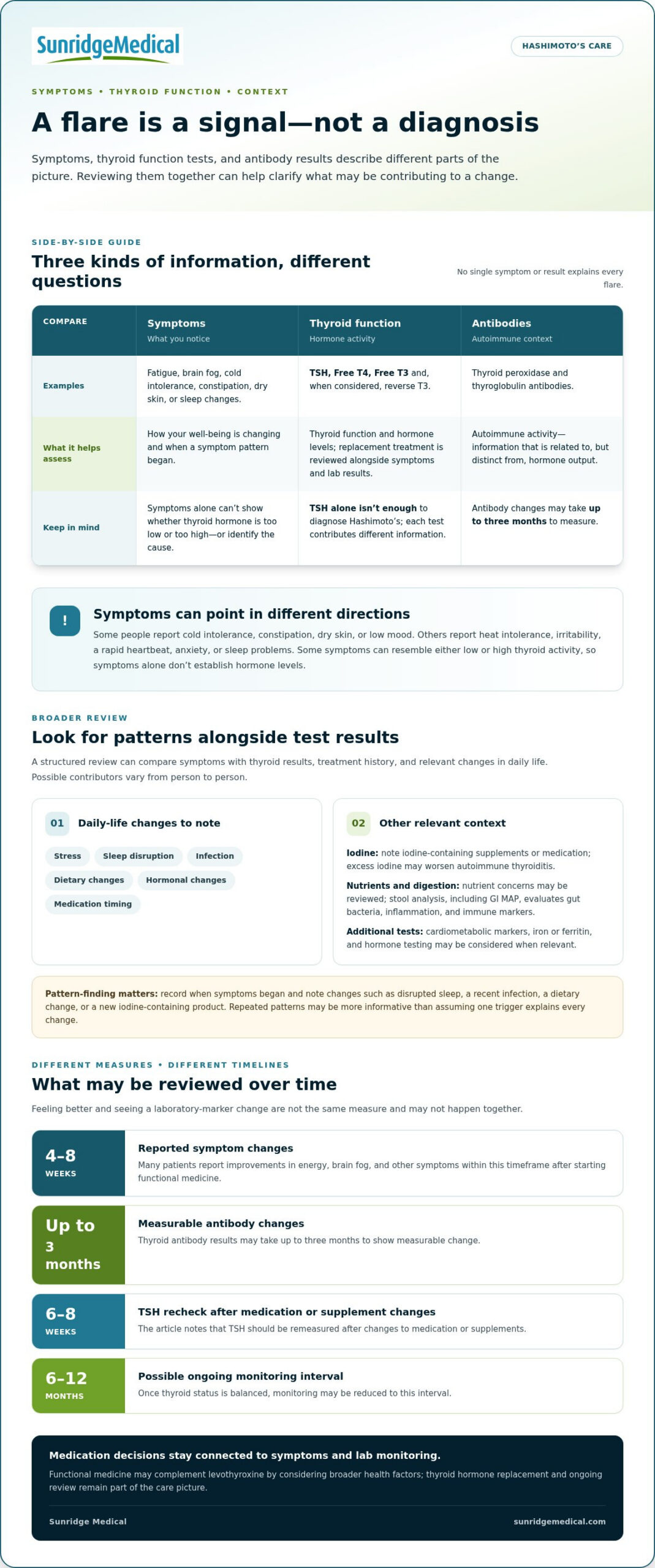
Investigating a flare means comparing symptom patterns with thyroid tests and relevant changes in daily life. Recording when fatigue, temperature sensitivity, or brain fog began can help distinguish a brief change from a continuing pattern. Include details such as a recent infection, disrupted sleep, a dietary change, or a new iodine-containing product.
Thyroid antibody results can provide context, but they may not change immediately: measurable changes can take up to three months. A single symptom or laboratory result may not reflect the full course of a flare. Reviewing results over time alongside symptoms gives a clearer picture of whether thyroid function or another factor may be contributing.
Timelines for symptom improvement vary with the underlying cause and the care being used. Many patients report improvements in energy, brain fog, and other symptoms within 4-8 weeks of starting functional medicine, while thyroid antibody changes may take up to three months to measure. These are different measures: feeling better and seeing a laboratory-marker shift don’t necessarily occur together.
How can you experience symptoms of hypo or hyperthyroidism with Hashimoto’s?
Hashimoto’s can affect thyroid hormone production, while symptoms may not clearly show whether levels are low or high. Changing medication or supplements without follow-up testing can create risks. Thyroid replacement, including compounded hormones, requires individualized review of symptoms and laboratory results.
Persistent Symptoms During Treatment
Persistent symptoms are concerns such as fatigue or brain fog that continue despite thyroid hormone treatment. Their presence matters because symptoms alone can’t show whether the dose, thyroid function, or another health factor needs attention. T4 and T3 affect metabolism, cardiovascular function, body temperature, digestion, and nervous system activity, so changes can appear across several body systems.
A structured review compares symptoms with thyroid results and treatment history. Tests may include TSH, Free T4, Free T3, reverse T3, thyroid antibodies, and vitamin D. TSH alone isn’t enough to diagnose Hashimoto’s, while thyroid peroxidase and thyroglobulin antibodies can help identify autoimmune activity. Each result contributes different information.
Further testing should reflect a person’s symptoms and history, rather than automatically expanding every panel. A clinician may consider cardiometabolic markers, nutrients such as iron or ferritin, and hormone testing when relevant. Stool analysis, including GI MAP, evaluates gut bacteria, inflammation, and immune markers. These results can help assess whether digestive or nutrient concerns accompany persistent symptoms.
Inflammation and Hormone Levels
Thyroid inflammation can damage thyroid tissue and reduce its ability to produce hormones, which may lead to hypothyroidism. The immune process and hormone output are related but distinct: thyroid antibodies indicate autoimmune activity, while TSH, T4, and T3 help assess thyroid function. This distinction matters because one result cannot fully explain every symptom.
When the thyroid cannot produce sufficient hormones, replacement may be necessary. Levothyroxine supplies T4, and treatment is individualized through symptoms and laboratory results. TSH should be remeasured 6-8 weeks after medication or supplement changes; once thyroid status is balanced, monitoring may be reduced to every 6-12 months.
Functional medicine approaches may include lifestyle or supplement changes alongside prescribed treatment, but those changes can affect thyroid management. Don’t stop levothyroxine or adjust its dose on your own. Compounded thyroid hormones also require individualized monitoring, since replacement decisions depend on symptoms and test results. Keeping a record of treatment changes and lab dates helps connect clinical decisions with measured thyroid levels.
What is the Functional Medicine Approach to Hashimoto’s?
Hashimoto’s thyroiditis is an autoimmune disease, so an assessment considers both thyroid function and immune activity. Functional medicine may broaden the evaluation beyond thyroid hormone levels to explore related health factors.
In the United States, consultation and testing costs depend on the appointment, selected tests, and laboratory work; pricing is provided after a quote request. For worsening symptoms, evidence-based care includes thyroid hormone replacement when the gland cannot produce enough hormone, with treatment guided by symptoms and laboratory monitoring. Seek urgent care for sudden severe symptoms such as chest pain, difficulty breathing, fainting, or confusion.
Hashimoto’s as an Autoimmune Condition
Hashimoto’s thyroiditis is an autoimmune condition in which the immune system attacks thyroid tissue, causing inflammation. Thyroid hormone levels and immune activity are related, but they are not interchangeable measures.
As inflammation damages the gland, its ability to produce hormones may decline, eventually contributing to hypothyroidism. Thyroid peroxidase antibodies and thyroglobulin antibodies are markers associated with Hashimoto’s. A positive antibody result can help explain the autoimmune process, while TSH, T4, and T3 provide information about thyroid function. Patients with fatigue or brain fog need both symptom context and appropriate test interpretation, rather than assuming antibodies alone explain how they feel.
Thyroid and Advanced Testing
A functional assessment may combine thyroid tests with selected investigations into nutrients, digestion, or food responses. This can be relevant when symptoms continue and a broader clinical picture may guide further evaluation.
A thyroid panel may include TSH, Free T4, Free T3, reverse T3, and thyroid antibodies. Additional nutrient tests can assess ferritin, serum iron, vitamin D, zinc, selenium, and B12. Depending on symptoms, investigations may also include microbiome testing or food sensitivity tests. GI MAP is a stool analysis that evaluates gut bacteria, inflammation, and immune markers. Each test should address a clinical question; a result is most useful when interpreted alongside symptoms and other findings.
Functional and Conventional Thyroid Care
Conventional care focuses on diagnosing thyroid dysfunction and replacing hormones when production is insufficient. Functional medicine may add an individualized review of nutrition, nutrient status, digestive health, and lifestyle factors that could affect well-being.
These approaches can complement each other. Levothyroxine supplies T4 when hormone replacement is needed, while broader assessment explores factors that medication may not address directly. Functional care doesn’t replace thyroid monitoring or establish a cure for autoimmune disease. Instead, test results and symptoms can inform a coordinated plan, with medication changes guided by laboratory findings and clinical review.
Diet, sleep, stress reduction, and physical activity
Lifestyle measures can support well-being alongside thyroid treatment, but they don’t replace medication or monitoring. For Hashimoto’s, focus on practical changes you can observe and adjust, rather than assuming one diet or routine addresses every cause of symptoms.
Diet and Daily Habits
Diet and daily habits include food choices, rest, and activity patterns that may influence overall health. Consistent routines can make it easier to notice what affects energy, digestion, or weight.
A nutrient-dense eating pattern can include foods containing selenium, zinc, omega-3 fatty acids, and antioxidants. Some care plans use an elimination diet that temporarily removes foods such as gluten, dairy, soy, and processed foods, then reintroduces them gradually to observe responses. This approach can help identify personal food patterns without treating every food as a universal trigger.
Keep the process measured. Record meals, sleep, stress, symptoms, and weight changes in one daily log, then compare those notes with clinical testing. Avoid removing several food groups indefinitely without a clear reason, since restrictive eating can make balanced nutrition harder. Be thoughtful about iodine: excessive intake may be problematic in autoimmune thyroid disease, so don’t start iodine supplements or impose strict limits without professional guidance.
Stress and Nervous System Support
Stress and nervous system support involve building repeatable ways to reduce strain and support recovery. Chronic stress can keep the immune system activated and may affect thyroid hormone conversion.
Under stress, the body may convert T4 into reverse T3 instead of active Free T3; high reverse T3 can indicate conversion issues or chronic stress. This is one reason stress belongs in a broader assessment, rather than being dismissed as unrelated to physical symptoms. Breathwork, mindfulness, and regular movement are practical options for managing stress.
Choose a manageable practice and track how it fits your routine. For example, a brief mindfulness session after work may be easier to maintain than an ambitious plan that adds pressure. Supplements aren’t substitutes for stress reduction, and nutrient support should reflect individual needs. Testing can help identify deficiencies, while a symptom log can show whether a routine change coincides with changes in sleep or energy.
Sleep, Movement, and Stress Management
Sleep, movement, and stress management work together to support health. Poor sleep and ongoing stress can affect energy, mood, and the ability to maintain regular activity.
A consistent wind-down routine can help make sleep a deliberate part of care. Pair it with regular movement suited to your current energy and symptoms. Walking, for example, may be easier to adapt than a demanding workout. Aim for sustainable activity, not pushing through exhaustion or using exercise to force weight changes.
Review the pattern over time by noting sleep disruption, movement, stress, and symptom changes together. If fatigue or insomnia persists, these details can help guide a discussion about thyroid function and other contributing factors. A structured lifestyle plan can support care, while laboratory results and clinical assessment remain important when making thyroid treatment decisions.
Functional medicine care alongside levothyroxine
Levothyroxine replaces T4 when Hashimoto’s has reduced the thyroid gland’s hormone production. Functional medicine for a Hashimoto’s flare-up can complement that treatment by examining nutrition, nutrient status, digestion, stress, and other factors that may influence fatigue or mental clarity. The central principle is integration: supportive strategies work alongside prescribed medication, not as a reason to stop or replace it.
Thyroid replacement is individualized using symptoms and laboratory results. After a medication or supplement change, TSH should be remeasured 6-8 weeks later; once thyroid status is balanced, monitoring may move to every 6-12 months. These follow-ups help assess the response and inform treatment decisions. Persistent symptoms call for a broader review, not an automatic dose change.
Nutrient support should reflect a person’s findings. Vitamin D testing can identify low levels, and research discussed in this article reports lower vitamin D concentrations among people with Hashimoto’s than controls, with replacement reducing thyroid autoantibodies in patients. Selenium supports thyroid tissue during hormone synthesis and T4-to-T3 conversion; studies have shown selenium supplementation can lower TPOAb levels.
Supplement protocols also discuss myo-inositol at 600 mg daily for at least six months, selenium at 200 mcg daily for at least three months, and vitamin D at 2,000 IU daily for at least six months. These are examples, not universal prescriptions. Relevant considerations include laboratory results, current supplements, medication use, and individual health needs. Iodine deserves particular attention because excess intake can worsen autoimmune thyroiditis.
Digestive support may be considered when an assessment points to gut-related concerns. Targeted probiotics, prebiotic-rich foods, or supplements intended to support the gut lining may be included in a tailored plan. This doesn’t establish that gut changes caused every flare. Instead, findings are considered alongside thyroid results, fatigue, sleep, and other symptoms to focus care on specific concerns.
A practical approach keeps levothyroxine and follow-up testing central while introducing one supportive change at a time. This makes it easier to relate a new supplement, eating change, or stress practice to symptoms and test results. Functional medicine for Hashimoto’s flare-ups may support a later reduction in thyroid medication dosage, but any change depends on thyroid function and clinical monitoring, never self-adjustment.
For readers managing overlapping chronic health concerns, explore individualized care for complex chronic conditions as one way to consider broader support alongside ongoing thyroid treatment.
Sunridge Medical: Alternative Cancer Treatment Protocols
Sunridge Medical offers Autoimmune Disease Management for people seeking a broader approach to complex autoimmune conditions such as Hashimoto’s. Care combines conventional therapies with research-based alternative treatments in individualized plans, supporting a more comprehensive view of health alongside prescribed thyroid medication.
Consider broader support if symptoms persist or you want help exploring factors that may affect your well-being. Thyroid medication decisions and monitoring remain important, and any broader plan should complement, not replace, that clinical management. Sunridge Medical also provides Alternative Cancer Treatment Protocols, Chronic Lyme Disease Treatment, and Hormone Optimization Therapy for people whose health needs involve those areas.
If you’d like to discuss autoimmune care, contact Sunridge Medical or visit sunridgemedical.com.
Choose a Thoughtful Next Step for Your Thyroid Care
Living with Hashimoto’s can require more than one explanation for changing symptoms. A functional medicine plan for a Hashimoto’s flare-up can help organize questions about daily patterns, test results, and supportive care while keeping prescribed treatment and monitoring in view. Bring a clear record of symptoms, medications, supplements, and recent changes to your next care discussion. That gives the conversation a practical starting point.
For people managing overlapping complex conditions, Sunridge Medical provides Autoimmune Disease Management, Chronic Lyme Disease Treatment, and Alternative Cancer Treatment Protocols. The relevant next step depends on the health concern you want to address and how it fits alongside your current care.
Contact Sunridge Medical to discuss a thoughtful path forward. Steady, informed decisions can help you feel more prepared as you continue managing your health.
Frequently Asked Questions
Do I need a confirmed diagnosis of Hashimoto’s before starting care?
Yes. You can begin by discussing symptoms and what evaluation may be appropriate, even if Hashimoto’s hasn’t been confirmed. Diagnosis generally involves reviewing thyroid function and antibody blood tests alongside symptoms and medical history. Fatigue alone, for example, doesn’t establish Hashimoto’s. A healthcare professional can assess whether thyroid testing or investigating another cause makes sense before deciding what care fits.
What is Hashimoto’s Disease?
Hashimoto’s disease is an autoimmune condition in which the immune system attacks the thyroid gland. Over time, damage to thyroid tissue can reduce hormone production and lead to hypothyroidism. The disease can affect how the body regulates functions such as energy, digestion, and temperature. A diagnosis is based on clinical evaluation and blood tests, not on symptoms alone or one isolated laboratory result.
Where can I learn more about Hashimoto’s thyroiditis?
This article outlines Hashimoto’s thyroiditis, symptom patterns, testing, and how supportive care may complement medication. To make the information useful for your situation, write down questions about your experience, such as which tests have been done and how symptoms have changed. A healthcare professional can interpret your history and results in context and discuss relevant next steps.
Can I work with you if I’m already taking levothyroxine?
Yes. Sunridge Medical provides Autoimmune Disease Management, combining conventional medicine with research-informed alternative treatments in individualized care plans. If you take levothyroxine, include your medication and recent laboratory results in your health history so they can inform care discussions. Don’t stop or change your dose on your own. Medication decisions should be guided by thyroid testing and clinical oversight.
What are Its Symptoms?
Hashimoto’s may cause symptoms associated with reduced thyroid function, including fatigue, cold sensitivity, constipation, dry skin, muscle aches, and difficulty concentrating. Some people also experience mood changes, menstrual irregularities, or an enlarged thyroid. These symptoms can overlap with other health concerns, so a symptom list can’t confirm the cause. Note which changes affect daily activities and when they began to support a clearer clinical discussion.
Why do I still feel flat or foggy even though my thyroid levels are in range?
Thyroid results within a reference range don’t automatically explain every symptom. Fatigue or brain fog may also relate to nutrient status, sleep disruption, stress, or another health issue. For example, a clinician may consider iron stores or vitamin B12 when the history supports further assessment. Bring a list of symptoms, supplements, and medication changes to a review instead of adjusting levothyroxine based on how you feel alone.
Why do my thyroid results and symptoms seem to change?
Results and symptoms may shift as thyroid function, treatment, and day-to-day health factors change. For example, a medication or supplement adjustment can affect thyroid test interpretation, while an infection or disrupted sleep may coincide with feeling worse. Keep dates for dose changes, tests, and symptom shifts in one record. TSH is typically rechecked 6-8 weeks after medication or supplement changes, helping relate follow-up results to the timing of care.
What are common symptoms of a Hashimoto’s flare-up, and what can trigger one?
A flare-up may involve worsening fatigue, brain fog, cold intolerance, constipation, dry skin, or muscle aches; some people report anxiety, irritability, or a rapid heartbeat. Possible triggers include stress, poor sleep, infections, hormone changes, dietary factors, nutrient deficiencies, and iodine exposure. Triggers vary between individuals. Record what changed before symptoms worsened, such as a new supplement or illness, but don’t assume timing alone proves a cause.