


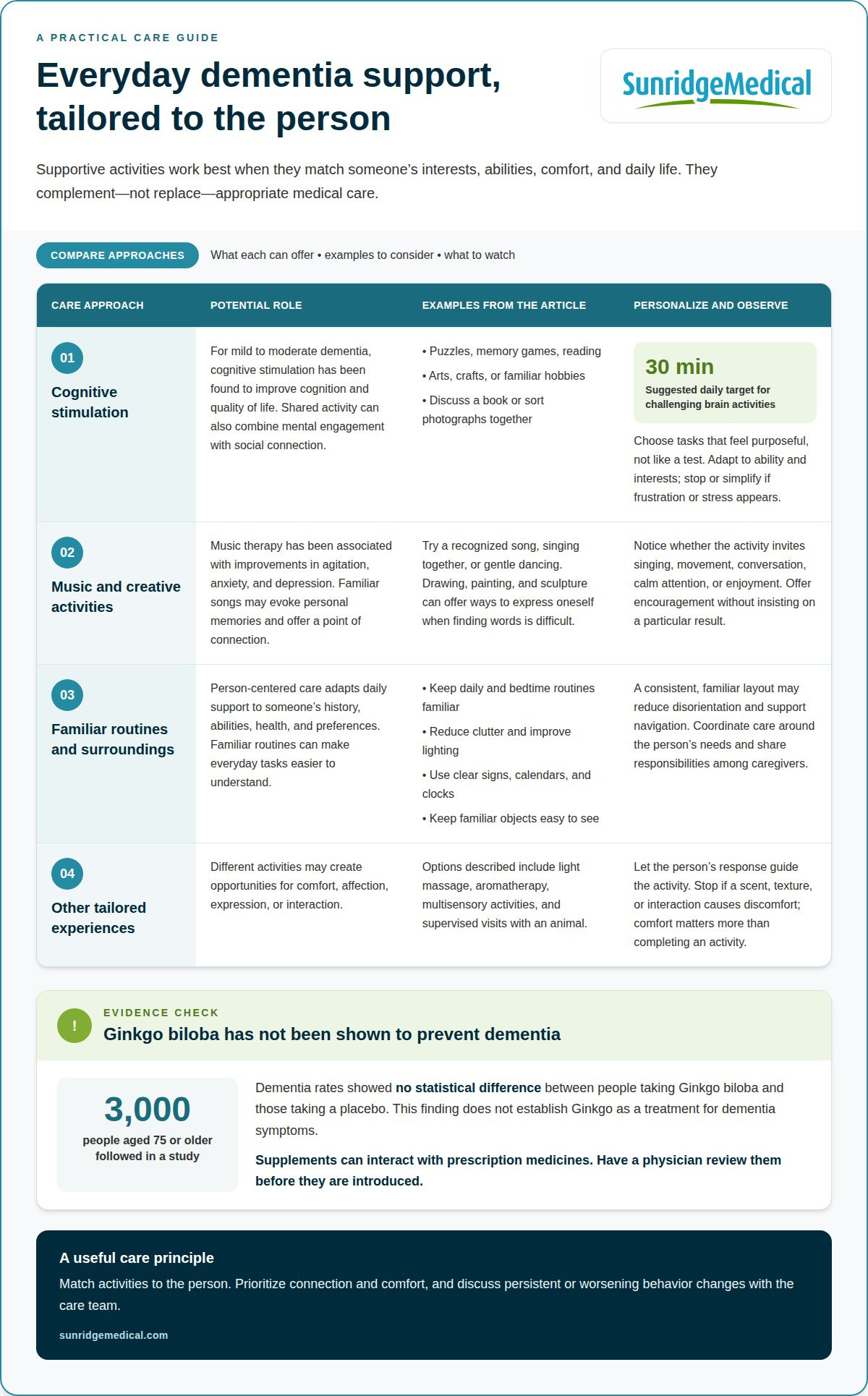
Ginkgo biloba hasn’t been shown to prevent dementia: a study that followed 3,000 people aged 75 or older found no statistical difference in dementia rates between those taking it and those taking a placebo. That finding doesn’t establish it as a treatment for dementia symptoms, either. Holistic management of dementia symptoms is better approached as a personalized combination of daily support and appropriate medical care, rather than relying on a supplement alone.
It’s understandable to look for options that may support memory and well-being, especially when symptoms disrupt familiar routines. But “natural” doesn’t automatically mean safe or effective, and supplements can interact with prescription medicines. A physician should review a supplement before it’s introduced.
This article explores how cognitive and social activities, familiar routines, nutrition, hydration, and medication can fit into dementia care. It also considers the evidence on Ginkgo biloba, helping you weigh its limits alongside practical ways to support comfort, connection, and daily functioning.
Key Takeaways
- Choose cognitive activities that match the person’s interests and abilities, and use social engagement to make them more meaningful.
- Familiar songs and personal memories can offer gentle ways to encourage connection and support emotional well-being.
- Consistent daily and bedtime routines, along with clear cues in the living space, can help reduce confusion and make everyday activities easier.
- Build meals around nourishing foods and keep hydration in view, since changes in fluid intake can affect confusion and disorientation.
- Review medications and supplements as part of the care plan, paying attention to possible interactions and changes in symptoms.
Cognitive stimulation therapy
Cognitive stimulation therapy uses conversation and engaging activities to exercise thinking and communication. For people with mild to moderate dementia, it has been found to improve cognition and quality of life. Activities may include puzzles, memory games, reading, arts and crafts, or familiar hobbies. Choose tasks that feel purposeful, not like a test. A puzzle, for example, can invite conversation and problem-solving without making the activity pass or fail. Holistic management of dementia symptoms can include tailored opportunities for connection and mental engagement.
Meaningful social interaction can help maintain communication, memory, and problem-solving abilities. A shared task with a family member, such as discussing a book or sorting photographs, combines mental activity with connection. The suggested target is at least 30 minutes of challenging brain activities daily, adapted to the person’s interests and ability. Stop or simplify an activity if it causes frustration or stress. Within holistic management of dementia symptoms, consistency and enjoyment matter more than making every session difficult.
Dementia is assessed by considering medical history, medication use, cognitive status, functional ability, psychological state, and social circumstances. No single detail explains the whole picture. Low vitamin B-12 and an underactive thyroid can affect brain function. Spinal fluid may be examined for infection, inflammation, or markers of some diseases. These findings help identify conditions that can resemble or contribute to cognitive symptoms.
Neuropsychological testing can describe strengths and challenges in memory, attention, language, and problem-solving. Results help clarify how symptoms affect daily tasks, such as following a conversation or managing a familiar routine. They can guide realistic activity choices and help track changes over time. Cognitive testing is one part of a broader assessment that also considers health, medication, and everyday function.
Cognitive behavioural therapy may help someone with early-stage dementia adjust to diagnosis, plan ahead, or address depression. Caregivers can use calm conversations and manageable activities rather than correcting every mistake. Supplements require care, too. A study following 3,000 people aged 75 or older found no statistical difference in dementia rates between those taking Ginkgo biloba and those taking placebo. A clinical trial found no cognitive benefit from CoQ10 after four months. Some trials found small cognitive-function improvements from vitamin B for certain people with mild cognitive impairment, particularly those with high homocysteine. A physician should review supplements because they can interact with prescribed medication.
Music therapy
Music can provide a familiar point of connection when memory loss makes conversation difficult. Music therapy has been associated with improvements in agitation, anxiety, and depression among people with dementia. A review identified in Frontiers in Medicine, volume 2, article 57, discusses this therapeutic approach. Familiar songs may evoke personal memories and help ease agitation. Try a song the person recognizes, then observe whether it invites singing, movement, conversation, or calm attention.
At home, reduce clutter, improve lighting, use contrasting colors, and place familiar objects where they’re easy to see. Clear signs, calendars, and clocks can support orientation, while a consistent, familiar layout may reduce disorientation. These changes can support safety and navigation without requiring the person to remember complex instructions.
Therapies work best when they reflect a person’s preferences and responses. A familiar playlist may prompt a singalong, while gentle dancing can bring movement and shared enjoyment. Drawing, painting, and sculpture offer other ways to express oneself, especially when finding words is difficult. Offer materials and encouragement without insisting on a particular result. The person’s engagement, comfort, and ability to participate can guide what to continue.
Other approaches include light massage, aromatherapy, and multisensory activities that combine experiences such as music, touch, or familiar objects. Consider these alongside everyday care, paying attention to what the person finds pleasant or distressing. A calm response matters more than completing an activity. If a scent or texture causes discomfort, stop and choose a more familiar, soothing alternative.
Animal-assisted therapy can create opportunities for affection and interaction. Supervise visits to protect both the person and the animal, and let the individual’s comfort guide each interaction. A quiet visit with a familiar pet may feel meaningful; an unfamiliar or energetic animal may be overwhelming. Across activities, watch for changes in agitation, anxiety, mood, and willingness to engage. Discuss persistent or worsening behavior changes with the care team. Therapy can support care, but it doesn’t replace medical assessment or treatment.
Personalized routines and life-history-based care
Person-centered dementia care adapts daily support to a person’s history, abilities, health, and preferences. Familiar routines can make everyday tasks easier to understand as cognitive function changes.
Family Support for Care at Home
Family support involves coordinating everyday care around the person’s needs and sharing responsibilities among caregivers. One relative might help maintain regular meal and bedtime routines, while another arranges appointments or handles household tasks. Care planning can also address communication, safety, pain, and social contact. Sharing responsibilities can reduce uncertainty and help caregivers notice changes in mood, function, or anxiety.
Planning Ahead and Respite Care
Advance care planning records a person’s wishes for future medical care, while respite care gives caregivers time away from daily duties. Discussing preferences early can guide decisions if communication becomes harder. A plan may specify who should be involved in medical decisions and which routines bring comfort. Caregiver education, respite, and support groups can help sustain family well-being and make ongoing care more manageable.
Dementia care costs vary by setting and the level of support needed. Medicare, Medicaid, and private insurance coverage depends on eligibility, plan terms, and the care involved. For example, home assistance and residential care are different services, so consider coverage in relation to the specific need.
In the United States, dementia support may include caregiver education, respite care, support groups, counseling, and coordinated input from physicians, nurses, therapists, dietitians, and pharmacists. These services can address practical caregiving demands alongside medical, emotional, and social needs.
A move to memory care or a nursing home may become relevant when safety risks or daily care needs exceed what the home environment and available caregivers can reliably support. Wandering, difficulty with essential activities, or a growing need for supervision can prompt a reassessment of care arrangements.
Personal history can make routines more meaningful. A care assessment may consider medical history, medications, cognitive status, functional ability, psychological state, and social circumstances. Someone who enjoyed gardening, for example, might respond to tending familiar plants, while a person who values quiet may prefer fewer visitors. Calendars, clocks, clear signs, and familiar objects can support orientation. Review the plan with the person and family, then adjust activities as abilities and needs change.
Medical care remains part of daily support. Regular check-ups, medication management, and treatment of underlying conditions can address health issues that may worsen symptoms. Keep an accurate medication list for appointments and note changes in sleep, mood, or daily function. A physician, nurse, or pharmacist can consider these observations alongside the person’s health history and current medicines.
Nutrition and hydration
Meals can support physical health and make daily care more predictable. A Mediterranean-style eating pattern emphasizes vegetables, fruits, whole grains, nuts, fish, and healthy fats. For example, serve oatmeal with fruit or pair vegetables with fish and whole-grain bread. This approach is associated with better brain health and slower cognitive decline, but it isn’t a dementia treatment or a substitute for medical care. Adapt portions and textures to appetite, swallowing ability, and personal preferences.
The MIND diet combines elements of Mediterranean and DASH eating patterns. It focuses on foods such as leafy greens, other vegetables, berries, beans, nuts, whole grains, fish, and olive oil. A reported association linked this diet with slower cognitive decline equivalent to being 7.5 years younger. That comparison describes an association, not a promised result for an individual. Familiar, enjoyable meals can make a nutrition plan easier to maintain than strict rules.
Hydration deserves attention because a person may forget to drink or have difficulty communicating thirst. Caregivers can offer fluids regularly with meals and between activities, then notice changes in intake. Dehydration may worsen confusion and disorientation. Water, soup, or other preferred drinks can contribute to fluid intake. If swallowing becomes difficult or dietary needs change, include those concerns in the care plan instead of relying on a generic menu.
Adapt food, activity, rest, and social plans to the person’s abilities and routine. A balanced plate can include vegetables, lean protein, whole grains, and healthy fats; exercise can range from seated movement to walking. Recommendations include at least 30 minutes of exercise per day, five to seven days per week, adjusted to ability. For sleep, consistent bedtimes and calming rituals can help; social meals or familiar community activities can add connection without overwhelming the person.
Micronutrients also matter. Adequate vitamin B12, vitamin D, and vitamin E intake can help prevent deficiencies linked with malnutrition and cognitive impairment. A varied menu may include eggs, fortified foods, vegetables, and nuts, depending on dietary needs. Supplements shouldn’t replace balanced meals or be added casually. A physician can review nutritional concerns alongside medications and health conditions, especially when appetite or food choices shift.
Practical adjustments can help caregivers respond to changing needs. If intake seems to decline, keep a simple meal and fluid record and note which foods the person accepts comfortably. Smaller portions or familiar dishes may be easier to manage than a large, unfamiliar meal. Changes in weight, swallowing, or food tolerance warrant clinical attention. A dietitian can help tailor meals to health needs, preferences, and any required texture modifications.
Medication treatment
Medication is one part of dementia care, not a replacement for routines, nutrition, or supportive activities. The right plan considers the diagnosis, symptoms, daily function, other health conditions, and current medicines. For example, changes in sleep or mood may prompt a review of the full medication list, rather than an assumption that dementia progression explains every change. Regular reviews help connect treatment decisions with comfort and quality of life.
Some medicines target the underlying disease process in selected cases, while others address symptoms or conditions that affect thinking. Lecanemab is administered by IV infusion every two weeks during its initial treatment schedule, which lasts 18 months. After that period, it can be given every two or four weeks. This schedule is a specific treatment arrangement, not a general medication routine for everyone with dementia.
Before lecanemab treatment, the FDA recommends testing for the APOE e4 gene. This information forms part of treatment assessment and discussion. Care decisions also consider the person’s diagnosis, health history, cognitive and functional status, and ability to follow the infusion schedule. Because Alzheimer’s disease is only one form of dementia, medication suitability depends on the condition being treated and the person’s clinical circumstances.
A medication review can identify whether a drug’s type or dose needs to change. Prescriptions may affect alertness, sleep, mood, or daily activities, so clinicians consider the complete list rather than one medicine in isolation. Vascular dementia care also involves attention to conditions that affect brain health, such as high blood pressure, cholesterol, and blood sugar. Managing these factors supports broader health goals, but doesn’t replace dementia-specific care.
Sleep concerns illustrate why treatment should match the symptom. For people with dementia who want to try melatonin, the discussed recommendation is to start with a dose under 5 mg about 30 minutes before bed. Sleep routines and nighttime conditions remain relevant alongside any medication choice. Persistent insomnia may also be addressed through cognitive behavioral therapy for insomnia, a non-drug option. Medication and behavioral approaches can be considered together within an individualized plan.
The practical takeaway is to connect each medication decision to a clear purpose: the symptom or condition being addressed, the intended effect on function, and any change in daily life. Record new concerns, such as increased daytime drowsiness or difficulty engaging in usual activities, and bring them to medication reviews. For complex neurologic concerns, explore support for neurologic conditions as part of a broader care conversation.
Sunridge Medical: Autoimmune Disease Management
Sunridge Medical’s Autoimmune Disease Management may be relevant for people with an autoimmune condition alongside dementia care. Dementia symptoms still require appropriate assessment and care; autoimmune management addresses a separate illness, not dementia itself. Sunridge Medical combines conventional therapies with research-informed alternative treatments in personalized care plans for complex chronic diseases. This can bring an autoimmune condition into a broader health discussion without presenting its management as a dementia treatment.
If you’re managing an autoimmune condition alongside other complex health concerns, contact Sunridge Medical to discuss your care needs.
Make the Next Care Conversation Count
The next step is to turn daily observations into a clear conversation about priorities. Note what helps the person feel comfortable, which changes interfere with daily life, and what matters most to them. These details can help shape care discussions around the individual, rather than treating symptoms as an isolated checklist. Holistic management of dementia symptoms works best as part of coordinated, ongoing care that respects the person’s preferences and changing needs.
Sunridge Medical focuses on complex chronic disease care, including Autoimmune Disease Management, Chronic Lyme Disease Treatment, and Alternative Cancer Treatment Protocols. These services address those specific health concerns, not dementia itself. If you’re exploring care for a complex chronic condition, contact Sunridge Medical for support and share what you’re seeking help with.
Thoughtful care starts with listening. Each informed conversation can help clarify a path forward.
Frequently Asked Questions
Are natural supplements like Ginkgo biloba effective for dementia?
Ginkgo biloba hasn’t been shown to prevent dementia, and evidence doesn’t establish it as an effective treatment for symptoms. Before using it, write down the product name and share it with the person’s clinician or pharmacist, along with prescription medicines and other supplements. This allows them to assess potential interactions and consider the person’s health conditions. “Natural” describes a product’s origin, not proof that it’s safe or beneficial.
How can families support a holistic approach at home?
Families can coordinate care by sharing observations and agreeing on manageable responsibilities. One person, for example, can accompany the individual to appointments while another records changes in sleep, appetite, or communication. Keep instructions simple, offer choices, and avoid rushing tasks. A written handover helps relatives stay consistent, especially when several people provide support. Caregiver education, counseling, or a peer group can also offer space to discuss stress and practical challenges.
What Is Dementia?
Dementia describes a decline in cognitive abilities that interferes with everyday life. It can affect memory, communication, judgment, and the ability to complete familiar tasks. Alzheimer’s disease is the most common form, but dementia has other causes too. Dementia isn’t a normal part of aging. A clinical assessment considers symptoms and their effect on daily function, while also looking for other health issues that could contribute to changes in thinking.
What are the main symptoms and stages of dementia?
Common symptoms include increasing forgetfulness, difficulty finding words, impaired judgment, and trouble managing familiar activities. Symptoms and their progression vary between people and depend partly on the underlying disease. Clinicians often describe changes as early, middle, or late stage, but a person’s abilities don’t always fit neatly into one label. Note which specific tasks have changed, such as preparing a meal or following a conversation, and share those examples during assessments.
What medications can help manage dementia symptoms, and what are their risks?
Medication choices depend on the dementia-related condition, symptoms, overall health, and other medicines. Lecanemab is administered by infusion for some people receiving treatment for dementia-related disease; the FDA recommends APOE e4 testing before treatment. Medicines and supplements can also interact, so a medication review should include prescriptions, over-the-counter products, and supplements. Report new changes in alertness, mood, or daily function so the care team can assess the regimen.
What non-drug approaches help with memory, behavior, sleep, and daily functioning?
Non-drug support includes meaningful activities, familiar music, adapted exercise, and predictable daily cues. For sleep, a steady bedtime routine and less nighttime noise can support a calmer environment. For memory, use visible reminders, such as a labeled drawer or a written note beside a commonly used item. Match each approach to the person’s interests and abilities, then observe whether it supports comfort, engagement, or everyday independence.
How can caregivers manage agitation, aggression, wandering, and sundowning?
When agitation or aggression occurs, reduce noise, allow personal space, and use a calm voice instead of arguing. Look for patterns in timing, surroundings, or unmet needs, and record what happened beforehand. For wandering, consider familiar routes and supervision, and tell the care team about new safety concerns. Observe evening distress as well: note sleep, activity, and environmental changes to help guide care planning.