


Your voice belongs in every health decision. Learning how to be your own health advocate means clearly sharing your needs, asking questions, and taking part in decisions about your care. It doesn’t mean managing everything alone; it means working with your providers as an informed partner.
It can be difficult to speak up when an appointment feels rushed or a treatment plan is complex. Preparing before a visit can help you focus on what matters, while a trusted support person can help you remember the discussion and take notes.
This guide explains what self-advocacy looks like in practice and how to prepare for appointments, organize health information, and involve someone you trust. You’ll also learn how to understand insurance coverage, clarify treatment options, and share decisions with your providers. The goal is to have informed conversations where your concerns and preferences are part of the plan.
Key Takeaways
- Prepare a focused appointment list and organize relevant health information so you can use your visit time purposefully.
- Keep key details about your conditions, allergies, medications, and implanted devices accessible for your care team.
- Invite a trusted support person to help you take notes and remember important parts of the conversation.
- Review your insurance coverage and in-network options to better anticipate how care may be covered.
- Ask providers to explain options, risks, and next steps so your preferences can inform decisions about treatment.
Preparing for medical appointments
A focused plan helps you use appointment time to discuss your main concerns, clarify confusing information, and agree on next steps.
-
Plan Discussion Points When Booking
When booking, tell the office the main reason for your visit and mention any urgent concern. Ask whether the appointment is intended for one issue or can cover several topics. If you have pain or fatigue, request a time of day when you usually feel better. This helps you plan what to discuss and avoid arriving with expectations the visit cannot meet.
-
Prioritize Concerns and Questions
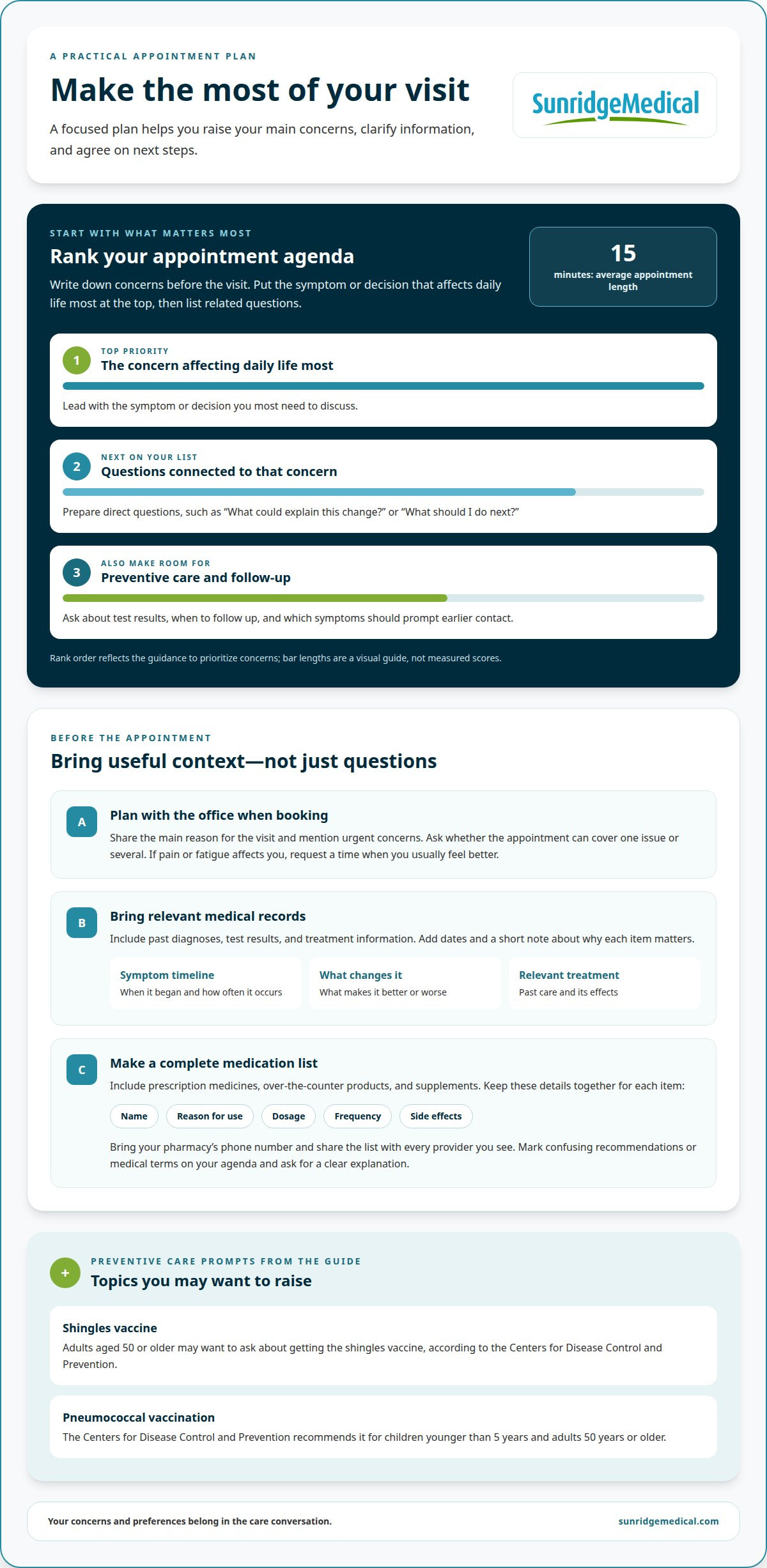
Before the visit, write down your concerns and rank them by importance. Put the symptom or decision that most affects daily life first, then list related questions. The average doctor’s appointment lasts 15 minutes, so a short written agenda can help you stay focused. Prepare direct questions such as, “What could explain this change?” or “What should I do next?”
- Bring relevant medical records, including past diagnoses, test results, and treatment information. Add dates and a brief note explaining why each item matters. If a symptom has changed, record when it started, how often it occurs, and what makes it better or worse. A symptom journal can help you describe patterns accurately, including details that may seem unrelated to your main concern.
- Prepare a complete medication list for your provider. Include prescription medicines, over-the-counter products, and supplements, along with each name, reason for use, dosage, and frequency. Note side effects and bring your pharmacy’s phone number. Share the list with every provider you see. If a recommendation or medical term is confusing, mark it on your agenda and ask for a clear explanation.
- Identify preventive care and follow-up topics that fit your circumstances. Adults aged 50 or older may want to ask about getting the shingles vaccine, according to the Centers for Disease Control and Prevention. The Centers for Disease Control and Prevention recommends pneumococcal vaccination for children younger than 5 years and adults 50 years or older. Ask about test results, follow-up timing, and what symptoms should prompt earlier contact.
What is self advocacy?
Self-advocacy means sharing your needs and health information so providers can make informed decisions with you. Request medical records and test results through a provider portal or medical records department, then save copies by date. Assess online health information by its source, publication date, and supporting evidence.
-
Organize Medical Information and Records
Create a secure digital or paper folder for diagnoses, allergies, medications, and implanted devices. Label each record with its date and provider so test results stay connected to the visit that prompted them. Use a patient portal to view available records, or contact the medical records department to request copies. Keep test results with the provider’s explanation and follow-up instructions, rather than saving isolated numbers without context.
-
Bring Key Health and Provider Details
Keep your insurance information, current medication list, provider names, and emergency contact together in one accessible place. Add the reason you see each specialist, such as a neurologist for recurring numbness. Record allergies and reactions, including what happened and when. Note implanted devices, such as a pacemaker, and include available device details. Update the file when a prescription changes or a provider gives you new treatment instructions.
-
Check Online Medical Information
Before relying on a health claim, identify who published it and when it was reviewed. Prefer information that names its authors, explains its evidence, and distinguishes established findings from opinion. Compare claims with guidance from recognized medical organizations, and be cautious of pages promising a cure or urging you to stop treatment. Write down unfamiliar terms and bring them to your provider for clarification.
- Describe symptoms with specific examples instead of broad labels. Note where a symptom occurs, when it began, how it changes, and how it affects activities such as walking or sleeping. Include relevant medical history, even if you’re unsure it connects to the current concern. Mention past treatments and their effects, such as a medicine that eased pain but caused nausea. These details help providers understand your experience and consider next steps.
- Share your priorities and ask for clear answers about your condition, treatment choices, and medications. For a new prescription, ask what it is intended to do, how to take it, and how to recognize side effects. Keep an emergency contact’s name and phone number with your health information, and tell that person where essential records are stored. You remain an active participant: provide accurate details, raise concerns, and clarify instructions you find confusing.
Bringing a support person
A trusted person can help you stay present during a difficult appointment and remember what was discussed. Choose their role before the visit, whether that means taking notes, helping you ask questions, or simply listening.
-
Identify Support Resources
Ask your clinic whether a patient advocate, social worker, or care coordinator can help with appointment communication. These roles may help you organize concerns, understand instructions, or identify practical support. For example, a social worker may help someone with a cancer diagnosis discuss emotional or day-to-day needs. Clarify what you want help with before the conversation, and keep your own questions central to each decision.
-
Choose Trusted Support and Build a Network
Invite someone who listens carefully and respects your choices, such as a sibling, friend, or partner. Before the appointment, agree on a task: your companion might take notes while you speak, then help review the provider’s instructions afterward. Build a wider network by identifying people who can offer different kinds of support, such as transportation, a meal, or company during difficult periods of a chronic condition.
- Explain the purpose of the visit to your support person in advance. Share the condition or decision you want to discuss, then point out the questions you most want answered. If you’re considering a treatment, ask your companion to note the options and instructions, not to decide for you. This preparation reduces confusion and helps keep the discussion focused on your needs and preferences.
- Look for a condition-specific support group when you want to hear from people with similar experiences. A group focused on cancer, for example, may provide a space to discuss treatment concerns and daily challenges. Consider whether its format suits you, such as an in-person meeting or an online discussion. Treat other members’ experiences as personal perspectives, not instructions for your own medical care.
- Set clear boundaries before sharing private details. Tell your companion which information you’re comfortable discussing and whether they may speak during the appointment. If asking questions feels overwhelming, agree on a simple signal that prompts them to help. You can also pause the conversation and answer for yourself. Your support person’s role is to strengthen your voice, not replace it.
- After the visit, review the notes together and mark anything that remains unclear. Your companion can help you remember a follow-up task or summarize instructions, while you decide what to do next. If the first person can’t attend, identify another trusted contact or ask whether the clinic permits a support person to join remotely. A specific backup plan keeps practical support available.
Understanding health insurance coverage and in-network providers
Use your insurance plan details alongside your care plan. Reviewing coverage, provider relationships, prescriptions, and follow-up instructions can help you make informed choices.
- Review your plan before scheduling a service or filling a prescription. Find out what the plan covers, which services require pre-approval, and how it defines in-network providers. A provider’s network status can affect coverage, so check the specific doctor, clinic, laboratory, or pharmacy involved. For example, confirm both the specialist and the facility where a planned test will occur. Keep the plan’s explanation of coverage accessible for reference.
- Ask about coverage for the specific care being considered, not just the general condition. A visit, test, medication, and follow-up service may each have separate coverage terms. Find out whether pre-approval applies and what information the plan needs. Record the date of your conversation and the representative’s instructions. If a service is denied, review the explanation and ask what appeal or review process the plan offers.
- Understand each prescription before starting or changing it. Ask the doctor what the medication is intended to do, how to take it, what side effects to watch for, and how long to use it. For example, clarify whether a new medicine replaces an existing prescription or is taken alongside it. Keep active and inactive medication lists, noting any side effects you experience, and ask whether each current medicine remains appropriate.
- Keep track of which doctors you see and why each one is involved. Write down the provider’s name, specialty, clinic, and role in your care, such as managing a chronic disease or interpreting test results. This record helps you explain your medical history and identify who should receive updates. If a provider is outside your plan’s network, understand how that may affect coverage before arranging non-urgent care.
- Leave each appointment with a clear follow-up plan. Note the next test, referral, medication instruction, and person responsible for each step. If you’re waiting for a referral or test, ask how long the wait is expected to be and which symptoms should prompt earlier contact with a doctor. Add follow-up dates to your calendar and keep instructions together, so you don’t have to rely on memory alone.
Shared decision-making with health care providers
Shared decision-making makes you an active member of your care team. You and your provider discuss the evidence, your priorities, and available options before agreeing on next steps.
- State what matters most to you before discussing a treatment plan. Explain how symptoms affect daily activities, which outcomes you value, and what concerns you have. For example, tell your provider if treatment side effects could interfere with work or caring for family. These preferences help shape a conversation around your life, not only your diagnosis.
- Ask your provider to explain each reasonable option, including its potential benefits, risks, and what may happen without treatment. Request clear, current, accurate, and unbiased information about your health. If a term or recommendation is confusing, ask for a plain-language explanation. You have the right to ask questions about your health status and learn about treatment risks and benefits.
- Review test results with the provider who ordered them. Ask what each result means for your health, whether it changes the diagnosis, and what follow-up is needed. A result without context can be difficult to interpret. If you still have questions afterward, request learning materials or written instructions that explain next steps and whom to contact.
- Make sure you understand a proposed medication before agreeing to take it. Ask what it is intended to do, how to use it, which side effects need attention, and how you’ll know whether it’s working. If you already take several medicines, ask whether each remains necessary and whether another doctor should help review the plan.
- Use teach-back to confirm shared understanding. After your provider explains a plan, summarize it in your own words: “I’ll start this treatment, watch for these effects, and follow up after the test.” Invite corrections if you misunderstood a dose, appointment, or care instruction. This simple exchange can reveal gaps before you leave the visit.
- Speak up if your preferences or questions haven’t been addressed. You have the right to respectful treatment and to seek a second opinion. For an extensive treatment decision, ask what information another health professional would need to review your case. A second opinion can clarify options or resolve concerns without requiring you to dismiss your current provider’s input.
- Request an interpreter or translated health documents if language makes it difficult to understand your choices. Before consenting to treatment, make sure the explanation covers the information you need to decide. Informed consent means a health care provider gives you the information needed to make a treatment decision. If important details remain unclear, pause and ask the provider to explain them again.
Sunridge Medical
Sunridge Medical can be a next step when a complex or chronic condition calls for a more individualized care plan. Its offerings include Alternative Cancer Treatment Protocols, Chronic Lyme Disease Treatment, Autoimmune Disease Management, and Hormone Optimization Therapy. If you’re managing a persistent diagnosis or considering treatment options, bring your questions, medical history, and priorities into the conversation.
Active participation remains important: discuss the potential approaches, understand the plan, and clarify how it fits your needs. Sunridge Medical focuses on care for complex conditions, rather than emergency concerns. If you’re ready to discuss whether its care may fit your health needs, contact Sunridge Medical.
Make Your Next Health Conversation Count
Your next step can be small and deliberate: choose one unresolved concern and decide what you need to understand before moving forward. You might clarify the purpose of a proposed treatment, ask how progress will be assessed, or request time to consider your options. A clear personal priority gives your next conversation direction without requiring you to have every answer in advance.
Learning how to be your own health advocate is an ongoing practice, not a demand to manage complex care alone. You can keep asking questions, communicate what matters to you, and work with providers to make informed choices. If you’re ready to discuss your health needs and care options with Sunridge Medical, contact Sunridge Medical for support.
Each thoughtful conversation can help you take a more active role in your care. Move forward at a pace that supports clear understanding and informed decisions.
Frequently Asked Questions
Why is advocating important?
Advocating helps ensure your care reflects your symptoms, priorities, and understanding of the options. Knowing how to be your own health advocate can help you explain what matters before a decision is made. For example, if a treatment plan conflicts with an important daily responsibility, sharing that concern gives your provider useful context. Speaking up can bring misunderstandings to light without challenging every recommendation.
Frequently asked questions?
People often ask how to communicate concerns, understand their rights, and find support when a care conversation feels difficult. Start with the question that most affects your next decision, such as what a test result means or what choices are available. The answers below offer ways to approach those situations. Adapt the wording to your circumstances and bring unanswered questions to a future discussion with your care team.
How do I ask for a second opinion without offending my doctor?
Present a second opinion as a way to understand your options, not as a personal criticism. You could say, “I value your guidance and would feel more confident hearing another perspective before deciding. Can you help me arrange that?” If you have a specific concern, name it calmly. A constructive conversation keeps your current doctor informed while giving you space to consider another professional’s assessment.
I am not getting the information I need from my provider, what other resources can help?
Ask for information in a different format, such as written instructions, a plain-language explanation, or educational materials. A patient advocate, clinic social worker, or care coordinator may help you identify the right person to address an unanswered concern. You can also consult reliable health information from government agencies or established medical organizations, then discuss anything unclear with a qualified professional before acting on it.
What Does it Mean to Be Your Own Health Advocate?
Understanding how to be your own health advocate starts with recognizing that your perspective belongs in care decisions. You can describe a change in your health, explain how it affects daily life, and ask what choices are available. Advocating for yourself doesn’t require medical expertise or making decisions alone. It means contributing your perspective, seeking understandable information, and working with your care provider toward a plan you can discuss with confidence.
What are patient rights?
Patients have the right to respectful treatment, clear and accurate information, and explanations of treatment risks and benefits. You can ask questions about your health status and seek a second opinion. If language makes a discussion difficult, you can request interpreter services or translated health documents in a medical facility. These rights support informed participation, including asking your provider to clarify information before you make a care decision.
What questions should I ask my doctor?
Ask questions that help you understand the decision in front of you. For example: “What are the possible explanations for this result?” “What choices do I have?” and “What changes would mean I should follow up?” If you’re weighing a treatment, ask how its benefits and risks relate to your goals. Before leaving, confirm who will contact you about pending results and how you’ll receive them.
What should I do if my doctor dismisses my concerns?
State the concern again with a specific example, such as when a symptom began and what activity it prevents. Then ask what the provider thinks explains it and what should happen if it continues. If you still don’t feel heard, request that your concern and the agreed next steps be documented. You can also arrange another discussion or seek a second opinion to clarify your options.