


What if the right cancer center isn’t the one making the boldest claims, but the one that clearly explains its approach, the evidence behind its recommendations, and how care fits with your existing treatment? Learning how to choose the right cancer treatment center can feel difficult when recommendations conflict and every decision carries weight. You deserve clear information, time to consider your options, and support as you make decisions.
This guide offers a safety-first framework for assessing a center’s clinical approach, communication, and fit for your circumstances. You’ll find practical questions to ask about treatment planning and care coordination, guidance on understanding accreditation, and steps to prepare for an evaluation without feeling rushed.
Integrative care may be considered alongside conventional cancer treatment, not as a replacement for it. Sunridge Medical develops individualized plans that bring conventional therapies and research-based alternative treatments into consideration. Patients can discuss how the approach relates to their existing oncology care. The goal is informed decision-making based on individual needs, not a promise of a particular outcome.
Key Takeaways
- Use a safety-first framework for how to choose the right cancer treatment center, focusing on clinical oversight, clear explanations of evidence, and coordinated decisions.
- Look for individualized planning that takes diagnosis, prior treatment, health context, and personal goals into account.
- Compare centers by how they communicate recommendations, monitor care, and explain what is known and uncertain.
- Prepare for an evaluation by gathering available pathology, imaging, medication, and prior treatment records, then listing your priorities.
- Understand how integrative care may be considered alongside conventional treatment, with your oncology team involved in discussions.
How to Choose the Right Cancer Treatment Center When Every Decision Feels High-Stakes
A cancer diagnosis can bring urgent questions, conflicting recommendations, and pressure to make decisions before you feel ready. It’s reasonable to ask for explanations, take notes, and seek clarification before agreeing to a proposed plan. Understanding your options is part of care, not a sign that you’re being difficult.
Learning how to choose the right cancer treatment center isn’t about finding a place that promises a particular result. No responsible center can guarantee an outcome. Instead, look for appropriate medical oversight, clear explanations of evidence and uncertainty, individualized planning, thoughtful communication, and a practical fit with your circumstances. These criteria help you assess whether recommendations take your diagnosis and existing care into account.
What does the right cancer treatment center need to provide?
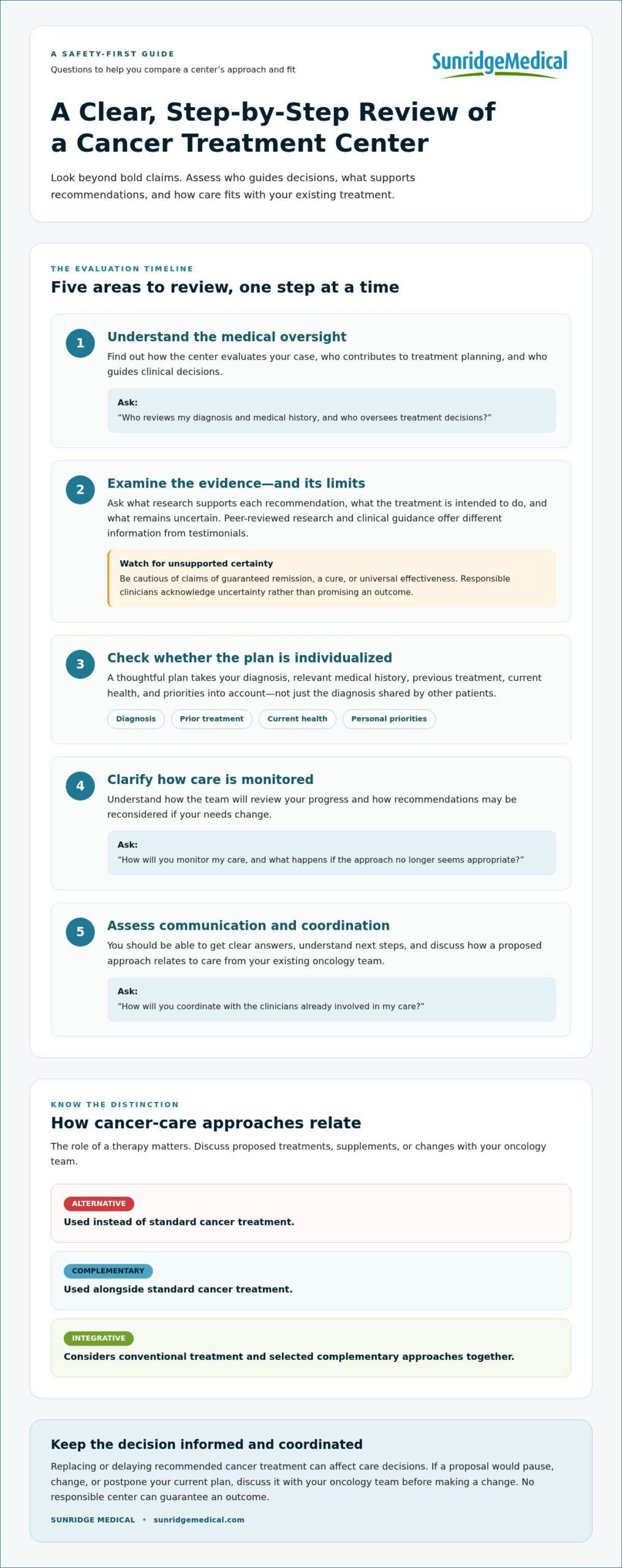
Start by asking how the center evaluates your situation. A clear process includes reviewing your diagnosis and relevant medical history, discussing treatment options, and explaining who oversees clinical decisions. Ask how recommendations are developed and how care is monitored. A plan should account for prior treatment, current health, and your priorities, rather than treating everyone with the same diagnosis as interchangeable.
Good communication matters as much as a detailed plan. A responsible team explains what a proposed approach is intended to do, what is known about it, and where uncertainty remains. Be cautious of claims that a treatment cures cancer or works for everyone. You should receive information that supports an informed decision, not pressure based on certainty the center can’t substantiate.
Alternative, complementary, and integrative cancer care: what is the difference?
Alternative care is used instead of standard cancer treatment; complementary care is used alongside it. Integrative cancer care considers conventional treatment and selected complementary approaches together. This distinction matters because replacing or delaying recommended cancer treatment can affect care decisions. Discuss any proposed therapy, supplement, or change with your oncology team before proceeding. An approach that seems supportive may still need to be considered in the context of your treatment.
Ask how a center communicates with the clinicians already involved in your care and how proposed approaches fit alongside recommended treatment. If a suggestion would require pausing, changing, or postponing your current plan, raise that directly with your oncology team before making a change. Coordination helps keep everyone informed and gives you a clearer basis for weighing options.
Use these questions to guide conversations as you compare centers:
- Clinical oversight: Who evaluates your case and guides treatment decisions?
- Evidence: What supports the recommendation, and what uncertainties should you understand?
- Individualization: How does the plan account for your diagnosis, previous care, health, and goals?
- Monitoring: How will the team review your progress and respond if your needs change?
- Communication and fit: Can you get clear answers, understand next steps, and discuss coordination with your existing oncology team?
You don’t need to resolve every question at once. A careful evaluation gives you time to understand the proposed approach and decide what feels appropriate for your circumstances.
Evaluate a Cancer Treatment Center’s Medical Oversight, Evidence, and Care Coordination
A center’s approach should be understandable, not opaque. As you assess how to choose the right cancer treatment center, look beyond the language used to describe its therapies. Find out how clinicians evaluate your case, who contributes to treatment planning, and how the team monitors your care over time. You should be able to understand how a recommendation relates to your diagnosis and the role it is intended to play.
How can patients assess the evidence behind a proposed treatment?
Ask the team to explain the basis for each proposed therapy in plain language. What research supports it? Is it intended to treat the cancer, address a particular symptom, or serve another purpose? What is not yet known, and how will the team judge whether the approach remains appropriate? Clear answers help you distinguish a measured clinical explanation from persuasive marketing.
Evaluate treatment claims by their supporting evidence, limitations, and relevance to your individual circumstances. Peer-reviewed research and clinical guidance offer a different kind of information from testimonials. Testimonials describe one person’s experience but can’t establish that a treatment will work for others. Be cautious of claims of guaranteed remission, a cure, or universal effectiveness. Responsible clinicians acknowledge uncertainty rather than promising a result.
Clinical trials are a separate way to access treatments being studied in a research setting. They aren’t interchangeable with established care or a guarantee of benefit. If you’re considering a trial, discuss eligibility, potential risks, and how participation could affect your current treatment plan with your treating oncology team. They can help you understand the implications in light of your diagnosis and care history.
Why coordination with an existing oncology team matters
Continuity matters. Cancer treatments and complementary therapies may affect care decisions, so proposed approaches should be reviewed in the context of your full treatment plan. Share relevant records and written recommendations from each clinician involved in your care. If you’re considering a therapy or supplement, discuss it with your oncology team before starting it or changing prescribed treatment. This gives your clinicians an opportunity to consider how the elements of your care fit together.
Look for a clear communication process: who will share the plan, what information will be exchanged, and how changes or concerns will be addressed. Ongoing monitoring matters, too. Ask what the team will review during follow-up and how recommendations may be revisited as your health or treatment needs change. You’re seeking a coordinated picture, not parallel plans that leave you to reconcile conflicting advice on your own.
Sunridge Medical’s model brings conventional therapies together with research-based alternative treatments through individualized planning and ongoing patient monitoring. Explore Sunridge’s integrative cancer care to understand this approach. Discuss proposed therapies with your oncology team so decisions reflect your complete care context.
Compare Cancer Treatment Centers by Personalization, Communication, and Practical Fit
Once you understand a center’s clinical approach, compare how that approach would work for you. Use consistent criteria to make differences easier to see without reducing a complex decision to a ranking. As you consider how to choose the right cancer treatment center, note not only what each team proposes, but how clearly it connects its recommendations to your circumstances.
What makes a cancer treatment plan genuinely individualized?
Individualized planning begins with a physician evaluation that considers more than the name of a cancer. Relevant context may include the diagnosis, prior treatment, current care, overall health, and your priorities. For example, a plan should explain how previous treatment or a stated goal informs the recommendations, rather than simply presenting a standard set of options.
A personalized plan should explain its rationale, intended role, and monitoring process. Sunridge Medical develops individualized cancer treatment plans that combine conventional therapies with research-based alternative treatments. When comparing a plan, look for a clear account of what it involves, how its elements relate to your existing care, and what limitations or uncertainties the team identifies.
How to assess communication and ongoing support
Notice whether explanations leave room for questions. A useful discussion addresses the purpose of each part of the plan, potential benefits and uncertainties, and what might prompt the team to revisit its recommendations. Clear communication helps you understand the plan well enough to discuss it with your existing clinicians and consider how it fits your day-to-day circumstances.
Monitoring is part of the comparison, too. Record what each center explains about follow-up and how changes in your health or treatment needs would be addressed. Compare the process the center describes rather than assuming a particular schedule. Practical fit may also include the effort needed to attend care and coordinate records with your other clinicians.
| Comparison area | What to look for | Notes to capture |
|---|---|---|
| Clinical oversight | A clear explanation of who evaluates the case and contributes to treatment planning. | Who is involved, and how are recommendations developed? |
| Evidence explanations | Discussion of the rationale, intended role, and limitations of proposed therapies. | What supports each recommendation, and what remains uncertain? |
| Individualized planning | Consideration of diagnosis, previous treatment, health context, and patient goals. | Which details about your circumstances shape the plan? |
| Monitoring and follow-up | An explanation of how progress is reviewed and when the plan may be reconsidered. | What follow-up process did the center describe? |
| Communication | Understandable answers, space for questions, and attention to coordination with current care. | Are next steps and information-sharing expectations clear? |
Use the same questions and notes for each evaluation. The aim isn’t to identify a universally “best” center, but to see which approach is understandable, responsive to your context, and workable alongside your ongoing care.
Prepare for a Cancer Treatment Center Evaluation With a Focused Checklist
A little preparation can make an evaluation feel more manageable. You don’t need every record or question organized perfectly. Bring what’s available, note what you’re unsure about, and use the conversation to understand what the proposed care would involve. Preparation can also help you compare recommendations as you consider how to choose the right cancer treatment center.
What information should patients organize before an evaluation?
Gather the records you have access to, then arrange them in a simple folder or digital file. A brief timeline of diagnosis and treatment can help you explain your care without having to recall every detail under pressure. Records support the discussion, but they don’t replace a clinician’s review of your history and current health.
Use these steps to prepare
- Gather available records. Include diagnosis details, pathology and imaging reports, prior treatment summaries, and a current medication list. Add relevant test reports or notes from clinicians involved in your care, if available. Don’t delay an evaluation just because you’re still waiting for a document.
- Write down your priorities. Note your current symptoms, main concerns, and goals for care. You might want to understand how a recommendation fits with ongoing treatment or what information the team needs to review before making a plan. Record questions as they come up rather than relying on memory during the appointment.
- Review the proposed approach. Ask what each recommended therapy is intended to do, what supports its use, and what limitations or uncertainties apply. Clarify how the plan relates to your diagnosis, previous treatment, and current care. If you’re exploring integrative options, the integrative cancer treatment by stage guide offers related educational context to discuss with your clinicians.
- Clarify next steps. Before the conversation ends, ask what decisions are needed now and what can wait. Find out what records or follow-up information the team expects, and how the proposed approach will be reviewed over time. Write down the answers and raise any concerns with the clinicians involved in your care.
Questions that clarify a center’s proposed approach
Specific questions can turn a broad recommendation into information you can evaluate. Consider asking:
- What is the rationale for each part of the proposed plan?
- What evidence supports the therapy, and what are its known limitations?
- How does the recommendation account for my previous treatment and current health?
- How will this plan be coordinated with my existing oncology care?
- What will the team monitor, and how could that information affect decisions?
Take notes, and consider bringing a trusted support person if you choose. You can ask for an explanation in different words or take time to review the plan before deciding. For an overview of Sunridge Medical’s individualized approach, explore Sunridge Medical’s cancer care approach.
Explore Sunridge Medical’s Individualized Integrative Cancer Care
For patients considering an approach beyond a standardized plan, Sunridge Medical offers individualized cancer treatment planning at a medical center in the United States. Its care model brings conventional therapies together with research-based alternative treatments, with attention to each patient’s clinical context and existing oncology care. The purpose is to develop a considered plan, not to promise a particular result.
How Sunridge Medical approaches individualized cancer care
Planning begins with a physician evaluation. That evaluation informs a plan shaped around the patient’s circumstances, rather than a single protocol for everyone. Relevant context can include the diagnosis, prior treatment, current care, health status, and the patient’s questions and priorities. This information supports a fuller discussion of how the proposed approach may fit alongside the care already in place.
Sunridge’s services include physician evaluations, treatment-plan development, clinical administration of integrative therapies, and ongoing patient monitoring. Monitoring helps the team review how care is progressing and whether the plan should be reconsidered as a patient’s circumstances evolve. Discuss proposed therapies and any potential changes to current treatment with the clinicians involved in your oncology care.
Integrative care means considering conventional treatment and selected approaches together, not setting conventional treatment aside. Use a plan discussion to clarify the intended role of each therapy, what is known about the approach, and what limitations or uncertainties should inform a decision. Keeping your oncology team involved helps ensure recommendations are considered in the context of your broader care plan.
A thoughtful next step for patients considering care
It’s reasonable to take time to understand an approach before deciding whether it aligns with your needs. Review how evaluations inform planning, how integrative therapies are considered alongside conventional care, and how ongoing monitoring fits into the model. The alternative cancer treatment clinical guide provides a deeper explanation of Sunridge Medical’s integrative care model.
As you review the information, note which questions matter most to you. These may include how your current treatment and medical history inform planning, how proposed therapies fit together, and how the team monitors care. Bring those questions to a discussion with your oncology clinicians, especially before making a change to your existing treatment. A clear conversation can help you weigh whether the approach is appropriate for your circumstances.
If you’d like to learn more about Sunridge Medical’s individualized cancer care, explore the center’s approach and schedule an appointment to discuss your questions. Take the next step at a pace that allows you to make an informed decision with your care team.
Take Your Next Step With Clarity
Choosing a center doesn’t require certainty about every decision today. Start with a conversation that helps you understand your options, identify unanswered questions, and consider how proposed care fits your circumstances. The framework for how to choose the right cancer treatment center can guide that discussion, while your priorities and clinical context remain central.
Sunridge Medical, founded in 2003 and led by Medical Director Dr. Steven S. Isaacman, develops individualized cancer treatment plans and provides ongoing patient monitoring. Explore the center’s approach and consider how it aligns with your needs. Discuss any proposed changes to your current treatment with your oncology team before acting.
Explore Sunridge Medical’s individualized cancer care and appointment information. A thoughtful next step can bring greater clarity, and you can move forward at a pace that feels informed and right for you.
Frequently Asked Questions
How do I know if a cancer treatment center is reputable?
Look for transparent clinical decision-making, clear explanations of evidence, and a willingness to coordinate with your existing oncology team. To judge how to choose the right cancer treatment center, verify any claimed accreditation or professional standing with the organization that issued it, and find out who oversees care. Treat testimonials as personal experiences, not proof of effectiveness. A reputable center won’t pressure you with guaranteed outcomes or discourage reasonable questions.
Should I choose an alternative or integrative cancer treatment center?
Consider the role of care in your overall plan, not the label alone. Alternative treatment means using an approach instead of standard cancer treatment; integrative care considers selected approaches alongside conventional care. If a recommendation would replace or delay treatment, discuss that decision with your oncology team first. Ask what each proposed therapy is intended to do and how it fits with your current care.
Can I use integrative cancer care while receiving chemotherapy or radiation?
Whether a therapy is suitable depends on your specific treatment and health context, so it needs clinical review. Tell your oncology team about supplements, infusions, diets, or other approaches you’re considering, even if they seem routine or “natural.” Bring the exact product name and ingredient list when relevant. Don’t start, stop, or change a therapy based on general advice alone; your clinicians can assess its fit with chemotherapy or radiation.
What should I bring to a cancer treatment center consultation?
Bring a current medication and supplement list, including doses if known, plus contact details for clinicians involved in your care. A short timeline can help: note diagnosis dates, treatments received, and any major changes or reactions. Keep a copy of your questions and write down answers during the visit. If you’re comfortable doing so, invite someone you trust to listen and help you recall details afterward.
What happens if a treatment center promises a cancer cure?
Pause before making a decision, and ask what evidence supports the claim, which patients it applies to, and what limitations are known. A promised cure or guaranteed result is not a reliable basis for choosing care. Share the claim and any written materials with your treating oncology team, and don’t stop or postpone recommended treatment because of marketing language. Take time to compare explanations and seek another clinical opinion.
Does Sunridge Medical offer standard health insurance billing?
No. Sunridge Medical does not offer standard health insurance billing. Review your plan documents to understand how your policy handles services and what documentation it may require. Keep coverage questions separate from clinical questions: payment rules don’t determine whether a treatment is medically appropriate. Discuss the care plan with the clinicians involved in your cancer treatment.
How does Sunridge Medical create an individualized cancer treatment plan?
Sunridge Medical develops plans through physician evaluations and individualized treatment planning. The center’s model combines conventional therapies with research-based alternative treatments, considering the patient’s clinical circumstances and existing oncology care. Ongoing monitoring is part of its services. Bring your diagnosis and treatment history, then discuss how recommendations relate to current care with the clinicians involved before making changes.