


A claim about lower chemotherapy doses is not proof of safer or more effective treatment. That distinction matters when you’re weighing insulin potentiation therapy for cancer, especially if concerns about treatment toxicity make the approach sound appealing.
It’s understandable to look for options that may ease the burden of treatment. IPT is generally presented as using insulin alongside chemotherapy, with the claim that this may allow lower chemotherapy doses. But a proposed mechanism does not establish that treatment controls cancer, improves outcomes, or reduces harm. The evidence and the risks both deserve careful consideration.
This article explains what IPT claims to do, what research can and cannot show, and why insulin-related risks, chemotherapy dosing, and coordination with other care require medical oversight. You’ll also find focused questions to discuss with your oncology team. Use them to compare IPT claims with established options in light of your diagnosis and goals, and to keep any decisions connected to the care you’re already receiving.
Key Takeaways
- Understand the proposed insulin-and-chemotherapy rationale behind insulin potentiation therapy for cancer, and why a biological explanation alone does not prove clinical benefit.
- Distinguish laboratory findings and observational reports from controlled evidence about meaningful cancer outcomes.
- Compare IPT with evidence-based cancer treatment and supportive integrative care, including the different roles each may play.
- Recognize why insulin-related hypoglycemia and chemotherapy’s drug-specific risks call for medical oversight, rather than assumptions about lower toxicity.
- Prepare focused questions about your diagnosis, treatment goals, evidence, monitoring, and care coordination for a discussion with your oncology team.
What Is Insulin Potentiation Therapy for Cancer?
Insulin potentiation therapy (IPT) is a proposed cancer-treatment approach that combines insulin with chemotherapy. Proponents suggest insulin may make cancer cells more sensitive to chemotherapy, sometimes arguing that this could allow lower chemotherapy doses. These are claims about a possible mechanism, not proof that IPT improves cancer outcomes.
Definition: Insulin potentiation therapy for cancer uses insulin alongside chemotherapy based on a proposed theory of increased cellular sensitivity. That theory is distinct from demonstrated improvement in survival, tumor control, or quality of life.
IPT protocols and the claims made for them can vary. The name alone does not establish which drugs are used, how treatment is delivered, or whether a particular approach has been tested for a specific cancer. For an overview of its history and proposed rationale, see Insulin potentiation therapy (IPT). A general overview should not be mistaken for evidence that the approach works.
How is insulin potentiation therapy proposed to work?
Proponents generally describe giving insulin before chemotherapy, with the aim of changing how cancer cells respond to the drugs. One proposed explanation involves insulin’s effects on blood glucose and cellular glucose uptake. The hypothesis is that these changes might make cancer cells more vulnerable to chemotherapy, although the rationale can differ among protocols.
This is a biological hypothesis that requires clinical testing. Even if a mechanism seems plausible in a laboratory setting, that alone cannot show that treatment helps people live longer, controls their cancer, or improves quality of life. Those outcomes need to be studied in patients.
How is IPT different from standard chemotherapy?
Standard chemotherapy is selected and adjusted according to factors such as cancer type, disease extent, treatment goals, the drugs involved, and a patient’s health and treatment history. Its use is guided by clinical evidence for particular cancers and circumstances. IPT adds a proposed insulin-related rationale that must be assessed separately. It should not be assumed to be an evidence-equivalent substitute for established cancer treatment.
A claim of lower doses does not, by itself, establish that treatment is safer or equally effective. The key questions are whether the specific regimen has been tested for the patient’s cancer and whether it improves meaningful outcomes. For a broader view of how treatment considerations may vary, see this integrative cancer treatment guide by stage. Discuss treatment decisions with qualified physicians familiar with the diagnosis and all concurrent care.
What Does the Clinical Evidence Say About IPT for Cancer?
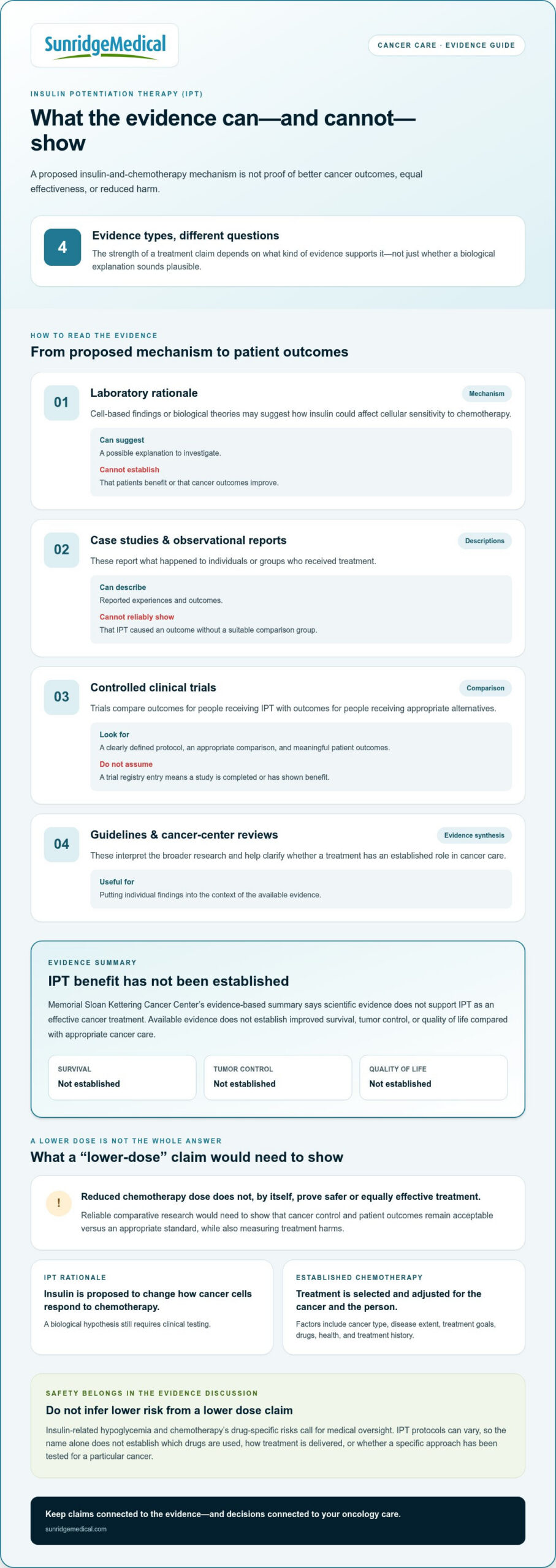
Claims about insulin potentiation therapy for cancer should be judged by the quality of patient evidence, not by the appeal of the proposed mechanism. Different kinds of evidence answer different questions:
- Laboratory rationale: Biological theories or cell-based findings may suggest a mechanism, but they do not show that patients benefit.
- Observational reports and case studies: These describe what happened to individuals, but without a suitable comparison group they cannot reliably show that IPT caused the outcome.
- Controlled clinical trials: These compare outcomes among groups receiving IPT and appropriate alternatives, while accounting for differences in treatment and patient characteristics.
- Guidelines and cancer-center reviews: These interpret the broader evidence and help clarify whether a treatment has an established role in cancer care.
Memorial Sloan Kettering Cancer Center’s evidence-based summary from MSKCC says scientific evidence does not support IPT as an effective cancer treatment. Available evidence does not establish that IPT improves survival, tumor control, or quality of life compared with appropriate cancer care. Evidence assessment: October 2026. This describes what research has established to date, not what future studies might find.
What kinds of studies have evaluated IPT?
The key question is whether research in people tests a clearly defined IPT protocol against a suitable comparison and measures outcomes that matter to patients. A laboratory explanation, testimonial, or case report cannot answer that question. Before drawing conclusions from a published study, look for its cancer type, participant numbers, comparison group, and measured outcomes. Do not infer these details from promotional summaries.
A trial registry entry indicates that a study was registered, not that it was completed or showed benefit. Look for published results and note whether the study is ongoing, completed, or stopped without results. Without reliable comparative clinical findings, reported responses cannot establish that IPT caused an improvement.
How should patients interpret claims of lower-dose chemotherapy?
A lower chemotherapy dose is not, by itself, evidence of better or safer treatment. To support that claim, research would need to show that cancer control and patient outcomes remain acceptable compared with an appropriate standard, while also measuring treatment harms. Without reliable comparative data, reduced toxicity and equal effectiveness cannot be assumed.
Consider evidence alongside your diagnosis, goals, medical history, and current treatment. A physician-led evaluation can put claims in context and support coordination of conventional and research-based approaches. Learn more about individualized cancer care at Sunridge Medical.
IPT Compared With Standard and Integrative Cancer Care
These approaches are not interchangeable. They differ in purpose, the evidence supporting them, and the role they may have in an individual care plan. This general comparison is a starting point. Treatment decisions depend on diagnosis, stage, biomarkers, medical history, and patient goals.
| Approach | Primary purpose | Evidence and role |
|---|---|---|
| IPT | Combines insulin with chemotherapy under a proposed theory of increased cancer-cell sensitivity. | Memorial Sloan Kettering Cancer Center reports that scientific evidence does not support IPT as an effective cancer treatment. Its role in cancer care is not established. |
| Evidence-based cancer treatment | May aim to control or eradicate cancer, reduce recurrence risk, or relieve cancer-related symptoms. | Options are evaluated through clinical research and recommendations for specific cancers and circumstances. Benefits and risks differ by treatment and patient. |
| Supportive integrative care | May help address symptoms, function, or well-being alongside oncology care. | Evidence depends on the specific practice and intended outcome. Supportive care should not be assumed to treat or control the cancer itself. |
How does IPT compare with evidence-based cancer treatment?
Evidence-based cancer treatments have a defined clinical role when research supports their use for a particular diagnosis and treatment goal. That does not mean every standard option suits every patient. A care team considers the cancer’s type and stage, relevant biomarkers, overall health, prior treatment, and the patient’s preferences.
For insulin potentiation therapy for cancer, a proposed rationale or lower-dose claim does not establish an equivalent role. The Memorial Sloan Kettering Cancer Center overview of IPT describes the lack of scientific evidence supporting its use as an effective cancer treatment. Do not stop, delay, or change prescribed treatment based on an article or treatment claim. Discuss decisions with your oncology team.
Where can integrative care fit alongside oncology?
Supportive integrative care is different from treatment intended to shrink, control, or eradicate cancer. Depending on the approach, its goal may instead be to support comfort or well-being during care. Tell the oncology team about every therapy, supplement, or major dietary change you are considering, since these may affect treatment planning or safety.
For broader context on individualized approaches and how integrative care may be considered, read this alternative cancer treatment clinical guide. A physician-led review of your diagnosis, goals, and concurrent care can help clarify which approaches are intended to treat cancer and which are supportive. Explore individualized cancer care at Sunridge Medical.
What Are the Potential Risks and Safety Questions About IPT?
Safety involves more than insulin. Any IPT approach that includes chemotherapy also carries risks tied to the specific drugs, the cancer being treated, and the patient’s health. A claim that chemotherapy doses may be lower does not establish that the combined approach is safer. Insulin-related effects and chemotherapy complications require qualified medical oversight.
What insulin-related risks should patients understand?
Insulin can lower blood glucose to a dangerous level, a condition called hypoglycemia. Possible signs include shakiness, sweating, dizziness, or confusion. Severe hypoglycemia can lead to seizures or loss of consciousness. Risks and monitoring needs vary with a person’s health, medications, food intake, and treatment setting. Treating clinicians should plan monitoring, rather than relying on a general protocol or online instructions.
Ask who will monitor glucose, how concerns will be recognized and communicated, and how insulin-related risks will be considered alongside your medical history and other medicines. This section is not a guide to insulin use, dosing, or self-treatment.
Could IPT affect other cancer treatments?
Treatment coordination matters. Chemotherapy’s risks depend on the particular drug or combination, and a lower dose under an IPT approach should not be presumed to reduce toxicity or preserve cancer control. A treatment plan also needs to account for other cancer therapies, prescription medicines, supplements, and any changes to the schedule of established care.
Tell the oncology team about every therapy and supplement you are considering, even if it is described as natural, supportive, or complementary. This helps clinicians assess possible interactions, overlapping effects, and whether the overall plan is coordinated. Delaying, replacing, or disrupting established treatment can carry consequences, so do not change prescribed cancer care based on an IPT claim or this article.
Safety summary: Before starting, stopping, or changing any cancer treatment, discuss the plan with the treating oncology team. Ask how risks will be monitored, how the proposed approach fits with current care, and whom to contact promptly about new symptoms or suspected treatment complications. Severe or rapidly worsening symptoms warrant urgent medical attention.
A careful review should consider your diagnosis, medical history, treatment goals, and all concurrent care. Discuss your cancer care and safety questions with Sunridge Medical’s physician-led team.
How to Evaluate IPT Claims and Discuss Your Options With a Physician
Considering insulin potentiation therapy for cancer can raise difficult questions, especially when claims sound promising but the supporting evidence is unclear. A structured conversation with your treating oncologist can help you assess the proposal in relation to your diagnosis and current care.
- Clarify your diagnosis and goals. Confirm the cancer type, stage, relevant biomarkers, and the goal of each part of your current plan. Ask whether the IPT proposal is intended to control the cancer, relieve symptoms, or serve another purpose.
- Ask what evidence supports the claims. What published studies in people support this specific approach for your cancer type and circumstances? Ask what outcomes were measured, how IPT compared with another treatment, and whether the results apply to your situation. A testimonial or proposed mechanism is not the same as comparative clinical evidence.
- Review potential benefits and risks. Ask which benefits are supported by data, what uncertainties remain, and how insulin-related and chemotherapy-related risks would be considered alongside your health history and medicines.
- Understand monitoring. Ask what monitoring is planned, who is responsible for it, and how changes in symptoms or treatment effects would be communicated and addressed.
- Plan coordination with oncology care. Discuss how the proposal could affect current treatment, who will coordinate among clinicians, and how your oncology team will stay informed.
What should a careful next step look like?
Before changing, delaying, or stopping prescribed cancer care, discuss the proposal with your treating oncologist. Bring a current medication and supplement list, relevant treatment records, and your questions. If you have written materials describing the IPT protocol or its claims, bring those too. This helps keep the discussion focused on the actual approach rather than a general label.
A physician-led review should take your diagnosis, prior treatment, overall health, treatment goals, and concurrent care into account. Ask for a clear explanation of what is known, what remains uncertain, and how options may fit together. This can help you make a more informed decision without assuming that one approach is right for every person.
For a thoughtful discussion of individualized cancer care and your treatment questions, explore individualized cancer care at Sunridge Medical.
Make Your Next Cancer-Care Decision With Clarity
Insulin potentiation therapy for cancer is based on a proposed rationale, but that rationale does not establish improved cancer outcomes. Claims of lower chemotherapy doses also do not prove equal effectiveness or reduced risk. Before considering a change, review the evidence for your specific diagnosis, potential harms, monitoring, and coordination with your oncology team.
Bring your treatment records, medication and supplement list, and questions to a physician-led discussion. Sunridge Medical provides individualized cancer care that integrates conventional therapies with research-based alternative approaches. A careful review can put options in context with your health history and goals.
Explore individualized cancer care at Sunridge Medical. With clear information and qualified medical guidance, you can take your next step with greater confidence.
Frequently Asked Questions
Does insulin potentiation therapy work for cancer?
Current evidence has not established that IPT improves cancer outcomes. A proposed biological explanation, patient testimonial, or case report cannot show that treatment causes longer survival, better tumor control, or improved quality of life. Stronger evidence would require well-designed clinical studies comparing a defined IPT approach with appropriate care and measuring meaningful outcomes. Discuss claims for your specific cancer with your oncology team.
Is insulin potentiation therapy FDA-approved for cancer?
IPT as a cancer-treatment approach is not FDA-approved to treat cancer. Approval of an individual drug for a particular use does not mean a combination protocol involving that drug and insulin has been approved or shown effective. If someone presents an approval claim, ask which exact treatment and indication it refers to. Your oncology team can help clarify how that information relates to your diagnosis and treatment plan.
Can IPT be used alongside chemotherapy?
IPT is described as combining insulin with chemotherapy, but that does not establish that it is safe or effective alongside a person’s prescribed cancer regimen. Chemotherapy drugs, schedules, and risks vary, and additional therapies may complicate coordination. Tell your oncology team about any IPT proposal before making changes, and ask how it could affect your current treatment, monitoring, and communication among clinicians.
What are the risks of insulin potentiation therapy?
Insulin can cause hypoglycemia, meaning blood glucose falls too low. This can become serious, and risk depends on factors such as health, medications, and the treatment setting. Chemotherapy also has drug-specific risks, which should not be presumed lower because a protocol claims to use less. Potential concerns include treatment interactions, inadequate monitoring, or delaying established care. Discuss risks and safety planning with your treating clinicians.
Is IPT the same as low-dose chemotherapy?
No. IPT refers to a proposed approach that combines insulin with chemotherapy, while “low-dose chemotherapy” describes chemotherapy given at a lower dose than another regimen or standard schedule. The terms are not interchangeable, and IPT protocols and claims can differ. A lower dose alone does not prove equal cancer control or fewer side effects. Ask what comparative evidence supports the exact regimen and outcomes being claimed.
What should I ask my oncologist about IPT?
Ask what published human studies support IPT for your cancer type, what outcomes they measured, and how the approach compares with established options. Discuss potential harms, monitoring, interactions, and how the proposal could affect your current treatment. Bring your medication and supplement list, treatment records, and written information about the proposed protocol. Do not stop, delay, or change prescribed care without discussing it with your oncology team.