


Integrative care doesn’t mean stopping conventional treatment. An integrative approach to chronic illness management combines appropriate medical care with complementary therapies and daily habits, with the aim of supporting the whole person. For cancer, talk with your oncologist before starting or stopping any medication or treatment.
It’s understandable to want care that addresses more than symptoms and to feel cautious about adding a supplement or changing your routine. Complementary approaches should support medical treatment, not replace it. No single complementary practice or supplement can prevent or cure a chronic disease.
This article explains how conventional care, complementary therapies, and daily habits such as nutrition, physical activity, sleep, and stress management can fit together. You’ll also learn what to discuss with your doctor about medicines and supplements so your choices can be coordinated with your existing care.
Key Takeaways
- Integrative care brings conventional treatment and complementary approaches together; it doesn’t mean replacing prescribed care.
- Review medicines, herbs, and supplements with your doctor before making changes, especially during cancer treatment.
- Nutrition, appropriate activity, restorative sleep, and stress management can be considered alongside medical care.
- Discuss how a proposed therapy fits your diagnosis, current treatments, and personal health goals.
- For complex chronic conditions, Sunridge Medical offers care options including Chronic Lyme Disease Treatment and Autoimmune Disease Management.
How should you think about medicines, herbs, and supplements?
Medicines, herbs, and supplements belong in one coordinated treatment plan, not on separate decision-making tracks. In the United States, look for a practitioner with credentials suited to their clinical role, training in integrative medicine, and a willingness to coordinate with your existing clinicians.
Conventional and Functional Care
Functional medicine considers biological factors and health patterns alongside conventional diagnosis and disease management. This can matter because a chronic illness plan may need to address both the diagnosed condition and factors affecting daily health. Conventional clinicians can guide established treatments, while functional assessments may inform discussions about nutrition, symptoms, and other possible contributors. Both approaches need a clear role in a shared treatment plan.
Coordination is especially relevant when care involves several disciplines. A cardiologist, primary care clinician, and nutrition professional may each focus on different aspects of cardiovascular disease. An estimated 19.8 million people died from CVDs in 2022, representing approximately 32% of all global deaths, according to the World Health Organization. That burden illustrates why chronic disease management needs clear communication, not disconnected recommendations. Each clinician should understand the medicines and supplements being considered, the condition being treated, and how proposed changes relate to the broader plan.
Herb and Medication Interactions
An interaction occurs when an herbal supplement changes how a medicine works or affects its risks. The effect can depend on the product, medicine, dose, and a person’s health conditions. A supplement that seems separate from treatment can still matter when a clinician reviews the full regimen. Disclose herbs and supplements along with prescription and over-the-counter medicines, rather than waiting until a problem arises.
Before adding an herbal product, share its name and label with the clinician managing the relevant condition. Explain how often you take it and why. For example, someone receiving cancer treatment should discuss a proposed supplement with their oncologist before starting or stopping any medication or treatment. Don’t stop prescribed medicine to make room for a supplement. No single complementary practice or supplement can prevent or cure a chronic disease, so claims of a cure should never replace a medical plan.
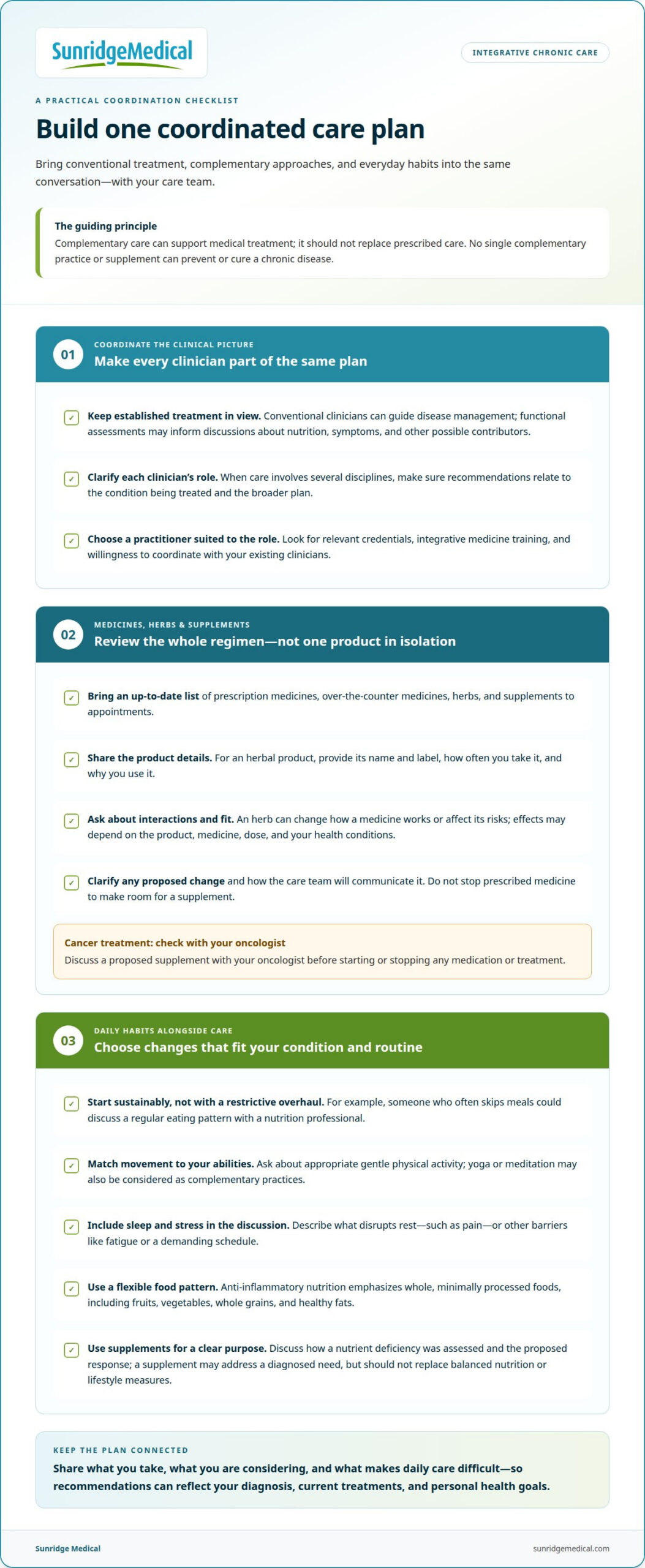
Bring an up-to-date list of medicines and supplements to appointments, then ask how each item fits the treatment plan. If a clinician recommends a change, clarify what should change and how the care team will communicate that decision. This record supports coordination across specialties and keeps health goals connected to established disease treatment.
Nutrition, physical activity, sleep, and stress management
Daily habits can support medical care when they reflect a person’s condition, needs, and routine. Nutrition, exercise, sleep, and stress strategies work best as coordinated parts of chronic disease care.
Nutrition and Lifestyle Changes
Nutrition and lifestyle changes are practical adjustments to eating, movement, rest, and stress routines. They matter because daily patterns can influence how manageable a chronic condition feels and how well a treatment plan fits into everyday life.
Start with sustainable choices instead of a restrictive overhaul. Someone who often skips meals, for example, might discuss a regular eating pattern with a nutrition professional. Another patient could ask about gentle physical activity suited to their abilities. Yoga and meditation may also be considered as complementary practices, with choices guided by symptoms and existing care.
Sleep and stress belong in the same conversation. A patient whose pain disrupts rest can describe the pattern at an appointment and discuss practical ways to support restorative sleep. Naming specific barriers, such as fatigue or a demanding schedule, helps make lifestyle planning more personal and useful.
Correcting Nutrient Deficiencies
Correcting a nutrient deficiency means identifying a diagnosed shortfall and addressing it with an appropriate plan. Supplements may help address a documented need, while unnecessary products can add complexity to an existing routine.
Discuss the deficiency, how it was assessed, and the proposed response with the clinician coordinating care. A supplement may be considered to address a diagnosed deficiency or support a dysfunctional body system, but it shouldn’t replace balanced nutrition or lifestyle measures. Share the product and its intended use with the care team so recommendations fit the broader treatment plan.
For example, a patient considering a supplement after learning of a deficiency can ask how it fits with current medicines and dietary needs. The aim is to respond to an identified issue, not to add products without a clear purpose.
Anti-Inflammatory Nutrition
Anti-inflammatory nutrition emphasizes whole, minimally processed foods, including fruits, vegetables, whole grains, and healthy fats. This offers a practical dietary framework that can be adapted to a patient’s preferences and medical needs.
Rather than treating one food as a cure, consider the overall eating pattern. A meal might combine vegetables, whole grains, and a source of healthy fat. Patients can discuss substitutions that suit their routines, symptoms, and existing dietary guidance. Personalizing the plan helps keep it realistic and compatible with medical care.
Nutrition Counseling
Nutrition counseling connects food choices with a patient’s health goals and medical context. Tailored guidance can coordinate diet, exercise, and treatment, rather than leaving patients to reconcile conflicting advice on their own.
At an appointment, describe typical meals, appetite changes, energy levels, and barriers to preparation. A counselor can use those examples to discuss feasible adjustments and coordinate recommendations with the medical plan. For patients managing autoimmune conditions, this kind of individualized discussion can complement Autoimmune Disease Management.
Consulting a doctor about treatments and supplements
A focused conversation can connect complementary therapies with your diagnosis, current care, and wellness goals. Bring specific questions about acupuncture, massage, herbal products, and gut health supplements to the clinician coordinating your chronic condition care.
Prepare an up-to-date list of prescription medicines, nonprescription products, herbs, and supplements. Include each product’s name, ingredients, purpose, and how you use it. Add any treatment or lifestyle changes you’re considering, such as acupuncture for chronic pain or an herbal product for fatigue. These details give your doctor something concrete to review alongside your diagnosis and treatment plan.
Ask what evidence supports the proposed therapy for your particular goal, and how its effects will be assessed. Acupuncture performed by a licensed practitioner has been shown to reduce chronic pain by up to 50%. That figure concerns chronic pain, not every condition or symptom. Discuss the intended outcome, such as pain relief, and how you’ll describe changes at follow-up.
Discuss massage in specific terms, too. Explain whether you’re considering it for tension, comfort, or another reason, and share relevant symptoms and treatments. Ask how it fits with your medical care and what changes to report. A clear goal helps distinguish massage’s purpose from the goals of medicines or other therapies.
For gut health supplements, start with the concern you want to address, such as a digestive symptom or diagnosed deficiency. Show your doctor the exact label, including ingredients and serving directions. Ask how the product relates to your diagnosis, medicines, and nutrition plan. Don’t treat a broad “gut health” claim as a personalized recommendation. The ingredients and intended use matter.
During cancer care, speak with your oncologist before starting or stopping any medication or treatment. Include complementary approaches, such as herbs and supplements, in that conversation. Don’t change prescribed treatment on your own. For other chronic conditions, discuss proposed therapies with the clinician coordinating your care so they can be considered alongside your existing treatment plan.
Before ending the appointment, clarify the next step: whether to begin, defer, or avoid the proposed therapy, and what changes to track. For example, record pain, fatigue, digestive symptoms, or daily function in a simple journal. Bring your observations to a follow-up discussion. This gives you a practical basis for reviewing whether the approach supports your stated wellness goal.
Sleep, stress management, and physical activity
Integrative medicine considers sleep, movement, and emotional well-being alongside physical symptoms. A whole-person plan connects these daily factors with the needs and limits of each chronic condition.
Mind-Body Stress Techniques
Mind-body techniques use practices such as mindfulness and stress reduction to address emotional strain associated with chronic illness. They can be useful because persistent stress may affect how patients experience symptoms and manage daily routines.
Start by identifying a specific stress response. A patient might notice tension before an appointment or difficulty settling at bedtime. Mindfulness can help bring attention to that feeling, while a stress-reduction practice offers a deliberate pause. These methods can support whole-person care, but they don’t replace medical treatment or address every source of distress.
Physical activity can be tailored to the person rather than treated as a fixed target. Appropriate, regular exercise can help reduce inflammatory markers, support cardiovascular health, and promote a healthy weight. A patient managing fatigue might discuss which kinds of movement suit current symptoms, then coordinate activity guidance with medical care. The aim is a sustainable routine that respects functional limits.
Psychotherapy and Stress Reduction
Psychotherapy offers structured support for thoughts, feelings, and stress responses associated with chronic conditions. Emotional support can be integrated with routine medical care rather than treated as separate from physical health.
Approaches used in chronic illness care include neurofeedback, somatic experiencing, and acceptance and commitment therapy. These approaches address psychological and neurological processes, including stress responses and emotional resilience. The right method depends on the patient’s concerns and care goals. A discussion with the treating team can clarify how psychological support fits the broader plan.
Sleep deserves individualized attention, too. A patient who wakes frequently because of discomfort can track when sleep disruption occurs and describe the pattern during an appointment. This helps the care team consider sleep alongside symptoms, medicines, and daily activity. Restorative sleep, stress management, and appropriate exercise are factors linked with improved outcomes across chronic conditions.
Coordination keeps these elements from becoming disconnected assignments. For example, a patient can discuss fatigue, sleep quality, and movement together, then align any activity guidance with current treatment. This creates a clearer picture of how lifestyle and emotional well-being intersect with physical care. The integrative goal is to support the whole person while keeping medical treatment central.
Combining conventional and complementary therapies
Integrative care combines conventional treatment with complementary therapies in a coordinated plan. Evaluate each therapy for a specific purpose, such as acupuncture for chronic pain or nutritional counseling alongside diabetes care. The level of support varies by therapy and goal, so the broad label “integrative” doesn’t mean every practice works.
The key distinction is whether a therapy complements established treatment or replaces it. Medicines and surgery are conventional treatments; acupuncture, stress management, and nutritional counseling can be complementary approaches. For example, a person managing diabetes may use nutritional counseling alongside prescribed medication. Each therapy needs a clear role, with the conventional treatment plan kept in view.
Evidence-based practice considers both effectiveness and safety when selecting a complementary therapy. The question isn’t simply whether a therapy has been studied, but whether the evidence relates to the condition, symptom, and intended outcome. For example, evidence about stress management may relate to emotional well-being, not curing disease. Discuss the goal with the care team and distinguish symptom support from treatment of the underlying condition.
Coordination matters because treatments can affect one another. A new supplement, a change in exercise, and a prescribed medicine may each affect the overall plan. Share these changes with the clinicians involved, including the person overseeing your chronic condition. A shared record of current treatments can help the team identify conflicts, clarify responsibilities, and decide what response or symptom to monitor.
Complementary and alternative practices aren’t substitutes for cancer treatments such as chemotherapy or radiation therapy. Anyone receiving cancer care should discuss proposed therapies with their oncologist before changing treatment. The same principle applies to other chronic conditions: complementary care may support aspects of well-being, but claims that a therapy cures disease need careful scrutiny. No single complementary practice or supplement can prevent or cure a chronic disease.
A useful plan states each therapy’s purpose, who oversees it, and how it fits medical treatment. A patient might define whether a stress-reduction practice aims to support coping, sleep, or daily function, then review that goal during care discussions. This keeps immune, nutritional, and symptom-support goals distinct rather than treating them as interchangeable evidence of disease control.
For care that considers conventional and complementary options together, explore integrative care options as a possible next step in discussing a coordinated plan.
Sunridge Medical: Chronic Lyme Disease Treatment
Sunridge Medical offers Chronic Lyme Disease Treatment for people seeking individualized care for a complex chronic condition. Its physician-led approach combines conventional therapies with research-informed alternative treatments, with plans tailored to each patient.
If symptoms persist or your current plan doesn’t address your broader health needs, an integrative discussion can help clarify which approaches may fit alongside existing care. Sunridge Medical also offers Autoimmune Disease Management and Environmental Illness Treatment for people facing these health concerns. Discuss complementary approaches with the clinicians involved in your care, and don’t replace prescribed treatment without medical guidance.
If you’re considering Chronic Lyme Disease Treatment, contact Sunridge Medical to discuss your care needs.
Shape a care plan around what matters to you
Start by identifying the health priorities you want your care to address. Consider what matters most in daily life, such as having more capacity for routine activities or feeling better supported while managing a condition. These priorities give conversations with your care team a personal focus and connect treatment decisions with the life you want to lead.
An integrative approach to chronic illness management should center on your health needs and coordinated medical care. Sunridge Medical offers Alternative Cancer Treatment Protocols, Chronic Lyme Disease Treatment, and Autoimmune Disease Management for people seeking care related to these conditions.
Bring your priorities to a conversation about possible next steps, and keep your established medical care involved in treatment decisions. Contact Sunridge Medical to discuss whether its care may align with your needs. A thoughtful, informed conversation can help you move forward with greater clarity.
Frequently Asked Questions
Does integrative medicine mean stopping conventional treatment?
No. Integrative medicine can add selected complementary care while conventional treatment continues. For cancer, discuss any proposed change to medication or treatment with your oncologist first. If you’re considering an herb during chemotherapy, share the exact product and its intended use before taking it. Focus the conversation on how it fits the existing plan and which clinician will coordinate decisions.
How can daily routines support care without becoming another burden?
Choose one manageable adjustment that addresses a real daily need. If preparing meals feels difficult, for example, discuss a simpler meal routine rather than attempting a complete dietary overhaul. If stress disrupts your evening routine, consider a brief mindfulness practice. Notice whether the change feels sustainable, then discuss it at a care appointment. A routine should fit your capacity, not become another demanding treatment task.
How can you make shared decisions about ongoing care?
Start by naming the outcome that matters most to you, such as maintaining independence or managing a particular symptom. Ask how each option relates to that priority, what role it serves, and which clinician will oversee it. You can bring a family member or caregiver to help remember the discussion. Before leaving, summarize the agreed next step in your own words.
How do you decide which supportive approaches are worth discussing?
Connect each approach to a specific concern and ask what evidence supports that use. For example, distinguish a therapy intended to ease nausea from one claimed to treat the underlying disease. Bring the product label or a description of the practice, then discuss how it fits your current care. Be cautious of claims that promise a cure or urge you to abandon established treatment.
How does primary care fit into an integrative approach?
Primary care can help maintain an overview of your health history, current medicines, and care from different specialists. Share new recommendations with your primary care clinician, especially if a specialist or complementary practitioner suggests a change. For example, this clinician can help keep your medication list current and direct questions to the relevant specialist. That shared context can reduce gaps between separate appointments.
Is integrative medicine right for everyone with a long-term condition?
No single care model suits every person or condition. Whether a complementary approach fits depends on its purpose, the person’s existing treatment, and how care can be coordinated. Someone with a complex medication plan may need careful review before adding supplements. Another person may prefer to focus on conventional care alone. Decisions should reflect personal priorities and medical needs, not pressure to try every option.
What is an integrative approach to chronic illness management?
An integrative approach to chronic illness management coordinates conventional medical care with selected complementary therapies and supportive daily practices. Its defining feature is coordination: each element has a purpose within the person’s broader care plan. For example, a patient may discuss a complementary therapy for symptom support while continuing treatment for the diagnosed condition. The roles should remain clear rather than being treated as interchangeable.
Which conventional and complementary therapies are used to manage chronic illness?
Conventional care may include medicines and surgery, depending on the condition and treatment plan. Complementary options can include acupuncture, nutritional counseling, stress management, and psychotherapy. A person may discuss nutritional guidance alongside diabetes medication or stress support alongside care for persistent symptoms. These options are not interchangeable, and a therapy’s suitability depends on its purpose and how it fits ongoing medical care.