


Brain fog is more than an occasional lapse in concentration. It can involve difficulty focusing, memory problems, and mental fatigue, and integrative treatment for brain fog considers the factors that may be contributing, from disrupted sleep and stress to nutrition, hydration, activity, or an underlying health condition.
If your thinking feels slower or less clear, it can be frustrating not to know why. Brain fog describes symptoms, rather than a diagnosis, and its causes can vary from person to person. A useful first step is to identify what you’re experiencing and consider the broader context of your health.
This article explains what brain fog can feel like, which conditions and everyday factors may contribute, and how integrative care can consider sleep, nutrition, hydration, movement, and stress. You’ll also learn why persistent or disruptive symptoms warrant closer attention, helping you approach next steps with greater clarity.
Key Takeaways
- Recognize how attention problems, memory lapses, and mental fatigue can show up differently from person to person.
- Look for patterns in sleep, stress, medications, diet, and health conditions that may contribute to unclear thinking.
- Understand why persistent symptoms that affect daily life deserve professional attention, rather than being dismissed as simple tiredness.
- Explore how sleep habits, nourishing food, hydration, and regular movement can form part of a broader care plan.
- Learn how integrative care can consider health history and daily routines together when shaping next steps.
Brain fog symptoms and causes
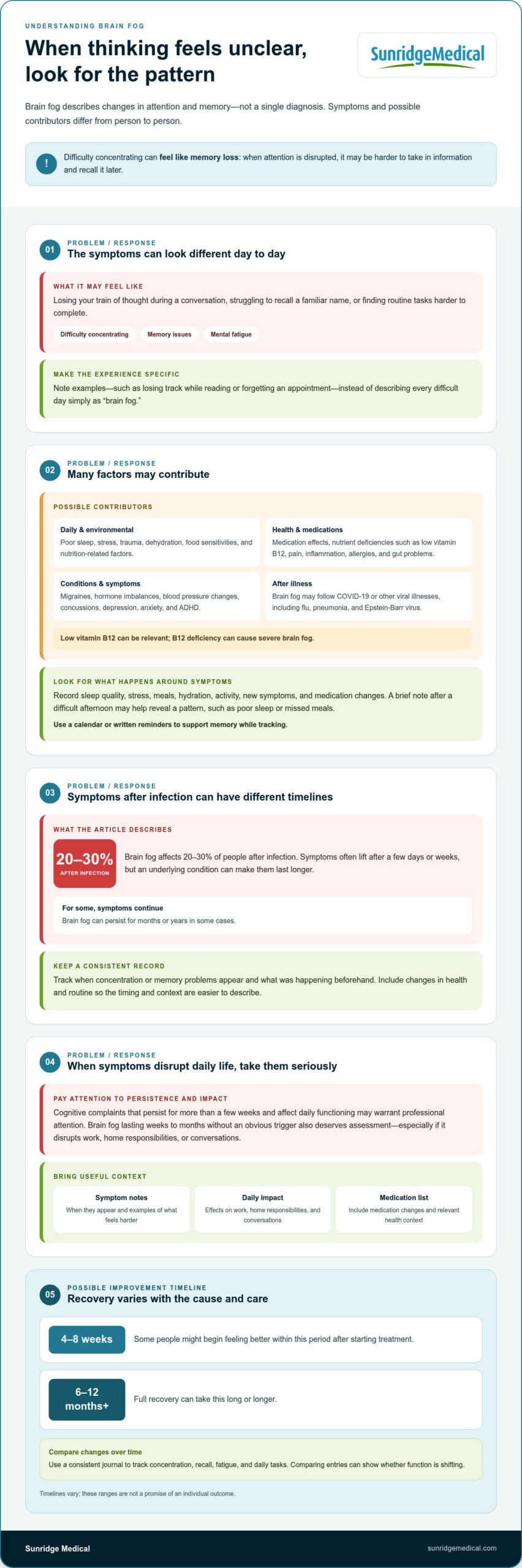
Brain fog describes changes in attention and memory, not a single diagnosis. Because symptoms can have different causes, noticing when they occur can help clarify what may need attention.
Common Brain Fog Symptoms
Brain fog can involve difficulty concentrating, memory issues, and mental fatigue. One person may lose their train of thought during a conversation, while another struggles to recall a familiar name or complete routine tasks.
These symptoms matter because attention difficulties can feel like memory loss. Poor sleep, anxiety, depression, trauma, and inflammation may interfere with attention, making it harder to take in and later recall information. Note specific examples, such as losing track while reading or forgetting an appointment, rather than describing every difficult day simply as “brain fog.”
Possible Underlying Causes
Possible contributors include health conditions, medication effects, and nutrient deficiencies. Fatigue, inflammation, pain, allergies, gut problems, migraines, hormone imbalances, blood pressure changes, concussions, depression, anxiety, ADHD, dehydration, poor sleep, trauma, and food sensitivities may all play a role.
Medication effects and deficiencies, including low vitamin B12, can also be relevant; B12 deficiency can cause severe brain fog. These possibilities matter because addressing a contributing factor may require a different approach than managing symptoms alone.
Brain fog can also follow infections. It may persist after COVID-19 or other viral illnesses, including flu, pneumonia, and Epstein-Barr virus; brain fog affects 20-30% of people after infection. Symptoms often lift after a few days or weeks, but an underlying condition can make them last longer. In some cases, brain fog continues for months or years.
To spot patterns, record when concentration or memory problems appear and what was happening beforehand. Note sleep quality, stress, meals, hydration, activity, new symptoms, and medication changes. A brief entry after a difficult afternoon, for example, may reveal a pattern involving poor sleep or missed meals. Use a calendar or written reminders to support memory while tracking these patterns.
Cognitive complaints that persist for more than a few weeks and affect daily functioning may warrant professional attention. Brain fog lasting weeks to months without an obvious trigger also deserves assessment, especially when it disrupts work, home responsibilities, or conversations. Bring your symptom notes and medication list to discuss the pattern and possible contributing conditions.
Improvement timelines vary with the cause and the care being used. Some people might begin feeling better within 4-8 weeks after starting treatment, while full recovery can take 6-12 months or longer. Track changes in concentration, recall, fatigue, and daily tasks in a consistent journal; comparing entries over time can show whether function is shifting.
Illnesses and health conditions associated with brain fog
Brain fog can accompany conditions that affect energy, mood, hormones, inflammation, or digestion. Examples include menopause-related hormone changes, depression, anxiety, ADHD, migraine, autoimmune illness, and gut problems. The connection varies from person to person. Tracking when cognitive symptoms develop alongside changes in health or daily routines can help clarify possible contributors.
During menopause, shifting hormone levels may coincide with concentration or memory complaints. Depression and anxiety can also affect mental clarity, while ADHD may involve ongoing challenges with attention and organization. These conditions can overlap, and one diagnosis does not automatically explain every symptom. A clinician can consider symptom timing, medical history, and effects on daily activities.
When brain fog occurs alongside menopause, depression, anxiety, or ADHD, care focuses on the condition and factors contributing to the cognitive symptoms. It may include condition-specific medical support as well as practical strategies for routines and daily functioning.
The gut-brain axis describes communication between the digestive system and the brain. The human gut has a nervous system containing over 100 million nerve cells, and 70% of serotonin is made in the gut. These facts help explain why digestive health and cognitive experiences may be connected, although they don’t establish that a gut problem is causing an individual’s brain fog.
Digestive symptoms alongside mental fatigue can offer useful context for an evaluation. A case study described a 35-year-old teacher whose brain fog and digestive issues improved after treatment addressed gut dysbiosis. This example illustrates why clinicians may consider digestive symptoms as part of a broader health history, rather than viewing memory complaints in isolation. It does not establish a universal cause or outcome.
Cognitive rehabilitation uses structured approaches to support thinking and memory. It may focus on practical skills for managing cognitive difficulties, such as organizing information or maintaining attention during tasks. Ask the clinician evaluating your symptoms about cognitive rehabilitation services and referral options in your area. Bring examples of activities that have become harder, such as following a meeting or managing a schedule.
Consider speaking with a healthcare provider when brain fog persists for several weeks, particularly if it affects quality of life. Describe when symptoms began, how they affect work or home responsibilities, and whether digestive, mood, or hormone-related changes occurred around the same time. This specific history can help guide an evaluation of possible contributing factors and appropriate next steps.
Sleep, nutrition, hydration, and physical activity
Daily habits can affect energy, attention, and brain function. Sleep, nutrient balance, fluid intake, and movement are practical areas to consider.
Nutrient Deficiencies and Brain Function
Nutrient deficiencies can impair processes that support brain function and may contribute to fatigue or unclear thinking. Vitamin B12, iron, magnesium, and vitamin D deficiencies are possible contributors. Testing can help distinguish a deficiency from other causes. Suggested nutrient tests include B12, folate, vitamin D, and magnesium, giving care a more specific starting point than adding supplements at random.
Sleep is another foundation. Aim for 7-9 hours of quality sleep per night to support hormones and daytime function. Taking more than 30 minutes to fall asleep can signal a sleep problem. A steady bedtime and a brief record of sleep and daytime concentration can help reveal whether poor rest and mental fatigue occur together.
Nutritional Support and Supplements
Nutritional support uses food choices and, when appropriate, supplements to address individual needs. Vitamin B12 is critical for brain function, and a deficiency can contribute to severe brain fog. Omega-3 fatty acids, B-complex vitamins, magnesium, and vitamin D may be considered based on test results. This targeted approach helps connect supplement choices to a measurable nutritional finding.
Meals also matter. Choose whole foods, colorful vegetables, healthy fats, and sources of omega-3 fatty acids to support cognitive function. Eating protein with every meal and choosing whole foods over processed options can help steady blood sugar. Limit sugary drinks and snacks. These choices support a more consistent energy balance across the day, rather than relying on short-lived boosts.
IV nutrient therapy delivers vitamins and minerals directly into the bloodstream when absorption is compromised or faster replenishment is needed. It differs from oral supplementation. “Detoxification therapy” can refer to various interventions, so the term alone does not explain what a treatment involves or why it might be used. Any discussion of therapy should be guided by a specific health finding.
Hydration and movement complete the picture. After checking with a primary practitioner, the article’s fluid targets are 2.7 liters a day for women and 3.7 liters a day for men. Regular physical activity supports cognitive function by increasing blood flow to the brain. A walk during the day is one practical way to add movement and notice whether activity affects alertness.
Exercise, sleep, stress management, and hydration
A comprehensive lifestyle approach considers how movement, rest, stress, and hydration interact. Small, consistent routines can help you notice which daily patterns support clearer thinking.
Exercise and Movement Strategies
Regular movement supports cognitive function by increasing blood flow to the brain. Gentle options such as walking or yoga for 20-30 minutes daily can make activity easier to maintain. Exercise also supports neuroplasticity, thinking, and cognitive health, while regular activity may help reduce inflammation. Choose a routine that fits your current energy, then notice how movement affects alertness and concentration afterward.
Consistency matters more than treating exercise as a one-time reset. A daily walk, for example, offers a reliable movement cue without requiring a complicated plan. If fatigue affects your routine, shorter bouts of activity may be easier to fit into the day. Record the activity and your energy afterward to see whether a particular time or type of movement suits you.
Sleep Strategies
Sleep strategies are habits that make rest more consistent and restorative. Avoid screens for 1-2 hours before bed, and keep bedtime routines steady where possible. Taking more than 30 minutes to fall asleep can signal a sleep problem. Tracking bedtime, wake time, and next-day concentration can reveal whether sleep patterns coincide with cognitive difficulty.
Stress and sleep can reinforce one another: stress may disrupt rest, while poor sleep can make stress harder to manage. A 10-minute daily meditation may reduce stress hormones and improve brain function. Mindfulness can also help balance the nervous system. Try a brief breathing or meditation practice at a consistent point, such as after work, and note changes in tension and bedtime readiness.
Hydration is part of the daily picture because dehydration may contribute to brain fog. Instead of waiting until the end of the day, build fluid breaks into existing habits, such as drinking with meals or after a walk. The previous section covered fluid targets; here, focus on noticing whether low intake coincides with fatigue or reduced concentration.
These habits work best as a connected pattern, not as isolated fixes. An evening walk followed by a screen-free wind-down, for example, can support movement and sleep together. Stress management may also make routines easier to maintain on demanding days. Track sleep, activity, stress, and hydration alongside mental clarity to see which combinations align with better daily functioning.
Integrative treatment approach
Integrative medicine considers brain fog in the context of health conditions and daily patterns that may contribute. Rather than focusing only on fatigue or memory lapses, an integrative treatment plan connects symptoms with medical history, routines, environment, and wellness goals.
An initial functional medicine visit may include discussion of symptoms, environment, routines, medical history, and personal goals. Bring examples of changes in daily functioning, such as struggling to follow a conversation or complete a familiar task. A symptom journal can add useful context by recording when problems arise and how sleep, stress, or meals have been lately.
Integrative medicine may combine conventional medication with natural therapies to address brain fog in a broader context. The approach depends on factors identified through a person’s history and evaluation. A plan may consider sleep habits, nutrition, hydration, movement, or stress together, while also accounting for an underlying health condition. This wider view connects care with the circumstances surrounding reduced mental clarity.
Practical supports can ease memory demands while a care plan is underway. Write down appointments and important information, set reminders for routine tasks, and break complex activities into smaller steps. These strategies can help organize the day without relying on perfect recall. Time in nature may also offer a simple routine to explore alongside other care.
Cognitive rehabilitation uses structured practice to support thinking and memory. Activities may include puzzles, number exercises, card games, recalling meaningful events, trying new activities, and socializing. Choose activities that match current abilities, then notice which feel manageable and which remain difficult. A psychotherapist trained in cognitive behavioral therapy may also teach psychological techniques for managing brain fog symptoms.
Mindfulness-based cognitive therapy is described as an 8-week course for brain fog. Mindfulness practice can help balance the nervous system, while meditation offers a specific way to build a regular stress-management routine. These approaches can sit alongside medical care and daily supports, rather than replacing assessment of persistent symptoms or relevant health conditions.
Track function, not only a general feeling of mental clarity. For example, note whether reading a page, keeping an appointment, or following a discussion becomes easier. One article reports that integrative interventions reduce brain fog by 25-40% long term, but a group-level figure cannot predict an individual’s progress. The useful takeaway is to set observable goals and review them as care continues.
Sunridge Medical: Alternative Cancer Treatment Protocols
Sunridge Medical provides individualized care for complex conditions that may be relevant when brain fog occurs alongside a broader health concern. Its services include Chronic Lyme Disease Treatment, Autoimmune Disease Management, Environmental Illness Treatment, and Neurologic Condition Treatment. Physician-led care integrates conventional medicine with research-informed alternative options, based on each patient’s health needs.
If cognitive symptoms accompany a diagnosed or suspected condition such as Lyme disease, an autoimmune disorder, or a neurologic illness, a broader medical perspective may help address the underlying context. Sunridge Medical focuses on complex chronic conditions rather than treating brain fog as a standalone diagnosis. Bring a clear account of your symptoms, relevant medical history, and current concerns to discuss possible next steps.
To learn more about care for complex chronic conditions, contact Sunridge Medical or visit its website.
Choose a Clear Next Step for Your Care
Brain fog can make it harder to decide what to do next. A useful step is to describe what has changed, how it affects daily life, and which broader health concerns may be part of the picture. This gives an evaluation a meaningful starting point and keeps your priorities at the center of the conversation.
An integrative treatment for brain fog should consider the broader health context, rather than assume everyone has the same cause or needs the same plan. If cognitive concerns occur alongside a complex condition, Sunridge Medical offers Alternative Cancer Treatment Protocols, Chronic Lyme Disease Treatment, and Autoimmune Disease Management. These services address specific health concerns, rather than brain fog as a standalone diagnosis.
When you’re ready to discuss care related to a complex health condition, contact Sunridge Medical. A clear account of your concerns can help begin a more informed conversation about your next step.
Frequently Asked Questions
What Is Brain Fog?
Brain fog is a common way to describe changes in clear thinking, rather than a medical diagnosis. Someone might reread the same email several times because the details aren’t sticking, or lose their train of thought during a familiar task. Describe the specific difficulty and its effect on daily life; concrete examples can make a medical discussion more useful than the phrase “brain fog” alone.
Can Conventional Brain Fog Treatment Fall Short?
Care can feel incomplete when it addresses one symptom but not factors that may contribute to it. Focusing only on fatigue, for instance, may overlook a medication effect, a sleep problem, or a diagnosed health condition. That doesn’t mean conventional medicine is inherently inadequate. A comprehensive discussion can include current treatments, symptom patterns, health history, and practical supports, so care is considered in the context of the whole person.
Can Functional Medicine Help with Brain Fog and Fatigue?
Functional medicine can offer a structured way to examine brain fog and fatigue alongside medical history, routines, environment, and wellness goals. An integrative treatment for brain fog may combine conventional medication with natural therapies, depending on the factors identified. The value lies in the breadth of the assessment, not a promise of a particular result. Bring a list of symptoms, treatments, and daily tasks that have become harder.
What Are Common Causes of Brain Fog, and When Should It Be Medically Evaluated?
Possible contributors include poor sleep, stress, dehydration, medication effects, nutrient deficiencies, infections, and underlying health conditions. Arrange a medical evaluation when cognitive complaints persist for more than a few weeks or interfere with daily functioning. Before the appointment, note when symptoms began, whether they fluctuate, and how they affect tasks such as keeping appointments or completing work. This timeline can help organize a discussion of possible causes.
What Evidence-Based Treatments Help Brain Fog, Including Treatment of Underlying Conditions?
Care focuses on the cause identified, rather than applying the same intervention to every case. Examples include addressing an established nutrient deficiency, reviewing a possible medication effect, or managing a condition linked with cognitive symptoms. Cognitive rehabilitation may help support thinking and memory skills. A practical goal, such as following a meeting or completing a familiar task, can help identify which abilities need support and whether they change over time.
Can Sleep Improvements, Exercise, Stress Reduction, or Mindfulness Improve Brain Fog?
These approaches can support cognitive function as part of a broader care plan. Someone might pair a consistent wind-down routine with a short walk and a brief mindfulness practice, then record how concentration feels during a demanding task. This makes the routine easier to evaluate than relying on a general impression. If fatigue or another health concern limits activity, adapt the routine to current capacity and discuss persistent symptoms during a medical evaluation.
What Foods, Hydration Strategies, or Supplements May Help Brain Fog, and What Is the Evidence?
Whole foods, colorful vegetables, healthy fats, and omega-3 sources can support cognitive function. Hydration needs vary; the article’s suggested daily fluid targets are 2.7 liters for women and 3.7 liters for men, after checking with a primary practitioner. Supplements such as B-complex vitamins, magnesium, vitamin D, and omega-3s may be considered based on test results. A specific deficiency provides a clearer reason for supplementation than symptoms alone.
What Are the Risks and Drug Interactions of Supplements Marketed for Brain Fog?
Supplements can have side effects and may interact with prescribed or over-the-counter medicines. A product marketed for concentration isn’t automatically suitable for everyone, especially for someone taking several medications or living with an ongoing health condition. Before starting a supplement, make a complete list of medicines and supplements, including doses, and review it with a healthcare professional. Don’t replace prescribed treatment with a supplement without discussing the change with the prescribing clinician.