


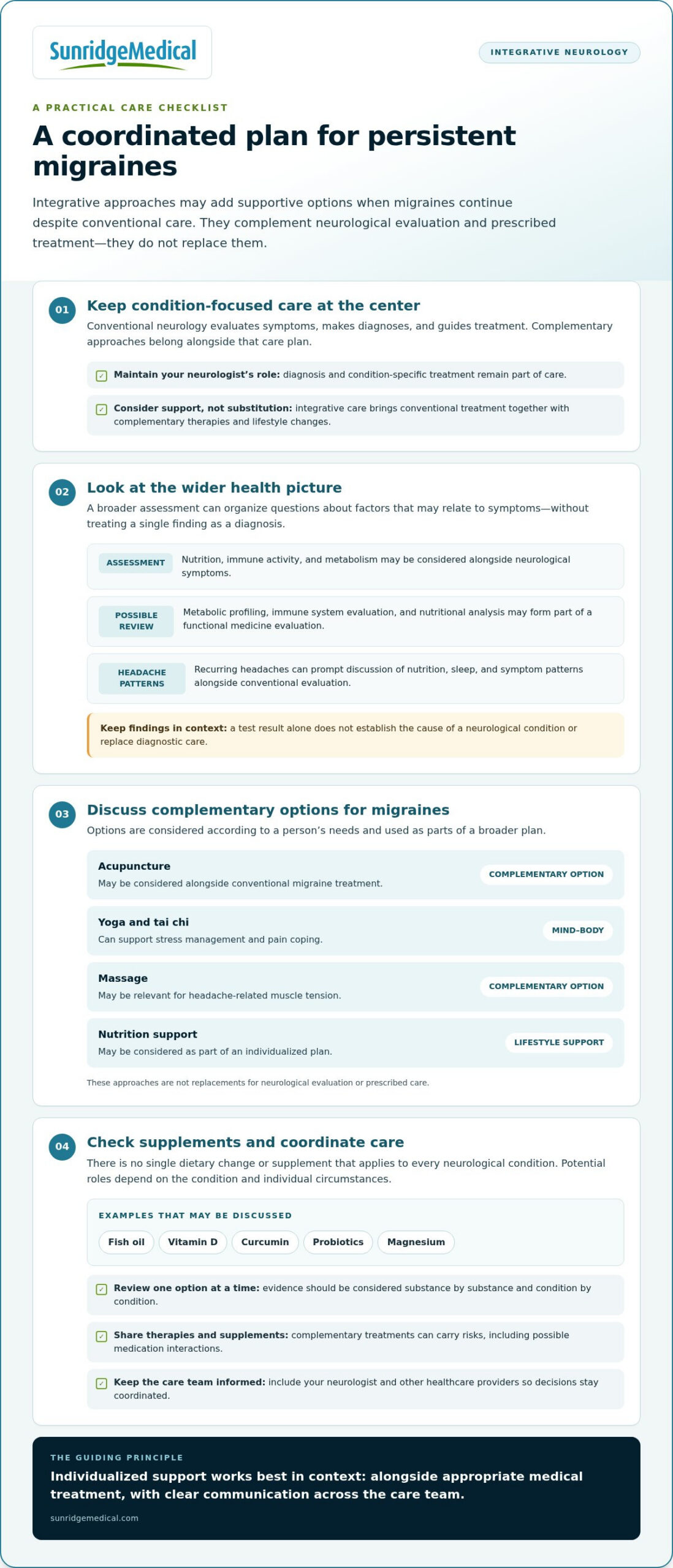
Persistent migraines deserve more than a medication-only conversation. Integrative treatment for neurological disorders may complement conventional care by considering symptoms alongside nutrition, health patterns, and other aspects of daily life. It doesn’t replace prescribed treatment or the neurologist’s role.
If migraines continue despite conventional care, it’s understandable to wonder whether another perspective could help. Functional medicine takes a broader view of health, while integrative care can bring conventional treatment and complementary approaches together around your needs.
This article explains how functional medicine differs from conventional neurological care, where integrative approaches may fit for migraines and other neurological conditions, and why coordinated, patient-centered care matters. You’ll also learn how nutrition, rehabilitation, and mind-body strategies may form part of an individualized plan and complement, rather than replace, your existing medical care.
Key Takeaways
- Functional medicine can broaden the assessment of neurological symptoms while complementing, not replacing, conventional neurological care.
- For persistent migraines, integrative approaches may add supportive options to a care plan when used alongside appropriate medical treatment.
- Different neurological conditions call for different considerations; an approach that may support one person may not suit another condition.
- Nutrition, rehabilitation, and mind-body strategies can be considered as parts of an individualized plan, with attention to how they fit together.
- Sharing complementary therapies with your healthcare team can support safer, more coordinated care.
What is functional medicine in neurology and how does it differ from traditional neurological care?
Functional medicine considers broader health patterns alongside neurological symptoms, while conventional neurology focuses on diagnosing and managing nervous system conditions. Integrative care can bring these perspectives together without replacing a neurologist or prescribed treatment.
Functional and Conventional Neurology
Conventional neurology evaluates symptoms, makes diagnoses, and guides condition-specific treatment. Functional medicine may also consider nutrition, immune activity, and metabolism, and how these factors relate to a person’s health. The approaches can work together: a neurologist manages the diagnosed condition, while a broader assessment may help identify relevant lifestyle or health factors.
Integrative medicine is broader than functional medicine. It combines conventional healthcare with complementary therapies and lifestyle changes, respecting modern medicine rather than rejecting it. For example, a care team might continue prescribed neurological treatment while considering nutrition or a mind-body practice. This distinction matters when exploring integrative treatment for neurological disorders: complementary approaches can support a coordinated plan, not replace specialist care.
Functional Medicine and Root-Cause Assessment
A root-cause assessment looks beyond a symptom to consider possible contributing factors. A functional medicine evaluation may include metabolic profiling, immune system evaluation, and nutritional analysis. These assessments help organize questions about overall health rather than treating every symptom as an isolated problem.
For example, recurring headaches may prompt discussion of nutrition, sleep, and symptom patterns alongside conventional evaluation. Functional testing may also be used to investigate underlying imbalances before symptoms become more severe. Findings need to be interpreted in context: a test result alone doesn’t establish the cause of a neurological condition or replace diagnostic care.
Functional Approaches to Brain Health
Functional approaches to brain health consider cognitive symptoms within a broader picture of physical and emotional well-being. Nutrition, immune function, and metabolic health may form part of that assessment. The goal is to connect relevant findings with a person’s symptoms and existing care, rather than apply the same protocol to everyone.
Care coordination matters, too. Integrative practitioners can work with a patient’s healthcare team, keeping the primary care provider and neurologist involved. A practical step is to share new symptoms, test results, and complementary therapies with those clinicians. This helps the team understand the full picture and make decisions together.
Dietary Changes, Supplements, and Evidence
There isn’t one dietary change or supplement that applies to every neurological condition. Nutritional analysis can help identify whether food patterns warrant attention. Integrative care may also discuss supplements such as fish oil, vitamin D, curcumin, probiotics, and magnesium. Their potential role depends on the condition and individual circumstances.
Evidence should be considered substance by substance and condition by condition. Mentioning a supplement as a possible approach doesn’t mean it treats a neurological disorder or suits every patient. Before adding one, discuss it with the healthcare team, including the neurologist managing prescribed treatment. This helps keep complementary choices coordinated with the overall plan.
What are the Top Neurological Disorders That May Benefit From Integrative Approaches?
Integrative care may be considered for chronic migraines and other ongoing neurological concerns, particularly when conventional approaches haven’t provided enough relief. It combines condition-focused medical care with complementary options, such as acupuncture, nutrition support, or mind-body practices, based on a person’s needs.
For chronic migraines, acupuncture may be considered alongside conventional treatment. Yoga and tai chi can support stress management and pain coping, while massage may be relevant for headache-related muscle tension. These therapies are parts of a broader plan, not replacements for neurological evaluation or prescribed care. A comprehensive plan can address physical symptoms and mental well-being where relevant.
Complementary treatments can carry risks, including possible interactions with medication. The specific concern depends on the therapy and the person’s prescriptions. Tell each healthcare provider about supplements and other therapies so the team can consider safety and coordinate care.
Collaborative care can bring neurologists, primary care clinicians, and complementary practitioners into a shared plan. Each contributes a different perspective: a neurologist addresses diagnosis and condition-specific treatment, while other practitioners may support nutrition, rehabilitation, or mind-body therapy. Clear communication helps keep every component of care in context. Patients also play an active role by describing symptom changes and the treatments they use.
International access may involve multidisciplinary settings where specialists collaborate. Some neurological programs coordinate diagnostics, therapy sessions, rehabilitation, and follow-up care in one program. For someone travelling for care, the treatment plan is only part of the picture: continuity after returning home matters, too. Ongoing monitoring, virtual consultations, and coordinated follow-up plans can help maintain communication across locations.
To find a qualified integrative neurology clinic near you, look for accreditation, relevant clinical expertise, and transparent treatment protocols. Ask how the team coordinates with a patient’s existing neurologist and what follow-up arrangements support ongoing care. Virtual consultations may help maintain contact when in-person visits aren’t practical, but they work best as part of a clearly coordinated plan.
When conventional care alone leaves unanswered needs, an integrative approach can provide additional avenues to discuss with a healthcare team. Explore neurologic condition treatment as one possible care pathway for ongoing neurological concerns.
Parkinson’s disease, epilepsy, dementia, and multiple sclerosis
Parkinson’s disease, epilepsy, dementia, and multiple sclerosis each involve different neurological challenges, so complementary approaches shouldn’t be treated as interchangeable. An integrative plan starts with the person’s diagnosis and existing care, then considers whether supportive therapies fit their needs. For someone with Parkinson’s, that might mean discussing a mind-body practice alongside neurological care, rather than expecting one approach to address every symptom.
For Parkinson’s disease, one randomized, double-blind, placebo-controlled trial described probiotics given to 30 adults, with a placebo given to 30 others. The study design alone doesn’t tell readers whether probiotics provide relief; the results and their relevance to an individual matter. A clinic or practitioner should distinguish a trial’s methods from evidence that an intervention improves symptoms. Patients can bring supplement use and study questions to their neurological care team.
Reiki is another complementary approach discussed in relation to Parkinson’s symptoms. It may be considered as supportive care, but shouldn’t be presented as a treatment that reverses the disease or replaces a neurologist’s care. A practical discussion can focus on the person’s goals, such as comfort or stress support, and whether the practice fits their current plan. This keeps expectations grounded.
Epilepsy care should center on the individual diagnosis and established neurological treatment. Complementary practices may be discussed to support broader well-being, but shouldn’t displace prescribed care. Patients can make these discussions more useful by noting the therapy, supplement, or practice they’re considering and sharing it with their treating clinician. This gives the care team a clearer basis for coordination and consideration of possible risks.
Dementia also calls for attention to more than one contributing factor. Dr. Dale Bredesen uses a “roof with 36 holes” analogy to illustrate how Alzheimer’s may involve multiple contributors. It’s a way to frame a broad assessment, not a count of causes in every person or a diagnosis. For a person experiencing cognitive changes, evaluation and an individualized care plan remain central.
Multiple sclerosis has its own course and care considerations, so a supportive practice should be considered in relation to the person’s symptoms and treatment plan. Across these conditions, the useful question isn’t whether one therapy works for every disease, but whether a particular approach supports an individual’s goals without disrupting neurological care. Shared discussions help ground decisions in diagnosis, priorities, and available evidence.
Chronic inflammation and neurological symptoms
Chronic inflammation may come up in discussions about neurological symptoms, but it doesn’t identify their cause by itself. Headaches, changes in concentration, and other concerns need to be assessed in context. A symptom pattern can guide questions, but it can’t establish inflammation as the root cause or replace a neurological diagnosis. This keeps brain health discussions grounded in evaluation rather than assumptions.
A functional assessment may consider immune activity, metabolism, and nutrition together. For example, a clinician may review symptom history alongside nutritional analysis and immune system evaluation. These are parts of a broader assessment, not proof that inflammation explains a person’s symptoms. Advanced diagnostics and functional testing may help identify possible imbalances, but findings still need interpretation alongside conventional neurological care.
Useful techniques start with a clear clinical picture. A patient might track when headaches occur, how concentration changes, and whether symptoms vary with sleep or meals. That record gives the healthcare team concrete examples to discuss. It can help distinguish a recurring pattern from a single episode, while a neurologist evaluates symptoms and determines what further assessment is appropriate.
Nutrition is one part of an individualized plan, not a universal inflammation protocol. Nutritional analysis can help identify relevant dietary concerns, while supplements such as fish oil, vitamin D, or curcumin need to be considered in light of a person’s health and medications. Their use in integrative care doesn’t establish that they treat inflammation or a neurological condition. General dose recommendations aren’t a substitute for individualized care.
Complementary approaches can support function and well-being without claiming to resolve inflammation. Rehabilitation may address movement or daily activities, while mind-body techniques can support coping with stress and pain. For example, yoga or tai chi may be considered for stress and pain support. These approaches should fit around neurological treatment, not displace assessment of persistent or changing symptoms.
A practical next step is to bring a concise symptom record and a complete list of medicines and supplements to a care appointment. Include what changed, when it began, and how it affects daily activities. The team can consider whether nutritional, immune, or metabolic evaluation is relevant, and whether a complementary approach fits. This patient-centered process keeps possible inflammation in perspective and focuses attention on individual symptoms and care needs.
Patient-centered, multidisciplinary neurological care
Patient-centered neurological care begins with the person’s priorities, not just a diagnosis. Someone with migraines, for example, may want fewer disruptions to work, while someone with a movement disorder may prioritize safer daily mobility. Integrative medicine brings these goals into discussions about conventional treatment, nutrition, rehabilitation, and mind-body approaches. Each component should address a practical need, rather than make “holistic” care a collection of unrelated therapies.
A multidisciplinary team may include a neurologist, primary care provider, rehabilitation professional, and complementary-care practitioner. Each has a different role: the neurologist manages neurological care, while rehabilitation can focus on function and movement. The patient contributes essential information about symptoms, medicines, lifestyle, and wellness priorities. Sharing these details helps the team coordinate care instead of letting each intervention operate in isolation.
Personalized care also means matching support to the condition and the patient’s daily life. A plan might include nutritional optimization, rehabilitation, or a mind-body practice, with each option considered alongside conventional care. Regenerative therapies may also be integrated to support the body’s natural healing processes. These approaches don’t replace prescribed neurological treatment. Their place depends on the person’s diagnosis, goals, and existing treatment plan.
Coordination requires clear communication. Keep an updated list of medicines, supplements, and complementary therapies, and share it with every member of the care team. Describe which symptoms affect daily activities and what changes you hope to address. Providers need to know about complementary therapies to tailor care with safety in mind. A practitioner’s experience with the specific neurological condition is another important consideration.
Follow-up turns an individualized plan into an ongoing conversation. The patient and team can review whether each component remains relevant as symptoms, routines, or priorities change. For example, rehabilitation may shift as mobility needs change, while nutrition support can be reconsidered as part of the broader plan. Coordinated follow-up also helps patients understand each intervention’s purpose and how to communicate changes across providers.
The central takeaway is practical: a strong integrative plan keeps the patient, neurological diagnosis, and care team connected. For ongoing neurological concerns, explore neurologic condition treatment as a next step toward coordinated care.
Sunridge Medical: Alternative Cancer Treatment Protocols
Sunridge Medical offers physician-led Neurologic Condition Treatment for people with neurological concerns, as well as care for cancer and complex chronic conditions. Its outpatient medical treatment facility provides hands-on care, including physician-directed IV and nutrient therapies, alongside research-informed options. Treatment recommendations depend on an individual’s diagnosis, medical history, laboratory findings, medications, organ function, symptoms, tolerance, and personal goals. If you’re exploring integrative care, bring your diagnosis, current treatment plan, and questions about complementary approaches into the conversation. This can help clarify how an individualized plan may fit alongside your existing medical care. Contact Sunridge Medical to discuss your neurological condition and potential next steps.
Take the Next Step Toward More Coordinated Care
Your next conversation about integrative treatment for neurological disorders can begin with one clear priority: what would you most like your care to help you do? That focus can make discussions more personal and practical, whether you’re seeking added support for migraines or another neurological concern. Bring that goal to your healthcare team and use it to explore which options fit alongside your current care.
Integrative care is most useful as a thoughtful partnership, with your priorities guiding the discussion and qualified providers coordinating around your health needs. You deserve to understand the purpose of each part of a care plan and how it relates to your broader treatment. A measured next step can help you move forward with greater clarity while keeping the medical care already in place in view.
If you’re ready to discuss your care needs, contact Sunridge Medical. A considered conversation can be a meaningful beginning.
Frequently Asked Questions
Can functional medicine help with chronic migraines that don’t respond to conventional treatments?
Functional medicine can complement migraine care by considering health patterns alongside ongoing neurological treatment. A practical starting point is to record headache timing, symptoms, meals, sleep, and medicines, then share that record with your care team. This can structure a discussion about whether nutrition analysis or another supportive approach fits your care. Don’t stop or change prescribed migraine treatment without discussing it with the clinician managing it.
How does functional medicine address the gut-brain connection in neurological disorders?
Functional medicine may consider digestive health, nutrition, and immune function when assessing neurological concerns. The gut-brain connection describes the relationship between digestive processes and nervous-system health, but it doesn’t prove that a digestive issue caused a neurological condition. For example, a clinician might discuss digestive symptoms alongside neurological symptoms and nutritional patterns. This information can inform a broader assessment, while diagnosis and neurological treatment remain grounded in clinical evaluation.
What is integrative medicine?
Integrative medicine combines conventional healthcare with complementary therapies and lifestyle approaches, with care organized around the person’s needs. It isn’t simply alternative care in place of medical treatment. For example, someone receiving neurological care could discuss nutrition or a mind-body practice as an addition to their existing plan. The important distinction is coordination: complementary approaches fit alongside appropriate medical care, and the patient’s healthcare team should know what therapies are being used.
What does integrative treatment for neurological disorders include?
Integrative care can include conventional neurological treatment alongside supportive approaches selected for a person’s needs. Examples include nutritional assessment, acupuncture, massage, rehabilitation, and mind-body practices. These aren’t a fixed package: the condition, symptoms, current treatment, and personal priorities help shape what’s considered. Focus discussions on the purpose of each approach and how it fits with existing care, rather than treating a list of therapies as a universal protocol.
Which neurological disorders may benefit from integrative care?
Integrative approaches may be discussed for chronic migraines and conditions such as Parkinson’s disease, epilepsy, dementia, and multiple sclerosis. Their potential role differs by condition: a supportive practice for comfort or stress isn’t the same as treatment for the underlying disease. Someone with persistent headaches, for instance, can discuss complementary support while continuing neurological assessment. The diagnosis and current care plan are essential context for deciding which approaches are relevant.
What evidence supports integrative treatments for neurological disorders?
Evidence depends on the specific therapy and condition, so broad claims about all integrative care can mislead. Acupuncture is described as a possible approach for migraine relief, while research on other therapies must be considered separately. A Parkinson’s probiotic trial included 30 adults in each group, but the study design alone doesn’t establish an outcome. Ask what a therapy is intended to support and what evidence applies to that specific use.
How do neurologists and integrative medicine practitioners coordinate care?
Coordination starts with sharing an up-to-date list of medicines, supplements, and complementary therapies with the care team. Bring recent symptom changes and your main treatment priorities to appointments, too. For example, a neurologist and another practitioner can discuss how a proposed nutrition or mind-body approach fits the existing plan. Keeping the primary care provider informed supports communication across clinicians and helps ensure complementary care is considered alongside neurological treatment.
Which complementary therapies are used for neurological disorders, such as acupuncture, mindfulness, or physical therapy?
Integrative care may involve acupuncture, massage, yoga, tai chi, guided imagery, and rehabilitation. Acupuncture may be considered for migraine relief, while rehabilitation can address functional needs. Mindfulness-based practices can provide mind-body support, with the specific approach chosen according to a person’s goals. Before adding a therapy, share it with the healthcare team, especially when medicines or other ongoing treatments are part of the plan.