


A 55-year-old nonsmoker walked into an oncologist's office expecting one clear answer. She walked out with a 14-page treatment plan she couldn't repeat back. The plan included staging terms, biomarker results, infusion schedules, radiation decisions, and several treatment paths that seemed to depend on test results she wasn't sure had even been completed.
That experience is common after a lung cancer diagnosis. The first consultation often compresses pathology, scans, molecular testing, prognosis, and treatment into one emotionally exhausting conversation. A lung cancer second opinion gives you a separate decision point, not a reason to panic and not a betrayal of your current oncologist.
For general respiratory information, families may also find this respiratory health guide for seniors useful while organizing care and monitoring symptoms.
Table of Contents
- Why a Lung Cancer Second Opinion Is Worth Considering
- What Specialists Actually Review in a Lung Cancer Second Opinion
- The Biomarker Question Most Second Opinions Overlook
- Records and Imaging to Bring to a Second Opinion Visit
- Alternative and Integrative Options That May Be Considered
- Working With Your Current Oncology Team During the Process
- When to Seek a Second Opinion and How to Prepare
Why a Lung Cancer Second Opinion Is Worth Considering
A second opinion should answer more than, “Would another doctor choose a different chemotherapy regimen?” The more important question is, “Do we have all the necessary test results to determine my treatment plan?”
That question matters because lung cancer treatment depends on several connected judgments. The pathology must identify the tumor type accurately. Imaging must establish how far the disease has spread. Molecular testing may reveal an alteration that changes the preferred treatment. The reviewing team must then match those findings to surgery, radiation, systemic therapy, clinical trials, or a combination.
What can change after expert review
A second review may uncover a pathology discrepancy between a community laboratory and a thoracic pathology service. It may identify a stage change after a fresh review of CT, PET, or brain imaging. It may also clarify whether a tumor is resectable, whether radiation should be part of the initial plan, or whether the available biomarker results are too limited to support a confident recommendation.
The evidence supports taking these possibilities seriously. In a 2014 study of 188 lung cancer patients, second opinions identified discrepancies in 9% of diagnoses, 13% of staging assessments, and 37% of treatment recommendations. The authors reported that differences could have a potentially major impact on outcomes in 28% of cases, particularly among patients with advanced disease. (Study of lung cancer second opinions)
A broader oncology review found that second-opinion use varied widely across studies, from 1% to 88%, while diagnostic or treatment discrepancies ranged from 2% to 51%. In lung cancer, one survey found that 14% of patients consulted a second practitioner, and a retrospective series reported clinically meaningful treatment changes with positive expected outcomes in 11 of 30 cases, or 37%, after review. (Oncology review of second opinions)
Practical rule: Seek another review before an irreversible decision when the diagnosis, stage, resectability, or biomarker profile remains uncertain.
A second opinion isn't automatically a different plan
The second specialist may agree with the original recommendation. That result still has value if the review confirms the diagnosis, validates the stage, documents the biomarker interpretation, and explains why one treatment sequence fits your case.
Integrative oncology clinics can also raise questions that a conventional consultation may not have had time to address, including nutrition, symptom control, medication interactions, functional status, and supportive therapies. Those discussions should complement evidence-based cancer treatment, not replace surgery, radiation, targeted therapy, immunotherapy, or chemotherapy when those treatments are appropriate.
Seeking a second opinion takes time, records, and emotional energy. But when the first plan feels rushed or incomplete, a deliberate pause can provide clarity before treatment begins.
What Specialists Actually Review in a Lung Cancer Second Opinion
Consider a worked example: a 62-year-old patient has been diagnosed with stage IIIA adenocarcinoma. The initial recommendation is combined treatment, but the patient wants to know whether surgery, chemoradiation, immunotherapy, or a clinical trial should come first.
A high-quality review doesn't just read the oncologist's summary. It reconstructs the case from the original evidence.
Pathology comes first
A thoracic pathologist reviews the biopsy report and, when available, the original slides and tissue block. The reviewer confirms whether the tumor is adenocarcinoma, squamous cell carcinoma, small-cell cancer, or another histologic type. Classification matters because treatment selection may differ substantially between tumor types.
The pathology review also examines PD-L1 expression, usually through immunohistochemistry, and assesses whether the available tissue is adequate for molecular testing. Historical lung-tumor data show why this step deserves specialist attention. Major cell-classification agreement among three pathologists reached 94%, but only 67% of evaluations achieved full three-way agreement, with some diagnoses reclassified during review. (Historical pathology review)
Imaging may change the stage
A thoracic radiologist reviews the original CT, PET-CT, and brain MRI rather than relying only on written reports. The review may clarify lymph-node involvement, identify a satellite nodule, or recognize a suspicious adrenal lesion that changes the clinical stage.
The team then applies the current TNM staging framework. A stage change can alter whether the patient is considered for surgery, definitive chemoradiation, systemic treatment, or a combined approach. In one lung cancer cohort, discrepancies appeared in 9% of diagnoses, 13% of stage assignments, and 37% of therapeutic recommendations. Among patients with advanced disease, stage changes reached 15% and treatment-advice changes reached 40%. (Cohort study of lung cancer second-opinion discrepancies)
Biomarkers guide treatment selection
The molecular review should assess whether testing included relevant alterations such as EGFR, ALK, ROS1, BRAF, KRAS G12C, MET, RET, NTRK, and HER2, along with PD-L1 when clinically relevant. The team considers whether tissue-based next-generation sequencing or another appropriate method has been used and whether additional testing is needed.
| Layer | What is reviewed | Why it matters |
|---|---|---|
| Pathology | Slides, tissue block, histology, PD-L1 interpretation | Confirms tumor type and testing adequacy |
| Imaging | CT, PET-CT, brain MRI, radiology reports | Establishes disease distribution and resectability |
| Staging | TNM classification and nodal or distant involvement | Determines the treatment framework |
| Biomarkers | Molecular alterations and PD-L1 | May identify targeted or immune-based options |
| Treatment plan | Surgery, radiation, systemic therapy, sequencing | Tests whether the recommendation fits the complete case |
The final review should explain the reasoning in writing. You should leave with a documented interpretation of the diagnosis, stage, missing information, recommended treatment sequence, alternatives, and questions for your treating team.
The Biomarker Question Most Second Opinions Overlook
The most consequential question in a second opinion often isn't whether the first oncologist is competent. It's whether complete molecular profiling was performed before treatment decisions were made.
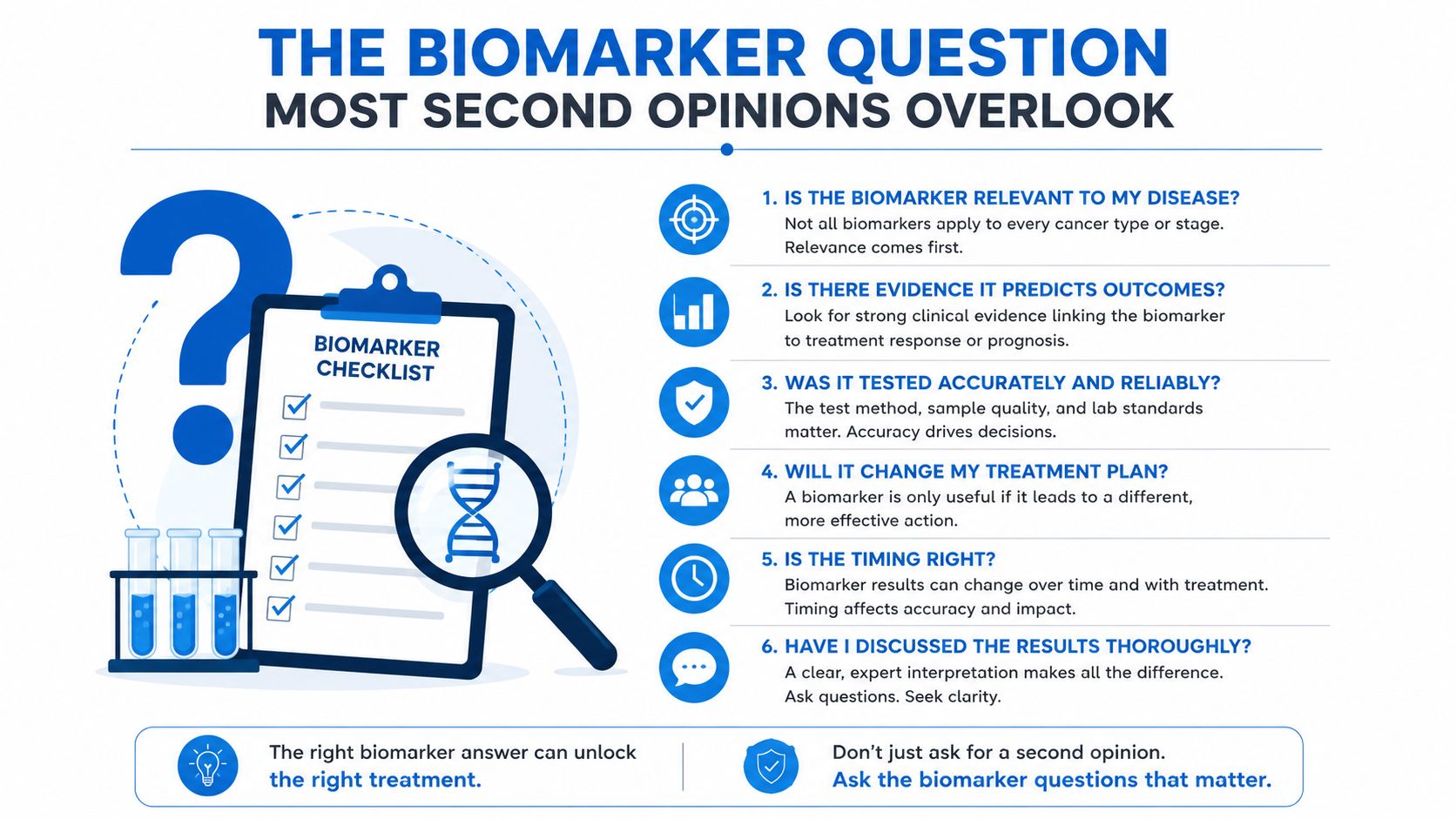
Patients may hear that their tumor was tested for its histologic type and PD-L1, then assume the molecular workup is complete. In metastatic non-small cell lung cancer, that assumption can be unsafe. A thorough review should ask whether the available testing assessed alterations including EGFR, ALK, ROS1, BRAF, KRAS G12C, MET, RET, NTRK, and HER2, and whether the testing method was broad enough for the clinical situation.
An actionable alteration means the tumor carries a molecular feature that may open a treatment designed to target that feature. It doesn't guarantee response, eligibility, or access. It does mean the treatment discussion may need to account for an option that broad chemotherapy alone wouldn't address.
Ask about testing before asking only about treatment
The practical question is not only, “Should I receive chemotherapy or immunotherapy?” Ask:
- Test completeness: Do we have all necessary test results to determine my treatment plan?
- Panel scope: Did testing assess the relevant driver genes and alterations for my tumor type and stage?
- Tissue adequacy: Is enough tissue available for additional testing?
- Testing method: Was a broad molecular panel used when appropriate?
- Liquid biopsy: Would blood-based testing add useful information if tissue is limited?
- Timing: Should treatment wait for clinically important pending results?
A biomarker-focused review is especially important when testing wasn't completed, the tumor subtype is uncommon, the diagnosis occurred at a younger age, the disease has progressed or returned, or a major treatment decision is imminent. Those situations can justify a fresh review even when the original plan appears reasonable.
The lung cancer biomarkers and targeted therapy resource can help patients understand the terminology before a consultation. Treatment decisions still require interpretation by a qualified oncology team that knows the complete clinical history.
Records and Imaging to Bring to a Second Opinion Visit
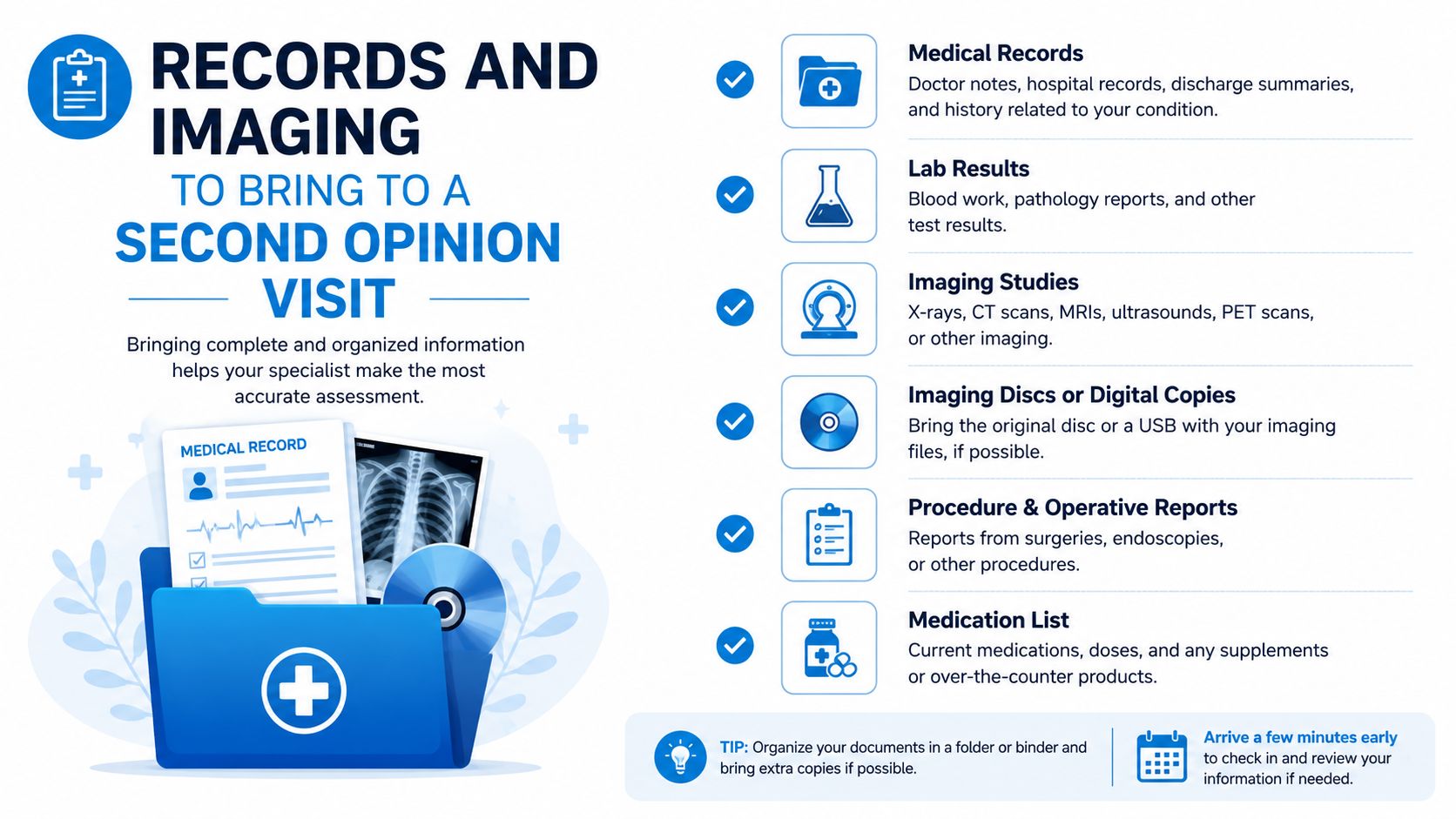
A second-opinion team can only review what it receives. Don't rely on a summary letter alone. Ask your oncology office for the original material, especially the pathology and imaging needed for direct review.
Prioritize the file in this order
1. Pathology materials
Request the original pathology report, the actual glass slides when available, and the tissue block. The second-opinion pathologist may need to reread the biopsy directly and determine whether additional stains or molecular testing can be performed.
2. Imaging files
Ask for the original DICOM files, often provided on a CD or DVD, for your CT scans, PET-CT, and brain MRI. Include the corresponding radiology reports. Written reports are useful, but direct image review allows the thoracic radiologist to reassess findings in context.
3. Clinical reports and treatment documents
Collect bronchoscopy and biopsy procedure reports, operative notes, discharge summaries, oncology notes, radiation notes, and the current treatment plan letter. Include a complete medication and supplement list, with doses if known, because interactions and treatment tolerance can affect planning.
4. Molecular results
Bring every biomarker and molecular profiling report already completed. Don't assume a reference to “genetic testing” means a broad cancer panel was performed. Ask for the actual report, including the genes assessed, alterations detected, specimen type, and any limitations noted by the laboratory.
Make the request specific
Tell the records office that the materials are for an outside thoracic oncology review. Ask how slides, blocks, imaging media, and reports should be transferred, and keep a personal copy of every digital document you receive.
For an explanation of how diagnostic information supports cancer planning, review Sunridge Medical's cancer diagnostic testing information. The aim isn't to repeat tests automatically. It's to give the reviewing specialists the original evidence so they can determine whether another test is necessary.
This video may also help families understand the practical preparation process:
Bring a written list of your top questions. A short list about stage, treatment intent, biomarker completeness, sequencing, clinical trials, side effects, and care coordination is more useful than trying to remember every concern during the visit.
Alternative and Integrative Options That May Be Considered
A second opinion can broaden the discussion, but it shouldn't turn into a catalogue of unproven promises. The reviewing team should separate established treatment from emerging research, supportive care, and complementary approaches.
For some patients, the central option is targeted therapy when an actionable alteration is identified. Others may be candidates for immunotherapy, combination chemotherapy and immunotherapy, surgery, radiation, or a sequence involving more than one modality. Clinical trials can provide access to investigational strategies, but eligibility, risks, availability, and evidence vary.
Localized treatment may also deserve review. Surgery can be appropriate in selected resectable cases. Radiation, including highly focused approaches such as SBRT, may be considered for carefully chosen lesions or treatment goals. These decisions depend on the tumor's location, stage, prior treatment, pulmonary function, overall health, and the intent of care.
Compare the purpose, not just the label
| Option | What it targets | Key question for the reviewing team |
|---|---|---|
| Targeted therapy | A specific actionable molecular alteration | Is there a confirmed alteration that supports this approach? |
| Immunotherapy | Immune recognition of cancer | How do PD-L1 and the full clinical picture affect eligibility? |
| Chemotherapy and immunotherapy | Cancer cells and immune response through combined treatment | Is combination treatment preferable to a biomarker-directed strategy? |
| Surgery | Localized or potentially resectable disease | Is complete resection feasible, and what treatment should come before or after it? |
| Radiation or SBRT | A defined tumor or region | Is focused radiation appropriate for location, stage, and treatment intent? |
| Clinical trial | An investigational treatment or sequence | What is known, what is uncertain, and what alternatives remain? |
| Nutrition counseling | Nutritional status, intake, and treatment support | How can nutrition support strength without interfering with care? |
| Acupuncture and mind-body care | Selected symptoms, stress, sleep, or treatment burden | Is this being used as supportive care alongside cancer treatment? |
| Supplement review | Potential interactions and safety concerns | Could any supplement affect bleeding, metabolism, immunity, or treatment? |
Integrative care can include nutritional counseling, acupuncture for symptom relief, mind-body work, exercise guidance, and a careful review of supplements. These measures may support comfort and function, but they aren't substitutes for treatments that control the cancer.
Sunridge Medical's information on ongoing research and advanced alternative medicine describes an integrative framework for discussing conventional and adjunctive options. Any therapy described as emerging, off-label, or investigational should be evaluated candidly. No approach guarantees a response or cure, and a supplement or alternative treatment can create risk if it delays effective care or interacts with medication.
Working With Your Current Oncology Team During the Process
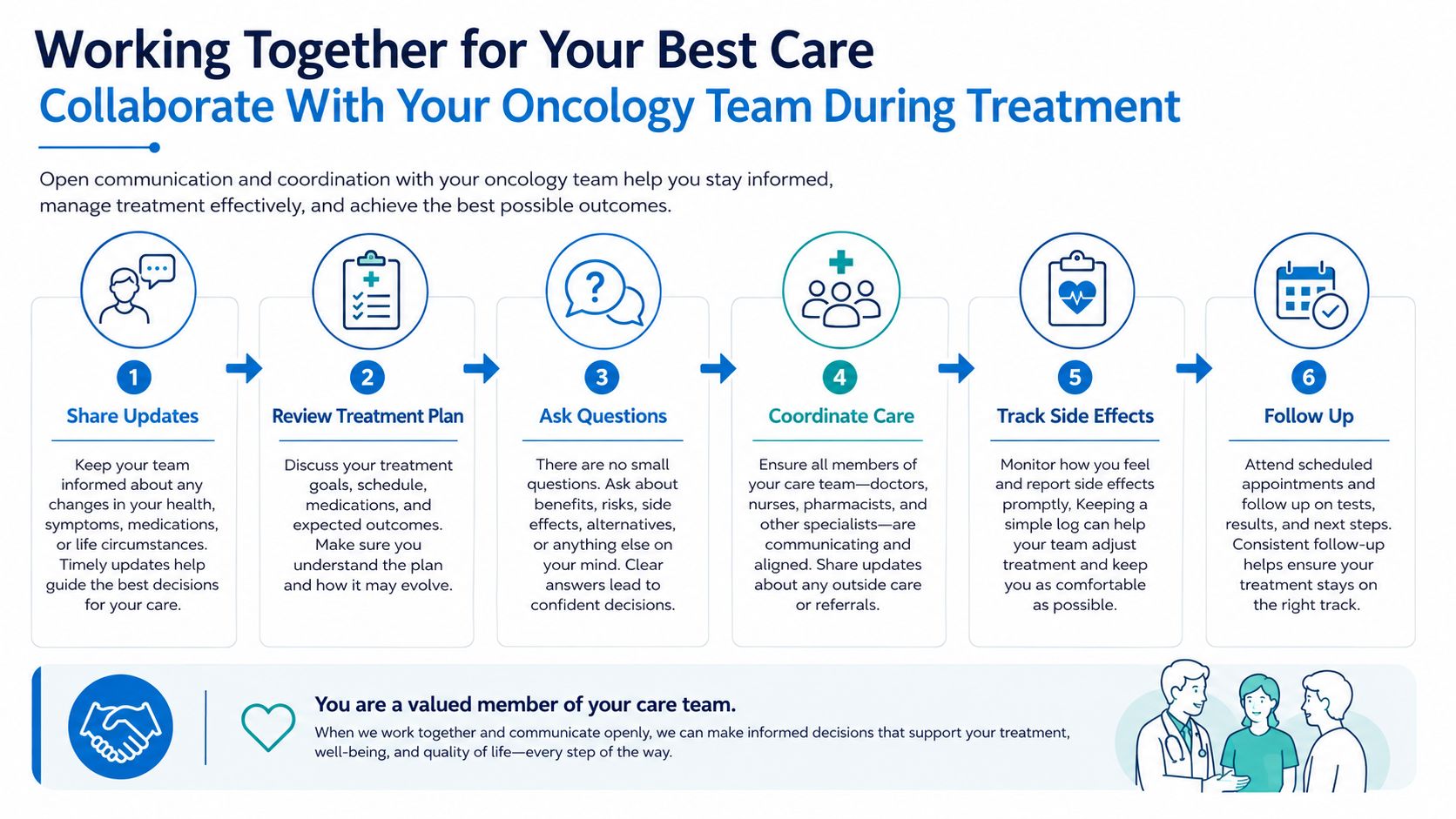
A second opinion doesn't require you to dismiss your current oncologist. In many cases, the most practical arrangement is a specialist review followed by coordinated treatment close to home.
Start with a straightforward request: explain that you want an outside thoracic oncology review to confirm the diagnosis, stage, biomarker results, and treatment sequence. Ask the oncology office to release the original pathology materials, imaging files, reports, and treatment notes. Most clinicians understand that patients want confidence before beginning major therapy.
Keep communication deliberate
Give permission for the reviewing specialist to communicate directly with your current oncologist. Ask both teams to identify who will manage each part of care, including laboratory monitoring, infusions, radiation appointments, prescriptions, and side-effect calls.
A written report should be shared with your local team. If the recommendations differ, request a clinician-to-clinician discussion rather than trying to reconcile complex oncology decisions alone.
Out-of-town patients should ask which parts of the evaluation require an in-person visit and which may be handled through telehealth or remote record review. Pathology and imaging can often be assessed from transferred materials, while physical examination, procedures, infusion therapy, and certain treatment discussions may require local attendance.
The best second opinion isn't always a competing regimen. Sometimes it confirms the original plan, identifies missing testing, and gives both teams a clearer way to carry it out.
Ask whether scans can be shared to avoid unnecessary duplicate imaging and whether infusion dates can be coordinated safely. The desired outcome is one shared plan, with clear responsibility and continuity between the reviewing specialist and the local oncology team.
When to Seek a Second Opinion and How to Prepare
Seek a lung cancer second opinion promptly when the diagnosis is new, the stage is uncertain, biomarker testing is incomplete, or the proposed treatment involves major surgery or chemoradiation. A review also makes sense after progression or recurrence, with a rare subtype, when treatment choices seem unclear, or when you want to explore clinical trials and integrative support.
The evidence is strongest for using the review before committing to a major treatment decision. In one cohort, 53 of 91 discrepancies were judged capable of having a major impact on survival, morbidity, or quality of life, supporting a careful review when the consequences of a decision are substantial. (Lung cancer second-opinion cohort findings)
Use a practical preparation sequence
- Request pathology first. Obtain the slides, tissue block, and pathology report.
- Collect imaging next. Ask for DICOM files and reports for CT, PET-CT, and brain MRI.
- Add the clinical record. Include biopsy, bronchoscopy, operative, oncology, radiation, and discharge notes.
- Verify molecular testing. Bring every biomarker report and ask what remains incomplete.
- Write down medications and goals. Include supplements, symptoms, work needs, travel limits, and treatment concerns.
- Choose multidisciplinary review. Look for coordinated input across pathology, radiology, medical oncology, surgery, radiation, pulmonology, and supportive care when appropriate.
Multidisciplinary review is valuable because lung cancer decisions depend on coordinated interpretation rather than one isolated report. Reviews of multidisciplinary lung cancer care found increased histologic confirmation, with one meta-analysis reporting an odds ratio of 3.01, and improved staging documentation, with an odds ratio of 2.55. (European Respiratory Society review of multidisciplinary lung cancer care)
Patients comparing medical evaluation resources across countries may also find this guide to private health screening in the UK useful for understanding how organized screening and record collection can differ from a cancer-focused second opinion.
In Scottsdale, Sunridge Medical offers an integrative cancer consultation and second-opinion pathway that can help review the available case information, clarify unanswered questions, and discuss conventional care alongside supportive and complementary options. You can learn more about cancer second opinions at Sunridge Medical before deciding whether an evaluation fits your needs.
If you're in Scottsdale, Phoenix, Paradise Valley, Tempe, Mesa, Chandler, Gilbert, or the surrounding Phoenix metropolitan area, contact Sunridge Medical to discuss a lung cancer case review, biomarker questions, treatment coordination, and an individualized integrative consultation. Bring your pathology, imaging, molecular reports, and current treatment plan so the clinical team can help you determine what information is still needed before your next major decision.