


What if the cognitive decline you’re experiencing isn’t a permanent loss of intelligence, but a reversible state of biological “brain on fire”? For high-achieving individuals, the sudden inability to find words during professional conversations or the crushing mental fatigue after simple tasks can feel like losing your very identity. You’ve likely been told your standard blood tests are normal, yet you still feel “slow” or “stupid” compared to your prior self. We understand that this frustration isn’t just in your head; it’s a physiological response to persistent neuroinflammation that requires a specialized clinical approach.
This guide explores the sophisticated mechanisms behind cognitive dysfunction and the advanced Lyme disease brain fog treatment protocols used to restore mental clarity in 2026. We’re moving away from standardized, packaged care to offer a clear medical path that doesn’t just manage symptoms but addresses the root infection. You’ll learn how targeted integrative therapies can cross the blood-brain barrier to eliminate inflammation and reclaim your executive function. By understanding the biological drivers of your condition, you can transition from a state of constant mental fog to a future of restored cognitive precision and professional confidence.
Key Takeaways
- Reframe cognitive decline as a functional efficiency issue rather than a loss of intelligence, focusing on the restoration of word retrieval and executive function.
- Identify the biological mechanisms of neuroinflammation, specifically how pathogens cross the blood-brain barrier to trigger persistent immune responses in the central nervous system.
- Recognize the limitations of conventional diagnostics to understand why structural imaging and standard lab tests frequently overlook chronic neurologic involvement.
- Evaluate sophisticated Lyme disease brain fog treatment strategies, such as specialized IV protocols and oxidative therapies that target persistent pathogens at their source.
- Learn how individualized physician evaluations and precision alternative medicine provide a customized clinical roadmap for reclaiming mental clarity.
Understanding the Neurocognitive Impact of Lyme Disease
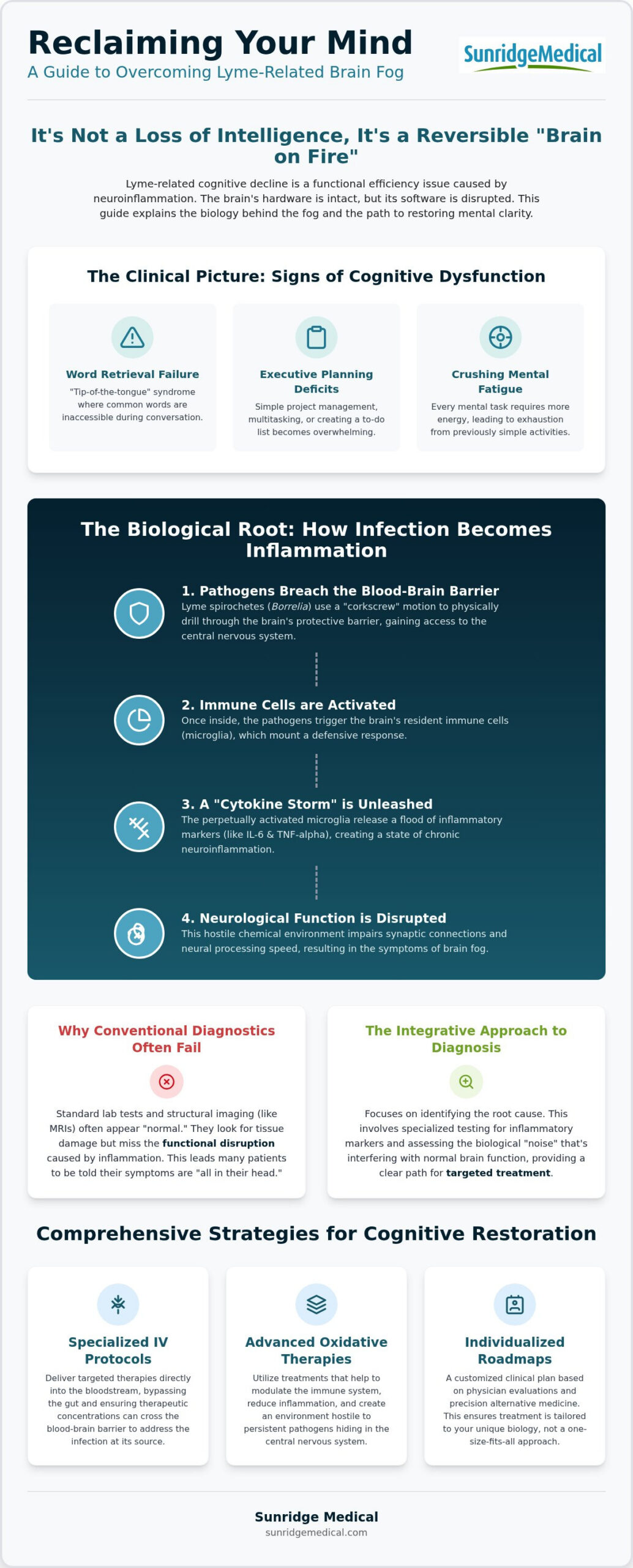
Brain fog is a term that often feels too casual for the debilitating reality it describes. In a clinical setting, we define this state not as a loss of intelligence, but as a significant decrease in cognitive efficiency. You haven’t lost your knowledge or your capacity for high-level thought. Rather, your brain is struggling to access that information through a thick layer of neuroinflammation. This condition is a hallmark of Neuroborreliosis, where the infection directly impacts the central nervous system. It’s a biologic reality, not a psychosomatic one, and it’s measurable through specific deficits in neural processing speed.
The “mental fatigue” associated with this condition is a physiological phenomenon. When the brain is inflamed, every synaptic connection requires more metabolic energy. Tasks that used to be automatic, like following a complex meeting or planning a weekly schedule, now feel like a mental marathon. This exhaustion isn’t just “feeling tired.” It’s the result of the brain working exponentially harder to perform basic executive functions. Understanding this is the first step toward finding an effective Lyme disease brain fog treatment that restores your baseline performance.
The Clinical Presentation of Cognitive Dysfunction
The way these symptoms manifest can be remarkably specific yet frustratingly inconsistent. Many patients struggle with “tip-of-the-tongue” syndrome, where common words suddenly become inaccessible during professional conversations. This isn’t a memory problem in the traditional sense; it’s a word-retrieval failure. You’ll likely notice other signs, including:
- Impaired Multitasking: An inability to juggle multiple streams of information or switch between tasks quickly.
- Executive Planning Deficits: Simple project management or organizing a daily to-do list becomes overwhelming.
- Symptom Fluctuation: Your clarity may vary wildly based on stress levels, sleep quality, and even your diet.
Lyme Brain Fog vs. Standard Cognitive Decline
It’s vital to distinguish this from age-related memory loss or early-onset dementia. Standard cognitive decline is typically a structural, progressive loss of tissue. In contrast, Lyme-related dysfunction is a “functional disruption.” The hardware of your brain is often intact, but the software is running through a “storm” of inflammatory cytokines. This is why symptoms can be so reactive. Daily triggers like environmental toxins, high-sugar intake, or emotional upheaval can suddenly worsen the fog. A sophisticated Lyme disease brain fog treatment focuses on clearing this internal environment so the nervous system can resume its normal, high-speed communication. We look for the biological “noise” that’s drowning out your natural intelligence.
The Biological Root: Neuroinflammation and the Blood-Brain Barrier
The blood-brain barrier is designed to be the body’s most secure gatekeeper, a semi-permeable membrane that protects the central nervous system from circulating toxins and pathogens. However, Borrelia burgdorferi, the spirochete responsible for Lyme disease, possesses a unique motility that allows it to bypass this defense. These bacteria use a specialized “corkscrew” motion to physically drill through endothelial cells, gaining direct access to brain tissue. This breach is often facilitated by systemic inflammation, which weakens the tight junctions of the barrier and creates an “open door” for both pathogens and environmental toxins. Because these bacteria can hide within the protected environment of the central nervous system, standard oral antibiotics often fail to reach therapeutic concentrations where they are needed most.
Once the infection enters the brain, it triggers a chronic immune response led by microglia, the resident immune cells of the central nervous system. When microglia are perpetually activated, they release a “cytokine storm” of inflammatory markers such as IL-6 and TNF-alpha. This chemical environment is hostile to normal neurological function. It doesn’t just cause discomfort; it physically alters the way your brain processes information. Achieving a successful Lyme disease brain fog treatment outcome depends on our ability to not only neutralize the pathogen but also to “cool” this inflammatory fire and restore the integrity of the blood-brain barrier. For those seeking a deeper understanding of these complex interactions, Sunridge Medical provides specialized clinical insights into the intersection of systemic health and neurologic recovery.
Spirochetes in the Central Nervous System
The presence of spirochetes in the brain initiates a cascade of cellular damage that can persist long after the initial infection. Even if the bacteria are eventually neutralized, the “molecular debris” left behind can keep the immune system in a state of high alert. This explains why approximately 20% of patients continue to experience debilitating cognitive symptoms after completing standard antibiotic courses. The chronic immune activation leads to a state of “functional disconnection,” where the neural pathways remain intact but are unable to communicate efficiently due to the surrounding inflammatory environment.
The Cytokine Connection to Mental Clarity
Inflammatory cytokines do more than cause swelling; they actively interfere with the balance of essential neurotransmitters like dopamine and serotonin. This interference is most pronounced in the hippocampus, which governs memory, and the prefrontal cortex, which manages focus and complex decision-making. When these areas are bathed in inflammatory markers, the result is the profound “mental haze” reported by so many patients. In 2026, we recognize that neuroinflammation is the primary biological driver of the cognitive haze that characterizes chronic neurologic Lyme disease. Addressing this chemical imbalance is essential for reclaiming the executive function and mental sharpess required for daily life.
Why Conventional Diagnostics Often Fail Neurologic Lyme Patients
Patients seeking an effective Lyme disease brain fog treatment frequently encounter a frustrating diagnostic wall. They present with profound cognitive symptoms, yet their standard medical workups return results within “normal” ranges. This discrepancy occurs because conventional diagnostic tools are often designed to detect acute infections or gross structural damage, rather than the subtle, systemic functional disruptions characteristic of chronic neurologic Lyme. Relying solely on “packaged” diagnostic results can lead to a dangerous delay in care. It ignores the complex biological reality of the individual, where a patient’s clinical experience should carry as much weight as a laboratory report.
A truly comprehensive evaluation must go beyond the tick bite itself. It requires a scientific guide to examine the interplay between the immune system, the endocrine system, and the patient’s unique toxic load. Neurologic symptoms are rarely isolated; they are the end result of multiple physiological systems failing to maintain homeostasis. By shifting the focus from standardized testing to a deeper, individualized physician evaluation, we can begin to uncover the root causes of cognitive haze that standard protocols miss.
The Limitation of Structural Brain Scans
A common misconception is that a clear MRI or CT scan rules out brain involvement. These technologies are excellent at identifying structural abnormalities like tumors or lesions, but they rarely capture metabolic or inflammatory dysfunction. Brain fog is not typically a result of physical tissue loss; it’s a result of how the brain is functioning in real-time. While advanced neuroimaging like PET or fMRI can show reduced blood flow or glucose metabolism in specific brain regions, these tools are often relegated to research settings. In a clinical context, a “normal” MRI simply means the architecture is intact, even if the “software” is failing to process information efficiently.
Lab Testing Gaps in Chronic Lyme
The standard two-tiered testing approach, consisting of ELISA and Western Blot, is notoriously unreliable for chronic neurologic cases. These tests measure the body’s antibody response, which can be inconsistent if the immune system is exhausted or if the bacteria have sequestered themselves within the central nervous system. Additionally, these tests don’t account for common co-infections or specific inflammatory markers that drive cognitive haze. To understand the full picture, clinicians must look beyond these narrow parameters. You can find more detailed information in Sunridge Medical’s guide on why conventional tests fail. Tracking a broader spectrum of biomarkers is essential for developing a customized path toward cognitive restoration.
Comprehensive Integrative Strategies for Cognitive Restoration
Restoration of cognitive clarity requires a departure from the “wait and see” approach common in traditional medicine. When the central nervous system is compromised by chronic infection, the path to recovery must be as sophisticated as the disease itself. We focus on a multi-faceted approach that prioritizes the direct delivery of therapeutic agents to bypass the often-compromised digestive tracts of chronic Lyme patients. By utilizing targeted clinical protocols, it’s possible to neutralize persistent pathogens while simultaneously repairing the neural pathways damaged by long-term inflammation. This shift from symptom management to active restoration is the cornerstone of a modern Lyme disease brain fog treatment.
Effective recovery isn’t just about killing bacteria; it’s about rebuilding the biological environment that allows the brain to thrive. This involves a strategic combination of antimicrobial action, mitochondrial resuscitation, and hormonal balance. When these systems are addressed in unison, the “mental haze” begins to lift, allowing for the return of executive function and professional performance. If you’re ready to explore how these advanced protocols can be tailored to your specific needs, you can consult with a specialist at Sunridge Medical to begin your journey toward cognitive restoration.
Advanced IV Protocols and Oxidative Medicine
Intravenous (IV) therapies are essential for delivering high concentrations of nutrients and oxidative agents directly into the bloodstream. This method ensures 100% bioavailability, which is critical when the goal is to cross the blood-brain barrier and address deep-seated neuroinflammation. High-dose Vitamin C and specialized oxidative therapies serve a dual purpose: they act as potent antimicrobials and provide the oxidative “spark” necessary to stimulate a dormant immune system. We utilize “pulsed” protocols to carefully manage the breakdown of pathogens, which helps to prevent the severe systemic distress known as a Herxheimer reaction. For a deeper look into these methods, read our clinical overview of IV therapy for autoimmune and chronic disease.
Neuro-Restorative Nutritional Support
The brain is the most metabolically demanding organ in the body, consuming approximately 20% of your total energy. In chronic Lyme cases, the mitochondria—the powerhouses of your cells—are often under-functioning, leading to the profound “brain drain” patients describe. Nutritional infusions targeting mitochondrial resuscitation use specific cofactors to restart cellular energy production. This process is paired with biological treatments designed to support the restoration of the blood-brain barrier’s integrity. By combining detoxification with neurologic repair, we help the brain transition from a state of survival back to a state of high-level processing. This synergy is vital for clearing the fog and ensuring that cognitive gains are permanent rather than transitory.
Individualized Protocols: The Sunridge Medical Approach to Neurologic Lyme
At Sunridge Medical, we operate under the philosophy of “precision alternative medicine,” a methodology that rejects the status quo of standardized, packaged care. We recognize that by the time a patient reaches us, they’ve often been through multiple rounds of conventional treatments that failed to address their cognitive decline. Finding a successful Lyme disease brain fog treatment requires more than a prescription pad; it requires a scientific guide who understands the nuances of how chronic infection disrupts the central nervous system. Our approach isn’t about simply managing symptoms. It’s about a relentless search for the root cause of your specific neuroinflammation, providing a sanctuary for those who have felt overlooked by traditional systems.
By combining the latest conventional research with advanced alternative methodologies, we create a customized clinical roadmap for every individual. Founded in 2003, Sunridge Medical has spent decades refining these protocols to help patients reclaim their quality of life. We don’t believe in “one-size-fits-all” medicine. Instead, we focus on the unique biological markers and environmental factors that influence your recovery. This level of specialized attention is what allows our patients to move from a state of survival back to a state of high-level cognitive performance and professional confidence.
Beyond Standardized Care
Standardized antibiotic protocols, often limited to a few weeks, frequently fail patients with neurologic involvement because they don’t account for the complexity of the blood-brain barrier or the persistence of spirochetes in protected tissues. We move beyond these limited models. Our commitment involves identifying the unique environmental, hormonal, and biological factors that allow the infection to persist. We integrate specialized neurologic condition treatment with systemic detoxification to ensure your body can clear the “molecular debris” left behind by the infection. This multi-faceted approach is essential for cooling the inflammatory fire and allowing neural pathways to repair themselves effectively.
Your Path to Mental Clarity
Your journey toward cognitive restoration begins with a comprehensive, individualized physician evaluation. Led by our Medical Director, Dr. Steven S. Isaacman, our team conducts a thorough assessment of your medical history and current physiological state. This isn’t a brief check-in; it’s a deep dive into your biology. We prioritize ongoing monitoring and protocol adjustments because we know that recovery is a dynamic process. As your neuroinflammation decreases, your treatment plan must evolve to support continued cognitive growth. This steady, methodical guidance helps build a foundation of trust and hope for the future. Contact Sunridge Medical today to discuss your recovery plan.
Reclaiming Your Cognitive Precision
Finding your path to cognitive recovery requires moving beyond the frustration of normal test results and standardized care. We’ve established that your symptoms are a biological reality driven by neuroinflammation and a compromised blood-brain barrier. By shifting focus toward individualized physician-led protocols, you can address the specific pathogens and metabolic imbalances holding your mind captive. Since 2003, Sunridge Medical has served as a scientific guide for those seeking a research-based alternative to conventional limitations, specializing in the restoration of executive function and mental clarity.
A successful Lyme disease brain fog treatment doesn’t just manage your fatigue; it seeks to eliminate the underlying triggers of cognitive haze. Our specialized neurologic recovery focus is designed to move you from a state of survival back into a life of professional and personal excellence. You don’t have to accept mental fog as your permanent reality. When you’re ready to explore a customized path to wellness, our team is here to provide the specialized attention you deserve.
Ready to reclaim your mental clarity? Speak with a Sunridge Medical specialist at 1-800-923-7878 to discuss your recovery plan today. Your restoration is possible with the right clinical approach.
Frequently Asked Questions
Is brain fog from Lyme disease permanent?
Cognitive decline associated with this condition is generally not permanent because it typically stems from a state of functional neuroinflammation rather than a loss of brain tissue. When the underlying infection and immune response are addressed through a targeted Lyme disease brain fog treatment, cognitive efficiency can be restored. The brain’s natural plasticity allows for the repair of neural pathways once the inflammatory “noise” is removed. Success depends on moving away from symptom management toward a protocol that clears the biological drivers of the haze.
How do I know if my brain fog is caused by Lyme disease or something else?
Identifying the root cause of cognitive haze requires a comprehensive physician evaluation that looks beyond standard laboratory results. Lyme-related fog often fluctuates in severity and may be accompanied by word-retrieval issues, joint pain, or extreme fatigue. Because other conditions like mold toxicity or autoimmune disorders can mimic these symptoms, we use specialized diagnostics to examine your systemic health. A clear clinical history often reveals a pattern of decline that correlates with the initial infection or environmental exposures.
Can IV therapy help with Lyme-related cognitive dysfunction?
Intravenous therapy is a cornerstone of advanced neurologic recovery because it delivers high concentrations of nutrients and oxidative agents directly into the bloodstream. This method bypasses the digestive tract, ensuring that therapeutic agents can effectively cross the blood-brain barrier to reach the central nervous system. These customized IV protocols help neutralize persistent pathogens while supporting mitochondrial function. This direct approach is often necessary for patients who haven’t responded to standard oral antibiotic courses and need a more intensive delivery system.
Why did my doctor say my tests are normal if I still have brain fog?
Standard diagnostic tests like the ELISA and Western Blot are designed to detect a specific antibody response that may be absent in chronic or neurologic cases. If the bacteria have sequestered themselves within the central nervous system, your blood may not show a high enough antibody count to trigger a positive result. This is why many patients are told their tests are normal despite having clear, debilitating symptoms. We prioritize clinical evaluations that consider the patient’s entire physiological experience rather than just limited lab parameters.
Does neuroinflammation show up on a standard MRI scan?
Neuroinflammation typically does not appear on a standard MRI or CT scan because these tools are designed to identify structural damage like tumors, strokes, or lesions. While your brain’s architecture remains intact, the software or metabolic function is disrupted by inflammatory cytokines. Advanced research tools like PET scans can show these functional deficits, but they aren’t common in standard clinical practice. A normal MRI simply confirms that the physical structure of your brain is currently healthy, even if it’s functioning poorly.
What is the fastest way to clear Lyme-related neuroinflammation?
The most efficient path to clearing neuroinflammation involves a multi-faceted clinical strategy that addresses both the infection and the immune response simultaneously. Utilizing a specialized Lyme disease brain fog treatment that includes oxidative therapies and nutritional infusions helps to cool the inflammatory fire in the central nervous system. While recovery times vary based on the individual’s toxic load and health history, direct IV delivery provides the fastest way to support cellular repair and restore cognitive precision by bypassing digestive limitations.
How does Sunridge Medical treat neurologic Lyme disease differently?
Sunridge Medical approaches neurologic Lyme through the lens of precision alternative medicine, moving away from standardized, one-size-fits-all protocols. Led by Medical Director Dr. Steven S. Isaacman, our team conducts individualized physician evaluations to identify the unique root cause of each patient’s struggle. We combine research-based alternative methodologies with conventional insights to create a sanctuary of specialized care. This focused approach ensures that every treatment plan is as unique as the patient’s own biological makeup, focusing on restoration rather than just management.
Are the cognitive symptoms of Lyme disease the same in children and adults?
While both children and adults experience cognitive decline, the presentation often differs based on developmental stages. Adults typically report fog, word-finding difficulties, and executive dysfunction in professional settings. In contrast, children may exhibit sudden mood swings, school refusal, or symptoms that mimic ADHD and learning disabilities. These pediatric neurologic symptoms are often misdiagnosed as behavioral issues or psychological distress. Regardless of age, the underlying cause is frequently a biologic immune response in the brain that requires specialized clinical attention.