


What if the most effective way to address cancer isn’t just to attack the tumor, but to systematically starve its engine? For many facing a difficult diagnosis, the standard medical experience can feel cold and impersonal, leaving you feeling like a mere number in a rigid, standardized system. You might worry that conventional treatments are only addressing surface symptoms while the underlying biological root causes remain untouched. This is why more patients are investigating research-based metabolic cancer treatment protocols to address the disease at its metabolic source. This anxiety is often compounded by the fear of metastatic progression when traditional methods don’t seem to offer the comprehensive answers you need.
You’re not alone in seeking a more profound level of care that respects your body’s complex needs. In this clinical guide, we’ll explore how advanced metabolic protocols target the specific fuel sources cancer cells rely on to survive and thrive. By shifting the focus toward the host environment and cellular health, these methodologies provide a research-based alternative to conventional-only care. We’ll provide a clear framework for evaluating these sophisticated protocols and help you gain the confidence to choose an integrative medical center that treats you as an individual, not a statistic.
Key Takeaways
- Understand how shifting from a genetic model to a metabolic paradigm allows for a more targeted approach to cellular health.
- Learn why cancer cells are biologically dependent on glucose and how addressing mitochondrial dysfunction can disrupt their energy supply.
- Discover how clinical metabolic cancer treatment protocols utilize individualized nutritional strategies and advanced IV therapies to target the disease’s fuel sources.
- Identify the specific diagnostic biomarkers and laboratory tests required to move beyond standardized care and build a personalized recovery path.
- Explore how a pioneering, research-based approach to integrative oncology provides a clear framework for those facing stage 4 or complex cases.
What is Metabolic Cancer Treatment? Defining the New Paradigm
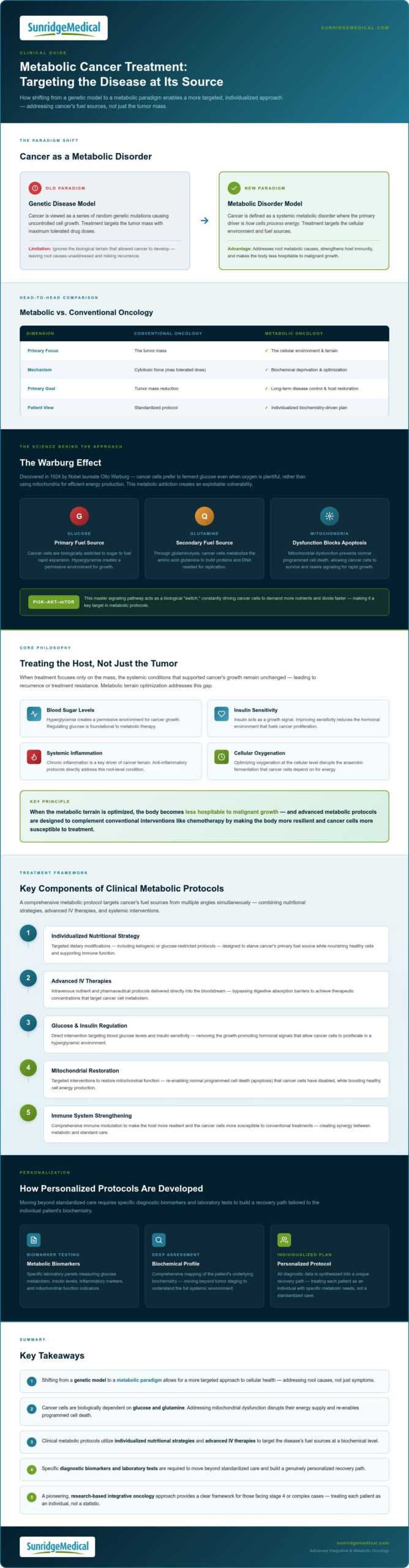
The landscape of oncology is undergoing a fundamental shift in perspective. For decades, the medical community viewed cancer primarily as a genetic disease, a series of unfortunate mutations that trigger uncontrolled growth. However, a growing body of research suggests a more nuanced reality. Metabolic oncology defines cancer as a systemic metabolic disorder where the primary driver is how cells process energy. By understanding the unique ways cancer cells utilize glucose, glutamine, and fatty acids, clinicians can develop more precise metabolic cancer treatment protocols that target these vulnerabilities.
Standard oncology often focuses exclusively on the tumor, utilizing aggressive methods to shrink or remove the mass. The mass isn’t the whole story. While these interventions are necessary, they frequently overlook the biological environment, or “terrain,” that allowed the cancer to thrive in the first place. Environment matters. This oversight is why many patients experience a feeling of being “stuck” even after successful surgery or radiation. Integrative oncology bridges this gap by combining conventional precision with a deep focus on the patient’s underlying biochemistry.
The Core Philosophy: Treating the Host, Not Just the Tumor
Treating the tumor in isolation is often a temporary solution. When the focus remains solely on the mass, the systemic conditions that supported its growth remain unchanged, which can lead to recurrence or treatment resistance. The concept of “Metabolic Terrain” refers to the complex interplay of blood sugar levels, insulin sensitivity, inflammation, and oxygenation within the body. When this terrain is optimized, it becomes less hospitable to malignant growth. Advanced metabolic cancer treatment protocols are designed to complement conventional interventions like chemotherapy by making the body more resilient and the cancer cells more susceptible to treatment.
Metabolic vs. Conventional Oncology: A Comparative View
The conventional standard of care typically prioritizes the maximum tolerated dose of a drug to achieve tumor reduction. While effective for immediate results, this localized focus may inadvertently weaken the host’s overall health. In contrast, the metabolic approach seeks to deprive cancer of its preferred fuel sources while simultaneously strengthening the patient’s immune and mitochondrial function. Precision is key. Metabolic therapy represents a systemic intervention designed to modulate the body’s internal environment rather than a localized treatment targeting a specific mass.
- Focus: Conventional care targets the tumor mass; metabolic care targets the cellular environment.
- Mechanism: Standard treatments use cytotoxic force; metabolic protocols use biochemical deprivation and optimization.
- Goal: The primary goal shifts from mere mass reduction to long-term disease control and host restoration.
The Warburg Effect and the Science of Cancer Metabolism
In 1924, Nobel laureate Otto Warburg observed something peculiar about cancer cells. Even when oxygen was plentiful, these cells preferred to ferment glucose rather than using their mitochondria for efficient energy production. This phenomenon, known as the Warburg Effect, revealed that cancer is fundamentally a metabolic adaptation. Most research-based metabolic cancer treatment protocols today are built upon this discovery, recognizing that malignant cells are biologically addicted to sugar to fuel their rapid expansion. This addiction creates a vulnerability that clinicians can exploit through targeted intervention.
This shift in energy production isn’t just a side effect of cancer; it’s often a primary driver of the disease’s progression. Mitochondrial dysfunction prevents cells from performing normal apoptosis, or programmed cell death. Instead, the cell rewires its internal signaling to prioritize survival. Pathways like PI3K-AKT-mTOR act as a master switch, constantly signaling for more nutrients and faster division. While sugar is a primary fuel, we can’t ignore the role of glutaminolysis. Cancer cells also metabolize the amino acid glutamine to build the proteins and DNA necessary for replication, making protein metabolism just as critical as glucose management.
Glucose and Insulin: The Primary Drivers of Growth
Hyperglycemia creates a permissive environment where cancer can thrive and expand. When blood sugar levels remain chronically elevated, the body produces more insulin and Insulin-like Growth Factor 1 (IGF-1). These hormones act as potent mitogens, directly stimulating tumor proliferation and encouraging metastatic spread. Managing these levels isn’t just a dietary suggestion; it’s a clinical requirement for stabilizing the body’s internal chemistry. Those navigating these complexities often benefit from specialized alternative cancer treatment protocols that account for these biological realities through precise metabolic management.
Acidosis and the Tumor Microenvironment
As cancer cells ferment sugar, they produce lactic acid as a byproduct. This waste builds up, creating an acidic tumor microenvironment that serves as a protective shield. This acidity effectively “turns off” the immune system by preventing T-cells from recognizing the threat. This environment is frequently hypoxic, meaning it lacks sufficient oxygen. Hypoxia triggers the release of growth factors that build new blood vessels, further fueling the disease. Neutralizing this microenvironment is essential for restoring the body’s natural defenses and improving the overall response to therapy.
- Acidity: Protects the tumor from immune detection and destruction.
- Hypoxia: Drives the formation of new blood vessels (angiogenesis) to feed the tumor.
- Resistance: Low-oxygen environments often make tumors more resistant to conventional radiation and chemotherapy.
Key Components of Clinical Metabolic Cancer Treatment Protocols
Effective metabolic cancer treatment protocols aren’t built on a single supplement or a rigid diet. Instead, they require a multi-layered clinical strategy that addresses the patient’s unique biochemistry. While many people associate metabolic oncology with a standard ketogenic diet, true clinical success often demands more nuance. We customize nutritional strategies to account for specific tumor markers and the patient’s existing nutrient deficiencies. This individualized approach ensures the body is nourished while the cancer cells are systematically deprived of the specific nutrients they need to replicate.
Beyond nutrition, we utilize repurposed pharmacological agents to disrupt malignant energy pathways. Medications originally designed for other conditions, such as glucose-lowering agents or lipid-regulators, can be strategically used to inhibit the PI3K or mTOR pathways. These are paired with targeted nutraceuticals that support mitochondrial health. By optimizing the “batteries” of your healthy cells, we help restore the body’s natural ability to regulate growth and repair. It’s about precision. Every component of the plan must work in harmony to shift the body from a state of disease to a state of management.
Advanced IV Therapy Protocols
When patients face advanced cases, digestive limitations can often prevent oral supplements from reaching therapeutic levels in the bloodstream. Advanced IV protocols solve this by delivering high-dose nutrients directly to the cells. For example, high-dose Vitamin C acts as an oxidative pro-drug; at specific concentrations, it generates hydrogen peroxide within the tumor microenvironment to selectively target cancer cells. These methods are similar to the advanced approaches detailed in our IV Therapy for Autoimmune Disease: 2026 Guide, where precision and absorption are the primary goals.
Hormone Optimization and Systemic Balance
Systemic balance is the foundation of any successful recovery path. Hormone imbalances, particularly involving insulin and IGF-1, can act as “gasoline” for certain metabolic cancers. We also prioritize thyroid and adrenal health to ensure the patient has the stamina required for intensive treatment. A body in a state of hormonal chaos cannot effectively fight disease. Much like the principles found in our Hormone Optimization for Autoimmune Disease: 2026 Guide, we focus on restoring the host environment to a state of equilibrium, which is vital for long-term disease control.
- Nutritional Precision: Moving beyond generic diets to target specific cellular fuel sources.
- Pharmacological Disruption: Using established medications to block cancer signaling pathways.
- Biological Support: Enhancing mitochondrial function to improve overall treatment stamina.
Diagnostics: How Personalized Protocols are Developed
Standard imaging like CT or MRI scans provides a snapshot of a tumor’s size, but it rarely explains why that tumor exists. To develop effective metabolic cancer treatment protocols, we must look deeper into the patient’s internal biochemistry. This process begins with a comprehensive physician evaluation that assesses your entire medical history, including previous treatments, environmental exposures, and lifestyle factors. By integrating advanced laboratory testing with functional imaging, we can identify real-time metabolic activity and specific pathway vulnerabilities that standard diagnostics often miss.
We also utilize genetic and epigenetic screening to identify specific pathway vulnerabilities. While your DNA provides the blueprint, epigenetics determines which genes are actually expressed. By understanding how your environment and metabolism are “turning on” certain growth signals, we can more effectively choose the repurposed medications and nutraceuticals needed to turn them off. This level of detail is what allows for a truly individualized care plan that departs from the standardized models of conventional oncology.
Measuring the “Terrain”: Essential Biomarkers
We prioritize biomarkers that reflect the body’s inflammatory and metabolic state. Lactate dehydrogenase (LDH) is a critical enzyme in this process; elevated levels often indicate high glycolytic activity within the tumor. Similarly, high-sensitivity C-reactive protein (hs-CRP) serves as a vital marker of systemic inflammation. These results directly dictate the specific concentrations of oxidative agents used in IV therapies, ensuring each dose is precisely calibrated to your current biochemical state. We also screen for environmental toxins, such as heavy metals, which can silently disrupt mitochondrial function and hinder the body’s ability to respond to therapy.
The Path to a Custom Treatment Plan
Creating a recovery path is a methodical process that ensures no detail is overlooked. It’s not about a “packaged” solution; it’s about a steady hand guiding you through a complex journey. If you’re ready to move beyond standardized care, you can speak with an expert physician today to begin your comprehensive evaluation.
- Step 1: Initial clinical consultation and data gathering to understand the unique challenges of your case.
- Step 2: Deep-dive diagnostic testing and pathway mapping to identify which fuels the cancer is using.
- Step 3: Integration of these findings into a multi-modal protocol that targets those specific pathways.
For a more detailed look at how these steps vary based on the progression of the disease, please see our Integrative Cancer Treatment by Stage: A Clinical Reference Guide (2026).
Sunridge Medical’s Approach to Advanced Metabolic Oncology
Since 2003, Sunridge Medical has served as a national leader in the application of specialized alternative cancer treatment protocols. We recognize that patients facing stage 4 or complex diagnoses often feel exhausted by the standardized, one-size-fits-all approach of conventional systems. Experience matters. Our center focuses on research-based integrative medicine, specifically designed for those who have exhausted traditional options or seek a more comprehensive management strategy. Every recovery path we develop is overseen by our medical director, Dr. Steven S. Isaacman, ensuring that the scientific principles of metabolic oncology are applied with clinical precision and individualized care.
We don’t view our patients as a set of symptoms or a stage in a progression. Instead, we see you as a person navigating a complex health journey. This advocacy is at the core of our mission. By bridging the gap between conventional oncology and advanced metabolic research, we provide a steady hand for patients traveling from across the United States. Our national reach ensures that proximity is never a barrier to receiving high-level, specialized attention. We’ve spent over two decades refining our methodologies to provide a clear, structured path forward for those who feel stuck in traditional cycles.
A Sanctuary for Complex Chronic Disease
Facing an advanced diagnosis is as much an emotional challenge as it is a physical one. We’ve designed our environment to be a sanctuary, a place where the clinical gravity of the condition is met with compassionate optimism. A collaborative relationship between the patient and the physician is essential for success. You’re a partner in your care. This transparency fosters trust and allows us to adjust metabolic cancer treatment protocols in real-time based on your body’s specific response. It’s this comprehensive lens that distinguishes our approach from the rigid structures of standard hospitals.
Getting Started: Your National Clinical Resource
Initiating your journey toward a more targeted metabolic approach is a straightforward process. Our dedicated team provides national support via our toll-free 1-800 line, helping you coordinate your initial steps from anywhere in the country. During your first comprehensive physician evaluation, we’ll review your history with the depth and thoroughness your case deserves. This isn’t a rushed consultation; it’s the foundation of your individualized care plan. We’ll examine the metabolic “terrain” discussed earlier to map out a strategy that prioritizes your long-term well-being.
If you’re ready to explore a research-based alternative that targets the underlying mechanisms of your disease, we’re here to help. Contact Sunridge Medical to discuss your individualized protocol and discover the difference that two decades of pioneering expertise can make for your recovery path.
Empowering Your Recovery Through Metabolic Precision
The journey beyond standardized care begins with a fundamental shift in perspective. You’ve learned that cancer is more than a genetic mutation; it’s a systemic metabolic challenge that requires a targeted, comprehensive response. By integrating precision diagnostics with advanced metabolic cancer treatment protocols, we can address the underlying mechanisms that drive disease progression. This approach moves beyond simply attacking a tumor to restoring the biological integrity of the host environment.
Since 2003, Sunridge Medical has remained at the forefront of this field, providing physician-led individualized care that prioritizes the human experience. We don’t believe in packaged solutions because every patient’s biochemistry is unique. If you’re seeking a research-based alternative that offers hope through clinical depth, our team is ready to act as your steady advocate. You can take the first step toward a more personalized recovery path today. Schedule a Consultation with a Sunridge Medical Specialist and discover a medical sanctuary designed for your specific needs.
Frequently Asked Questions
What are the main goals of metabolic cancer treatment protocols?
The primary goals of metabolic cancer treatment protocols are to systematically deprive cancer cells of the specific nutrients they need to replicate while simultaneously strengthening the host environment. By targeting the metabolic vulnerabilities of malignant cells, we aim to slow progression and improve the body’s natural defense mechanisms. This approach focuses on restoring cellular health and systemic balance, ensuring that the patient’s biological terrain becomes less hospitable to further growth.
Can metabolic therapy be used alongside traditional chemotherapy or radiation?
Metabolic therapy is designed to be integrative and can often be used alongside conventional treatments like chemotherapy or radiation. These protocols may enhance the effectiveness of standard care by making cancer cells more vulnerable to oxidative stress while protecting healthy tissue from collateral damage. This synergy allows for a more comprehensive management strategy. It addresses both the tumor mass and the underlying biochemical environment that supports its survival and treatment resistance.
How long does it typically take to see results from a metabolic protocol?
Every patient’s biochemistry is unique, so the timeline for observable progress varies based on the complexity and stage of the case. While some biomarkers of inflammation and metabolism may show shifts within the first few weeks of intensive therapy, long-term systemic stabilization is a gradual process. We monitor these changes through advanced laboratory testing to ensure the protocol remains precisely calibrated to your body’s evolving needs and responses.
Is a metabolic approach only for stage 4 or advanced cancer patients?
A metabolic approach is valuable at any stage of a diagnosis, though it’s particularly sought after by those facing stage 4 or complex cases. Addressing the metabolic drivers of cancer early in the journey can help prevent recurrence and build a stronger foundation for recovery. Whether you’re recently diagnosed or have exhausted conventional options, focusing on your internal terrain provides a strategic advantage in managing the disease effectively through research-based methodologies.
What kind of diet is required during metabolic cancer treatment?
There isn’t a single required diet; instead, we develop individualized nutritional strategies based on your specific diagnostic markers. While reducing glucose and insulin levels is a common objective, we move beyond a one-size-fits-all ketogenic approach to account for your unique nutrient deficiencies and tumor sensitivities. This precision ensures your diet acts as a clinical tool to starve the cancer engine without compromising your overall stamina or well-being during the treatment process.
Do metabolic protocols involve the use of standard medications?
Yes, metabolic cancer treatment protocols frequently utilize repurposed pharmacological agents to disrupt malignant signaling pathways. Medications originally approved for other conditions, such as metabolic or lipid disorders, can be strategically used to block the pathways cancer cells use to acquire fuel. These are integrated with targeted nutraceuticals and advanced IV therapies to create a multi-faceted disruption of the disease’s energy supply while supporting healthy cellular function and host resilience.
How does Sunridge Medical customize protocols for different types of cancer?
Sunridge Medical utilizes a deep-dive diagnostic process that includes comprehensive physician evaluations and advanced pathway mapping. We examine biomarkers of oxidation, inflammation, and metabolism to identify exactly how a specific cancer is fueling itself. This level of customization allows our medical director to develop a plan that targets the unique vulnerabilities of your specific case. We avoid standardized, packaged treatment models in favor of precision care that respects your individual biology.
Is metabolic cancer treatment covered by standard health insurance?
Sunridge Medical doesn’t utilize standard health insurance billing for our specialized alternative protocols. Our focus is on providing a level of individualized, research-based care that often falls outside the rigid constraints of traditional insurance models. This independence allows us to prioritize the most effective therapies without being limited by standardized coverage requirements. Your recovery path is dictated by clinical necessity rather than administrative policy, ensuring you receive the specialized attention your case deserves.