
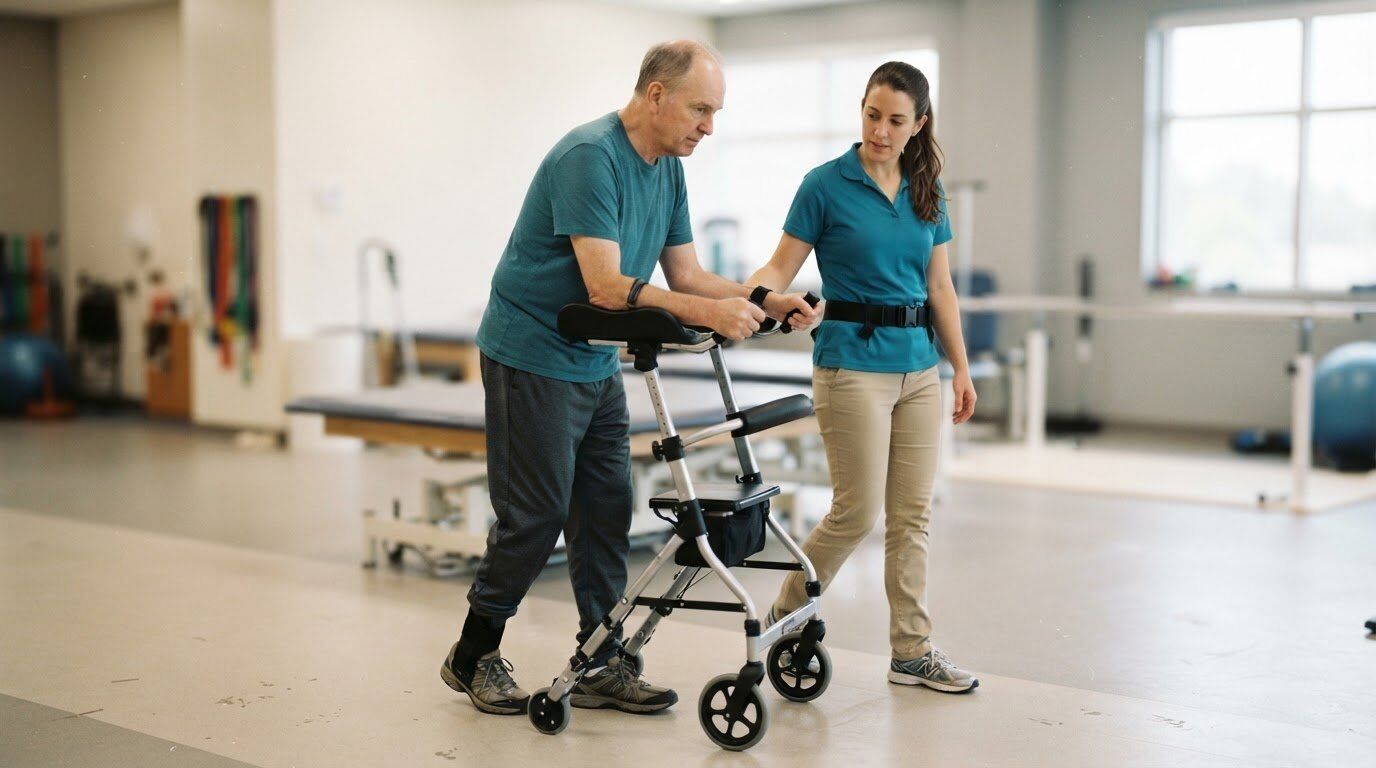
Supportive care for motor neuron disease is tailored to a person’s changing needs. Physiotherapy and appropriately adapted exercise may help with weakness and stiffness, while speech therapy, communication aids, occupational therapy, and assistive equipment can support everyday activities. Amyotrophic lateral sclerosis (ALS) is the most common form of motor neuron disease.
A diagnosis can raise difficult questions about what may change and how to preserve comfort, communication, and independence. That uncertainty is real, but practical support can be shaped around the person rather than applied as a one-size-fits-all plan.
This article explains what motor neuron disease is and how supportive therapies for motor neuron disease can help address day-to-day challenges. It covers tailored movement and exercise, speech and communication support, and equipment for mobility and daily tasks, helping you understand the options and how they fit together.
Key Takeaways
- Understand how motor neuron disease can affect movement, speech, swallowing, and breathing, and how its effects differ from person to person.
- Learn how medications may address symptoms or slow disease progression, while supportive care focuses on day-to-day needs.
- See how physiotherapy and tailored exercise can help address stiffness and support mobility.
- Explore how speech therapy and communication aids can help people maintain communication as needs change.
- Discover how occupational therapy and assistive equipment can support independence with everyday activities.
What is Motor Neuron Disease?
Motor neuron disease (MND) is a group of progressive conditions that damage the nerve cells controlling voluntary muscle function. As these motor neurons stop communicating effectively with muscles, weakness can develop and everyday actions may become harder. Amyotrophic lateral sclerosis (ALS), the most common form, affects both upper and lower motor neurons. Most people with MND are in their 60s and 70s, although adults of any age can be affected.
Different forms affect different motor neurons and follow different patterns. Progressive muscular atrophy affects lower motor neurons and often progresses more slowly. Primary lateral sclerosis is a rare form affecting upper motor neurons, and it also typically progresses more slowly. Progressive bulbar palsy can initially affect speech and swallowing. In some people, MND occurs with frontotemporal dementia, which can involve changes in behaviour, personality, or communication. These differences help explain why symptoms and support needs vary.
Symptoms may include progressive muscle weakness, stiffness, and reduced mobility. Speech, swallowing, and breathing can also be affected. The pattern changes as the disease progresses: someone may first notice difficulty with movement or communication, then need more help with daily activities as muscle function changes. There is no known cure, and care focuses on slowing disease progression where possible, relieving symptoms, and providing practical support.
Medication has different roles. Riluzole and edaravone may help slow disease progression, but they don’t reverse motor neuron loss. Tofersen is another treatment that can help slow progression in some cases; it is associated with SOD1-related MND. Medicines can also target specific symptoms: baclofen may reduce muscle tightness and spasms, while glycopyrrolate may reduce drooling. These treatments address distinct biological processes or symptoms, rather than restoring lost function.
Respiratory support may include noninvasive ventilation (NIV), which assists breathing through a mask rather than a tube placed in the airway. Healthdirect describes mask-based breathing support as an option for people with MND. Psychological support can include cognitive behavioral therapy (CBT), which can help people with MND cope with emotions, stress, or depression; counseling can also give caregivers a space to discuss the demands of care.
In the United States, patients can ask a neurologist or primary care clinician for a referral to a multidisciplinary ALS clinic, where neurology and rehabilitation needs can be coordinated. For support at home, contact local home health agencies or community care programs and ask about services suited to the person’s mobility, communication, and daily living needs. A clinician can help identify the type of support that fits the current challenges.
Personalised physiotherapy and exercise physiology
Physiotherapy and exercise are adapted to a person’s muscle weakness, stiffness, and mobility needs. For MND, the aim is practical: support movement and function while responding to changing symptoms.
Physiotherapy for Mobility and Spasticity
Physiotherapy uses movement-based support to address mobility and spasticity, or muscle stiffness and tightness. The NHS notes that physiotherapy and exercises can help with muscle weakness and stiffness in MND. A physiotherapist can shape sessions around tasks such as standing, transferring between a chair and bed, or moving safely around the home. This keeps therapy connected to activities that matter in daily life.
An assessment considers which movements are difficult and how symptoms affect function. Stiffness, for example, may make it harder to take a step or reach for an object, while weakness may affect how someone rises from a chair. A tailored plan can focus on maintaining comfortable movement and finding practical strategies for these tasks. As symptoms change, a physiotherapist can adjust the focus rather than rely on a fixed routine.
Exercise Benefits and Precautions
Exercise for MND is planned to support movement and manage stiffness, not to push through worsening symptoms. The NHS identifies exercise as a supportive measure for weakness and stiffness. Activities should be suited to current ability and clinical needs, including fatigue, balance, and breathing. Physical therapy and exercise can support strength and ease stiffness, while a tailored plan accounts for symptoms and helps avoid overexertion.
There is no single routine that suits everyone. A physiotherapist considers current movement, muscle weakness, stiffness, and the effort required for daily activities. The plan may emphasize gentle, manageable movement rather than demanding exercise. If walking is difficult, for instance, therapy can focus on mobility within the person’s current capacity. The goal is functional support, not a promise to reverse MND or stop disease progression.
Exercise physiology can help structure activity around a person’s changing capacity. Sessions can be reviewed against practical signs, such as whether standing, reaching, or moving between rooms remains manageable. If an activity causes marked fatigue or makes breathing feel harder, that response can guide adjustments to the plan. The pace and type of movement should reflect the person’s clinical picture, not a standardized target.
Physiotherapy has a different role from clinical trials, which investigate research questions about treatments. A rehabilitation plan addresses an individual’s movement and daily function. As MND changes, reassessment can identify when an exercise needs to be adapted, simplified, or replaced. Tailored physiotherapy is therefore a responsive part of care, with mobility, stiffness, and breathing considered alongside the person’s goals.
Speech therapy and communication aids
Motor neuron disease can affect speech and swallowing as muscle control changes. Speech and language therapy addresses these effects with support tailored to a person’s communication and daily needs.
Speech and Language Therapy
Speech and language therapy assesses changes in speaking and helps identify ways to communicate effectively. In progressive bulbar palsy, speech may be affected early, so support can become relevant before other changes dominate daily life. A therapist can consider how clearly a person speaks, how much effort conversation takes, and which communication methods suit their preferences.
Practical strategies can include allowing more time to speak, choosing a quieter setting, and agreeing on a clear signal for when a message needs repeating. These adjustments can make conversations with family, friends, and care teams more manageable. Because MND changes over time, speech therapy can revisit a person’s needs and adapt communication approaches as muscle weakness progresses.
Swallowing Therapy
Swallowing therapy addresses changes in eating and drinking by focusing on a person’s specific swallowing needs. Progressive bulbar palsy can affect swallowing as well as speech, making this an important part of support during daily meals. Rehabilitation for MND may include speech and swallowing therapy tailored to individual needs.
A therapist can discuss which parts of eating or drinking have become difficult and how those changes affect routine meals. For example, a person can describe the effort involved in eating or drinking so support can respond to their experience rather than rely on a general plan. The aim is to address current needs and coordinate relevant rehabilitation. Changes in swallowing can be discussed during speech and language therapy alongside communication concerns.
Communication Aids
Communication aids offer alternative ways to express messages when speaking becomes difficult. A speech therapist can introduce aids suited to the person, helping them communicate preferences, ask questions, or take part in a conversation when speech is less reliable.
The most useful aid depends on what a person can comfortably use and where communication matters most. A written message or letter board may help in a quiet conversation; an electronic communication device may suit someone who needs another way to share longer messages. These are examples, not a fixed prescription. A therapist can help match an approach to the person’s abilities and priorities.
Planning ahead can make communication support more useful. A person might identify important phrases, such as requests for assistance or ways to describe discomfort, and share preferred communication methods with close contacts. Family members can allow time for responses and confirm they have understood the message. This helps make communication more deliberate while keeping the person involved in decisions as MND’s effects change.

Assistive equipment and safety
As motor neuron disease changes movement, equipment can make everyday activities more manageable. Occupational therapy helps people maintain independence in daily tasks, while mobility equipment can support walking and getting around. The right support depends on which activities have become difficult, from moving around the home to eating and drinking. For someone with amyotrophic lateral sclerosis (ALS), those needs can change over time.
An occupational therapist can review how someone manages familiar tasks and identify where equipment may help. A mobility aid may support movement around the home, while equipment for eating or drinking may make mealtimes easier. These tools address practical barriers rather than changing the underlying disease. Their value depends on how well they fit the person’s abilities, routines, and living environment.
Safety depends in part on the right fit and use. Equipment should support the intended activity without adding unnecessary effort or making movement harder. Someone who struggles to move between rooms, for example, may need a different kind of support from someone whose main challenge is holding a cup. Occupational therapy can link equipment choices to the specific task and the person’s current function.
Needs can shift as muscle weakness progresses. An item that currently supports walking may no longer be the best choice if movement becomes more difficult. Reviewing everyday tasks can reveal useful signs, such as increased effort, difficulty completing an activity, or a change in how safely it can be managed. These observations can help show when further assessment or a different form of support may be useful.
Equipment can also support participation. A suitable aid for eating or drinking may help someone take part in mealtimes, while mobility equipment can make it easier to move between important areas. Small practical adjustments can improve daily routines, even though they do not reverse ALS or stop disease progression.
How much do MND supportive therapies and equipment cost in the United States, and what does insurance cover? Costs depend on the type of equipment and support required; coverage depends on the individual plan’s terms and the item being considered. The key questions are whether the benefit applies to that equipment and what conditions the plan sets for coverage. These details determine the out-of-pocket amount.
Equipment planning can also involve the people who assist with daily activities. Clear routines for using a mobility aid or eating support help caregivers understand how it fits into a task. As needs change, reassessing the task and equipment together keeps support focused on independence, comfort, and safe movement.
Tailored exercise for motor neuron disease
Tailored exercise starts with a practical question: which movements matter most to this person today? For someone with MND, that might mean maintaining a comfortable range of movement, practising a transfer, or keeping up a manageable daily routine. The plan should reflect current symptoms and muscular capacity, not a generic fitness target. Its purpose is supportive, not to reverse motor neuron damage.
Personalization matters because MND affects people differently. One person may experience stiffness that makes movement feel restricted; another may notice weakness affecting the same task. A physiotherapist can shape activity around these specific effects and adjust its focus as function changes. The NHS notes that physiotherapy and exercise can help with muscle weakness and stiffness in MND.
Exercise and daily movement are not the same as strenuous training. A plan can focus on manageable activities connected to a person’s goals, such as practising a movement used during everyday tasks. Relevant considerations include which muscles are affected, how much effort an activity requires, and whether symptoms change during or after it. These details help keep the plan individual rather than fixed.
A useful review considers function, not only whether an exercise was completed. A clinician may consider, for example, whether a person can still perform a familiar movement comfortably or whether the same activity now takes more effort. This information can guide changes to the exercise, how it is performed, or the goal it supports. As MND progresses, an earlier plan may need a different emphasis.
Exercise has a distinct role from disease-directed research. Some MND studies examine biological mechanisms and proteins such as SOD1; other research has investigated cells placed into the spinal cord. Those studies address research questions, while tailored movement focuses on a patient’s current function and symptoms. Keeping these aims separate helps set realistic expectations for what exercise is intended to support.
The key takeaway is that exercise should be specific, adaptable, and connected to daily life. A plan that reflects a person’s muscular capacity and changing movement needs can support mobility and help address stiffness. It should be reviewed when symptoms change, rather than treated as a permanent routine. Tailoring is central: the activity should serve the person’s goals, not the other way around.
Sunridge Medical
Sunridge Medical offers neurologic condition treatment through individualized care plans that combine conventional therapies with research-based alternative approaches. If you’re considering broader medical care alongside the practical supports discussed here, the team can help you explore an approach shaped around your health needs. Support for movement, communication, swallowing, and daily activities remains distinct from treatment directed at a neurologic condition, so each concern benefits from clear discussion within your care plan. Sunridge Medical also provides care for complex chronic diseases, including Chronic Lyme Disease Treatment and Autoimmune Disease Management. These services address different health concerns and are not substitutes for MND-specific rehabilitation or assistive equipment. For a conversation about neurologic care options, contact Sunridge Medical.
Make your next care conversation purposeful
Living with motor neuron disease can bring decisions that evolve as needs change. A useful next step is to identify the questions that matter most now, such as how to coordinate treatment discussions or what kind of broader medical perspective you want. This can help keep a care conversation focused on your priorities rather than a general overview.
Supportive therapies for motor neuron disease address practical needs, while medical care for neurologic conditions is a separate consideration. Sunridge Medical offers individualized care for complex health concerns, including Alternative Cancer Treatment Protocols. Its services also include Chronic Lyme Disease Treatment and Autoimmune Disease Management. These offerings address distinct conditions and should not be confused with rehabilitation, communication aids, or equipment.
If you’re considering a broader discussion of your health needs, contact Sunridge Medical. A thoughtful conversation can help you clarify what you’re seeking and consider the next steps with greater confidence.
Frequently Asked Questions
What Does the Current Research Reveal?
Research distinguishes treatments that target disease progression from care that manages symptoms and daily needs. Studies of regenerative approaches have not established consistent, meaningful clinical benefit across people with MND. Larger, better-controlled trials are needed to clarify which approaches may help, for whom, and at what disease stage. This distinction can help patients weigh established care alongside research participation without treating preliminary findings as proven outcomes.
What Is the Science Exploring in MND Management?
Researchers are studying biomarkers, gene-related mechanisms, and ways to influence the neural environment. Neurofilament light chain is being explored as a marker of disease progression and treatment response. Cell research also examines paracrine signaling, where cells release molecules that affect nearby cells. A Phase 1/2a trial investigated spinal cord transplantation of human neural progenitor cells that secrete GDNF. These approaches remain subjects of research, not established routine treatments.
What are the Current MND Treatments?
Current treatment can include medicines aimed at slowing progression or easing particular symptoms, alongside supportive care. Tofersen has been studied in people with faulty SOD1 genes: the Phase 3 trial included 108 MND patients. After six months, harmful SOD1 protein and neurofilament markers were lower, but physical improvement was not statistically significant. Treatment decisions also account for the person’s MND type, symptoms, and priorities.
Why is Rehabilitation Important?
Rehabilitation connects clinical recommendations with the tasks a person needs to manage each day. A coordinated plan can address changing movement, communication, swallowing, and equipment needs without treating each challenge in isolation. For example, a change in hand function can affect both mobility aids and eating routines. Reviewing goals as abilities change helps keep therapy relevant and focused on activities the person values.
What supportive therapies are used for motor neuron disease (MND)?
Support can include rehabilitation, communication assistance, mobility equipment, breathing support, nutrition guidance, and psychological care. Cognitive behavioral therapy can help people cope with stress, difficult emotions, or depression. The right combination depends on the person’s needs: breathlessness, for instance, may prompt discussion of respiratory support, while distress may make emotional support especially valuable. These approaches address different concerns and can be coordinated as circumstances change.
What occupational therapy and assistive devices help maintain independence with MND?
Occupational therapy focuses on making everyday tasks more manageable and supporting independence. An occupational therapist can identify where a task becomes difficult, then match support to that activity. Mobility equipment may help with getting around, while adapted equipment can assist with eating or drinking. The useful question is how a particular aid fits the person’s routine, abilities, and environment, not whether it is generally suitable for MND.
How can speech and communication therapy help as MND progresses?
Speech and communication therapy helps people address changes in speaking and maintain ways to express their needs. A therapist can identify suitable communication methods and revisit them as speech changes. It can help to agree on a reliable backup for important messages, such as expressing discomfort or making a choice. Sharing that approach with family and caregivers can support clearer, more consistent conversations.
What nutrition support and swallowing treatments are recommended for MND?
Nutrition support can help people with MND maintain a healthy weight, while swallowing therapy addresses difficulties with eating and drinking. These needs are connected: swallowing changes can affect how comfortably a person manages meals and nutrition. Rehabilitation may include speech and swallowing therapy tailored to individual needs. Discussing changes in eating or drinking helps bring relevant concerns into the care plan and supports coordinated attention to nutrition and swallowing.