


The Myers’ cocktail IV for immune support typically contains vitamin C, B-complex vitamins, vitamin B12, magnesium, and calcium, mixed with sterile water or saline for infusion. The exact combination can vary, and claims that it boosts immunity or eases fatigue aren’t established benefits. Knowing what’s in the infusion is a useful starting point, but it’s just as important to understand what the evidence can and can’t show.
If you’re considering this approach for low energy or a chronic condition, it’s reasonable to want more than a list of ingredients. This article explains common components and their roles, what to consider when weighing possible benefits for fatigue and chronic conditions, and the adverse effects and infusion risks to keep in mind. The goal is to offer a clearer, balanced picture for an informed conversation about your health.
Key Takeaways
- Understand the vitamins and minerals commonly included, and why the exact mixture can differ.
- See why claims about energy and immune benefits should be weighed against the limited evidence for people without nutrient deficiencies.
- Learn how chronic conditions or difficulty absorbing nutrients may affect the discussion of IV nutrition.
- Recognize possible infusion reactions, medication interactions, and health conditions that can increase risk.
- Explore how a broader, individualized care plan may be relevant when fatigue or complex chronic illness persists.
What Goes Into the Myers Cocktail?
A Myers Cocktail is an intravenous blend of vitamins and minerals, usually mixed with sterile water or saline. The ingredients enter the bloodstream through a vein rather than passing through digestion. Formulas can vary, so the name alone doesn’t tell you the exact dose or mixture.
Magnesium is involved in over 300 enzymatic reactions in the body, according to the National Institutes of Health. It supports functions such as nerve signaling and muscle activity. Vitamin C and B vitamins also have established roles in normal body processes, but those roles don’t prove an infusion prevents illness or improves wellness in everyone.
Immune support is a common reason people consider cocktail IV therapy. Providers may describe vitamin C as supporting immune function, or say an infusion supports white blood cells and antioxidant defenses. These are claims about potential effects, not proof that Myers’ Cocktail prevents colds, flu, or other infections. Very few studies have tested high-dose IV vitamin therapy in people without a nutrient deficiency.
Claims also extend to energy, fatigue, migraines, stress, pain, and allergies. Proposed explanations vary: B vitamins are linked with energy metabolism, magnesium with muscle and nerve function, and vitamin C with antioxidant activity. These roles alone do not show that an infusion will relieve symptoms or treat an underlying condition. Persistent symptoms deserve assessment for their underlying cause, rather than reliance on a wellness claim alone.
How does it compare with oral vitamins or standard medical care? IV delivery puts nutrients directly into the bloodstream, while oral vitamins are absorbed through the digestive system. Standard medical care evaluates symptoms and treats their cause; an infusion does not replace that assessment or prescribed treatment.
How can you assess clinic safety? Look up the administering clinician through the relevant state licensing board, and ask who prepares and administers the infusion. Before treatment, clarify the ingredients, sterile handling practices, medication interactions, and how staff monitor for reactions.
What does it cost, and does insurance cover it? Cost depends on the formulation, clinical setting, and services involved; a price is provided after a quote request. Insurance coverage varies by plan and the reason for treatment.
What do studies say about colds, flu, or other illnesses? Very few studies have tested Myers’ Cocktail or other high-dose IV vitamin therapy in people without a vitamin or mineral deficiency. Claims that it prevents infection or speeds recovery should not be treated as established clinical benefits.
Energy and fatigue
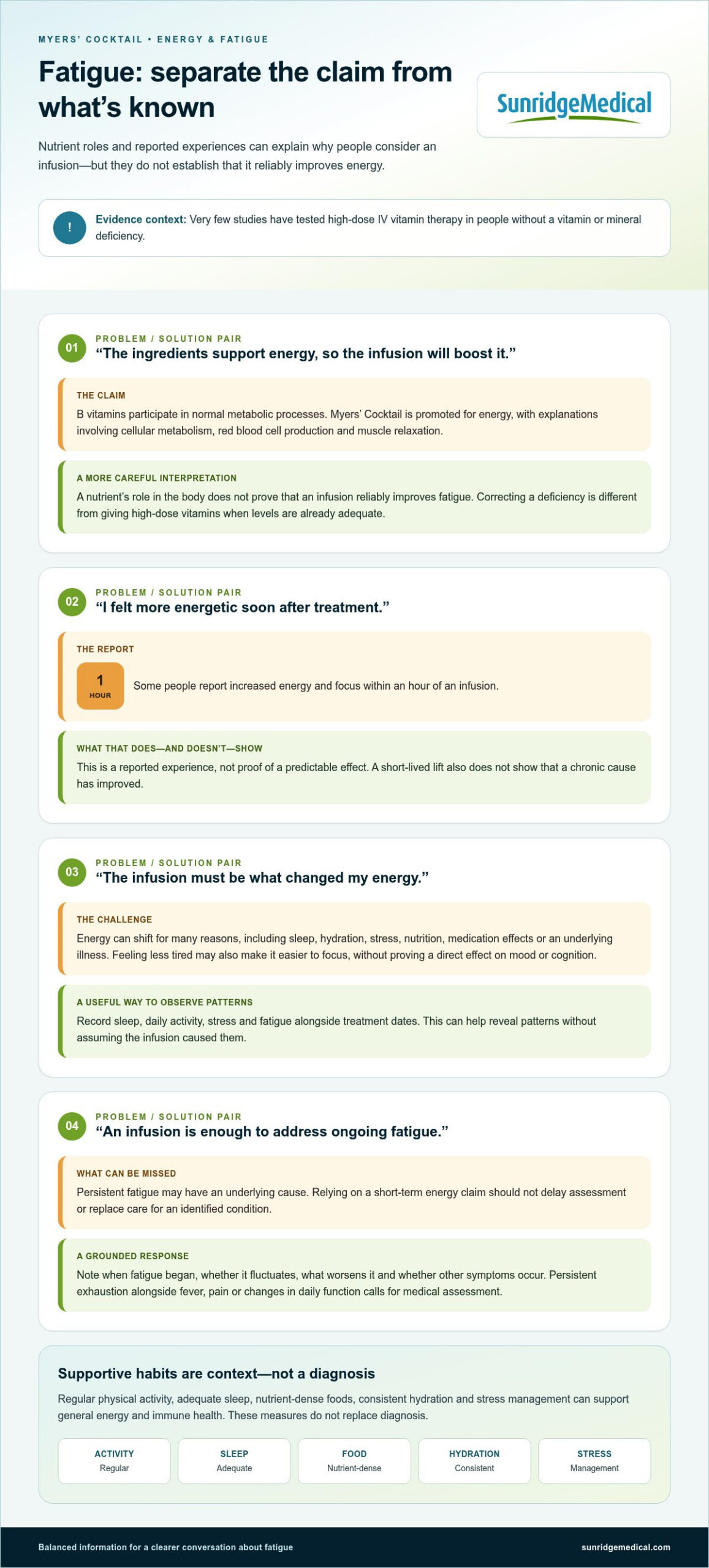
Fatigue can make ordinary tasks feel demanding, prompting interest in vitamin infusions that promise an energy boost. Myers’ Cocktail is promoted for energy and chronic fatigue, with explanations involving cellular metabolism, red blood cell production, and muscle relaxation. These proposed mechanisms describe how nutrients function; they do not establish that an infusion reliably improves fatigue.
Some people report increased energy and focus within an hour of an infusion. That timing is a reported experience, not proof of a predictable effect. Energy can shift for many reasons, including sleep, hydration, stress, nutrition, medication effects, or an underlying illness. A short-lived lift also does not show that a chronic cause has improved.
Vitamin B12 and other B vitamins participate in normal metabolic processes. Correcting a nutrient deficiency can be different from giving high-dose vitamins to someone whose levels are already adequate. Very few studies have tested high-dose IV vitamin therapy in people without a vitamin or mineral deficiency, so claims that it will enhance energy or mental clarity should be weighed carefully.
Mood and concentration deserve the same distinction. Someone who feels less tired may find it easier to focus, but that experience does not establish a direct treatment effect on mood or cognition. For example, poor sleep can affect both energy and attention. Recording sleep, daily activity, stress, and fatigue alongside treatment dates can help reveal patterns without assuming the infusion caused them.
For ongoing fatigue, start with the symptom pattern. Note when it began, whether it fluctuates, what worsens it, and whether other symptoms occur. Persistent exhaustion alongside fever, pain, or changes in daily function calls for medical assessment. An infusion should not delay evaluation or replace care for an identified condition.
Supportive routines address practical influences on energy. Regular physical activity, adequate sleep, nutrient-dense foods, consistent hydration, and stress management can support general energy and immune health. These measures do not replace diagnosis, but they can help clarify whether fatigue changes with daily habits. If low energy continues despite addressing these factors, discuss possible causes and appropriate evaluation with a healthcare professional.
Chronic Lyme disease can involve persistent symptoms that warrant an individualized medical discussion. For readers exploring that cause, Chronic Lyme Disease Treatment is relevant to the broader question of persistent fatigue. The key distinction remains whether care addresses an underlying condition or relies on a short-term energy claim.
Typical Myers’ cocktail ingredients
A Myers’ Cocktail formulation commonly combines vitamin C, B-complex vitamins, vitamin B12, magnesium, and calcium. The ingredients are administered intravenously, often in sterile water or saline. That route bypasses digestion, but direct bloodstream delivery doesn’t prove greater wellness benefits or protection from illness. Formulas vary, so ingredient names alone don’t show the amount administered or whether it suits a particular patient.
Vitamin C is included for its roles in immune function, collagen production, and nutrient absorption. These are normal functions of the nutrient, not evidence that an infusion prevents infections. A label showing vitamin C identifies one component; it does not establish an individual’s need or predict a clinical effect.
B vitamins can include thiamine, riboflavin, niacin, pantothenic acid, pyridoxine, and cobalamin, also known as vitamin B12. Each is a distinct nutrient, so “B-complex” is a broad label rather than a complete description. Checking which B vitamins appear helps distinguish a formula with several components from one containing only selected vitamins.
Magnesium supports functions such as nerve signaling and muscle activity. Calcium contributes to bone health, muscle function, and blood clotting. Their presence does not mean everyone needs supplementation. The amount and combination matter, particularly for people taking medication or managing a health condition.
Some formulations may also contain zinc, sodium, potassium, chloride, selenium, or manganese. Zinc has roles in immune function, wound healing, and cellular growth. Sodium, potassium, and chloride contribute to fluid balance, nerve function, and muscle contraction. Selenium and manganese are trace elements that may appear in certain versions, not defining features of every mixture.
To understand what a specific IV therapy contains, distinguish its ingredient list from its doses. Look for each nutrient’s name and amount, the fluid used, and whether the mixture includes additional minerals. For example, “vitamin C and B vitamins” does not identify which B vitamins are present. A complete formulation gives a clearer basis for discussing interactions, individual needs, and the reason for including each component.
That distinction matters for immune claims. Nutrients have biological roles, but their presence in an IV does not by itself establish that the mixture strengthens immune function or treats illness. The formulation’s purpose should be clear, and its ingredients considered alongside a person’s health status and medications. This keeps a nutrient’s known function separate from claims about what the full cocktail can accomplish.
Adverse effects and infusion risks
A Myers’ Cocktail is administered intravenously through a vein, with nutrients entering the bloodstream directly. An infusion typically takes 30-60 minutes. Its duration can depend on the formulation and infusion rate, and administering it too quickly can lower blood pressure, causing light-headedness or fainting.
Some effects are brief and localized. A person may have slight bruising where the needle entered, temporary light-headedness, or an upset stomach. Other reported effects of IV vitamin therapy include insomnia and depression. Effects after an infusion are often described as lasting several days, but that does not mean everyone experiences the same response.
Ingredient-specific risks deserve attention. Large intravenous doses of thiamine can cause anaphylaxis, a potentially life-threatening allergic reaction. High doses of vitamin B6 may damage peripheral nerves and cause neuropathy. Magnesium can interact with antihypertensive medication and contribute to low blood pressure, while infused calcium may bind with ceftriaxone in the blood, potentially harming the kidneys, lungs, or gallbladder.
Blood chemistry and existing conditions also matter. Magnesium-containing infusions can trigger arrhythmias or muscle weakness when magnesium or potassium levels are abnormal. Some people experience a gradual increase in blood pressure during IV vitamin therapy. People who are pregnant or breastfeeding, or who have kidney disease, high blood pressure, or a heart condition, are advised to avoid high-dose IV vitamin therapy.
Preparation and sterile handling are central safety concerns. Improperly sterilized equipment has been associated with severe infections, including fatal infections. The FDA has also highlighted concerns about drug products compounded in medical offices and clinics under insanitary conditions. An antioxidant ingredient or a nutrient’s role in normal production processes does not remove contamination risks.
During treatment, providers monitor patients for adverse reactions. That observation matters because a reaction can develop while the infusion is running, including sudden light-headedness, a blood-pressure change, or allergic symptoms. The specific ingredients and medications a person takes also shape which interactions deserve attention. A list of vitamins alone does not capture those risks.
Before an infusion, share relevant health conditions, pregnancy or breastfeeding status, and a complete medication list, including drugs such as ceftriaxone or antihypertensives. Mention known nutrient deficiencies and prior reactions to IV ingredients. These details help identify concerns related to the formula, rather than assuming a vitamin infusion is low-risk because it contains familiar nutrients.
The clinic’s estimate that effects often last several days is a general description, not a promise of how long any individual will feel them.
Olympia advises avoiding Myers Cocktail in patients with renal disease, corn allergy, or a G6PD mutation. Olympia also states that some people may experience slight bruising at the injection site or temporary lightheadedness after Myers’ Cocktail IV therapy. These points make individualized screening and discussion of prior reactions important before treatment.
Potential benefits for chronic conditions
Chronic symptoms can have different causes, so an IV nutrient blend is not a universal solution. Myers’ Cocktail IV is sometimes considered when malabsorption or difficulty obtaining adequate nutrients through diet limits intake. In that situation, intravenous delivery bypasses digestion. The relevant question is whether a nutrient shortfall contributes to a person’s symptoms, not whether the infusion is marketed for general wellness.
That distinction matters because fatigue, muscle discomfort, and reduced daily function can occur alongside many chronic conditions. A nutrient’s role in normal physiology does not show that extra amounts will improve a symptom. For example, magnesium supports muscle and nerve function, while calcium contributes to muscle activity. Those roles alone do not demonstrate that an infusion will relieve persistent pain or improve a chronic illness.
For someone with impaired absorption, the route of administration may be relevant because nutrients delivered into a vein do not rely on absorption through the digestive tract. Potential value depends on the underlying absorption problem, the nutrients involved, and whether the person has a deficiency. An IV mixture should therefore be considered in the context of nutritional status, not as a substitute for identifying why absorption or dietary intake is inadequate.
Hydration also deserves separate consideration. Fluid used for an infusion can contribute fluid during the session, but that does not establish a lasting improvement in hydration or chronic symptoms. Someone whose weakness worsens with dehydration needs an assessment of the cause and appropriate fluid needs. Adding vitamins and minerals does not make an infusion a treatment for every condition associated with low energy.
People managing chronic Lyme disease or a neurologic condition may seek options after persistent symptoms disrupt work, sleep, or movement. Those experiences deserve careful attention. A useful discussion separates symptom support from treatment of the underlying disease. It also considers current medications, kidney function, relevant nutrient levels, and whether the proposed ingredients fit the person’s health needs.
If treatment is being considered, track specific outcomes: fatigue during ordinary activities, muscle discomfort, sleep quality, or ability to complete a regular task. Record changes alongside other care and daily factors, such as food intake and hydration. A clear measure is more informative than a general impression of feeling better, and helps distinguish a short-term change from meaningful improvement in function.
The practical takeaway is focused: IV nutrient delivery is most relevant to a chronic-condition discussion when absorption or adequate dietary intake is a concern. It doesn’t establish disease treatment or replace care directed at the underlying cause. To explore a broader perspective on persistent, complex symptoms, discuss individualized care for chronic conditions.
Sunridge Medical: Alternative Cancer Treatment Protocols
Sunridge Medical offers Alternative Cancer Treatment Protocols for people seeking a broader approach to cancer care. Its work also includes Chronic Lyme Disease Treatment, Autoimmune Disease Management, and Hormone Optimization Therapy. These services may be relevant when persistent symptoms or a complex diagnosis call for care that considers more than an IV nutrient infusion.
Sunridge Medical combines conventional therapies with research-based alternative treatments in individualized care plans. This approach focuses on the person’s condition and health needs, rather than treating a Myers’ Cocktail as a solution for every symptom. If you’re weighing options for cancer or a complex chronic condition, contact Sunridge Medical to discuss your care.
Make your next health decision with clarity
Use what you’ve learned to frame a focused conversation about your goals, symptoms, medications, and current care. When considering a Myers’ cocktail IV for immune support, distinguish the reason you’re considering an infusion from the broader health concern you want addressed. That can help keep expectations grounded and bring attention to the needs that matter most in your situation.
If persistent symptoms or a complex diagnosis are shaping that decision, consider how any option fits into your overall care rather than treating it as a stand-alone answer. Sunridge Medical works with people pursuing care for complex conditions, including cancer, chronic Lyme disease, and autoimmune disorders. Contact Sunridge Medical to discuss your care questions and explore a thoughtful next step for your health.
Frequently Asked Questions
Why Choose IV Therapy During Cold and Flu Season?
Some people consider a Myers’ cocktail IV for immune support, hoping it will help protect them during cold and flu season, but it has not been established as a way to prevent infections. IV therapy may be more relevant when a diagnosed absorption problem makes it difficult to obtain nutrients through food. Adequate sleep, hydration, nutrient-dense foods, regular activity, and stress management support general health without presenting an infusion as infection prevention.
What ingredients and doses are in a Myers’ cocktail IV?
Common ingredients include vitamin C, B-complex vitamins, vitamin B12, magnesium, and calcium. Some formulations may include other minerals, such as zinc, selenium, or manganese. The exact mixture can vary, so the name doesn’t specify the dose. Before treatment, review the complete ingredient list and amount of each nutrient with the administering professional, especially if you take medication or have an ongoing health condition.
Is there scientific evidence that Myers’ cocktail IV boosts immune function or prevents infections?
Evidence that a Myers’ cocktail IV for immune support prevents infections or reliably boosts immunity has not been established. Very few studies have tested Myers’ Cocktail or other high-dose IV vitamin therapy in people without a vitamin or mineral deficiency. Nutrients such as vitamin C have normal roles in immune function, but that fact does not demonstrate that an infusion prevents illness. Consider claims of immune benefits separately from established infection prevention and care.
What are the risks and side effects of Myers’ cocktail IV?
Possible effects include bruising at the needle site, temporary light-headedness, upset stomach, insomnia, or blood-pressure changes. More serious risks include allergic reactions and infection from improperly sterilized equipment. The ingredient mix also matters: high doses of vitamin B6 can damage peripheral nerves, and large IV doses of thiamine can cause anaphylaxis. Share medication and health details before treatment, and report symptoms during an infusion promptly.
Who should avoid Myers’ cocktail IV, including people with kidney disease or pregnancy?
High-dose IV vitamin therapy is advised against during pregnancy or breastfeeding and for people with kidney disease, high blood pressure, or a heart condition. Kidney impairment is especially important because it can affect how the body handles some nutrients. People with a corn allergy or G6PD mutation are also advised to avoid this infusion. Disclose these conditions before any treatment is considered.
Can Myers’ cocktail IV interact with medications or affect lab test results?
Yes, potential medication interactions include magnesium with antihypertensives, which can contribute to low blood pressure. IV vitamin B6 can reduce responses to medicines used to stimulate blood cell production, including erythropoietin, epoetin alfa, and darbepoetin alfa. Infused calcium may also interact with ceftriaxone. Before laboratory testing, tell the clinician interpreting your results about the infusion and share its ingredients and doses.