

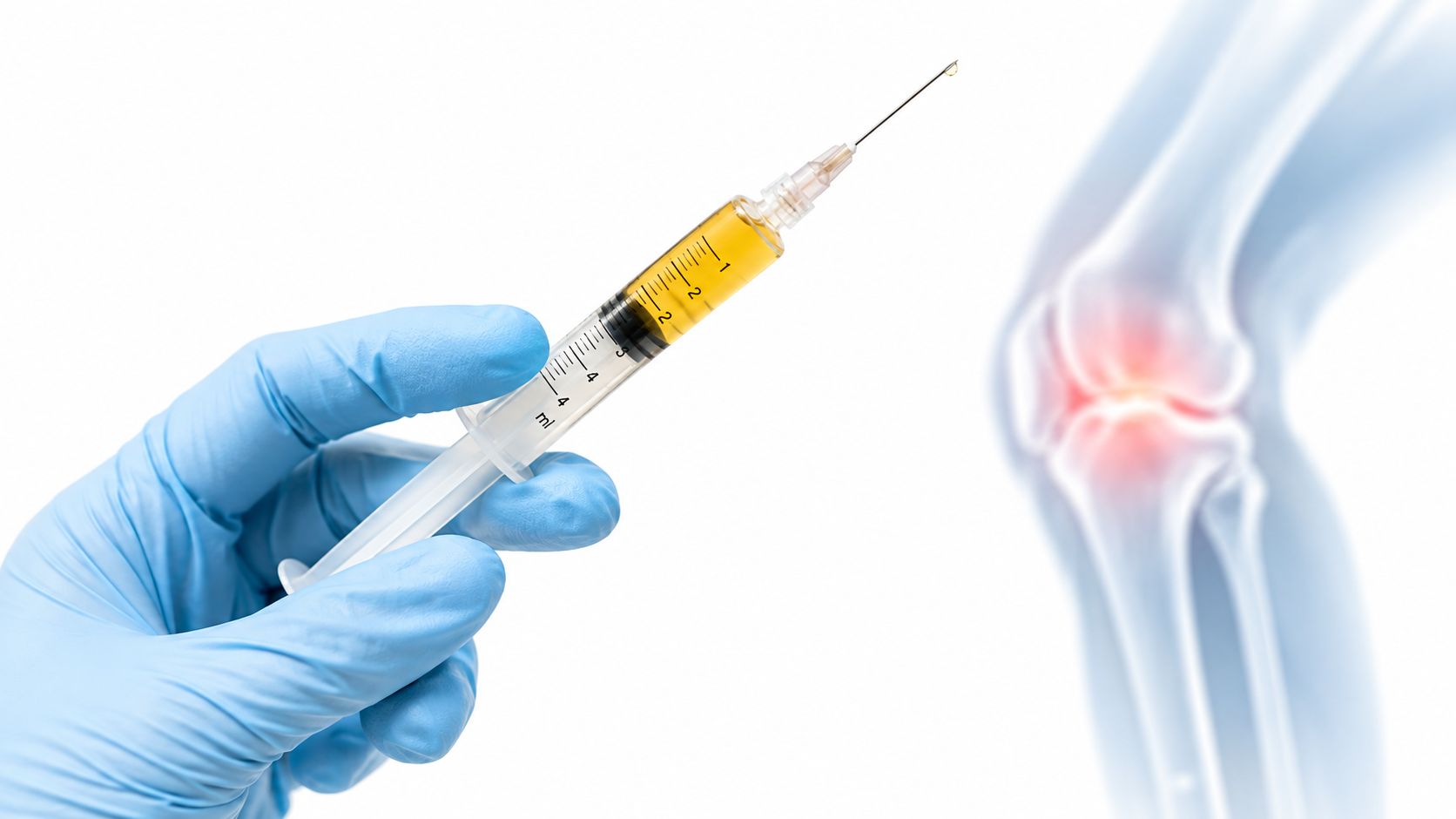
You've been offered a PRP injection and are trying to picture the day after: Will the area hurt more? How long might it stay sore? And how can you tell ordinary irritation from a complication? Those are sensible questions, especially when the injection site, your medications, or another health condition could affect the decision.
The evidence is generally reassuring for the studied uses of platelet-rich plasma, but “generally well tolerated” isn't the same as risk-free or right for every person. Your risk depends on the preparation, the injection site and technique, and your health history. Here's how to think through expected reactions, warning signs, and the questions to raise before treatment.
Table of Contents
- What Patients Really Want to Know About PRP Safety
- How Platelet Rich Plasma Is Made and Why It Matters for Side Effects
- Common Short-Term Side Effects After PRP
- Less Common Risks Worth Understanding Before You Consent
- Why Formulation and Treatment Site Change the Picture
- Red Flag Symptoms That Warrant a Call to Your Clinician
- How Sunridge Medical Evaluates PRP Candidacy in Scottsdale
- Key Takeaways and Next Steps for Phoenix Area Patients
What Patients Really Want to Know About PRP Safety
A patient considering a knee injection may be less concerned with the phrase “favorable safety profile” than with what happens when they stand up, climb stairs, or try to sleep that night. Someone considering an injection near a tendon, nerve, or the spine may have a different concern: could the needle irritate or injure nearby tissue? The useful question isn't only whether PRP has been tolerated in studies. It's whether the proposed procedure makes sense for your condition, anatomy, medications, and goals.
PRP uses a preparation made from your own blood, but that doesn't make the injection harmless by definition. Reviews of PRP for lower-back pain reported no major complications or serious adverse events in the included studies, and found no statistically significant difference in adverse-event rates between PRP and control injections. At the same time, study protocols varied, and the absence of serious events in published trials doesn't prove that severe complications are impossible. The evidence review of PRP for lower-back pain is reassuring about the reported experience, while also underscoring why study findings can't replace an individual assessment.
A practical distinction: “Was this generally tolerated in studies?” and “Is this a reasonable option for me?” are two different questions.
Before scheduling, ask what reaction is expected for your specific injection and who to contact if it doesn't follow that pattern. The explanation should include the proposed target, preparation method, likely short-term soreness, and risks that matter for your medical history. If you're comparing regenerative procedures, Sunridge Medical's overview of platelet-rich plasma versus stem cell approaches can help frame the discussion around what each approach involves rather than treating them as interchangeable.
Patients weighing risks from other hands-on treatments may also find it useful to read this explanation of chiropractic adjustment side effects. The important principle applies across procedures: understand what's expected, what depends on technique, and what symptoms need follow-up.
How Platelet Rich Plasma Is Made and Why It Matters for Side Effects
PRP begins with a blood draw, followed by processing and an injection into a selected area. A centrifuge acts like a sorting machine: it separates blood components so the clinician can collect a portion concentrated in platelets. Those platelets release signaling molecules, including growth factors, after the preparation is delivered to the target tissue.
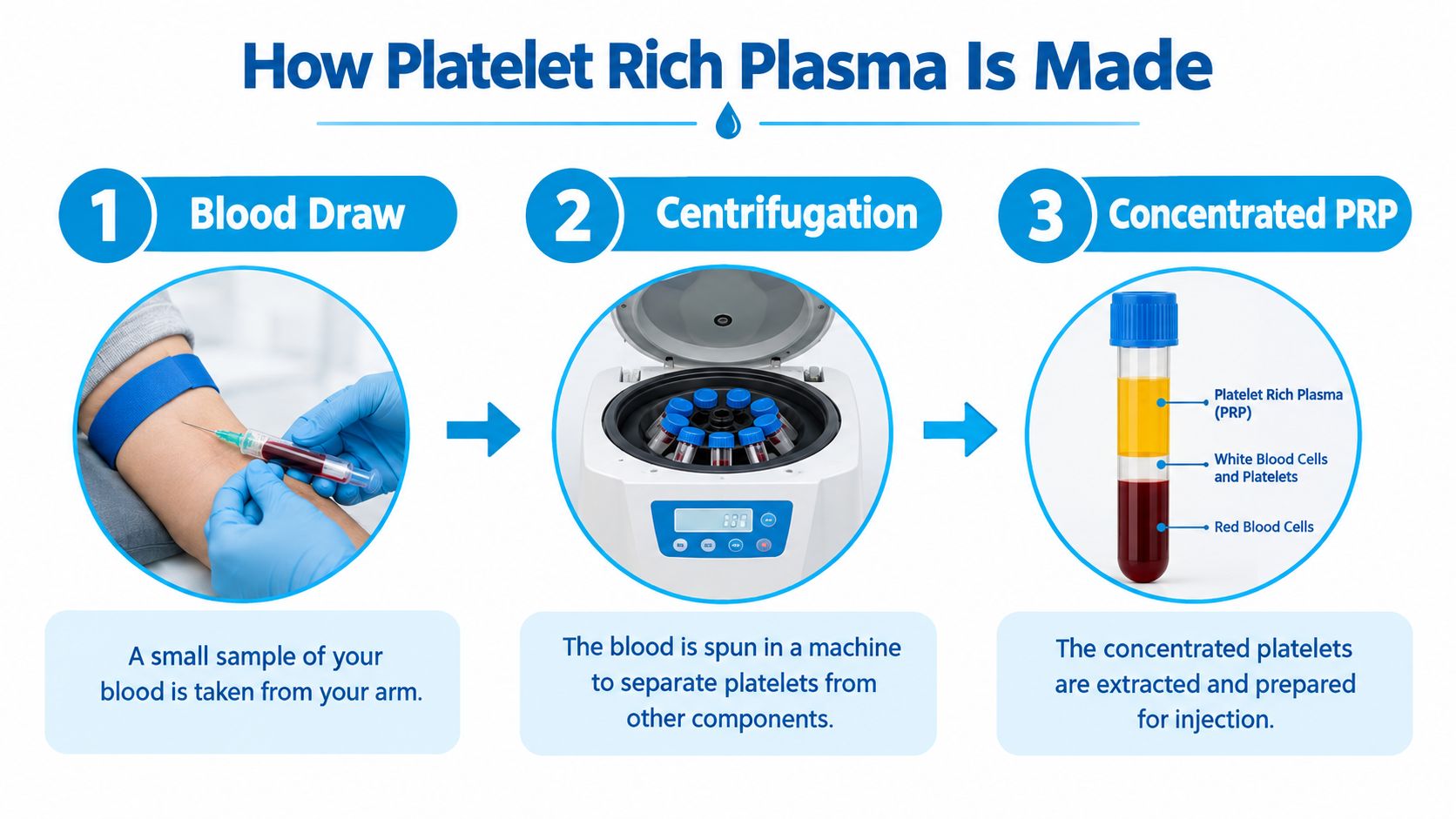
That “repair crew” isn't prepared the same way everywhere. PRP protocols can differ in platelet concentration, white blood cell content, whether the product is activated, the centrifugation approach, injection site, and number of treatments. These differences affect what is injected and make it harder to compare results across studies or assume that every clinic's procedure has the same side-effect profile.
Questions that make the preparation clearer
Before treatment, ask the clinician to explain:
- What preparation is planned: Is it leukocyte-rich or leukocyte-poor PRP, and why does that fit the target?
- How the injection will be placed: Will the clinician use ultrasound or other imaging guidance, particularly if the target is near sensitive structures?
- What aftercare applies: What activities should you modify, and which medicines should you continue or avoid?
- What to expect afterward: Which symptoms are ordinary for this site, and how can you reach the clinic if they worsen?
The method should fit the treatment goal and anatomy. A general explanation of PRP for hair thinning illustrates that the target area can vary considerably, but the risks of a scalp procedure shouldn't automatically be applied to an orthopedic or spinal injection. Ask about the procedure being offered to you, not just PRP as a broad category.
Common Short-Term Side Effects After PRP
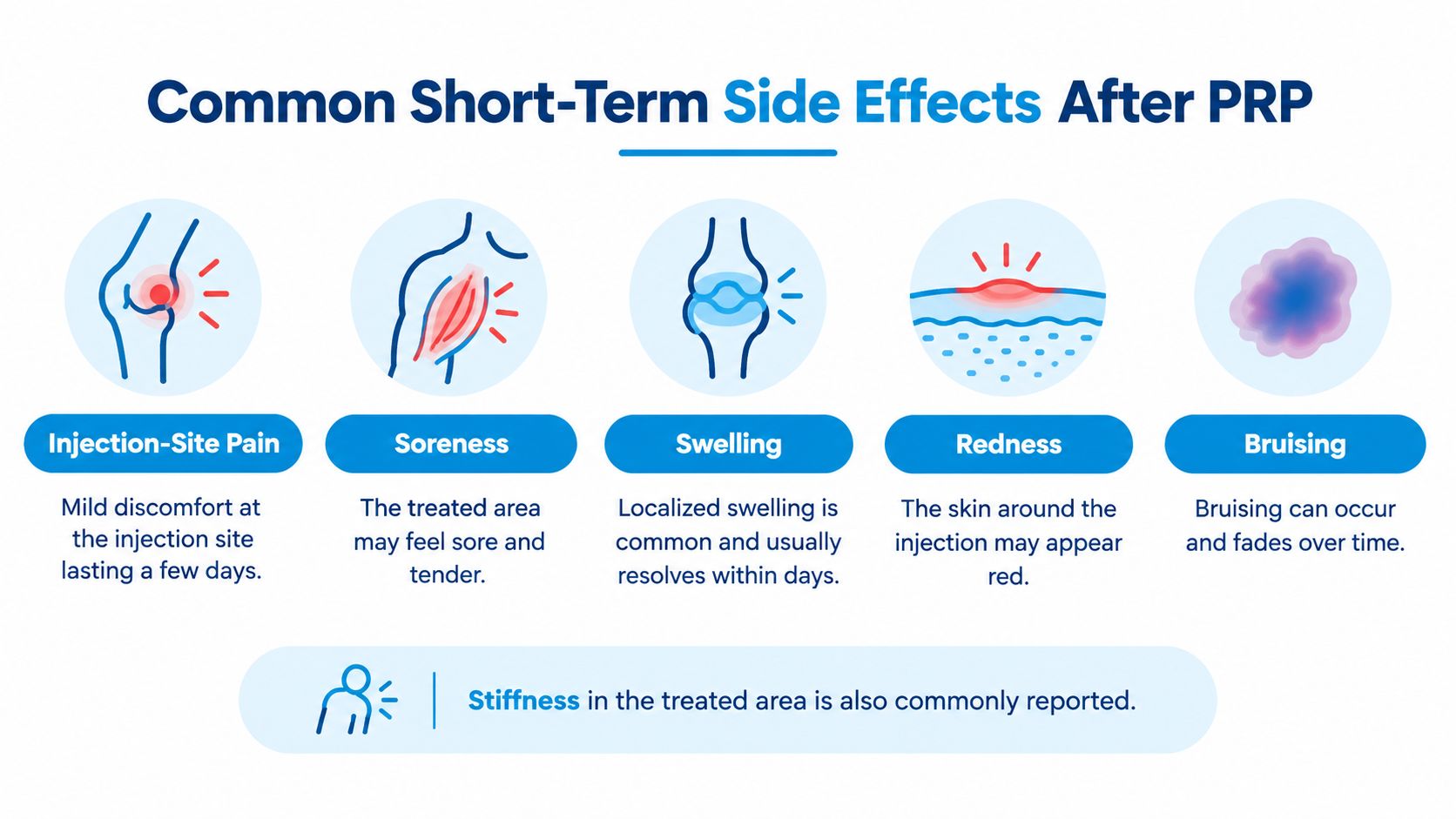
The most familiar reactions are local: pain at the injection site, soreness, swelling, redness, bruising, and stiffness. A temporary increase in the original pain can also happen. A systematic review of PRP for hamstring injuries reported a mean complication rate of 5.2%, with a range of 2.7% to 9.1%; reported events were mainly post-injection discomfort, pain, or transient sciatic-nerve irritation. The review of PRP for hamstring injuries provides an example from one indication, not a universal rate for every PRP procedure.
Why an inflammatory flare can happen
Platelets and white blood cells can release inflammatory mediators and growth factors at the treatment site. That local response is one reason the area may feel more tender or stiff for a while. A short-lived increase in discomfort doesn't, by itself, mean the injection failed. What matters is how symptoms behave over time and whether concerning signs appear.
The timing varies with the target, preparation, and person. Local symptoms are often described as short-lived, but no single schedule applies to every injection. Ask your clinician what duration they consider expected for your procedure and what to do if soreness isn't easing. Follow their activity guidance, and use ice or heat only as advised for your treatment. Don't start or stop an anti-inflammatory medicine without checking, since medication instructions depend on the clinician's plan and your other health needs.
A systematic review and meta-analysis of randomized trials found that injection-site pain was the most common reported complication, and that the reported pain resolved during the study periods. It also found more complications with leukocyte-rich than leukocyte-poor PRP in the included analysis. The PRP complications meta-analysis supports discussing both the expected local response and the formulation, rather than relying on a single side-effect estimate for all patients.
Less Common Risks Worth Understanding Before You Consent
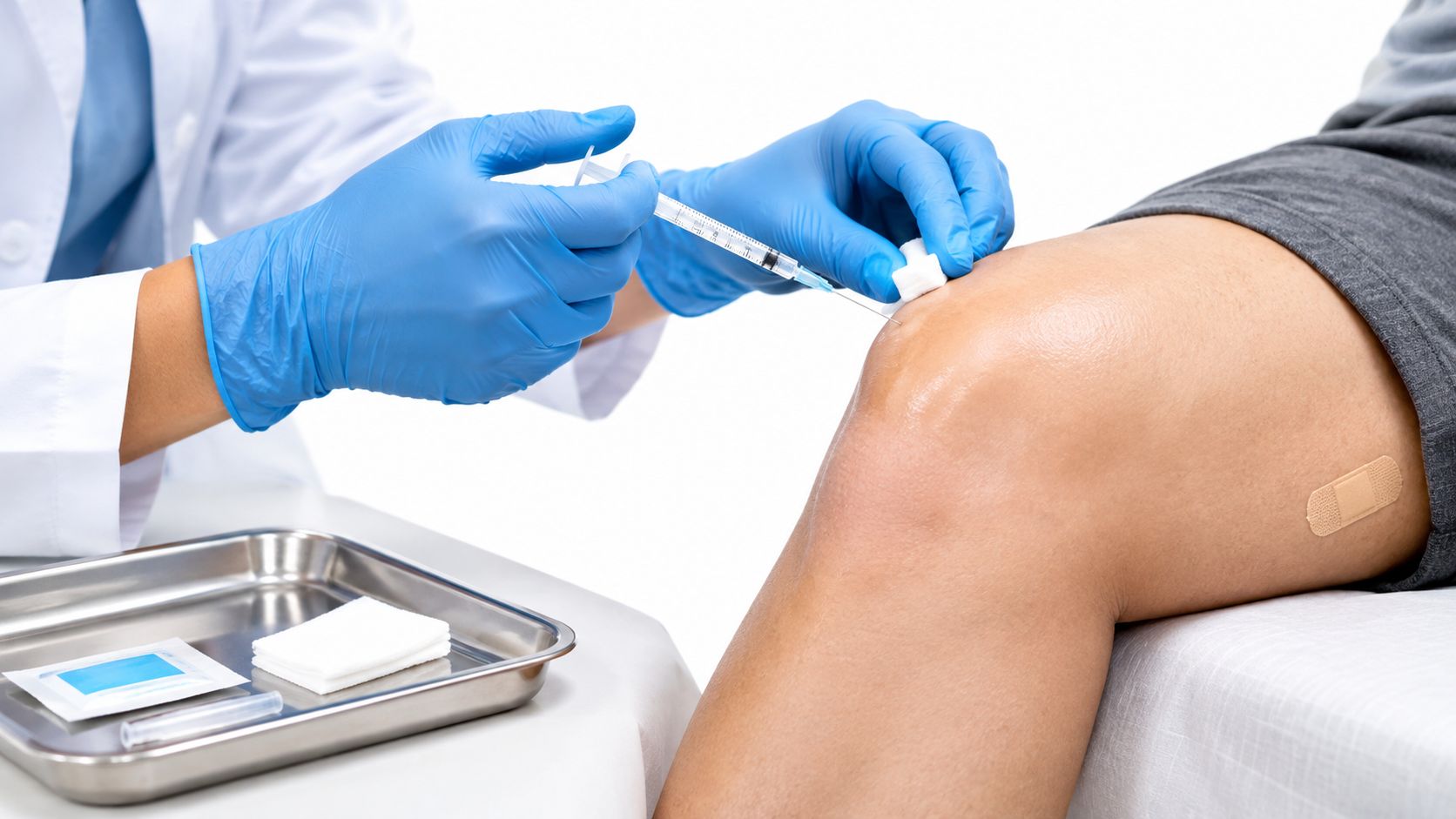
Most reported PRP reactions are local, but informed consent should cover less common procedural risks too. Because PRP involves a blood draw and an injection, infection, bleeding or hematoma, tissue irritation, and a vasovagal reaction are possible. Nerve irritation or injury matters particularly when a needle approaches sensitive anatomy. Inadequate symptom relief is also a real outcome to consider: an injection may not help, and it shouldn't be presented as a guaranteed treatment.
Risk depends partly on where and how the clinician injects. Skin disease or an active infection near the planned site can affect whether treatment should proceed. Bleeding disorders and medications that affect coagulation deserve review. Procedures near nerves, vessels, tendons, or spinal structures call for careful attention to the needle path and, when appropriate, imaging guidance.
What “from your own blood” does and doesn't mean
Autologous means the material comes from your own blood. It doesn't mean the entire process is risk-free: blood must be drawn, handled, processed, and injected with appropriate precautions. Infection-prevention concerns can arise from the procedure and handling, even when the prepared product is autologous. PRP also isn't an FDA-approved treatment for every condition; its clinical use depends on the indication, provider judgment, and informed consent. This review of PRP infection-prevention issues discusses why preparation and injection safety matter.
Some reviews have raised concern about inflammatory reactions in particular settings. In a summary of systematic reviews on knee osteoarthritis, most reviews described minor complications comparable to other injections, but findings weren't uniform: one comparison reported a higher adverse-event risk versus saline based on only two studies, and an included study reported mild synovitis after treatment. Those differences show why the treated joint, PRP formulation, comparison treatment, and definition of an adverse event matter.
Published studies can't reliably rule out rare complications, especially when sample sizes are small. If you're comparing injection-based options, ask how the specific procedure's risks relate to your diagnosis; research on Prolozone therapy offers context for a different approach, but it doesn't establish that one injection is suitable for every patient.
Why Formulation and Treatment Site Change the Picture
Two people can receive PRP and have different experiences because both the preparation and the target tissue matter. Leukocyte-rich PRP contains more white blood cells and may prompt a stronger inflammatory response. Leukocyte-poor PRP contains fewer white blood cells and may be considered when limiting post-injection inflammation is a priority. Neither label alone tells you which preparation is appropriate; the choice needs to match the condition and clinical judgment.
| Factor | Typical post-procedure response | What it means for you |
|---|---|---|
| Leukocyte-rich formulation | May produce a stronger local inflammatory response | Ask why this formulation fits your condition and what soreness to expect |
| Leukocyte-poor formulation | May be selected when less inflammation is desired | Ask whether it is appropriate for the tissue being treated |
| Joint or tendon target | Local pain, swelling, or stiffness can occur | The target and needle path shape the relevant risks |
| Spine or nerve-adjacent target | Nerve irritation is a procedure-specific concern | Ask how the clinician will locate the target and reduce injury risk |
| Imaging guidance | Can help the clinician place the needle accurately | Ask whether ultrasound or other guidance is planned and why |
The treatment site changes the stakes. A knee injection, a tendon injection, and a procedure near the spine aren't interchangeable because each uses PRP. Anatomy, nearby nerves and blood vessels, and the clinician's ability to visualize the target all influence the procedural discussion. For musculoskeletal concerns, Sunridge Medical's information on chronic soft-tissue pain and musculoskeletal injuries can help you identify the type of issue to discuss during an evaluation.
Ask the clinician to explain the formulation and needle path in plain language. A useful answer connects those choices to your diagnosis and anatomy, rather than implying there is one standard PRP product for every use.
Red Flag Symptoms That Warrant a Call to Your Clinician
Mild soreness and localized irritation may occur after an injection. Symptoms that intensify, spread, or suggest infection or nerve involvement need a different response. Your treating clinician knows the injection site and procedure, so contact that clinic first when symptoms are concerning.
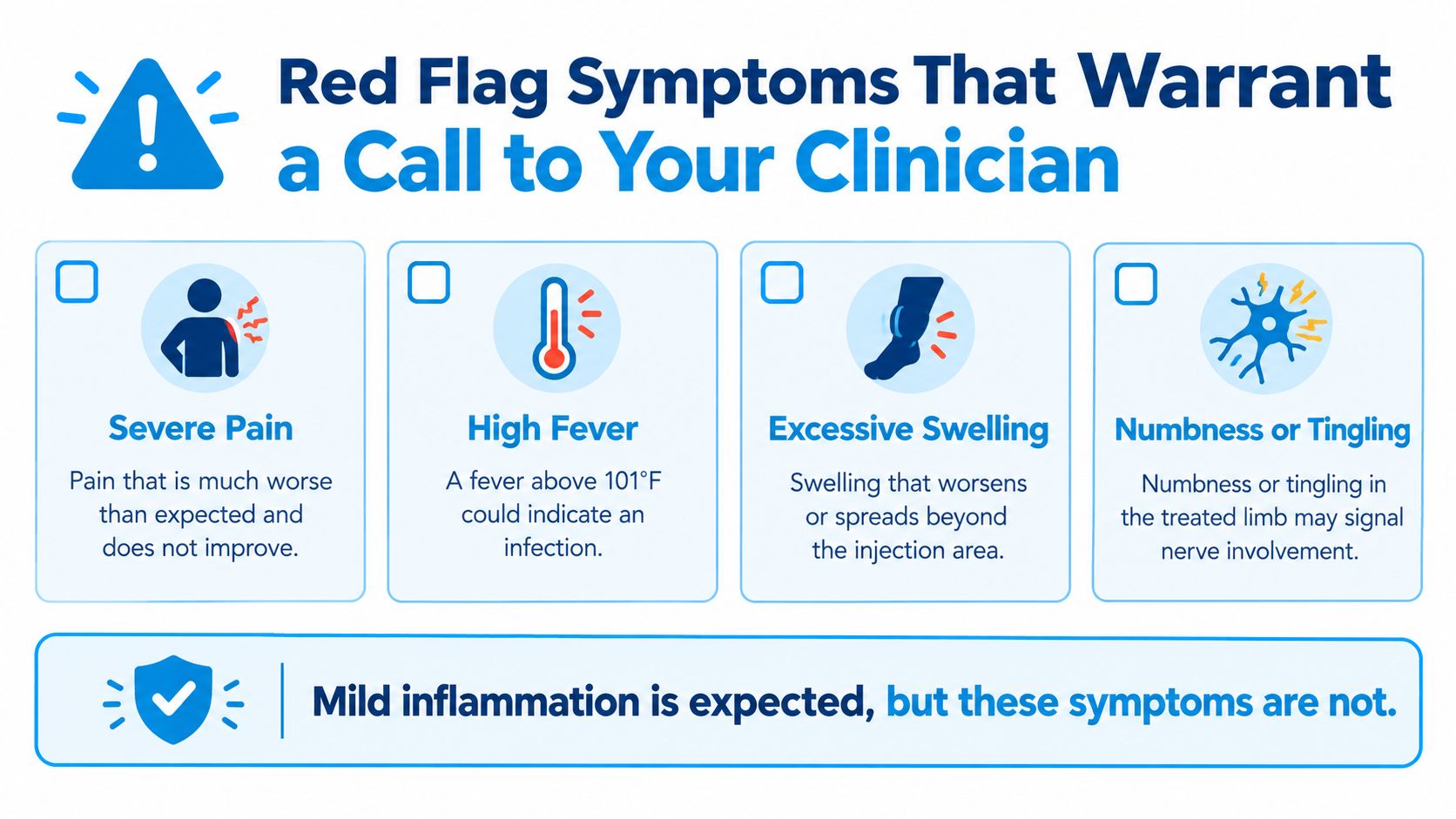
Use symptoms and their direction to guide the next step
- Monitor and follow your care instructions: Mild, localized soreness or bruising that isn't worsening can often be watched at home, as long as it fits the expectations your clinician gave you.
- Call your clinician promptly: Contact the clinic about worsening redness or warmth, increasing swelling, drainage, pain that keeps escalating rather than easing, persistent numbness or tingling, or new weakness.
- Seek same-day medical assessment: Fever with a hot, spreading, or draining injection site, rapidly worsening pain, or a new neurological problem warrants urgent evaluation. If symptoms are severe or you can't reach your clinician, seek urgent or emergency care.
Progressive redness, warmth, drainage, or fever can signal infection. New weakness or persistent numbness may indicate nerve involvement, while severe or escalating pain needs assessment rather than reassurance based on average study findings. Don't wait for a routine follow-up if concerning symptoms are developing.
The infographic includes a fever threshold of 101°F as a warning marker, but your clinician's instructions and the full symptom picture matter; don't use a temperature reading alone to dismiss worsening symptoms. For a visual reminder of warning signs, review the red-flag symptoms after PRP video.
How Sunridge Medical Evaluates PRP Candidacy in Scottsdale
A responsible evaluation starts with the proposed indication, not with an assumption that PRP is suitable because it's available. At Sunridge Medical in Scottsdale, the discussion can include the target tissue, the evidence and uncertainty for that use, the intended preparation, and how the procedure fits with your broader care. Established uses and emerging or off-label applications shouldn't be described as equally proven.
Medical history matters as much as the injection plan. The clinician should review anticoagulants and antiplatelet medicines, and consider platelet count or coagulation testing when clinically indicated. Active infection, skin disease at the planned site, immune compromise, bleeding concerns, and the intended anatomical target also need attention. Patients with cancer or complex chronic illness may need a more individualized review of their overall treatment plan before an injection is considered.
Bring a complete medication list and a clear description of your goal. That helps the clinician assess whether PRP is an appropriate option, what uncertainties remain, and what other care should continue.
PRP is one possible tool, not a replacement for needed conventional care or a standalone answer to every chronic problem. For patients with ongoing joint symptoms, Sunridge Medical's chronic joint pain information provides a starting point for discussing evaluation and treatment options in context.
Key Takeaways and Next Steps for Phoenix Area Patients
PRP is generally well tolerated in the studied indications, with temporary local discomfort the most consistent reported reaction. But your experience depends on the preparation, injection site, technique, and overall health. Ask what's expected for your procedure and what symptoms should prompt a call.
How long might soreness last? It varies; follow the recovery guidance for your treatment and ask when persistent or worsening pain should be reassessed.
Does cancer or chronic illness change the decision? It can. Medication use, immune status, bleeding concerns, and the reason for treatment may call for individualized review.
Do repeat injections automatically compound risk? There isn't one answer for every protocol. Ask how the number and spacing of proposed treatments affect your situation and whether the expected benefit justifies the procedure.
For people in Scottsdale, Phoenix, Paradise Valley, Tempe, Mesa, Chandler, Gilbert, and the greater Phoenix area, a conversation with a clinician can clarify whether an evaluation is appropriate. Bring your medication list, relevant diagnoses, and questions about formulation and aftercare.
Sunridge Medical offers individualized, integrative evaluations that consider PRP alongside your diagnosis, medications, and broader care plan. If you're in the Scottsdale area and want to discuss whether an assessment makes sense for you, contact Sunridge Medical to start the conversation.