


Recovery after Lyme disease treatment can be non-linear: symptoms may ease, flare, and improve again. Post-treatment Lyme disease syndrome recovery can take time, and fatigue, pain, or difficulty thinking may persist after antibiotic treatment. The term PTLDS describes significant symptoms that begin within six months after treatment and last at least six months.
If your progress feels uneven, it can be frustrating, especially when you expected treatment to bring a clear turning point. This article explains what post-treatment Lyme disease syndrome recovery means, what evidence says about lingering symptoms and additional antibiotics, and how pacing, supportive care, and assessment for coinfections may fit into recovery. It also explains why persistent symptoms deserve careful evaluation, since fatigue, pain, and cognitive difficulties can have causes beyond Lyme disease.
Key Takeaways
- Track changes in fatigue, pain, thinking, sleep, and daily function over time; recovery can include setbacks as well as progress.
- Persistent symptoms deserve a broad evaluation, since conditions beyond Lyme disease can cause similar problems.
- Learn why evidence does not support extended antibiotics as a routine response to lingering symptoms, and why prolonged treatment can carry risks.
- Understand how pacing and gradual activity adjustments may help you manage energy while rebuilding capacity.
- Explore how coinfections and the terminology used for ongoing symptoms can shape the questions considered in a personalized care plan.
Persistent symptoms after Lyme disease treatment
After antibiotic treatment, fatigue, body aches, or difficulty thinking can persist, even when the initial infection has been treated. Some people with early Lyme disease notice improvement within 4-8 weeks, while recovery for others is uneven.
Lingering symptoms after treatment
Persistent symptoms after Lyme disease treatment may include fatigue, widespread musculoskeletal pain, and difficulty thinking. These problems can affect work, sleep, concentration, and everyday routines. Tracking how they change can help clarify their impact.
PTLDS describes significant symptoms that arise within six months after treatment for physician-documented Lyme disease and last at least six months. Studies have reported that 5 to 30 percent of people ideally diagnosed and treated for Lyme disease develop PTLDS. The range reflects differences between studies and criteria, not a prediction for an individual. A symptom record can capture patterns that are easy to miss day by day.
Cognitive symptoms and brain imaging
Cognitive symptoms may include memory problems, particularly with verbal memory, and difficulty concentrating or sustaining attention to spoken information. These changes can make conversations, reading, or following instructions more demanding than before Lyme disease.
A multimodal neuroimaging study compared 12 patients with PTLD with 18 healthy controls. PET scanning found activated microglia and reactive astrocytes across 8 brain regions in the PTLD group. These findings offer a research clue about brain activity, but they don’t establish a routine diagnostic test or a proven treatment. Cognitive concerns still need to be understood alongside symptoms and daily function.
Possible explanations for lingering symptoms
Lingering symptoms can have several possible explanations, and fatigue or pain alone cannot confirm an ongoing Lyme infection. Other infections, medications, depression, diabetes, and cancer can also cause fatigue, body aches, or difficulty thinking. A broad review helps avoid treating one symptom as proof of a single cause.
Researchers have found Borrelia peptidoglycan, a bacterial cell-wall fragment, in joint fluid from people with Lyme arthritis weeks to months after treatment. This finding may help explain ongoing inflammation in some cases, but it does not show that live bacteria remain or establish the cause of every persistent symptom. Diagnosis depends on the full clinical picture.
Pacing activity around symptoms
Pacing means matching activity to your current capacity and building back gradually, rather than pushing through a flare. For example, if a long grocery trip leaves you feeling worse, divide errands across days and rest between tasks.
Notice how activity affects fatigue, pain, and concentration later that day and afterward. A brief daily note can record activities, symptom changes, sleep, and medication adjustments, giving a healthcare provider concrete patterns to review. If symptoms worsen, scaling back and resuming activity more gradually may help avoid repeated overexertion. Persistent or recurring problems after recommended antibiotic treatment call for an evaluation of possible causes, rather than assuming every setback has the same explanation.
Evidence on additional antibiotic treatment
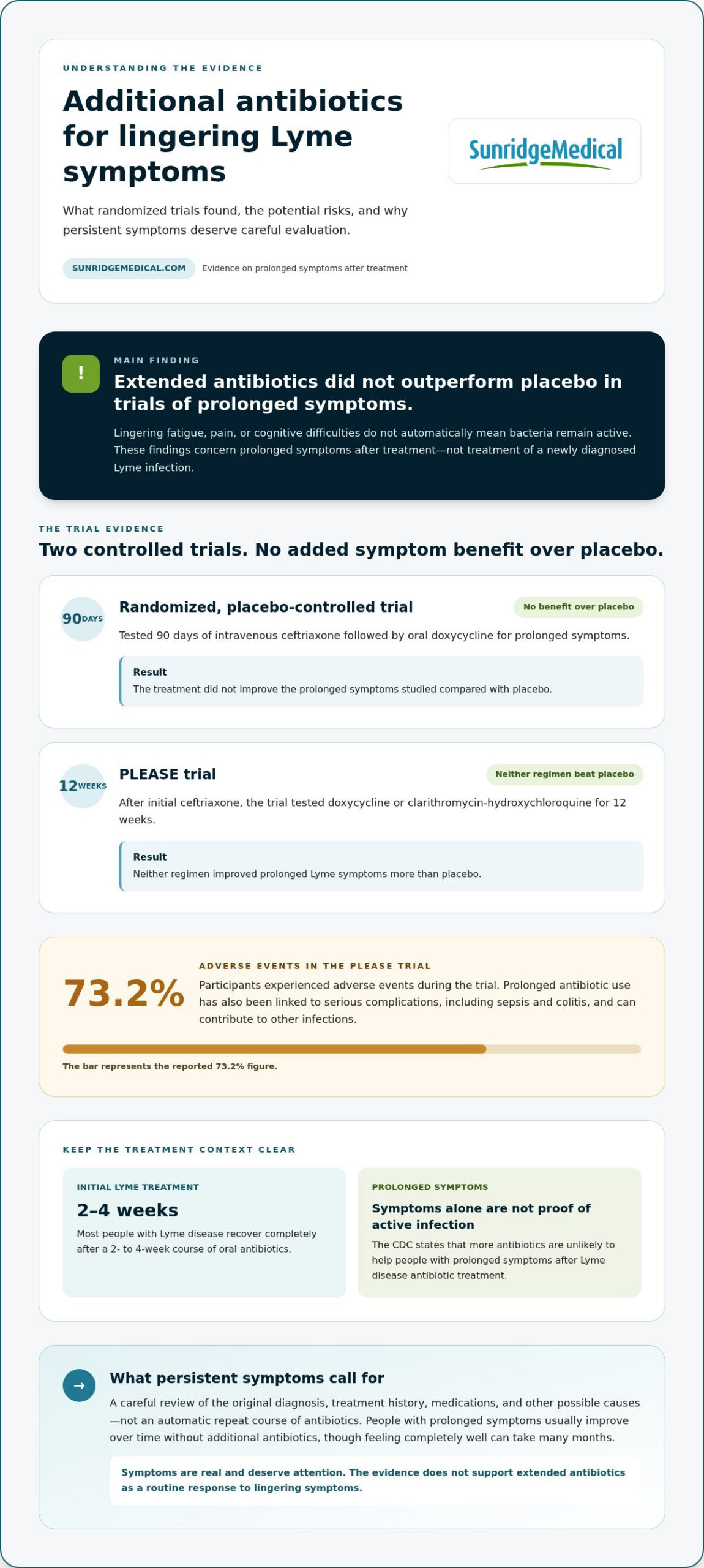
Persistent symptoms after Lyme disease do not automatically mean bacteria remain active. Research over two decades has generally found extended antibiotics no better than placebo for prolonged symptoms.
What treatment trials found
Two randomized, placebo-controlled trials tested additional antibiotics for PTLD symptoms. One examined 90 days of intravenous ceftriaxone followed by oral doxycycline. It found no benefit over placebo for the prolonged symptoms studied.
The PLEASE trial tested 12 weeks of doxycycline or clarithromycin-hydroxychloroquine after initial ceftriaxone. Neither regimen improved PTLD symptoms more than placebo. These results address prolonged symptoms after treatment, not the initial treatment of a newly diagnosed Lyme infection.
That distinction matters. Most people with Lyme disease recover completely after a 2- to 4-week course of oral antibiotics. Persistent fatigue, pain, or cognitive difficulties call for a careful review of the diagnosis and possible causes, rather than automatic repeat treatment.
Why prolonged courses can carry risks
Additional antibiotics can cause harm as well as inconvenience. In the PLEASE trial, 73.2% of participants experienced adverse events. Long-term antibiotic use for prolonged symptoms has also been linked to serious complications, including sepsis and colitis.
Prolonged antibiotic courses can also contribute to other infections. This risk makes it important to weigh a proposed treatment against the evidence and potential harms. A treatment that did not outperform placebo in trials should not be assumed to help just because symptoms remain difficult or disruptive.
How to interpret persistent symptoms
The CDC states that more antibiotics are unlikely to help people with prolonged symptoms after Lyme disease antibiotic treatment. This does not mean symptoms are imagined or unimportant. It means another course isn’t an evidence-based default for symptoms alone.
People with prolonged symptoms attributed to Lyme disease usually improve over time without additional antibiotics, though feeling completely well can take many months. Improvement may be gradual. A symptom record can reveal changes in stamina, pain, sleep, or concentration that are difficult to notice from one day to the next.
If symptoms recur or persist after recommended treatment, the next step is to evaluate possible causes. Review the original diagnosis, treatment history, medications, and other conditions that could explain the symptoms. Do not start, stop, pulse, or extend antibiotics without medical guidance. Antibiotic breaks or pulsing should be done only under the advice of a Lyme-literate medical doctor.
Supportive medical care and Lyme specialists
Seek medical evaluation when symptoms persist, return, or interfere with daily activities after Lyme disease treatment. A clinician can review the original diagnosis, treatment history, current symptoms, medications, and alternative explanations.
Supportive medical care
Supportive medical care addresses the effects of illness while evaluating what may be driving ongoing symptoms. For example, a clinician can review fatigue alongside sleep, medication changes, pain, and difficulty concentrating, rather than treating each concern in isolation.
Bring a concise timeline to the appointment: when early Lyme disease was diagnosed, which antibiotics were taken, and when symptoms changed. Include examples such as needing rest after routine errands or struggling to follow conversations. These details help distinguish a steady pattern from symptoms that fluctuate with activity or treatment.
Care may also involve evaluating conditions that can cause similar symptoms, including other infections, depression, diabetes, cancer, or medication effects. The aim is to consider more than one possible cause, not to assume every persistent symptom means Lyme infection remains active.
Seeking care for persistent symptoms
Arrange a medical evaluation if symptoms continue or recur after recommended antibiotic treatment, especially if they affect work, sleep, mobility, or concentration. A clinician can reassess the diagnosis and review possible causes instead of defaulting to another course of antibiotics.
Prepare a medication list and note when each symptom began, what makes it better or worse, and how it affects a specific daily task. For instance, record whether pain shifts between limbs or fatigue follows exertion. Concrete examples can make an appointment more focused and useful.
A clinician familiar with Lyme disease can interpret the original test results and treatment course alongside your current symptoms. If an infectious disease specialist is involved, share the same timeline and records to support a consistent assessment across appointments. The priority is a careful review, not simply repeating a test or prescription.
Persistent symptoms can have multiple explanations, so a broad assessment matters even when Lyme disease was confirmed. Research reports that people with prolonged symptoms usually improve over time without additional antibiotics, though feeling completely well can take many months. Ongoing evaluation can help address symptoms and daily function during that period.
Ask how each proposed treatment relates to your evaluation findings and what change it aims to address. Antibiotic breaks or pulsing for Lyme disease should occur only under the advice of a Lyme-literate medical doctor. A clear plan helps you understand the next step and avoid making medication changes on your own.
Coinfections and recovery
A coinfection is another infection present alongside Lyme disease. Coinfections can complicate symptom assessment and recovery, so persistent fatigue calls for a broader review rather than an assumption about one cause.
Why coinfections matter
When someone has Lyme disease and another infection, symptoms may overlap, making it harder to identify what is driving the illness. Some people with Lyme disease experience prolonged symptoms, particularly when diagnosis is delayed or coinfections are present. That makes symptom timing, exposure history, and documented diagnoses important parts of a clinical review.
Fatigue, body aches, and difficulty thinking can also have causes beyond Lyme disease, including other infections. A clinician can compare the symptom timeline with the original Lyme diagnosis and treatment course, then consider whether another illness better explains a change or new symptom. The aim is to identify a specific clinical reason for action, not to label every setback a coinfection.
How clinicians assess ongoing symptoms
Bring a timeline that separates the original Lyme illness from later changes. Note when symptoms began, whether they improved after antibiotic treatment, and whether new concerns appeared afterward. Include medication names and dates when available, along with concrete examples, such as fatigue that now limits a familiar daily task.
Exposure history also matters. Lyme disease is especially unlikely to explain prolonged or recurring symptoms if someone tested negative using a recommended test or has not lived in or traveled to an area where Lyme disease is common. These details help frame whether Lyme disease, another infection, or a different condition warrants closer evaluation.
Testing and treatment should address a specific clinical question. A positive result or symptom alone does not establish that an active coinfection explains ongoing problems. The clinician weighs medical history, examination findings, and relevant tests before choosing a medication. This distinction helps avoid unnecessary antimicrobial treatment when the evidence does not support a target infection.
How coinfections affect the recovery plan
If a separate infection is identified, its treatment may differ from Lyme treatment. The appropriate medication and course depend on the infection, the available evidence, and the patient’s clinical findings. Intravenous treatment is not automatically more appropriate simply because fatigue or pain continues. Treatment decisions need a defined clinical reason.
Tracking recovery can clarify whether a plan is helping. Record changes in fatigue, pain, sleep, and daily function, then compare your notes at follow-up. If symptoms shift after a new medicine or treatment change, record when that happened. This gives clinicians a clearer basis for adjusting care than relying on a general sense of feeling better or worse.
Coinfections are one possible factor, not a complete explanation for every difficult recovery. A careful review of diagnosis, exposure, symptoms, and treatment history can help distinguish coinfections from other causes and guide the next clinical decision.
Post-Treatment Lyme Disease Syndrome terminology
PTLDS is diagnosed based on documented Lyme disease, a specific symptom pattern, and when symptoms began, while other causes are also assessed. The term describes persistent symptoms, not proof that live bacteria remain or continue to spread.
PTLDS criteria include significant fatigue, widespread musculoskeletal pain, and/or cognitive difficulties. Symptoms must begin within six months after antibiotic therapy for physician-documented Lyme disease and last at least six months. This definition gives patients and clinicians a shared framework, but it does not explain every symptom or establish one cause for every case.
That distinction matters because “chronic Lyme disease” can be interpreted as evidence of an ongoing spirochetal infection requiring extensive antibiotic therapy. The term may blur the difference between a past infection and current symptoms. A careful account of the diagnosis, treatment, symptom onset, and course helps keep that distinction clear in medical discussions.
PTLDS is a clinical diagnosis based on history and symptoms, rather than a standalone test result. Studies have reported that 5 to 30 percent of people ideally diagnosed and treated for Lyme disease develop PTLDS. This range reflects differences across studies and criteria; it cannot determine an individual’s diagnosis by itself.
For an assessment, document when Lyme disease was diagnosed, which treatment you completed, and when each symptom began. Include examples such as verbal memory problems, widespread pain, or fatigue that disrupts a usual task. This timeline helps clinicians compare your experience with the PTLDS criteria and identify important differences.
Other explanations also need attention. Fatigue, body aches, and difficulty thinking can arise from other infections, medications, depression, diabetes, or cancer. An evaluation should consider these possibilities alongside the documented Lyme history, rather than treating a symptom as proof of persistent infection.
The terminology also shapes treatment decisions. PTLDS names a pattern after treatment; it does not prescribe additional antibiotics or prove an ongoing bacterial process. Research on prolonged symptoms has generally not found extended antibiotic treatment more effective than placebo. Using precise terms can support a clearer conversation about symptom management and the evidence behind proposed treatment.
Researchers continue to examine possible mechanisms, including immune and inflammatory responses. But a proposed mechanism is not automatically a confirmed explanation for an individual’s symptoms. The practical takeaway is to describe the diagnosis and symptoms precisely, then consider alternative causes through a thorough clinical assessment.
Sunridge Medical: Alternative Cancer Treatment Protocols
Sunridge Medical offers Chronic Lyme Disease Treatment for people seeking a broader assessment of ongoing symptoms after Lyme disease. Its physician-led care combines conventional medicine with research-informed options in an individualized plan. Recommendations depend on the person’s diagnosis, medical history, laboratory findings, medications, organ function, symptoms, tolerance, and goals.
Persistent symptoms can overlap with other complex health concerns. Sunridge Medical also offers Autoimmune Disease Management, Hormone Optimization Therapy, and Alternative Cancer Treatment Protocols. These address different needs, so the appropriate path depends on the condition being evaluated and the care sought.
If you’re exploring support for ongoing Lyme-related concerns, contact Sunridge Medical to discuss your situation, or visit Sunridge Medical online.
Choose a Clear Next Step
The next stage of post-treatment Lyme disease syndrome recovery can begin with a focused conversation about what is affecting your daily life now. Consider writing down your main concerns, current treatment, and the changes you hope to discuss. This gives your next appointment a practical starting point and helps keep the focus on your priorities.
Sunridge Medical offers Chronic Lyme Disease Treatment, Autoimmune Disease Management, and Alternative Cancer Treatment Protocols. These are distinct services for different health needs, so the relevant path depends on the concern you want to address.
If you’re ready to discuss your care, contact Sunridge Medical. A thoughtful next step can help you move forward with greater clarity and confidence.
Frequently Asked Questions
Can recovery from Lyme disease be non-linear?
Yes, symptoms can improve, flare temporarily, and ease again instead of steadily disappearing. To see the pattern, compare similar activities over time, such as walking the same route or completing a familiar household task. Note the activity and how you feel afterward. A setback following exertion does not by itself show that the infection has returned; persistent or recurring symptoms need a broader clinical assessment.
What Affects Your Personal Recovery Timeline?
Your timeline can depend on how early Lyme disease was diagnosed, the stage at treatment, symptom burden, and whether another infection is present. Some people with early disease notice improvement within 4-8 weeks, while delayed or late-stage illness can take longer. These ranges describe different recovery experiences, not a personal forecast. A timeline of diagnosis, treatment, and changing symptoms can help make progress easier to evaluate.
What is healing from Lyme disease and why does it matter?
Healing means regaining function and experiencing a meaningful reduction in symptoms, not necessarily improving every day. For example, someone may resume a regular task but still need more rest afterward. Track stamina, sleep, pain, and concentration separately to spot changes that a single overall rating might miss. Day-to-day fluctuations can obscure gradual progress or reveal a pattern worth discussing with a clinician.
Why does Lyme disease duration vary so much?
The duration of Lyme disease varies partly because diagnosis and treatment timing differ. Early Lyme disease may improve within weeks to a few months, while delayed diagnosis can mean a longer recovery. Coinfections may also complicate the course. Someone diagnosed after symptoms have continued for months, for example, may not follow the same timeline as someone treated early. Duration alone does not identify the cause of ongoing symptoms, so the full clinical history matters.
What is post-treatment Lyme disease syndrome (PTLDS)?
PTLDS describes significant fatigue, widespread musculoskeletal pain, and/or cognitive difficulties that begin within six months after antibiotic therapy for physician-documented Lyme disease and last at least six months. It describes a symptom pattern after treatment, not proof that live bacteria remain. The term helps distinguish persistent symptoms from an assumption of ongoing infection, informing discussions about diagnosis and treatment choices.
What symptoms are common in PTLDS and how long can they last?
Common PTLDS symptoms include fatigue, widespread pain, and cognitive difficulties such as memory problems or poor concentration. Sleep difficulties can also be prominent. By definition, symptoms last at least six months; some people experience prolonged effects beyond that. Keeping separate notes on sleep, energy, pain, and thinking can make changes clearer than relying on memory during an appointment.
How often do people recover from PTLDS, and what is the typical recovery timeline?
There is no single established timeline for post-treatment Lyme disease syndrome recovery that applies to everyone with PTLDS. People with prolonged symptoms attributed to Lyme disease usually improve over time without additional antibiotics, but feeling completely well can take many months. Progress may be subtle, with little apparent change from one month to the next. Record functional changes, such as returning to a usual activity, alongside symptoms to recognize gradual shifts.
What factors affect recovery from PTLDS?
Factors affecting post-treatment Lyme disease syndrome recovery can include the timing of diagnosis, the original illness, coinfections, and other conditions that contribute to fatigue, pain, or cognitive symptoms. Medications, depression, diabetes, and other infections can produce overlapping complaints. A practical review starts with the treatment and symptom timeline, then considers changes in health and daily function. This can help distinguish persistent effects from a separate or treatable cause.