


Sauna therapy for detoxification can increase sweating, but sweat plays only a minor role in the body’s natural detoxification; the liver and kidneys do the primary filtering and elimination. If you’re considering a sauna, start with short sessions of 10 to 15 minutes while you adapt to the heat.
The appeal is understandable: sweating can feel cleansing, and warmth may help you relax. But detox claims deserve a closer look, especially if you’re managing an autoimmune condition and heat may affect how you feel.
This article explains what sauna use can and can’t do for the body and skin, and how traditional and infrared sauna temperatures and session times differ. You’ll also find practical safety considerations and why an individualized approach matters with autoimmunity, so you can assess sauna use in the context of your overall health.
Key Takeaways
- Saunas increase sweating, but the liver and kidneys do most of the body’s detoxification; sweat is a minor route.
- For infrared sauna use, learn how to begin with a lower temperature and shorter sessions, then adjust gradually based on tolerance.
- Traditional and infrared saunas use different heat methods, so their suggested temperatures and session lengths aren’t interchangeable.
- Sweating may affect the skin, but it doesn’t directly target fat-soluble toxins stored in fat cells.
- With an autoimmune condition, consider how heat affects your symptoms and overall health before making sauna use part of your routine.
Suggested infrared sauna session duration and temperature
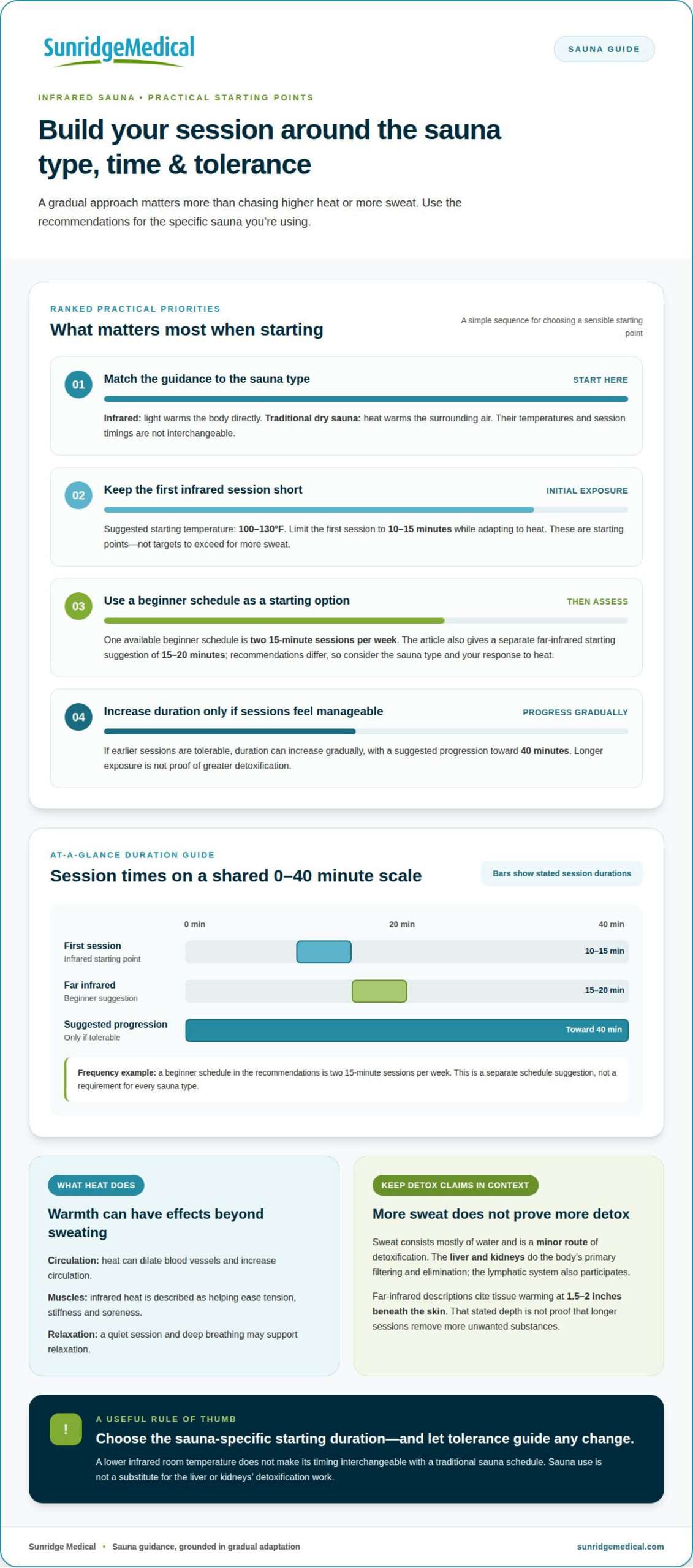
Infrared saunas use light to warm the body directly, unlike traditional dry saunas, which heat the surrounding air. For a first session, the suggested infrared temperature is 100-130°F, with an initial session limited to 10-15 minutes while adapting to heat. These are starting points, not targets to exceed simply to produce more sweat.
A beginner schedule in the available recommendations is two 15-minute sessions per week. If those sessions are tolerable, duration can increase gradually, with a suggested progression toward 40 minutes. For far infrared sessions specifically, beginners are advised to start at 15-20 minutes and increase duration gradually. These recommendations differ, so the sauna type and your response to heat matter when choosing a starting duration.
Far infrared detox is commonly described as a process in which infrared waves warm tissue, increase sweating, and help the body release substances through sweat. The stated penetration depth is 1.5-2 inches beneath the skin. That description should not be confused with proof that a longer session removes more unwanted substances. Sweat consists mostly of water, and the liver and kidneys perform the body’s primary detoxification work.
Infrared and traditional saunas both expose you to heat and promote sweating, but they work differently. An infrared unit directs light toward the body, while a traditional dry sauna heats the room. A lower room temperature in an infrared sauna doesn’t make its session duration interchangeable with a traditional sauna schedule. Follow recommendations for the specific sauna type rather than transferring timings between them.
What are the health benefits of traditional and infrared sauna therapy? Heat can dilate blood vessels and increase circulation. Infrared heat is also described as helping ease muscle tension, stiffness, and soreness. Sauna use may support relaxation, but these effects are distinct from a proven detoxification treatment or a substitute for cardiovascular exercise.
In the United States, sauna therapy costs vary based on the sauna type, session duration, and setting. These factors affect the charge, so there is no single price for every session.
For sauna therapy for detoxification, a gradual, tolerable approach is more useful than pursuing the highest heat or longest session. Start with a duration recommended for that sauna type, and increase it only if earlier sessions feel manageable. Shorter exposure is a practical starting point while you adapt.
Can Saunas Detoxify the Body?
Heat affects several body functions, but sweating isn’t the same as comprehensive detoxification. During a sauna session, body temperature rises, blood vessels dilate, and sweat production increases. These responses explain why you may feel warm, flushed, and perspire. They don’t show that sauna heat removes toxins more effectively than the organs that process and eliminate them.
The liver and kidneys filter substances from the bloodstream and help eliminate them through urine and waste. The lymphatic system also participates in the body’s detoxification processes. Sweat is a minor route by comparison. Fluid loss during a session, for example, can leave skin damp without showing that the body has cleared a meaningful amount of unwanted material.
Heat also prompts a cellular response. Sauna use can activate heat shock proteins, which protect and repair cells under heat stress. This is a biological effect of warming, not evidence that sauna use cleanses the bloodstream. The distinction matters: sauna therapy for detoxification is often promoted as a way to support elimination, but sweating alone can’t replace the liver’s or kidneys’ functions.
Changes in circulation are another reason people use saunas. Dilated blood vessels can support oxygen and nutrient delivery throughout the body. Sauna heat can also raise heart rate in a way that resembles moderate cardiovascular exercise. However, a sauna session isn’t a workout: it doesn’t reproduce the muscle activity or movement involved in exercise, and a faster heartbeat alone doesn’t demonstrate improved heart health.
For muscle and joint discomfort, infrared heat is described as helping reduce tension, stiffness, and soreness. Gentle movement may improve circulation and complement sauna use, but it should feel comfortable rather than strenuous. Someone with tight muscles, for example, might use easy movement to maintain mobility instead of treating intense heat as a substitute for rehabilitation or exercise.
Relaxation is another reason people report using saunas. A quiet session and deep breathing may support relaxation and stress reduction, while mental comfort can shape how a person experiences heat. These effects are separate from detoxification and aren’t proof of improved skin health or cardiovascular function. Each outcome involves a different process.
Use sauna effects as one part of a broader health picture, not as evidence that toxins have been removed. For concerns involving persistent symptoms or complex health factors, individualized health care can address more than heat exposure alone.
Can sweating detox the skin?
Sauna heat stimulates sweating, but sweat is only a minor route of detoxification. Its composition and the body’s primary filtering organs help put skin-related claims in perspective.
Sweating and Detoxification Claims
Detoxification claims often describe sauna sweating as a way to release toxins, pollutants, and metabolic waste. Far infrared sauna proponents specifically claim that sweating helps release heavy metals and environmental pollutants. These claims deserve scrutiny: visible sweat can feel like evidence of cleansing, but sweat volume doesn’t show how much material has left the body or whether skin function has improved.
Trace Substances and Heavy Metals in Sweat
Sweat consists mostly of water, with small amounts of electrolytes, urea, and trace substances. Studies have found measurable amounts of arsenic, lead, and mercury in sweat samples. This shows that some substances can be present in sweat; it doesn’t establish how much the body removes overall or whether sweating meaningfully lowers a person’s exposure to these metals.
Sweat Excretion Compared with Liver and Kidneys
Sauna-induced sweating contributes less to detoxification than the liver and kidneys. Those organs filter substances from the bloodstream and help eliminate them through urine and waste, while sweating plays a minor role. How does sauna-induced sweating compare with the liver and kidneys for detoxification? Sweat can carry trace substances, but those organs do most of the body’s filtering and elimination.
Skin effects are a separate consideration. Sauna use may be associated with unclogged pores, a brighter or more even skin tone, improved hydration, smoother texture, and reduced puffiness or inflammation. These are possible skin benefits, not proof that sweating removes toxins from the body. A flushed complexion after heat exposure, for example, is a visible response, not a measure of toxin removal.
Hydration matters because sweat contains mostly water and electrolytes. Fluid loss can affect how your skin feels after a session, so a damp surface shouldn’t be mistaken for improved skin hydration. The presence of trace substances in sweat also doesn’t mean that producing more sweat will remove more toxins or heavy metals.
Saunas don’t directly target fat-soluble toxins stored in fat cells. Sweat is one result of heat exposure, not a targeted pathway for every substance in the body. Distinguishing surface-level skin changes from whole-body elimination helps set realistic expectations: sauna use may change how your skin looks or feels, while the liver and kidneys remain central to detoxification.
Suggested traditional sauna session duration and temperature
Traditional sauna guidance varies, so temperature and duration should be considered together. One description places sauna therapy at 120°F-160°F, while a traditional sauna recommendation gives 190°F-200°F. These figures represent different guidance, not one temperature range to combine. A session at the higher temperature can feel more intense, making gradual adjustment especially relevant.
For beginners, the suggested starting point is 10-15 minutes while adapting to heat. This shorter exposure helps establish how the body responds before sessions become longer. Don’t treat sweating as a reason to stay inside longer. A session’s duration and heat level both contribute to the overall exposure.
Suggested frequency also depends on experience. A general recommendation is two to four sauna sessions per week, lasting 15 to 30 minutes each. Experienced users may have three to four sessions weekly, with each lasting 20 to 30 minutes. These are distinct recommendations, not a requirement to reach the experienced schedule. Starting at the lower end allows time to assess tolerance.
Leave at least 24 hours between intense sauna sessions. That interval gives the body time between higher-heat exposures, rather than stacking demanding sessions close together. For example, someone choosing a longer session should avoid treating daily use as the automatic next step. The 24-hour spacing applies to intense sessions; frequency still needs to account for duration and heat.
Traditional sauna heat warms the room, so the displayed temperature describes the surrounding air. Infrared equipment, by contrast, uses light to warm the body directly. A temperature number alone therefore doesn’t make traditional and infrared sessions equivalent. Follow guidance for the sauna type you’re using, and consider temperature alongside session length rather than comparing one number in isolation.
Heat exposure can dilate blood vessels and increase circulation. Some people use sauna sessions to promote relaxation or ease muscle tension, but those aims don’t mean hotter or longer exposure will enhance the effects. Sauna use also isn’t a substitute for cardiovascular exercise. Strenuous activity combined with a sauna can increase the overall demand on your body, so don’t use heat to intensify a workout.
A measured progression is more useful than chasing maximum heat. Begin with a shorter session, then adjust duration gradually as tolerance becomes clear. Keep the temperature and frequency in view together: a 20-minute session at 190°F-200°F is not the same exposure as a shorter session at 120°F-160°F. That distinction helps make traditional sauna use more deliberate.
Sauna detox and autoimmunity
For someone managing an autoimmune condition, sauna use raises two separate questions: what sweating does and how heat feels in their circumstances. Sweat is a minor route of detoxification, so increased sweating shouldn’t be treated as evidence of improved wellness or reduced autoimmune activity.
“Natural detox” is often used to describe sauna sweating, but the phrase doesn’t explain how the body processes substances. The liver and kidneys filter toxins and help eliminate them through urine and waste. Sauna heat instead raises body temperature and stimulates sweating. A sauna may create a noticeable response without showing that it changes the underlying condition.
Autoimmune conditions vary, and your health context matters when considering heat exposure. Focus on effects you can observe during and after a session rather than assuming infrared saunas are automatically gentler or more suitable. Excessive heat exposure can cause dehydration, dizziness, fatigue, or skin irritation. If these occur, stop, cool down, and reassess rather than pushing through.
Use symptoms as practical signals. Leave the sauna and cool down if you feel lightheaded or dizzy; nausea or headache can signal dehydration or overheating. Sweating that stops during a session signals dangerous overheating. These responses matter whether the sauna is traditional or infrared. They indicate heat stress, not toxin release or a change in autoimmune disease activity.
Hydration is one concrete consideration. The recommendations in this article suggest drinking 16 to 24 ounces of water before a session and the same amount afterward. Rehydrating with 16 to 24 ounces of water containing electrolytes within 30 minutes afterward is another recommendation. These amounts support fluid replacement; they don’t prove that sauna sweating enhances detoxification or treats an autoimmune condition.
Separate a wellness goal from a disease-management goal. If you’re seeking relaxation, consider how heat affects your comfort and recovery. If you hope to improve autoimmune symptoms, don’t treat sweating as a substitute for condition-focused care. Sauna use also doesn’t replace exercise, and sweat volume can’t show whether the body has removed heavy metals or other toxins.
A measured approach considers sauna type, session intensity, hydration, and personal response together. Avoid intense exercise immediately before sauna use, and don’t continue through warning signs. No single sauna routine suits every autoimmune condition. The relevant question is whether heat exposure fits your broader health needs, not whether it produces more sweat.
For care focused on the condition itself, explore individualized autoimmune disease management. This keeps sauna use in perspective: it may be a wellness choice, while autoimmune care addresses the broader health picture.
Sunridge Medical: Hormone Optimization Therapy
Sunridge Medical offers Hormone Optimization Therapy for people whose health concerns call for a broader focus than sauna use. Sweating doesn’t substitute for evaluating hormone-related needs, and sauna sessions alone don’t address those concerns.
Sunridge Medical develops individualized care plans that integrate conventional therapies with research-informed alternative treatments. If you’re exploring how hormone health fits into a complex health picture, Hormone Optimization Therapy may be a relevant next step. This shifts the focus from pursuing detox through heat alone to considering care in the context of your wider health needs.
To discuss Hormone Optimization Therapy and your health concerns, contact Sunridge Medical.
Make Your Next Health Step Individual
Keep sauna use as one consideration within a broader health plan. A thoughtful approach to sauna therapy for detoxification looks beyond the sensation of sweating and considers what support fits your concerns and priorities.
When ongoing or complex health issues call for more than a wellness routine, Sunridge Medical offers care focused on those concerns, including Alternative Cancer Treatment Protocols, Chronic Lyme Disease Treatment, and Autoimmune Disease Management. These services offer a way to explore care for a specific health challenge rather than relying on heat exposure to do more than it can.
If you’re ready to discuss your health needs and possible next steps, contact Sunridge Medical to learn more. A clear, individualized conversation can help you move forward with greater purpose and confidence.
Frequently Asked Questions
What Toxins Can Saunas Help Eliminate?
Sauna sweating has not been shown here to reliably eliminate a specific toxin. Sweat can contain trace substances, but their presence doesn’t establish meaningful removal from the body. A wet towel or flushed skin, for example, can’t show which substances have been cleared. Treat sauna use as heat exposure, not as a targeted method for removing a named chemical or replacing the body’s ordinary elimination processes.
Does sauna therapy remove toxins from the body, and what does the evidence show?
Sauna use produces heat-related responses, but those responses don’t establish broad detoxification. The liver and kidneys handle most filtering and elimination; sweat contributes much less. For sauna therapy for detoxification, the key distinction is between observing sweat and demonstrating a meaningful reduction in a toxin. Feeling refreshed after a session may be valuable, but it doesn’t measure toxin levels or clearance.
Which substances, if any, are excreted in sweat during sauna use?
Sweat contains mostly water, plus small amounts of electrolytes, urea, and trace substances. Samples have shown measurable arsenic, lead, and mercury, but finding these metals in sweat doesn’t show how much the body eliminated overall. Sweat volume and appearance can’t tell you the amount. A person can perspire heavily without knowing which substances, if any, were excreted in a meaningful amount.
What are the risks of sauna use, including dehydration, overheating, and low blood pressure?
Dehydration and overheating can cause dizziness, fatigue, skin irritation, nausea, or headache. Stop the session and cool down if you become lightheaded or dizzy; sweating that stops during heat exposure signals dangerous overheating. Low blood pressure is also a relevant concern to discuss before sauna use, especially if you’ve experienced faintness or weakness. Don’t push through symptoms to complete a planned session.
Who should avoid sauna therapy or consult a doctor before using it?
Anyone with a health condition that could affect heat tolerance should discuss sauna use with a clinician before starting. This includes people managing autoimmune disease or other complex chronic conditions, particularly when symptoms are active or changing. A clinician can consider your current health status, medications, and response to heat. Avoid sauna use when you feel unwell, and stop if new symptoms arise during exposure.
How long and how often is it generally safe to use a sauna?
Suggested use depends on the sauna type and personal tolerance. Beginners are advised to start with 10 to 15 minutes; one beginner infrared schedule is two 15-minute sessions per week. Traditional sauna recommendations include two to four sessions weekly, lasting 15 to 30 minutes. These are different starting frameworks, not one schedule to combine. Choose guidance for the sauna type you’re using and avoid extending a session just to sweat more.
How much water should you drink before and after a sauna session?
A suggested amount is 16 to 24 ounces of water before a session and the same amount afterward. Another recommendation is 16 to 24 ounces of water containing electrolytes within 30 minutes after finishing. These are practical reference amounts, not individualized fluid instructions. Your needs can vary with sweating, hydration status, and health circumstances, so avoid treating water intake as a way to make excessive heat exposure safe.
Can sauna therapy help remove heavy metals or environmental chemicals from the body?
Sauna sweating may contain trace heavy metals, including arsenic, lead, and mercury, but that doesn’t establish reliable removal of these substances from the body. Sauna use also doesn’t directly target fat-soluble toxins stored in fat cells. Sweat testing or visible perspiration alone can’t show that exposure to an environmental chemical has fallen. Don’t use sauna exposure instead of addressing a known exposure or health concern through appropriate care.