


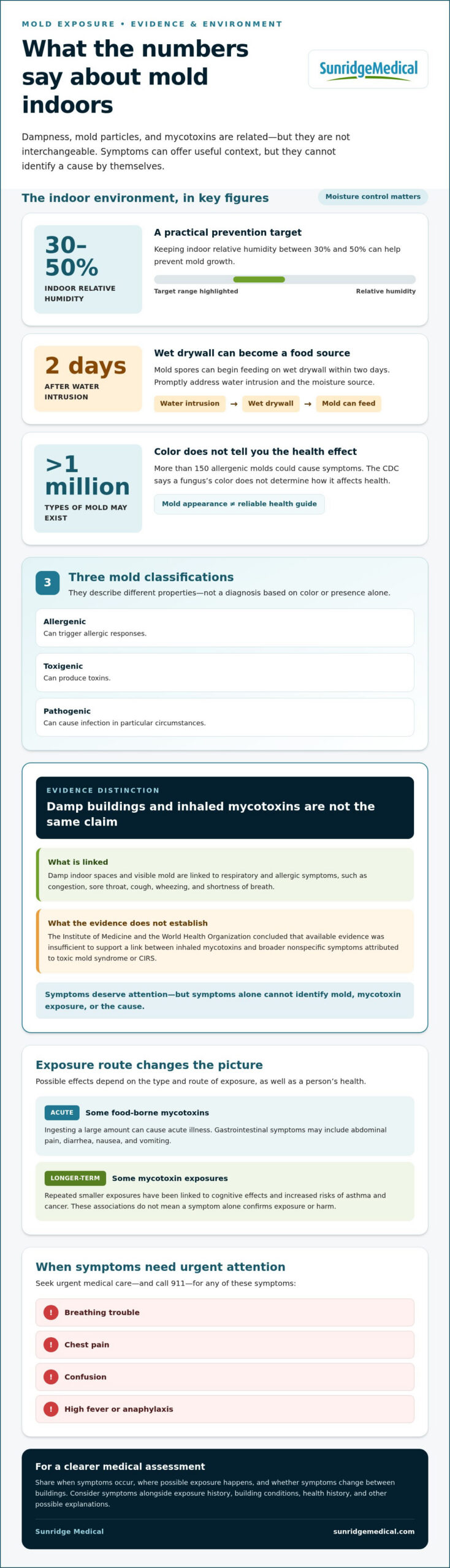
Brain fog, memory changes, headaches, digestive problems, or breathing symptoms can feel unsettling, especially when they seem to worsen in a particular building. The symptoms of mycotoxin illness are often nonspecific and can overlap with other conditions. Damp indoor spaces and visible mold are linked to respiratory and allergic symptoms, but the Institute of Medicine and the World Health Organization concluded that available evidence was insufficient to support a link between inhaled mycotoxins and the broader symptoms attributed to toxic mold syndrome or CIRS.
That distinction matters: symptoms deserve attention, but they can’t identify their cause on their own. Mold exposure may involve spores, allergens, irritants, or mycotoxins. Possible effects depend on the type and route of exposure, as well as a person’s health.
This article explains what mold exposure means, which acute and longer-term effects have been associated with mycotoxins, and why neurological, cognitive, and gastrointestinal complaints need careful interpretation. You’ll also learn how clinicians assess suspected exposure and what practical steps can help address mold and moisture in your environment.
Key Takeaways
- Learn why visible mold, dampness, and mycotoxin exposure are related but not interchangeable, and why symptoms alone can’t identify the cause.
- Understand how acute effects may differ from longer-term concerns, including reported cognitive and neurological symptoms.
- See why gastrointestinal symptoms can occur with certain food-borne mycotoxins, including patulin.
- Explore practical ways to address moisture and mold at home, and how to recognize when symptoms warrant medical attention.
- Find out why a careful assessment of symptoms, health history, and possible exposure is more informative than relying on one symptom alone.
What is mold toxicity or mold exposure?
Mold exposure means contact with mold or its particles, while mycotoxin exposure involves toxins produced by certain fungi. Damp buildings are linked to respiratory and allergic effects, but evidence connecting typical indoor inhalation to broader illness remains contested.
Immune Responses to Mold Spores
An immune response is the body’s reaction to mold spores or other particles, whether or not those spores produce toxins. Not all mold produces mycotoxins, yet species that do not produce them can still prompt immune responses and side effects. Animal studies found that both toxic and non-toxic spores triggered an innate immune response. Mold presence alone, however, doesn’t establish mycotoxin toxicity or explain a person’s symptoms.
Challenges in Diagnosing Mold-Related Illness
Assessing a possible mold-related illness means considering symptoms alongside exposure history and other possible explanations. Complaints attributed to mold toxicity can be nonspecific and resemble food sensitivities, mast cell activation syndrome, or viral illness. The Institute of Medicine and the World Health Organization concluded that available evidence was insufficient to support a link between inhaled mycotoxins and nonspecific symptoms attributed to toxic mold syndrome or CIRS. A clinician can consider symptom patterns, building conditions, existing conditions, and examination findings together.
Respiratory Symptoms After Mold Exposure
Respiratory symptoms are breathing and airway problems that may occur around dampness or mold. Examples include sinus congestion, sore throat, cough, wheezing, and shortness of breath. Damp indoor spaces and visible mold are linked to respiratory and allergic symptoms, although the precise mechanisms may be uncertain. Symptoms that appear in a particular building offer useful context for medical assessment, but don’t establish mycotoxin illness or identify the mold present.
Molds are commonly grouped into three classifications: allergenic, toxigenic, and pathogenic. Allergenic molds can trigger allergic responses; toxigenic molds can produce toxins; and pathogenic molds can cause infection in particular circumstances. More than 1 million types of mold may exist, and more than 150 allergenic molds could cause symptoms. Color is not a reliable guide to health effects: according to the CDC, a fungus’s color doesn’t determine how it affects health.
Moisture control is central to limiting mold growth. Repair roof, wall, or plumbing leaks promptly, and ventilate bathrooms and kitchens. Keep indoor relative humidity between 30% and 50% to help prevent mold growth. After water intrusion, mold spores can begin feeding on wet drywall within two days. According to the CDC, remove indoor mold promptly regardless of its type; address the moisture source as part of remediation.
Seek urgent medical care for breathing trouble, chest pain, confusion, high fever, or anaphylaxis. Call 911 for these symptoms. Otherwise, share with a healthcare professional when symptoms occur, where exposure may happen, and whether they change between buildings. Those details help distinguish a possible exposure pattern from symptoms with other causes.
Acute and long-term health effects
Health effects depend on the mycotoxin, exposure route, and amount consumed. Ingesting a large amount can cause acute illness, while repeated smaller exposures may have different consequences.
Acute illness from some food-borne mycotoxins can begin soon after someone eats contaminated food. Gastrointestinal symptoms may include abdominal pain, diarrhea, nausea, and vomiting. Longer-term exposure to smaller amounts has been linked to cognitive effects and increased risks of asthma and cancer. Some food-borne mycotoxins are also associated with immune deficiency. These patterns differ from nonspecific complaints attributed to inhaling mold spores, such as fatigue or mood changes, which don’t identify a cause on their own.
Neurological and Cognitive Effects
Neurological and cognitive effects involve changes in the nervous system or thinking, including dizziness, blurred vision, brain fog, and short-term memory loss. These symptoms can interfere with concentration and daily activities, but they can also occur with other conditions. Chronic exposure to smaller amounts of mycotoxins has been linked to cognitive effects. Track when symptoms began and whether they follow a specific exposure pattern. This context can help inform medical assessment.
Ochratoxin A and Kidney Effects
Ochratoxin A is a mycotoxin associated with kidney damage. Kidney effects have been demonstrated in humans, while animal studies identify kidney damage as its most sensitive and notable effect. Symptoms such as fatigue or general discomfort can’t establish kidney injury. A clinician considers a person’s health history and symptoms when evaluating possible organ effects. Mycotoxin exposure alone doesn’t prove that a particular organ has been harmed.
Immune and Endocrine Effects
Immune effects concern the body’s defenses, while endocrine effects involve hormone signaling. Long-term effects linked to some food-borne mycotoxins include immune deficiency, so persistent or recurrent health problems deserve careful evaluation rather than self-diagnosis. Fatigue and mood changes alone don’t establish an endocrine disorder or show that mycotoxins caused it. This distinction helps prevent symptoms from being mistaken for a confirmed mechanism, particularly when several health conditions can cause similar experiences.
Higher Risk of Serious Effects
The clearest risk distinction is the exposure pattern: ingesting a large amount can cause acute illness, while smaller amounts over time may have chronic effects. A substantial amount of contaminated food raises concern about acute poisoning; repeated exposure presents different long-term concerns. Serious complications reported for mycotoxin poisoning include cancer, coma, convulsions, and death. These outcomes aren’t predictions for every exposed person, but suspected poisoning with severe symptoms needs prompt medical attention.
For persistent cognitive or neurological concerns, an individualized assessment may help clarify the next steps. Explore neurologic condition treatment as part of a broader medical approach.
Neurological and cognitive symptoms
Brain fog, dizziness, headaches, mood changes, and short-term memory problems are among the neurological or cognitive complaints sometimes attributed to mycotoxin exposure. They can affect concentration, recall, and everyday tasks, such as following a conversation or completing familiar work. These symptoms deserve attention, but don’t show on their own that mold toxins caused them. The setting, timing, and overall medical picture all matter.
Evidence needs careful interpretation. The Institute of Medicine and the World Health Organization concluded that available evidence was insufficient to support a link between inhaled mycotoxins and the nonspecific symptoms attributed to toxic mold syndrome or CIRS. In a separate animal study reported in Behavioral Brain Research, mice that inhaled Stachybotrys chartarum spores experienced cognitive issues. Animal findings can raise research questions, but they don’t establish that indoor exposure causes the same effects in humans.
Look for patterns rather than assuming a single cause. For example, note whether a headache or difficulty concentrating begins in one building, changes after you leave, or occurs in several environments. Record the symptom, when it started, where you were, and any other changes, such as fatigue or respiratory irritation. This gives a healthcare professional concrete context to consider alongside your medical history and examination.
Buildings can affect exposure because moisture supports mold growth. Yet a damp environment doesn’t prove that mycotoxins are responsible for cognitive changes, and visible mold doesn’t identify the species or its effects. Immune responses to mold particles can vary, while infections, medication effects, sleep disruption, and other health conditions may also affect thinking or mood. A thorough assessment considers these possibilities rather than treating “brain fog” as a specific disease.
Severe or worsening confusion calls for prompt medical attention, particularly when it occurs with chest pain, breathing trouble, or a high fever. Those symptoms require urgent care. For ongoing memory problems, dizziness, or headaches, share your symptom record with a clinician and describe relevant exposure conditions. Addressing moisture and mold growth can help reduce environmental exposure, but it doesn’t replace evaluation of neurological symptoms or establish their cause.
To help prevent continued exposure, focus on building conditions that support mold growth, including leaks and persistent dampness. If symptoms repeatedly coincide with time in a particular environment, mention that pattern in your medical discussion. Distinguishing exposure, immune response, and confirmed illness helps keep decisions grounded in evidence and the person’s full health picture.
Patulin and gastrointestinal symptoms
Patulin is a mycotoxin associated with gastrointestinal symptoms after exposure. Reported human effects include nausea, gastrointestinal disturbances, and vomiting. These symptoms can disrupt eating, hydration, and daily activities, but they don’t identify patulin as the cause on their own. The timing of symptoms, foods eaten, and other possible exposures all provide context for medical evaluation.
Food is a relevant route to consider. Patulin can affect apples and apple juice, among other foods vulnerable to mycotoxins. The Codex Alimentarius Commission sets a maximum limit of 50 µg/L for patulin in apple juice. That food standard provides a concrete reference for apple juice, but it doesn’t diagnose poisoning in an individual or explain symptoms after a meal.
Visible mold is a practical warning, not a reliable test of the toxin or dose. Avoid foods or drinks that look moldy, and discard food with insect infestations. Cooking is not a dependable way to make food that may be contaminated with mycotoxins safe. Removing moldy portions or heating a questionable item therefore isn’t a dependable way to make it safe.
Patulin-related gastrointestinal effects should also be distinguished from allergic responses. Mold spores can trigger immune reactions, while mycotoxins are compounds produced by some fungi. An allergic response and food-borne poisoning aren’t interchangeable explanations for nausea or vomiting. Likewise, an inflammatory sensation or mental fatigue alongside stomach symptoms doesn’t establish that patulin caused either problem. A clinician considers the whole pattern, including health history and suspected exposure.
Keep a clear record if symptoms follow a particular food. Note the item, when you ate it, when symptoms began, and whether anyone else who ate it became ill. For example, recording apple juice alongside nausea and vomiting gives a clinician a specific detail to assess. Healthcare providers may review medical history, ask about symptoms, and order blood tests when evaluating suspected mycotoxicosis. These steps assess the person, rather than proving that a particular food contained patulin.
Be cautious about relying on direct-to-consumer urine mycotoxin testing to explain gastrointestinal symptoms. Such tests aren’t FDA-approved, lack standardization, can produce false results, and have no established thresholds for harmful levels. A test result alone can’t establish that patulin caused symptoms or that a person has mycotoxin poisoning. Food handling, symptom timing, clinical findings, and the suspected source all matter when interpreting the evidence.
What should someone do if they suspect mold or mycotoxin exposure at home?
Start with the home’s moisture sources, not an assumption about a particular toxin. Look for visible growth, water stains, condensation, and musty areas in basements, attics, crawl spaces, and bathrooms. A persistent relative humidity above 60% can be a clue to possible mold contamination. Fix roof, wall, or plumbing leaks promptly, because damp materials support mold growth.
Address moisture and visible mold together. According to the CDC, indoor mold should be removed promptly regardless of its type. Ventilate bathrooms and kitchens, run fans when showering, bathing, or cooking, and keep indoor relative humidity between 30% and 50% to help prevent mold growth. Check that the clothes dryer vents outdoors and works properly. These steps reduce moisture, a key condition that allows mold to persist.
For a building assessment, visual inspection and moisture mapping are often enough to identify where remediation is needed. Air or surface sampling is rarely necessary to decide on remediation. First locate and correct the water source, then address affected materials. If mold covers belongings or has affected porous materials, dispose of contaminated items appropriately. An indoor air quality specialist can assess the building and identify remediation measures.
Filtration has limits. A HEPA filter can remove mold spores from the air, but it’s too small to remove mycotoxins. Activated carbon filters may help remove airborne mycotoxins. Neither filter fixes a leak or removes mold growth from a building, so use filtration alongside moisture control, not as a substitute. Choose HVAC filters only when they’re compatible with the system, and follow the equipment’s specifications.
Track symptoms alongside building conditions. Record where symptoms occur, whether they improve away from the building, and any visible moisture or mold. Make a medical appointment if symptoms last more than 2-4 weeks, worsen in a specific building, or interfere with daily life. A healthcare professional can review symptom history and possible exposure. Breathing trouble, chest pain, confusion, high fever, or anaphylaxis require an emergency response; call 911.
When persistent symptoms and suspected exposure raise broader health concerns, explore environmental illness treatment as part of an individualized medical discussion.
Sunridge Medical: Alternative Cancer Treatment Protocols
Sunridge Medical offers Environmental Illness Treatment for people seeking care for complex health concerns involving environmental exposures. Its physician-led team combines conventional medicine with research-informed alternative, nutritional, metabolic, botanical, and regenerative approaches to develop individualized care plans. For persistent symptoms alongside neurological or chronic concerns, Environmental Illness Treatment and Neurologic Condition Treatment are relevant areas to discuss as part of your broader health picture.
Sunridge Medical also offers Alternative Cancer Treatment Protocols, Chronic Lyme Disease Treatment, Autoimmune Disease Management, and Hormone Optimization Therapy. These services address distinct health needs. A discussion of your health concerns and priorities can help identify which area of care is most relevant. Contact Sunridge Medical to discuss your concerns and possible next steps.
Turn your concerns into a focused next step
A useful next step is to bring your concerns into a clear, personal medical discussion. If symptoms of mycotoxin illness remain on your mind, bring your questions, symptom timeline, and environmental observations. Because these symptoms can overlap with other conditions, an individualized assessment is needed to determine what they mean in your case.
You don’t have to resolve every uncertainty before seeking guidance. A thoughtful conversation can help organize priorities, consider your broader health picture, and identify practical next steps without treating a suspected exposure as a diagnosis. Start by describing what changed, what you hope to understand, and which concerns most affect daily life. This keeps the discussion centered on your priorities.
Sunridge Medical provides individualized care for people with complex health concerns. If you’re ready to discuss your situation, contact Sunridge Medical. A measured next step can make a complicated health question feel more manageable.
Frequently Asked Questions
What are mycotoxins?
Mycotoxins are toxic compounds produced by certain fungi, including some molds. They can reach people through contaminated food or contact with mold-contaminated environments. For example, food and beverages such as grains, nuts, and apple products can be affected. Finding mold doesn’t establish that mycotoxins are present, so the suspected source and exposure route matter when assessing possible health effects.
What is black mold and is it dangerous?
“Black mold” is a color-based term, not a reliable measure of danger. Stachybotrys chartarum is one mold often associated with that label, but a dark appearance alone can’t identify a species or determine its health effects. Dampness and visible mold can contribute to respiratory or allergic problems. Address water damage and mold growth rather than judging risk by color alone.
How Long Do Symptoms Last After Exposure?
How long symptoms last varies with the symptom, exposure, and a person’s health. Allergic or irritant symptoms may improve within days to weeks after moisture and mold are controlled, while asthma or sinusitis can take longer. A lingering symptom doesn’t by itself show that toxin exposure is ongoing. Note whether symptoms change after you leave the affected setting, and discuss persistent or worsening problems with a healthcare professional.
How do you avoid them?
Reduce exposure by keeping food dry and storing it in clean, dry containers. Avoid extended storage and discard food that looks moldy or shows insect infestation. At home, repair leaks promptly and use bathroom or kitchen ventilation to limit damp conditions. A varied diet can also reduce reliance on any single food source. These practical steps reduce opportunities for mold growth and food contamination.
What symptoms are commonly attributed to mycotoxin exposure in humans?
Reported complaints include nausea, vomiting, diarrhea, abdominal pain, headache, dizziness, blurred vision, fatigue, brain fog, and short-term memory problems. The pattern depends partly on whether exposure involved contaminated food or a damp indoor environment. These symptoms also occur with other health conditions, so a list can’t establish mycotoxin illness. Record when symptoms begin, what you ate or where you were, and how they change.
What health effects of mycotoxins are supported by scientific evidence?
Evidence is strongest for particular mycotoxins and defined exposure routes, especially food-borne poisoning and organ effects associated with specific compounds. For example, ochratoxin A has demonstrated kidney effects in humans, while large aflatoxin doses can cause severe liver injury. Evidence doesn’t support treating every nonspecific symptom in a damp building as proof of illness from inhaled mycotoxins. The toxin, dose, and exposure route shape the health concern.
Can symptoms of mycotoxin illness resemble allergies, asthma, or other conditions?
Yes. Congestion, cough, wheezing, and shortness of breath can resemble allergic reactions or asthma, while fatigue, headache, and concentration problems overlap with many other conditions. A symptom’s timing and relationship to a particular building or food provide useful context, but not a diagnosis. A healthcare professional can consider medical history, examination findings, existing conditions, and exposure circumstances together.
How long after exposure can mycotoxin-related symptoms begin, and how long do they last?
After eating food contaminated with certain mycotoxins, acute symptoms can begin soon after consumption. With indoor exposure, timing and duration depend on the health effect and whether dampness or mold exposure continues. Allergic or irritant symptoms may ease within days to weeks once moisture and mold are controlled; asthma and sinusitis may take longer. There isn’t one timeline that applies to every exposure or symptom.