


Most transplant recipients need anti-rejection medicines every day for life, so tapering off immunosuppressant drugs safely is considered only in carefully selected situations under close medical supervision. Stopping suddenly can cause withdrawal symptoms or other health risks. Although some patients have stopped treatment in closely monitored studies, withdrawal is not appropriate for everyone.
It’s understandable to wonder whether reducing medication could ease side effects or simplify a demanding routine. This article explains why transplant recipients rarely stop anti-rejection drugs, what risks withdrawal may bring, and how biomarkers may help researchers predict who could develop tolerance. It also covers why medication changes require careful monitoring and what clinicians consider when weighing a gradual reduction against the risk of rejection or a disease flare.
Key Takeaways
- Most transplant recipients need anti-rejection medication long term; any reduction requires close medical supervision and ongoing monitoring.
- Withdrawal can carry risks, including rejection or a disease flare, while medication side effects should be discussed with a healthcare professional rather than managed by stopping treatment independently.
- Successful withdrawal remains uncommon, though a closely matched sibling kidney-and-stem-cell transplant trial reported that 75% of participants stopped immunosuppressive medication for more than two years.
- Biomarkers may help researchers identify signs of tolerance, but they are one part of a broader assessment rather than a substitute for clinical monitoring.
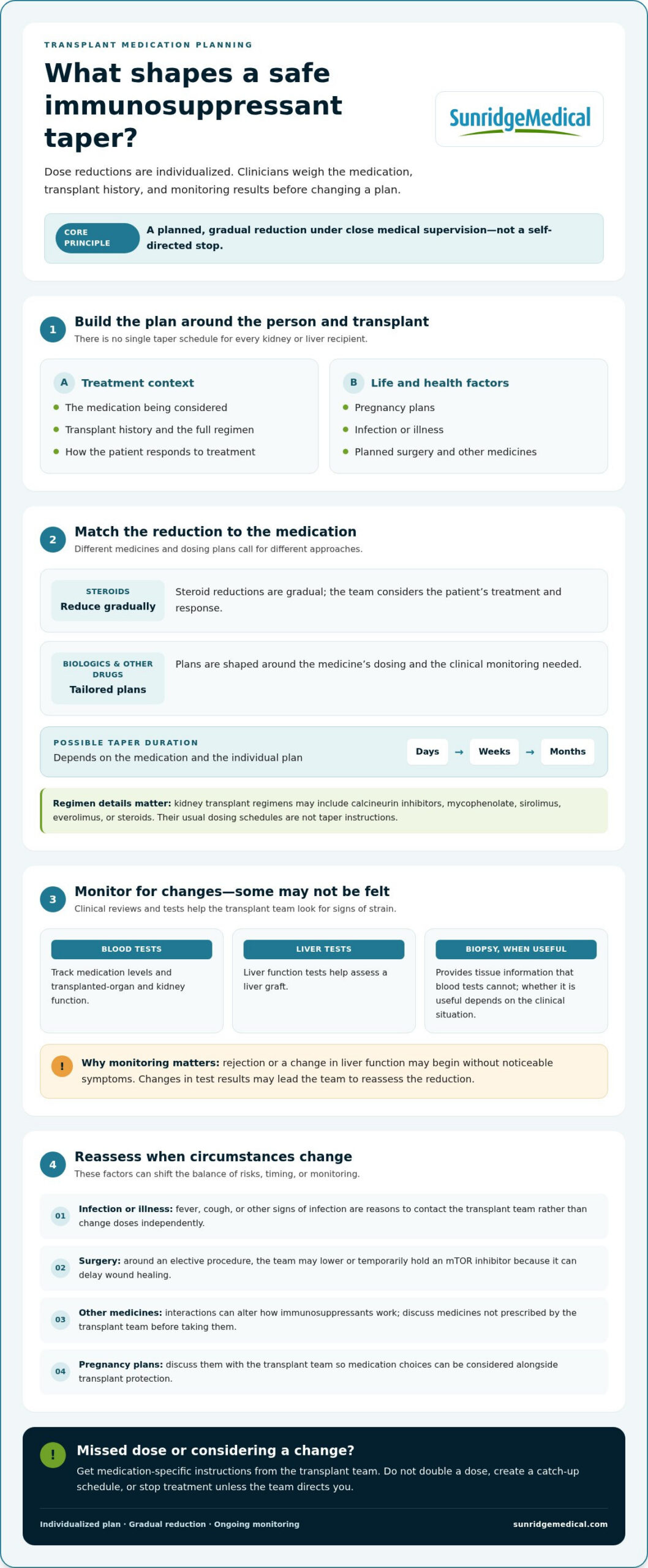
- A taper is individualized: the medication, health history, symptoms, and monitoring results all shape how dose reductions are considered.
Can transplant recipients be “weaned” off anti-rejection drugs?
Most transplant recipients need anti-rejection medications long term because these drugs help prevent the immune system from attacking the transplanted organ. A small number of carefully selected patients have stopped treatment in closely supervised studies, but stopping independently can put the transplant at risk.
Personalized Tapering Under Medical Supervision
A personalized taper is a planned, gradual dose reduction shaped by the medication, transplant history, and response to treatment. It matters because there is no single schedule that suits every kidney or liver recipient. Steroid reductions are gradual, while biologics and other immunosuppressants need plans tailored to their dosing and clinical monitoring. Depending on the medication, a taper may take days, weeks, or months.
Kidney transplant regimens may include calcineurin inhibitors, mycophenolate, sirolimus, everolimus, or steroids. Calcineurin inhibitors and mycophenolate products are usually taken twice daily, 12 hours apart, unless a different formulation or prescription applies. Sirolimus is taken once daily, while everolimus is taken twice daily. These schedules are not taper instructions: the transplant team considers the full regimen before changing any dose.
Monitoring During Medication Reduction
Monitoring involves clinical reviews and tests to look for signs that the transplanted organ is under strain. This matters because rejection or a change in liver function may begin without noticeable symptoms. Regular blood tests can track medication levels and transplanted-organ and kidney function; liver function tests help assess a liver graft. Changes in results may prompt the team to reassess the reduction.
Biopsies provide tissue information that blood tests cannot. In a liver transplant withdrawal trial, medication reduction was monitored over three years, and one participant had three liver biopsies during that period. A biopsy may help guide decisions, but its usefulness depends on the clinical situation. For kidney recipients, a repeat biopsy may also inform withdrawal, though it is not always necessary.
Factors That Affect Tapering Decisions
Pregnancy plans, infection, surgery, and other medicines can all shift the balance of risks around reducing immunosuppression. Discussing pregnancy plans with the transplant team helps them consider medication choices alongside transplant protection. During an illness, a fever, cough, or other signs of infection are reasons to contact the transplant team rather than changing doses independently.
Surgery can also affect the plan: around an elective procedure, the team may lower or temporarily hold an mTOR inhibitor because it can delay wound healing. New medicines matter too, since interactions can alter how immunosuppressants work. Discuss any medicine the transplant team has not prescribed with them before taking it. These factors can change the timing or monitoring of a taper.
Missed Doses and Abrupt Stops
A missed dose or accidental interruption calls for prompt, medication-specific instructions from the transplant team. Don’t double a dose or create a catch-up schedule unless the team directs you to. Take anti-rejection doses exactly as prescribed and around the same time each day; skipped doses can increase rejection risk or cause complications.
Stopping medication after a transplant is not a routine, self-directed step, even if the recipient feels well or has taken it for years. Any reduction must be planned under close medical supervision, and new symptoms or feeling worse during a change should be reported. For anyone considering tapering off immunosuppressant drugs safely, the key distinction is between a monitored, individualized plan and suddenly stopping treatment.
Potential risks and side effects of immunosuppressive medications
Anti-rejection medicines help protect a transplanted organ, but they can also affect other parts of the body. Understanding these effects helps patients discuss medication changes without mistaking side effects for rejection or stopping treatment abruptly.
Medication Side Effects
Medication side effects are unwanted effects that can occur alongside the intended suppression of immune activity. Immunosuppressants can cause headaches and tremors, and they can increase the risks of infection and cancer. Feeling unwell may prompt someone to reduce a dose without guidance, potentially weakening protection for the transplanted organ.
Steroid effects depend partly on the dose. Trouble falling asleep may occur with prednisone or methylprednisone, especially at doses of 40 mg per day or higher. Transplant teams use the lowest effective steroid dose to limit side effects. Mycophenolate can decrease the effectiveness of oral contraceptives, so patients taking it are advised to use two forms of birth control, including a barrier method.
Managing Side Effects and Monitoring
Managing side effects means reporting changes and reviewing them alongside treatment benefits and monitoring results. Don’t stop or reduce a medication because of an unwanted effect; discuss it with a healthcare provider or pharmacist. For transplant recipients, blood tests monitor medication levels and organ function. Testing may become more frequent after illness or rejection.
Some symptoms need urgent attention. Shortness of breath, chest pain, or swelling can signal a serious allergic reaction and require immediate help. Keep a clear record of symptoms and when they occur, including how they relate to medication doses. This information helps the care team assess whether a side effect, infection, or another complication may be involved.
Flare and Rejection Risks During Reduction
A disease flare or organ rejection can occur if immune suppression becomes insufficient. Symptoms may not reveal the full extent of a problem, and flares are particularly likely during tapering and the first years after withdrawal. Regular monitoring helps identify changes early; contact the treating team if new symptoms appear or you feel worse.
In the largest trial of immunosuppressive therapy interruption in lupus nephritis, 10.6% of patients experienced flares during treatment reduction. The comparison underscores why a dose change needs a planned monitoring approach, not simply symptom tracking. For people managing an autoimmune condition, autoimmune disease management can support broader care discussions without replacing transplant-team decisions about anti-rejection medication.
Withdrawal Symptoms and Complications
Withdrawal effects are symptoms or health complications that can follow a dose reduction or sudden stop. Their nature depends on the medicine and the pace of reduction, making a personalized schedule important. Gradually lowering a dose gives the body time to adjust and may help minimize withdrawal symptoms and other complications.
During a taper, report new symptoms or feeling worse rather than making another dose change on your own. A flare may require prompt reassessment and, in some cases, reinforcement of immunosuppressive treatment. Because side effects, withdrawal effects, and disease activity can overlap, medication history and monitoring results help guide the next clinical decision.
How rare successful withdrawal is
Stopping immunosuppressants completely remains uncommon, and results differ between transplant recipients and people treated for autoimmune disease. In previous studies of liver transplant recipients, about 1 percent of participants successfully weaned off immunosuppressive medication. That figure helps distinguish full withdrawal from reducing a dose: some liver transplant patients can substantially reduce medication with close supervision, yet discontinuation is a different outcome. For patients, the key question isn’t simply whether treatment can be lowered. It’s whether their condition remains controlled without it, while monitoring continues for signs of rejection, relapse, or infection.
In systemic lupus erythematosus, withdrawal findings show why remission does not eliminate flare risk. Among 77 patients who successfully stopped glucocorticoids, 23% reported flares after a median of 1 year. A review reports that flares may affect one-third to one-quarter of patients who discontinue therapy. In a lupus nephritis interruption trial, 10 of the 20 patients who returned to remission remained without therapy after a median follow-up of 24 years. These findings describe different patient groups and outcomes, not a universal prediction for an individual.
Patient selection and disease stability shape the chance of withdrawal. A review identifies people who have been relapse-free for at least 4 years and are in complete remission as potential candidates for complete discontinuation. It also suggests withdrawal is more successful after patients have taken immunosuppressive therapy for at least 5 to 6 years. These are selection considerations, not a timetable that makes stopping safe by itself. Clinicians also weigh disease history, current activity, prior flares, and whether monitoring can detect recurrence early.
Transplant recipients face a distinct risk: the immune system may attack the transplanted organ even after years of stable function. Mayo Clinic researchers report that stopping immunosuppressive medication eight to 10 years post-transplant has led to rejection, including among closely matched siblings. That experience cautions against treating elapsed time or tissue matching as proof of tolerance. A small group in a closely matched kidney-and-stem-cell transplant trial stopped medication for more than two years, but that specialized approach doesn’t represent routine transplant care.
For lupus nephritis, the review notes that hydroxychloroquine can help prevent extrarenal flares in patients considering withdrawal. If a flare occurs, promptly reintroducing glucocorticoids or other immunosuppressants can lead to remission. These details show why successful withdrawal includes ongoing follow-up and a clear response plan. For transplant and autoimmune patients alike, reduced medication exposure must be weighed against recurrence, organ rejection, and infection.
Biomarkers that may predict tolerance
A biomarker is a measurable sign of a biological process, such as immune activity or organ injury. In transplant care, researchers are studying whether biomarker patterns can help distinguish stable tolerance from signs that the immune system may attack a transplanted organ. The goal is to support better-informed decisions, not to use a test as independent authorization to stop medication.
Blood samples can reveal changes in immune cells, proteins, or gene activity. Researchers examine whether particular patterns occur alongside stable organ function or rejection. For example, a kidney recipient’s blood results may be considered alongside kidney function and medication history. A liver recipient’s results would be interpreted in the context of liver function and the transplant’s clinical course. Their meaning depends on the pattern and the patient’s full medical picture.
A single result cannot capture every factor affecting an organ. Infection, inflammation, medication exposure, and changes in organ function can influence test results. Clinicians therefore interpret biomarkers alongside symptoms, laboratory trends, treatment history, and other assessments. If a result shifts, the next step is to determine whether it suggests immune activation, another health change, or a finding that needs continued observation.
Biomarkers may be especially useful when they provide information before symptoms appear. For instance, a research team could compare immune signals with organ-function results during a supervised dose reduction. A pattern associated with stable function might support further study of tolerance, while a pattern linked to injury could prompt closer assessment. Neither pattern is proof on its own. Ongoing clinical monitoring remains central to detecting rejection or another complication.
For patients, the practical value is a more individualized assessment, not a universal threshold for withdrawal. Ask what a test measures, how its result relates to the transplanted organ, and whether it changes the monitoring plan. A biomarker that looks promising in research still needs to be interpreted in light of the patient’s transplant history and current condition. The goal is to prevent avoidable graft injury while identifying people whose immune response may remain controlled with less medication.
How do doctors create an immunosuppressant tapering schedule?
A tapering schedule sets out how a dose changes over time, with monitoring to track the patient’s response. The medication, health history, transplant function, and reason for treatment all shape the plan. No single schedule applies to every patient or immunosuppressant.
Medication and Treatment History
The first step is to review each medication, its dose, and the condition it treats. A taper may take days, weeks, or months, depending on the medicine and the patient’s circumstances. For transplant recipients, the team also considers organ function, previous rejection, other health conditions, and the full anti-rejection regimen.
Different medicines require different approaches. A plan for prednisone, for example, cannot simply be applied to a biologic or another immunosuppressant. The prescriber weighs how the medicine works, how long the patient has taken it, and what risks could follow a dose reduction. The aim is to make measured changes while watching for symptoms and changes in test results.
Monitoring and Adjustments
Monitoring connects each dose change with the patient’s response. For transplant recipients, blood tests track medication levels and the function of the transplanted organ and kidneys. Patients doing well after a transplant usually have anti-rejection medication lab tests scheduled every one to three months. Testing may be more frequent early after transplant or after illness or rejection.
Results and symptoms inform the next decision. If a patient feels worse or develops new symptoms during a taper, the care team needs to know. An mTOR inhibitor may be lowered or temporarily held around elective surgery because it can delay wound healing. This is a procedure-specific adjustment, not general advice to stop the medication.
Keeping the Plan Safe and Practical
A usable schedule should clearly state each dose change, when it begins, and how progress will be assessed. Patients can keep a written medication list and record doses, symptoms, and test appointments. This record helps connect a change, such as a new symptom after a reduction, with the treatment timeline.
Don’t change the plan independently or compensate for a missed dose by doubling the next one. Transplant recipients should take each anti-rejection dose as prescribed and contact their transplant team about medication changes or new symptoms. If immunosuppressants are part of autoimmune care, explore autoimmune disease management as a related area of support.
Sunridge Medical: Alternative Cancer Treatment Protocols
Sunridge Medical provides Alternative Cancer Treatment Protocols for people seeking individualized care for cancer and complex chronic conditions. Its physician-led approach integrates conventional medicine with research-informed alternative therapies in personalized care plans.
If you’re managing an autoimmune condition and have questions about immunosuppressant treatment, Sunridge Medical offers Autoimmune Disease Management. It also provides Chronic Lyme Disease Treatment and Hormone Optimization Therapy. These services address distinct health concerns; they do not replace a transplant team’s guidance or authorize changes to anti-rejection medication.
If you’re exploring care for cancer or a complex chronic condition, contact Sunridge Medical to discuss your needs.
Take Your Next Step With a Clear Care Plan
Decisions about changing long-term treatment deserve a considered conversation, not a rushed response to side effects or uncertainty. If you’re discussing tapering off immunosuppressant drugs safely, bring your questions, current medication list, and treatment goals to the clinicians overseeing your care. This gives the conversation a practical starting point and keeps decisions connected to your health priorities.
For people also seeking support with other complex conditions, Sunridge Medical offers Alternative Cancer Treatment Protocols, Chronic Lyme Disease Treatment, and Autoimmune Disease Management. These services address distinct needs and do not replace transplant-team guidance about anti-rejection medicines. Whether a treatment change is appropriate depends on your individual clinical circumstances.
Contact Sunridge Medical to explore care for a relevant health concern. A thoughtful next step can help you move forward with greater clarity and confidence.
Frequently Asked Questions
How do I safely taper off medications?
Start by discussing the medication and your reason for reducing it with the clinician managing your treatment. A safe plan identifies which dose changes are prescribed, when they happen, and what symptoms or test results should prompt follow-up. Don’t skip doses, create your own schedule, or double a dose after a missed one without instructions. If you’ve had a transplant, involve your transplant team before making any change.
What’s important to know?
The medicine’s purpose matters: immunosuppressants may protect a transplanted organ or control an immune-related disease. Keep an accurate list of prescription medicines, supplements, and recent dose changes, since other medicines can interact with immunosuppressants. Track new symptoms and attend scheduled tests, even when you feel well. If your treatment involves a transplant, contact your transplant team before starting a medicine they haven’t prescribed.
Why can’t I just quit cold turkey?
Stopping suddenly can remove protection against organ rejection or disease activity, and some medicines can cause withdrawal effects when stopped abruptly. Feeling normal doesn’t prove that the underlying condition is controlled. If side effects, cost concerns, or missed doses are making treatment difficult, tell the prescriber what’s happening. They can assess the concern and explain whether a supervised change or another approach is appropriate.
When is it safe to taper off immunosuppressant medication?
There isn’t one time that makes tapering appropriate for everyone. The decision depends on why you take the medicine, how stable your condition has been, prior flares or rejection, current organ function, and monitoring results. In lupus, complete remission and being relapse-free for at least 4 years are identified as possible candidate characteristics in a review. These criteria don’t replace an individualized clinical assessment.
Why should immunosuppressants not be stopped abruptly?
A sudden stop can leave the immune system insufficiently controlled, increasing the possibility of transplant rejection or a disease flare. The consequences vary with the medicine and the condition it treats. A gradual reduction gives the care team an opportunity to assess symptoms and test results as treatment changes. If you’ve already stopped or missed doses, contact the prescribing or transplant team for instructions rather than restarting or changing doses on your own.
What monitoring and tests are needed during immunosuppressant tapering?
Monitoring is tailored to the medicine and condition. For transplant recipients, blood tests can assess medication levels and transplanted-organ and kidney function; liver recipients may also have liver function tests. The team may adjust testing after illness, rejection, or a treatment change. Bring a current medication list to appointments and report dose changes, new medicines, and symptoms so results can be interpreted in context.
Which symptoms during tapering require urgent medical attention?
Shortness of breath, chest pain, or swelling can signal a serious allergic reaction and require immediate medical help. For transplant recipients, fever, cough, or other signs of illness warrant prompt contact with the transplant team. Also report feeling worse or developing new symptoms during a dose reduction. Follow your care team’s instructions for urgent concerns, and don’t wait for a routine test if serious symptoms occur.