


What if feeling worse during a detox isn’t proof that your body is healing? A new headache, nausea, fatigue, or intensified symptoms can feel alarming, especially if you’ve been told discomfort means toxins are leaving. If you’re asking “what is a healing crisis in detoxification,” the term is often used in complementary health settings, but it isn’t an established medical diagnosis.
It’s understandable to want reassurance when symptoms change during a treatment or wellness practice. But worsening symptoms deserve attention, not an automatic explanation as progress. They can have many causes, including dehydration, an adverse effect, or an unrelated illness.
This guide explains what people mean by a “healing crisis,” what the evidence does and doesn’t establish, and how the term differs from medically recognized reactions such as the Jarisch-Herxheimer reaction. You’ll also learn when symptoms call for prompt or emergency care, why withdrawal from alcohol or drugs can be dangerous, and what details to share with a clinician. A symptom flare is a signal to assess, not proof of detoxification.
Key Takeaways
- Understand what is a healing crisis in detoxification and why the phrase doesn’t establish that symptoms are evidence of healing.
- Learn how a Jarisch-Herxheimer reaction differs from the broader “healing crisis” label and why the distinction matters clinically.
- Consider symptom timing, severity, treatments, and other possible causes rather than relying on a detox explanation alone.
- Use practical steps to track new symptoms and discuss them with a clinician. Don’t stop prescribed medicines or cancer treatment without medical guidance.
- See how individualized assessment can bring symptoms, health history, and current care into a clearer picture.
What Is a Healing Crisis and Is It a Medical Diagnosis?
Feeling worse after starting a wellness practice can be unsettling. You may wonder whether a new symptom is expected, a sign that the practice is helping, or a reason to stop and seek advice. The phrase “healing crisis” can sound like a clear medical explanation, but the label alone can’t tell you what’s happening in your body.
In complementary and alternative health settings, people often use “healing crisis” to describe symptoms that appear or intensify after beginning a practice. It isn’t a universally accepted medical diagnosis, and it isn’t recognized as a diagnosis in the World Health Organization’s ICD-11. “Detox reaction” and “cleansing reaction” are also labels, not explanations of a symptom’s cause or evidence that a treatment is effective.
A symptom flare is a real experience, but diagnosing its cause requires assessing the clinical context. That distinction matters. Calling symptoms a crisis may describe how someone feels, but it doesn’t establish that toxins are being released, that the body is “cleansing,” or that health is improving. Those claims require evidence, not simply a change in how someone feels.
What do people mean by a detox healing crisis?
The common claim is that symptoms temporarily intensify as the body adjusts to a wellness practice or eliminates toxins. People may use the phrase for experiences such as feeling unwell after starting a new supplement, restrictive diet, or cleansing routine. But the label doesn’t identify a biological mechanism or show that the practice caused the symptoms. The experience deserves attention, while the detox explanation remains a claim that needs evidence.
Why does feeling worse not prove healing?
A symptom that begins after a new practice may be related to it, but timing alone can’t prove cause. For example, nausea after starting a supplement could be a side effect, while fatigue might relate to an underlying condition, another illness, or a change in eating or fluid intake. More than one factor may be involved. Don’t treat worsening symptoms as something to endure simply because they’re described as a healing response.
Specific, medically described reactions can occur in defined circumstances, but they shouldn’t be used to validate a broad detox claim. For example, the Jarisch-Herxheimer reaction is a recognized response associated with antimicrobial treatment for certain infections. It has a particular clinical context and is distinct from the general “healing crisis” label. A specific reaction in one setting doesn’t show that symptoms after an unrelated wellness practice mean toxins are leaving.
Consider what changed, when symptoms began, and whether they’re worsening or affecting daily activities. Those details can help a clinician assess possible causes. A label shouldn’t delay that assessment or replace medical advice, especially when symptoms are severe, persistent, or concerning. The safest interpretation is measured: symptoms are real, their cause may be unclear, and worsening alone isn’t proof of progress.
Healing Crisis vs. Jarisch-Herxheimer Reaction: How Are They Different?
The similar language can make two very different ideas sound interchangeable. They aren’t. A Jarisch-Herxheimer reaction is a recognized clinical reaction associated with antibiotic treatment for certain infections, particularly spirochetal infections. “Healing crisis,” by contrast, is a broad label used in some complementary health settings, not a specific reaction with a defined cause.
A named clinical reaction has a defined medical context; a loosely used “healing crisis” label doesn’t identify what caused someone’s symptoms. This distinction helps prevent a familiar phrase from being mistaken for a diagnosis. If you’re trying to understand what is a healing crisis in detoxification, don’t use the term as a substitute for assessing a symptom change in context.
What is a Jarisch-Herxheimer reaction?
The Jarisch-Herxheimer reaction is an acute inflammatory response that can occur after antimicrobial treatment begins for certain infections, including syphilis and other spirochetal infections. Symptoms may include fever, chills, headache, and muscle aches. The timing and infection-treatment context matter; symptoms alone can’t confirm the reaction. If symptoms arise after starting prescribed antimicrobial treatment, contact the treating clinician for guidance rather than labeling the change yourself.
The comparison makes the difference clearer:
| Aspect | Jarisch-Herxheimer reaction | “Healing crisis” |
|---|---|---|
| Meaning | A recognized inflammatory response to treatment in a specific clinical setting. | A popular, broad label for symptoms said to worsen during a wellness or complementary practice. |
| Context | Associated with antimicrobial treatment for certain infections, especially spirochetal infections. | Used across varied practices, such as cleanses, without one established mechanism or diagnostic definition. |
| Clinical response | Discuss symptoms with the clinician treating the infection, who can assess their significance and advise on care. | Assess the symptoms and practice individually; don’t assume the label explains the cause. |
Why are the two terms often confused?
Both may be described informally as a “reaction,” and some wellness discussions use words like “detox” for a range of symptom changes. That overlap can blur the difference between a defined response to treatment and a general interpretation of feeling worse. Similar wording doesn’t make the causes equivalent. A headache after a cleanse, for example, doesn’t become a Jarisch-Herxheimer reaction simply because someone calls it a detox reaction.
More useful questions are specific: What treatment or practice was started? When did symptoms begin? Which symptoms are occurring, and how severe are they? A clinician can consider those details alongside the infection, treatment plan, and health history. Don’t stop or alter prescribed antimicrobial treatment on your own. Contact the treating clinician if you suspect a reaction or are concerned about a change.
For readers managing complex health concerns, individualized chronic illness care considers symptoms alongside a person’s broader medical context, rather than relying on a catch-all label.
What Symptoms During Detox Need More Than a “Healing Crisis” Explanation?
A new symptom during a cleanse or wellness practice deserves thoughtful assessment, not an automatic detox explanation. Headache, nausea, fatigue, dizziness, or changes in digestion can have different causes. They may relate to the practice, a supplement or other treatment, an existing condition, or an unrelated illness. No symptom pattern, by itself, proves that detoxification is occurring.
Notice how symptoms behave, but don’t use their severity as a measure of whether a practice is “working.” Mild, stable symptoms may still merit discussion, particularly if they’re new or recurring. Severe, rapidly worsening, or otherwise concerning symptoms need prompt attention. A clinician can interpret the pattern in light of your health and treatments; a general symptom list can’t determine the cause.
Which details help a clinician assess a new symptom?
A clear timeline can make a medical conversation more useful. Write down when the symptom started, whether it has changed, and what was happening around its onset. Include changes that might seem unrelated. These details can help a clinician evaluate possible causes without assuming the detox practice is responsible.
- Record when symptoms began, how often they occur, and whether they’re improving, stable, or worsening.
- List new supplements, medicines, procedures, restrictive diets, and changes to existing treatments, including when each change began.
- Note relevant medical conditions, symptoms that were present beforehand, and any effect on sleep, eating, drinking, or daily activities.
Bring the product label or a current medication list if available. Don’t delay urgent care to gather records, and don’t stop prescribed medicines or cancer treatment without direction from your treating clinician.
Which warning signs call for urgent attention?
Some symptoms shouldn’t wait for a routine appointment. In the United States, call 911 for severe breathing difficulty, chest pain, fainting, or new confusion. These signs can have different causes, and this guidance isn’t a diagnosis. If you’re unsure whether a situation is an emergency, contact emergency services for direction.
Seek prompt medical advice for symptoms that are severe, persistent, rapidly worsening, or substantially interfering with usual activities. Do the same when symptoms appear after starting a medicine, supplement, procedure, or other intervention, particularly if you have a complex condition or are receiving active treatment.
“Detox” can also refer to withdrawal from alcohol or drugs, which is different from a wellness cleanse. Withdrawal can become dangerous, including through seizures, hallucinations, or delirium. Don’t dismiss these symptoms as a healing crisis; seek urgent medical help. If you’re asking what is a healing crisis in detoxification, the safest answer is that the label can’t determine whether symptoms are harmless, treatment-related, or a sign of illness. The next step depends on severity and clinical context, not on the label someone assigns.
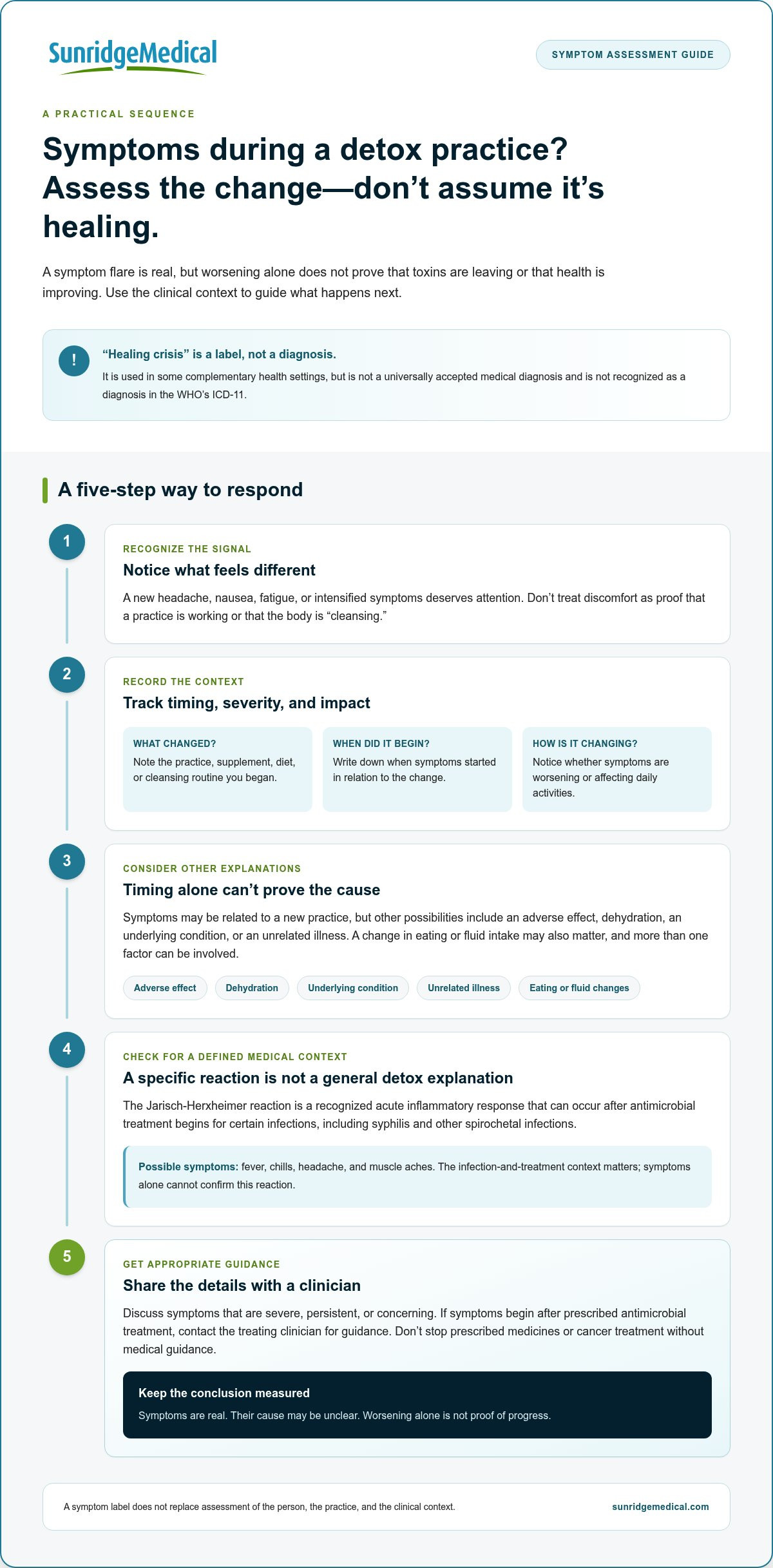
What Should You Do If Symptoms Begin During a Detox Practice?
New or intensified symptoms can leave you unsure whether to wait, change what you’re doing, or seek help. A careful, stepwise response can help you act without guessing at the cause. Worsening symptoms should be assessed, not assumed to be beneficial.
If symptoms begin during a cleanse or other wellness practice, use these steps as a guide. If symptoms are severe or feel like an emergency, seek emergency help rather than working through the list first.
- Assess severity. Consider how intense the symptoms are, whether they’re worsening quickly, and whether they’re interfering with basic activities. For severe breathing difficulty, chest pain, fainting, or new confusion, call 911 in the United States.
- Pause nonessential new practices. If a new cleanse, supplement, or procedure isn’t medically prescribed, consider pausing it while you seek guidance. Don’t stop or change prescribed medicines or cancer treatment without direction from your treating clinician.
- Document the changes. Note when symptoms began, how they’ve changed, and when you started the practice. Keep the product label, ingredient list, supplement dose, and details of any procedure or preparation.
- Contact a clinician. Share your notes and ask what steps are appropriate for your situation. Seek prompt advice for symptoms that are severe, persistent, rapidly worsening, or concerning to you.
How should you prepare for a medical conversation?
A concise timeline can make the discussion clearer. Include symptom onset and progression, the name and dose of each medication and supplement, and any recent changes. Mention relevant health conditions, existing treatments, and the practice or procedure involved. Ask which changes require urgent follow-up and whether to pause the nonessential practice while symptoms are assessed.
Bring the actual container or a clear photo of its label when possible. A product’s name alone may not show all its ingredients or strength. For a procedure, describe what was done and when, along with any instructions you received. If you can’t gather every detail, don’t delay seeking care for a serious symptom.
Why should detox practices be reviewed in context?
Possible risks and interactions depend on the individual, the practice, and existing medical care. A supplement or restrictive routine may be especially relevant when someone is managing a chronic condition or receiving treatment. Adding several new products or procedures while symptoms remain unexplained can make it harder to identify what might be contributing. Avoid starting another cleanse or home remedy as a substitute for medical assessment.
If symptoms occur alongside cancer or complex chronic illness care, explore individualized care for complex conditions that considers a person’s broader health context. Whatever the practice, share changes openly with your treating clinician so decisions can account for your current care and medical history.
How Can Individualized Medical Care Help When Symptoms Have an Unclear Cause?
When symptoms change during a wellness practice, a clinician can help put that change in context rather than relying on a label. Timing matters, but so do your health history, active diagnoses, current treatments, and the nature and progression of the symptoms. This broader view can help identify questions that need attention and whether further evaluation is appropriate.
That matters especially for people managing complex or chronic conditions. A new symptom may overlap with an existing health concern or occur while treatment is changing. The question “what is a healing crisis in detoxification” can start a conversation, but it can’t replace an individualized review of what’s happening and what care you’re receiving.
What does an individualized review consider?
A useful review brings together the symptom timeline, your medical history, active diagnoses, and current care. Share what changed, when it changed, and how symptoms have developed. A clinician can use these details to consider possible explanations and decide whether an examination, testing, or coordination with your existing care team may be appropriate.
No single test or protocol can identify every possible cause. Next steps depend on the person and the clinical picture. A clear timeline and accurate list of medicines, supplements, and recent practices can help make the discussion more focused.
How can readers take a safe next step?
Share your concerns with a qualified clinician familiar with your health and treatment history. Be direct about any wellness practice or supplement you’ve tried, even if you’re unsure it’s relevant. This gives the clinician a fuller account to consider alongside your symptoms and existing care.
Sunridge Medical provides individualized care for cancer and complex chronic diseases, with care plans that may integrate conventional therapies and research-based alternative approaches. This integrative perspective doesn’t make a “healing crisis” a diagnosis, and alternative approaches shouldn’t replace necessary conventional care. Suspected emergencies require emergency services, not a routine consultation.
If you’re living with a complex chronic condition and would like to discuss your broader health needs, consider an individualized medical consultation with Sunridge Medical. Bring your questions and details of any recent changes so the conversation can begin with your specific circumstances.
Choose a Next Step Grounded in Your Care
Uncertainty about symptoms can make it tempting to settle on a simple explanation. Instead, let your next step be guided by your health needs and the care you already receive. Asking “what is a healing crisis in detoxification” can open a useful discussion, but you deserve an assessment that considers your circumstances rather than assuming discomfort signals progress.
For people managing cancer or complex chronic illness, Sunridge Medical offers individualized plans that may integrate conventional therapies with research-based alternative care. The medical center is led by Medical Director Dr. Steven S. Isaacman and was founded in 2003. Discuss any new or worsening symptoms with a qualified clinician. Seek emergency help for urgent symptoms, and don’t change prescribed treatment without your treating clinician’s direction.
If you’re considering a broader, individualized perspective on complex care, explore Sunridge Medical’s individualized approach to complex care. Contact Sunridge Medical to discuss your care needs and take a clear next step.
Frequently Asked Questions
Is a healing crisis in detoxification a medically recognized diagnosis?
No. “Healing crisis” is commonly used in some wellness settings, but it isn’t a universal medical diagnosis. If you’re wondering what is a healing crisis in detoxification, think of it as a label people may apply to feeling worse after a practice, not a confirmed explanation. Note what changed and when. If symptoms are significant or concerning, share those details with a clinician rather than relying on the label.
Can detox symptoms mean toxins are leaving my body?
Symptoms alone can’t establish that toxins are leaving your body or that a detox practice is working. For example, nausea after starting a supplement could have several explanations, including an unwanted effect or an interaction with another product or treatment. Keep the supplement container or a photo of its ingredients, and record when you took it and when symptoms began. Discuss these details with a clinician before assuming the symptoms are beneficial.
How long does a healing crisis last?
There’s no dependable universal timeline for a supposed healing crisis. Duration alone can’t show whether a symptom is harmless or caused by detoxification. How long it lasts depends on the actual cause and the person’s health circumstances. Don’t wait for a promised timeline if symptoms are worsening or concerning. A symptom diary can help you describe changes over time, but it isn’t a substitute for clinical advice when you need it.
Is a Jarisch-Herxheimer reaction the same as a detox healing crisis?
No. A Jarisch-Herxheimer reaction is a recognized clinical reaction associated with treatment of certain infections; “healing crisis” is a broader, loosely used wellness term. They shouldn’t be used interchangeably. If symptoms appear after you begin treatment for an infection, tell the clinician who prescribed it and ask what to do. Don’t stop or alter prescribed treatment based on an online description or an assumption about the reaction.
Should I stop a detox practice if I feel worse?
Don’t assume that feeling worse means you should continue, and don’t stop prescribed medicines or medical treatment without your treating clinician’s direction. For a non-prescribed practice or product, contact a clinician to discuss your symptoms and whether pausing it is appropriate. Keep the packaging or ingredient list, and note how much you used and when. Seek urgent care if symptoms are severe or rapidly worsening.
When should I seek emergency care for symptoms during detox?
Call 911 in the United States for severe difficulty breathing, chest pain, fainting, or new confusion. These examples aren’t a complete list, and symptoms can’t identify their own cause. Severe or rapidly worsening changes also need urgent assessment. If you’re uncertain whether symptoms are an emergency, contact local emergency services for direction. Don’t delay urgent help to research whether a symptom fits a “healing crisis” description.