


You leave the oncologist's office carrying a diagnosis, a proposed treatment plan, and questions you couldn't organize quickly enough to ask. You may be wondering whether surgery is possible, whether the scans tell the whole story, or whether starting treatment immediately means giving up the chance to hear another perspective.
A second opinion for pancreatic cancer can help answer those questions without asking you to abandon responsible medical care. The most useful review repeats the diagnosis while also examining the pathology, imaging, biomarker results, stage, treatment sequence, and your overall health so you can make a decision with greater clarity.
Table of Contents
- Why a Second Opinion Is a Normal Part of Pancreatic Cancer Care
- How Often Second Opinions Actually Change Pancreatic Cancer Care
- The Records That Matter Most Before Your Second-Opinion Visit
- When Staging Is Uncertain and the Answer Hinges on Interpretation
- Types of Specialists to Consult for Pancreatic Cancer
- Evaluating Integrative and Adjunctive Approaches Wisely
- How Sunridge Medical Approaches Second Opinions in Scottsdale
Why a Second Opinion Is a Normal Part of Pancreatic Cancer Care
The first days after a pancreatic cancer diagnosis often feel compressed. One appointment leads to another, family members are asking what happens next, and the proposed treatment may sound urgent before you've had time to understand what it means. In Scottsdale, Phoenix, and communities across the greater Phoenix metropolitan area, patients commonly seek another qualified perspective during this period.
Requesting that review isn't an accusation against your oncologist. It's a normal part of complex cancer care. NCCN patient guidance says there is usually time to obtain a second opinion before treatment begins, allowing another cancer care provider to review test results and suggest a plan. The guidance also recommends sending copies of your records to the reviewing clinician. NCCN patient guidance for pancreatic cancer provides that framework.

A review doesn't have to mean starting over
A second opinion should be organized around the information you already have. The reviewing team can examine pathology, CT or MRI images, laboratory results, operative reports, and treatment recommendations rather than automatically repeating every test.
That distinction matters. A fast, well-prepared review may clarify whether the tumor appears removable, whether additional pathology interpretation is appropriate, or whether the treatment sequence deserves discussion. It can also confirm that the initial recommendation is reasonable, which may provide reassurance rather than a dramatic change.
Many patients worry that their current physician will feel offended. Most experienced cancer clinicians understand that patients need confidence before making major decisions. If you'd like a broader perspective on how personal experience can shape conversations about cancer treatment and survival, you can read the Dr Al Danenberg cancer survival story, while keeping your own treatment decisions grounded in a qualified review of your records.
For practical preparation, Sunridge Medical's pancreatic cancer second-opinion resource can help you think through what to gather and what questions to bring.
Practical rule: A second opinion should make the next decision clearer, not create pressure to reject your current team immediately.
How Often Second Opinions Actually Change Pancreatic Cancer Care
A second opinion can confirm a plan, but it can also change who provides treatment, how scans are interpreted, or what sequence clinicians recommend. The available evidence suggests that this is more than a courtesy visit.
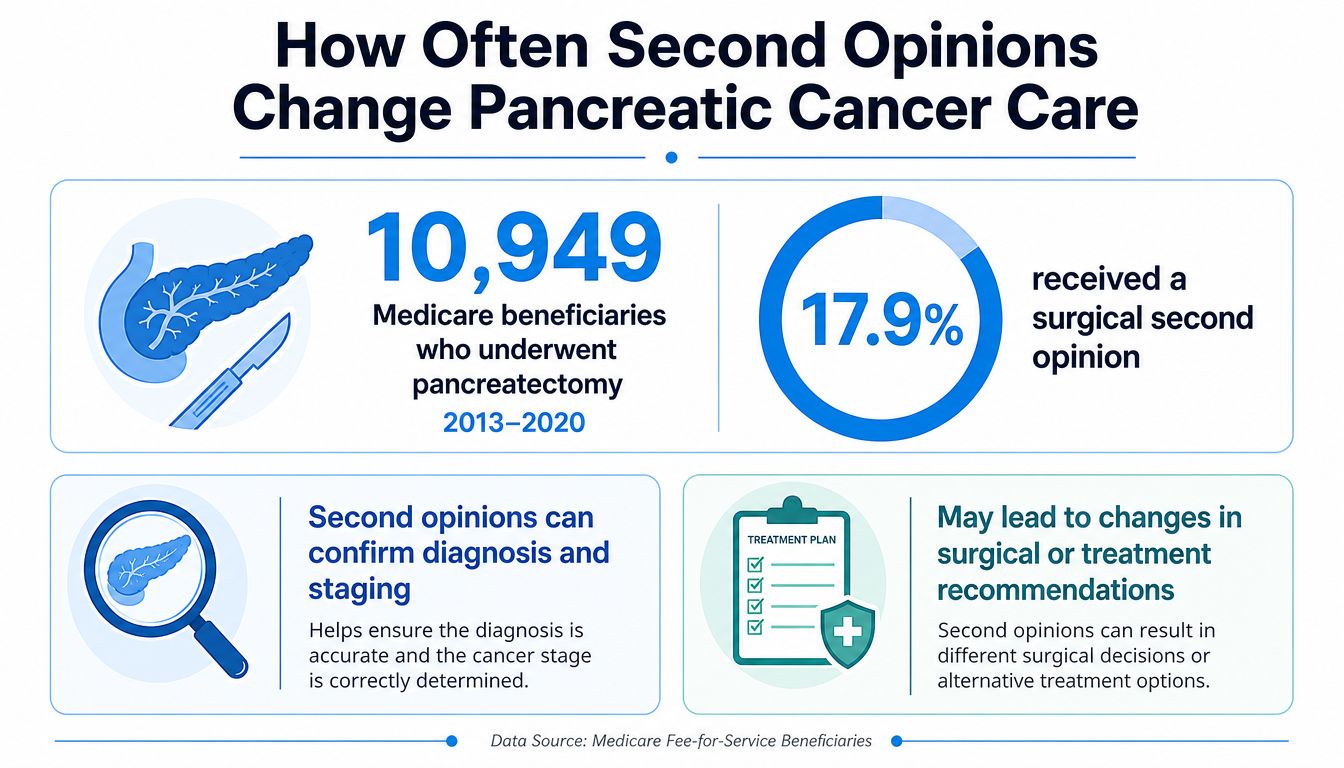
A large U.S. Medicare analysis examined 10,949 beneficiaries who underwent pancreatectomy between 2013 and 2020. Only 17.9% received a surgical second opinion. Among those who sought one, 39.9% had surgery performed by their first surgeon, meaning the remaining patients underwent surgery with a different surgeon. These findings are reported in the Medicare pancreatectomy analysis.
The practical meaning is important. Patients often seek a second opinion expecting either confirmation or disagreement. In surgical care, the review may instead lead to a different treating team, particularly when the question involves technical expertise, resectability, or access to a multidisciplinary program.
Imaging review can alter the treatment conversation
Radiology re-review matters because pancreatic cancer decisions depend heavily on the relationship between the tumor and nearby blood vessels, lymph nodes, liver, lungs, and other structures. A written report may not answer every surgical or staging question in the same way a subspecialized review can.
In a retrospective study of 65 biopsy-proven pancreatic adenocarcinoma cases, subspecialized second-opinion radiology changed management recommendations in 49.2% of patients. The review also maintained high agreement with the pathologic reference standard and aligned more closely with actual six-month management than the outside reports, according to the subspecialized radiology review study.
49.2% of patients in the study had management recommendations changed after subspecialized radiology review.
A separate study of suspected recurrent pancreatic cancer found disagreement between the original and second interpretations in 32% of cases. After expert review, sensitivity improved from 0.75 to 0.93, while specificity improved from 0.68 to 0.90. Additional imaging was recommended less often after the second review, 6% compared with 22%, as described in the second-opinion imaging study.
These numbers don't predict what will happen in your case. They do show why a second opinion can function as a diagnostic quality check. The value may lie in a changed recommendation, a more accurate stage, or a carefully documented confirmation that the current plan fits the available evidence.
For comparison, patients may also encounter second-opinion services in other cancer specialties, such as this breast cancer second-opinion resource. The principle is similar, but pancreatic cancer requires reviewers familiar with its anatomy, staging, and treatment sequencing.
The Records That Matter Most Before Your Second-Opinion Visit
The quality of a second opinion depends partly on the quality of the record package. A specialist can't reliably assess resectability, pathology, or treatment timing from a brief summary alone.
Start by asking the hospital, pathology department, imaging center, and oncology office for copies of the following:
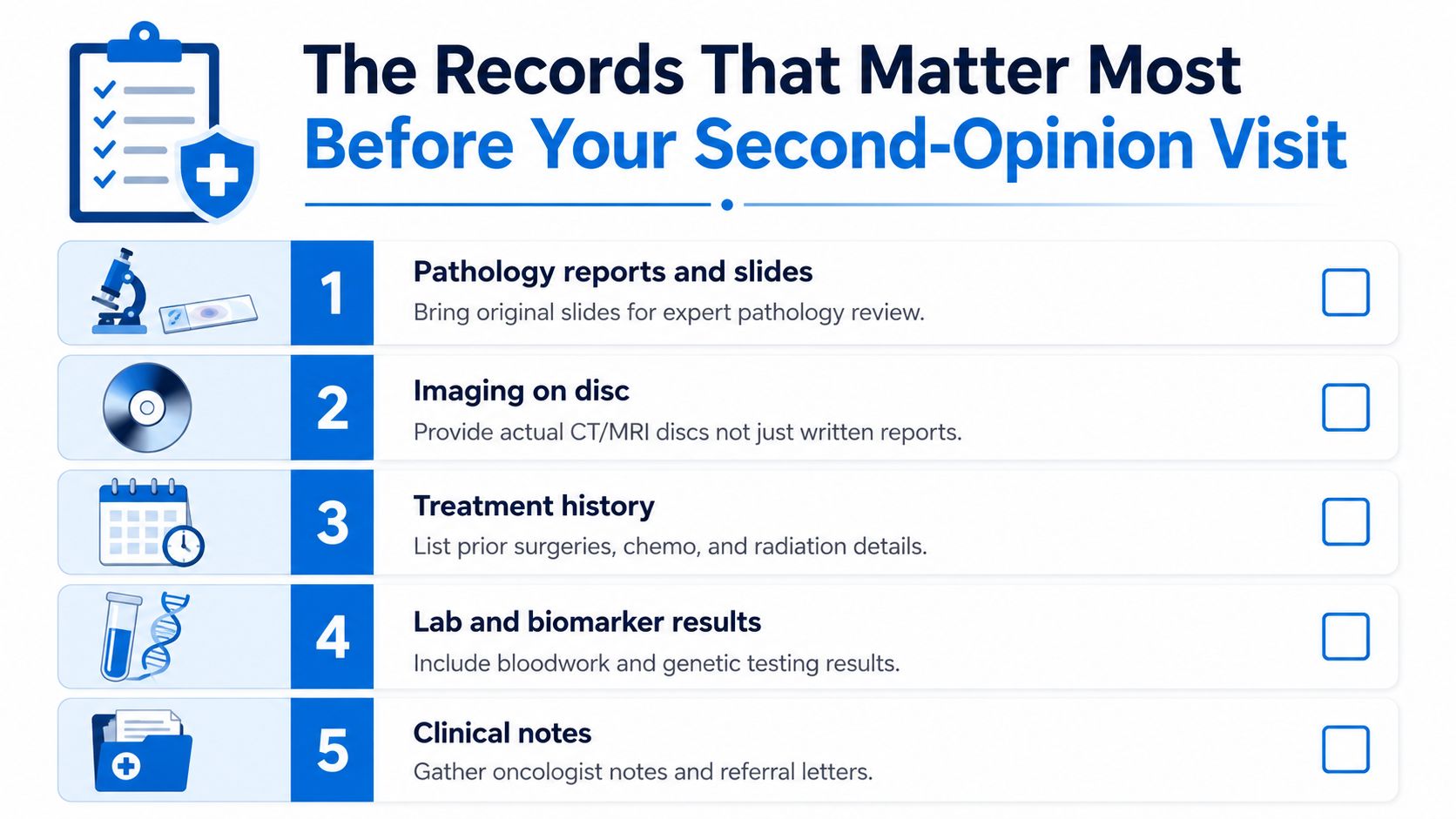
- Pathology reports and slides: Request the written pathology report and ask whether the original biopsy slides or tissue blocks can be sent for expert review. The report establishes the diagnosis, while the slides allow a subspecialized pathologist to examine the tissue directly.
- Actual imaging files: Obtain CT and MRI images on a disc or through the imaging center's electronic transfer system, not only the written reports. The reviewer needs to examine the images and their relationship to vessels and possible sites of spread.
- Treatment history: Include prior surgery, chemotherapy, radiation, biliary procedures, hospitalizations, and medication changes. A timeline helps the new clinician understand what has already happened.
- Laboratory and biomarker results: Include CA 19-9 results, bilirubin, liver tests, blood counts, kidney function, and genetic or molecular testing when available.
- Clinical notes: Gather oncology notes, surgical consultations, discharge summaries, referral letters, and the current treatment recommendation.
Why CA 19-9 requires context
CA 19-9 is a baseline biomarker, not a pancreatic cancer screening test. Guideline information notes that preoperative CA 19-9 can correlate with AJCC stage and resectability, but it's best measured after biliary decompression when bilirubin is normal. Elevated bilirubin can make the result misleading, as explained in this pancreatic cancer guideline document.
That means a single value shouldn't be interpreted in isolation. The reviewing clinician may ask when the blood was drawn, whether bile duct obstruction was present, and how the result fits with the imaging and clinical picture.
Send records before the appointment
NCCN guidance emphasizes transferring existing pathology and imaging for review instead of beginning with a new workup from scratch. Ask each facility about its release process, electronic transfer options, and whether pathology slides require a separate request.
You have the right to request your medical records, although the exact process and turnaround can vary by facility. Start early, keep a personal copy, and ask the receiving office to confirm which items arrived. Patients seeking a related specialty review may find this lung cancer second-opinion preparation resource useful for organizing records, even though the medical questions differ.
When Staging Is Uncertain and the Answer Hinges on Interpretation
Staging is not always a simple label. A pancreatic tumor may be described as resectable, borderline resectable, locally advanced, or metastatic, and the distinction can depend on detailed imaging interpretation, vessel involvement, pathology, and whether small areas of spread are visible or suspected.
Think of staging as identifying your starting point on a road map. If the map places you in the wrong town, choosing the correct route won't solve the problem. A second opinion verifies the starting point before the team commits to a treatment road.
Why categories can be reclassified
A tumor initially considered removable may require treatment before surgery if imaging shows a concerning relationship with nearby blood vessels. A tumor considered locally advanced may need a different treatment sequence from one with distant spread. A staging review may also influence whether surgery is discussed, how chemotherapy is sequenced, whether radiation has a role, and whether a clinical trial is worth exploring.
This doesn't mean every second opinion produces a new stage. It means that borderline cases deserve careful interpretation, especially when the treatment recommendation depends on a narrow anatomical distinction.
Formal imaging-based staging at diagnosis commonly includes CT of the abdomen and pelvis with thoracic CT at the same time. Independent guidance also describes situations in which staging laparoscopy may be considered, including CA 19-9 greater than 150 U/mL, borderline resectable tumors, tumors in the body or tail, ascites, or tumors larger than 3 cm, as outlined in this initial management guidance for pancreatic adenocarcinoma.
Questions to ask when the stage is unclear
Ask the reviewing team to explain:
- Which findings establish the current stage?
- Has a subspecialized radiologist reviewed the actual images?
- Does the tumor's relationship to nearby vessels affect surgical eligibility?
- Is there evidence of spread that remains uncertain?
- Would additional pathology or imaging review change the treatment sequence?
- Could the case qualify for a clinical trial based on a revised category?
You can also review plain-language information about biopsy and the spread of cancer. The most useful answer may not be a confident yes or no. It may be a clear explanation of what is known, what remains uncertain, and which next test or specialist can resolve that uncertainty.
Types of Specialists to Consult for Pancreatic Cancer
The right second opinion depends on the question you need answered. A surgeon is best positioned to discuss an operation, while a pathologist examines the tissue diagnosis and a radiologist interprets the images. A medical oncologist considers systemic treatment, and a radiation oncologist evaluates whether radiation could contribute to a particular plan.
High-volume pancreatic cancer centers can be especially relevant for surgical questions because pancreatic operations are technically demanding and patient selection requires experience. A multidisciplinary review differs from collecting several unrelated opinions. In a coordinated review, surgeons, medical oncologists, radiation oncologists, pathologists, and radiologists examine the same record set and discuss how their conclusions fit together.
| Specialist | Best Suited to Answer |
|---|---|
| Hepatopancreatobiliary surgeon or surgical oncologist | Whether surgery is technically appropriate, what operation may be required, and how vessel involvement affects eligibility |
| Medical oncologist | Which chemotherapy, targeted, or systemic treatment sequence fits the diagnosis and stage |
| Radiation oncologist | Whether radiation may have a role before or after other treatment |
| Gastrointestinal subspecialist pathologist | Whether the biopsy diagnosis and relevant tissue features merit expert re-review |
| Subspecialized radiologist | What the CT or MRI shows about local invasion, vessels, lymph nodes, and possible spread |
Match the reviewer to the uncertainty
If the immediate question is “Can this tumor be removed?”, prioritize a pancreatic surgeon and subspecialized radiologist. If the concern is a rare or unclear biopsy, pathology review may come first. If treatment has already started, a medical oncologist can assess sequencing, response, side effects, and whether molecular testing or a clinical trial should be discussed.
A practical record-transfer process can also reduce confusion. Secure exchange of files, notes, and reports helps each specialist work from the same information. Tools and services designed to streamline healthcare data may be relevant to organizations managing complex medical information, although they don't replace clinician interpretation or a patient-specific consultation.
Evaluating Integrative and Adjunctive Approaches Wisely
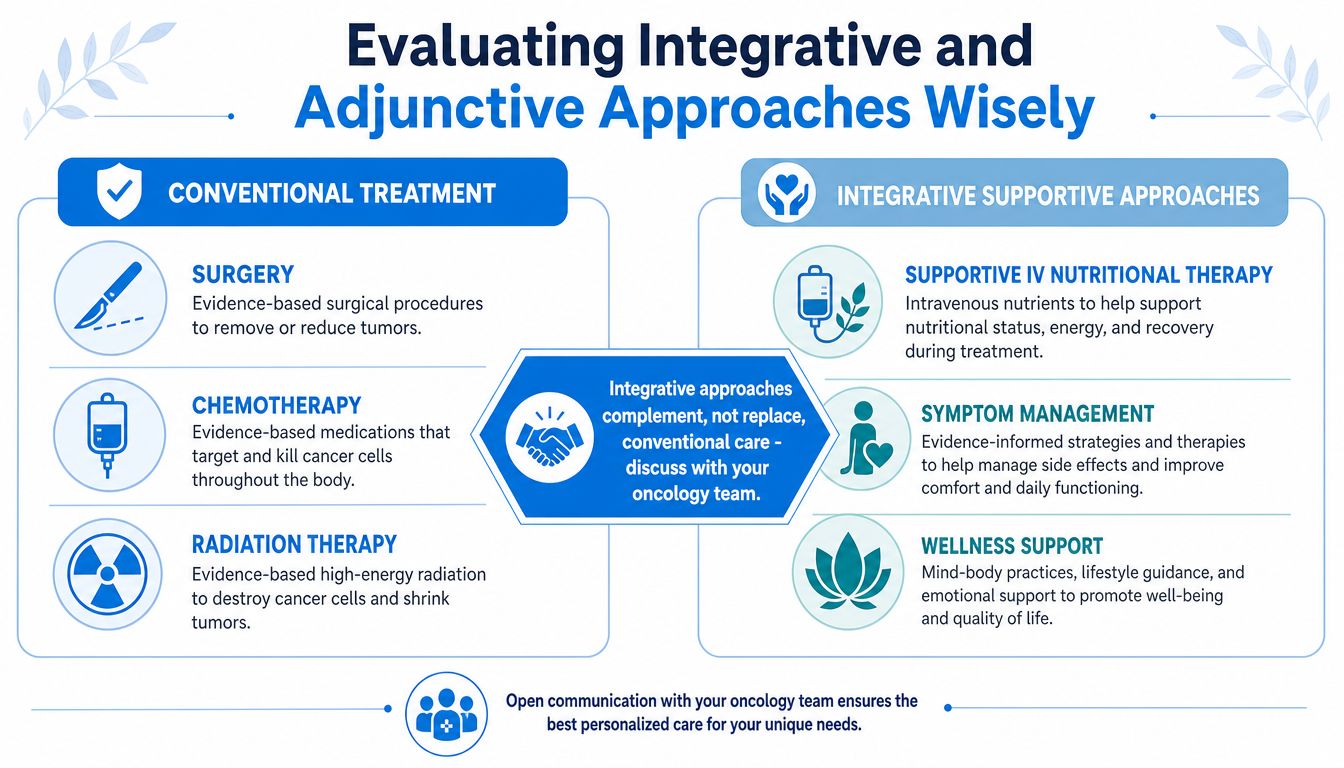
An integrative approach should add structure and support to cancer care, not create a false choice between conventional treatment and complementary care. Surgery, chemotherapy, and radiation remain cancer-directed treatments with established roles that depend on the diagnosis, stage, and individual circumstances.
Supportive approaches may include nutritional IV therapies, symptom management, oxidative medicine such as ozone therapy, hyperthermia, or detoxification-oriented care. Their role must be described transparently. These approaches may be considered as adjunctive, complementary, emerging, or off-label, depending on the therapy and the clinical context. They should not be presented as replacements for surgery, chemotherapy, or radiation, and they shouldn't be assumed to treat pancreatic cancer just because they may support general well-being.
Four questions protect patients
Before adding any therapy, ask:
- What evidence supports this specific use? Separate evidence for symptom support or treatment tolerance from evidence of direct cancer control.
- Could it interact with active treatment? Supplements, infusions, restricted diets, and procedures may affect hydration, liver function, bleeding risk, or medication metabolism.
- Will the clinic coordinate with the oncology team? Your clinicians should know what you're receiving, when you're receiving it, and what monitoring is planned.
- What outcome is being measured? A reasonable plan identifies whether the focus is nausea, pain, sleep, appetite, strength, treatment tolerance, or another defined concern.
A guaranteed cure claim is a red flag. No responsible clinician can promise that an adjunctive therapy will eliminate pancreatic cancer or make conventional treatment unnecessary.
Patients should discuss every adjunctive decision with a qualified healthcare professional, particularly during chemotherapy, before surgery, or when liver and kidney function are changing. Sunridge Medical is one Scottsdale option that describes physician-directed integrative oncology evaluations, including supportive therapies such as IV treatments and other adjunctive approaches. Any such plan should remain individualized and coordinated with cancer-directed care.
How Sunridge Medical Approaches Second Opinions in Scottsdale
Sunridge Medical, an integrative medical clinic in Scottsdale, Arizona, begins a physician-directed review by examining the available diagnosis, pathology, imaging, prior treatments, current symptoms, medications, and overall health. The discussion can then focus on whether an integrative strategy may reasonably fit alongside the patient's existing oncology plan.
Patients may seek an evaluation after a new diagnosis, during active treatment, after recurrence, or with Stage 4 disease. The purpose is not to promise a cure or replace a cancer specialist. It's to clarify the medical picture, identify questions for the treating team, and consider supportive or complementary options with appropriate attention to safety and coordination.
Patients travel to Scottsdale from Phoenix, Paradise Valley, Tempe, Mesa, Chandler, Gilbert, the broader Phoenix metropolitan area, and out of state. Before scheduling, ask what records are needed, whether the consultation is appropriate for your current situation, and how communication with your oncology team will be handled.
A second opinion is a step toward confidence, not a betrayal of the physicians already caring for you. Bring the questions that keep you awake, request a careful review of the records, and give yourself permission to understand the decision before moving forward.
If you're seeking a second opinion for pancreatic cancer, Sunridge Medical can review your available records and discuss whether a physician-directed integrative oncology consultation is appropriate. Visit Sunridge Medical to contact the Scottsdale care team, ask about the records to send, and schedule a conversation about your diagnosis and next steps.