


With the CDC predicting that Lyme disease cases will exceed 500,000 in 2026, the medical community is facing a growing crisis of patients who remain unwell despite standard care. If you’re experiencing persistent fatigue and neurological symptoms that don’t seem to resolve, it’s likely you feel overlooked by a system that relies on a single-pathogen model. You’re not alone in your frustration with negative lab tests or the confusion caused by overlapping symptoms of lyme co-infections. At Sunridge Medical, we recognize that these secondary infections are often the primary drivers of chronic illness.
This clinical guide will help you identify the specific markers of tick-borne pathogens and explain why a comprehensive, multi-pathogen approach is essential for true recovery. We’ll examine the distinct signatures of co-infections like Babesia and Anaplasmosis, moving beyond basic diagnostics to validate your experience. By understanding these biological complexities, you can begin a clear path toward advanced integrative testing and the restoration of your well-being. Our focus remains on providing the specialized attention required to address the root causes of your persistent health challenges.
Key Takeaways
- Discover how co-infections act as biological force-multipliers, creating a synergistic pathology that requires more than standard antibiotic treatment for lasting recovery.
- Learn to recognize the specific symptoms of lyme co-infections, such as the air hunger associated with Babesia or the distinct neurological foot pain linked to Bartonella.
- Understand the limitations of standard antibody-based testing and why a multi-faceted diagnostic approach is necessary for patients with compromised immune systems.
- Identify the clinical differences between the primary tick-borne pathogens to move beyond a one-size-fits-all diagnosis toward a more precise health strategy.
- See how advanced integrative protocols, including specialized IV therapies, offer a sophisticated alternative for individuals who haven’t found relief through conventional methods.
Beyond Borrelia: Understanding the Synergistic Nature of Lyme Co-Infections
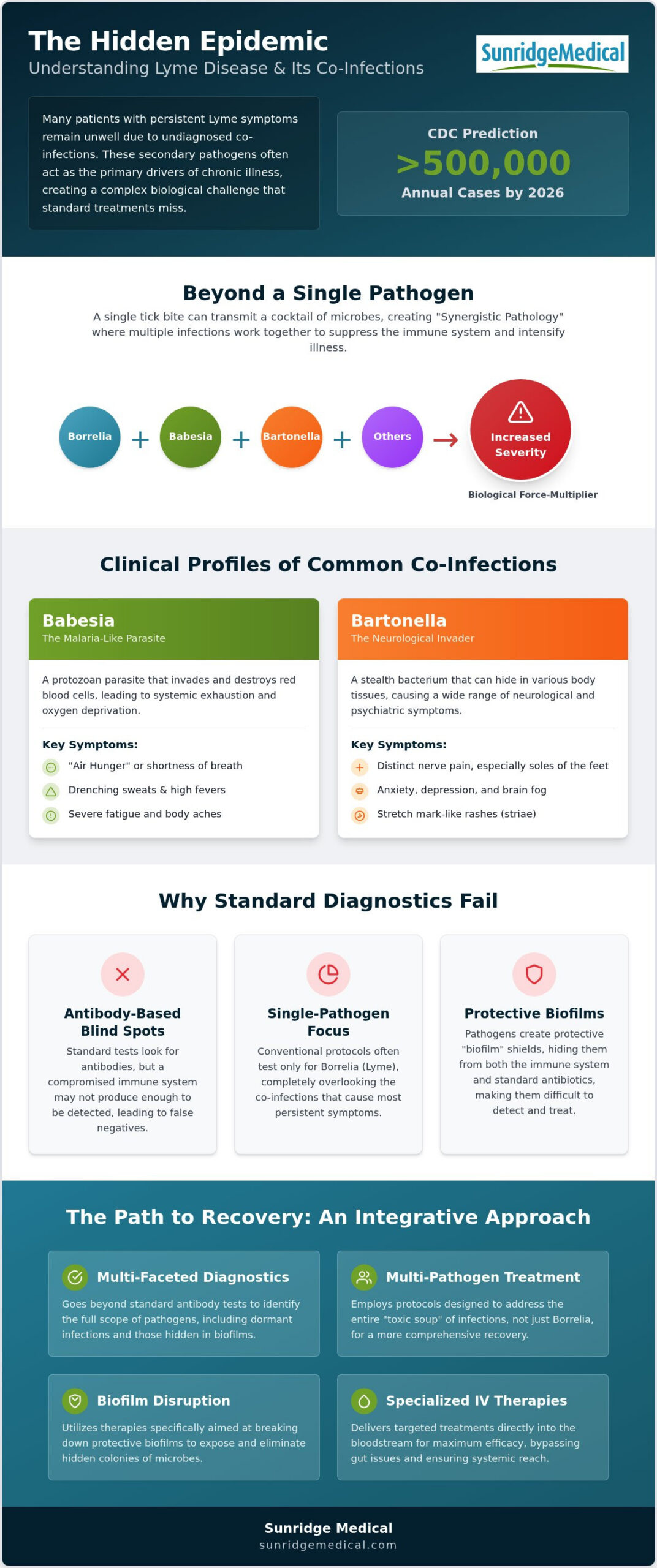
A diagnosis of Lyme disease is frequently only the first chapter of a much more complex biological story. When a tick feeds, it doesn’t just transmit a single bacterium. It often delivers a cocktail of pathogens known as Lyme disease co-infections. These concurrent infections create what researchers call “synergistic pathology,” where the presence of multiple microbes significantly increases the severity of the illness. This interaction makes the symptoms of lyme co-infections far more debilitating than a single infection would suggest. It’s a biological force-multiplier that leaves patients feeling trapped in a state of constant decline despite following standard medical advice.
These pathogens don’t just coexist; they actively assist one another in evading the human immune system through sophisticated mechanisms. While Borrelia might suppress certain immune signals, a co-infection like Babesia can further deplete white blood cell counts. This leaves the body’s natural defenses scattered and ineffective. This complex environment necessitates a shift toward integrative medicine for chronic illness to address the multi-pathogen burden through specialized protocols. At Sunridge Medical, we view this not as a single hurdle, but as a multi-layered challenge that requires a steady, expert hand to navigate.
The ‘Tick Toxic Soup’ Phenomenon
Ticks are often described as nature’s “toxic soup,” carrying a diverse array of microbes that enter the bloodstream simultaneously. This mixture typically includes:
- Bacteria: Such as Bartonella, Ehrlichia, and Anaplasma.
- Protozoan Parasites: Most notably Babesia, which invades red blood cells.
- Viral Agents: Including Powassan virus or Tick-Borne Encephalitis.
When these pathogens enter the body together, they overwhelm the natural defense barriers of the gut and skin. This systemic breach often leads to early inflammation in the central nervous system. This explains why many patients experience profound brain fog, cognitive decline, or unexplained anxiety early in their journey. The body’s natural resources are simply stretched too thin to combat multiple distinct biological threats at once.
Why Recovery Stalls Without Addressing Co-Pathogens
Standard medical protocols often rely on a 21-day course of antibiotics designed solely to target Borrelia. However, this narrow focus is a primary reason why recovery often stalls. Pathogens like Bartonella can remain dormant or hide within specialized niches in the body, remaining completely unaffected by standard treatments. Additionally, these microbes often create “biofilm” structures. These are protective matrices that shield the entire community of infections from both the immune system and medications alike. Unless a treatment plan specifically targets these secondary pathogens and their protective environments, the patient remains trapped in a cycle of persistent symptoms of lyme co-infections that standard care fails to resolve. True restoration requires a plan that accounts for every hidden player in this complex biological landscape.
The Clinical Profiles of Common Tick-Borne Co-Infections
Identifying the specific symptoms of lyme co-infections is the first step toward reclaiming your health. While Borrelia is the most famous tick-borne pathogen, it’s rarely a solitary invader. The “Big Three” co-infections—Babesia, Bartonella, and Ehrlichia—each possess distinct clinical signatures that often differ from classic Lyme. Understanding Lyme Disease Co-Infection is critical because these pathogens change the trajectory of the illness, often making it more severe and difficult to treat. We see these pathogens as distinct biological challenges that require a steady, expert hand to identify and resolve.
Babesia Symptoms: The Malaria-Like Parasite
Babesia is a protozoan parasite that invades red blood cells. This invasion leads to symptoms that often mimic malaria, creating a state of systemic exhaustion. Patients frequently report “air hunger,” a distressing sensation of being unable to take a full breath even when oxygen levels appear normal. Other markers include:
- Drenching Sweats: Both daytime drenching and intense, recurring night sweats.
- Psychological Distress: Profound feelings of impending doom or sudden, unexplained anxiety.
- Physical Indicators: Hemolytic anemia and unexplained high fevers that may come and go.
Bartonella Symptoms: The Neurological Specialist
While many pathogens affect the body systemically, Bartonella is known for its neurological dominance. It often manifests as severe brain fog, tremors, and psychiatric shifts sometimes called “Lyme rage.” Physical clues are also present, such as “cat scratch” striae that resemble stretch marks but appear in unusual locations like the back or shoulders. Many patients also experience deep pain on the soles of the feet, especially upon waking in the morning. Because these symptoms are so complex and mimic other conditions, consulting with lyme disease specialists is often the only way to achieve an accurate diagnosis and a customized recovery plan.
Ehrlichia and Anaplasma: The White Blood Cell Invaders
These bacterial pathogens target the white blood cells, which are the foundation of your immune system. A sudden drop in white blood cell counts on standard blood panels is a major clinical red flag. They often trigger sharp, stabbing headaches and intense muscle aches, known as myalgias. If left untreated, they can cause a rapid clinical decline. While they may initially resemble a stubborn flu, their persistence for months indicates that the symptoms of lyme co-infections require a deeper clinical investigation. If you’re struggling to differentiate these signs, a personalized clinical evaluation can provide the clarity you need to move forward with confidence.
Why Standard Diagnostics Often Miss Co-Infections
Many patients arrive at our facility exhausted by a cycle of negative lab results. It’s a common experience to be told your health is fine because a standard test didn’t flag an infection. This reliance on a single data point is often where the path to recovery breaks down. The primary issue lies in the methodology of conventional testing. Most standard labs look for your body’s immune response, not the bacteria itself. If your immune system is overwhelmed by the symptoms of lyme co-infections, it may not produce a detectable level of antibodies. Additionally, there is a “window period” early in the infection where the body hasn’t yet responded, and a later stage where pathogens hide in deep tissues. Both scenarios result in negative labs while the patient remains profoundly ill.
The Seronegative Challenge
Co-infections are masters of immune evasion. Pathogens like Babesia can actively suppress the very immune signals that standard diagnostic tests are designed to find. This creates a “seronegative” state where you are clinically ill but legally “negative” on paper. We utilize advanced molecular testing and direct visualization techniques that go beyond these limitations. The principles we apply in integrative cancer treatment by stage, where deep and precise diagnostics are non-negotiable, are the same ones we use to uncover hidden tick-borne pathogens. Moving from general screening to targeted molecular analysis is essential for identifying the true cause of your decline.
Pathogen Mimicry and Misdiagnosis
The symptoms of lyme co-infections are frequently mislabeled as Fibromyalgia, Chronic Fatigue Syndrome, or even psychological disorders. These are often “wastebasket” diagnoses given when a physician can’t find a clear cause in standard blood work. Additionally, there is a significant overlap between tick-borne illnesses and environmental illnesses, such as mold toxicity or heavy metal exposure. Without a comprehensive physician evaluation that prioritizes clinical observation over lab reports, these nuances are missed. We believe that your symptoms are the most reliable data points we have. A diagnosis should be a clinical conclusion reached by an expert who understands how these pathogens mimic other chronic states. Recovery begins when we stop treating the lab report and start treating the individual human experience.
Differentiating Symptoms: A Pathogen-Specific Diagnostic Checklist
Moving from a general understanding of tick-borne illness to a specific diagnosis requires a methodical clinical approach. It isn’t enough to simply list symptoms; we must identify the patterns that distinguish one pathogen from another. This process begins with documenting your primary complaint. While migratory joint pain is a hallmark of classic Lyme, the symptoms of lyme co-infections often lean toward neurological or systemic dysfunction. By following a structured diagnostic checklist, you can provide your clinical team with the data necessary to build a targeted treatment strategy.
- Step 1: Document the Primary Complaint. Determine if your pain is primarily musculoskeletal, suggesting Borrelia, or neurological, which often points toward Bartonella.
- Step 2: Identify Red Flag Symptoms. Look for specific markers like air hunger, which is highly indicative of Babesia, or deep pain in the soles of the feet, a common sign of Bartonella.
- Step 3: Track Symptom Cycles. Many co-infections follow a distinct rhythm, flaring every few weeks or once a month. Documenting these cycles helps identify the biological life cycle of the pathogen.
- Step 4: Evaluate Antibiotic Response. If previous standard treatments failed to provide relief or caused a severe Herxheimer reaction without eventual improvement, it suggests a multi-pathogen burden.
- Step 5: Consult a Specialist. Partner with a professional who understands complex, multi-pathogen protocols rather than relying on a one-size-fits-all antibiotic course.
Tracking Neurological vs. Systemic Symptoms
Distinguishing between different types of pain is vital for clinical accuracy. Lyme-related joint pain often moves from one limb to another, while Bartonella typically manifests as burning nerve pain or “electric shock” sensations. We also look closely at cognitive fluctuations. If your brain fog or anxiety spikes in a predictable pattern, it provides a map of the infection’s activity. Using these symptom maps allows us to guide clinical consultations with a level of precision that standard questionnaires often miss.
Identifying Environmental and Hormonal Overlap
The path to recovery is rarely a straight line because other factors often complicate the clinical picture. Environmental toxins, such as mold or heavy metals, can mimic the symptoms of lyme co-infections, creating a “biological static” that makes diagnosis difficult. In these complex cases, we often utilize hormone therapy for autoimmune disease and chronic infection to stabilize the endocrine system. This hormonal support provides the body with the resilience needed to endure pathogen clearance. Establishing a “clean” internal and external environment is a non-negotiable step for those seeking a full restoration of health. If you’re ready to move beyond the confusion of overlapping symptoms, we invite you to schedule a personalized clinical consultation to begin your targeted recovery journey.
Advanced Integrative Protocols for Complex Chronic Infections
For many patients, the journey through the persistent symptoms of lyme co-infections has been defined by the limitations of conventional oral antibiotics. Standard care often fails because it attempts to resolve a multi-faceted biological invasion with a single-pathogen solution. At Sunridge Medical, we’ve spent over two decades refining an advanced integrative approach that addresses the unique pathogen load of each individual. By utilizing iv therapy for autoimmune disease and chronic infections, we deliver targeted biological treatments directly into the bloodstream. This method ensures that the necessary clinical concentrations reach the tissues where pathogens hide, bypassing the compromised digestive systems so common in chronic patients.
Our protocols incorporate oxidative therapies and specialized nutritional infusions to stimulate deep cellular recovery. These treatments don’t just target the bacteria; they restore the host’s internal environment. Since 2026 research indicates that nearly 35 percent of certain tick populations carry mixed infections, a comprehensive strategy is the only logical path forward. For patients seeking to optimize their recovery, incorporating functional nutrition through Root Cause Health Solutions can help stabilize the body’s internal systems. We move beyond the status quo by creating individualized care plans that account for the synergistic nature of these pathogens, providing a level of precision that “packaged” care models cannot provide.
Customized Intravenous Protocols
IV administration allows for a level of clinical authority that oral medication simply cannot match. It facilitates the use of advanced biological treatments designed to modulate the immune system, helping it recognize and eliminate pathogens it previously ignored. This approach is particularly effective for those who have experienced a lack of progress with traditional systems. Comprehensive monitoring is a cornerstone of our methodology, ensuring that each protocol is adjusted in real-time based on the patient’s specific physiological response. This steady hand is essential for navigating the complexities of long-term recovery without the toxicity often associated with long-term oral regimens.
The Path to Restoration and Hope
Our clinical philosophy is rooted in the belief that managing symptoms is not a final destination. We strive for a complete restoration of well-being through research-based care that honors the individual human experience. If you feel overlooked or frustrated by a system that doesn’t account for the symptoms of lyme co-infections, we offer a sanctuary of specialized attention and pioneering expertise. We focus on the possibility of progress and the steady return to a vibrant life. To take the next step in your recovery, Contact Sunridge Medical at 1-800-280-4574 to schedule your comprehensive evaluation.
Reclaiming Your Health Through Precision Diagnostics
Understanding the intricate landscape of tick-borne pathogens is the first step toward breaking the cycle of chronic illness. You’ve learned that symptoms of lyme co-infections are not just secondary issues; they’re often the primary drivers of persistent neurological and systemic dysfunction. Recognizing these specific markers allows for a shift from general symptom management to a targeted, effective intervention that addresses the root cause of your decline.
At Sunridge Medical, we’ve spent over 20 years developing advanced research-based alternative treatments for those who feel overlooked by the traditional system. Our individualized physician evaluations look beyond standard lab results to identify the unique biological burden you carry. We focus on restoring your well-being through specialized protocols designed for complex recovery. If you’re ready to move toward a more comprehensive lens of care, we invite you to Schedule a Consultation with Sunridge Medical Specialists. You don’t have to navigate this journey alone. Progress is possible, and a return to vitality is within reach.
Frequently Asked Questions
What are the most common symptoms of Lyme co-infections?
Common symptoms of lyme co-infections include air hunger, drenching night sweats, and severe cognitive impairment. Patients often experience a migratory pattern of pain where joint or nerve discomfort shifts across different areas of the body. You might also notice distinct physical markers like the stretch-mark-like rashes associated with Bartonella. These signs often persist long after standard treatments end, indicating that multiple pathogens are actively overwhelming your immune system’s natural defenses.
Can you have co-infections without a positive Lyme disease test?
Yes, it’s entirely possible to harbor co-infections even if your standard Lyme test returns a negative result. Many pathogens, such as Babesia, possess sophisticated mechanisms to suppress your immune response, which is exactly what standard tests look for. If your body isn’t producing a high level of antibodies due to this suppression, the test will fail to flag the infection. We prioritize a clinical diagnosis that values your symptoms over flawed lab data.
How do Babesia and Bartonella symptoms differ from standard Lyme?
A standard 21-day course of antibiotics is often insufficient because it only targets the active, blood-borne form of Borrelia. Many co-infections, like Bartonella, can enter a dormant state or hide within protective biofilms where standard medications cannot reach them. Additionally, pathogens like Babesia are protozoan parasites, not bacteria, meaning they require completely different anti-parasitic protocols. Without a multi-faceted approach, these infections can persist and cause recurring symptoms of lyme co-infections.
Are tick-borne co-infections permanent if left untreated?
Tick-borne co-infections aren’t necessarily permanent, but they can become chronic and deeply systemic if they aren’t addressed with specialized care. These pathogens are experts at evading the immune system and can remain in the body for years, leading to long-term neurological and autoimmune issues. However, with advanced integrative protocols and individualized physician evaluations, it’s possible to clear the pathogen load and restore your health, even years after the initial exposure occurred.
What is the best testing method for identifying multiple tick-borne pathogens?
The most effective testing involves a combination of advanced molecular diagnostics and expert clinical evaluation. We utilize specialized labs that look for the DNA of the pathogens themselves through PCR testing or direct visualization rather than relying solely on antibody responses. This deep diagnostic approach helps uncover hidden infections that standard ELISA or Western Blot tests frequently miss. Relying on a scientific guide who understands these complexities ensures a much higher rate of diagnostic accuracy.
How does IV therapy help with chronic tick-borne illness?
IV therapy is a powerful tool because it bypasses the digestive system to deliver high clinical concentrations of biological treatments directly into the bloodstream. Many chronic patients suffer from gut inflammation that prevents the absorption of oral medications. By using intravenous protocols, we ensure that specialized nutrients and oxidative therapies reach the deep tissues where pathogens reside. This method supports cellular recovery and helps modulate the immune system more effectively than standard oral regimens.
Can co-infections cause psychiatric symptoms or ‘Lyme rage’?
Yes, psychiatric symptoms are a very common manifestation of certain co-infections, particularly Bartonella. This phenomenon, often referred to as Lyme rage, involves sudden, intense bouts of anger, anxiety, or depression that feel out of character for the individual. These shifts occur because the pathogens trigger inflammation within the central nervous system. Recognizing these as biological symptoms rather than psychological failings is a crucial step toward finding the right integrative treatment and regaining emotional stability; you can visit Assure Psychiatry if you need compassionate support for these complex mental health challenges.