


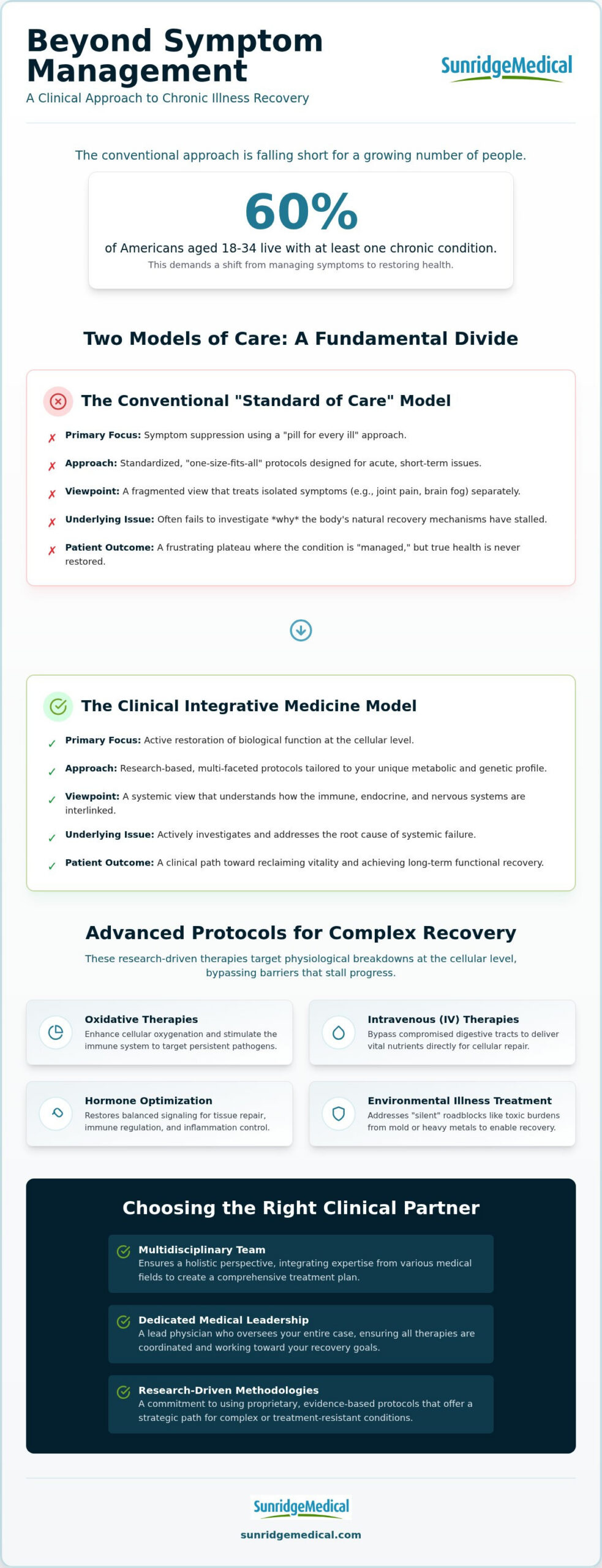
What if the standard “pill for every ill” model isn’t just failing to help you, but is actually overlooking the biological root of your struggle? For many navigating the complexities of fatigue, brain fog, and persistent pain, the conventional path often leads to a frustrating plateau where symptoms are managed but health is never truly restored. With 60% of Americans aged 18 to 34 now living with at least one chronic condition, the need for a more sophisticated approach has never been more urgent. Clinical integrative medicine for chronic illness offers a bridge beyond these limitations, moving past standardized protocols to address the unique underlying mechanisms of your health.
You deserve a medical partnership that validates your experience and treats your recovery as a scientific priority. This article explores how advanced alternative health medicine in 2026 utilizes research-based protocols to restore functional well-being where traditional methods stop. We’ll examine the transition from reactive care to a model focused on biological restoration; this provides you with a clear, clinical path toward reclaiming your vitality and moving toward a future of long-term functional recovery.
Key Takeaways
- Learn how clinical alternative medicine shifts the focus from managing symptoms to the active restoration of biological function through research-based protocols.
- Discover how integrative medicine for chronic illness utilizes specialized oxidative and IV therapies to bypass digestive limitations and target cellular health directly.
- Gain a clear framework to evaluate your current treatment by contrasting “standard of care” models with individualized, multi-faceted clinical protocols.
- Identify the essential criteria for choosing a clinical partner, including the necessity of a multidisciplinary team and dedicated medical leadership.
- Explore how proprietary, research-driven methodologies offer a strategic path toward recovery for those facing complex or treatment-resistant conditions.
Defining Alternative Health Medicine in the Context of Chronic Illness
Alternative health medicine isn’t just a collection of wellness trends; it’s a rigorous, research-based expansion of the traditional medical model. While conventional medicine often prioritizes symptom suppression, this clinical approach focuses on the restoration of biological function. This distinction is vital for those seeking integrative medicine for chronic illness. Understanding the nuances of alternative and integrative medicine terminology helps patients identify the specific level of care required for systemic healing. It represents a shift from simply “managing” a condition to actively investigating why the body’s natural recovery mechanisms have stalled.
By 2026, this field has matured through the deep integration of genomics and advanced biological therapies. We don’t just look at the disease; we look at how your unique genetic markers influence your response to environmental triggers. This specialized lens is essential for conditions like chronic Lyme or complex autoimmune disorders, where the standard of care often falls short. It moves the needle from “stable” to “recovered” by addressing the specific cellular mechanisms that have been compromised by long-term illness.
The Limitations of the Conventional Acute-Care Model
The standard medical system is designed for acute interventions. It excels at setting broken bones or treating infections with a short course of antibiotics. However, this “one size fits all” approach often fails the complex chronic patient. Chronic illness isn’t a single event; it’s a systemic failure. There’s a massive gap between emergency intervention and long-term systemic recovery. Practitioners like Rooted Functional Medicine look beyond isolated symptoms to examine how the immune, endocrine, and nervous systems are interlinked. This systemic view is essential for the patient to move past management and toward true functional wellness.
Whole-Person Health vs. Clinical Integrative Medicine
It’s essential to distinguish between supportive lifestyle changes and therapeutic medical interventions. While diet and meditation are valuable, they aren’t always enough to reverse deep-seated biological dysfunction. Individualized Care Plans represent the gold standard for 2026, utilizing precise medical protocols tailored to the patient’s specific metabolic profile. Integrative medicine for chronic illness ensures that every treatment is targeted, multi-faceted, and rooted in the latest medical research. Alternative health medicine serves as a clinical bridge for individuals whose conditions have not responded to conventional standards of care.
The Clinical Mechanism: Advanced Protocols for Complex Recovery
Recovery from complex illness requires more than lifestyle adjustments; it demands precise clinical intervention targeting physiological breakdowns at the cellular level. While many patients are familiar with basic supplements, integrative medicine for chronic illness utilizes advanced delivery systems to overcome the biological barriers that often stall progress. These protocols aren’t merely supportive. They’re designed to reset the body’s baseline. This involves a multi-faceted approach including oxidative therapies, which enhance cellular oxygenation and stimulate the immune system to recognize persistent pathogens that conventional tests might miss. Research monitored by the National Center for Complementary and Integrative Health continues to validate how integrated approaches manage systemic dysfunction.
Hormone optimization serves as a foundational pillar for immune regulation. Without balanced hormonal signaling, the body lacks the chemical instructions necessary for tissue repair and inflammation control. Addressing environmental illness is also a critical step. Toxic burdens from mold or heavy metals often act as the “silent” roadblocks to recovery in modern chronic cases. If you’ve reached a plateau in your current care, exploring advanced treatment options can provide the clarity needed to move forward.
Intravenous and Biological Therapies
Chronic illness often compromises the digestive tract, making oral supplementation insufficient for cellular repair. Intravenous (IV) therapies bypass these limitations, delivering high concentrations of nutrients and biological agents directly into the bloodstream. This immediate bioavailability is crucial for iv therapy for autoimmune disease, where the goal is to modulate a hyper-reactive immune response at the cellular level. Precision is paramount here. Every infusion must be customized to the patient’s current metabolic state to ensure safety and efficacy. These treatments represent a departure from standardized care, focusing instead on the unique biological needs of the individual.
Targeting Chronic Infections and Lyme Disease
Standard antibiotic cycles often fail to eradicate persistent infections. In the professional opinion of many lyme disease specialists, these pathogens frequently retreat into protective structures called biofilms. These barriers shield bacteria from both the immune system and traditional medications. Effective management requires targeted antimicrobial alternative therapies that prioritize biofilm disruption. By breaking down these physical defenses, we allow the body’s natural defenses and specialized treatments to finally reach the source of the infection. This strategic approach is essential for achieving long-term resolution rather than temporary symptom relief.
Navigating the Spectrum: Conventional Care vs. Advanced Alternative Medicine
Many patients find themselves trapped between two extremes: a rigid “standard of care” that offers little hope for recovery and unscientific wellness trends that lack clinical depth. Integrative medicine for chronic illness occupies the critical middle ground, utilizing the rigor of clinical medicine while expanding the scope of what we measure and treat. While major institutions like integrative medicine at Mayo Clinic have helped bring these concepts into the mainstream, a premiere clinical center goes further. We move beyond “complementary” support and into advanced, primary therapeutic protocols that address the systemic failures standard models often ignore.
The contrast between these models lies in the objective. Conventional care is often reactive, focusing on managing symptoms once a disease has reached a detectable threshold on standard tests. Individualized clinical protocols are proactive and investigative. They don’t just ask what the symptom is; they ask why the body’s regulatory systems have failed to maintain balance. By combining high-level conventional diagnostics with advanced biological testing, we create a roadmap for recovery that is both evidence-based and deeply personal.
The Integrative Oncology Advantage
In cases of malignant disease, the gap between standard care and advanced alternative medicine is most visible. Standard oncology often focuses exclusively on the tumor, sometimes at the expense of the patient’s overall biological resilience. In contrast, alternative cancer treatment protocols prioritize the host environment. This approach focuses on maintaining immune integrity and mitochondrial health while the body faces aggressive challenges. It’s about ensuring the patient remains strong enough to not only navigate the treatment but to thrive in the years that follow. This is especially critical in advanced staging, where systemic resilience is often the deciding factor in long-term outcomes.
Root Cause Diagnostics: Beyond Standard Lab Panels
Conventional lab panels are designed to identify acute disease states, not the subtle shifts in biological function that precede chronic illness. If your standard blood work comes back “normal” while you struggle with debilitating symptoms, the diagnostic tools are likely too blunt for the task. We utilize advanced functional testing to uncover hidden burdens that standard panels frequently miss. Consider these “red flag” symptoms that often signal a need for deeper investigation:
- Unexplained fatigue that doesn’t resolve with rest or sleep.
- Chronic joint or muscle pain without a clear history of injury.
- Cognitive dysfunction or “brain fog” that disrupts daily productivity.
- Persistent digestive issues that remain despite significant dietary changes.
- New or worsening sensitivities to chemicals, scents, or specific environments.
Identifying these markers for environmental illness, heavy metal toxicity, or hidden pathogens allows for the development of a truly targeted recovery plan. This synergy of diagnostics ensures that no stone is left unturned in your health journey.
Choosing a Clinical Partner: Criteria for Integrative Medical Excellence
Selecting the right partner for integrative medicine for chronic illness is perhaps the most significant decision you’ll make on your path to recovery. It’s not enough to find a facility that offers “holistic” options; you need a center that operates with the clinical gravity of a premiere medical institution. A hallmark of excellence is a multidisciplinary team led by a dedicated Medical Director who provides a steady hand throughout your journey. This leadership ensures that proprietary protocols aren’t merely unique, but are refined through years of clinical application and research-based evidence. For patients traveling from across the country, a center must also offer the logistical infrastructure necessary to support an intensive, out-of-state treatment experience.
If you’re seeking a scientific guide for your recovery, contact Sunridge Medical to explore our advanced clinical options.
Evaluating Clinical Experience and Longevity
In the field of alternative medicine, a clinic’s founding date and track record are vital indicators of reliability. Sunridge Medical, for example, was founded in 2003, providing over two decades of data-driven insights into complex disease recovery. This longevity allows a medical team to witness the long-term efficacy of their protocols, a perspective that newer facilities simply don’t have. Many individuals start their search by looking for an integrative oncologist near me, yet proximity shouldn’t be the only factor. Coordination of complex care requires constant, high-level monitoring, especially during intensive protocols where biological responses can shift rapidly and require immediate clinical adjustment.
The Importance of Customization
You should be wary of any clinic offering “packaged” or “one-size-fits-all” programs. Real medicine isn’t sold in bundles; it’s developed through meticulous investigation. A comprehensive physician evaluation should lead to a unique biological roadmap that addresses your specific deficiencies and toxic burdens. This level of customization ensures that every IV infusion or oxidative therapy session is targeted toward your body’s current state. We believe the patient is an active participant in the clinical decision-making process. By understanding the “why” behind every protocol, you become an empowered advocate for your own health, moving from a passive recipient of care to a partner in your functional recovery.
The Sunridge Approach: Pioneering Individualized Care for Lasting Wellness
Sunridge Medical serves as a sanctuary for individuals navigating the most challenging health journeys. We recognize that by the time a patient reaches our doors, they’ve often been through a cycle of fragmented care and unmet expectations. Our methodology for integrative medicine for chronic illness is rooted in over two decades of clinical application; our protocols have been meticulously refined since our founding in 2003. We combine the professional gravity of a high-level medical center with a welcoming atmosphere of compassionate optimism. Every patient is seen not as a set of symptoms, but as a complex biological system requiring a customized restoration plan.
Our national reach ensures that distance isn’t a barrier to premiere care. We provide comprehensive support for patients traveling from across the country, assisting with the logistics of their stay so they can focus entirely on their recovery. This commitment to thoroughness extends from our administrative support to our most advanced clinical interventions. We act as your scientific guide, providing the steady hand needed to navigate a path toward lasting wellness. We aren’t satisfied with the status quo; we’re constantly seeking more effective ways to help you reclaim your life.
Advanced Protocols for Cancer and Lyme
At Sunridge Medical, we specialize in addressing conditions that require more than just supportive care. Our team has developed specific successes in adenocarcinoma stomach treatment, utilizing multi-faceted strategies that target malignant cells while preserving the body’s natural defenses. We also place a heavy emphasis on neurological and autoimmune recovery, recognizing that these systems are often the most compromised in chronic illness. The core pillars of our treatment include proprietary IV and oxidative therapies. These advanced delivery methods ensure that therapeutic agents reach the cellular level where they’re needed most, bypassing the limitations of traditional oral medications and providing a level of intensity that standard “wellness” models lack.
Starting Your Recovery Journey
The first step toward restoration begins with a comprehensive physician evaluation. This initial consultation isn’t a brief check-in; it’s a deep dive into your medical history, genetic markers, and current biological status. We use this data to build your unique recovery roadmap, ensuring every intervention is purposeful. If you’re ready to move beyond symptom management and toward true functional recovery, our team is here to support you. You can reach our toll-free patient line to discuss your case and learn more about our specialized approach. We invite you to take this first step toward a medical alliance built on reliability, expertise, and the genuine possibility of progress.
Reclaiming Your Future Through Advanced Clinical Care
Navigating a complex health journey requires more than just managing symptoms; it demands a dedicated scientific guide and a commitment to biological restoration. We’ve explored how moving beyond the standard medical model toward integrative medicine for chronic illness allows for the identification of hidden pathogens, environmental toxins, and cellular deficiencies. By combining high-level diagnostics with specialized IV and oxidative therapies, you can finally bridge the gap between conventional limitations and long-term recovery.
Sunridge Medical stands as a national leader in research-based alternative medicine, offering over 20 years of clinical experience. Our specialized protocols for Stage 4 cancer and Chronic Lyme are designed for those who haven’t found success with standard care. This expertise provides the professional gravity and precision needed to address even the most resistant conditions. We invite you to move toward a future of functional wellness with a partner you can trust. Schedule your comprehensive clinical evaluation with Sunridge Medical today. Your path toward a restored quality of life begins with this single, decisive step.
Frequently Asked Questions
What is the primary difference between alternative health medicine and conventional medicine?
Alternative health medicine expands the standard medical model by prioritizing the restoration of biological function rather than just suppressing symptoms. Conventional care is often reactive, focusing on managing a disease once it reaches a detectable threshold. This clinical approach is investigative, seeking to identify why the body’s internal systems have failed to maintain balance. By addressing these root causes, we move beyond management and toward true recovery.
Is alternative medicine safe for patients currently undergoing chemotherapy?
Many advanced alternative protocols are specifically designed to support the body during chemotherapy. These treatments focus on maintaining immune integrity and mitochondrial health while the body faces aggressive conventional interventions. This synergy helps mitigate side effects and supports overall resilience. You should always discuss these supportive therapies with your medical team to ensure a coordinated, safe, and effective approach to your oncological care.
How does an integrative medical center treat chronic Lyme disease differently?
We treat chronic Lyme disease by addressing the persistent nature of the infection and the protective biofilms that shield bacteria. Standard antibiotic cycles often fail to reach these hidden pathogens. Our integrative medicine for chronic illness utilizes targeted antimicrobial therapies and oxidative protocols to disrupt these biofilms. This allows the immune system to finally recognize and eliminate the source of the infection for long-term resolution.
Can integrative protocols help with autoimmune disorders like Lupus or MS?
Clinical integrative protocols help manage autoimmune disorders by modulating the hyper-reactive immune response and reducing systemic inflammation. Conditions like Lupus or MS require a multi-faceted strategy that includes hormone optimization and cellular repair. By stabilizing the body’s internal environment, we can often reduce the frequency of flares. This supports long-term functional stability for patients who haven’t responded to standard immunosuppressive medications. Patients seeking a targeted approach may benefit from learning how iv therapy for autoimmune disease can address immune dysregulation at the cellular level.
What should I expect during my first consultation at an integrative medical center?
Your first consultation involves a comprehensive physician evaluation and a deep dive into your medical history. This isn’t a brief check-in; it’s a meticulous investigation of your unique biological markers and previous treatment plateaus. We’ll discuss your symptoms, environmental exposures, and recovery goals. This session concludes with the development of a personalized biological roadmap tailored specifically to your unique metabolic and recovery needs.
Does Sunridge Medical accept standard health insurance for alternative protocols?
Sunridge Medical does not accept standard health insurance billing for our specialized alternative protocols. These research-based methodologies often fall outside the “standard of care” definitions used by traditional insurance providers. Patients typically utilize out-of-pocket payments to access this level of care. Many individuals use Health Savings Accounts or Flexible Spending Accounts, which have a 2026 contribution limit of $3,400, to help manage these medical expenses.
How long does a typical integrative treatment program last for chronic illness?
The duration of an integrative medicine for chronic illness program depends entirely on the complexity of your condition and your individual biological response. Some intensive protocols require several weeks of daily clinical treatment, while others involve periodic follow-ups. We don’t use “packaged” timelines. Instead, your progress is monitored constantly, and your protocol is adjusted in real-time to ensure the most effective path toward functional recovery.
What types of advanced diagnostics are used in alternative health medicine?
We utilize advanced functional testing that goes far beyond standard lab panels. This includes genomic testing to identify metabolic predispositions, heavy metal analysis, and specialized testing for mold or hidden pathogens. These diagnostics provide a high-resolution view of your internal health that standard tests often miss. By uncovering these underlying burdens, we can create a more precise and effective treatment plan than conventional diagnostics allow.