

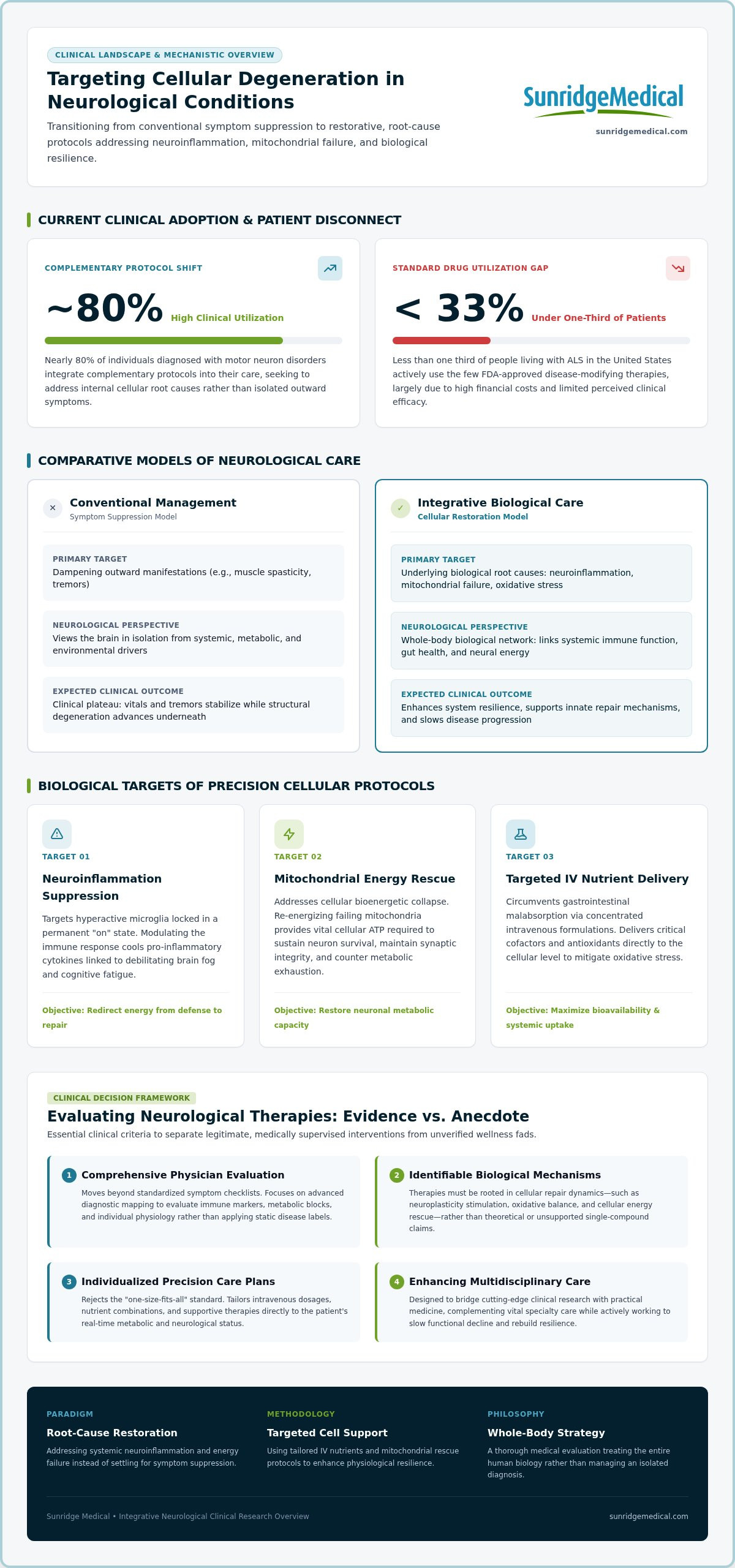
Did you know that nearly 80% of individuals facing motor neuron disorders now integrate complementary protocols into their care? This shift isn’t just about trying something new; it’s a response to the reality that standard medications often only mask symptoms while the underlying condition continues to advance. If you’re exploring alternative therapies for neurological conditions, you’re likely seeking a way to address the internal cellular environment rather than just the outward signs of illness.
We recognize the frustration of feeling stuck with a prognosis of inevitable decline. It’s difficult to rely on prescriptions that offer limited relief while ignoring the biological root causes of your struggle. This 2026 clinical guide provides a research-based roadmap for targeting the specific mechanisms of complex neurologic illnesses. You’ll discover how precision-based protocols like mitochondrial rescue and targeted nutrient therapies can support system resilience, slow disease progression, and help you find a medical partner dedicated to your whole-body health.
Key Takeaways
- Identify the critical shift from standard symptom masking to root-cause protocols that target neuroinflammation and cellular energy depletion.
- Discover how research-based alternative therapies for neurological conditions utilize targeted IV nutrients and mitochondrial support to enhance system resilience.
- Explore the 2026 clinical landscape for ALS and motor disorders, highlighting specialized interventions designed to address the underlying mechanisms of decline.
- Learn the essential criteria for distinguishing between anecdotal fads and peer-reviewed, medically supervised protocols that offer legitimate biological support.
- Understand the value of a comprehensive physician evaluation in creating an individualized care plan that addresses the “whole body” rather than just a diagnosis.
Beyond Symptom Management: The Shift Toward Alternative Neurological Care
The current medical model for chronic neurodegeneration often functions as a management strategy rather than a restorative one. For many patients, the standard of care involves pharmaceutical interventions designed to suppress specific symptoms, such as muscle spasticity or tremors. While these medications provide temporary relief, they rarely address why the neurons are failing in the first place. This gap in care explains why less than one third of people living with ALS in the United States actively use the few FDA-approved disease-modifying therapies available in 2026. High costs and limited perceived clinical efficacy often leave families feeling stuck in a cycle of inevitable decline.
The Limitations of the Conventional “Standard of Care”
Conventional neurology typically operates within a narrow framework of symptom control. When a patient is told their condition is “managed,” it often means their vital signs are stable or their tremors are dampened, even as their mobility and cognitive function continue to erode. This approach views the brain in isolation, ignoring the systemic environment that influences neural health. Chronic neurologic illness isn’t a single-point failure. It’s usually the result of a complex interplay between neuroinflammation, metabolic dysfunction, and environmental triggers. Relying solely on drugs to mask these signals can lead to a clinical plateau where quality of life remains stagnant while the disease progresses beneath the surface.
Defining the Integrative Neurological Approach
The shift toward alternative therapies for neurological conditions represents a fundamental change in medical philosophy. Instead of asking how to hide a symptom, we ask how to restore the cellular environment. This integrative model focuses on the cellular mechanisms of neuroregeneration to support the body’s innate ability to repair and protect nervous tissue. Research-based protocols in 2026 prioritize identifying hidden drivers of decline, such as mitochondrial energy failure or oxidative stress. These aren’t “one-size-fits-all” treatments; they’re precise interventions tailored to the individual’s unique biological landscape.
A comprehensive physician evaluation is the cornerstone of this approach. It moves beyond standardized checklists to look at the “whole body” root cause. By utilizing advanced diagnostics and individualized IV protocols, we provide a structured path forward for those who’ve been told there are no other options. This isn’t about replacing multidisciplinary care. It’s about enhancing it. We bridge the gap between cutting-edge research and clinical application, offering a sanctuary for patients who demand more than just a prognosis of decline. Our goal is to move beyond the status quo and foster a sense of compassionate optimism through scientific rigor.
The Science of Cellular Repair: How Alternative Protocols Target Neurodegeneration
Understanding neurodegeneration requires a shift in focus from the visible symptoms to the microscopic environment where the damage begins. While conventional medicine often prioritizes slowing the loss of function, research-based alternative therapies for neurological conditions focus on restoring the biological foundations of neural health. This involves a multi-faceted approach that targets neuroinflammation, oxidative stress, and the inherent potential for neuroplasticity. By addressing these underlying mechanisms, alongside the structural integrity of the nervous system addressed by Precision Spinal Care, we can create a cellular environment that is more conducive to repair and long-term resilience.
Chronic neuroinflammation is a silent driver of neurological decline. It occurs when the brain’s immune cells, known as microglia, remain in a permanently “on” state, releasing pro-inflammatory cytokines that damage healthy neurons. This persistent inflammatory response is often linked to the debilitating brain fog and cognitive fatigue reported by many patients. Specialized protocols aim to “cool” this response by utilizing biological treatments that modulate the immune system. These complementary and alternative health approaches help stabilize the central nervous system, allowing the body to redirect energy from defense to restoration.
Mitochondrial Support and Energy Production
The brain is the most energy-demanding organ in the body, consuming approximately 20% of your total oxygen and glucose. This energy is produced by mitochondria, the power plants within every cell. When these power plants fail, neurons lose their ability to communicate and eventually perish. Mitochondrial dysfunction represents a primary roadblock in neurologic recovery, as depleted cellular energy prevents the repair of damaged neural pathways. To overcome this, we utilize specialized IV therapies, such as NAD+ and high-dose glutathione, to deliver essential cofactors directly to the cells. These interventions bypass digestive limitations, providing the fuel necessary to support ATP generation and cellular defense.
Beyond energy production, we must also consider neuroplasticity, the nervous system’s biological potential to adapt and reorganize. This process isn’t just for developing brains; it’s a lifelong capability that can be supported through targeted oxidative therapies and nutrient protocols. By reducing oxidative stress, we lower the burden of reactive oxygen species that stifle neural growth. This comprehensive strategy ensures that the body isn’t just surviving, but actively working to maintain its complex neural networks. If you’re ready to explore how these protocols can be tailored to your unique biological needs, a detailed physician evaluation is the first step toward a personalized recovery plan.
Clinical Focus: Alternative Therapies for ALS Patients and Motor Disorders
Advanced Protocols for ALS Support
Our clinical approach focuses on the preservation of cellular integrity. We utilize specialized IV infusions, including high-dose antioxidants and metabolic cofactors, to combat the oxidative stress that accelerates motor neuron degeneration in ALS. Beyond nutrient support, we conduct thorough evaluations for environmental illnesses. Identifying and addressing neurotoxin triggers or heavy metal burdens can significantly reduce the total toxic load on a compromised nervous system. Additionally, hormone optimization therapy provides another layer of resilience. By balancing the body’s internal chemistry, we create a more stable foundation for neural health and systemic function.
Managing Progression and Quality of Life
The primary goal for any patient facing a motor disorder is the maintenance of daily function and independence. A proactive, alternative approach doesn’t just address physical markers; it provides a psychological sense of agency that is often lost in conventional settings. We view management as a dynamic process. Patients can look into our guide on integrative cancer treatment by stage to see how we apply a similar, structured model to complex illnesses. Just as in oncology, neurological care requires a multi-faceted strategy that evolves with the patient’s needs.
Early intervention is critical. By implementing research-based protocols as soon as symptoms appear, we aim to slow the trajectory of decline and improve the patient’s overall daily experience. This steady, methodical guidance helps families navigate a complex journey with a dedicated medical partner by their side. For those requiring ongoing practical assistance, WithCare Support Services provides professional disability support to help maintain independence and quality of life. Our focus remains on the individual human experience, ensuring that every protocol is as unique as the patient it serves.
Evaluating the Evidence: Research-Based vs. Anecdotal Neurological Therapies
Patients facing neurodegenerative decline often find themselves in a vulnerable position, making them susceptible to “internet fads” and unverified claims found on social media. While the desire for a rapid solution is understandable, distinguishing between anecdotal home remedies and clinically administered alternative therapies for neurological conditions is vital for patient safety. The withdrawal of the drug Relyvrio in 2024 following failed Phase 3 trials serves as a stark reminder that even pharmaceutical paths require constant validation through data. In the alternative space, this means moving beyond “what worked for someone else” toward protocols backed by physiological logic and peer-reviewed literature.
The Role of Research in Alternative Medicine
At Sunridge Medical, our protocols aren’t based on guesswork. We utilize research-based alternative medicine to bridge the gap between experimental science and clinical application. This involves analyzing specific biomarkers, such as neurofilament light chain (NfL) levels, to monitor axonal damage objectively. Unlike unmonitored home remedies, professional protocols are medical-grade and administered under strict physician supervision. We rely on established data regarding mitochondrial rescue and oxidative stress reduction to ensure every intervention has a clear biological rationale. This scientific rigor transforms “alternative” from a buzzword into a precise medical methodology.
What to Look for in an Alternative Treatment Center
Selecting a treatment partner is a critical decision that requires careful vetting. A reputable center should be led by experienced physicians who prioritize individualized care over standardized packages. It’s often helpful to look at a clinic’s broader expertise; for instance, those who provide a comprehensive clinical guide to integrative oncology demonstrate a deep understanding of managing complex, multi-system chronic diseases. This breadth of knowledge is essential when dealing with the intricate pathways of the human nervous system.
When evaluating a potential program, look for these specific indicators of quality:
- Physician Leadership: All treatments must be directed and monitored by licensed medical professionals.
- Individualized Diagnostics: The center should evaluate environmental toxins, metabolic dysfunction, and chronic inflammation.
- Safety and Monitoring: Regular diagnostic follow-ups are non-negotiable to track progress and adjust protocols as needed.
Avoid programs that lack clinical oversight or make grand promises without diagnostic evidence. If you’re seeking a medical ally who combines technical depth with a commitment to your specific journey, contact our team today to discuss a research-informed path toward better neurological health.
Individualized Recovery: The Sunridge Medical Approach to Neurologic Health
Sunridge Medical operates on the principle that neurologic recovery requires a departure from standardized, one-size-fits-all medical models. We’ve spent over two decades, since our founding in 2003, refining a philosophy that prioritizes treating the patient rather than just the diagnosis. While conventional systems often categorize individuals by their disease label, we view each case as a unique intersection of genetics, environmental exposure, and metabolic function. This philosophy allows us to develop alternative therapies for neurological conditions that are as specific as the patients we serve. Our goal is to move beyond the clinical plateau and provide a structured path toward the restoration of well-being through scientific rigor and clinical depth.
The Sunridge Individualized Care Model
The process of building a unique protocol begins with a comprehensive physician evaluation led by Dr. Steven S. Isaacman and our specialized medical team. We don’t rely on “packaged” care. Instead, we examine the body’s internal landscape to identify triggers that standard tests might overlook, such as latent environmental illnesses or chronic immune activation. Our approach involves a synergistic combination of customized IV protocols and biological treatments designed to support cellular resilience and energy production. For instance, our extensive experience in IV therapy for autoimmune disease directly informs our neurological work. We recognize that immune dysregulation is often a silent partner in neurodegeneration. By integrating multiple research-based modalities, we aim to create a powerful cumulative effect that targets the underlying mechanisms of illness from several angles simultaneously.
Your Next Steps Toward Neurological Support
Navigating a complex health journey can be overwhelming, especially when you’ve been told your options are limited. We’ve designed our outpatient facility to serve as a sanctuary where patients receive the specialized, high-level attention they deserve. You won’t find a cold, indifferent atmosphere here. You’ll encounter a team of dedicated advocates who are not satisfied with the status quo. The path to recovery starts with a detailed consultation. During this initial meeting, we’ll discuss your history, your specific challenges, and how our methodologies can be applied to your biological needs. We’re here to act as your scientific guide, providing a steady hand and a clear, supportive plan for the years ahead.
Contact Sunridge Medical today to discuss your individualized neurologic care plan and discover how a targeted, whole-body approach can help you regain control over your health in 2026.
A New Paradigm for Neurological Resilience
Navigating a complex neurologic illness requires more than just managing symptoms; it demands a dedicated focus on the cellular environment. We’ve seen that addressing neuroinflammation and supporting mitochondrial function can provide a more robust foundation for the nervous system. By choosing research-based alternative therapies for neurological conditions, you’re taking a proactive step toward slowing disease progression and improving your daily quality of life.
Sunridge Medical offers over 20 years of experience in treating complex chronic diseases with a focus on individualized, MD-led care. Our protocols are not standardized packages but precise interventions tailored to your unique biological needs. You deserve a medical partner who looks beyond a diagnosis to find the root causes of your struggle. It’s time to move past the feeling of being stuck and embrace a path defined by clinical expertise and compassionate optimism.
Schedule your comprehensive neurological evaluation with Sunridge Medical today. Let’s work together to restore your well-being through a more comprehensive medical lens.
Frequently Asked Questions
How do alternative therapies for neurological conditions differ from conventional ones?
Alternative therapies for neurological conditions differ from conventional medicine by targeting the underlying biological mechanisms rather than just suppressing outward symptoms. While standard neurology often relies on pharmaceutical intervention for symptom control, our approach focuses on resolving neuroinflammation and oxidative stress. We aim to restore cellular health and support neuroplasticity through research-based protocols. This methodology provides a more comprehensive perspective for those who feel their progress has plateaued under traditional care models.
Are alternative therapies for ALS patients safe to use alongside standard medications?
Yes, our protocols are specifically designed as supportive integrative care to be used alongside standard neurologist-led management. We don’t advise patients to discontinue their multidisciplinary care; instead, we provide biological support that enhances the body’s resilience. For ALS patients, this includes targeted nutritional and oxidative therapies that address the cellular environment without interfering with approved disease-modifying medications. This collaborative approach ensures the patient receives the most thorough and well-rounded medical support possible.
What is the role of IV therapy in treating neurological disorders?
IV therapy plays a critical role by bypassing the digestive system to deliver high concentrations of essential nutrients and cofactors directly to the bloodstream. This ensures that the brain and nervous system receive the fuel required for cellular repair and ATP generation. Protocols involving NAD+, glutathione, and specialized vitamins help combat mitochondrial dysfunction and oxidative damage. This direct delivery method is essential for patients with complex neurologic conditions who may have compromised absorption or high metabolic demands.
Can alternative medicine help with symptoms like brain fog and chronic fatigue?
Alternative protocols can be highly effective for managing brain fog and chronic fatigue by “cooling” the inflammatory response in the central nervous system. These symptoms are often the result of microglial activation and systemic toxic load. By utilizing targeted IV therapy and biological treatments to reduce cytokine levels, we help restore cognitive clarity and physical energy. Our focus remains on identifying the root causes of these issues, such as environmental illness or metabolic depletion, rather than just masking the symptoms.
How long does it typically take to see results from an integrative neurological protocol?
The timeline for visible progress varies significantly based on the specific condition and the individual’s unique biological landscape. Some patients report improvements in energy and cognitive clarity within several weeks, while modifications in disease trajectory require a more sustained, long-term commitment. Our protocols are methodical and steady, focusing on cumulative cellular repair rather than temporary fixes. We monitor progress closely through regular diagnostics to ensure the treatment plan remains aligned with the patient’s evolving health needs.
What neurological conditions does Sunridge Medical specialize in treating?
Sunridge Medical specializes in treating a broad spectrum of complex chronic and neurologic illnesses, including Amyotrophic Lateral Sclerosis (ALS), motor neuron disorders, and chronic neurodegeneration. We also address conditions where neurologic symptoms overlap with other systemic issues, such as chronic Lyme disease, autoimmune disorders, and environmental illnesses. Our expertise lies in managing these multi-faceted conditions through research-based alternative protocols that target the underlying drivers of decline, providing a specialized sanctuary for patients seeking advanced medical support.
Is a physician referral required for a consultation at Sunridge Medical?
A formal physician referral is not required to schedule a consultation at Sunridge Medical. We welcome individuals who are seeking a more comprehensive, root-cause approach to their health independently. Patients can contact our center directly via our toll-free 1-800 number to speak with a patient advocate and begin the process of a comprehensive physician evaluation. This direct access allows patients to take immediate action in their health journey without the delays often found in traditional systems.
How are Sunridge Medical’s protocols individualized for each patient?
Every protocol at Sunridge Medical is built from the ground up following a comprehensive physician evaluation led by Dr. Steven S. Isaacman. We reject “one-size-fits-all” packages in favor of precise, data-driven care. Our team analyzes your unique history, environmental exposures, and metabolic markers to identify specific triggers. This individualized planning ensures that your specialized IV therapies and biological treatments are perfectly aligned with your body’s needs, creating a targeted path toward restoration and improved quality of life.