


The most advanced medical options for recovery in 2026 aren’t always found within the walls of a conventional hospital. You might feel like a number in a rigid system, frustrated by protocols that don’t account for your unique biological terrain. It’s exhausting to face standard options that seem to prioritize the diagnosis over the person, which is why many patients now seek a sophisticated alternative cancer treatment strategy. We understand the need for a clinical approach that honors your experience while utilizing the latest research to provide a clear, structured path forward.
This guide demonstrates how advanced, research-based protocols provide a highly individualized clinical strategy for those seeking options beyond standard care. You’ll learn how to access advanced therapies that target the whole body rather than just the symptoms. We’ll examine the specific precision medicine breakthroughs redefining the oncology landscape this year, helping you reclaim your agency and find a renewed foundation of hope for your recovery journey.
Key Takeaways
- Understand the clinical distinction between supportive care and a primary alternative cancer treatment strategy that addresses the body’s entire biological terrain.
- Discover how advanced diagnostic testing identifies metabolic pathways and biomarkers that standard laboratory evaluations often overlook.
- Learn a strategic vetting framework to evaluate medical centers based on clinical experience, physician tenure, and research-driven methodologies.
- Explore the application of specialized IV therapies, such as oxidative protocols and biological modifiers, tailored to support whole-body restoration.
- Gain a sense of agency by shifting from a one-size-fits-all approach to a highly customized medical plan focused on long-term well-being.
What is Alternative Cancer Treatment? Defining the Clinical Paradigm
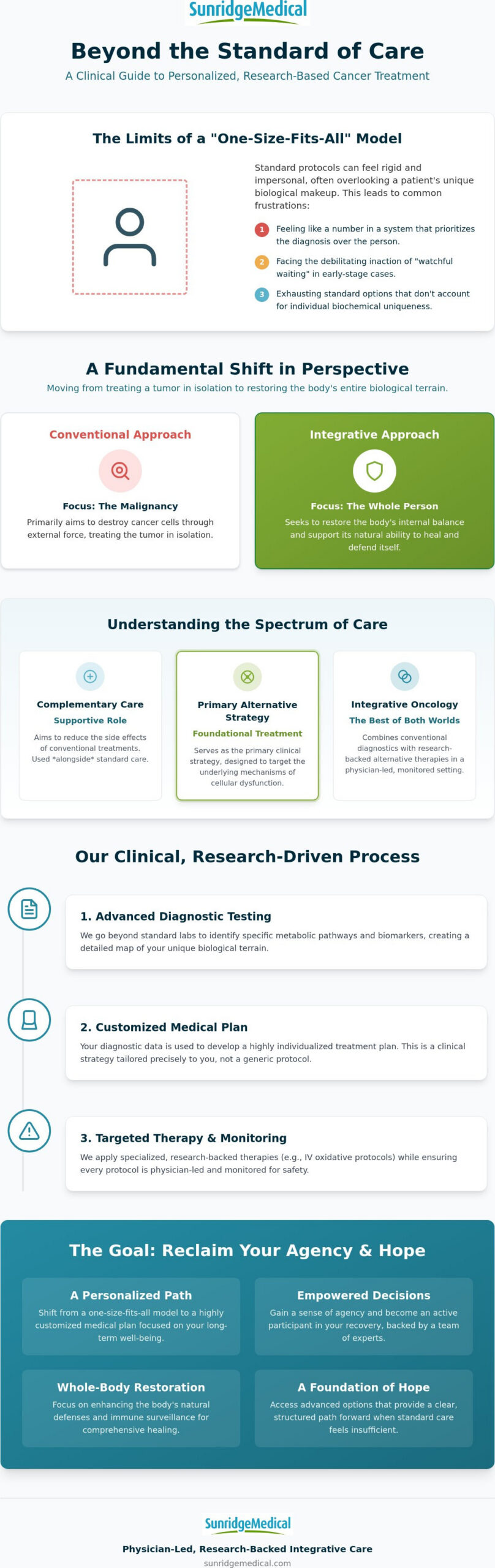
Medical progress in 2026 has reached a pivotal juncture where the focus is shifting from the malignancy alone to the physiological environment that allowed it to manifest. This is the core of a new clinical paradigm. While conventional oncology focuses primarily on the destruction of cancer cells through external force, an alternative cancer treatment approach seeks to restore the body’s internal balance. This isn’t merely about symptom management; it’s a fundamental shift from treating a tumor in isolation to addressing the patient’s entire biological terrain. By analyzing the unique metabolic and genetic markers of each individual, we can move beyond the limitations of generalized medicine.
To accurately frame this discussion, patients often ask, What is Alternative Cancer Treatment? and how does it differ from standard supportive care? It’s essential to distinguish between complementary and alternative strategies. Complementary medicine is typically supportive, aimed at reducing the side effects of toxic treatments. In contrast, research-based alternative protocols serve as a primary clinical strategy designed to target the underlying mechanisms of cellular dysfunction. 2026 marks a turning point where these advanced, patient-centered methodologies are backed by a growing body of clinical evidence, offering a clear path forward for those who feel overlooked by traditional systems.
The Limits of the Standard of Care
Standardized protocols often fall short because they ignore individual biochemical uniqueness. For patients with advanced stages, the “one-size-fits-all” model can feel like a dead end. There’s also a profound sense of frustration associated with “watchful waiting” in early-stage cases, where patients are essentially told to do nothing while the disease potentially progresses. This lack of action can be debilitating. The Standard of Care serves as the essential baseline for medical safety and consensus, but it doesn’t represent the ceiling of what advanced clinical research can achieve for an individual. When standard options are exhausted, a more comprehensive lens is required to identify new opportunities for progress.
Integrative Oncology vs. Pure Alternative Medicine
Integrative oncology represents a collaborative medical discipline that bridges the gap between different philosophies. It’s not about choosing one world over the other; it’s about combining the best of both. Advanced alternative centers utilize conventional diagnostics, such as high-resolution imaging and blood chemistry, but they apply that data to implement unconventional, targeted therapies. This is a far cry from unmonitored home remedies or the dangerous advice often found through “Dr. Google.” True integrative care is physician-led and research-backed. It provides a sanctuary of specialized attention, ensuring that every protocol is monitored for safety while pushing the boundaries of what’s possible in the restoration of well-being. For a comprehensive overview of how this discipline is evolving, the role of integrative oncology in modern cancer care offers an essential 2026 medical reference for patients navigating these decisions.
The Clinical Science of Individualized Alternative Protocols
True healing begins where generic advice ends. While the internet is flooded with anecdotal “cures,” a professional alternative cancer treatment strategy requires a high-level physician evaluation to be effective. We don’t rely on guesswork or unmonitored home remedies. Instead, we utilize advanced diagnostics to map out the specific biomarkers and metabolic pathways driving a patient’s condition. This clinical precision allows us to develop a plan that isn’t just about fighting a disease, but about supporting the body’s natural defenses through research-based alternative medicine. By identifying the unique drivers of cellular dysfunction, we can offer a more comprehensive lens than standard practices.
It’s vital to understand the difference between supportive care and primary treatment. While the National Cancer Institute’s guide to CAM provides a helpful overview of how complementary therapies manage symptoms, clinical alternative protocols go much deeper. They act as a sophisticated medical discipline that targets the underlying mechanisms of the disease. The immune system is the most powerful tool in the medical arsenal, and our protocols prioritize therapies that enhance immune surveillance and response. This methodical approach provides a sanctuary of specialized attention for those who feel stuck in a rigid, conventional system.
Targeting the Biological Terrain
The “biological terrain” refers to the internal environment of your body, including your pH levels, oxygenation, immune function, and nutrient status. Cancer doesn’t appear in a vacuum; it thrives because of environmental triggers or epigenetic factors that have compromised this terrain over time. Our protocols focus on reversing these conditions. By addressing the root causes of cellular stress and toxic load, we aim to make the body an inhospitable environment for cancer growth. This shift in the internal landscape is essential for long-term health restoration.
The Importance of Medical Customization
No two diagnoses are identical because no two patients share the same biological history. Even if two individuals are diagnosed with the same stage of cancer, their genetic makeup and metabolic health will differ significantly. This is why customization is paramount. We implement specialized IV protocols, such as oxidative therapies and biological modifiers, that are tailored to the individual’s specific lab results. Metabolic optimization serves as a foundational pillar in modern alternative protocols by recalibrating the body’s energy production to favor healthy cellular function over malignant growth. If you’re looking for a strategy that respects your unique biology, exploring advanced alternative medicine may provide the clarity and hope you need for the journey ahead.
Navigating the Spectrum: How to Evaluate Alternative Cancer Centers
Choosing a facility for alternative cancer treatment is a high-stakes decision that requires a methodical approach. It’s not enough to find a center that offers “options”; you need a facility that operates with the precision of a high-level specialist. A true sanctuary of care is built on a foundation of clinical authority and a commitment to tracking measurable progress. To avoid feeling like just another number in a rigid system, you must move beyond marketing and evaluate the actual medical tenure behind the protocols. This process begins with a structured vetting framework designed to uncover the depth of a center’s expertise.
Every patient should ask five critical questions before committing to an alternative cancer treatment plan. First, does the Medical Director have at least 20 years of clinical experience in integrative oncology? Tenure matters because it represents a deep library of clinical observations. Second, what specific diagnostic monitoring is used to track treatment efficacy in real time? Third, are the protocols truly individualized based on your unique biomarkers? Fourth, how does the center distinguish between anecdotal miracle claims and documented clinical progress? Finally, what is the physician-to-patient ratio to ensure you receive the specialized attention you deserve?
Reliability is found in transparency and thoroughness. Be wary of centers that offer guarantees or rely solely on unmonitored home remedies. High-level specialists focus on steady, calibrated progress. While you research, consulting the NCCIH’s evidence-based review of complementary cancer therapies can help you understand the scientific landscape of supportive care. A pioneering expert won’t shy away from these questions; they’ll welcome the opportunity to demonstrate the clinical logic behind their methodologies.
Standard Hospital vs. Advanced Alternative Center
Standard hospitals are often tumor-centric, focusing almost exclusively on the destruction of malignant cells through high-volume, group-care models. While they excel at acute interventions, they often lack the diagnostic depth required for individualized metabolic management. Advanced alternative centers provide a patient-centric model where the focus is on the restoration of the whole body. Instead of relying only on standard scans, these centers utilize advanced functional testing to identify the underlying drivers of cellular dysfunction, providing a level of individualized physician attention that standard systems cannot match.
The Role of Research and Proprietary Protocols
Leading alternative clinics often act as pioneers in translational medicine, applying the latest research to clinical practice more rapidly than large, bureaucratic institutions. Proprietary protocols are not “secret” cures; they’re refined medical strategies developed over decades of observing how specific therapies interact within the human body. When evaluating these protocols, it’s essential to verify the credentials and board certifications of the practitioners. A dedicated advocate for your health will always prioritize safety and precision, ensuring that every treatment is backed by a clear medical rationale and a commitment to your long-term well-being. Understanding how integrative oncology bridges conventional and alternative cancer care can help you ask more informed questions when evaluating any clinical program.
Advanced Diagnostic Testing and Targeted Therapy Implementation
Standard oncology often relies on imaging and basic blood panels that identify the presence of a tumor but fail to explain why it developed. This is a significant gap in conventional care. A comprehensive alternative cancer treatment plan requires a deeper dive into your unique biochemistry to uncover the underlying drivers of disease. By utilizing advanced functional testing, we can identify nutritional deficiencies, immune markers, and metabolic imbalances that standard labs frequently miss. This diagnostic precision allows for the implementation of targeted therapies that address the root causes of illness rather than just the symptoms.
Restoring the body’s biological terrain is not a matter of guesswork; it’s a methodical process of recalibration. We look closely at how environmental factors and internal stressors interact with your genetic expression. For many patients, the path to recovery is blocked by heavy metal burdens or chemical toxicities that suppress the immune system. By integrating environmental medicine into our protocols, we can systematically address these obstacles, such as by utilizing protective window coatings from Sunshield Group to reduce UV-related stress. This level of specialized attention ensures that your treatment plan is as unique as your own DNA, moving beyond the “one-size-fits-all” model that often leads to frustration and a lack of progress.
Beyond Standard Imaging: Advanced Diagnostics
We go beyond traditional scans to assess the cellular environment with extreme detail. This includes evaluating Circulating Tumor Cells (CTCs) to monitor the effectiveness of a protocol at the cellular level, providing a more immediate feedback loop than waiting for a three-month scan. We also screen for underlying chronic infections, such as viral loads or hidden pathogens, which can drain the body’s resources and hinder the healing process. Identifying these hidden stressors is a vital step in creating a sanctuary of recovery where the immune system can finally function at its peak performance. Patients dealing with complex co-infections, such as those who benefit from working with experienced lyme disease specialists, understand how undetected pathogens can significantly undermine the body’s capacity to heal.
Specialized IV and Injection Therapies
Intravenous protocols allow for the delivery of high-potency nutrients and biological modifiers directly into the bloodstream, bypassing the limitations of the digestive system for maximum absorption and immediate cellular utilization. This delivery method ensures that the body receives the precise concentration of supportive agents needed to modulate the immune response effectively. Oxidative therapies in a clinical alternative setting utilize medical-grade ozone or hydrogen peroxide to enhance cellular oxygenation and stimulate the body’s innate antioxidant enzyme systems. For those seeking a strategy that prioritizes this level of precision, we invite you to learn more about our Alternative Cancer Treatment Protocols and how they can be tailored to your specific needs.
Hormone optimization also plays a critical role in our clinical strategy, particularly for hormone-sensitive conditions such as breast or prostate cancer. We don’t just look at hormone levels in isolation; we examine how they are metabolized and balanced within your entire system. By fine-tuning these pathways, we can reduce the signals that may be encouraging malignant growth while simultaneously improving your overall sense of well-being and vitality. This multi-faceted approach is designed to give you a sense of agency and hope as you navigate your recovery journey.
For individuals looking to apply these principles of root-cause healing to their overall primary care, you can check out Westridge Holistic medicine.
The Path Forward: Integrative Care at Sunridge Medical
Sunridge Medical represents more than just a clinic; it’s a sanctuary for those who’ve exhausted standard options and feel overlooked by traditional systems. With a 20-year legacy as a pioneer in advanced alternative medicine, we provide a structured path for patients seeking a more comprehensive lens. Dr. Steven S. Isaacman’s philosophy is rooted in personalized, research-driven oncology. He isn’t satisfied with the status quo and constantly seeks more effective ways to help those in need. This intellectual and empathetic approach ensures every alternative cancer treatment protocol we develop is grounded in precision, thoroughness, and a deep respect for the individual human experience.
Your journey starts with a comprehensive medical evaluation that goes far beyond a typical consultation. We review your entire diagnostic history, including the advanced functional testing discussed in previous sections, to identify the specific metabolic and genetic markers of your condition. This data-driven process allows us to build a multi-faceted strategy that targets the whole body rather than just the symptoms. Patients from across the country travel to our advanced facility to access these specialized therapies, finding a level of clinical care that isn’t available in standard hospital systems. We act as a steady hand for patients navigating these complex health journeys, offering a sense of sanctuary and specialized attention.
A Sanctuary of Specialized Attention
The Sunridge experience is designed to replace clinical coldness with compassionate advocacy. We understand that facing a serious diagnosis is daunting, so our team functions as a confident and capable ally throughout your recovery. A truly integrative experience requires collaboration. We coordinate with your existing healthcare providers to ensure your care is seamless, safe, and logically progressed. If you’re currently Evaluating Alternative Cancer Treatment Centers in the USA, it’s essential to look for this level of professional gravity and dedicated support that prioritizes your unique biological terrain.
Taking the First Step Toward Individualized Care
Early intervention is a critical factor in any recovery journey. A comprehensive diagnostic review can uncover opportunities for progress that were previously overlooked, providing a foundation of trust and credibility. We encourage you to take an active role in your health by exploring a strategy that honors your unique human experience and rejects “one-size-fits-all” protocols. You can schedule your initial consultation by calling our toll-free 1-800 number, where our team is ready to provide personalized support and answer your clinical questions. Contact Sunridge Medical Today to Explore Your Individualized Treatment Path and discover how a customized clinical strategy can change your perspective on recovery and well-being.
Reclaiming Agency in Your Medical Journey
The transition from standard protocols to a customized clinical strategy represents a fundamental shift in how we approach recovery. By integrating precision diagnostics with a focus on the body’s internal terrain, we move past the limitations of generalized medicine. This article has outlined how advanced evaluations and targeted therapies provide a clear, structured path for those seeking a research-based alternative cancer treatment. You don’t have to navigate this path alone; expertise and advocacy are available to help you reclaim your sense of hope and agency.
Sunridge Medical, founded in 2003, offers over 20 years of clinical experience in the application of individualized protocols. Led by Medical Director Dr. Steven S. Isaacman, we specialize in addressing the complex needs of patients who require more than the status quo. Contact our medical team today at 1-800-928-5575 to schedule your personalized consultation. Your health is your most valuable asset, and it deserves the care of high-level specialists dedicated to your long-term well-being and restoration.
Frequently Asked Questions
Is alternative cancer treatment safe when administered by medical doctors?
Safety is ensured by the rigorous clinical standards maintained by licensed medical doctors who monitor every aspect of your care. Unlike unmonitored home remedies, a physician-led alternative cancer treatment strategy utilizes precise dosing and continuous diagnostic feedback to mitigate risks. This professional oversight provides a sanctuary of safety, ensuring that therapies such as oxidative protocols or biological modifiers are administered within a controlled medical environment to support the body’s restoration.
Can I use alternative protocols alongside conventional chemotherapy or radiation?
Yes, alternative protocols can be integrated with conventional treatments to create a comprehensive, multi-faceted strategy. This integrative approach focuses on reducing the debilitating side effects of chemotherapy or radiation while supporting the body’s immune surveillance. By coordinating with your existing healthcare team, we ensure that specialized IV therapies and nutritional infusions complement your standard care without causing adverse interactions, helping you maintain a higher quality of life during recovery.
What is the difference between stage 4 and stage 5 cancer in an alternative context?
Standard clinical oncology recognizes stages one through four, while the term “stage five” is occasionally used colloquially to describe advanced, refractory cases that have exhausted standard options. In an alternative medical context, the focus remains on the biological terrain regardless of the numerical stage. For a thorough clinical explanation of this terminology and its implications for treatment planning, our dedicated resource on stage 5 cancer medical realities and advanced treatment options provides essential clarity. We look for metabolic pathways and immune markers that can still be optimized, providing a structured path forward for individuals who feel they’ve reached the end of conventional possibilities.
Does insurance typically cover advanced alternative medical treatments?
Insurance coverage for advanced alternative therapies is currently limited and varies significantly depending on your specific provider and policy. While some wellness benefits may cover nutritional counseling or acupuncture, most specialized IV protocols and biological treatments are private-pay. Many centers require payment at the time of service but can assist you in navigating medical financing options to ensure you have access to the individualized care necessary for your journey.
How do I know if a specific alternative protocol is right for my type of cancer?
Determining the appropriate protocol requires advanced diagnostic testing that goes beyond standard imaging to map your unique biomarkers. We analyze your metabolic health, nutritional status, and immune function to identify the specific drivers of your condition. This data-driven evaluation ensures that your treatment plan isn’t a “packaged” solution but a highly targeted strategy designed to address the root causes of cellular dysfunction specific to your type of cancer.
What should I look for when choosing an alternative cancer treatment center?
You should prioritize centers led by a Medical Director with at least 20 years of clinical experience in integrative oncology. It’s essential to look for a facility that emphasizes individualized physician attention over high-volume group care. Verify that the center uses advanced functional testing and proprietary research-backed protocols. A dedicated advocate for your health will always offer transparency regarding their methodologies and focus on measurable clinical progress rather than anecdotal miracle claims.
How long do typical alternative treatment protocols last?
The duration of a protocol is highly individualized and depends on the complexity of your condition and your body’s specific response to therapy. Some patients may begin with an intensive two to four-week clinical program to recalibrate their biological terrain, while others require a longer twelve-week integrative strategy for sustained progress. We continuously monitor your diagnostic markers to adjust the pacing of your treatment, ensuring you receive the precise level of support needed.
What is the role of nutrition and lifestyle in an advanced medical protocol?
Nutrition and lifestyle serve as the foundational pillars for metabolic optimization and the restoration of your internal environment. We don’t view these as “extra” supportive measures; they are essential components of a research-based medical protocol. By fine-tuning your diet and addressing environmental stressors, we help make your body an inhospitable environment for malignant growth. This comprehensive lens ensures that every aspect of your daily life supports the long-term restoration of your well-being.