


SEO Title: Integrative Treatment for Stage 4 Cancer in Scottsdale: What to Expect
Meta Description: Learn what integrative treatment for stage 4 cancer means, how to coordinate it safely with oncology care, and what to expect from a consultation in Scottsdale.
When you're dealing with stage 4 cancer, the hardest part often isn't finding ideas. It's sorting through too many of them while you're already managing appointments, scans, medication changes, side effects, and opinions that don't always line up.
A common situation looks like this: someone in Scottsdale, Phoenix, or another part of the Valley is still under the care of an oncologist, may be receiving chemotherapy, immunotherapy, radiation, or targeted therapy, but still feels stuck. Pain may be better controlled one week and worse the next. Fatigue can become the dominant problem. Appetite drops. Sleep falls apart. Family members start researching supplements, IV therapies, hyperbaric oxygen, hyperthermia, cannabis, detox plans, and “natural cancer treatments,” but nobody is giving a clear answer on what can be added safely, what has a realistic role, and what may interfere with active treatment.
That coordination gap is where many patients start searching for integrative treatment for stage 4 cancer.
Table of Contents
- When Standard Oncology Is Not Enough
- What Integrative Treatment for Stage 4 Cancer Actually Means
- Evidence, Outcomes, and Realistic Expectations
- Common Modalities Used in Advanced Cancer Care
- When Integrative Care Makes Sense and When It Does Not
- How to Coordinate Care and Prepare for a Consultation
- Next Steps for Patients and Families in Scottsdale
When Standard Oncology Is Not Enough
For many patients, “not enough” doesn't mean oncology has failed. It means conventional care is doing one job well while other problems remain unresolved.
A patient may have a sound oncology plan and still need help with nausea, fatigue, poor oral intake, sleep disruption, anxiety, treatment recovery, or the day-to-day burden of advanced disease. Another patient may be between treatment decisions and wants a second opinion on how to support strength and quality of life without stepping outside medically responsible care.

The real problem is often uncoordinated care
The biggest mistake isn't usually that a patient wants complementary care. It's that they try to assemble it piecemeal.
One person recommends supplements. Another suggests high-dose IV nutrients. A friend sends information about oxygen-based therapies. An online group insists standard treatment should be stopped. That's how patients end up with overlapping protocols, unclear goals, and unnecessary risk.
Practical rule: In stage 4 cancer, every added therapy needs a purpose, a timing plan, and review against the current oncology regimen.
A responsible integrative evaluation starts with the basics:
- Diagnosis details: cancer type, pathology, stage, sites of spread, and pace of disease
- Treatment history: surgery, radiation, chemotherapy, targeted therapy, immunotherapy, and prior responses
- Current burden: pain, neuropathy, bowel changes, weight loss, fatigue, sleep, mood, and functional decline
- Decision point: symptom support, treatment tolerance, second opinion, recovery support, or discussion of broader options
What an individualized review should look like
In practice, the first step is usually document review, not treatment.
That means looking closely at pathology reports, imaging summaries, biomarker testing when available, medication lists, supplement use, prior complications, and the patient's actual goals. Some patients want aggressive supportive care while continuing active oncology treatment. Others want help after recurrence or progression. Some are traveling from Paradise Valley, Tempe, Mesa, Chandler, Gilbert, or outside Arizona and need to know whether an in-person visit is worth the logistics.
At Sunridge Medical, cases are approached this way first: define what the patient is trying to accomplish, identify what's medically realistic, and separate supportive measures that may fit from claims that don't hold up in late-stage disease.
The question isn't “What alternative therapy is best for stage 4 cancer?” The better question is “What can be added safely, for this patient, at this point in treatment, with what goal?”
What Integrative Treatment for Stage 4 Cancer Actually Means
A patient with metastatic cancer may already have an oncologist, a local infusion center, a long medication list, and a shelf full of supplements recommended by friends or found online. The hard part is usually not finding more options. The hard part is deciding what can be added safely, what should be avoided during active treatment, and whether traveling to Scottsdale will lead to a usable plan or just more noise.
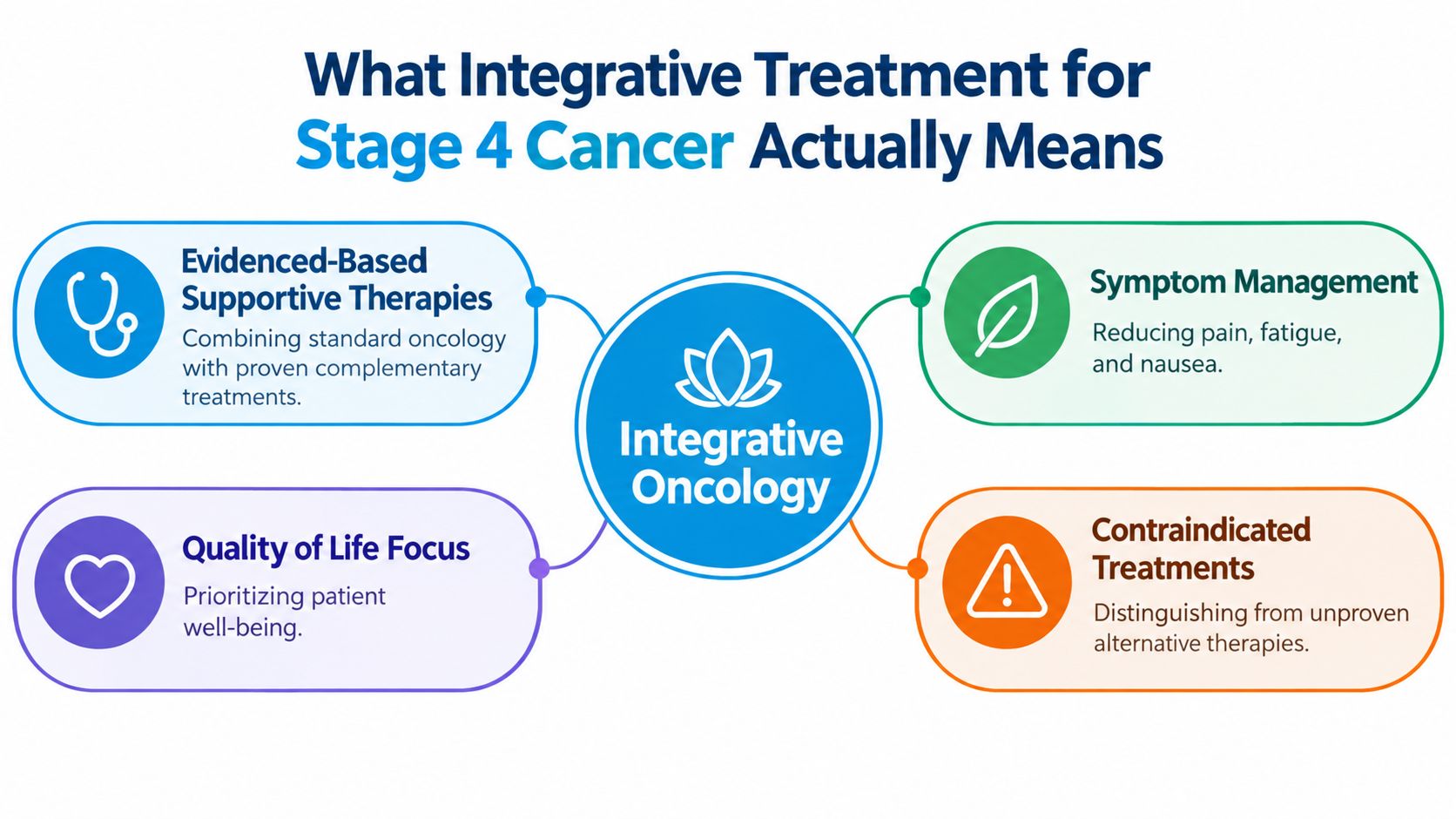
Integrative oncology addresses that coordination problem. It combines standard cancer treatment with selected supportive therapies, symptom management, psychosocial care, and a structured review of risks, goals, and timing.
That definition matters in stage 4 disease. Patients are often offered broad claims without any serious discussion of drug-supplement interactions, treatment sequencing, lab monitoring, or how supportive care fits around chemotherapy, immunotherapy, radiation, or palliative procedures.
It has developed into a studied care model
Integrative oncology in advanced cancer is no longer limited to informal or fringe use. North American clinical experience, including the Canadian and U.S. Integrative Oncology Study of advanced cancer patients treated in naturopathic oncology settings, helped establish an early real-world body of literature around how supportive integrative care is being used in late-stage disease, as summarized in this review of integrative treatment models in advanced cancer.
That does not mean every therapy used under the integrative label has proven anticancer benefit. It means the field is being examined more carefully, especially in settings where symptom burden is high, decision fatigue is common, and patients need better coordination across clinicians.
Palliative care sits inside this model, not outside it. Standard references such as the National Cancer Institute overview of palliative care in cancer describe it as symptom relief and support that can be provided alongside disease-directed treatment. In practice, that includes pain control, appetite issues, sleep disruption, anxiety, bowel symptoms, fatigue, family support, and discussions about what treatments still match the patient's goals.
The core problem is often uncoordinated care
Late-stage patients rarely need more random interventions. They need a plan that matches the oncology timeline.
For one patient, that may mean choosing only low-risk symptom support during immunotherapy because the priority is staying on schedule with treatment. For another, it may mean reviewing nutrition, weight loss, dehydration risk, constipation, sleep, and medication burden after progression, when the immediate problem is function rather than tumor response. A patient traveling to Scottsdale also has practical questions that matter: what records need to be sent first, whether testing can be done locally, how many days to stay, and which parts of the plan can be carried out back home.
Those are care design questions. They are often missed when integrative care is discussed too loosely.
What it includes and what it does not
A sound integrative plan uses supportive therapies for a stated purpose. Common goals include reducing distress, helping with fatigue, supporting sleep, improving appetite, easing pain, and helping patients tolerate treatment more predictably. Oncology guidance supports selected symptom-directed approaches such as stress management, yoga, massage, music therapy, meditation, and energy conservation for anxiety, depression, fatigue, stress, and quality of life, as outlined in this guideline-focused review of integrative oncology.
It also has clear limits:
- It works alongside oncology care: It does not replace indicated chemotherapy, immunotherapy, radiation, surgery, or symptom-directed medical procedures.
- It requires interaction screening: Supplements, botanicals, and metabolic therapies can create problems if they are added without review of liver function, kidney function, blood counts, anticoagulants, or active treatment drugs.
- It should have a defined goal: “More treatment” is not a goal. Better pain control, less nausea, improved sleep, support during travel, or recovery after a difficult cycle are goals.
- It is not proof of cure: Reports of remission in metastatic disease do not establish that a therapy reliably controls cancer.
Patients who want to see how these pieces are organized into an actual plan can review this clinical framework for an integrative cancer care plan.
Evidence, Outcomes, and Realistic Expectations
The strongest evidence in advanced cancer doesn't support miracle claims. It supports better coordination, earlier palliative involvement, and measurable improvement in symptoms and quality of life.
Where the evidence is strongest
For adults with advanced cancer, professional guidance recommends early palliative care delivered alongside active treatment through interdisciplinary teams, not instead of oncology care, as outlined in the ASCO palliative care guideline summary.
A systematic review of integrated outpatient palliative and oncology care identified 7 randomized controlled trials and 2 cluster-randomized trials and found small-to-moderate positive short-term effects on quality of life, symptom burden, and mortality. In pooled results, short-term quality of life improved with SMD 0.24 (95% CI 0.13 to 0.43) and mortality decreased with HR 0.77 (95% CI 0.61 to 0.98), according to this evidence review of integrated palliative and oncology care.
That's the core of realistic expectation setting. The best-supported outcomes are not “cancer reversal.” They are better symptom control, stronger support, and sometimes improved near-term outcomes when care is organized well.
| Outcome Category | Evidence Strength | Clinical Relevance |
|---|---|---|
| Quality of life | Strongest support in integrated palliative oncology models | Matters when fatigue, pain, distress, and treatment burden are limiting daily function |
| Symptom burden | Strongest support in coordinated supportive care | Helps patients stay more comfortable and may improve tolerance of treatment |
| Depression and emotional distress | Supported in early palliative care and structured integrative settings | Important when uncertainty, loss of appetite, insomnia, and fear begin to dominate daily life |
| Mortality signal | Present in some pooled palliative data, but not a blanket claim for all integrative therapies | Should be discussed cautiously and never used to justify replacing standard treatment |
| Tumor response or cure | Weak support for broad claims in metastatic disease | Patients should be skeptical of clinics that promise remission without prospective evidence |
What observational studies suggest, and what they don't
Some observational data are encouraging but mixed. In advanced gynecological cancer, an integrative oncology treatment program was associated with better overall 3-year survival than non-integrative care or control groups, and the non-integrative group had higher mortality risk with crude and adjusted hazard ratios of 2.18 and 2.23, as reported in this review of survival outcomes in integrative oncology.
But that same review also notes that after controlling for bias in advanced cancers, there was no clear survival benefit from naturopathic oncology in another Canadian/U.S. analysis. That's why responsible clinicians frame integrative care as supportive and individualized, not as a proven replacement for standard stage 4 therapy.
Patients exploring additional options often also review broader stage 4 cancer treatment options so they can place supportive care in the larger treatment framework.
Good integrative care changes the lived experience of advanced cancer more reliably than it changes the biology of every tumor.
Common Modalities Used in Advanced Cancer Care
Patients searching for integrative treatment for stage 4 cancer usually aren't looking for abstract philosophy. They want to know what therapies may be considered, what each one is trying to do, and how those pieces fit into a physician-directed plan.
Supportive and symptom-directed therapies
Some modalities are used primarily to support the patient during or around active treatment.
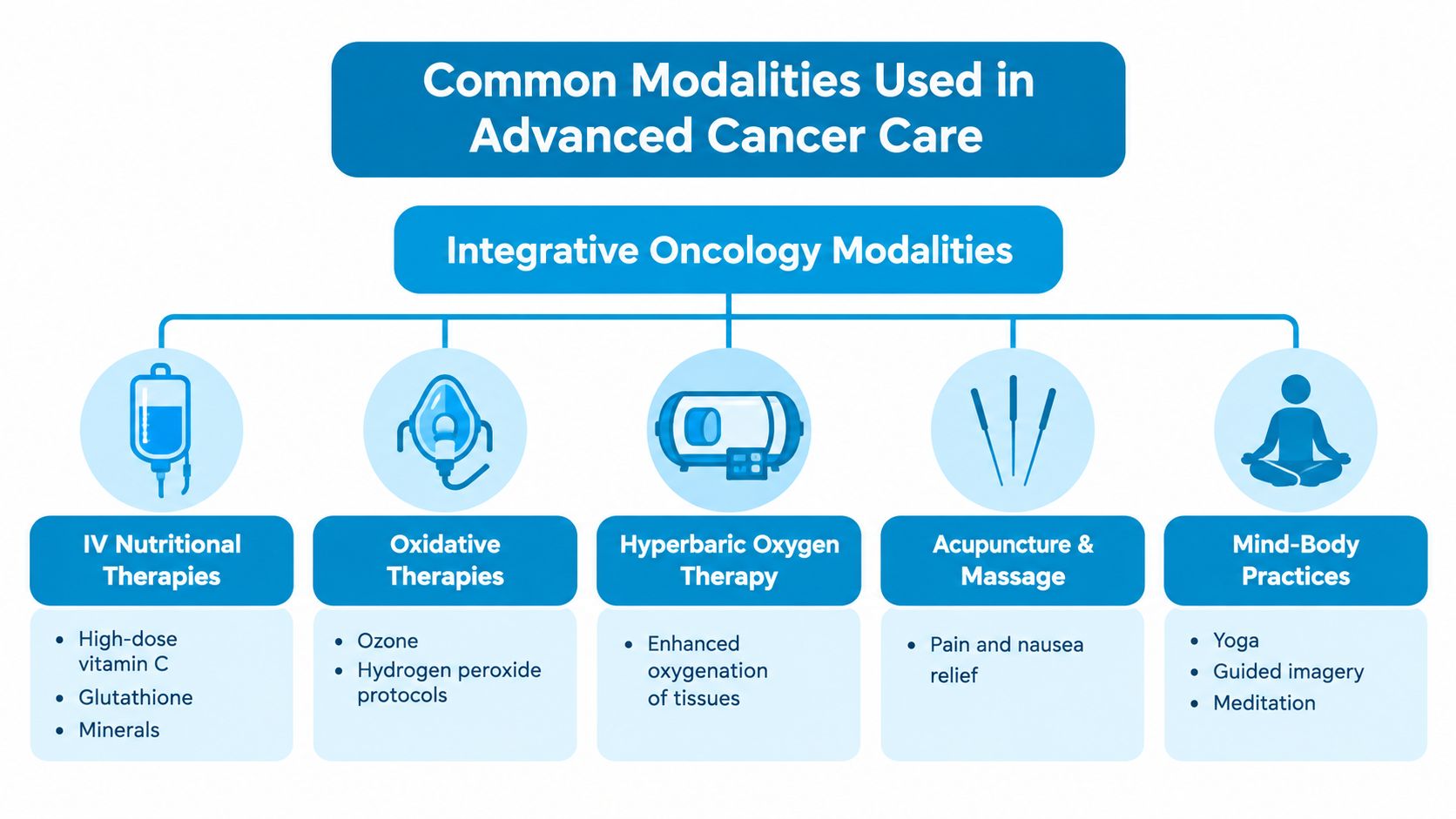
IV nutritional therapies may be considered when intake is poor, treatment recovery is difficult, or physician-directed nutrient support is part of a broader plan. In practice, these infusions are selected based on the patient's overall status, current treatments, hydration, labs, and goals. They aren't interchangeable with standard oncology treatment.
Mind-body care often matters more than patients expect. Guideline-supported approaches such as meditation, yoga, massage, music therapy, and stress management are most useful when anxiety, insomnia, depression, and fatigue are compounding the burden of disease.
Acupuncture and body-based supportive therapies may be considered for selected symptoms such as pain, nausea, or tension, depending on blood counts, anticoagulation status, skin integrity, infection risk, and the patient's oncology schedule.
Device-based and oxygen-related approaches
Other modalities are considered because of their potential supportive or adjunctive role.
Hyperbaric oxygen-oriented care is typically discussed in relation to oxygenation, tissue recovery, and selected supportive goals. Whether it fits depends on the person's pulmonary status, metastatic pattern, recent procedures, and treatment timing.
Hyperthermia is generally discussed as an adjunctive approach within a larger protocol, not as a stand-alone cure. In advanced cancer, the practical question is whether there's a rational reason to use it in this patient's case and whether it can be integrated safely with the rest of the plan.
Oxidative therapies, including ozone-based approaches referenced by integrative clinics, require the same level of caution. These aren't casual wellness interventions in a stage 4 patient with active treatment complexity, anemia risk, central lines, or multi-organ involvement.
A useful modality isn't defined by how impressive it sounds. It's defined by whether it has a clear target, acceptable risk, and a place in the patient's current treatment calendar.
Targeted protocol components that require careful selection
Some clinics also discuss therapies that are more specialized or controversial in advanced cancer planning:
- Insulin potentiation therapy: Sometimes used in physician-directed integrative protocols. It remains an area where patients should ask direct questions about rationale, evidence, monitoring, and compatibility with current oncology treatment.
- Regenerative approaches such as PRP: These are generally considered in specific supportive contexts rather than as metastatic cancer treatment itself.
- Detoxification and chelation: These may be discussed when environmental medicine is part of a broader evaluation, but they should never distract from urgent oncology needs.
- Immune-modulating support: The practical issue is whether the intervention complements or complicates existing treatment, especially with immunotherapy or steroid use.
At clinics that offer broad integrative oncology services, including Sunridge Medical, these modalities are generally considered as parts of a coordinated plan rather than as isolated fixes. That distinction matters because combination decisions should be driven by diagnosis, prior treatment burden, current symptoms, and the patient's functional reserve.
When Integrative Care Makes Sense and When It Does Not
Integrative care makes the most sense when the patient's goals are clear and the boundaries are respected.
Situations where it may be useful
It can be reasonable to explore integrative treatment for stage 4 cancer when standard oncology is still ongoing but symptoms remain poorly controlled. It may also make sense when disease has recurred or progressed, when a patient wants a second opinion on supportive options, or when treatment side effects are limiting function more than the cancer itself on a day-to-day basis.
Another appropriate use case is care coordination. Many patients already have an oncologist they trust but need a separate team to review supplements, IV support, recovery needs, fatigue, sleep, mood, nutrition, or logistics around travel and treatment timing.
Situations where it may be risky
It does not make sense to delay clearly indicated oncology treatment in favor of unproven alternatives.
It's also risky when a clinic:
- Promises tumor response without qualification: Especially in metastatic disease
- Discourages communication with your oncologist: That's a major warning sign
- Recommends large supplement stacks immediately: Before reviewing medications, organ function, and active therapies
- Uses one protocol for every cancer type: Stage 4 cancer is not one disease
- Treats symptom support as proof of anticancer efficacy: Feeling better matters, but it isn't the same as controlling disease
If a clinic can't explain why a treatment is being used, what it's meant to affect, and how it will be monitored, the plan isn't ready.
Questions worth asking before you commit
Ask practical questions, not just hopeful ones.
- How will this plan fit with my oncology treatment schedule?
- Which supplements or therapies could interact with chemotherapy, immunotherapy, or radiation?
- What are you treating first, symptoms, recovery, treatment tolerance, or the cancer itself?
- How will you communicate with my oncology team if needed?
- What would make you stop, delay, or change part of the plan?
National Cancer Institute-linked guidance emphasizes that advanced cancer patients should be referred to palliative care early and that these services should begin alongside active treatment, with the ASCO recommendation cited as starting within the first 8 weeks of diagnosis in the advanced setting, according to this overview of palliative care integration in advanced cancer. That's a useful benchmark because it reinforces a basic principle: add support early, don't wait for crisis, and don't substitute it for standard care.
How to Coordinate Care and Prepare for a Consultation
The patients who get the most out of an integrative consultation usually arrive with organized information. That doesn't mean perfect records. It means the major pieces are available.
What to gather before the visit
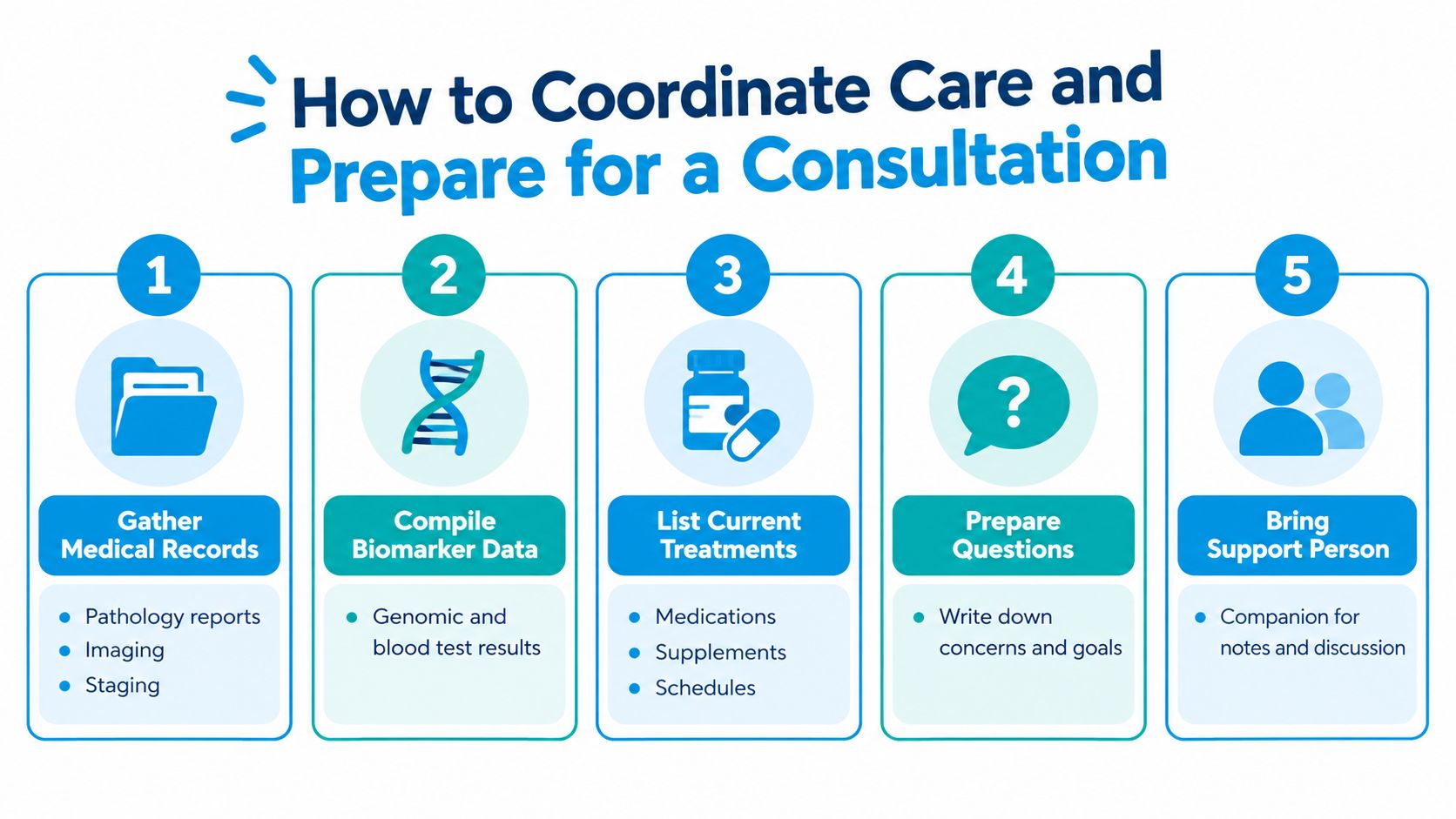
Bring or request these items from your oncology team:
- Pathology and diagnosis records with staging information and biopsy details
- Imaging reports that show current disease extent and recent changes
- Biomarker or genomic testing if it has been performed
- Current medication and supplement list including doses and schedule
- Prior treatment timeline with what you received and how you tolerated it
For many patients, a formal cancer second opinion in Scottsdale is most useful when this information is assembled in advance.
Questions to prepare and travel logistics to expect
Write down the questions you don't want to forget. Ask about safety with current treatment, what the plan is trying to accomplish first, whether remote record review is possible, and which parts of care require travel versus local follow-up.
This overview may help before you schedule:
For out-of-area patients traveling to Scottsdale from elsewhere in Arizona or from outside the Phoenix metro, logistics matter. A good care team should explain what can be reviewed remotely, what testing or treatment requires in-person attendance, how long a visit may take, and whether scheduling can be clustered to reduce travel burden.
A practical patient guide on integrative oncology also emphasizes discussing specific complementary therapies, insurance questions, and communication with outside practitioners, as described in this patient-focused integrative oncology resource.
Next Steps for Patients and Families in Scottsdale
The best use of integrative treatment for stage 4 cancer is not as a substitute for evidence-based oncology. It's as a disciplined layer of support and clinical judgment around a patient who needs more than a standard visit can usually provide.
That may mean building a symptom-focused plan while chemotherapy continues. It may mean reassessing options after progression. It may mean clarifying which therapies are reasonable, which are investigational, and which should be avoided because they add cost and confusion without a clear role.
A structured study of integrative oncology plus palliative care found that higher adherence to integrative care was associated with significant improvements in fatigue, depression, and global quality of life at 6 weeks, with fewer hospitalizations at 12 weeks, according to this study on integrative oncology and palliative care outcomes. That kind of result is clinically useful because it reflects the goals many late-stage patients have right now: function better, suffer less, and understand treatment more clearly.
Patients in Scottsdale, Phoenix, Paradise Valley, and the surrounding metro area who want a more coordinated review can start with a focused discussion of diagnosis, prior treatment, current symptoms, and treatment goals. For those comparing options, this page on integrative cancer care in Scottsdale gives a practical overview of that model.
If you're considering next steps, look for a plan that is individualized, transparent about limits, and willing to coordinate with your oncology team. That's the difference between added support and added noise.
Sunridge Medical offers physician-directed integrative cancer evaluation in Scottsdale for patients seeking coordinated supportive care, a second opinion, or a broader review of treatment options alongside standard oncology. If you or a family member want to discuss whether an individualized consultation is appropriate for stage 4 cancer, visit Sunridge Medical to learn more or request an appointment.