


What if the most effective way to treat a tumor isn’t by looking at the cancer alone, but by addressing the biological terrain that allowed it to thrive? Implementing a sophisticated integrative cancer care plan allows us to move beyond the fear of debilitating side effects that often accompany standard treatments. You’ve likely felt the deep frustration of being treated as just another statistic in a large hospital system. It’s common to feel that your unique biological needs are overlooked in favor of standardized protocols, yet you deserve a clinical environment that functions as a sanctuary, offering the specialized attention required for complex health journeys.
This article defines the clinical framework for 2026, demonstrating how research-based alternative therapies provide a personalized roadmap to recovery. We’ll explore how targeting the underlying mechanisms of disease with clinical precision creates a path forward that’s both intellectual and empathetic. By combining advanced protocols with a focus on the individual human experience, we bridge the gap between traditional oncology and the leading edge of medical research. You’ll discover how a multi-faceted methodology can restore well-being and provide the steady hand you need during this time.
Key Takeaways
- Understand how modern oncology is shifting toward a multi-faceted medical strategy that addresses cancer at the cellular level rather than a standardized institutional model.
- Discover why a research-based integrative cancer care plan incorporates specialized IV therapies and biological response modifiers to strengthen the immune system’s natural defenses.
- Learn how to bridge the gap between conventional diagnostics and advanced alternative protocols to identify the true root causes of illness.
- Explore the step-by-step process of developing a personalized treatment roadmap through comprehensive physician evaluations and the identification of unique biological markers.
- Gain insight into how a clinical sanctuary with over two decades of expertise provides the specialized attention needed for advanced stages of disease.
Beyond the Standard of Care: What is a Clinical Integrative Cancer Care Plan?
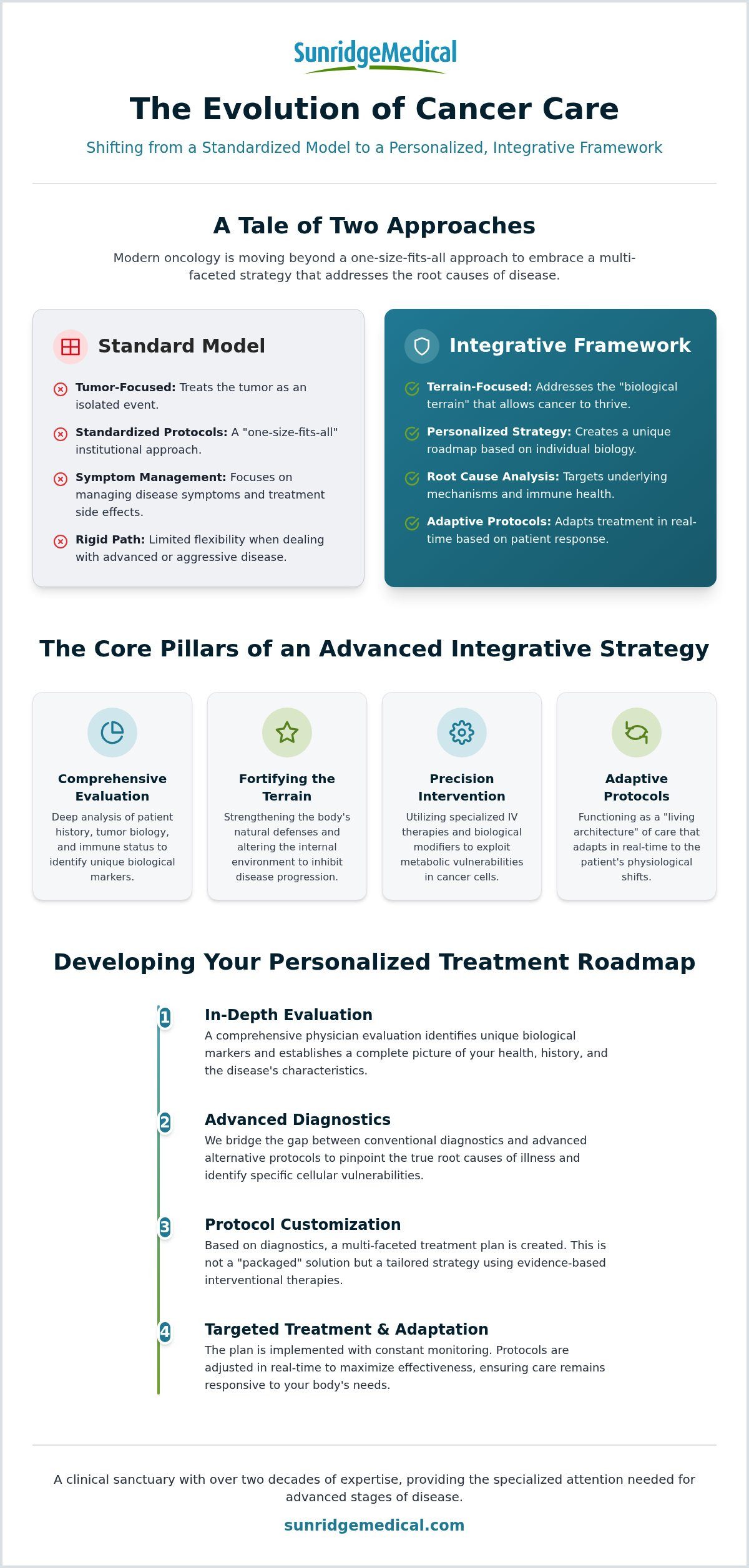
Many patients view integrative care as a secondary wellness program designed simply to manage the side effects of chemotherapy. However, a clinical integrative cancer care plan is a primary, multi-faceted medical strategy that targets cancer at the cellular level. This approach represents a significant departure from the one-size-fits-all institutional model common in large hospital systems. Instead of treating the tumor as an isolated event, this framework focuses on the biological terrain. This terrain involves the complex internal environment, immune health, and metabolic factors that either inhibit or encourage disease progression.
By 2026, the role of research-based alternative medicine has evolved into a sophisticated discipline. When Defining Integrative Medicine, it’s essential to distinguish between unproven methods and evidence-based protocols that leverage conventional research to inform alternative applications. This clinical approach doesn’t ignore traditional oncology; it enhances it by addressing the underlying mechanisms that standard treatments often miss. It positions the physician as a scientific guide, navigating a path that is both intellectually rigorous and deeply empathetic.
The Shift from Supportive to Interventional Care
Wellness activities like yoga, massage, or meditation are valuable for stress management, but they aren’t active medical interventions. Clinical alternative protocols involve targeted therapies such as specialized IV applications and biological response modifiers. These protocols aren’t “packaged” or standardized solutions. They rely on a physician-led, individualized evaluation process to determine which research-based therapies will most effectively disrupt the cancer’s life cycle. This shift from supportive to interventional care ensures that every treatment choice is backed by clinical precision and directed toward measurable progress.
Why Customization is the Foundation of Recovery
The Core Pillars of an Advanced Integrative Oncology Strategy
A truly effective integrative cancer care plan functions as a living architecture, adapting to the patient’s physiological shifts in real-time. Unlike standardized treatments that follow a fixed path regardless of individual response, this strategy relies on clinical precision to target the disease from multiple angles. This methodology is built upon foundational pillars that prioritize both the destruction of malignant cells and the fortification of the host’s immune system. According to The Core Pillars of an Advanced Integrative Oncology Strategy, evidence-based complementary treatments are essential for managing the complex interplay of symptoms and systemic health.
Customized Intravenous Protocols and Oxidative Therapies
High-dose nutritional infusions are a cornerstone of this interventional approach. By delivering concentrated nutrients directly into the bloodstream, we bypass the limitations of the digestive tract, ensuring that the cellular environment receives the support it needs for repair and defense. These protocols often work in tandem with oxidative therapies. These therapies exploit metabolic vulnerabilities in cancer cells, which typically lack the antioxidant enzymes necessary to survive specific reactive environments. For a deeper understanding of these methodologies, you can review our Alternative Cancer Treatment: A Comprehensive Clinical Guide to Integrative Oncology in 2026.
Biological Treatments and Immune Modulation
Advanced integrative strategies also utilize biological response modifiers and specialized injectable medications to manage chronic disease markers. These treatments don’t just attack the tumor; they educate the immune system to recognize and respond to threats more effectively. Hormone optimization further refines this process by creating an internal environment that is inhospitable to disease progression. Biological treatments act as a steady hand for the patient’s internal defenses, ensuring the immune system remains vigilant and responsive throughout the recovery journey. This level of immune modulation is critical for patients who’ve felt their progress stall under conventional care. To find out more about how medical cannabis can be integrated into a clinical care plan via online evaluations, patients can explore specialized patient guides.
Success in complex oncology requires more than just initial intervention. It demands ongoing monitoring and real-time protocol adjustments based on updated diagnostic labs and patient feedback. This methodical rhythm ensures that the integrative cancer care plan remains as dynamic as the condition itself. If you’re ready to move beyond standardized care, our team provides the specialized medical attention required to navigate these intricate health challenges with confidence.
Integrative vs. Conventional: Addressing the Misconception of “Either/Or”
A common objection suggests that alternative protocols cannot work alongside conventional knowledge. This “either/or” mentality creates unnecessary fear for patients navigating advanced stages, often forcing them to choose between rigorous science and holistic healing. In reality, a clinical integrative cancer care plan represents a sophisticated evolution of medicine rather than a rejection of science. We utilize conventional diagnostic labs as a foundational tool, yet we don’t stop where standard oncology ends. We seek the deeper root causes that basic blood panels often overlook, bridging the gap between established clinical practices and advanced, research-based methodologies.
Standard labs are frequently too broad to detect the subtle nuances of chronic illness or the metabolic shifts driving cancer progression. These baseline tests might show “normal” ranges while a patient continues to feel unwell or experiences a lack of progress. By moving beyond these limitations, we can identify the specific biological triggers that allow disease to persist. This approach establishes a more comprehensive lens, ensuring that the patient is treated as a complex human being rather than just a set of data points on a laboratory report. It’s a commitment to thoroughness that provides a steady hand during the most challenging health journeys.
Comparing Outcomes: Standard vs. Integrative Frameworks
Standard care focuses almost exclusively on tumor reduction through aggressive intervention. While shrinking a tumor is a vital objective, this singular focus often ignores the physiological toll of the treatment itself and the underlying terrain that allowed the cancer to form. An integrative framework targets tumor reduction while simultaneously prioritizing system restoration. This dual-action strategy addresses the long-term consequences of disease progression that standard models might leave untreated. For a detailed breakdown of how these strategies apply to different phases of illness, consult our Integrative Cancer Treatment by Stage: A Clinical Reference Guide (2026).
The Role of Advanced Diagnostics in Alternative Medicine
Developing a personalized integrative cancer care plan requires a deliberate, multi-step progression that moves far beyond the administrative checklists of conventional oncology. This framework is designed to identify the specific biological vulnerabilities of the disease while concurrently strengthening your internal defenses. The process follows a logical sequence that ensures no detail of your health history is overlooked. By moving from broad medical philosophy to specific application, we create a strategy rooted in reliability and thoroughness.
- Comprehensive Evaluation: A deep clinical review of medical history and previous treatment responses.
- Marker Identification: Pinpointing specific biological markers and environmental stressors that influence disease progression.
- Protocol Customization: Engineering specialized IV and injection therapies tailored to your unique cellular needs.
- Systemic Optimization: Implementing targeted nutritional support and hormone optimization to refine the internal terrain.
- Continuous Monitoring: Utilizing ongoing diagnostic feedback to make iterative adjustments to the plan.
The Physician Consultation: A Deep Clinical Dive
A standard 15-minute appointment is insufficient for the complexity of advanced cancer care. At Sunridge Medical, our specialists dedicate the time necessary to build a foundation of trust through clinical thoroughness. This initial phase isn’t just about the tumor; it involves addressing autoimmune conditions and neurologic co-factors that may be impacting your recovery. By treating you as a whole person rather than a diagnosis, we provide the specialized medical attention required to uncover hidden barriers to progress. If you’re seeking a treatment roadmap that adapts to your unique biological needs, schedule a comprehensive physician evaluation to begin your journey.
Iterative Monitoring: Why the Plan Must Evolve
The path to recovery is rarely linear. As your body responds to treatment, your integrative cancer care plan must evolve to meet new physiological demands. Real-time feedback and clinical markers dictate these protocol changes; this ensures you’re always receiving the most effective care for your current status. Your physician acts as a scientific guide, navigating you through different recovery phases with calm determination. This iterative approach ensures the strategy remains at the leading edge of medical research throughout your entire journey, providing a steady hand when you need it most.
Sunridge Medical: Pioneering Individualized Alternative Cancer Protocols
Sunridge Medical functions as a sanctuary for those who feel overlooked by the standardized models of large hospital systems. Since our founding in 2003, we’ve positioned ourselves as a pioneering leader in advanced alternative medicine. Led by Medical Director Dr. Steven S. Isaacman, our clinic provides a level of specialized attention that honors each patient’s individual experience. We don’t believe in “packaged” solutions; instead, we engineer a multi-faceted integrative cancer care plan that targets the underlying mechanisms of disease. This commitment to premiere status ensures you’re supported by a team that isn’t satisfied with the status quo, constantly seeking more effective ways to help you regain your quality of life.
A Sanctuary for Complex Disease Management
Our national scope allows us to act as a scientific guide for patients navigating the most complex health journeys. This pioneering expertise isn’t limited by regional boundaries; it’s a comprehensive philosophy that we apply to every individual we treat. We maintain an emotional register of calm determination, balancing clinical authority with a genuine, compassionate optimism for your future. We focus on the biological terrain of the individual, ensuring that every protocol is as unique as the person receiving it. This thoroughness provides a steady hand for patients who have felt stuck in conventional cycles. To see how this philosophy extends beyond oncology, you can read more about Alternative Health Medicine: A Clinical Path for Chronic Illness Recovery in 2026.
Taking the First Step: Your Individualized Consultation
Taking the first step toward a personalized roadmap to recovery is a straightforward process. You can contact our toll-free support line to speak with a dedicated advocate who will help you schedule your initial appointment. During this comprehensive evaluation, you’ll experience a level of thoroughness that defines our clinical framework. We’ll explore your history, identify specific biological markers, and begin the development of your individualized integrative cancer care plan. This isn’t a 15-minute administrative check-in; it’s a deep clinical dive designed to restore hope and well-being through precision medicine. Schedule your clinical consultation today and experience the difference that specialized medical attention can make for your recovery journey.
Restoring Your Health Through Clinical Precision
Founded in 2003, Sunridge Medical is a specialized physician-led medical center dedicated to providing the individualized attention you deserve. Our team acts as a scientific guide, ensuring your treatment is as unique as your biological markers. Contact Sunridge Medical at 1-800-923-7878 to schedule your comprehensive medical consultation. You can move forward with calm determination, knowing you have a steady hand to guide you toward the restoration of your well-being. Progress is possible when expertise meets empathy.
What is the difference between integrative cancer care and holistic cancer treatment?
Integrative cancer care is a multi-faceted medical strategy that targets disease at the cellular level through clinical precision. While holistic treatment often emphasizes general wellness, a clinical integrative cancer care plan utilizes research-based alternative protocols like biological treatments and specialized IV therapies. This approach moves beyond supportive care to provide active intervention. It functions as a sophisticated evolution of medicine, bridging the gap between conventional clinical language and advanced alternative methodologies.
Is an integrative cancer care plan suitable for Stage 4 or Stage 5 cancer?
Yes, our clinical framework is specifically designed to address the challenges of advanced cancer stages. We specialize in complex cases where individuals may feel like a statistic in a large hospital system. By identifying specific biological markers and addressing underlying mechanisms, we provide a personalized roadmap to recovery. This specialized medical attention focuses on the restoration of well-being even when traditional systems suggest that standard options have been exhausted.
How long does it take to develop and implement a personalized cancer protocol?
The development of your protocol begins immediately during your comprehensive physician evaluation and history review. Our specialists work efficiently to identify environmental stressors and biological triggers that impact your health. Once these unique factors are established, we implement your customized IV and injection protocols without delay. This methodical rhythm ensures that you receive targeted care as quickly as possible; it provides a steady hand for patients navigating complex health journeys.
Does integrative cancer care involve chemotherapy or radiation?
Sunridge Medical focuses on advanced alternative medicine and research-based alternative protocols. While we utilize conventional research to inform our methodologies, we don’t provide standard inpatient chemotherapy or radiation services. Instead, we offer alternative cancer treatment protocols that can be used to target the biological terrain of the individual. This approach provides a departure from standardized care, offering a sanctuary for those seeking a more comprehensive lens than standard practices provide.
Can integrative protocols be used for rare cancers like triple negative breast cancer?
Individualized protocols are highly effective for rare or aggressive cancers because they target the specific tumor biology rather than a generalized diagnosis. By analyzing your unique immune status and metabolic vulnerabilities, we can engineer a plan that addresses the root causes of disease progression. This level of customization is essential for conditions like triple negative breast cancer, where “one-size-fits-all” institutional models often fall short of providing the necessary specialized attention.
What is the role of IV therapy in an integrative cancer care plan?
Specialized IV therapy is a cornerstone of our clinical framework; it allows for the direct administration of customized intravenous protocols into the bloodstream. These nutritional infusions and oxidative therapies target metabolic vulnerabilities in cancer cells while strengthening your internal defenses. By bypassing the digestive tract, we ensure your cellular environment receives the precision support required for repair. This interventional approach is a key component of a successful integrative cancer care plan.
How does Sunridge Medical monitor the effectiveness of a personalized plan?
Effectiveness is monitored through continuous clinical monitoring and iterative plan adjustments based on real-time diagnostic labs. We don’t rely on basic blood panels alone; instead, we utilize sophisticated physician evaluations to track your progress. As your physiological markers shift, your scientific guide updates your protocol to ensure it remains at the leading edge of medical research. This thoroughness builds a foundation of trust and ensures your care remains as dynamic as your condition.
Do I need a referral to start an integrative cancer care plan?
No, a formal referral from a primary care physician or oncologist isn’t required to begin your journey with us. You can take the first step by contacting our toll-free support line at 1-800-923-7878 to schedule your comprehensive medical consultation. This direct access allows you to transition to a personalized treatment roadmap without the administrative delays often found in traditional hospital systems. We welcome all individuals seeking advanced alternative medicine.