


You may be comparing IV vitamin C clinics in Scottsdale after a cancer diagnosis, during difficult treatment, or while managing a chronic illness that hasn't improved with standard care. You may also be searching for a second opinion and trying to separate physician-directed treatment from a generic wellness drip.
The central question isn't just whether IV vitamin C is safe or beneficial. It's whether it's appropriate for you, at the proposed dose, after the right screening, and with adequate medical supervision. The IV route can produce drug-like concentrations that oral supplements can't, which is why the therapy deserves careful evaluation rather than casual promotion.
This guide explains the pharmacology, evidence, limitations, safety screening, visit process, practical planning issues, and the role of individualized integrative care in Scottsdale. Sunridge Medical works with patients from Scottsdale, Phoenix, Paradise Valley, Tempe, Mesa, Chandler, Gilbert, and the greater Phoenix metropolitan area who want to explore options alongside conventional care. If you're considering integrative cancer care in Scottsdale, bring your diagnosis, current treatment plan, medication list, and questions to a qualified clinician.
Table of Contents
- Introduction to IV Vitamin C Care in Scottsdale
- What IV Vitamin C Is and How It Works Differently
- Evidence and Limitations for Integrative Oncology and Chronic Illness
- Safety Screening Contraindications and Who Should Avoid Treatment
- Typical Protocols and What to Expect During Your Visit
- Pricing Insurance and Scottsdale Logistics for Local and Traveling Patients
- How Sunridge Medical Approaches Individualized IV Vitamin C Care
Introduction to IV Vitamin C Care in Scottsdale
A patient may find IV vitamin C after reading about early cancer research, hearing about supportive infusions from another patient, or looking for help with fatigue and treatment tolerance. That search often starts with a simple phrase, such as “IV vitamin C Scottsdale,” but the decision itself is medically complex. A clinic must understand the underlying illness, current therapy, kidney health, laboratory results, and the patient's goals before discussing a protocol.
The treatment shouldn't be presented as a replacement for surgery, chemotherapy, radiation, immunotherapy, or other established cancer care. The National Cancer Institute's patient information on vitamin C states that the FDA hasn't approved high-dose vitamin C as a cancer treatment. Research remains exploratory, and the possible role of IV vitamin C is better understood as a supportive or investigational adjunct, not a proven standalone cure.
The questions that deserve direct answers
Patients commonly want to know:
- Who should avoid treatment: Kidney disease, kidney stones or urolithiasis, and G6PD deficiency can change the risk assessment.
- What testing comes first: A clinician may review G6PD status, kidney function, medications, and relevant medical history.
- What the infusion feels like: The experience depends on the dose, infusion rate, hydration plan, and individual tolerance.
- What the evidence supports: Some studies report favorable tolerability and possible symptom or quality-of-life signals, but definitive survival or tumor-response evidence is lacking.
A careful consultation should leave you with a clear explanation of expected benefits, uncertainties, alternatives, and monitoring. It should also clarify how any infusion would fit with your oncology team or other treating physicians.
The practical standard: A pharmacologic infusion should be treated like a medical therapy, not like an automatically harmless nutrient beverage.
That distinction matters for local patients and for people traveling to Scottsdale from across the Phoenix area. The right plan may involve no infusion at all, a lower-risk supportive strategy, or a carefully monitored protocol coordinated with existing treatment.
What IV Vitamin C Is and How It Works Differently
Vitamin C has ordinary nutritional roles, including participation in antioxidant and connective-tissue functions. Oral vitamin C is absorbed through the digestive system, but blood concentrations reach a saturation point. According to pharmacokinetic information summarized by the Orthomolecular Medicine News Service, oral intake saturates around 200 µM, while IV administration can raise plasma levels roughly 50 to 100 times higher, reaching approximately 10 to 20 mM.
The simplest analogy is a household faucet. Oral supplementation pours water through a narrow pipe, and the digestive system limits how much enters the bloodstream at once. IV infusion places the solution directly into circulation, allowing a much larger temporary concentration under controlled conditions.
That difference changes the biological question. At nutritional levels, vitamin C supports normal physiology. At pharmacologic levels, preclinical research has examined whether the compound can participate in reactions that generate oxidative stress around susceptible cancer cells. These laboratory findings help explain continued oncology interest, but laboratory toxicity isn't the same as a proven clinical response.
Key concept: Oral vitamin C is primarily a nutritional strategy. High-dose IV vitamin C is a pharmacologic intervention whose effects and risks depend on concentration, dose, kidney clearance, and patient biology.
A phase I study cited by the National Cancer Institute found that an infusion of 100 g could safely reach plasma concentrations of 25 to 30 mM, with approximately 10 mM sustained for at least 4 hours in the study setting. The National Cancer Institute discussion of pharmacologic vitamin C explains why those concentrations matter: preclinical work suggests they may be high enough to produce cancer-cell toxicity in laboratory models.
The body doesn't hold those concentrations indefinitely. Reviews describe a half-life of approximately 30 to 120 minutes and near-complete clearance within 24 hours, even after infusions of 75 to 100 g. That rapid change means the treatment's concentration curve, infusion schedule, and renal function all matter. A protocol isn't defined only by the number of grams in the IV bag.
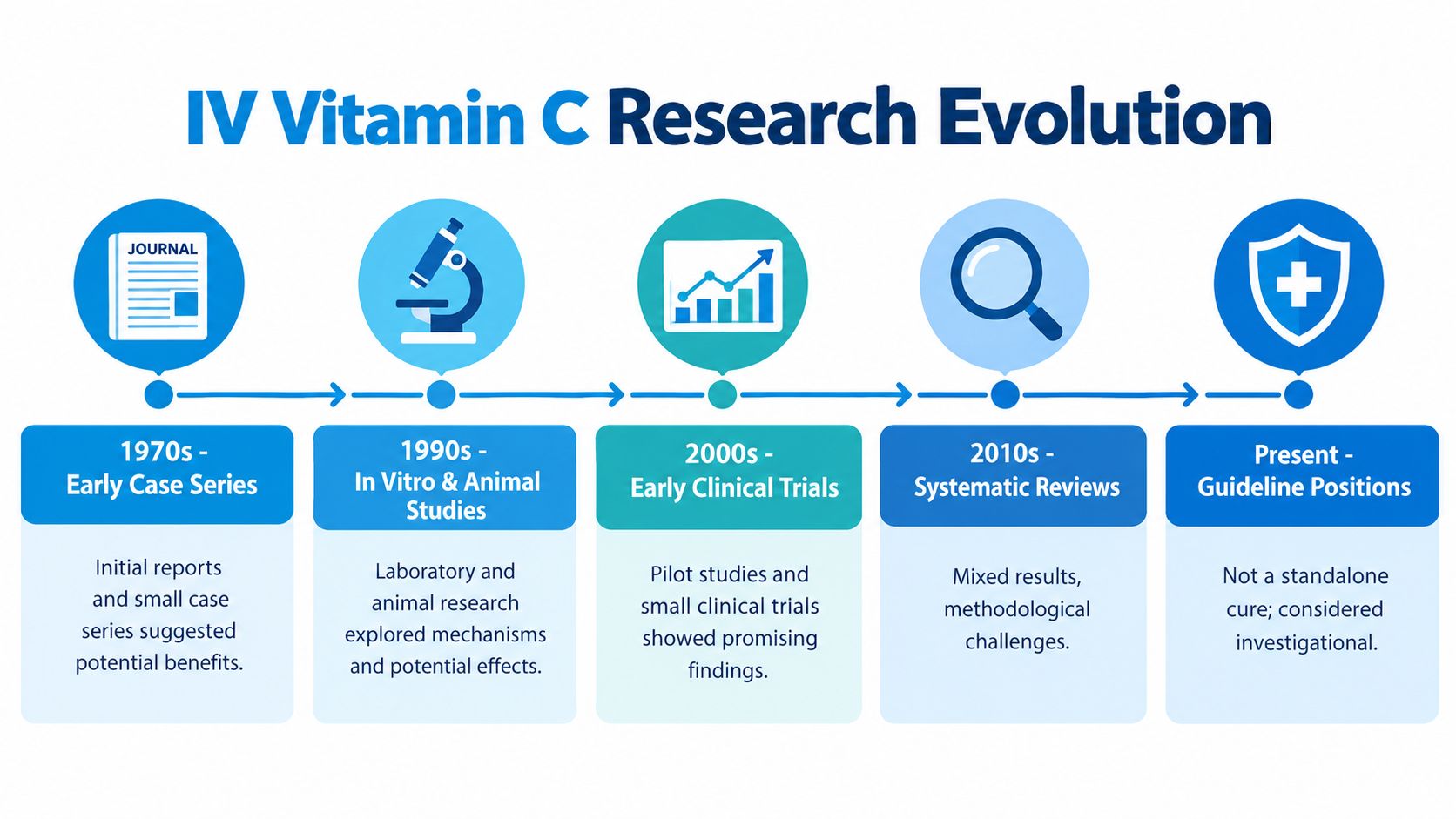
IV vitamin C research has also evolved over time, from early reports to modern pharmacology and clinical investigation.
For a broader discussion of how oxidative approaches may fit into chronic-disease care, patients can review this clinical guide to oxidative therapy. Any application should still be individualized and medically supervised.
Evidence and Limitations for Integrative Oncology and Chronic Illness
A patient with advanced cancer may hear that IV vitamin C is “supportive” and reasonably ask what that means. The answer depends on the outcome being measured, the treatment plan already in place, and the person's medical risks. IV vitamin C should therefore be evaluated as a pharmacologic, screening-dependent therapy, not as a routine wellness drip.
Interest in this approach predates modern wellness clinics. The National Cancer Institute describes cancer research extending back to the 1970s, when Scottish surgeon Ewan Cameron and later Linus Pauling publicized intravenous and oral ascorbic acid for people with advanced cancer. Early reports included a case series of 50 patients. These observations helped prompt further research, but they do not prove improved survival or tumor control.
Route of administration also matters. Oral-vitamin-C trials cannot be applied to high-dose infusions because they do not produce the same blood concentrations. IV delivery creates a pharmacologic rationale for additional study, while leaving the clinical benefit uncertain.
What the clinical literature can and can't tell us
A systematic review identified 23 cancer trials involving 385 patients, with only one randomized comparison against standard care, according to the PubMed record for the review. The review found no high-quality evidence proving anti-tumor effects or reduced chemotherapy side effects, although reported safety signals were generally favorable.
Individual studies have described symptom relief, improved quality of life, or better treatment tolerability in selected settings. Those findings remain difficult to interpret because studies used different protocols, included different cancer types, involved small groups, and often lacked strong comparison groups. A patient's improvement may be real without proving that IV vitamin C caused it.
A 2024-2025 clinical review of high-dose IV vitamin C in oncology describes commonly reported doses of 50,000 to 100,000 mg per infusion, administered 2 to 3 times weekly. Published reviews generally describe safety under monitoring, while efficacy signals vary. Reports of quality-of-life improvement should not become promises of tumor shrinkage or longer survival. The published review of high-dose IV vitamin C in oncology distinguishes reported signals from definitive proof.
Why the language used by a clinic matters
A responsible clinic uses terms such as supportive, adjunctive, exploratory, or investigational when appropriate. It should explain how the infusion fits alongside standard oncology care rather than presenting it as a replacement.
The clinical review of IV vitamin C in cancer care emphasizes that the evidence remains preliminary. Symptom and tolerability improvements have appeared in some circumstances, but definitive randomized controlled trial evidence for tumor response or overall survival benefit is unavailable.
The same standard applies to chronic illness outside oncology. A biological mechanism, laboratory finding, or subjective response can support a discussion, but it does not automatically establish a treatment indication. The clinician must weigh plausible benefit against treatment burden, cost, interactions, and individual risk.
Patients considering vitamin C infusions for cancer should ask which outcome the clinician will track. Possible goals include symptom burden, functional status, or treatment tolerance. Defining a measurable goal keeps individualized care grounded in informed medical decision-making rather than vague wellness language.
Safety Screening Contraindications and Who Should Avoid Treatment
A patient arrives in Scottsdale hoping for a wellness infusion, but the first clinical question is different: can the proposed dose be given safely with this person's enzyme status, kidney function, medications, and treatment history? High-dose IV vitamin C is pharmacologic therapy, not a routine hydration drip. Risk depends on the patient, the dose, and the monitoring plan.
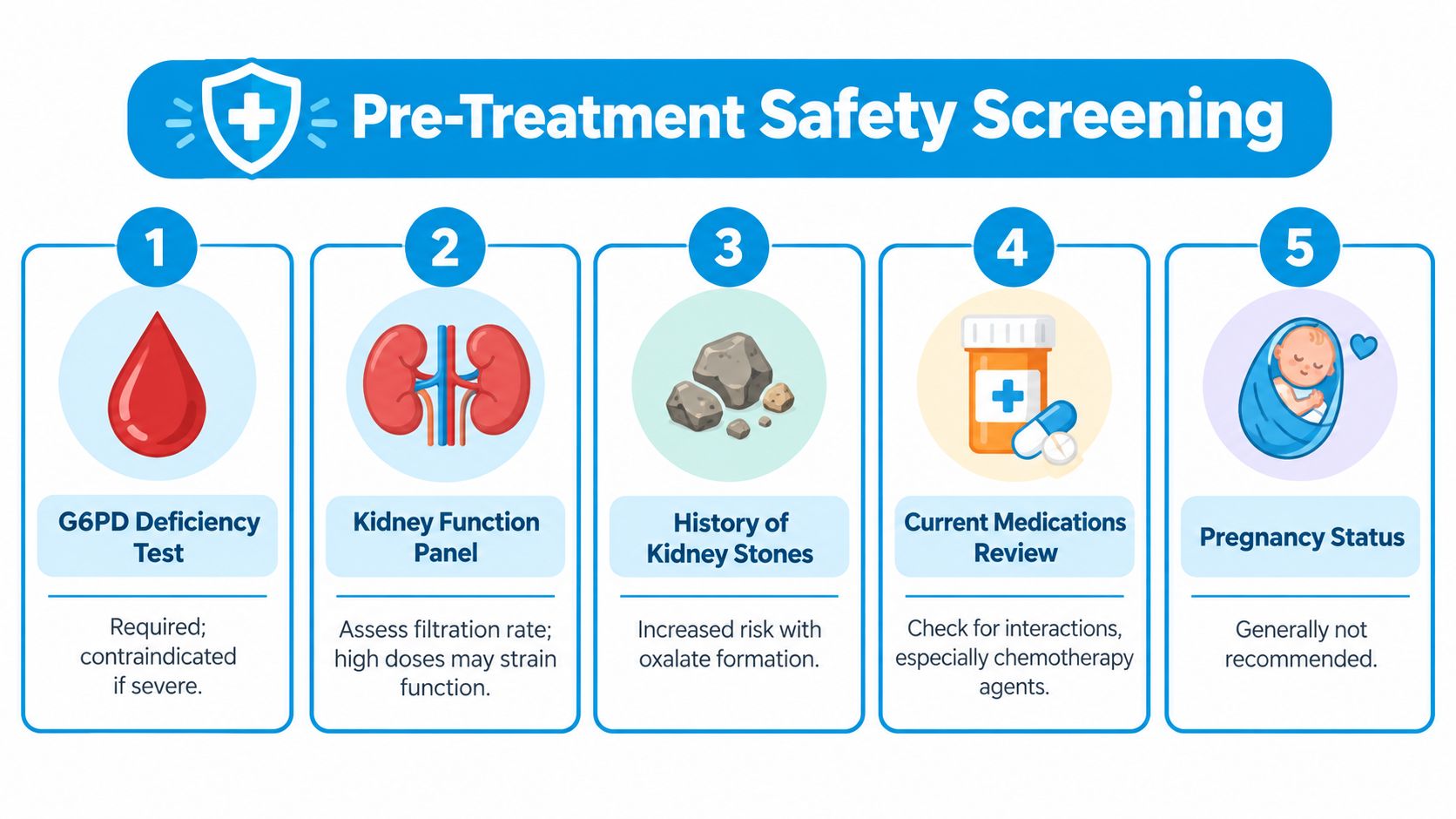
G6PD deficiency receives particular attention because gram-level vitamin C can trigger intravascular hemolysis in affected patients, potentially causing a life-threatening complication. The National Cancer Institute's professional guidance recommends screening for G6PD deficiency, renal disease, and urolithiasis before treatment.
A practical screening lens
- G6PD status: If deficiency is known or status is unknown, clinicians commonly avoid doses above approximately 15 g until the risk is clarified. The quantitative G6PD test clarifies enzyme status before any gram-level dosing is considered. A review of IV vitamin C safety and pharmacology discusses this precaution and the potential for hemolytic anemia.
- Kidney function: The kidneys clear vitamin C and its metabolites. Impaired function can raise concern about accumulation, oxalate-related complications, or further renal stress.
- Kidney stones or urolithiasis: A stone history changes the risk-benefit discussion because oxalate formation may matter.
- Medication and treatment review: Chemotherapy, prescription drugs, supplements, allergies, and treatment timing all require review. A combination that appears acceptable in general may not fit a particular care plan.
- Glucose monitoring: IV vitamin C can interfere with some point-of-care glucose meters. Patients using these devices need instructions for alternative testing and communication with their care team.
The National Cancer Institute notes that studies have administered IV vitamin C safely at doses up to 1.5 g/kg in healthy volunteers and patients with cancer. Study experience does not establish that dose as appropriate for an individual. The laboratory results and clinical context determine whether treatment can proceed.
When treatment may be inappropriate
Known G6PD deficiency, significant kidney disease, active stone disease, or unresolved laboratory abnormalities may lead a clinician to avoid treatment or consider another approach. Renal and laboratory abnormalities have been described as potential adverse effects in advanced-cancer patients, warranting caution and monitoring, as detailed in this clinical safety review.
A pre-infusion checklist is a clinical decision tool, not paperwork. Patients can ask whether G6PD testing is quantitative, which kidney markers will be reviewed, how glucose readings will be handled, and which symptoms require urgent attention. That discussion helps determine whether an individualized protocol fits the patient's physiology.
Typical Protocols and What to Expect During Your Visit
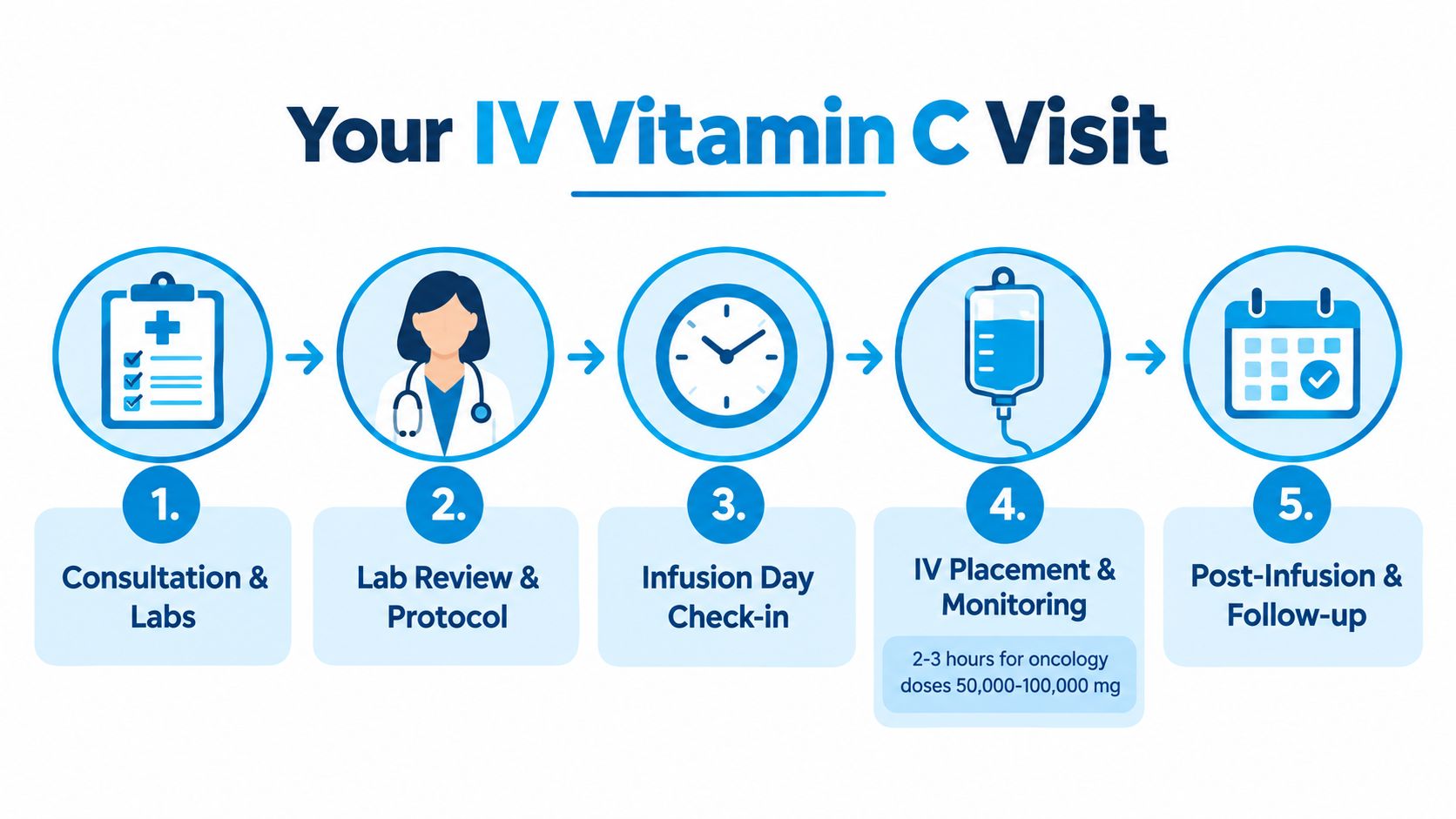
A Scottsdale IV vitamin C visit should begin with a clinical question, not a standard wellness menu. Before the IV is placed, the clinician reviews the diagnosis, symptoms, treatment history, kidney status, G6PD result, medications, allergies, hydration, and goals. These details function like guardrails, helping the team choose whether treatment is appropriate and how it should be delivered.
From consultation to infusion
Record review comes first. Bring oncology notes, pathology information, recent laboratory results, medication and supplement lists, and the schedule for chemotherapy or other treatments. Coordination helps place an integrative infusion within the larger care plan rather than treating it as a separate service.
Protocol selection follows the review. The oncology dosing ranges discussed earlier describe reported research and clinical practice, not an automatic prescription. A clinician may adjust the amount, dilution, frequency, and infusion rate according to kidney function, treatment goals, prior tolerance, hydration, and the timing of other therapies. Patients should also ask how long they will remain in the chair and whether they should drink fluids before the appointment, unless their medical team has given different instructions.
On infusion day, staff repeat the safety check. They may ask about new symptoms, medication changes, hydration, and recent treatment before placing the IV. The rate can be slowed or adjusted if symptoms develop.
Monitoring continues throughout treatment. Patients may read, work, or rest while the team watches for discomfort and other reactions. Hydration is configured for the individual, particularly when medical history or fluid restrictions affect the plan.
Sensations and communication
Some patients notice coolness at the IV site, a change in taste, or discomfort if the solution moves too quickly. Tell the nurse promptly about burning, pain, nausea, dizziness, shortness of breath, or any unusual sensation. Early reporting lets the team pause, slow, or reassess the infusion before a minor problem becomes harder to manage.
The appointment length depends on dose and infusion rate. Oncology-range treatments may require substantial chair time, and the process infographic describes 2 to 3 hours for oncology doses of 50,000 to 100,000 mg. Avoid scheduling a rushed commitment immediately afterward.
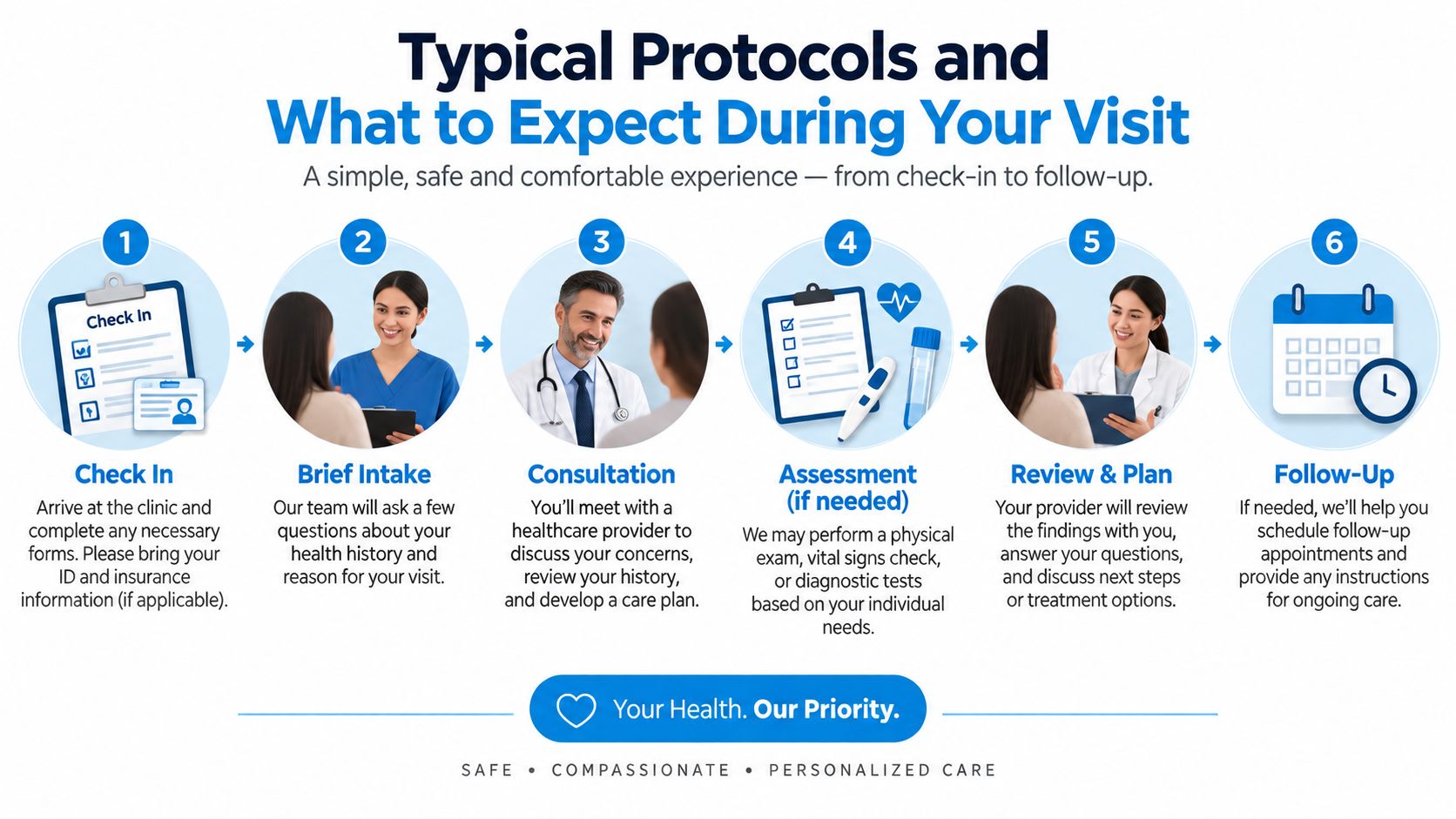
Follow-up returns to the original goal. The clinician may review symptoms, treatment tolerance, laboratory findings, and communication with the conventional oncology team. If benefit is absent or the treatment burden exceeds its possible value, changing or stopping the protocol is part of responsible care.
Pricing Insurance and Scottsdale Logistics for Local and Traveling Patients
Patients often ask about cost before they ask about evidence. That's reasonable, especially when a proposed protocol involves repeated visits, laboratory testing, travel, and time away from work or family responsibilities.
High-dose IV vitamin C is commonly self-pay because the FDA hasn't approved it as a cancer treatment. Insurance coverage can vary by plan and by the reason for treatment, but patients shouldn't assume that an infusion, consultation, laboratory work, or monitoring will be reimbursed. Ask the clinic for a written estimate and verify benefits directly with the insurer.
What changes the total cost
Pricing may depend on:
- Dose and infusion duration: Larger pharmacologic doses generally require more solution, chair time, and monitoring.
- Frequency: A single consultation differs financially from an ongoing schedule.
- Laboratory testing: G6PD testing, kidney evaluation, and follow-up labs may be billed separately.
- Clinical oversight: Physician review and coordination with other clinicians can affect the service structure.
- Billing format: Ask whether the clinic charges per infusion, bundles visits, or separates medical consultations from treatment.
Patients from Phoenix, Paradise Valley, Tempe, Mesa, Chandler, and Gilbert may be able to attend locally in Scottsdale. People traveling from outside the greater Phoenix metropolitan area should ask about appointment spacing, nearby lodging, transportation after an infusion, and how records will be exchanged with their home team.
Create a compact travel folder containing your diagnosis, pathology, imaging reports, recent labs, treatment calendar, medication list, allergies, and contact information for your primary oncology team. Schedule enough time for an initial evaluation and lab review before expecting treatment. A clinic should also explain what happens if screening identifies a contraindication or if your home physician recommends a different plan.
The most useful logistics question is not merely “How much is an IV?” Ask for the complete projected care pathway, including consultation, screening, infusion, monitoring, follow-up, and coordination. That answer lets you compare options fairly and avoids treating the infusion price as the entire medical decision.
How Sunridge Medical Approaches Individualized IV Vitamin C Care
Sunridge Medical is an integrative medical clinic in Scottsdale that evaluates complex cases through an individualized, evidence-informed model. A consultation may consider the diagnosis, prior treatments, pathology and molecular information when available, current health status, laboratory findings, and the patient's goals before any IV strategy is discussed.
That review helps place IV vitamin C in context. Depending on the situation, an integrative plan may involve coordination with conventional oncology, IV therapies, oxidative medicine, hyperthermia-oriented approaches, regenerative medicine, or environmental medicine. These options aren't interchangeable, and not every patient is a candidate for every therapy.
The clinic's approach also considers underlying contributors rather than treating an infusion as an isolated event. For patients traveling to Scottsdale, records coordination, scheduling, and continuity planning can help connect local evaluation with ongoing care at home.
The most appropriate next step may be a consultation rather than an immediate infusion. A qualified clinician can explain whether the potential supportive role justifies the screening, time, cost, and uncertainty in your particular case.
If you're considering IV vitamin C in Scottsdale, Sunridge Medical offers individualized evaluation, laboratory screening, and integrative care planning for cancer and complex chronic illness. Contact the clinic to discuss your medical history, current treatments, and whether a physician-directed consultation is appropriate before scheduling an infusion.